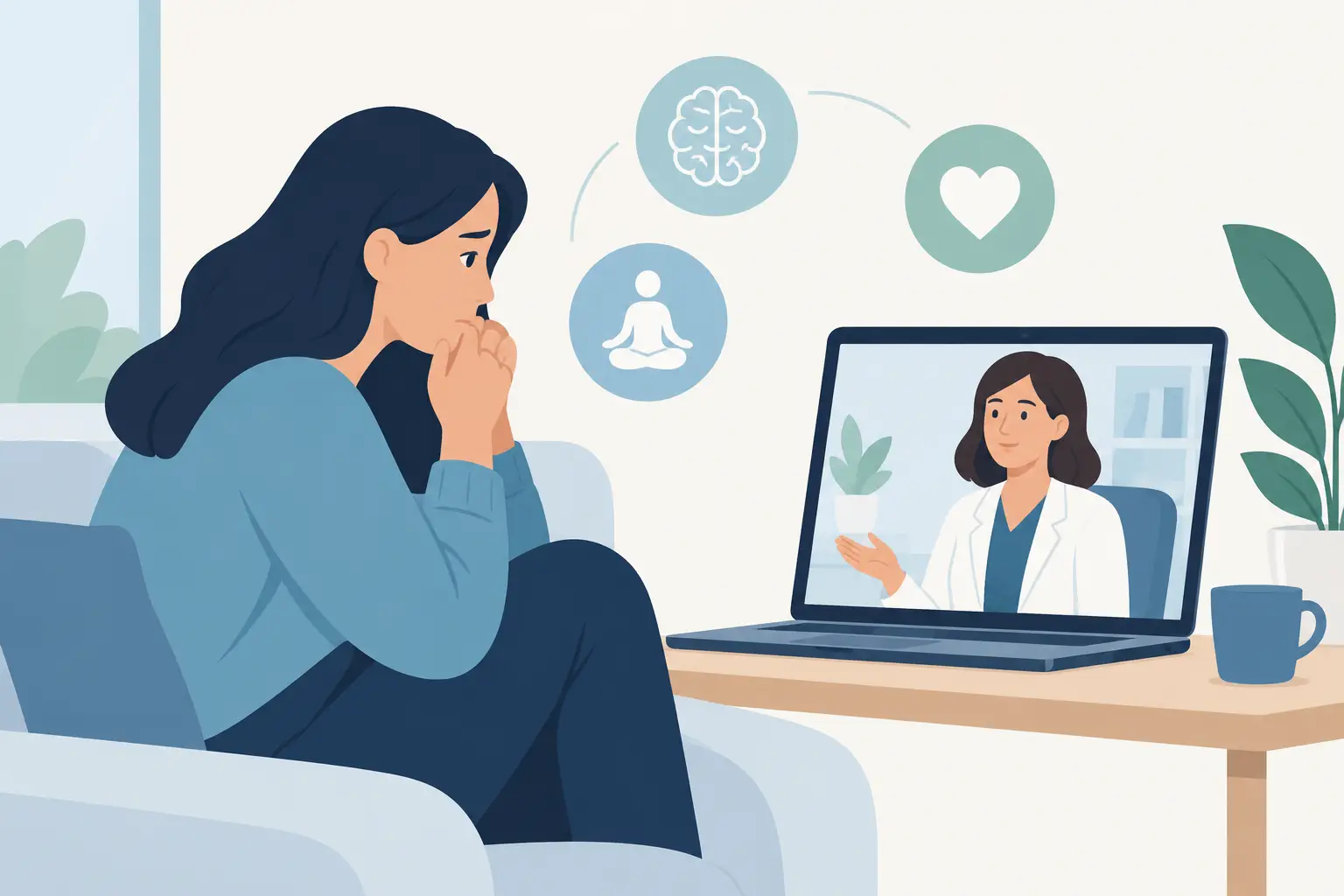
A panic attack can make a normal moment feel dangerous without warning. Your heart may race, your chest may tighten, and it may feel hard to catch your breath or stay in control. When that happens, leaving home for an appointment can feel like one more impossible task. So, can virtual care treat panic? For many adults, it can be a practical, private way to get evaluated and begin a treatment plan with a licensed provider.
Virtual care is not a replacement for emergency help when symptoms could signal a medical crisis. But for recurring panic attacks, ongoing fear of another attack, or anxiety that is starting to shape your daily routine, online mental health care can offer timely support without adding the stress of a waiting room.
Table of Contents
Can Virtual Care Treat Panic?
Yes, virtual care can help treat panic symptoms and panic disorder when it is clinically appropriate. A licensed provider can talk with you about what you are experiencing, review your health history and medications, screen for related concerns, and recommend a personalized plan.
Panic treatment is rarely about simply telling someone to calm down. It starts with understanding the full pattern: what your episodes feel like, how often they happen, what you avoid because of them, and whether stress, sleep changes, caffeine, health conditions, or major life events may be making symptoms worse.
For some people, a treatment plan may include evidence-based medication. For others, it may focus on therapy-based skills, lifestyle changes, symptom tracking, or a combination of approaches. The right plan depends on your symptoms, medical history, preferences, and the provider’s clinical judgment.
Online care can be especially helpful if panic is paired with generalized anxiety, low mood, trouble sleeping, work stress, or emotional strain after a significant change. These concerns often overlap, and addressing the bigger picture can make panic feel less disruptive over time.
What a Virtual Panic Evaluation Looks Like
Your first online visit should feel like a conversation, not a test you have to pass. A provider will usually ask when symptoms started, whether you have had panic attacks before, how long they last, and what physical sensations you notice. They may also ask about sleep, alcohol or substance use, family history, recent stressors, and any medications or supplements you take.
This assessment matters because panic can resemble other conditions. Palpitations, dizziness, shortness of breath, nausea, and chest discomfort can occur during a panic attack, but they can also have medical causes. A responsible provider will consider whether you need an in-person examination, lab work, or care from another clinician before making treatment recommendations.
Be as open as you can during your visit. Mention if you are avoiding driving, stores, meetings, exercise, travel, or being alone because you fear another episode. Those details help show whether panic is beginning to limit your life and what kind of support may be most useful.
What Treatment May Include
There is no single solution that works for everyone, and relief may take time. Still, a clear plan can replace some of the uncertainty that keeps panic going.
Medication may be appropriate for certain people, particularly when panic is frequent, intense, or interfering with sleep and daily responsibilities. A licensed provider can explain the potential benefits, side effects, timing, and follow-up needed for any medication they recommend. Medication decisions should always be individualized, especially if you are pregnant, breastfeeding, managing another health condition, or taking other prescriptions.
Elevate Your Health for Just $29.99/Month
Join the Precision Wellness Subscription at My Healing 365 and get discounted services, priority coaching access, virtual care, and exclusive wellness resources to support your physical, emotional, and hormonal health.
Join for $29.99/MonthSkills-based support is another important part of care. Panic often creates a frightening cycle: you notice a body sensation, interpret it as danger, become more alarmed, and experience stronger physical symptoms. A provider may help you learn ways to recognize that cycle, respond to symptoms differently, and reduce the behaviors that keep fear in control.
Simple strategies can help in the moment, but they are not a cure-all. Slowing your exhale, orienting yourself to your surroundings, relaxing tense muscles, and using a brief grounding exercise may lower the intensity of an episode. Consistent sleep, regular meals, movement, and less caffeine or nicotine can also make some people less vulnerable to panic. If these steps do not stop attacks, that does not mean you are failing. It means you may need more structured treatment.
Why Virtual Care Can Be a Good Fit
Panic does not wait for a convenient opening in your calendar. Virtual care can reduce common barriers to getting help, including travel time, long waitlists, childcare demands, and the discomfort of discussing mental health concerns in a public setting.
With online care, you can meet with a licensed provider from a private place that feels comfortable. Follow-up communication can also make it easier to ask practical questions as you start a plan, such as whether a new symptom is expected or when to schedule your next check-in.
For people who want a guided, digital-first experience, My Healing 365 offers access to licensed providers, individualized treatment plans, and ongoing messaging support. The goal is not to make panic feel like something you have to manage alone. It is to make getting care feel more straightforward.
Virtual care is often most effective when you are able to communicate openly, follow through with recommended check-ins, and seek additional in-person support when your provider advises it. Convenience is valuable, but good care still requires honest assessment and appropriate follow-up.
When Online Care Is Not Enough
Virtual mental health care has clear limits. If you have new or severe chest pain, fainting, trouble breathing that is not improving, weakness on one side of the body, confusion, or symptoms that could be a heart or other medical emergency, call 911 or seek emergency care right away. Do not assume it is panic, even if you have had panic attacks before.
You should also seek immediate crisis support if you are thinking about harming yourself or someone else, feel unable to stay safe, or are experiencing severe changes in perception or behavior. In the United States, call or text 988 to reach the Suicide & Crisis Lifeline, or call 911 if there is immediate danger.
Some situations may require a higher level of care, more frequent therapy, or coordination with a primary care clinician or specialist. A trustworthy virtual provider will tell you when online treatment is not the right level of support rather than trying to force every concern into a digital appointment.
How to Prepare for Your Appointment
Before your visit, write down a few details while they are fresh: when your panic episodes happen, how long they last, what symptoms you feel, and what you were doing beforehand. Include any recent changes in sleep, stress, caffeine, alcohol, medications, or physical health.
It can also help to think about your goal. Maybe you want to stop avoiding social plans, sleep without worrying about waking in panic, get through work meetings more comfortably, or understand whether medication is an option. You do not need perfect language for what you are feeling. A clear goal simply gives you and your provider a place to start.
Panic can be convincing. It can make you believe that one frightening episode means another is always around the corner. Getting support will not erase every uncomfortable sensation overnight, but the right care can help you understand your symptoms, build confidence in responding to them, and make room for your life again.

























