• Twenty47HealthNews
  • Health & Wellness
  • Disclaimer
    • Terms of Use
    • Privacy Policy
    • DMCA Notice
  • Twenty47HealthNews
  • Health & Wellness
  • Disclaimer
    • Terms of Use
    • Privacy Policy
    • DMCA Notice
24/7 Health News
No Result
View All Result
Struggling with energy, weight, or blood sugar?
Get personalized medical & wellness support at My Healing 365.
Book Your Wellness Strategy Session
Home Article

Dementia care: Re-envisioning the role of music

June 14, 2026
in Article
Dementia care: Re-envisioning the role of music

As a certified music therapist, I have observed firsthand the many ways music can bring meaning and beauty into people’s lives, even under very difficult circumstances. Much of my clinical work and research has occurred in dementia care. Here, music is often described as an inexpensive non-pharmacological treatment for behavioural and psychological symptoms with no side effects.

I strongly believe that music should hold a central place in dementia care. However, prioritizing it as a treatment discounts the wide range of benefits music has to offer. This label also contributes to misinformation and dementia-related stigma.

Table of Contents

  • Why music?
  • So, what’s the problem?
  • What about therapy?

Why music?

Music has a unique capability to engage multiple areas of the brain that can function in sync with one another. This includes areas involved in hearing and listening, movement, attention, language, emotion, memory and thinking.

Ongoing research seeks to further understand the mechanisms underlying how music works in the brain. We do know, however, that areas of the brain related to musical memory and engagement are often preserved in persons with dementia. This happens regardless of one’s prior musical knowledge or background.

Imagine feeling lost, confused, overwhelmed, unable to communicate with others, but when you hear music, it makes sense. When you engage in music making, dancing or singing with others, you experience a shared instinctive understanding. This is a meaningful life encounter when other forms of sensory input and social interaction may feel overwhelming, intangible or confusing.

Three women of different ages around a piano
Individuals living with dementia have demonstrated ability to learn new songs, take part in collaborative songwriting and participate in improvisatory music making.
(Getty Images/Unsplash+)

So, what’s the problem?

Receiving a dementia diagnosis can feel devastating and frightening. For some individuals, perceived stigma results in delayed diagnosis. Fear of being labelled often prevents individuals from seeking out early medical advice.

While not all people living with dementia are older adults, it is more commonly associated with this age group. As a result, dementia can be misunderstood as a normal sign of aging that signals what feels like an inevitable beginning of the end.

Geriatrician Dr. Allen Power proposes that dementia be viewed beyond disease and conceived as a shift in how each person experiences their world. Also, symptoms of distress or anxiety often exhibited by persons with dementia may not be a direct result of neurological deterioration. They may be a sign of individuals’ unmet needs and their attempts to communicate them. These are meaningful forms of self expression that we should seek to understand before simply aiming to eliminate them as symptoms.

Elevate Your Health for Just $29.99/Month

Join the Precision Wellness Subscription at My Healing 365 and get discounted services, priority coaching access, virtual care, and exclusive wellness resources to support your physical, emotional, and hormonal health.

Join for $29.99/Month

There are several studies that examine the effectiveness of music interventions in addressing behavioural and psychological symptoms of dementia. While some suggest promising results, practical applications are limited and the search for effective standardized music treatment protocols continues.

I am not opposed to anything that will help persons with dementia achieve their best possible quality of life. However, a single-minded focus on loss, deficit and inevitable decline wrongly stigmatizes and disempowers these individuals. Although not deliberate, it devalues the lives they have left to live.

Rather than “tackling” dementia with music, how can we better capitalize on its unique potentials as a resource for well-being and quality of life?
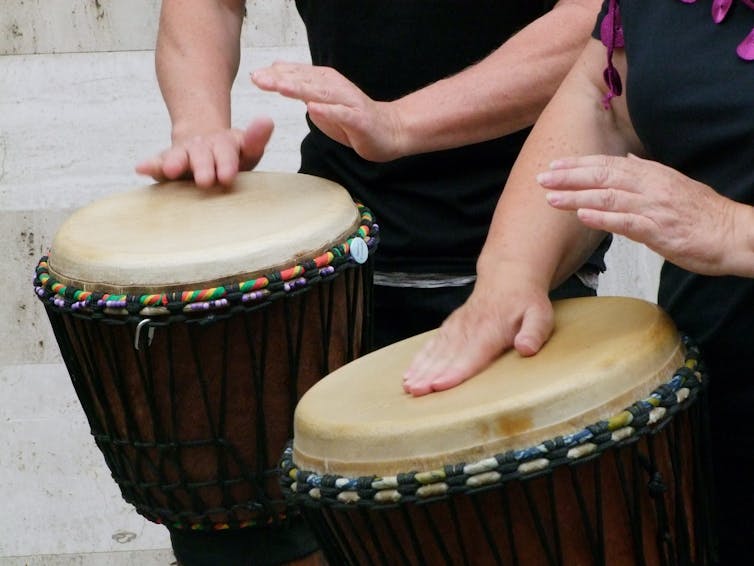
Close-up photo of two people's hands playing drums
Music programs could be constructed in ways that capitalize on music’s unique potentials as a personal, cultural, expressive and relational life resource.
(Piqsels)

In this scenario, individuals with dementia are provided with supported opportunities to participate in music experiences that are culturally and personally relevant. Rather than treating symptoms, these activities aim to foster self expression, sense of identity, sense of agency and meaningful interactions. Individuals could explore a past or present love of music for its own sake.

This approach goes well beyond the popular practice of personalized playlists and use of familiar music only. Individuals living with dementia have demonstrated ability to learn new songs, take part in collaborative songwriting and participate in improvisatory music making.

What about therapy?

You may find it strange that a music therapist is critiquing the gold standard view of music as a treatment for symptoms of dementia. While therapy is widely assumed to mean treatment, the Greek root of the word is therapeia, which also means to attend, serve or help. I want to help ensure that individuals with dementia are not defined by their disease but are empowered to live their best possible lives.

Music holds distinct potential in this regard and in more ways than many people realize. To paraphrase the late great neurologist Dr. Oliver Sacks, music can provide access, even when no medication can, to movement, to speech, to life. For many persons with dementia, music is not a luxury, but a necessity.

Music therapists are in a unique position to advocate for change. Rather than emphasizing loss and deficit, music therapy and music leisure programs could be constructed in ways that capitalize on music’s unique potentials as a personal, cultural, expressive and relational life resource. They can also raise awareness around the potential for music to cause harm. It may not be what an individual wants or needs at a particular time.

Integrating music therapists into dementia care systems as professional consultants is key. This would further enable people with dementia to have access to diverse music experiences and supportive sound environments focused on meeting their evolving needs and preferences, from diagnosis to end of life.

This could make such a radical difference for persons living with dementia.

ShareTweetSharePin

Most Read

What causes stuttering? A speech pathology researcher explains the science and the misconceptions around this speech disorder

What causes stuttering? A speech pathology researcher explains the science and the misconceptions around this speech disorder

December 15, 2022
3 women stroke prevention

Silent Stroke Symptoms in Women: What You Might Be Overlooking

February 27, 2026
In war-torn Iran, air pollution from burning oil depots and bombed buildings unleashes invisible health threats

In war-torn cities, air pollution from burning oil depots and bombed buildings unleashes invisible health threats

March 25, 2026
morning back pain

Morning Again Ache Trigger Is Not the Mattress

October 11, 2021

4 steps to building a healthier relationship with your phone

January 28, 2025

Why Circadian Rhythms Matter for Your Health

July 30, 2024
lower back pain relief exercises

5 decrease again ache aid workouts

October 11, 2021
Good Night Sleep

6 Causes of Good Evening Sleep

October 11, 2021
Nasal vaccines promise to stop the COVID-19 virus before it gets to the lungs – an immunologist explains how they work

Nasal vaccines promise to stop the COVID-19 virus before it gets to the lungs – an immunologist explains how they work

December 14, 2022
3 years after legalization, we have shockingly little information about how it changed cannabis use and health harms

3 years after legalization, we have shockingly little information about how it changed cannabis use and health harms

October 15, 2021
bleeding in gum

When The Bleeding in gum Is Severe ?

October 11, 2021
Socialising, work, exercise: what makes a good day and is there a ‘formula’ for making it better?

Socialising, work, exercise: what makes a good day and is there a ‘formula’ for making it better?

April 12, 2026
Biden is getting prostate cancer treatment, but that’s not the best choice for all men − a cancer researcher describes how she helped her father decide

Biden is getting prostate cancer treatment, but that’s not the best choice for all men − a cancer researcher describes how she helped her father decide

May 20, 2025

COVID vaccines: how one can pace up rollout in poorer international locations

October 5, 2021
Kick up your heels – ballroom dancing offers benefits to the aging brain and could help stave off dementia

Kick up your heels – ballroom dancing offers benefits to the aging brain and could help stave off dementia

January 3, 2023
Ten small changes you can make today to prevent weight gain

Ten small changes you can make today to prevent weight gain

October 12, 2021
Support and collaboration with health-care providers can help people make health decisions

Support and collaboration with health-care providers can help people make health decisions

December 16, 2021
Greece to make COVID vaccines mandatory for over-60s, but do vaccine mandates work?

Greece to make COVID vaccines mandatory for over-60s, but do vaccine mandates work?

December 1, 2021
GLP-1 drugs may fight addiction across every major substance, according to a study of 600,000 people

GLP-1 drugs may fight addiction across every major substance, according to a study of 600,000 people

March 6, 2026
Five ways to avoid pain and injury when starting a new exercise regime

Five ways to avoid pain and injury when starting a new exercise regime

December 30, 2022
woman covered with white blanket

Exploring the Impact of Sleep Patterns on Mental Health

August 4, 2024

Multiple sclerosis: the link with earlier infection just got stronger – new study

October 12, 2021
Six ways to improve your cat’s one wild and precious life

Six ways to improve your cat’s one wild and precious life

June 6, 2026

This Simple Hygiene Habit Could Cut Your Risk of Stroke, New Research Reveals

February 1, 2025

Maximize Your Performance – Sync with Your Circadian Rhythms

August 9, 2024
As viral infections skyrocket, masks are still a tried-and-true way to help keep yourself and others safe

As viral infections skyrocket, masks are still a tried-and-true way to help keep yourself and others safe

December 14, 2022
GPs don’t give useful weight-loss advice – new study

GPs don’t give useful weight-loss advice – new study

December 16, 2022
Four ways to avoid gaining weight over the festive period – but also why you shouldn’t fret about it too much

Four ways to avoid gaining weight over the festive period – but also why you shouldn’t fret about it too much

December 22, 2022
FDA limits access to COVID-19 vaccine to older adults and other high-risk groups – a public health expert explains the new rules

FDA limits access to COVID-19 vaccine to older adults and other high-risk groups – a public health expert explains the new rules

May 21, 2025

🧬 How Your DNA Affects Exercise: The Science of Personalized Fitness

May 21, 2025

Ready to take control of your health?

Get a personalized plan for your weight, energy, hormones, and blood sugar with My Healing 365.

Book Your Session Now – Limited Weekly Spots
  • Twenty47HealthNews
  • Health & Wellness
  • Disclaimer

© 2020 DAILY HEALTH NEWS

  • Twenty47HealthNews
  • Health & Wellness
  • Disclaimer
    • Terms of Use
    • Privacy Policy
    • DMCA Notice

© 2020 DAILY HEALTH NEWS
















