Medically Reviewed
Dr. Jose Rossello, MD, PhD, MHCM
Preventive Medicine & Public Health Specialist
Last Reviewed: April 19, 2026
Choosing between a home gym and a gym membership is one of the most common fitness decisions people face today. Both options offer real benefits, but they suit different needs, budgets, and lifestyles. For most people, a home gym becomes more cost-effective over time despite higher upfront costs, while gym memberships offer more equipment variety and professional support at a monthly price.
The home gym vs gym membership debate has no universal winner. Some people thrive with the convenience and privacy of working out at home. Others need the social environment and expert guidance that commercial gyms provide.
Understanding the key differences helps people make a choice that fits their situation. This guide breaks down costs, convenience, equipment access, and other factors that matter most when deciding where to work out.
Table of Contents
Key Takeaways
- Home gyms save money long-term and offer convenience, while gym memberships provide equipment variety and professional trainers
- The best choice depends on personal budget, available space, fitness goals, and whether social interaction helps with motivation
- Both options can deliver excellent results when matched to individual needs and workout preferences
Comparing Cost and Value
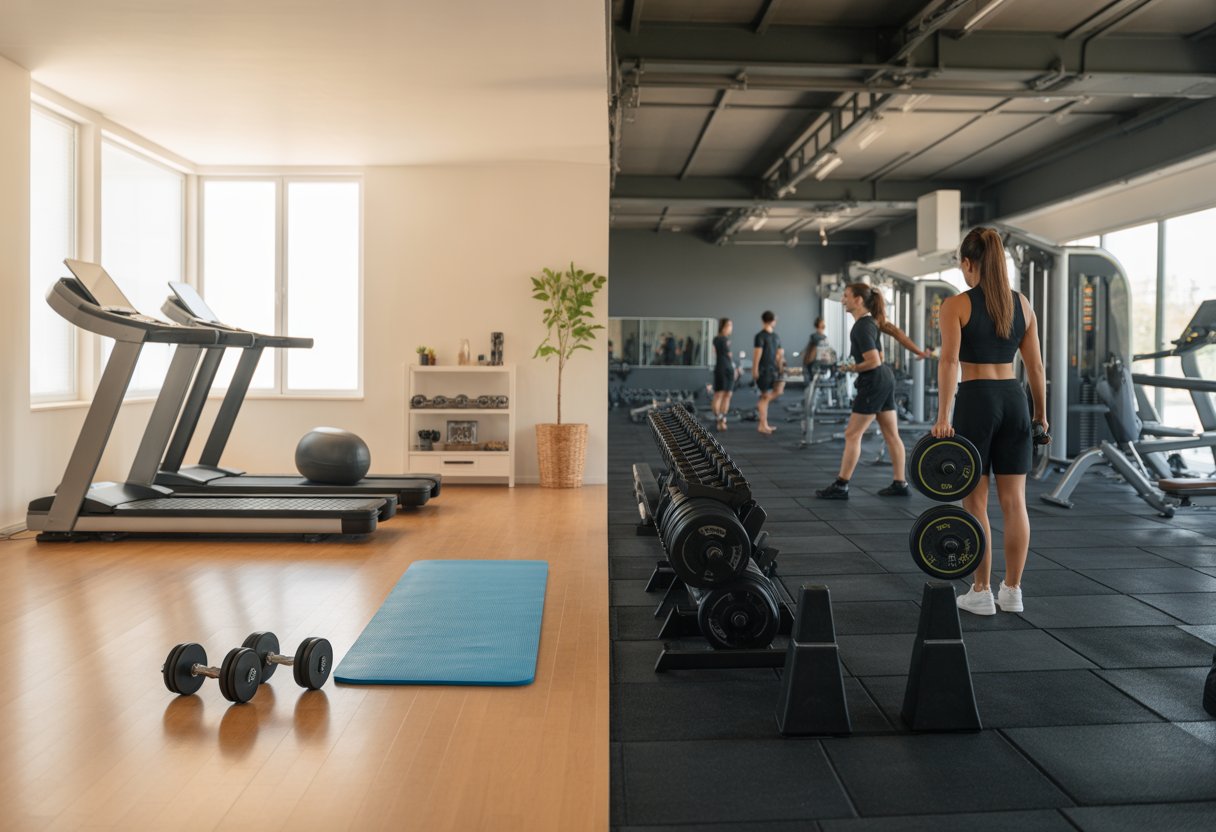
A gym membership typically costs $30 to $80 per month, while a basic home gym setup requires $300 to $2,000 upfront. The financial winner depends on how long someone plans to work out and what equipment they need.
Upfront Expenses and Long-Term Savings
A commercial gym membership requires little to no upfront cost beyond a registration fee. Most gyms charge between $10 and $100 to join, then bill monthly.
Home gym equipment demands significant initial investment. A basic garage gym with dumbbells, a bench, and resistance bands costs $300 to $800. A more complete setup with a power rack, barbell, plates, and cardio equipment runs $1,500 to $3,000.
The cost-benefit analysis shows potential savings[1] of $7,050 to $37,939 over eight years with a home gym. These savings materialize after the break-even point, which typically occurs between 6 and 24 months depending on the gym membership cost and home gym setup expenses.
Recurring Fees and Membership Structures
Gym membership fees vary widely by location and amenities. Budget gyms charge $10 to $30 monthly, mid-tier facilities cost $30 to $60, and premium clubs run $80 to $200 per month. Many gyms add annual maintenance fees of $30 to $60.
Common membership fee structures include:
- Month-to-month contracts with higher rates
- Annual commitments with discounted pricing
- Family plans at reduced per-person costs
- Initiation fees ranging from $0 to $200
A home gym has minimal recurring costs. Equipment occasionally needs replacement parts or upgrades, averaging $50 to $200 annually.
Cost Effectiveness Over Time
The long-term value of each option[2] shifts as years pass. A $50 monthly gym membership costs $600 yearly or $6,000 over ten years. A $2,000 home gym setup paid upfront saves $4,000 in that same decade.
Someone who works out three times weekly for five years pays $3,000 at a budget gym or invests $1,200 in home equipment. The home gym becomes more cost effective after 24 months.
Fitness goals affect value calculations. Someone needing specialized machines or classes gets better value from commercial gyms. People comfortable with basic strength training equipment find home gyms more economical after the first year.
Convenience and Accessibility
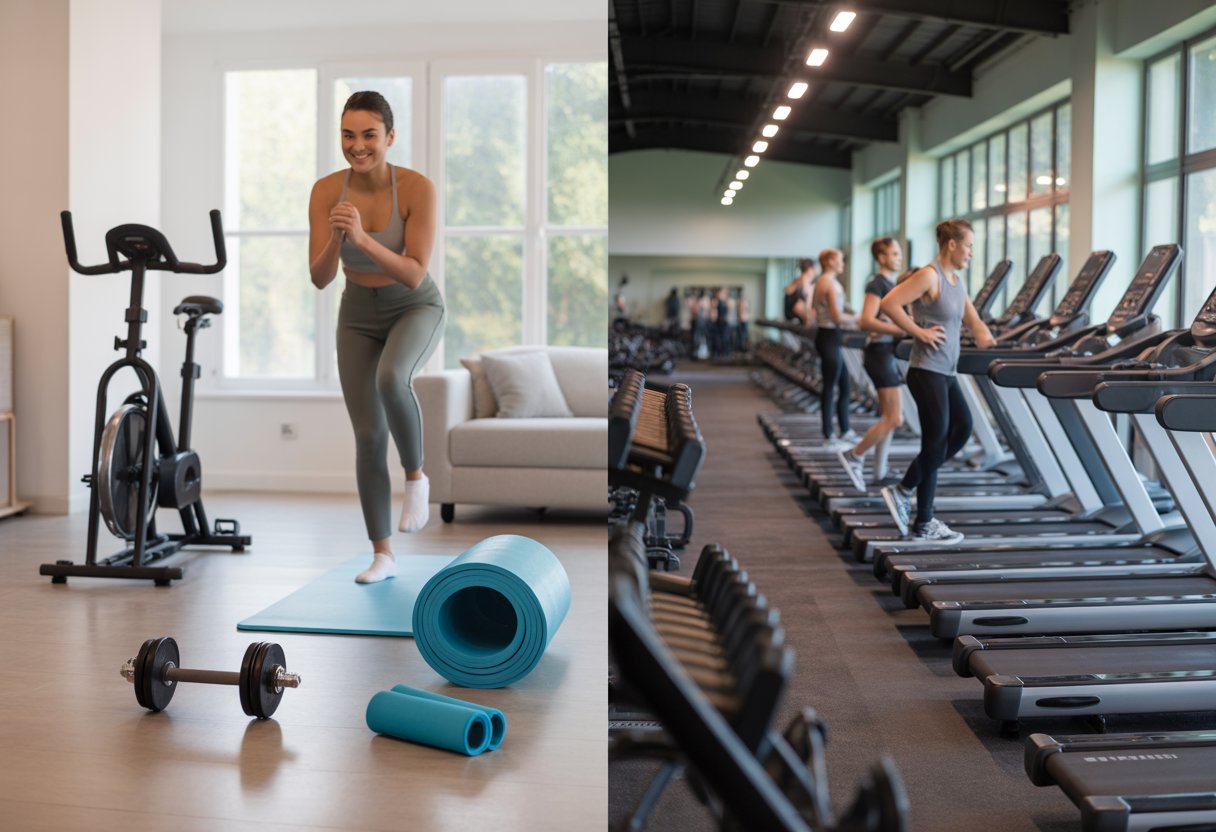
A home gym eliminates travel time and offers 24/7 access to equipment, while gym memberships require planning around facility hours and commute schedules.
Commute Time and Location Benefits
The average gym commute adds 20 to 40 minutes to each workout session. This time adds up quickly over a week or month of training.
A home gym removes this barrier completely. There’s no commute involved, which means more time for actual exercise or other daily activities.
Gym memberships require planning around travel[3], packing a gym bag, and factoring in traffic or parking. These small tasks create friction that can discourage consistent training.
Home workouts let people exercise during short breaks in their schedule. A 30-minute window becomes enough time for a full session when there’s no travel involved.
Flexible Scheduling vs. Gym Hours
Commercial gyms typically operate on set schedules, with some closing as early as 9 PM on weekdays. Many facilities also have peak hours between 5 PM and 8 PM when equipment becomes crowded.
A home workout space provides access at any hour. Early morning exercisers can train at 5 AM without waiting for a facility to open. Late-night workers can complete their fitness routine after midnight if needed.
This flexibility helps people who work irregular shifts, travel frequently, or manage busy family schedules. Parents can exercise while children nap or after bedtime without leaving the house.
Key scheduling advantages of home gyms:
- No waiting for equipment during busy periods
- Ability to split workouts into multiple short sessions
- Freedom to train on holidays when gyms may be closed
Home Workout Integration
A home gym fits naturally into daily routines without requiring dedicated blocks of time. Someone can complete a quick 15-minute strength session between meetings or before dinner.
This integration supports consistency better than traditional gym visits. The workout routine becomes as simple as walking to another room rather than a separate event requiring preparation and travel.
Home workouts also eliminate waiting for machines[4], which means training sessions stay focused and efficient. People finish their exercises faster without the distractions or delays common in commercial facilities.
Equipment Variety and Workout Options
Commercial gyms stock dozens of machines and tools that most people can’t fit at home. Home gyms work well for focused training but usually can’t match the equipment variety found at larger facilities.
Wide Range of Equipment
Commercial gyms typically offer extensive equipment variety that covers every type of workout. Members get access to multiple cardio machines including treadmills, ellipticals, rowing machines, and stationary bikes. The weight training area usually includes several squat racks, power racks, and bench press stations so people don’t wait in line.
Most commercial gyms provide high-end equipment[4] with advanced features like smartphone integration and preset workout programs. Free weights sections stock dumbbells ranging from 5 to 100+ pounds, along with olympic barbells, weight plates, and bumper plates. Specialized machines target specific muscle groups that are hard to train with basic equipment.
The cardio equipment selection alone gives members many options to switch up their routine and avoid boredom.
Home Gym Limitations
A garage gym typically works with limited equipment due to space and budget constraints. Most home setups start with essential items like a power rack, bench press, olympic barbell, weight plates, and a pull-up bar. Building a basic home gym costs around $1,000 to $2,000 for quality equipment.
Limited equipment variety means people need to get creative with their workouts. A single adjustable bench and set of dumbbells can handle many exercises, but won’t replace the 20+ machines found at commercial facilities. Cardio options often come down to one piece like a stationary bike or some resistance bands for conditioning work.
Space restrictions in garages or spare rooms make it hard to add bulky items. Home gym equipment selections require careful planning to maximize what fits in the available area.
Workout Variety and Specialization
Gym memberships give access to specialized equipment for different training styles. CrossFit gyms stock bumper plates, rowing machines, and assault bikes. Bodybuilding-focused facilities have cable machines, leg press equipment, and isolation stations.
Home gyms work best for people who follow consistent programs using basic movements. Squats, deadlifts, presses, and pulls can all happen with a simple setup of free weights and a squat rack. The limited equipment variety actually helps some people stay focused instead of jumping between too many options.
Group fitness classes at commercial gyms add another layer of workout variety that home setups can’t replicate without streaming services.
Training Atmosphere and Motivation
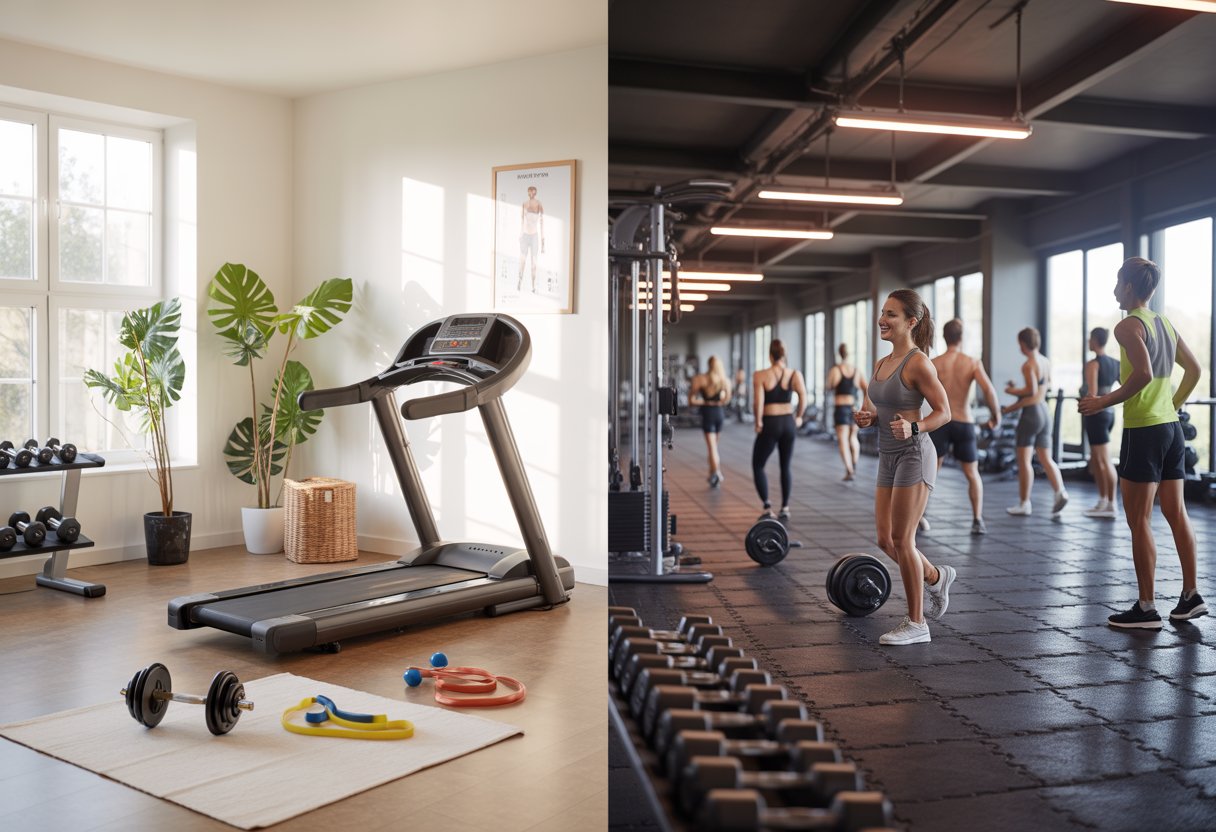
The environment where someone trains can make or break their fitness routine. Gym memberships offer built-in social support and energy, while home gyms require stronger personal discipline but provide complete privacy.
Social Motivation and Group Dynamics
A gym membership gives people access to group fitness classes where they can work out alongside others who share similar goals. These classes create accountability because participants show up at scheduled times and feed off the energy of the instructor and other members.
The gym environment naturally builds motivation through observation. When someone sees others lifting heavier weights or running faster, it can push them to work harder. Personal trainers[3] and fellow gym-goers create a community that many people find essential for staying consistent.
However, a crowded gym during peak hours can sometimes reduce motivation. Waiting for equipment or feeling self-conscious around experienced lifters may discourage some people. The social atmosphere works best for those who thrive on external encouragement and enjoy being part of a fitness community.
Self-Motivation and Discipline
Home gym users must rely entirely on self-motivation to complete their workouts. There are no trainers watching, no classmates waiting, and no scheduled sessions creating external pressure. This requires strong personal discipline and clear fitness goals.
Some people excel with this independence. They prefer setting their own schedule and pushing themselves without needing others around. They can work out early in the morning or late at night based on their personal preferences.
The challenge comes when motivation drops. Without the social pressure of a gym membership, it becomes easier to skip workouts or cut them short. People who struggle with consistency often find home workouts harder to maintain long-term.
Privacy and Focus
Working out at home eliminates obstacles[5] like feeling watched or judged by others. People can try new exercises, make mistakes, and focus entirely on their form without distraction. This privacy appeals to beginners who feel intimidated by the gym environment.
Home gyms allow complete control over music, temperature, and workout flow. There are no interruptions from other members or time limits on equipment. Someone can take as long as they need between sets without feeling rushed.
The downside is that home environments contain more distractions. Family members, household chores, and comfortable furniture can pull attention away from training. Gyms provide a dedicated space that signals it’s time to work, which helps many people focus better on their fitness goals.
Professional Guidance and Support
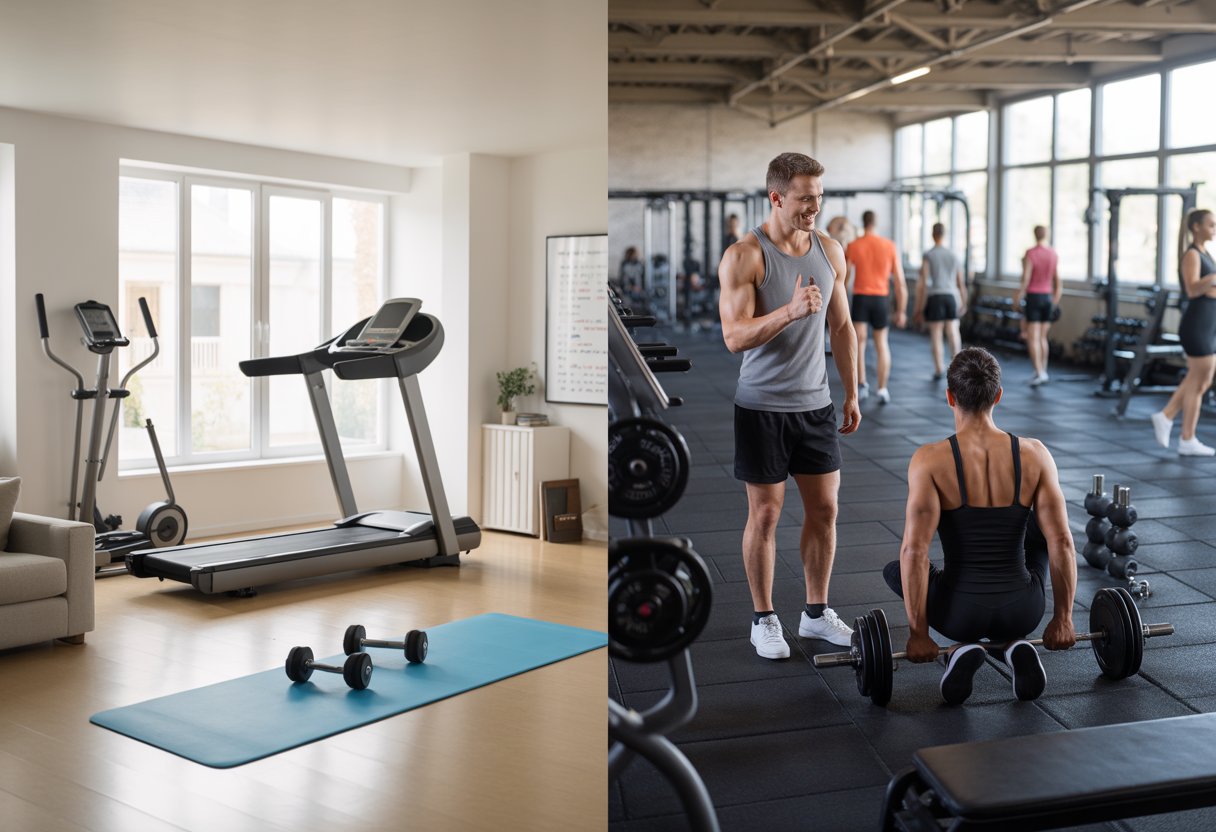
Commercial gyms provide access to trained professionals who can teach proper form and create workout programs. Gym memberships often include fitness classes and structured training that many people need to stay consistent and avoid injuries.
Personal Trainers and Expert Coaching
Commercial gyms employ certified personal trainers who can assess fitness levels and design customized workout plans. These trainers watch clients perform exercises and correct their form to prevent injuries. Beginners who need feedback on form and exercise programming[3] benefit most from professional guidance.
Personal training sessions typically cost $50 to $150 per hour depending on the location and trainer experience. Many gyms include one or two complimentary sessions with new memberships. Trainers can also teach members how to use unfamiliar equipment safely.
Home gym owners must learn exercises through online videos or apps. This approach works for experienced lifters but can lead to poor form and injuries for beginners. Some people hire personal trainers for occasional home visits, though this costs more than gym-based training.
Fitness Classes and Structured Programs
Group fitness classes offer structured workouts led by instructors who demonstrate proper technique. Classes include yoga, spinning, aerobics, HIIT, and Pilates. These sessions provide motivation through social interaction and scheduled times.
Most gym memberships include access to basic classes. Premium classes like CrossFit or specialized training may cost extra. Classes remove the guesswork from planning workouts since instructors design the routines.
Home gym users can stream virtual classes through services like Peloton or online platforms. These options work well for self-motivated individuals but lack the accountability of in-person instruction.
Personal Training vs. Independent Learning
Working with a personal trainer provides accountability and motivation that independent learning cannot match. Trainers check in regularly and adjust programs based on progress. They push clients harder than most people push themselves.
Independent learners save money but must stay disciplined without external support. They need to research exercises, count repetitions, and track their own progress. This approach requires strong self-motivation and basic fitness knowledge.
Key differences:
- Accountability: Trainers provide scheduled sessions and progress tracking
- Cost: Independent learning is free beyond equipment costs
- Knowledge: Trainers offer immediate feedback and corrections
- Flexibility: Self-guided workouts happen on any schedule
Home gym owners can combine both approaches by hiring a trainer occasionally for form checks while maintaining an independent routine between sessions.
Health, Hygiene, and Safety Considerations
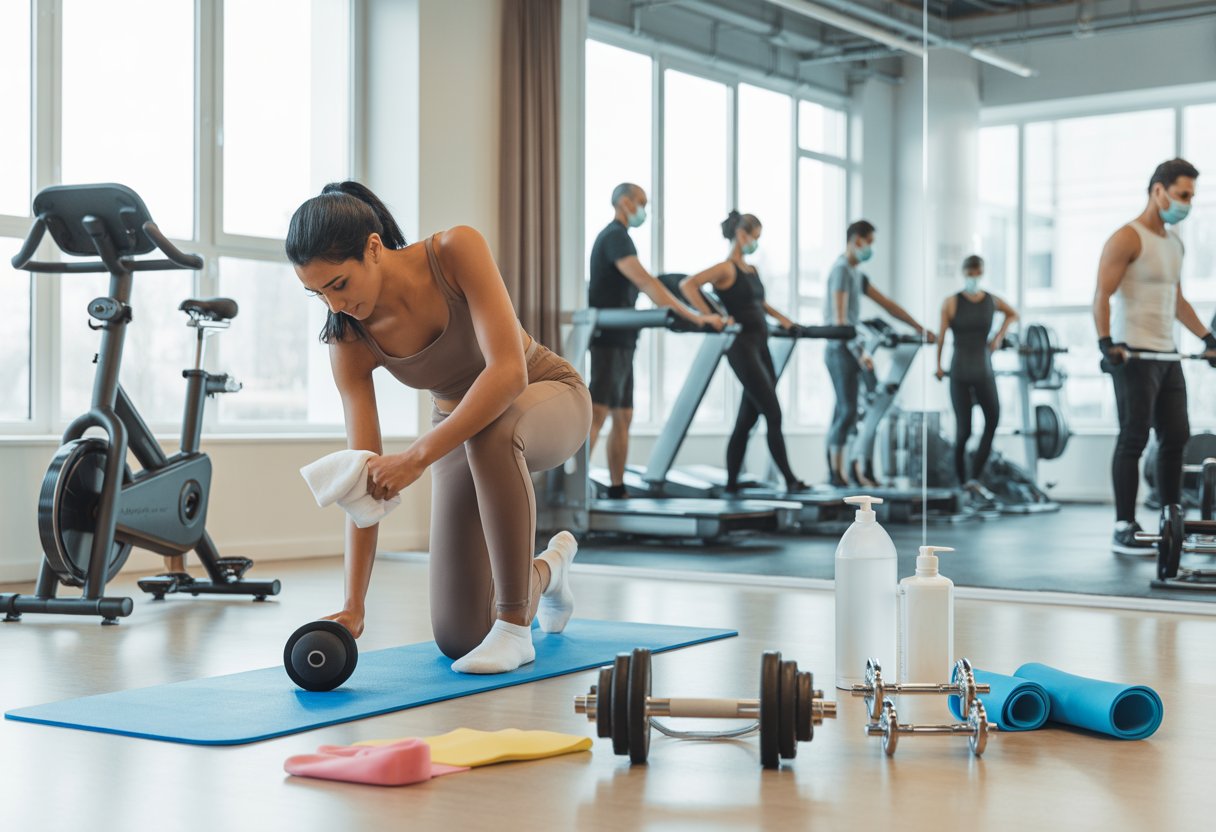
Cleanliness standards and injury risks differ significantly between home and commercial gym settings. Equipment safety, shared spaces, and hygiene control play key roles in determining which option better protects your health.
Hygiene Control in Different Environments
Home gyms offer greater control over cleanliness[4] since users manage their own equipment maintenance. A person can wipe down machines immediately after use and choose their preferred cleaning products.
Commercial gyms serve hundreds of members daily. Equipment gets touched by many hands, increasing exposure to germs and bacteria. While most facilities provide cleaning stations, not everyone wipes down equipment after their workout.
- Complete control over cleaning schedule
- No exposure to other people’s sweat
- Personal towels and equipment only
- Choice of disinfecting products
Crowded gym environments during peak hours make it harder to maintain hygiene standards. Equipment may not dry completely between users, creating conditions where bacteria thrive.
Injury Prevention and Equipment Safety
Commercial gyms stock professional-grade equipment designed for heavy daily use by multiple people. These machines include built-in safety features and weight stops that prevent accidents during solo workouts.
Home gym equipment varies widely in quality and safety features. Budget options may lack proper safety mechanisms for heavy lifts. However, users can select specific safety equipment like squat rack catches and adjustable safety bars.
Spotters are readily available at commercial gyms for heavy compound lifts. This extra safety measure proves critical when attempting personal records on bench press or squat exercises. Home gym users lifting alone face higher risks without a spotter present.
Locker Rooms and Shared Spaces
Locker rooms at commercial facilities require sharing showers, changing areas, and bathroom facilities with other members. These damp, warm environments can harbor fungi, bacteria, and viruses despite regular cleaning.
Home gym users shower in their private bathrooms immediately after workouts. They avoid walking through shared spaces in sweaty clothes or waiting for available shower stalls.
Common Locker Room Concerns:
- Athlete’s foot and fungal infections
- Shared bench surfaces
- Communal showers
- Storage of personal items
Some people feel uncomfortable changing or showering in public spaces. Privacy concerns extend beyond hygiene to personal comfort levels in shared environments.
Elevate Your Health for Just $29.99/Month
Join the Precision Wellness Subscription at My Healing 365 and get discounted services, priority coaching access, virtual care, and exclusive wellness resources to support your physical, emotional, and hormonal health.
Join for $29.99/MonthFitness Goals and Personalization
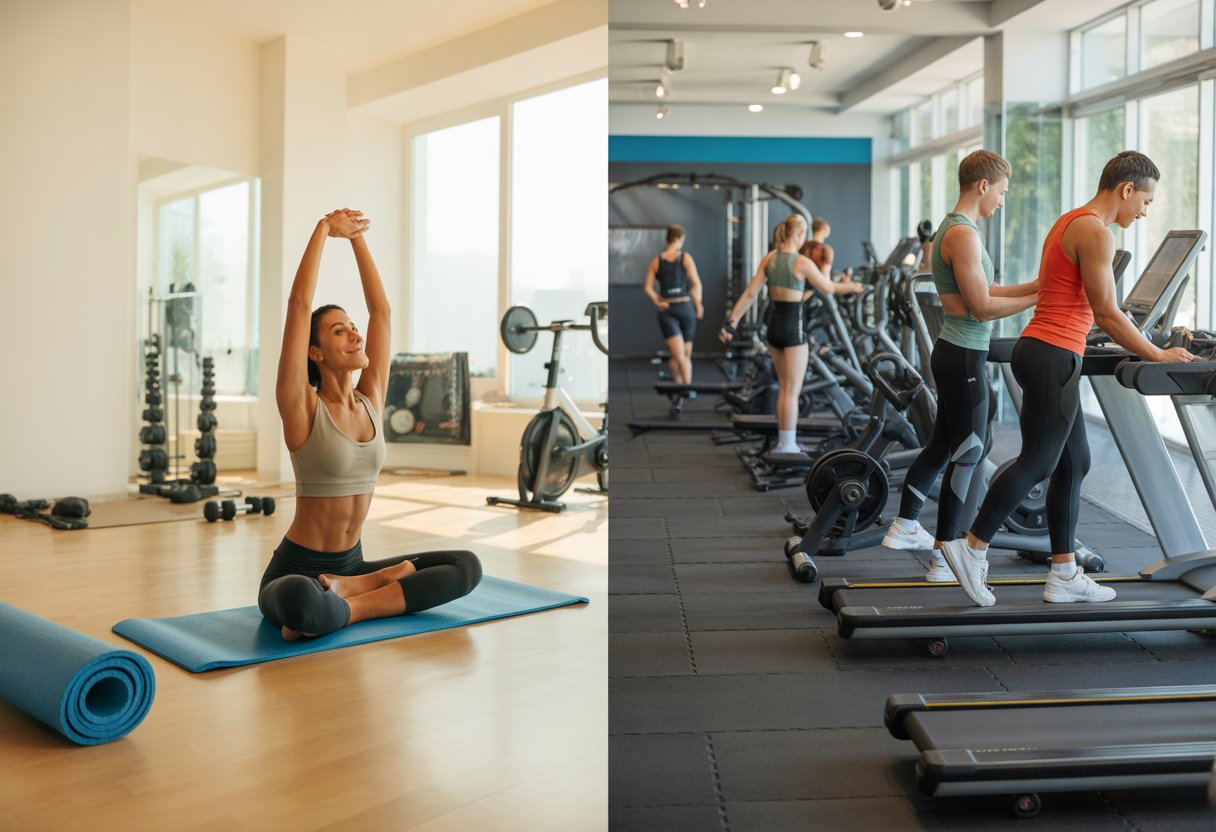
Your fitness goals shape whether a home gym or membership works better for you. The equipment you need, how often your routine changes, and what type of training you focus on all play into this decision.
Customizing Workouts to Goals
A home gym setup lets you buy exactly what matches your training style. Someone focused on strength training can invest in a power rack, barbell, and plates without paying for cardio equipment they won’t use. A person who prefers bodyweight exercises needs minimal equipment like a pull-up bar and resistance bands.
Gym memberships give you everything at once. You can try different machines and tools before committing to one approach. This matters when you’re still figuring out what works for your body.
The trade-off is simple. Home gyms allow you to select equipment that best suits your specific regimen[4], whether that’s weightlifting or yoga. Commercial gyms offer variety but include equipment you might never touch.
Specialty Equipment for Strength and Cardio
Specialty machines cost thousands of dollars. Cable crossovers, leg press machines, and rowing ergometers take up space and money that most home gyms can’t spare.
Commercial gyms stock these machines because hundreds of members split the cost. You get access to specialized cardio equipment with smartphone integration and advanced features. They also maintain and replace broken equipment as part of your membership.
Home gyms work best with basic but versatile gear. A barbell, adjustable dumbbells, and a bench cover most strength training needs. For cardio, a jump rope or running outside costs almost nothing compared to a treadmill.
Flexibility for Changing Objectives
Your workout routine will change over time. You might start with cardio and later add weightlifting. You could switch from powerlifting to functional fitness training.
Gym memberships adapt to these shifts easily. The equipment is already there when you decide to try something new. You don’t need to buy or sell anything.
Home gyms require planning ahead. You need to anticipate what equipment future goals might need. Some people solve this by starting with versatile basics and adding specialized items later. Others find they outgrow their home setup and need to upgrade or expand their space and budget.
Lifestyle Fit and Suitability
The choice between home gym equipment and a traditional membership depends heavily on daily routines and personal circumstances. Work schedules, family responsibilities, and individual motivation levels all play major roles in determining which option delivers better results.
Time Constraints and Scheduling
People with unpredictable work hours find home gyms particularly valuable. A garage gym eliminates travel time entirely, which can save 30 to 60 minutes per workout session. This makes it easier to fit exercise into busy days.
Early risers who prefer working out at 5 AM or night owls who exercise at 11 PM benefit from having equipment at home. Commercial gyms operate on set hours, which may not align with everyone’s schedule. Parents who need to exercise while children nap or after bedtime also gain flexibility with home setups.
However, gym memberships work well for people with regular 9-to-5 schedules. They can stop at the gym on their way home from work, creating a consistent workout routine. Some people also find that the commute to the gym helps them mentally prepare for their fitness routine.
Family and Household Factors
Families with multiple members interested in fitness can maximize the value of a home gym[2] since everyone uses the same equipment. Parents save money by avoiding multiple gym memberships and can exercise while supervising children.
Space availability matters significantly. A dedicated garage gym or spare room works best, but some people manage with minimal equipment in a bedroom or basement. Those living in apartments or small homes may struggle to accommodate bulky equipment.
Households where only one person exercises might find gym memberships more practical. The social environment at commercial gyms also appeals to people who live alone and want interaction during workouts.
Commitment and Adherence
Self-motivated individuals typically succeed with home gyms because they don’t need external accountability. They can stick to their workout routine without supervision or peer pressure.
People who thrive on social interaction often maintain better adherence at commercial gyms. Group classes, training partners, and familiar faces create accountability that helps them stay consistent. Beginners who need guidance from instructors usually benefit from gym memberships initially.
The home gym benefits[4] include privacy and comfort, which helps people who feel self-conscious exercising around others. However, some individuals need the separation between home and workout space to stay focused and committed to their fitness goals.
Amenities and Extra Features
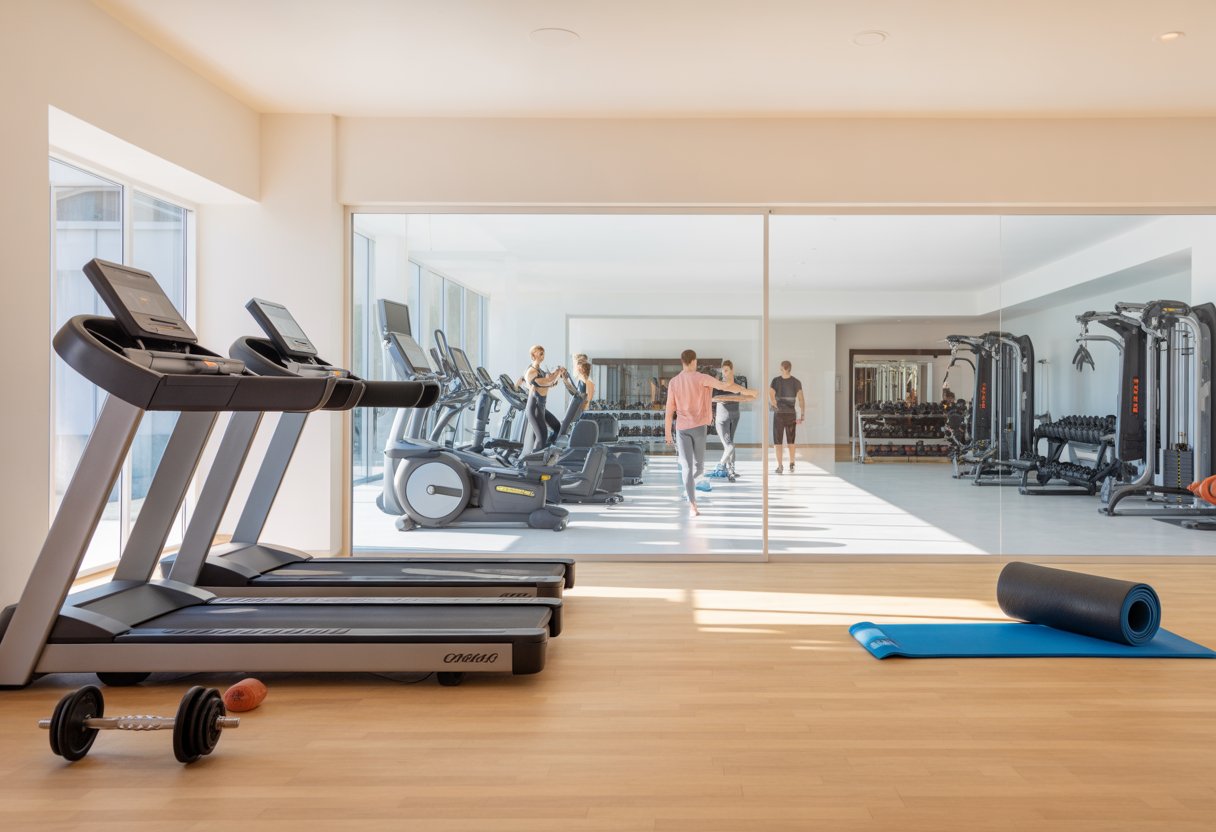
Commercial gyms typically offer amenities that most home setups cannot match. These extras range from relaxation spaces to practical facilities that make workouts more convenient for members with different needs.
Pools, Saunas, and Wellness Spaces
Many commercial gyms provide access to wellness amenities[3] like swimming pools, saunas, steam rooms, and hot tubs. A swimming pool allows members to do low-impact cardio workouts and recover through water therapy. A sauna helps with muscle recovery and relaxation after intense training sessions.
Some facilities also include massage rooms, tanning beds, and stretching areas. These wellness spaces add value beyond basic exercise equipment. Building a sauna or installing a swimming pool at home costs thousands of dollars and requires significant space and maintenance.
Home gym owners miss out on these recovery and relaxation options unless they invest heavily in custom installations. The ongoing costs for heating pools and maintaining saunas make them impractical for most residential setups.
Locker Rooms and Showers
Gym memberships include access to locker room facilities with showers, changing areas, and storage. Members can work out before or after work without going home to clean up. This convenience matters for people with tight schedules or those who commute directly from the gym to other activities.
Locker rooms typically provide:
- Private shower stalls with hot water
- Secure lockers for personal belongings
- Grooming stations with mirrors and outlets
- Towel service at premium facilities
Home gym users need to factor in their own space for storing equipment and must use their existing bathroom facilities. This works fine for people exercising at home with time to shower afterward, but it limits flexibility for those with busy routines.
Childcare and Accessibility
Many gyms offer childcare services where parents can drop off their kids during workouts. This feature removes a major barrier for parents who struggle to find time to exercise. Childcare typically costs extra or comes included with premium memberships.
Commercial facilities also provide wheelchair ramps, elevators, and specialized equipment for people with mobility issues. Staff members receive training to assist members with different physical abilities. Home gyms require owners to purchase their own adaptive equipment and ensure their space meets accessibility needs. Parents working out at home must either exercise when kids are asleep or arrange separate childcare.
Pros and Cons Comparison
Both workout options offer distinct advantages and challenges that affect budget, convenience, and fitness results. Understanding the trade-offs helps people choose the setup that matches their lifestyle and training needs.
Advantages of Home Setups
Home gyms eliminate travel time and membership fees entirely. People can work out at any hour without worrying about gym hours or commuting in bad weather. There’s no waiting for equipment since everything belongs to the owner.
Privacy is a major draw for many users. They can exercise without feeling judged or self-conscious about their form, appearance, or fitness level. Home workouts also offer complete control over the environment, from music selection to temperature settings.
The long-term cost savings are significant. After the initial investment in equipment, there are no recurring monthly charges. A basic setup with dumbbells, a bench, and resistance bands can last for years with minimal maintenance.
Key home gym benefits include:
- 24/7 access without travel
- One-time equipment costs
- Complete privacy
- Customizable workout space
- No membership fees
Membership Benefits
Commercial gyms provide access to a wide variety of specialized equipment that most people cannot afford or fit at home. Members can use cable machines, leg press equipment, rowing machines, and multiple cardio options in one location.
Professional trainers and group fitness classes offer guidance and motivation. These resources help people learn proper form, discover new exercises, and stay accountable to their fitness goals. The social environment creates natural motivation through interaction with other gym-goers.
Many facilities include amenities like pools, saunas, basketball courts, and childcare services. These extras add value beyond basic weight training and cardio equipment. Gym memberships offer access to equipment variety and social interaction[4] that home setups cannot match.
Common Drawbacks
Home gyms face the challenge of limited equipment options. Most people cannot afford or accommodate the full range of machines found in commercial facilities. This restriction may limit exercise variety and progression options over time.
Gym memberships come with ongoing financial commitments. Monthly fees add up to hundreds or thousands of dollars annually. Many facilities also charge initiation fees, cancellation penalties, and extra costs for premium services.
Commercial gyms often involve waiting for equipment during peak hours. This waiting cuts into workout time and disrupts training rhythm. Commute time and parking hassles add additional inconvenience to each gym visit.
Common cons and drawbacks:
- Home: Limited equipment selection and space constraints
- Home: Lacks professional guidance and social motivation
- Membership: Recurring monthly costs and potential contract obligations
- Membership: Crowded conditions and no waiting for equipment during busy times
- Membership: Travel time required for each workout session
Making the Right Decision for You
The choice between home gym vs gym membership depends on individual circumstances, budget constraints, and how someone plans to reach their fitness goals. A person’s daily schedule, workout routine preferences, and long-term commitment level all play a role in determining which option delivers better results.
Evaluating Your Needs and Preferences
A person should start by examining their current fitness goals and how they prefer to exercise. Someone training for strength might need barbells and a squat rack, while another person focused on cardio could get by with minimal equipment.
Schedule flexibility matters significantly. Deciding between a home gym and gym membership[4] involves considering whether someone works irregular hours or travels frequently. Those with unpredictable schedules often benefit from having equipment at home.
Social preferences also factor into the decision. Some people thrive in group fitness classes and enjoy the motivation from other gym-goers. Others prefer privacy and find crowded facilities distracting.
Budget plays a major role too. A person needs to calculate both upfront costs and long-term expenses. Gym memberships typically range from $30 to $100 monthly, while basic home equipment starts around $300 to $500 for essentials.
Checklist for Choosing Your Best Fit
For a Home Gym:
- Available space of at least 50 square feet
- Budget of $500+ for basic equipment
- Self-motivation to work out alone
- Desire for 24/7 access
- Long-term commitment to training
For a Gym Membership:
- Need for equipment variety
- Preference for classes or personal training
- Limited space at home
- Motivation from social environment
- Uncertain about long-term fitness commitment
A person should also consider their workout routine complexity. The home gym versus gym membership decision[3] comes down to which option makes consistent training easier over time. Beginners might benefit from gym staff guidance, while experienced lifters often know exactly what they need.
Adjusting Over Time
Fitness needs change as people progress in their training journey. Someone might start with a gym membership to learn proper form and explore different exercises, then transition to a home setup once they establish a clear workout routine.
For most people, a home gym is the right long-term choice[6] based on personal circumstances and preferences. However, this doesn’t mean the decision is permanent. Many fitness enthusiasts maintain both options, using their home gym for quick daily sessions and visiting commercial gyms for specialized equipment.
A person can start small and expand gradually. Adding one piece of equipment every few months spreads out costs while building a functional space. Others might keep a minimal home setup for busy days while maintaining a gym membership for variety.
Life changes like moving to a new home, changing jobs, or having children often require reassessing the home gym vs gym membership question. The right answer today might not be the best choice in two years.
Frequently Asked Questions
Cost differences shift dramatically based on timeframes, while space requirements and equipment choices depend heavily on individual training goals and living situations.
Which option is more cost-effective over 1, 3, and 5 years when all fees and equipment costs are included?
A gym membership typically costs less in the first year. Budget gyms charge around $10 to $30 per month, totaling $120 to $360 annually. Premium memberships range from $50 to $100 monthly, adding up to $600 to $1,200 per year.
A basic home gym requires $1,000 to $2,000 upfront for essential equipment. This initial investment exceeds what most people pay for a single year of gym access.
The calculation changes at the three-year mark. Budget gym memberships cost $800 to $1,000 over five years[7], while premium options reach $2,500 to $6,000. A home gym with quality equipment remains functional throughout this period without additional fees.
By year five, the home gym becomes more economical for most people. The equipment continues working with minimal maintenance costs. Gym memberships accumulate thousands of dollars in recurring payments with no ownership stake.
How much space is realistically needed to set up a functional training area at home?
A functional home training area requires 50 to 100 square feet minimum. This equals roughly an 8-by-10-foot section of a garage, basement, or spare room.
Strength training setups need more room than cardio equipment. A power rack with barbell requires about 8 feet by 8 feet of floor space, plus clearance for loading plates. Ceiling height matters too, with 8 feet being the minimum for overhead pressing movements.
Compact setups work in smaller spaces. Adjustable dumbbells, a bench, and resistance bands fit in 25 to 50 square feet. Foldable equipment like wall-mounted racks or collapsible benches maximize tight areas.
Dedicated cardio zones need less space than people expect. A treadmill occupies roughly 7 feet by 3 feet. Stationary bikes and rowing machines require similar footprints. These machines often fold or move easily for storage.
What essential equipment provides the best versatility for beginners with a limited budget?
Adjustable dumbbells offer the most versatility for $200 to $400. They replace multiple fixed-weight sets and work for dozens of exercises targeting all major muscle groups.
A flat adjustable bench adds another layer of exercise options for $100 to $200. The combination of dumbbells and a bench enables chest presses, rows, shoulder work, and various arm exercises.
Resistance bands cost $20 to $50 and provide progressive resistance. They work well for warm-ups, assistance work, and travel situations. Pull-up bars install in doorways for $20 to $40 and enable multiple bodyweight movements.
A basic barbell setup with plates costs $300 to $500. This includes a standard Olympic bar, weight plates totaling 200 to 300 pounds, and collars. Adding a squat stand or power rack for $200 to $600 creates a complete strength training station.
Beginners can build an effective setup for under $1,000 total. The equipment handles progressive overload for years as strength increases.
How do workout consistency and motivation typically compare between training at home and training at a facility?
Home gym users report higher workout frequency due to eliminated travel time. The ability to exercise during any 20 to 30-minute window throughout the day removes scheduling barriers. People can take advantage of spontaneous free time[4] rather than skipping sessions entirely.
Commercial gyms provide built-in accountability through social environments. Seeing other people training creates external motivation. Group classes and regular interactions with trainers add structure that some individuals need.
Privacy affects motivation differently for each person. Some people feel self-conscious in public gyms and avoid certain exercises. Others thrive on the energy of a crowded facility during peak hours.
Consistency depends more on personality than location. Self-motivated individuals maintain routines in either setting. People who need external accountability struggle more with home workouts but may benefit from virtual coaching or workout apps.
What are the main hygiene, privacy, and convenience trade-offs between the two options?
Home gyms eliminate shared equipment concerns entirely. Users control cleaning schedules and never touch equipment recently used by strangers. Locker rooms and communal showers become unnecessary.
Commercial gyms expose members to varying hygiene standards. Not everyone wipes down equipment after use. Shared facilities require trust in both other members and cleaning staff.
Privacy at home extends beyond the workout itself[4]. Changing clothes and showering happen in personal spaces without time limits or waiting. There are no concerns about others watching during exercises or judging form.
Convenience favors home setups for time-sensitive schedules. No commute means more actual training time per session. Late-night or early-morning workouts happen without worrying about facility hours.
Commercial gyms win on equipment variety and maintenance. Broken machines get fixed by staff. Members access dozens of specialized tools without purchasing or storing them.
Which choice is better suited for strength training goals versus cardio and group-class focused goals?
Strength training works well in both environments with different advantages. Home gyms provide unlimited access to barbells and racks without waiting for equipment. Commercial facilities offer spotters for heavy lifts[4] and specialized machines for isolation work.
Serious powerlifters and Olympic weightlifters often prefer home setups. They customize equipment selection and avoid peak-hour crowds competing for squat racks. The ability to train with loud music and drop weights appeals to this group.
Cardio goals adapt easily to home environments. A single quality treadmill, bike, or rower provides everything needed for conditioning work. Streaming services offer guided workouts that replicate studio experiences.
Group fitness enthusiasts benefit more from gym memberships. Live classes create energy and accountability that home streaming cannot fully match. Instructors provide real-time form corrections and modifications.
Mixed goals require careful consideration. Someone wanting both strength training and yoga classes might struggle to justify the cost of home equipment plus a studio membership. A commercial gym offering both eliminates this duplication.
Post Views: 2