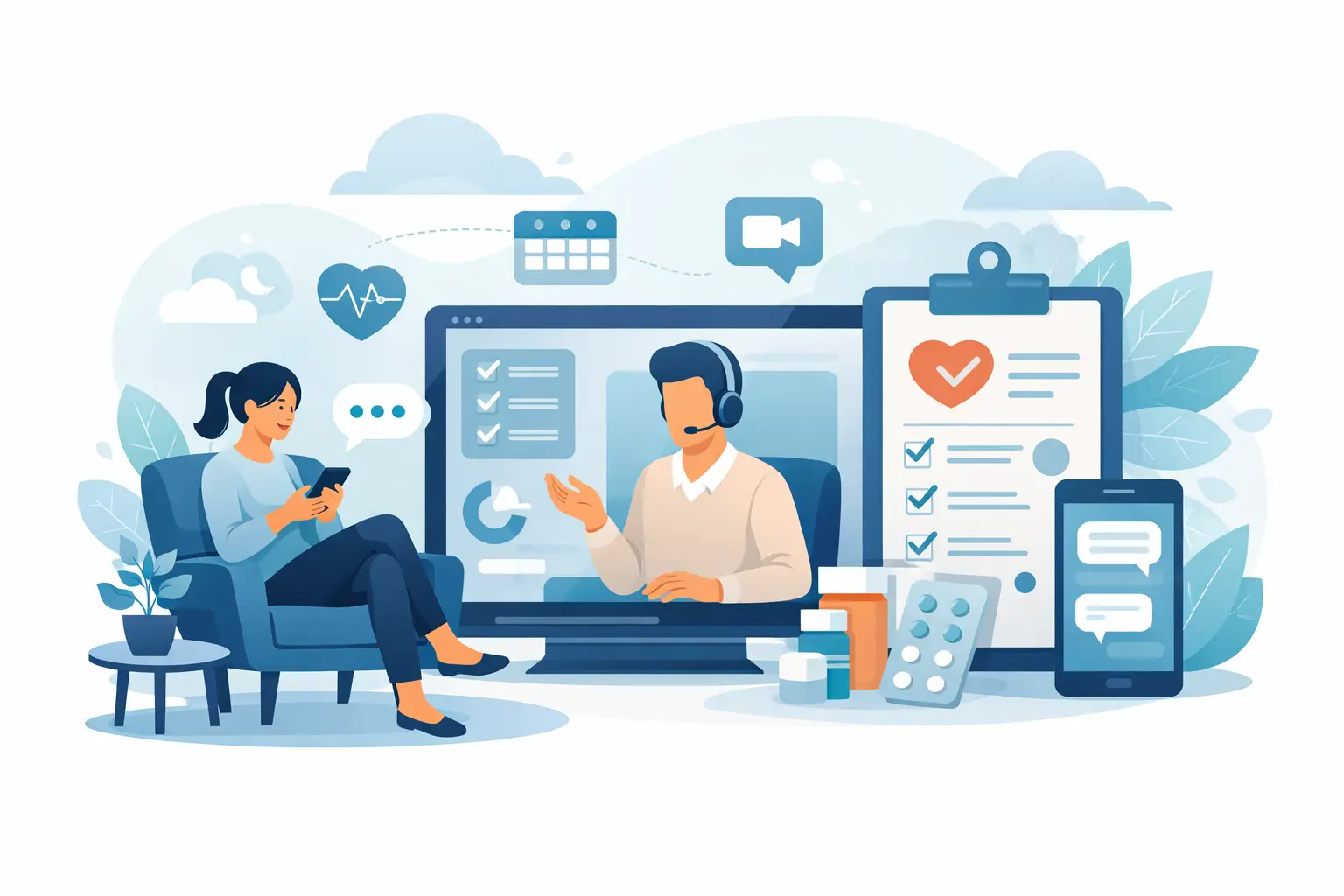
Maybe you have been lying awake at 2 a.m. replaying the same thought loop for hours. Maybe your patience is gone, your sleep is off, or getting through work and family responsibilities feels harder than it should. An online mental health care plan can make support feel more reachable when you need help but do not want the delays, hassle, or exposure that often come with traditional care.
For many adults, the hardest part is not admitting something feels off. It is figuring out what to do next. Calling around for appointments, waiting weeks to be seen, taking time off work, and sitting in a waiting room can all become reasons to put care off. Online treatment changes that. It brings licensed-provider support, personalized treatment, and ongoing communication into a format that fits real life.
Table of Contents
What an online mental health care plan actually includes
A good online mental health care plan is more than a one-time questionnaire or a quick prescription. It should start with a clinical review of your symptoms, health history, and goals. That helps a licensed provider understand whether you are dealing with anxiety, depression, sleep-related issues, emotional stress after a major life event, or a mix of concerns that need a thoughtful approach.
From there, your care plan should feel personalized. For some people, that means evidence-based medication. For others, it means symptom tracking, provider guidance, treatment education, and regular check-ins to see what is improving and what is not. Mental health treatment is rarely one-size-fits-all, and a credible virtual model should reflect that.
Ongoing access matters just as much as the initial assessment. Symptoms change. Side effects can show up. Stress can spike after a breakup, job loss, new baby, or family crisis. A care plan works better when you are not left on your own after the first step. That is why messaging with a licensed provider, clear treatment adjustments, and practical guidance can make such a difference.
Elevate Your Health for Just $29.99/Month
Join the Precision Wellness Subscription at My Healing 365 and get discounted services, priority coaching access, virtual care, and exclusive wellness resources to support your physical, emotional, and hormonal health.
Join for $29.99/MonthWhy people choose online care instead of waiting
Convenience is part of it, but it is not the whole story. Many people choose virtual mental health care because it feels easier to start and easier to stick with. When treatment is private, simple, and built around your schedule, it removes some of the friction that keeps people from getting help.
That matters if you are juggling work deadlines, childcare, commuting, or just the everyday exhaustion that comes with feeling mentally stretched thin. Logging in from home can feel more manageable than organizing an in-person visit. If privacy is a concern, online care can also feel less exposing. You do not have to explain where you are going or sit in a crowded office when you are already overwhelmed.
There is also the speed factor. Traditional systems often move slowly, even when your symptoms do not. If anxiety is getting louder, your mood is dropping, or sleep disruption is starting to affect the rest of your life, waiting several weeks for support can feel like too much. A digital model is appealing because it shortens the gap between realizing you need help and actually beginning treatment.
Who an online mental health care plan may help
Online care can be a strong fit for adults dealing with common but disruptive concerns such as anxiety, depression, stress, sleep problems, and emotional strain tied to major life changes. If your symptoms are affecting your focus, relationships, motivation, or daily routines, a structured online plan may give you a clearer path forward.
It can be especially helpful if you prefer direct communication and practical next steps over complicated medical systems. Some people do better when treatment feels guided and easy to follow. They want to know what is happening, what their options are, and how to reach someone if something changes. Telehealth works well for that.
That said, online care is not identical to every in-person setting. It depends on your symptoms, safety needs, and medical history. If someone is in immediate crisis, having thoughts of self-harm, or dealing with severe psychiatric symptoms that require urgent intervention, emergency or higher-level in-person care may be more appropriate. Good online care should acknowledge that clearly, not pretend virtual treatment fits every situation.
What the process usually looks like
The first step is usually an online intake. You answer questions about how you have been feeling, how long symptoms have been present, what makes them worse, what treatments you have tried before, and whether you have other health conditions or medications to consider. This information helps the provider build a plan that is safer and more relevant to you.
After review, a licensed provider may recommend a treatment approach based on your symptoms. That could include medication if clinically appropriate, along with education about what to expect, how long it may take to notice changes, and what side effects to watch for. Mental health medications are not instant fixes, so clear guidance matters.
The best plans do not stop there. Follow-up is where treatment becomes real. If you are not sleeping better, if your anxiety is still peaking in the afternoon, or if a medication does not feel like the right fit, your care plan should be adjusted. Unlimited messaging or regular digital check-ins can help you stay connected without having to restart the process every time you have a question.
The benefits of a digital-first care model
An online mental health care plan can give you something many people are missing when they first seek treatment: momentum. Instead of spending weeks trying to coordinate care, you can move from symptom recognition to a clinical plan in a much shorter window.
It also gives you more control. You can review treatment guidance at home, send questions when they come up, and stay engaged without reshaping your entire week around an appointment. For adults who are already carrying a lot, that flexibility is not a luxury. It is often the reason treatment feels possible at all.
Another advantage is consistency. Mental health symptoms do not always flare up neatly between office visits. If you have access to treatment guides, ongoing provider communication, and a clear care structure, you are more likely to keep moving forward instead of falling off track after one difficult week.
Affordability matters too. For many people, cost is not a side issue. It is the deciding factor. A lower-friction model with clear pricing can make it easier to begin care before symptoms become harder to manage. When treatment starts at a more accessible price point, more people can take action sooner.
What to look for before you start
Not all online mental health services are built the same. Look for licensed providers, secure communication, individualized treatment plans, and a clear explanation of what is included. If a platform feels vague about who is treating you or how follow-up works, that is worth pausing on.
You should also look for realistic expectations. Credible care does not promise that everything will change overnight. It should explain that improvement can take time and that treatment may need adjustment based on your response. That kind of honesty builds trust.
A strong service also makes it easy to understand next steps. You should know how to get started, what information you will need, whether messaging is available, and how medication decisions are made. Simple does not mean shallow. In healthcare, simple and clear often means better.
Getting support without putting your life on hold
One reason people delay mental health care is the belief that getting help will be complicated. It does not have to be. A well-designed virtual care model can bring together clinical oversight, privacy, convenience, and ongoing support in a way that feels manageable from day one.
That is especially important when life is already heavy. If you are trying to hold it together at work, take care of your family, or just make it through the day without feeling constantly on edge, adding more barriers is the last thing you need. Services like My Healing 365 are built to reduce those barriers so treatment can feel more accessible, more private, and easier to continue.
You do not have to have the perfect words for what you are feeling before you start. You do not need to wait until things get worse, either. If something feels off and it is affecting your daily life, getting support online can be a practical first step toward feeling more steady, more rested, and more like yourself again.

























