
Medically Reviewed
Dr. Jose Rossello, MD, PhD, MHCM
Preventive Medicine & Public Health Specialist
Last Reviewed: May 4, 2026
Starting a workout routine is easy. The hard part is making it last longer than a few weeks. Most people begin with big plans and high energy, but end up quitting when life gets busy or results feel slow.
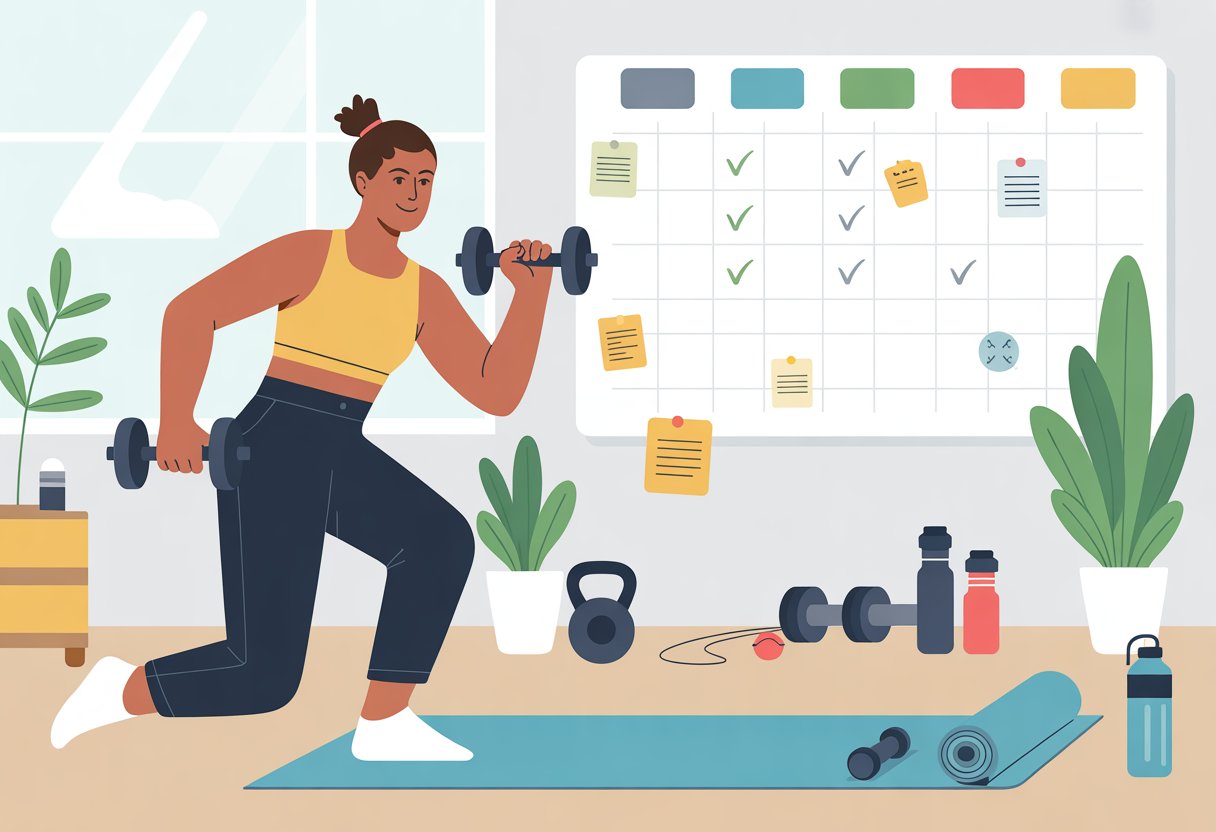
The secret to creating a workout routine that sticks is matching your exercise plan to your real schedule, picking movements you actually enjoy, and building habits gradually instead of trying to change everything at once. Research shows that tying new workout habits to existing daily routines[1] makes them much more likely to become permanent. This approach works better than relying on willpower alone.
Building a fitness routine[2] requires thinking about more than just which exercises to do. Success comes from understanding personal goals, removing obstacles that get in the way, and tracking progress over time. The right approach makes working out feel less like a chore and more like a normal part of the day.
Table of Contents
Key Takeaways
- Match workout plans to available time and personal preferences rather than following generic programs
- Start with simple compound exercises and gradually increase difficulty as strength and consistency improve
- Track workouts and tie exercise sessions to existing daily habits to build lasting routines
Understanding What Makes Fitness Habits Sustainable
Most people struggle with exercise not because they lack motivation, but because they misunderstand how habits form and what their bodies can actually maintain long-term. The difference between a workout routine that lasts and one that fails within weeks comes down to three core factors: realistic expectations, prioritizing consistency, and understanding the science behind habit formation.
Why Most Workout Routines Fail
The primary reason fitness routines collapse is that people start with unrealistic intensity levels. Someone who hasn’t exercised in months decides to work out six days per week at high intensity. Their body isn’t prepared for this demand, leading to exhaustion, soreness, and injury.
Fear of failure often stems from past fitness experiences[3] that started well beyond a person’s initial ability level. When someone pushes too hard too fast, the brain files this away as a negative experience rather than a positive one.
Another common mistake involves choosing exercises based on what seems most effective rather than what feels enjoyable. A person who hates running but forces themselves to jog every morning will inevitably quit. The sustainable workout routine must include movements that don’t feel like punishment.
Environmental factors also play a significant role in exercise adherence. Training in spaces that feel intimidating or unwelcoming creates additional barriers that make skipping workouts easier to justify.
Consistency Versus Intensity
A moderate workout performed three times per week beats an intense workout attempted once. The body adapts through regular exposure to stress, not through occasional extreme sessions.
Someone who exercises for 20 minutes three days per week will see better results over six months than someone who does two-hour sessions sporadically. This happens because consistent training allows the body to recover and adapt progressively.
The workout habit forms through repetition at manageable difficulty levels. When intensity is too high, the body requires longer recovery periods, which disrupts the frequency needed for habit formation. This creates gaps that make it easier to skip the next session.
Starting with bodyweight exercises and mastering proper form before adding weight prevents injury while building confidence. Many people skip this foundation phase and jump straight to heavy resistance or advanced movements, which increases injury risk and decreases long-term adherence.
The Psychology of Habit Formation
Habits form through a three-part loop: cue, routine, and reward. For a fitness routine to stick, each component must be clearly defined and consistently reinforced.
The cue might be laying out workout clothes the night before or exercising at the same time each day. The routine is the actual workout. The reward could be the feeling of accomplishment, increased energy levels, or tracking progress in a journal.
Research shows it takes an average of 66 days for a new behavior to become automatic, though this varies significantly between individuals. During this formation period, the brain is building neural pathways that make the behavior easier to execute without conscious effort.
External accountability strengthens habit formation. Working with a trainer, joining a class, or having a workout partner creates social commitment that makes skipping sessions psychologically harder. These structures provide additional motivation during the critical early weeks when the habit isn’t yet automatic.
Clarifying Your Fitness Goals and Motivation
Understanding why someone wants to exercise and what they hope to achieve makes the difference between a routine that lasts and one that fades after a few weeks. Clear goals tied to personal motivation create a foundation for long-term success.
Defining Your ‘Why’
The reason behind wanting to exercise matters more than the exercise itself. Someone might want to keep up with their kids, manage stress, or feel stronger in daily activities. Others might exercise to improve their health markers like blood pressure or blood sugar.
Writing down specific reasons helps maintain focus when motivation drops. A person who exercises to reduce anxiety has a different driving force than someone who wants to build muscle. Both are valid, but knowing the difference shapes how they approach their routine.
The emotional connection to fitness goals determines how well someone sticks with their plan. When the reason feels meaningful on a personal level, it becomes easier to show up even on difficult days.
Setting Realistic and Measurable Objectives
Vague goals like “get fit” or “lose weight” don’t provide enough direction. Specific targets give someone concrete milestones to track. Instead of “build muscle,” a better goal states “perform 10 pushups without stopping” or “increase leg press weight by 20 pounds in 8 weeks.”
When deciding on fitness goals[4], people should consider their current fitness level and lifestyle. Someone who hasn’t exercised in years shouldn’t aim to run a marathon in two months.
Breaking larger goals into smaller steps makes progress visible. A person working toward building muscle might start with bodyweight exercises before adding weights. Tracking these incremental changes shows improvement and reinforces the habit.
Aligning Goals With Lifestyle
A workout routine only works if it fits into someone’s actual schedule, not an ideal version of their life. Someone who works 12-hour shifts needs a different approach than a person with flexible mornings.
The time available, energy levels throughout the day, and access to equipment all shape what routine makes sense. A parent with young children might need 20-minute home workouts instead of hour-long gym sessions.
Goals should match current life circumstances. If someone travels frequently for work, their fitness goals might focus on bodyweight exercises they can do in hotel rooms. Someone with a consistent schedule can plan more structured gym sessions to build muscle or improve endurance.
Designing Your Personalized Workout Plan
A successful workout routine starts with honest assessment and smart planning. The right workout split and equipment setup can make the difference between a plan that works and one that gets abandoned after two weeks.
Assessing Your Current Fitness Level
Before anyone can create a workout routine that delivers results, they need to know where they’re starting from. A person who can’t do a single push-up shouldn’t follow the same program as someone who can knock out 50.
Testing basic movements reveals fitness gaps. Someone should try a few bodyweight squats, push-ups, and see how long they can hold a plank. If they can walk briskly for 30 minutes without stopping, that’s a baseline for cardio fitness.
Previous injuries matter too. A bad knee or shoulder problem changes which exercises are safe to include. Writing down any pain points or limitations helps avoid setbacks later.
Beginners often need 2-3 days per week to start, while intermediate exercisers can handle 4-5 days. Advanced athletes might train 6 days weekly. Recovery ability is just as important as workout intensity when someone plans to build their workout plan[5].
Choosing a Workout Split
A workout split determines which muscle groups get trained on specific days. Full-body routines work every major muscle 2-3 times per week and suit beginners perfectly.
Upper/lower splits alternate between upper body days and lower body days. This approach fits well for someone training 4 days weekly. Push/pull/legs divides training into pushing movements, pulling movements, and leg work across three separate sessions.
The most effective split depends on schedule and goals. Someone with only 3 days available should stick with full-body sessions. A person who can train 5-6 days might benefit from breaking up muscle groups more.
Rest days aren’t optional. Muscles grow during recovery, not during the workout itself. A solid workout schedule includes at least 1-2 complete rest days per week.
Home Gym and Equipment Considerations
A home gym doesn’t require thousands of dollars in equipment. A set of adjustable dumbbells, a pull-up bar, and resistance bands cover most exercises for building strength.
- Adjustable dumbbells (5-50 lbs)
- Resistance bands (multiple strengths)
- Yoga mat
- Pull-up bar or suspension trainer
Space limitations shape equipment choices. Someone in a small apartment can build an effective exercise routine with items that fit under a bed. A garage or spare room opens up options for a bench, barbell, or squat rack.
Bodyweight training requires zero equipment. Push-ups, squats, lunges, and planks build real strength without any purchases. Many people start here before investing in gear.
The best home setup is one that actually gets used. Buying equipment that collects dust wastes money and space.
Selecting Effective Exercises and Training Methods
The right exercise choices create a foundation for long-term success. Building a routine around multi-joint movements, balanced strength work, and varied training approaches helps prevent plateaus while keeping workouts engaging.
Embracing Compound Movements
Compound exercises work multiple muscle groups at once, making them the most efficient choice for building strength and muscle. These movements include squats, deadlifts, bench press, and overhead press. Each of these exercises engages several joints and large muscle groups simultaneously.
A beginner should focus on mastering proper form before adding heavy weight[6]. This approach builds the movement patterns that allow safe progression over time. Squats develop the legs, glutes, and core. The bench press targets the chest, shoulders, and triceps. Deadlifts strengthen the entire posterior chain from calves to upper back.
Lunges add single-leg work that improves balance and addresses strength imbalances between sides. Starting with 3-4 compound movements per workout covers all major muscle groups. These exercises deliver more results per minute spent training than isolation exercises that target only one muscle at a time.
Elevate Your Health for Just $29.99/Month
Join the Precision Wellness Subscription at My Healing 365 and get discounted services, priority coaching access, virtual care, and exclusive wellness resources to support your physical, emotional, and hormonal health.
Join for $29.99/MonthIntegrating Strength Training and Core Work
Strength training builds the muscle that increases metabolism and protects joints. Most compound exercises already engage the core, but dedicated core exercises enhance stability and performance. The core includes more than just abs—it encompasses all the muscles that stabilize the spine and pelvis.
Planks, dead bugs, and bird dogs strengthen the core without unnecessary spine flexion. These exercises complement the stability demands of squats and deadlifts. A bodyweight circuit works well for those without equipment access. Incline push-ups offer a scaled version of the standard push-up while still building upper body strength.
Training frequency matters less than consistency. Two to three strength sessions per week produces measurable results. Each session should include 2-3 compound movements followed by 1-2 core exercises. Rest periods between sets typically range from 60-180 seconds depending on the exercise intensity and individual recovery needs.
Cross-Training and Variety
Cross-training prevents overuse injuries and keeps motivation high by mixing different types of exercise. Combining strength work with cardiovascular activities like cycling, swimming, or hiking creates a well-rounded fitness base. This variety challenges the body in new ways while giving specific muscle groups time to recover.
Rotating through different movement patterns throughout the week maintains progress. Someone might perform lower body strength work on Monday, upper body on Wednesday, and a conditioning circuit on Friday. The specific split matters less than ensuring adequate recovery between sessions targeting the same muscles.
Changing exercise variations every 4-8 weeks prevents adaptation plateaus. Swapping barbell squats for goblet squats or switching from barbell bench press to dumbbell variations provides fresh stimulus. This rotation keeps the routine effective without requiring a complete overhaul of the program structure.
Structuring Your Sessions for Progress
The right combination of sets, reps, and rest periods determines whether a workout builds strength, muscle, or endurance. Adding progressive overload and periodization ensures continued progress over time.
Determining Sets, Reps, and Rep Ranges
Different rep ranges create different adaptations in the body. Training for strength requires 3-6 reps per set with heavier weights. This approach maximizes neural efficiency and builds raw power.
Muscle growth happens best in the 6-12 rep range with moderate weights. This creates enough mechanical tension and metabolic stress to trigger hypertrophy. Most people seeking visible muscle development should prioritize this range.
Muscular endurance develops with 15-20+ reps per set using lighter weights. This improves the muscles’ ability to perform repeated contractions without fatigue.
For total sets per muscle group, research shows 10-20 hard sets per week delivers optimal results. A hard set means training within 1-3 reps of failure. Beginners should start at the lower end while advanced trainees can handle higher volumes.
Optimal Rest Between Sets
Rest periods directly impact training quality and adaptations. Strength training demands 2-5 minutes between sets. This allows the nervous system to fully recover for maximum force production.
Hypertrophy training works well with 60-90 seconds of rest. This balances recovery with metabolic stress. Shorter rest can still build muscle but may reduce the total volume completed.
Endurance-focused training uses 30-60 seconds between sets. The brief recovery maintains elevated heart rate and challenges muscular stamina.
These guidelines apply to compound movements. Isolation exercises can use shorter rest periods across all goals.
Progressive Overload and Periodization
Progressive overload means gradually increasing training demands over time. Without it, the body has no reason to adapt. Adding weight to the bar is the most straightforward method. Even small increases of 2-5 pounds matter.
Increasing reps within a target range also works. If someone performs 8 reps one week, they might aim for 9 the next. Adding sets or reducing rest periods creates overload too.
Periodization involves planned variation in a training program[7]. It prevents plateaus and reduces injury risk. A simple approach uses 4-week blocks with a deload week every fourth or fifth week. During deload, volume and intensity drop by 40-50% to allow full recovery.
Linear periodization starts with higher reps and lighter weights, then progresses to lower reps and heavier weights. Undulating periodization varies intensity within the same week. Both approaches work when applied consistently.
Establishing a Workout Schedule That Fits Your Life
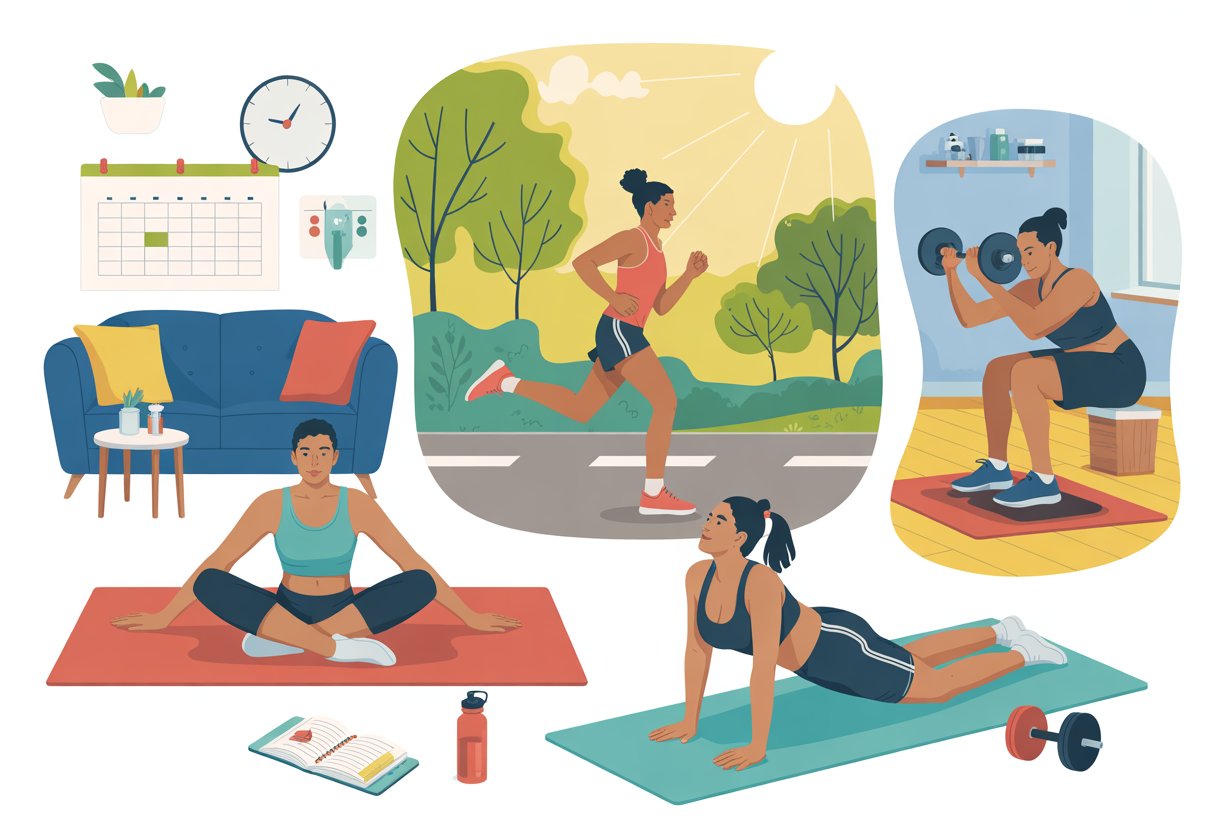
A workout schedule needs to match real-world commitments and energy patterns. The right timing, proper rest, and built-in flexibility help people maintain a consistent workout routine without burning out or skipping sessions.
Choosing Consistent Training Times
Selecting the same time slot each day helps build a consistent workout[8] habit. The body adapts to regular exercise patterns and begins preparing for activity at expected times.
Morning workouts offer several advantages for consistency. They happen before daily responsibilities pile up and require willpower. People who exercise in the morning face fewer scheduling conflicts than those who wait until evening.
Evening sessions work better for individuals who aren’t alert early or have family obligations before work. The key is picking a time that aligns with natural energy levels and sticking with it. Someone who struggles to wake up at 5 AM won’t maintain morning workouts long-term.
Block out specific calendar times for exercise just like important meetings. This prevents other commitments from taking over workout slots. Most people need at least 20 to 30 minutes per session, though even 10-minute workouts provide benefits when time is limited.
Planning Rest Days and Active Recovery
Rest days prevent injury and allow muscles to repair and grow stronger. Every workout routine needs rest[8] between training sessions.
Each muscle group requires one to three days of recovery for optimal results. Someone training full body twice per week needs different rest patterns than someone doing split routines four days weekly. High-intensity workouts demand more recovery time than moderate sessions.
Active recovery involves light movement on rest days rather than complete inactivity. Walking, gentle yoga, or easy cycling promotes blood flow without straining muscles. This approach helps reduce soreness and maintains workout consistency without overtraining.
Schedule at least one full rest day each week with no structured exercise. Athletes training heavily may need two rest days. Listen to persistent fatigue, decreased performance, or unusual soreness as signs that more recovery time is necessary.
Flexible Adaptation to Life’s Demands
A rigid schedule breaks down when unexpected events occur. Build backup options into the weekly plan to maintain momentum during disruptions.
Keep shorter workout alternatives ready for busy days. A 15-minute bodyweight routine can replace a 45-minute gym session when time gets tight. This prevents the all-or-nothing thinking that derails consistency.
Shift workout days around responsibilities rather than skipping them entirely. If something conflicts with Tuesday’s session, move it to Wednesday instead of losing the workout. The total weekly volume matters more than hitting exact days.
Strategies for schedule flexibility:
- Identify 2-3 possible workout times each day
- Prepare home workout options when the gym isn’t accessible
- Accept that some weeks will look different than others
- Track weekly totals rather than daily completion
Travel, illness, and family obligations will interrupt any plan. People who adapt their routines to circumstances stay active longer than those who quit when perfect conditions disappear. A consistent workout routine means showing up regularly over months and years, not following an inflexible schedule.
Building Accountability and Tracking Progress

A written record of workouts and support from others helps people maintain their exercise routine over time. These two elements work together to create external motivation when willpower alone falls short.
Utilizing a Training Log
A training log serves three main purposes: recording what someone has done, preventing errors during workouts, and helping plan future sessions. The most effective workout tracking system[9] takes less than 60 seconds to set up before each session.
The basic format includes the date, exercise name, weight used, sets, and repetitions. Writing out the complete workout plan before starting removes the need to think between exercises. This makes the actual workout more automatic and efficient.
Tally marks next to each set help people remember their place in the routine. When breathing gets heavy during difficult exercises, these marks prevent confusion about which set just finished. The person can glance at their log and immediately know what comes next.
Tracking workouts provides accountability[10] and shows how someone progresses toward their goals. A notebook works well because recent workouts stay just one or two pages away. This makes it easy to add five more pounds or an extra set based on last week’s numbers.
Incorporating Social Support
Accountability partnerships increase workout adherence by 2.4 times compared to training alone. A partner expects someone to show up, which creates external pressure that motivation cannot always provide.
The most effective accountability comes from scheduling workouts like important meetings. This approach has an 87 percent success rate because it treats exercise as non-negotiable.
Partners can meet in person at the gym or check in remotely through texts or apps. The key is regular contact where both people report their completed workouts. This simple exchange makes skipping sessions harder because it means admitting the miss to someone else.
Celebrating Milestones
Small wins throughout a fitness journey reinforce the habit of working out. These celebrations should connect directly to the training log data rather than arbitrary dates.
Meaningful milestones include:
- Adding weight to a core exercise
- Completing an extra set without form breakdown
- Maintaining consistency for four consecutive weeks
- Reaching a specific repetition target
Recognition does not require rewards or treats. Simply noting the achievement in the training log with a star or exclamation mark provides enough positive reinforcement. The person can flip back through their notebook and see concrete evidence of improvement over weeks and months.
Reducing Barriers and Avoiding Burnout
Making exercise easier to start and sustain requires removing obstacles that prevent consistency. When people overcome common barriers to fitness[11], they create sustainable routines that don’t lead to exhaustion.
Simplifying Workout Decision-Making
Decision fatigue drains mental energy before a person even begins exercising. Planning workouts in advance eliminates the need to choose what to do each day.
A simple weekly template removes guesswork. Monday could always be upper body strength training, Wednesday could be lower body work, and Friday could be cardio. This pattern repeats without requiring fresh decisions.
Basic Weekly Structure:
- Monday: Upper body strength
- Tuesday: Rest or light activity
- Wednesday: Lower body strength
- Thursday: Rest or light activity
- Friday: Cardio
- Weekend: Flexibility work or active recovery
Laying out workout clothes the night before reduces morning decisions. Keeping sneakers in the car or at the office makes it harder to skip sessions. These small preparations remove mental roadblocks that stop people from starting.
Managing Decision Fatigue
Decision fatigue accumulates throughout the day as people make countless choices. Exercisers who work out in the morning face fewer decisions and experience better consistency.
Creating non-negotiable time slots treats exercise like an appointment. Blocking specific times on a calendar reduces the daily question of when to work out. The decision becomes automatic rather than optional.
Selecting activities that require minimal equipment also helps. Walking, bodyweight exercises, and simple routines need less planning than complex programs. A person can choose three to five exercises and rotate them without constant variation.
Meal planning supports this approach too. Preparing post-workout meals in advance eliminates one more choice from an already busy day.
Preventing Overtraining
Recognizing signs of exercise burnout[12] prevents long-term setbacks. Rest days are essential components of any effective routine, not optional additions.
Physical warning signs include persistent muscle soreness lasting more than 72 hours, elevated resting heart rate, and decreased performance. Mental symptoms include dreading workouts, irritability, and disrupted sleep patterns.
Rest and Recovery Guidelines:
- Schedule at least one complete rest day per week
- Alternate hard training days with easier sessions
- Take a full recovery week every 8-12 weeks
- Listen to unusual fatigue or pain signals
Active recovery activities like walking, gentle yoga, or swimming keep the body moving without adding stress. These lighter sessions promote blood flow and healing without requiring intense effort.
Varying workout intensity throughout the week prevents constant strain. Not every session needs maximum effort. Mixing moderate and vigorous activities creates sustainable patterns that last months and years rather than weeks.
Maintaining Motivation for Long-Term Success
Fitness plateaus require strategic adjustments to keep progress moving forward, while understanding different types of motivation helps exercisers stay committed when initial excitement fades.
Adjusting Your Routine for Plateaus
Progress typically slows after the first few months of any exercise program. The body adapts to repeated movements and workload patterns, making the same exercises less challenging over time.
When progress stalls, exercisers should modify at least one training variable. Increasing weight or resistance provides new stimulus for strength gains. Changing the number of sets or repetitions challenges muscles differently. Switching exercise order or trying new movements engages muscles from different angles.
Adding variety prevents both physical and mental stagnation. Someone who runs three times per week might replace one session with swimming or cycling. A weightlifter could swap barbell exercises for dumbbells or resistance bands.
Tracking specific metrics reveals when plateaus occur. Recording workout details like weights lifted, distances covered, or times completed shows whether improvements have stopped. Most people who drop out of exercise programs do so within the first six months[13], making plateau management critical for building a sustainable workout routine.
Reward Systems and Intrinsic Motivation
External rewards work well initially but internal motivation sustains long-term habits. Creating a sustainable workout routine requires both approaches at different stages.
Non-food rewards reinforce positive behavior patterns. Exercisers might treat themselves to new workout gear after completing a month of consistent training. A massage, movie, or extra time for a favorite hobby serves as effective motivation for reaching milestones.
Intrinsic motivation develops gradually as people notice improvements in energy, mood, and physical capabilities. They begin exercising because it feels good rather than for external outcomes. This shift typically happens after several months of regular activity.
Keeping detailed records helps exercisers recognize progress that might otherwise go unnoticed. Photos, workout logs, and performance metrics provide tangible evidence of improvement. Building connections with other fitness enthusiasts creates accountability and makes workouts more enjoyable.
Adapting Your Routine As You Grow
A workout routine needs regular updates to match changing fitness levels and life circumstances. Progress happens through small, planned increases in difficulty, while variety keeps motivation high over months and years.
When and How to Progress
The body adapts to exercise within 4-6 weeks, making progression essential to continue seeing results. Adding weight, reps, or workout frequency signals the body to keep building strength and endurance.
Progressive overload methods include:
- Adding 5-10 pounds to strength exercises when completing all sets feels manageable
- Increasing reps by 2-3 once current targets become easy
- Reducing rest time between sets by 15-30 seconds
- Adding one extra set to existing exercises
A person should progress only one variable at a time to avoid injury. If someone completes three sets of 10 push-ups comfortably for two consecutive workouts, they might aim for three sets of 12 before adding weight or difficulty.
Age also affects how someone should build a workout routine. Adapting exercise routines as the body ages[14] means focusing more on balance, flexibility, and recovery time rather than just intensity.
Refreshing Your Workout Habit
Boredom kills consistency faster than difficulty does. Switching exercises every 8-12 weeks prevents mental fatigue while challenging muscles in new ways.
- Swap barbells for dumbbells or resistance bands
- Try a different cardio activity like swimming instead of running
- Change workout times from morning to evening
- Join a class or find a workout partner
- Rearrange exercise order within the same routine
Someone doesn’t need to abandon their entire program. Changing just 2-3 exercises or the training environment can reignite interest. A person who always lifts weights might add one day of yoga or hiking to break up the week while maintaining their strength goals.
Frequently Asked Questions
Building a workout plan raises common questions about timing, injury prevention, motivation, and adapting routines to different needs and environments. These answers provide practical guidance for creating an exercise routine that works long-term.
How do I build a weekly workout plan that fits my schedule and goals?
A good weekly workout plan starts with setting SMART fitness goals[7] that are specific, measurable, attainable, relevant, and time-based. The person should write down their goals and map out a plan that includes when they’ll exercise each week.
Most beginners benefit from 30-minute workouts three to five times per week. They should put these workouts on their calendar like any other appointment.
The plan needs to include both aerobic exercise and strength training. Adults should aim for 150 minutes of moderate-intensity aerobic activity or 75 minutes of vigorous activity each week, plus two muscle-strengthening sessions.
Someone training for a specific goal adjusts their plan accordingly. A person preparing for a race would include more running days, while someone focused on building muscle would schedule additional strength sessions.
What’s the best way to start exercising again after a long break without getting injured?
Starting slowly is the most important step when returning to exercise after time off. Beginners or people getting back into fitness should start with 15 minutes of daily exercise and gradually work up to 30 minutes.
The body needs time to adjust to increased activity. New exercisers can see results with just 50 percent effort at first. They can steadily increase exercise effort, frequency, and duration as they build consistency.
Stretching before and after workouts[7] helps prevent injury and keeps joints healthy. Active or dynamic stretches work best before exercising, while passive or static stretches are better after workouts.
Anyone with chronic health conditions should check with their doctor before starting a new exercise program. This conversation helps identify any precautions needed for safe exercise.
How can I stay consistent with workouts when motivation is low?
It takes around 60 days for a new behavior to become a habit. Exercising at the same time each day helps establish a routine that becomes automatic over time.
Finding enjoyable activities makes a huge difference in staying consistent. People should try different workout formats like group classes, personal training sessions, or workout apps to discover what they like best.
Tracking progress in a fitness journal or app keeps people motivated. Small victories like walking five minutes longer or lifting three pounds more show that the plan is working.
Rest days are essential and should include light activity like walking for at least 30 minutes. Active recovery prevents burnout while keeping the body moving.
What strategies help people with ADHD follow through on an exercise plan?
People with ADHD often benefit from variety in their workout routines. Mixing up exercises challenges the body and prevents boredom, which helps maintain focus and interest.
Scheduled workouts at consistent times create structure that supports follow-through. Putting exercise sessions on a calendar as non-negotiable appointments makes them harder to skip.
Group classes or working out with a partner adds external accountability. The social component and scheduled nature of classes help people with ADHD show up regularly.
Shorter, more frequent workouts may work better than longer sessions. Breaking exercise into 15 or 20-minute blocks makes the commitment feel more manageable and easier to start.
How can I create an effective home workout routine with minimal equipment?
Body-weight exercises provide an effective way to build strength without equipment. Push-ups, planks, squats, lunges, and bear crawls target all major muscle groups.
People should aim for a set of 8 to 12 repetitions of each exercise, take a short rest, and then complete another set. Proper form matters more than the number of reps or amount of weight.
A home routine should include both strength training and cardio. Someone can do body-weight strength exercises on some days and activities like dancing or brisk walking on other days.
Balance and flexibility work completes a well-rounded home program. Yoga, Pilates, or tai chi practiced two to three times weekly improves mobility without requiring equipment.
What are some low-impact or non-strenuous exercises I can do while building fitness?
Walking briskly at around 2.5 miles per hour counts as moderate-intensity aerobic exercise. It’s accessible for most people and can be done almost anywhere.
Water aerobics provides a full-body workout with minimal stress on joints. The water supports body weight while creating resistance for muscle strengthening.
Riding a bike, whether outdoors or on a stationary bike, offers good cardio without high impact. Beginners can start with flat terrain and short distances.
Activities like doubles tennis, pickleball, and dancing combine social interaction with moderate exercise. These options feel less like traditional workouts, which helps some people stick with them longer.
Post Views: 4
References
- How to Build an Exercise Routine That Actually Sticks. https://www.touchcare.com/build-a-routine/ Accessed May 5, 2026
- How to Build a Workout Routine: 12 Expert-Backed Tips. https://www.onepeloton.com/blog/build-a-fitness-routine Accessed May 5, 2026
- How to Build a Sustainable Workout Routine: 10 Tips That Will Help You Exercise Consistently . https://www.self.com/story/fitness-resistance-building-sustainable-workout-program Accessed May 5, 2026
- How to Define SMART Fitness Goals and Stick to Achievable Routines. https://www.crunch.com/thehub/how-to-define-smart-fitness-goals-and-stick-to-achievable-routines/ Accessed May 5, 2026
- How To Build Your Own Workout Routine (Plans & Exercises). https://www.nerdfitness.com/blog/how-to-build-your-own-workout-routine/ Accessed May 5, 2026
- A Guide to Training Exercise Selection. https://rippedbody.com/exercise-selection/ Accessed May 5, 2026
- Access to this page has been denied. https://www.goodrx.com/well-being/movement-exercise/exercise-plan Accessed May 5, 2026
- consistent workout. https://www.verywellfit.com/how-to-create-a-home-workout-routine-you-ll-actually-stick-to-6751771 Accessed May 5, 2026
- Hacking the Workout Journal: How to Track Your Workouts. https://jamesclear.com/workout-journal Accessed May 5, 2026
- Just a moment…. https://fitbod.me/blog/best-way-to-track-workouts/ Accessed May 5, 2026
- Breaking Down Barriers to Fitness. https://www.heart.org/en/healthy-living/fitness/getting-active/breaking-down-barriers-to-fitness Accessed May 5, 2026
- Ways To Avoid Exercise Burnout. https://www.adidas.com/us/blog/991670-ways-to-avoid-exercise-burnout Accessed May 5, 2026
- Sticking to an Exercise Program: 25 Tips to Achieve Exercise Success. https://www.acefitness.org/resources/everyone/blog/8704/sticking-to-an-exercise-program-25-tips-to-achieve-exercise-success/ Accessed May 5, 2026
- How to Adapt Your Exercise Routine as You Age for Lifelong Strength an
– Young Again. https://youngagain.com/blogs/blog/how-to-adapt-your-exercise-routine-as-you-age-for-lifelong-strength-and-mobility Accessed May 5, 2026

























