Medically Reviewed
Dr. Jose Rossello, MD, PhD, MHCM
Preventive Medicine & Public Health Specialist
Last Reviewed: March 24, 2026
Getting clearer skin in just one week is possible with the right approach and consistent effort. While dramatic transformations take time, noticeable improvements can happen quickly when following a targeted routine. Many people see real changes within days by making simple adjustments to their daily habits.

A focused 7-day skincare routine[1] combines proper cleansing, hydration, gentle exfoliation, and protective measures to help skin look brighter and feel smoother. The key is understanding what the skin needs and giving it consistent care. Each day builds on the previous one to create visible results.
Success comes from choosing the right products for specific skin types and sticking to proven methods. Small changes in diet, sleep, and sun protection also play important roles. Following a structured plan makes it easier to track progress and stay motivated throughout the week.
Table of Contents
Key Takeaways
- Clear skin requires a consistent daily routine that includes cleansing, moisturizing, and sun protection
- Understanding individual skin type helps choose the most effective products and treatments
- Lifestyle factors like hydration, diet, and sleep quality directly impact skin appearance and health
Understanding Your Skin Type
Knowing your skin type helps you choose the right products and create a routine that works. Each skin type has different needs and responds differently to various ingredients and treatments.
Identifying Oily, Dry, Combination, and Sensitive Skin
Oily skin produces excess sebum, which makes the face look shiny or greasy a few hours after washing. People with oily skin often have larger, more visible pores and tend to get more breakouts.
Dry skin feels tight and rough, especially after washing. It may show flaky patches or small cracks. This skin type often looks dull and can feel uncomfortable without moisturizer.
Combination skin shows oily areas in the T-zone (forehead, nose, and chin) while the cheeks remain normal or dry. The oil production varies across different parts of the face.
Sensitive skin reacts easily to products, weather, or stress. It becomes red, itchy, or irritated when exposed to certain ingredients. People with sensitive skin may experience burning or stinging when applying new products.
How Skin Type Affects Your Skincare Choices
Different skin types need different product formulations to stay balanced and healthy. Oily skin benefits from oil-free, noncomedogenic products[2] that won’t clog pores or add extra grease.
Dry skin requires richer moisturizers with ingredients like hyaluronic acid or ceramides. These help the skin hold onto water and repair its protective barrier.
Combination skin works best with a targeted approach. Apply lighter products to oily areas and richer formulas to dry patches.
Sensitive skin needs gentle, fragrance-free products with minimal ingredients. Harsh chemicals or strong active ingredients can trigger reactions and worsen existing issues.
Adjusting Routines for Individual Needs
A daily skincare routine should match your specific skin type and concerns. Someone with oily skin might wash their face twice per day with a mild cleanser, while dry skin may only need one gentle cleanse at night.
People with combination skin can use different products on different zones. Apply mattifying products to the T-zone and hydrating formulas to the cheeks.
The time of year also matters. Many people notice their skin becomes drier in winter and oilier in summer. Adjust product thickness and ingredients based on seasonal changes.
Testing new products on a small area first helps avoid widespread reactions. This step is especially important for sensitive skin types that react easily to new ingredients.
Essential Skincare Routine for Seven Days
A consistent cleansing, toning, and moisturizing routine[3] forms the foundation for achieving clear skin within one week. The key lies in selecting products matched to skin type and applying them at the right times each day.
Daily Cleansing and Moisturizing Basics
Every person needs to start by identifying their skin type before choosing products. Dry skin feels tight and flaky. Oily skin shows shine on the forehead, nose, and chin. Combination skin has both oily and dry areas.
A gentle cleanser removes dirt and oil without stripping the skin. People with sensitive skin should look for mild cleansers without harsh chemicals or fragrances. Those with oily skin can use gel-based formulas, while dry skin types benefit from cream cleansers.
After cleansing, applying a moisturizer keeps skin hydrated. Even oily skin needs moisture. Light, oil-free formulas work well for oily skin types. Richer creams suit dry skin better.
Proper hydration through drinking water[4] helps improve skin appearance from the inside. Drinking more than 2 liters daily has been shown to hydrate skin and improve its overall health.
Optimizing Steps for Morning and Night
Morning routines prepare skin for the day ahead. This includes cleansing, applying toner, moisturizing, and using sunscreen with at least SPF 30. Sunscreen protects against damage that can slow progress toward spotless skin.
Night routines allow skin to repair itself. The evening daily skincare routine should include removing makeup, cleansing thoroughly, applying toner, and using a night moisturizer. Nighttime products can contain stronger ingredients since sun exposure is not a concern.
People should avoid washing their face more than twice daily. Over-cleansing strips natural oils and can actually increase oil production. The skin needs its natural barrier to stay healthy.
Building Consistency for Visible Results
Following the same steps every morning and evening trains the skin to respond predictably. Skipping even one day can slow progress toward clear skin within the seven-day timeline.
Setting specific times for skincare creates a habit. Many people find success by linking their routine to existing habits like brushing teeth. Keeping products visible on the bathroom counter serves as a reminder.
Results become noticeable around day three or four for most people. The skin starts looking fresher and more even. By day seven, consistent application of a mild cleanser and moisturizer produces visible improvements in texture and tone.
Effective Cleansing for Clearer Skin
Proper cleansing removes dirt, oil, and bacteria that clog pores and cause breakouts. The type of cleanser used and how it’s applied can make a significant difference in skin clarity within days.
Choosing the Right Cleanser
A mild cleanser works best for most skin types because harsh products strip away natural oils and damage the skin barrier. When the skin barrier gets damaged, it triggers excess oil production that leads to more breakouts.
Oil-free and noncomedogenic formulas prevent pores from getting clogged. These products are designed to clean the skin without leaving behind ingredients that block pores or cause irritation.
People with oily skin should look for cleansers containing salicylic acid, which dissolves dead skin cells before they can clog pores. Those with sensitive or dry skin need an extra gentle cleanser[2] with minimal ingredients and no added fragrances.
The cleanser should not leave skin feeling tight or dry after washing. This tight feeling means the product is too harsh and will cause the skin to produce more oil to compensate.
Proper Cleansing Techniques
Washing the face twice daily removes accumulated dirt and oil without overdoing it. More than two washes per day dries out the skin and causes increased oil production.
Apply the cleanser using fingertips in gentle circular motions. Scrubbing or using rough cloths irritates the skin and worsens acne. The product should sit on the skin for 30 to 60 seconds to work effectively.
Rinse with warm water using only fingertips to remove all traces of cleanser. Hot water damages the skin barrier, while cold water doesn’t remove oil effectively. Pat the face dry with a clean towel instead of rubbing, which can irritate active breakouts.
Power of Hydration and Moisturizing
Proper hydration works from both inside the body and outside on the skin’s surface to create a clearer complexion. The right ingredients can lock in moisture and strengthen the skin’s protective barrier.
Importance of Hydrating Inside and Out
Drinking adequate water[5] helps maintain skin moisture and promotes elasticity. Women should aim for 2.7 liters daily while men need 3.7 liters according to recommended guidelines.
However, water alone isn’t enough. Studies show that while increased water intake can improve skin hydration in the uppermost layer, it doesn’t necessarily improve the skin barrier function that prevents moisture loss.
This is where topical products become essential. The skin needs both water and oil to stay balanced[6]. Applying moisturizer within minutes after cleansing traps water in the skin before it evaporates.
People should look for products that contain humectants to draw water into the skin and occlusives to seal it in. Using a humidifier at home also helps keep skin hydrated, especially in dry climates or during winter months.
Selecting Hydrating Ingredients
Hyaluronic acid stands out as one of the most effective hydrating ingredients. This humectant attracts moisture to the skin and can hold up to 1,000 times its weight in water.
Glycerin works similarly to pull water into the skin’s outer layers. Both hyaluronic acid and glycerin[7] appear in lightweight formulas that feel comfortable on the skin.
Ceramides repair the skin barrier to prevent moisture from escaping. These lipids soften rough texture and protect against irritants that can trigger breakouts.
Squalane mimics the skin’s natural oils without clogging pores. Other beneficial ingredients include:
- Shea butter
- Niacinamide
- Peptides
People should avoid products with alcohol, fragrances, and harsh exfoliants that strip away natural oils. The best moisturizer matches the skin’s needs—lighter lotions for oily skin and richer creams for dry skin.
Smart Exfoliation Strategies
Dead skin cells build up on the surface and make skin look dull while clogging pores. Both chemical and physical methods can remove this layer, but they work in different ways and suit different skin needs.
Chemical Exfoliants: AHAs, BHAs, and More
Chemical exfoliants use acids to break down the bonds between dead skin cells without scrubbing. AHAs like glycolic acid and lactic acid work on the skin’s surface to brighten and improve skin texture. Lactic acid is gentler than glycolic acid, making it better for sensitive skin types.
BHAs, particularly salicylic acid, go deeper into pores because they’re oil-soluble. This makes them effective to prevent clogged pores[2] and treat acne. People with oily or acne-prone skin often see better results with BHAs.
For normal or combination skin, using a chemical exfoliant two times per week works well. Those with oily skin can exfoliate up to four times weekly. Sensitive skin needs a lighter approach with low-percentage glycolic acid once per week.
Apply chemical exfoliants at night since they can make skin more sensitive to sun damage. Always follow with moisturizer and wear SPF 30 or higher during the day.
Physical vs. Chemical Exfoliation
Physical exfoliation uses tools or scrubs to manually remove dead cells from the skin. Sugar scrubs and rice enzyme powders offer gentler options than harsh beads. However, dermatologists generally recommend chemical exfoliation[8] over physical methods.
Physical exfoliants can create small tears in the skin that lead to inflammation and infection. Chemical exfoliants provide more controlled and even results without the risk of over-scrubbing.
That said, physical exfoliation works for some people when done correctly. Light circular motions with minimal pressure prevent damage. The key is treating skin gently rather than aggressively rubbing.
People using retinol products don’t need to add extra exfoliation since retinol already increases cell turnover. Combining multiple exfoliating methods often causes redness, peeling, and irritation rather than clearer skin.
Targeted Treatments for Acne and Blemishes
Specific active ingredients can address breakouts quickly when applied directly to problem areas. Benzoyl peroxide and salicylic acid work through different mechanisms to reduce acne, while spot treatments deliver concentrated doses of these ingredients exactly where they’re needed.
Using Benzoyl Peroxide and Salicylic Acid
Benzoyl peroxide kills acne-causing bacteria beneath the skin’s surface. It works by releasing oxygen into pores, which creates an environment where bacteria cannot survive. This ingredient is available in concentrations ranging from 2.5% to 10%.
Salicylic acid functions differently by dissolving the bonds between dead skin cells. This allows the cells to shed more easily and prevents them from clogging pores. It also reduces inflammation and redness associated with breakouts.
For best results with these ingredients:
- Start with lower concentrations to test skin tolerance
- Apply benzoyl peroxide in the morning
- Use salicylic acid at night
- Always follow with moisturizer since both can cause dryness
Dermatologists recommend combining salicylic acid and benzoyl peroxide[9] for cystic acne treatment. The two-pronged approach targets both bacterial growth and pore blockages simultaneously.
Spot Treatments and Active Ingredients
Spot treatments for acne[10] contain higher concentrations of active ingredients than regular cleansers. They should be applied as soon as a pimple starts forming to keep it small and contained.
The most effective spot treatments include sulfur powder, succinic acid, or hyaluronic acid alongside traditional acne-fighting ingredients. Sulfur absorbs excess oil while reducing inflammation. Succinic acid offers antibacterial properties without the harsh drying effects of benzoyl peroxide.
People should apply spot treatments after cleansing but before moisturizing. A thin layer directly on the blemish is sufficient. Using too much product or applying it to surrounding skin increases the risk of irritation without improving results.
Topical retinoids can also serve as targeted treatments by increasing cell turnover and preventing new clogs from forming. These work well for both active breakouts and preventing future acne.
Brightening and Evening Skin Tone
Targeted ingredients can reduce dark spots and create a more uniform complexion. The right combination of active ingredients works to fade hyperpigmentation while preventing new discoloration from forming.
Harnessing the Power of Vitamin C and Niacinamide
Vitamin C stands out as one of the most effective brightening ingredients available. It works by inhibiting melanin production and protecting skin from environmental damage that causes dark spots. A person should apply vitamin C serum in the morning after cleansing and before moisturizer.
The ingredient comes in different forms, with L-ascorbic acid being the most potent. Serums with 10-20% concentration deliver the best results. Users should store vitamin C products in dark bottles away from light and heat to maintain their effectiveness.
Niacinamide offers a gentler approach to brightening. This form of vitamin B3 reduces inflammation and helps fade existing dark spots. It works well with most other ingredients and suits all skin types, including sensitive skin.
People can use products with 5-10% niacinamide twice daily. The ingredient also strengthens the skin barrier and reduces redness. Unlike some brightening agents, niacinamide doesn’t increase sun sensitivity.
Combating Pigmentation Effectively
Dark spots form when skin produces excess melanin in specific areas. Products with skin-brightening ingredients[4] like kojic acid and azelaic acid can help fade these spots over time.
Consistent sun protection remains the most important step in preventing new pigmentation. UV exposure triggers melanin production and darkens existing spots. A person must apply SPF 30 or higher every morning and reapply every two hours when outdoors.
Chemical exfoliants containing AHAs help remove pigmented skin cells faster. Lactic acid and mandelic acid work gently to promote cell turnover without irritation. These acids should be used at night, starting with 2-3 times per week.
Patience is essential when treating pigmentation. Most people see noticeable improvement after 4-6 weeks of consistent use. Combining multiple approaches delivers better results than relying on a single product.
Face Masks and Intensive Treatments
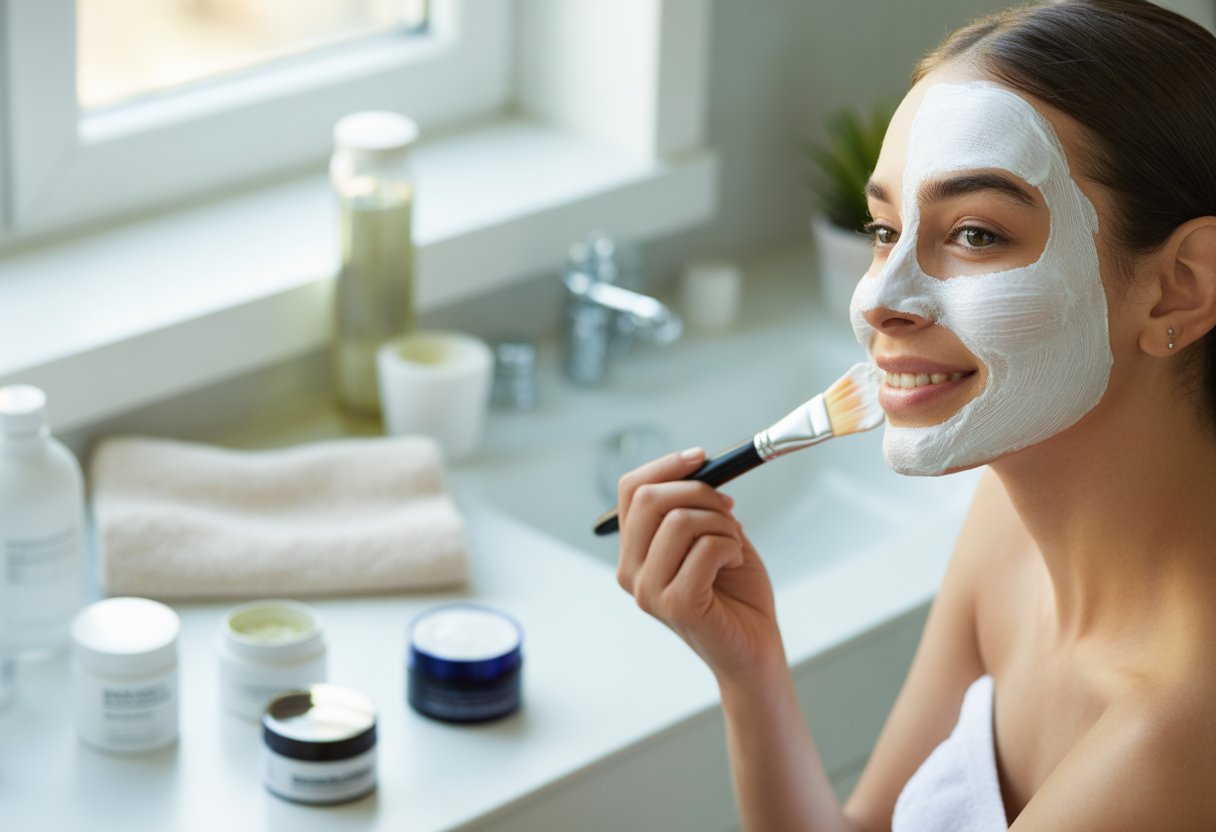
Clay masks pull out impurities from deep within pores, while sheet masks deliver concentrated ingredients that boost hydration and brightness. Both treatments work quickly to improve skin texture and appearance when used correctly.
Benefits of Clay Masks for Deep Cleansing
A clay mask[11] draws out excess oil, dirt, and toxins from clogged pores. The clay absorbs sebum and removes dead skin cells that can lead to breakouts.
Bentonite clay and kaolin clay are two common types that work well for different skin needs. Bentonite clay suits oily skin because it pulls out more oil. Kaolin clay is gentler and works better for sensitive or combination skin.
People should apply clay masks to clean, dry skin and leave them on for 10 to 15 minutes. The mask should feel slightly tight as it dries but should never cause pain or extreme discomfort.
Using a clay mask two to three times per week helps keep pores clear. After rinsing with warm water, the skin needs a good moisturizer to prevent dryness. Those with acne-prone skin often see fewer breakouts within the first week of regular use.
Sheet Masks for Hydration and Glow
Sheet masks are fabric sheets soaked in serum that deliver concentrated ingredients directly to the skin. They create a barrier that helps the skin absorb more product than regular serums alone.
Hyaluronic acid sheet masks[11] provide intense moisture that plumps the skin and reduces the appearance of fine lines. Vitamin C sheet masks brighten dull skin and even out tone. Niacinamide sheet masks help control oil and minimize pores.
The user should apply a sheet mask to clean skin and leave it on for 15 to 20 minutes. Most masks work best at night when the skin repairs itself. After removing the mask, patting the remaining serum into the skin helps it absorb better.
Daily use during a seven-day challenge can dramatically improve skin hydration and glow. However, regular long-term use should be limited to two to three times per week to avoid over-saturating the skin.
Healthy Lifestyle and Dietary Adjustments
What you eat directly affects your skin’s appearance, and certain nutrients play a crucial role in skin health[12]. Anti-inflammatory foods and proper hydration work together to reduce breakouts and support a clearer complexion within days.
Adopting a Skin-Friendly Diet
A skin-friendly diet focuses on reducing inflammation while providing essential nutrients. Anti-inflammatory foods help calm irritated skin and reduce redness. Foods rich in omega-3 fatty acids, such as salmon and sardines, decrease inflammation throughout the body and skin.
People should aim for two 3-ounce servings of omega-3-rich fish per week. Magnesium-rich foods also fight inflammation and support skin health. Nuts, seeds, and legumes provide healthy amounts of this mineral.
Vitamin C supports skin repair and healing. This nutrient appears in many topical products, but eating vitamin C-rich foods provides internal benefits. Citrus fruits, bell peppers, and strawberries deliver this essential vitamin.
Limiting added sugars helps maintain skin elasticity. Too much sugar breaks down collagen and makes skin appear less firm.
Foods That Promote Clear Skin
Leafy greens like kale, spinach, and arugula contain magnesium and antioxidants that reduce inflammation. These vegetables also provide vitamins A and C for skin repair.
Fatty fish delivers omega-3 fatty acids that calm inflammation. Salmon, albacore tuna, and herring rank among the best choices.
Colorful fruits and vegetables provide antioxidants that protect skin cells. Berries, tomatoes, and sweet potatoes contain compounds that fight free radical damage. Nuts and seeds offer healthy fats, vitamin E, and magnesium. Almonds, walnuts, and chia seeds make excellent additions to meals or snacks.
Greek yogurt provides probiotics that support gut health, which connects to skin clarity. Avocados contain healthy fats that keep skin moisturized from within.
Sun Protection and Preventative Skincare
Daily sun protection prevents damage that leads to dark spots, premature aging, and breakouts. A strong skin barrier works with sunscreen to keep skin clear and healthy.
Importance of Wearing Sunscreen Daily
Applying sunscreen every day before going outdoors[13] helps prevent sun damage that can worsen existing acne and create new skin problems. Sun exposure causes inflammation in the skin, which triggers excess oil production and can lead to clogged pores.
People with acne-prone skin should look for oil-free and noncomedogenic sunscreen products. These formulas won’t clog pores or make breakouts worse.
Dermatologists recommend applying sunscreen in the morning after washing the face and applying acne medication. This order allows the medication to work properly while the sunscreen provides protection from harmful rays.
Key sunscreen features to look for:
- Broad-spectrum protection
- SPF 30 or higher
- Water-resistant formula
- Oil-free or noncomedogenic label
A wide-brimmed hat adds extra protection for the face. Sunscreen also protects against signs of aging like redness, dryness, wrinkles, and rough patches that can make skin look uneven.
Protecting Your Skin Barrier
The skin barrier acts as a shield against bacteria, pollution, and irritants that cause breakouts. When this barrier becomes damaged from harsh products or over-washing, skin produces more oil to compensate.
Moisturizing the skin keeps the barrier strong and functioning properly. Even oily or acne-prone skin needs adequate hydration to stay balanced.
Many acne treatments like retinoids and salicylic acid can dry out skin and weaken the barrier. Using a gentle, oil-free moisturizer after cleansing helps repair this damage. Studies show that people with acne see improvement within four to eight weeks of starting a regular moisturizer routine.
Ways to protect the skin barrier:
- Use gentle, fragrance-free cleansers
- Avoid washing more than twice daily
- Apply moisturizer when skin feels dry
- Don’t pick or squeeze blemishes
- Keep skincare tools clean
Drinking plenty of water supports skin health from the inside. Higher fluid intake of more than 3,200 milliliters per day has been linked to better skin health in clinical trials.
When to Seek Professional Help
Some skin concerns require expert guidance beyond basic home routines. A dermatologist can diagnose underlying conditions and create treatment plans that address specific skin issues more effectively than over-the-counter products alone.
Recognizing When to Consult a Dermatologist
Persistent acne that doesn’t improve after two weeks of consistent home care needs professional attention. Cystic acne, painful bumps under the skin, or breakouts that leave scars are signs to consult a dermatologist right away.
Sudden changes in skin texture, color, or the appearance of new moles require immediate evaluation. Severe redness, burning sensations, or reactions to skincare products that last more than a few days also warrant a professional visit.
Someone experiencing rapid skin darkening, unusual rashes, or skin that feels constantly irritated should schedule an appointment. These symptoms might indicate hormonal imbalances, allergies, or other medical conditions that need proper diagnosis and treatment.
Personalizing Advanced Skincare Plans
Dermatologists can prescribe stronger treatments like retinoids, antibiotics, or chemical peels tailored to specific skin types and concerns. They assess factors like age, skin sensitivity, climate, and lifestyle to create customized routines.
Professional treatments such as laser therapy, microneedling, or prescription-strength products work faster than drugstore alternatives. A dermatologist can combine multiple approaches to target issues like hyperpigmentation, deep acne scars, or stubborn texture problems.
Blood tests might reveal vitamin deficiencies or hormonal issues affecting skin health. Medical-grade skincare products contain higher concentrations of active ingredients than retail versions, delivering more noticeable results when used under professional supervision.
Frequently Asked Questions
Simple home remedies like ice cubes and honey masks can reduce inflammation, while ingredients such as aloe vera and tea tree oil target specific skin concerns. A consistent routine with gentle cleansing and proper hydration forms the foundation for visible improvements.
What are effective home remedies for achieving clearer skin in a week?
Ice cubes help reduce puffiness and shrink pores when gently rolled across the face for a few minutes each morning. The cold temperature constricts blood vessels and calms inflamed skin.
Honey acts as a natural antibacterial agent when applied as a mask for 10-15 minutes. It draws moisture into the skin while fighting acne-causing bacteria.
Oatmeal mixed with yogurt creates a gentle exfoliating mask that removes dead skin cells without irritation. This combination soothes sensitive skin while improving texture.
Steam treatments open pores and allow deep cleansing of trapped dirt and oil. A person can lean over a bowl of hot water with a towel draped over their head for 5-10 minutes twice weekly.
What natural ingredients can improve skin clarity within seven days?
Aloe vera gel contains vitamins and enzymes that heal blemishes and reduce redness. Fresh gel from the plant works better than processed versions for maximum benefits.
Tea tree oil targets acne when diluted and applied directly to spots. Its antimicrobial properties kill bacteria without the harshness of chemical treatments.
Lemon juice lightens dark spots and evens skin tone due to its vitamin C content. It should always be diluted with water and applied carefully to avoid irritation.
Turmeric powder mixed with milk creates a paste that reduces inflammation and brightens the complexion. The anti-inflammatory compounds in turmeric calm irritated skin quickly.
Green tea works as a toner when cooled and applied with a cotton pad. Its antioxidants protect skin cells from damage while reducing oil production.
What daily skincare routine should be followed to get clear skin quickly?
Morning routines should start with a gentle cleanser that removes overnight oil buildup without stripping natural moisture. Oil-based cleansers work well for removing any residue from nighttime products.
A hydrating toner with hyaluronic acid or glycerin prepares the skin to absorb serums and moisturizers. This step balances pH levels after cleansing.
Vitamin C serum applied in the morning brightens the skin and protects against environmental damage. A few drops patted into damp skin provide the best absorption.
Moisturizer locks in all previous layers and creates a protective barrier. Even oily skin needs hydration to maintain balance and prevent excess oil production.
Sunscreen with SPF 30 or higher prevents sun damage that can worsen dark spots and texture issues. This step cannot be skipped regardless of weather or season.
Evening routines begin with double cleansing to remove makeup, sunscreen, and daily buildup. An oil-based cleanser followed by a water-based one ensures thorough cleaning.
Chemical exfoliants containing AHAs or BHAs should be used 2-3 times per week at night. These gentle exfoliating products[1] remove dead skin cells without physical scrubbing.
How can I brighten my skin complexion in just one week?
Vitamin C serum applied daily fades dark spots and evens out skin tone through its brightening properties. Consistent use shows noticeable results within days.
Niacinamide reduces hyperpigmentation and strengthens the skin barrier when included in serums or moisturizers. This ingredient also controls oil production in acne-prone areas.
Regular exfoliation removes the dull outer layer of dead cells to reveal fresher skin underneath. Chemical exfoliants work more effectively than physical scrubs for achieving an even complexion.
Hydration from both water intake and topical products creates a plump, dewy appearance. Skin looks brighter when properly moisturized from inside and out.
Sheet masks with brightening ingredients provide an intensive treatment that shows immediate results. Using one every other day during the week enhances overall radiance.
Which dietary changes can help in getting clearer skin rapidly?
Drinking 8-10 glasses of water daily flushes toxins and keeps skin cells hydrated. Proper hydration improves skin elasticity and reduces the appearance of fine lines.
Berries contain antioxidants that fight free radical damage and support collagen production. Blueberries, strawberries, and raspberries make excellent snack choices for skin health.
Leafy greens like spinach and kale provide vitamins A and C that promote cell turnover. These vegetables support the skin’s natural healing process.
Nuts and seeds offer healthy fats that maintain the skin’s moisture barrier. Walnuts and flaxseeds contain omega-3 fatty acids that reduce inflammation.
Reducing sugar intake prevents glycation, a process that breaks down collagen and leads to premature aging. Sugar also triggers inflammation that worsens acne.
Limiting dairy products may help some people reduce breakouts. Dairy can increase oil production and clog pores in sensitive individuals.
What are the best overnight skincare tips to enhance skin clarity?
Sleeping on a silk pillowcase reduces friction that can irritate skin and create wrinkles. The smooth surface also prevents moisture loss during sleep.
Applying a thicker night cream or facial oil before bed gives the skin time to absorb nutrients. Nighttime is when skin cells regenerate most actively.
Spot treatments with salicylic acid or benzoyl peroxide work on blemishes while a person sleeps. These targeted applications reduce inflammation by morning.
Retinol products applied at night increase cell turnover and improve texture over time. Starting with a low concentration prevents irritation in new users.
Getting 7-8 hours of quality sleep allows the body to repair skin damage naturally. Sleep deprivation shows immediately in the form of dull skin and dark circles.
Keeping the bedroom cool and using a humidifier maintains optimal conditions for skin repair. Dry air can dehydrate the skin overnight.
Post Views: 5
References
- Clear Skin in 7 Days: Step-by-Step Daily Glow Routine. https://ntdesigns.com.au/skincare/clear-skin-in-7-days/ Accessed March 25, 2026
- oil-free, noncomedogenic products. https://www.verywellhealth.com/how-to-get-clear-skin-5095862 Accessed March 25, 2026
- The 7-Day Challenge for a Glowing and Radiant Skin at Home. https://www.ulike.com/blogs/skincare/the-7-day-challenge-for-a-glowing-and-radiant-skin-at-home Accessed March 25, 2026
- How To Get Glowing Skin In 7 Days: 7 Essential Tips. https://www.stylecraze.com/articles/how-to-get-glowing-skin-in-7-days-with-day-by-day-instructions/ Accessed March 25, 2026
- Does Drinking Water Help Clear Skin?. https://dermatology.org.uk/does-drinking-water-help-clear-skin/ Accessed March 25, 2026
- both water and oil to stay balanced. https://www.health.com/how-to-hydrate-skin-11756986 Accessed March 25, 2026
- Both hyaluronic acid and glycerin. https://www.harpersbazaar.com/beauty/skin-care/a64253892/how-to-hydrate-dry-skin/ Accessed March 25, 2026
- dermatologists generally recommend chemical exfoliation. https://www.womenshealthmag.com/beauty/a65903428/best-exfoliation-tips-for-glowing-skin/ Accessed March 25, 2026
- 12 Best Acne Spot Treatments in 2024, According to Dermatologists. https://www.allure.com/gallery/best-acne-spot-treatments Accessed March 25, 2026
- 12 Best Spot Treatments for Acne 2025, Dermatologist Recommended. https://www.glamour.com/story/best-acne-spot-treatments Accessed March 25, 2026
- Face Masks: Which Products Can Help You Get Clearer, Smoother Skin?. https://www.northwestpharmacy.com/healthperch/face-masks-for-clearer-smoother-skin Accessed March 25, 2026
- certain nutrients play a crucial role in skin health. https://www.eatingwell.com/article/291721/7-day-meal-plan-for-healthy-skin/ Accessed March 25, 2026
- 10 skin care secrets for healthier-looking skin. https://www.aad.org/public/everyday-care/skin-care-secrets/routine/healthier-looking-skin Accessed March 25, 2026

















