Medically Reviewed
Dr. Jose Rossello, MD, PhD, MHCM
Preventive Medicine & Public Health Specialist
Last Reviewed: April 25, 2026
Your kitchen might look clean, but it could be harboring invisible threats that put your health at risk every day. From bacteria-filled sponges to worn cutting boards releasing microplastics, many common kitchen items can increase the risk of foodborne illness[1] and other health concerns. Even with regular cleaning, certain kitchen tools, storage habits, and food preparation practices can expose families to harmful bacteria and contaminants.
The good news is that most kitchen health hazards are preventable with simple changes. Understanding which items pose the biggest risks and knowing when to replace or properly sanitize them makes a significant difference. Many people focus on wiping down counters and washing dishes but overlook the real culprits that spread germs throughout their cooking space.
Small adjustments to daily kitchen routines can protect against illness without requiring a complete overhaul. From choosing safer cookware materials to establishing better cleaning schedules, practical solutions exist for every kitchen concern.
Table of Contents
Key Takeaways
- Damaged cookware, worn cutting boards, and plastic containers can release harmful particles into food
- Kitchen sponges and dishcloths harbor bacteria that spread to dishes and surfaces without proper sanitization
- Simple changes like using separate cutting boards for raw meat and replacing worn items significantly reduce health risks
Hidden Health Hazards Lurking in Your Kitchen
Your kitchen harbors several areas where bacteria multiply rapidly and spread to food and surfaces. Certain groups face higher risks from these contaminants, and recognizing illness symptoms helps you respond quickly.
Bacteria and Microbe Hotspots
Kitchen sponges rank among the worst offenders for bacterial growth. Research shows that harmful bacteria like Salmonella can survive for more than a week[1] in reusable kitchen sponges. Their warm, moist structure creates ideal conditions for rapid microbial growth and easy transfer of bacteria to hands, dishes and surfaces.
Dishcloths present similar problems when stored damp or used repeatedly without washing. Improper laundering increases health risks significantly.
Cutting boards with deep grooves and visible wear harbor bacteria in ways that make thorough cleaning nearly impossible. These surfaces act as reservoirs for pathogens, increasing cross-contamination risk between raw and ready-to-eat foods.
Common bacterial hotspots include:
- Kitchen sponges and dishcloths
- Cutting boards with deep cuts
- Sink drains and faucet handles
- Refrigerator door handles
- Can openers
Common Symptoms of Foodborne Illness
Foodborne illness typically causes digestive symptoms that appear within hours or days after consuming contaminated food. The most common signs include nausea, vomiting, diarrhea and stomach cramps.
Many people also experience fever, headaches and body aches. Symptoms usually develop between 6 to 48 hours after exposure, though some illnesses take longer to appear.
Most cases resolve within a few days without medical treatment. However, severe symptoms like bloody diarrhea, high fever above 102°F or signs of dehydration require immediate medical attention. Persistent vomiting that prevents keeping liquids down also warrants a doctor’s visit.
High-Risk Groups for Kitchen-Borne Illness
Young children under age 5 face heightened risks from foodborne illness because their immune systems are still developing. Their bodies cannot fight off harmful bacteria as effectively as healthy adults.
Pregnant women experience changes in their immune systems that make them more susceptible to certain infections. Older adults over 65 have weakened immune responses that increase vulnerability to serious complications.
People with chronic health conditions or compromised immune systems need extra caution. This includes individuals undergoing chemotherapy, living with HIV/AIDS or taking immunosuppressant medications.
Elevate Your Health for Just $29.99/Month
Join the Precision Wellness Subscription at My Healing 365 and get discounted services, priority coaching access, virtual care, and exclusive wellness resources to support your physical, emotional, and hormonal health.
Join for $29.99/MonthThese groups should pay special attention to proper food storage and kitchen hygiene practices[2] to minimize exposure risks.
Cross-Contamination: A Leading Cause of Kitchen Illness
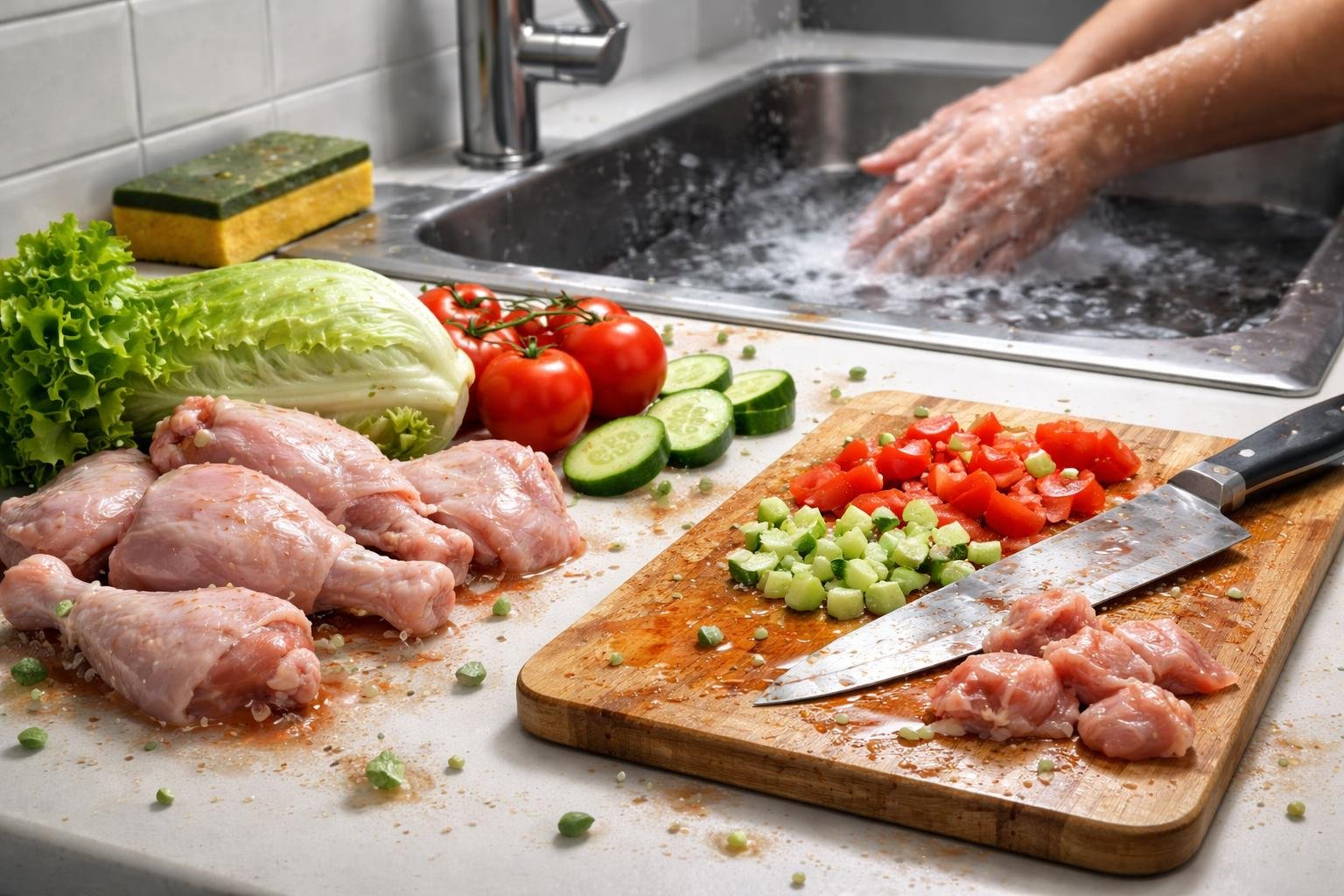
Cross-contamination occurs[3] when harmful bacteria or allergens transfer from one surface, food item, or utensil to another. Raw meat, poultry, and seafood are common sources of dangerous bacteria like salmonella that can spread to ready-to-eat foods through improper handling.
Understanding and Preventing Cross-Contamination
Bacteria from raw foods can spread through multiple pathways in the kitchen. Hands transfer germs after touching raw meat, especially when people skip washing before handling other ingredients. Countertops and utensils that come into contact with raw foods become contaminated surfaces.
Kitchen towels and sponges harbor bacteria when used across different tasks. These items need regular washing in hot water and frequent replacement. Washing hands properly[4] requires warm water and soap for at least 20 seconds, with attention to areas under nails and between fingers.
People should wash hands before and after handling raw foods, after touching their face, and after using the restroom. Clean countertops, cutting boards, and utensils with hot soapy water after each use. Sanitizing with a food-safe disinfectant or bleach solution (1 tablespoon bleach per gallon of water) kills remaining bacteria.
Proper Use of Separate Cutting Boards
Using different cutting boards[4] for raw meat and vegetables prevents bacteria transfer. Color-coded boards help avoid confusion, such as red for meat and green for vegetables. Plastic cutting boards offer advantages because they can go in the dishwasher for high-heat sanitizing.
Wood boards require more careful maintenance and hand washing. Regardless of material, boards need thorough cleaning with hot soapy water after contact with raw foods. Deep grooves and cuts in worn boards trap bacteria that cleaning cannot remove. Replace cutting boards when they develop significant knife marks or damage.
Keep separate utensils for raw and cooked foods as well. Knives, tongs, and spatulas used on raw meat should not touch ready-to-eat items without washing first.
Safe Handling of Raw Meat and Produce
Raw meat, poultry, and seafood carry bacteria that cause illness. Store these items on the bottom refrigerator shelf in sealed containers to prevent juices from dripping onto other foods. Never place cooked food on plates that previously held raw meat without washing them first.
Salmonella and other bacteria die when food reaches proper internal temperatures. Cook poultry to 165°F, ground meat to 160°F, and seafood to 145°F. Use a food thermometer to verify temperatures rather than guessing by appearance.
Unwashed produce also carries contamination risks from soil and handling. Rinse all fruits and vegetables under running water before cutting or eating. This step removes dirt and reduces bacteria on the surface. Keep produce separate from raw meat during storage and preparation to prevent bacterial transfer.
Your kitchen tools and surfaces can become breeding grounds for harmful bacteria if not properly maintained. Plastic cutting boards shed microplastics while harboring dangerous pathogens, kitchen sponges can spread salmonella throughout your workspace, and the way you dry your hands affects cross-contamination risks.
Dangers of Plastic Cutting Boards
Plastic cutting boards release microplastic particles into food as they break down from repeated use. As knives create cuts in the surface, these boards shed tiny plastic fragments that end up in meals. Studies show that worn plastic boards can transfer millions of microplastic particles during food preparation.
Beyond microplastics, deep grooves in cutting boards harbor bacteria[1] that normal cleaning cannot remove. These crevices act as reservoirs for pathogens, making thorough sanitization nearly impossible. The risk increases significantly when the same board contacts raw meat and ready-to-eat foods.
Food safety experts recommend replacing plastic cutting boards when they show deep grooves, visible wear, or lingering odors after cleaning. Using separate boards for raw meats and produce reduces cross-contamination risk. Glass, bamboo, or smooth wood alternatives present safer options for food preparation surfaces.
Sanitizing Kitchen Sponges
Kitchen sponges create ideal conditions for bacterial growth due to their warm, moist structure. Research demonstrates that harmful bacteria like salmonella can survive for more than a week[1] in reusable sponges. These bacteria transfer easily to hands, dishes, and countertops during routine cleaning tasks.
The porous nature of sponges allows microbes to penetrate deep within the material where they multiply rapidly. Rinsing sponges with water after use does not eliminate these bacteria. Even microwaving or boiling sponges only provides temporary relief, as bacteria quickly recolonize the damp environment.
Food safety specialists advise sanitizing kitchen sponges daily through dishwasher cycles or bleach solutions. Replacement should occur at least once per week. Some households find that switching to washable dishcloths that can be laundered at high temperatures offers better bacteria control.
Switching to Paper Towels for Hand Drying
Paper towels provide a more hygienic option for hand drying compared to reusable cloth towels in the kitchen. Single-use paper towels eliminate the risk of transferring bacteria between family members or from hands back to food preparation surfaces. Each person uses a fresh, clean surface for drying.
Cloth kitchen towels can harbor bacteria when they remain damp between uses. These towels often contact multiple surfaces throughout the day, picking up and spreading microorganisms. Without frequent laundering at high temperatures, cloth towels become vectors for cross-contamination in the kitchen environment.
Using paper towels specifically after handling raw meat or during food preparation reduces the spread of pathogens. They also serve well for wiping down surfaces that have contacted potentially contaminated foods. While less environmentally friendly, paper towels offer superior protection against foodborne illness transmission in high-risk cooking situations.
Food Storage and Expiration Safety
Proper food storage prevents harmful bacteria from growing and helps families avoid foodborne illness. Understanding expiration dates, using safe thawing methods, and organizing the refrigerator correctly are essential steps to keep food fresh and safe to eat.
Checking and Following Expiration Dates
Food packages display different types of dates that serve specific purposes. A “sell by” date tells stores how long to display a product, while a “use by” date indicates when the food is at its peak quality. A “best by” date suggests when the product tastes best but doesn’t necessarily mean the food is unsafe after that date.
Most food items come with expiration or “use by” dates[5], but these guidelines can be confusing. Dairy products should be used within seven days of opening, even if the date hasn’t passed. Raw ground meat stays safe for one to two days in the refrigerator, while whole cuts last three to five days.
Eggs remain safe for three to five weeks after purchase when stored properly. Canned goods last much longer but should be thrown away if the can is dented, bulging, or rusty.
Safe Food Thawing and Cooling Practices
Never thaw frozen food on the counter at room temperature. Bacteria multiply rapidly between 40°F and 140°F, making this method dangerous.
The safest thawing method is in the refrigerator, which keeps food at a safe temperature throughout the process. A one-pound package of ground meat takes about 24 hours to thaw completely. Cold water thawing works faster by placing sealed food in a bowl of cold water and changing the water every 30 minutes.
Hot leftovers need to cool quickly to prevent bacterial growth. Divide large portions into shallow containers no more than two inches deep. This helps food cool from 140°F to 40°F within two hours. Never put hot food directly into the refrigerator in large, deep containers as the center stays warm too long.
Organizing the Refrigerator for Safety
Proper refrigerator organization[6] reduces cross-contamination and keeps food at safe temperatures. The top shelves work best for ready-to-eat foods like leftovers, drinks, and prepared meals.
Raw meat, poultry, and seafood belong on the bottom shelf where they cannot drip onto other foods. Store these items in sealed containers or on plates to catch any leaks. The middle shelves suit dairy products and eggs well.
Temperature matters throughout the refrigerator. Keep the unit at 40°F or below and use a refrigerator thermometer to check regularly. Door shelves experience the most temperature fluctuation, so they should hold condiments and items that resist spoilage. Avoid storing milk or eggs in the door despite built-in egg holders.
Everyday Habits That May Be Making You Sick
Simple daily routines in the kitchen can introduce harmful bacteria into food without any visible signs. These common practices often seem harmless but can lead to foodborne illness when done repeatedly.
Tasting Food to Check Freshness
Many people taste food directly from a spoon to determine if it has gone bad. This habit exposes them to bacteria that may already be growing in spoiled food. Harmful pathogens like Salmonella and E. coli don’t always change the taste or smell of food in the early stages of contamination.
The practice becomes even riskier when someone uses the same spoon multiple times or puts it back into the food after tasting. This transfers bacteria from the mouth into the container, which speeds up spoilage for any remaining food.
A safer approach involves checking expiration dates and looking for visual signs of spoilage like mold, discoloration, or separation. If food must be tasted, a person should use a clean spoon each time and discard the sample rather than returning it to the container.
Improper Reuse of Kitchen Towels
Kitchen towels accumulate bacteria quickly when used for multiple tasks throughout the day. A single cubic centimeter of a kitchen sponge can harbor millions of bacteria, and dish towels carry similar levels of contamination[7].
Using the same towel to wipe hands, dry dishes, and clean counters spreads germs across all these surfaces. When a towel stays damp between uses, bacteria multiply even faster in the moist environment.
Safe towel practices include:
- Using separate towels for hands, dishes, and counters
- Washing kitchen towels in hot water every one to two days
- Allowing towels to dry completely between uses
- Replacing towels immediately if they smell musty
Neglecting Regular Handwashing
Handwashing gets skipped during cooking more often than most people realize. Common kitchen mistakes[8] include touching raw meat and then grabbing other ingredients without washing hands in between.
Hands should be washed with soap and warm water for at least 20 seconds before cooking, after handling raw proteins, and after touching the face or hair. Many cooks rinse their hands quickly under water without soap, which doesn’t remove bacteria effectively.
Cross-contamination happens easily when unwashed hands touch cabinet handles, refrigerator doors, or seasoning containers. These surfaces then transfer bacteria to the next person who touches them or to foods that won’t be cooked before eating.
Actionable Steps for a Safer Kitchen Today
Clean surfaces regularly and replace tools when they show signs of wear to keep harmful bacteria out of the kitchen. These two practices form the foundation of kitchen safety and sanitation[9].
Daily and Weekly Cleaning Routines
Countertops need wiping down with hot, soapy water after each meal preparation. Cutting boards require immediate washing after contact with raw meat, poultry, or seafood.
Sponges and dishcloths harbor dangerous bacteria when left damp. They should be sanitized daily by microwaving damp sponges for one minute or running dishcloths through the washing machine. Replace sponges every one to two weeks.
The sink drain and disposal collect food particles that breed bacteria. Pour boiling water down drains daily and scrub the sink basin with a disinfectant cleaner weekly.
Refrigerator shelves need checking weekly for spills or expired food. Wipe down shelves with a mild bleach solution monthly. Proper food storage[10] prevents cross-contamination between items.
Smart Replacement of Worn-Out Items
Cutting boards with deep grooves or cracks trap bacteria that washing cannot remove. Replace plastic boards when they develop knife scars and wooden boards when they split or warp.
Kitchen towels showing stains or odors no longer clean effectively. Throw them out and buy fresh ones every three to six months.
Non-stick pans with scratched or peeling coatings can release harmful particles into food. Replace these pans immediately when damage appears.
Worn rubber spatulas with cracks collect moisture and bacteria. Check these tools regularly and replace them when they show splitting at the handle or blade. Keeping work areas and tools clean[11] prevents illness from spreading through the kitchen.
Frequently Asked Questions
Kitchen-related illnesses often stem from bacteria like E. coli and Salmonella that can survive on surfaces for days. Understanding these risks and proper cleaning methods helps protect against foodborne illness at home.
What common illnesses can be spread through improper kitchen hygiene?
Poor kitchen hygiene can lead to several health problems[2] including E. coli, Salmonella, Campylobacter, and norovirus infections. These pathogens cause symptoms like nausea, vomiting, diarrhea, stomach cramps, and fever.
Food poisoning is the most common result of unsanitary kitchen practices. In severe cases, these infections can lead to dehydration and require medical attention.
Young children, elderly adults, pregnant women, and people with weakened immune systems face higher risks. Their bodies have a harder time fighting off foodborne bacteria.
Which kitchen hazards most often lead to foodborne illness at home?
Cross-contamination between raw meat and ready-to-eat foods creates one of the biggest risks. Using the same cutting board for raw meat and vegetables[8] allows bacteria to transfer from one food to another.
Undercooked meat, especially chicken and ground beef, remains a major hazard. Internal temperatures must reach 165°F for poultry and 160°F for ground beef to kill harmful bacteria.
Improper food storage also causes problems. Leaving leftovers at room temperature for more than two hours gives bacteria time to multiply to dangerous levels.
How long can bacteria survive on kitchen surfaces like countertops and cutting boards?
Bacteria can live on kitchen surfaces for several hours to multiple days depending on the type and conditions. Some bacteria survive longer on porous surfaces like wooden cutting boards compared to smooth countertops.
Moisture and food particles help bacteria thrive longer on surfaces. Dry, clean surfaces make it harder for bacteria to survive and multiply.
Temperature plays a role too. Warmer kitchens provide better conditions for bacterial growth than cooler environments.
What are the health risks of leaving dirty dishes and sponges unwashed for several days?
Kitchen sponges can harbor bacteria like E. coli and Salmonella for days[8] when left damp and dirty. These warm, moist environments act like breeding grounds for germs.
Dirty dishes piled in the sink collect food particles that attract bacteria. The longer they sit, the more bacteria multiply and spread to nearby surfaces.
Using contaminated sponges to clean counters or dishes spreads bacteria instead of removing it. This creates a cycle where the cleaning tool becomes the source of contamination.
How can cross-contamination occur during meal prep, and how can it be prevented?
Cross-contamination happens when bacteria from raw foods transfer to cooked or ready-to-eat items. This occurs through shared cutting boards, utensils, countertops, or unwashed hands.
Storing raw meat above ready-to-eat foods in the refrigerator[8] allows juices to drip down and contaminate items below. Raw meat should always sit on the bottom shelf in a sealed container or on a plate.
Preventing cross-contamination requires using separate cutting boards for meat and produce. Color-coded boards make this system easy to follow.
Washing hands with soap and warm water for at least 20 seconds after handling raw meat stops bacteria from spreading. This simple step breaks the chain of contamination before it reaches other foods.
What are the most effective ways to clean and sanitize high-touch kitchen areas?
Hot, soapy water removes most bacteria from countertops, handles, and faucets. Wiping surfaces with a clean cloth after washing dishes prevents buildup of food particles and moisture.
Disinfecting solutions or sanitizing sprays kill remaining bacteria after cleaning with soap. These products work best on surfaces that have already been cleaned of visible dirt and food.
Microwaving damp sponges for one minute or replacing them weekly[8] keeps cleaning tools from spreading bacteria. Switching to washable cloths that can go through the washing machine offers another effective option.
Using separate towels for drying hands and drying dishes prevents bacteria transfer. Washing kitchen towels frequently, at least every few days, maintains their cleanliness and effectiveness.
Post Views: 6
References
- common kitchen items can increase the risk of foodborne illness. https://www.eatingwell.com/kitchen-items-that-may-be-making-you-sick-11903920 Accessed April 26, 2026
- 6 Health Problems You May Get Due To Poor Kitchen Hygiene. https://www.ndtv.com/health/3-health-problems-you-may-get-due-to-poor-kitchen-hygiene-9550010 Accessed April 26, 2026
- Preventing Cross-Contamination in the Kitchen. https://share.upmc.com/2025/12/prevent-kitchen-cross-contamination/ Accessed April 26, 2026
- Preventing Cross-Contamination in Kitchens: A Guide to Safe Food Practices . https://www.foodpoisoningnews.com/preventing-cross-contamination-in-kitchens-a-guide-to-safe-food-practices/ Accessed April 26, 2026
- Is Your Refrigerator Making You Sick? Find Out the Hidden Dangers. https://applianceupdate.com/can-your-refrigerator-make-you-sick/ Accessed April 26, 2026
- Refrigeration & Food Safety. https://www.fsis.usda.gov/food-safety/safe-food-handling-and-preparation/food-safety-basics/refrigeration Accessed April 26, 2026
- MSN. https://www.msn.com/en-us/health/medical/7-everyday-kitchen-habits-that-could-be-slowly-making-you-sick/ss-AA1SPwtt Accessed April 26, 2026
- 15 Common Kitchen Habits That Can Make You Sick. https://chefstandards.com/habits-make-you-sick/ Accessed April 26, 2026
- Kitchen Safety and Sanitation Tips for a Cleaner, Safer Space. https://nationalsafetyinstitute.com/kitchen-safety-sanitation-tips/ Accessed April 26, 2026
- Food Safety in Your Kitchen. https://www.fda.gov/food/buy-store-serve-safe-food/food-safety-your-kitchen Accessed April 26, 2026
- MSN. https://www.msn.com/en-us/health/nutrition/5-mistakes-you-might-be-making-in-your-kitchen-that-could-make-you-sick-plus-how-to-fix-them/ar-AA1JmDk7 Accessed April 26, 2026

























