Medically Reviewed
Dr. Jose Rossello, MD, PhD, MHCM
Preventive Medicine & Public Health Specialist
Last Reviewed: June 22, 2026
Healthcare organizations face constant pressure to identify and manage risks that could harm patients, staff, and operations. Risk assessment tools help healthcare providers systematically evaluate potential threats, measure their likelihood and impact, and implement targeted safeguards to protect patient safety and organizational integrity. These tools range from simple checklists to advanced software systems that analyze data across entire health systems.
The right risk assessment approach depends on the size of the organization, the types of risks it faces, and regulatory requirements. Federal guidance on risk analysis emphasizes that conducting a thorough assessment of potential risks is the first step in implementing effective safeguards. Small clinics may need different tools than large hospital networks, but all healthcare organizations must evaluate where vulnerabilities exist and how to address them.
Modern risk assessment combines traditional methods with digital tools that track patterns, predict problems, and support better decision-making. Healthcare informatics improves patient outcomes by enabling providers to make more informed decisions and reduce errors. The goal is to create a systematic process that protects patients while meeting compliance standards and supporting quality care.
Table of Contents
Key Takeaways
- Healthcare risk assessment tools identify threats to patient safety, data security, and operational performance
- Organizations must document vulnerabilities, evaluate current safeguards, and determine the likelihood and impact of potential risks
- Effective risk management combines regulatory compliance, technology integration, and continuous monitoring to protect patients and staff
Fundamentals of Risk Assessment in Healthcare
Healthcare organizations use risk assessment to identify potential dangers before they harm patients or staff. This process involves systematic evaluation of hazards, rating their severity, and implementing controls to prevent adverse events.
Defining Risk Assessment and Its Impact
Risk assessment in healthcare is a structured method for finding and analyzing potential threats to patient safety and organizational operations. The process helps hospitals and clinics spot problems like medication errors, infection risks, or equipment failures before they cause harm.
A comprehensive risk assessment follows a clear pattern: identify hazards, prioritize controls using the hierarchy, use screening tools and checklists, and document actions to reduce harm. Healthcare teams examine everything from patient care procedures to workplace safety.
The impact shows up in measurable ways. Hospitals that conduct regular risk assessments report fewer patient injuries and better outcomes. Staff feel safer at work when organizations address identified hazards.
Types of Risk Assessment in Medical Settings
Healthcare facilities use different assessment types depending on what they need to evaluate. Prospective risk assessment happens before implementing new procedures or equipment. Teams analyze what could go wrong and plan preventive measures.
Concurrent risk assessment occurs during ongoing operations. Nurses and doctors monitor patients and processes in real-time to catch emerging problems. This type works well for high-risk situations like surgery or intensive care.
Retrospective risk assessment examines past incidents to prevent recurrence. Root cause analysis and incident reviews fall into this category. Organizations learn from mistakes and near-misses to strengthen their systems.
Each type serves a specific purpose in protecting patient safety and reducing organizational risk.
Key Principles of Comprehensive Risk Evaluation
Effective health risk assessment follows several core principles. Systematic identification requires looking at all possible hazards across the entire organization. Teams cannot fix problems they do not know about.
Risk rating helps prioritize which threats need immediate attention. High-severity, high-probability risks get addressed first. Lower-priority items get scheduled for later action.
The hierarchy of controls guides solution selection. Eliminating hazards works better than just warning people about them. Engineering controls beat administrative policies, which are stronger than personal protective equipment alone.
Documentation creates accountability and tracks progress. Written records show what was found, what actions were taken, and what results occurred. This information helps during audits and supports continuous improvement efforts.
Healthcare facilities rely on specialized risk assessment tools to identify patient vulnerabilities and prevent adverse outcomes. These instruments range from fall prevention scales to cardiovascular calculators and advanced digital systems that analyze patient data.
Morse Fall Scale and Braden Scale Applications
The Morse Fall Scale evaluates six key factors to determine a patient’s fall risk. These factors include history of falling, secondary diagnosis, ambulatory aid use, IV therapy, gait, and mental status. Each category receives a point value, and the total score places patients into low, moderate, or high-risk categories.
Healthcare teams use this tool during admission and throughout hospital stays. Nurses typically reassess scores after any change in patient condition or medication. Patients scoring above 45 points require immediate fall prevention interventions such as bed alarms, frequent rounding, or mobility assistance.
The Braden Scale measures pressure injury risk through six subscales. It evaluates sensory perception, moisture, activity, mobility, nutrition, and friction. Scores range from 6 to 23, with lower numbers indicating higher risk. Patients scoring 18 or below need preventive measures like specialized mattresses, repositioning schedules, and skin assessments.
Cardiovascular Risk Assessment Tools
The Society of Thoracic Surgeons (STS) Online Risk Calculator helps predict surgical complications before heart procedures. Healthcare professionals use this tool to assess risks including renal failure, stroke, prolonged ventilation, and mortality.
Physicians enter patient-specific data such as age, previous cardiac surgeries, ejection fraction, and comorbidities. The calculator generates percentage-based risk estimates for each potential complication. This information guides conversations between doctors and patients about surgical decisions.
Other cardiovascular risk assessment tools measure long-term disease risk. These calculators evaluate factors like blood pressure, cholesterol levels, smoking status, and diabetes. They help physicians determine which patients need aggressive preventive treatments such as statins or blood pressure medications.
Common Patient Screening Instruments
The LACE Risk Assessment evaluates readmission risk using four components. The L stands for length of stay, A for acuity of admission, C for comorbidities, and E for emergency department visits. Each factor contributes points to a total score that predicts death or readmission within 30 days of discharge.
Patients with high LACE scores receive enhanced discharge planning. This may include transition coaches, home healthcare referrals, or scheduled follow-up appointments within one week. Heart failure patients often benefit most from these targeted interventions.
The Modified Early Warning Scoring (MEWS) monitors hospitalized patients for deterioration. It tracks vital signs including respiratory rate, heart rate, blood pressure, temperature, and consciousness level. Abnormal values trigger escalating responses from nursing staff to rapid response teams.
Digital and Predictive Solutions
Predictive analytics tools use patient data to forecast adverse events before they occur. These systems integrate with electronic medical records to continuously monitor multiple risk factors. Algorithms process information faster than manual assessments and can alert staff to subtle changes.
The Geriatric Surgery Verification Program addresses 30 standards for older surgical patients. This comprehensive approach improves communication about patient goals and reduces complications in elderly populations. Facilities implementing this program report better outcomes and lower costs.
Digital platforms also track risk assessment compliance across healthcare systems. They generate reports showing which patients received screenings and which interventions were implemented. This data helps organizations identify gaps in care and share successful practices between departments.
Integrating Technology and Data for Risk Evaluation
Modern healthcare systems rely on digital tools to identify and manage patient risks more effectively. Technology enables real-time monitoring, automated alerts, and data-driven predictions that help providers intervene before problems escalate.
Electronic Health Records and Risk Alerts
Electronic health records serve as the foundation for automated risk detection in healthcare settings. These systems continuously monitor patient data and trigger alerts when specific risk factors appear. For example, an EHR might flag a patient with elevated blood pressure readings combined with diabetes as high-risk for cardiovascular events.
Integration with electronic health records allows risk assessment tools to pull data automatically from multiple sources. This eliminates manual data entry and reduces errors. The system can track lab results, vital signs, medications, and medical history in one place.
Healthcare providers configure alert thresholds based on clinical guidelines and patient populations. When a patient meets certain criteria, the system sends notifications to the care team. This ensures timely responses to emerging health concerns.
Data Integration and Audit Trails
Risk assessment solutions combine information from various healthcare systems to create complete patient profiles. Data might come from laboratory systems, pharmacy records, imaging departments, and external health information exchanges.
Audit trails document every action taken within the risk evaluation process. These logs record who accessed patient data, what changes were made, and when decisions occurred. An audit trail protects patient privacy and supports regulatory compliance.
Healthcare organizations use these records to track the effectiveness of risk interventions. They can review past decisions and identify patterns that led to better or worse outcomes.
AI and Predictive Analytics in Risk Stratification
Predictive analytics in healthcare uses historical data to forecast future health events. Machine learning algorithms analyze thousands of patient records to identify patterns humans might miss.
Risk stratification categorizes patients into different risk levels based on their likelihood of adverse outcomes. AI models consider hundreds of variables simultaneously, including demographics, comorbidities, social determinants, and treatment adherence.
These tools help healthcare teams prioritize patients who need immediate attention. A patient identified as high-risk might receive more frequent monitoring, care coordination, or preventive interventions. The technology updates risk scores automatically as new data becomes available.
Healthcare organizations need structured approaches to deploy risk management tools that deliver consistent results. Success depends on matching tools to organizational needs, ensuring staff can use them reliably, and integrating assessments into daily workflows.
Selecting the Right Tool for Your Organization
Organizations must evaluate their specific risk landscape before implementing risk assessment tools. A hospital system faces different challenges than an outpatient clinic or specialty practice.
The selection process should consider patient population characteristics, types of services provided, and existing compliance gaps. Comprehensive risk assessment and gap analysis helps identify which tools address the most pressing vulnerabilities.
Organizations should prioritize tools that align with their current staff expertise and technology infrastructure. A complex enterprise risk management system may overwhelm a small practice with limited IT resources. The tool must fit the organization’s size, budget, and regulatory requirements while supporting audit readiness.
Training and Inter-Rater Reliability
Staff training directly impacts the accuracy and consistency of risk assessments across an organization. Without proper training, different team members may interpret risk criteria differently and produce inconsistent results.
Inter-rater reliability ensures that multiple staff members evaluating the same situation reach similar conclusions. Healthcare facilities should conduct calibration sessions where staff review sample cases together and compare their assessments.
Regular training refreshers maintain consistency as staff turnover occurs and new risks emerge. Organizations should document training completion and test comprehension through scenario-based exercises that mirror real-world situations.
Embedding Screening and Documentation Workflows
Risk tools only work when integrated into existing clinical and administrative workflows. Staff will skip assessments that feel like additional burdens rather than natural parts of patient care.
Organizations should map current workflows and identify logical points for health risk assessment integration. Electronic health records can prompt clinicians to complete assessments at admission, during treatment, and before discharge.
Documentation templates must be clear and easy to complete without disrupting patient interactions. Standardized forms reduce errors and ensure all necessary information gets captured for regulatory compliance and quality improvement initiatives.
Risk Management Frameworks and Best Practices
Healthcare organizations need structured approaches to identify threats, document incidents, and track mitigation efforts. These practices transform reactive responses into proactive systems that protect patients and reduce exposure.
Establishing Incident Management Processes
An incident management framework creates clear pathways for reporting, investigating, and resolving safety events. Healthcare teams should define what constitutes an incident, from near-misses to data breaches, so staff know when to report.
Incident reporting works best when organizations remove fear of blame. Anonymous reporting channels and non-punitive policies encourage clinicians and support staff to document problems without hesitation. Each report should capture who was involved, what happened, when it occurred, and immediate actions taken.
The framework must assign triage responsibilities. A designated team reviews incoming reports, assesses severity, and escalates critical incidents to leadership within defined timeframes. For example, a suspected ransomware attack requires immediate escalation, while a misdirected fax may follow standard review.
Response protocols should spell out investigation steps, communication requirements, and documentation standards. Organizations that practice tabletop exercises test their incident management framework under realistic scenarios and identify gaps before real crises occur.
Using the Risk Register Effectively
A risk register serves as the central record of identified threats, their likelihood, potential impact, and planned responses. Each entry should include a clear description of the risk, the assets or processes it affects, and the individual accountable for monitoring it.
Organizations should categorize risks by type such as cybersecurity, clinical safety, privacy, or operational risks. Scoring each risk on likelihood and impact creates a heat map that shows where to focus resources first.
The register must track both inherent risk before controls and residual risk after mitigation. This comparison demonstrates whether controls work and whether additional measures are needed. Healthcare leaders should review high-residual risks quarterly and require written acceptance when risks cannot be fully eliminated.
Linking each risk to specific controls and evidence makes audits simpler. When assessors ask how an organization addresses ransomware, the register points directly to backup procedures, network segmentation, and staff training already in place.
Action Planning and Continuous Improvement
Action plans convert risk assessments into measurable steps with owners and due dates. Each plan should state the control being implemented, the risk it addresses, who will execute it, and when completion is expected.
Prioritization models help teams tackle the most dangerous gaps first. Healthcare organizations should weigh vulnerability severity against patient safety impact and data sensitivity rather than fixing every finding at once.
Continuous improvement requires regular review cycles. Monthly or quarterly meetings examine whether completed actions reduced risk scores, whether new threats emerged, and whether controls failed during incidents. Organizations should feed lessons from real incidents back into their risk register and update action plans accordingly.
Metrics such as time-to-remediate, percentage of overdue actions, and trending risk scores show whether the program strengthens over time. Leadership dashboards that translate technical risks into care delivery impacts help executives allocate budget and staff to the areas that matter most.
Healthcare Risk Management Software Solutions
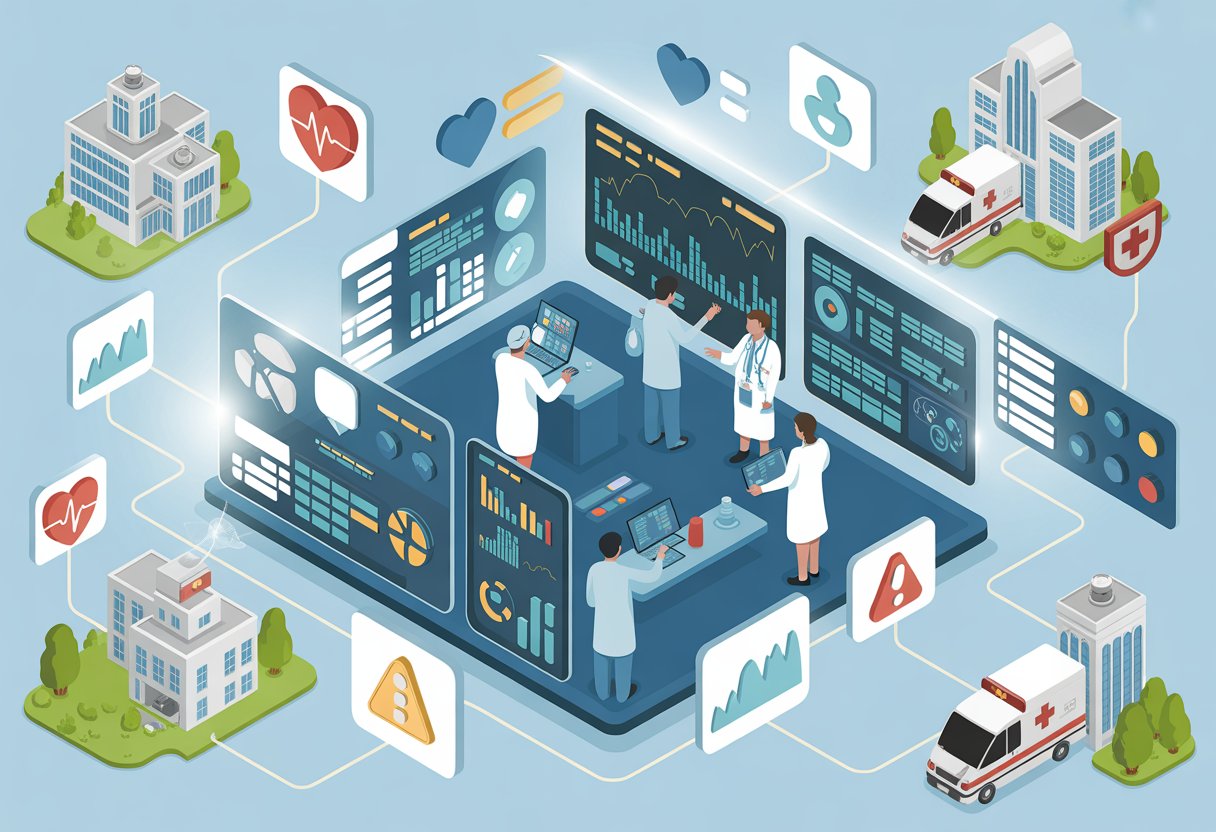
Modern platforms help healthcare organizations identify, score, and treat clinical, operational, financial, and compliance risks in one centralized system. These solutions automate workflows, maintain detailed audit trails, and support organizations in preparing for regulatory reviews.
Features of Leading Risk Management Platforms
Healthcare risk management software provides digital platforms designed to help providers identify, assess, mitigate, and monitor risks that impact patient safety and regulatory compliance. These platforms include risk assessment solutions that allow teams to score and prioritize risks based on likelihood and potential impact.
Most systems offer dashboards that display real-time risk data across departments. Users can track incidents, near-misses, and safety events in one location. The software assigns risk scores to help leadership focus on the most critical issues first.
Risk governance features enable organizations to establish clear accountability for risk ownership. Administrators can assign tasks to specific team members and set deadlines for remediation activities. Many platforms integrate with electronic health records and other hospital systems to pull relevant data automatically.
Workflow Automation and Evidence Collection
Automated workflows reduce manual work and ensure consistent processes across the organization. When staff members report an incident, the system automatically routes it to the appropriate department or individual based on pre-set rules.
These platforms collect and organize evidence related to each risk event. Users can upload photos, documents, and other files directly to the case record. The system timestamps all entries and maintains a complete audit trail of who accessed or modified information.
Notification systems alert relevant stakeholders when action is needed. Automated reminders help ensure that follow-up tasks get completed on time. This reduces the chance that important safety issues fall through the cracks.
Audit Planning and Compliance Support
Healthcare teams use these tools to maintain audit readiness by keeping documentation organized and accessible. The software stores policies, procedures, and training records in searchable repositories.
Audit trails track every action taken within the system. This creates a clear record for regulators and auditors to review. The software documents when risks were identified, what actions were taken, and who was responsible for each step.
Compliance modules help organizations track adherence to regulations and standards. Users can map controls to specific regulatory requirements and monitor gaps. The system generates reports that demonstrate compliance status to auditors and accrediting bodies.
Regulatory Compliance and Accreditation Requirements
Healthcare organizations must navigate complex federal, state, and accreditation standards that directly impact their ability to manage patient safety risks. Strong compliance frameworks help facilities maintain audit readiness while reducing the likelihood of regulatory violations.
Compliance Risk Assessment Essentials
A compliance risk assessment identifies gaps between current practices and regulatory requirements. Healthcare facilities need to evaluate their policies, procedures, and documentation against standards set by organizations like CMS and state health departments.
Healthcare regulatory compliance software serves as a centralized hub for policy management, document tracking, staff training, and risk monitoring. These systems reduce errors and help organizations track compliance across multiple departments.
Assessment teams should review areas including patient rights, data security, quality metrics, and financial integrity. Regular evaluations help facilities catch potential violations before they become serious problems. Documentation of these assessments proves critical during inspections and surveys.
Aligning With National and International Standards
Organizations seeking accreditation must meet specific performance benchmarks. The Joint Commission’s accreditation standards provide an objective evaluation process that helps healthcare organizations measure and improve their performance.
Different accrediting bodies have overlapping but distinct requirements. NCQA, AAAHC, and The Joint Commission each hold organizations accountable for third-party vendor performance under the Respondeat Superior principle.
Healthcare facilities can access standards through electronic platforms like E-dition, which offers searchable and current content. Organizations not yet accredited can request 90-day trial access to review requirements before formal application.
Role of Accreditation in Risk Mitigation
Comprehensive risk management improves audit and accreditation readiness by ensuring policies and documentation align with regulatory standards consistently. This alignment makes audits smoother and increases the likelihood of successful accreditation.
Accreditation demonstrates an organization’s commitment to quality and safety standards. The evaluation process identifies weaknesses in current systems and provides a roadmap for improvement.
Facilities with active accreditation status typically experience fewer compliance violations and better patient outcomes. The ongoing review process keeps organizations focused on maintaining high standards rather than addressing problems reactively.
Patient Safety: Clinical and Operational Approaches
Healthcare facilities use specific methods to identify risks before they harm patients and to learn from incidents that do occur. These approaches include regular reviews of clinical practices, structured systems for reporting problems, and protocols designed to maintain safety over time.
Clinical Risk Review and Patient Outcomes
Clinical risk reviews help healthcare teams spot potential dangers in patient care before problems happen. These reviews look at medication processes, surgical procedures, and diagnostic testing to find weak points where errors might occur.
ECRI’s Risk Assessments evaluate unique challenges in different care settings through web-based tools that examine situations known to compromise patient safety. Teams use these assessments to check everything from infection control practices to equipment safety.
The process works best when it becomes part of daily operations. Staff members conduct regular audits of high-risk areas like operating rooms and intensive care units. They track metrics such as fall rates, medication errors, and hospital-acquired infections.
Key review areas include:
- Medication administration and dosing
- Patient identification procedures
- Surgical site preparation
- Equipment maintenance and function
- Staff training and competency
Incident Reporting and Root Cause Analysis
Incident reporting systems let healthcare workers document safety events when they happen. These systems collect information about near misses, minor incidents, and serious adverse events. Every report adds to the facility’s understanding of where problems occur.
Root cause analysis (RCA) digs deeper into serious incidents to find their underlying causes. Rather than blaming individuals, RCA looks at system failures and process breakdowns. Teams ask “why” multiple times to trace problems back to their source.
Tools adapted from high-risk industries[1] like aviation and nuclear power help investigators examine patient safety events. These methods focus on preventing similar incidents in the future.
The RCA process brings together staff from different departments who work through what happened step by step. They create action plans with specific changes to prevent the same problem from occurring again.
Developing Sustainable Safety Protocols
Safety protocols need regular updates to stay effective as medical practices change. Hospitals build sustainability by making safety part of their culture rather than a separate program.
Patient safety implementation[2] faces challenges like resistance to change and budget limits, which require structured approaches based on evidence. Teams must show staff why new protocols matter and how they protect patients.
Successful protocols include clear steps that fit into existing workflows. They use checklists, standardized procedures, and decision support tools that guide staff through complex tasks. Training ensures everyone understands their role in keeping patients safe.
Elements of sustainable protocols:
- Regular staff training and competency checks
- Leadership support and resources
- Measurement of compliance and outcomes
- Feedback loops for continuous improvement
Addressing Population Health and Social Determinants
Healthcare organizations need tools that go beyond individual patient care to address broader community factors. Population health analytics requires clinically relevant approaches that consider both medical history and social factors affecting entire groups of patients.
Population Health Management Strategies
Population health management focuses on improving health outcomes for defined groups of people. Organizations use data analytics to identify patterns and risks across their patient populations. These strategies help healthcare systems move from treating individual illnesses to preventing health problems before they start.
Value-based care contracts push healthcare providers to look at the bigger picture. They need to understand not just what happens in the clinic but also what affects patients in their daily lives. Effective population health management combines clinical data with information about where patients live, work, and spend their time.
Healthcare systems benefit from knowing the social determinants in the communities[3] where their patients live. This knowledge helps organizations plan better services and allocate resources where they will have the most impact.
Social Determinants of Health and Risk
Social determinants of health include conditions in the environments where people are born, live, learn, work, play, worship, and age. These factors affect health outcomes, functioning, and quality of life.
Key social determinants include:
- Housing stability – Safe, affordable housing options
- Food security – Access to healthy, nutritious food
- Transportation – Reliable ways to reach healthcare appointments
- Education – Literacy levels and health knowledge
- Employment – Job stability and income levels
- Social connections – Community support and relationships
Health risk assessments now incorporate these social factors alongside traditional medical risks. Healthcare providers who understand these determinants can better identify patients who need additional support or community resources.
Several validated screening tools help identify social needs[3] patients currently face and their risks for developing future needs. Organizations can choose from tools with different focuses and question sets.
Common screening options include:
- HealthBegins Upstream Risks Screening Tool – Covers 14 different social determinants
- WellRx – An 11-item screener validated for nonmedical social needs
- Kaiser Permanente’s Your Current Life Situation survey – Addresses housing, food, utilities, childcare, debts, medical needs, transportation, stress, and social isolation
- PRAPARE – Contains 17 core questions plus 4 optional items about social determinants
These tools integrate into electronic health records to make screening part of regular care. Healthcare providers can then connect patients with community resources based on identified needs. The choice of screening tool depends on the specific population served and the clinical setting where it will be used.
Continuous Improvement and Risk Communication
Healthcare organizations must build systems that actively monitor risks and share information across teams. Regular audits and clear communication channels help reduce errors and improve patient outcomes over time.
Embedding Quality Audits and Surveillance
Quality audits serve as checkpoints to identify gaps in care delivery and compliance. Healthcare facilities should schedule regular internal audits that examine clinical protocols, documentation practices, and safety procedures. These audits create audit readiness by keeping staff prepared for external reviews.
Surveillance systems track patterns in patient data, infection rates, and adverse events in real time. Automated alerts notify care teams when metrics fall outside acceptable ranges. This approach allows staff to address problems before they escalate into serious safety issues.
Organizations benefit from combining scheduled audits with ongoing surveillance. Scheduled audits provide deep dives into specific areas, while continuous monitoring catches emerging risks between formal reviews. Risk management strategies work best when they go beyond simple tracking to include systematic evaluation methods.
Risk Communication Approaches for Care Teams
Clear communication about risks prevents misunderstandings that lead to patient harm. Care teams need standardized methods for sharing safety concerns, such as structured handoff protocols and incident reporting systems. Daily huddles give staff a forum to discuss emerging risks and near misses.
Transparent reporting culture encourages staff to speak up without fear. Healthcare leaders should acknowledge reports promptly and explain what actions they plan to take. Visual displays like dashboards make risk data accessible to everyone on the floor.
Communication extends beyond immediate teams to include patients and families. Staff should explain treatment risks in plain language and verify understanding. Written materials supplement verbal discussions to ensure patients retain important safety information.
Measuring Outcomes for Ongoing Optimization
Healthcare organizations track specific metrics to evaluate improvement efforts. Common measures include readmission rates, infection rates, medication errors, and patient satisfaction scores. Teams analyze these data points to identify trends and measure progress.
Root cause analysis helps organizations understand why problems occur and prevents repeat incidents. This systematic approach examines contributing factors rather than assigning blame. The findings guide targeted interventions that address underlying system weaknesses.
Run charts and control charts visualize performance over time. These tools show whether changes lead to actual improvements or just random variation. Regular review meetings keep teams focused on continuous improvement rather than one-time fixes.
Frequently Asked Questions
Organizations face complex decisions when implementing new safety tools and technologies. Understanding how modern tools integrate with existing processes helps teams make informed choices about risk management strategies.
Which AI tools are most effective for improving occupational health and safety management?
AI-powered predictive analytics tools help identify potential workplace hazards before incidents occur. These systems analyze historical data, near-miss reports, and environmental factors to forecast risks.
Computer vision systems monitor workspaces in real-time to detect unsafe behaviors or conditions. They can alert supervisors when workers enter restricted areas without proper protective equipment.
Natural language processing tools scan incident reports and safety documentation to identify recurring patterns. This helps safety managers understand common risk factors across different departments or locations.
How can AI be integrated into workplace health and safety processes without disrupting operations?
Organizations should start with pilot programs in specific departments rather than company-wide rollouts. This approach allows teams to test the technology and adjust workflows gradually.
Existing safety protocols can incorporate AI tools as supplementary support rather than replacements for human judgment. Workers need training on how to interpret AI-generated insights and recommendations.
Integration works best when AI systems connect with current safety management software and databases. This prevents duplicate data entry and ensures all information flows through familiar channels.
What are the main benefits and drawbacks of using AI in health and safety decision-making?
AI tools process large amounts of safety data faster than manual review methods. They can identify subtle patterns that humans might miss when reviewing thousands of incident reports.
However, AI systems require high-quality data to generate accurate predictions. Poor data inputs lead to unreliable recommendations that could increase rather than reduce risks.
These tools may not account for unique workplace conditions or cultural factors that affect safety. Human oversight remains necessary to evaluate AI recommendations within proper context.
What common health risks should organizations prioritize when conducting risk assessments?
Physical hazards like slips, trips, and falls represent one of the most frequent causes of workplace injuries. Organizations must identify what could cause injury and determine how likely harm could occur.
Ergonomic risks from repetitive motions or poor workstation setup lead to musculoskeletal disorders. These conditions develop gradually but can cause long-term employee health problems.
Chemical exposures, noise levels, and temperature extremes require monitoring in many work environments. Mental health stressors and workplace violence have also become recognized priorities for assessment.
What risk management tools are commonly used in healthcare to identify and mitigate hazards?
Healthcare facilities use screening checklists to identify hazards and prioritize controls based on severity and likelihood. These tools help staff document actions taken to reduce potential harm to patients and workers.
Patient fall risk assessment scales evaluate factors like mobility, medication effects, and cognitive status. Hospitals implement specific interventions based on individual risk scores.
Infection control protocols use surveillance systems to track healthcare-associated infections. Environmental assessments identify areas where sterilization procedures or protective equipment need improvement.
What are the key risks associated with relying on digital tools for safety monitoring and compliance?
System failures or technical glitches can create gaps in safety monitoring coverage. Organizations need backup procedures when digital systems go offline or malfunction.
Over-reliance on automated alerts may cause workers to ignore warnings or develop complacency. Alert fatigue occurs when systems generate too many notifications for minor issues.
Data privacy and cybersecurity vulnerabilities pose risks when safety systems store sensitive employee health information. Unauthorized access could expose confidential medical data or compromise system integrity.
Post Views: 7

Elevate Your Health for Just $29.99/Month
Join the Precision Wellness Subscription at My Healing 365 and get discounted services, priority coaching access, virtual care, and exclusive wellness resources to support your physical, emotional, and hormonal health.
Join for $29.99/MonthMedically Reviewed
Dr. Jose Rossello, MD, PhD, MHCM
Preventive Medicine & Public Health Specialist
Last Reviewed: June 22, 2026
Healthcare organizations face constant pressure to identify and manage risks that could harm patients, staff, and operations. Risk assessment tools help healthcare providers systematically evaluate potential threats, measure their likelihood and impact, and implement targeted safeguards to protect patient safety and organizational integrity. These tools range from simple checklists to advanced software systems that analyze data across entire health systems.
The right risk assessment approach depends on the size of the organization, the types of risks it faces, and regulatory requirements. Federal guidance on risk analysis emphasizes that conducting a thorough assessment of potential risks is the first step in implementing effective safeguards. Small clinics may need different tools than large hospital networks, but all healthcare organizations must evaluate where vulnerabilities exist and how to address them.
Modern risk assessment combines traditional methods with digital tools that track patterns, predict problems, and support better decision-making. Healthcare informatics improves patient outcomes by enabling providers to make more informed decisions and reduce errors. The goal is to create a systematic process that protects patients while meeting compliance standards and supporting quality care.
Key Takeaways
- Healthcare risk assessment tools identify threats to patient safety, data security, and operational performance
- Organizations must document vulnerabilities, evaluate current safeguards, and determine the likelihood and impact of potential risks
- Effective risk management combines regulatory compliance, technology integration, and continuous monitoring to protect patients and staff
Fundamentals of Risk Assessment in Healthcare
Healthcare organizations use risk assessment to identify potential dangers before they harm patients or staff. This process involves systematic evaluation of hazards, rating their severity, and implementing controls to prevent adverse events.
Defining Risk Assessment and Its Impact
Risk assessment in healthcare is a structured method for finding and analyzing potential threats to patient safety and organizational operations. The process helps hospitals and clinics spot problems like medication errors, infection risks, or equipment failures before they cause harm.
A comprehensive risk assessment follows a clear pattern: identify hazards, prioritize controls using the hierarchy, use screening tools and checklists, and document actions to reduce harm. Healthcare teams examine everything from patient care procedures to workplace safety.
The impact shows up in measurable ways. Hospitals that conduct regular risk assessments report fewer patient injuries and better outcomes. Staff feel safer at work when organizations address identified hazards.
Types of Risk Assessment in Medical Settings
Healthcare facilities use different assessment types depending on what they need to evaluate. Prospective risk assessment happens before implementing new procedures or equipment. Teams analyze what could go wrong and plan preventive measures.
Concurrent risk assessment occurs during ongoing operations. Nurses and doctors monitor patients and processes in real-time to catch emerging problems. This type works well for high-risk situations like surgery or intensive care.
Retrospective risk assessment examines past incidents to prevent recurrence. Root cause analysis and incident reviews fall into this category. Organizations learn from mistakes and near-misses to strengthen their systems.
Each type serves a specific purpose in protecting patient safety and reducing organizational risk.
Key Principles of Comprehensive Risk Evaluation
Effective health risk assessment follows several core principles. Systematic identification requires looking at all possible hazards across the entire organization. Teams cannot fix problems they do not know about.
Risk rating helps prioritize which threats need immediate attention. High-severity, high-probability risks get addressed first. Lower-priority items get scheduled for later action.
The hierarchy of controls guides solution selection. Eliminating hazards works better than just warning people about them. Engineering controls beat administrative policies, which are stronger than personal protective equipment alone.
Documentation creates accountability and tracks progress. Written records show what was found, what actions were taken, and what results occurred. This information helps during audits and supports continuous improvement efforts.
Healthcare facilities rely on specialized risk assessment tools to identify patient vulnerabilities and prevent adverse outcomes. These instruments range from fall prevention scales to cardiovascular calculators and advanced digital systems that analyze patient data.
Morse Fall Scale and Braden Scale Applications
The Morse Fall Scale evaluates six key factors to determine a patient’s fall risk. These factors include history of falling, secondary diagnosis, ambulatory aid use, IV therapy, gait, and mental status. Each category receives a point value, and the total score places patients into low, moderate, or high-risk categories.
Healthcare teams use this tool during admission and throughout hospital stays. Nurses typically reassess scores after any change in patient condition or medication. Patients scoring above 45 points require immediate fall prevention interventions such as bed alarms, frequent rounding, or mobility assistance.
The Braden Scale measures pressure injury risk through six subscales. It evaluates sensory perception, moisture, activity, mobility, nutrition, and friction. Scores range from 6 to 23, with lower numbers indicating higher risk. Patients scoring 18 or below need preventive measures like specialized mattresses, repositioning schedules, and skin assessments.
Cardiovascular Risk Assessment Tools
The Society of Thoracic Surgeons (STS) Online Risk Calculator helps predict surgical complications before heart procedures. Healthcare professionals use this tool to assess risks including renal failure, stroke, prolonged ventilation, and mortality.
Physicians enter patient-specific data such as age, previous cardiac surgeries, ejection fraction, and comorbidities. The calculator generates percentage-based risk estimates for each potential complication. This information guides conversations between doctors and patients about surgical decisions.
Other cardiovascular risk assessment tools measure long-term disease risk. These calculators evaluate factors like blood pressure, cholesterol levels, smoking status, and diabetes. They help physicians determine which patients need aggressive preventive treatments such as statins or blood pressure medications.
Common Patient Screening Instruments
The LACE Risk Assessment evaluates readmission risk using four components. The L stands for length of stay, A for acuity of admission, C for comorbidities, and E for emergency department visits. Each factor contributes points to a total score that predicts death or readmission within 30 days of discharge.
Patients with high LACE scores receive enhanced discharge planning. This may include transition coaches, home healthcare referrals, or scheduled follow-up appointments within one week. Heart failure patients often benefit most from these targeted interventions.
The Modified Early Warning Scoring (MEWS) monitors hospitalized patients for deterioration. It tracks vital signs including respiratory rate, heart rate, blood pressure, temperature, and consciousness level. Abnormal values trigger escalating responses from nursing staff to rapid response teams.
Digital and Predictive Solutions
Predictive analytics tools use patient data to forecast adverse events before they occur. These systems integrate with electronic medical records to continuously monitor multiple risk factors. Algorithms process information faster than manual assessments and can alert staff to subtle changes.
The Geriatric Surgery Verification Program addresses 30 standards for older surgical patients. This comprehensive approach improves communication about patient goals and reduces complications in elderly populations. Facilities implementing this program report better outcomes and lower costs.
Digital platforms also track risk assessment compliance across healthcare systems. They generate reports showing which patients received screenings and which interventions were implemented. This data helps organizations identify gaps in care and share successful practices between departments.
Integrating Technology and Data for Risk Evaluation
Modern healthcare systems rely on digital tools to identify and manage patient risks more effectively. Technology enables real-time monitoring, automated alerts, and data-driven predictions that help providers intervene before problems escalate.
Electronic Health Records and Risk Alerts
Electronic health records serve as the foundation for automated risk detection in healthcare settings. These systems continuously monitor patient data and trigger alerts when specific risk factors appear. For example, an EHR might flag a patient with elevated blood pressure readings combined with diabetes as high-risk for cardiovascular events.
Integration with electronic health records allows risk assessment tools to pull data automatically from multiple sources. This eliminates manual data entry and reduces errors. The system can track lab results, vital signs, medications, and medical history in one place.
Healthcare providers configure alert thresholds based on clinical guidelines and patient populations. When a patient meets certain criteria, the system sends notifications to the care team. This ensures timely responses to emerging health concerns.
Data Integration and Audit Trails
Risk assessment solutions combine information from various healthcare systems to create complete patient profiles. Data might come from laboratory systems, pharmacy records, imaging departments, and external health information exchanges.
Audit trails document every action taken within the risk evaluation process. These logs record who accessed patient data, what changes were made, and when decisions occurred. An audit trail protects patient privacy and supports regulatory compliance.
Healthcare organizations use these records to track the effectiveness of risk interventions. They can review past decisions and identify patterns that led to better or worse outcomes.
AI and Predictive Analytics in Risk Stratification
Predictive analytics in healthcare uses historical data to forecast future health events. Machine learning algorithms analyze thousands of patient records to identify patterns humans might miss.
Risk stratification categorizes patients into different risk levels based on their likelihood of adverse outcomes. AI models consider hundreds of variables simultaneously, including demographics, comorbidities, social determinants, and treatment adherence.
These tools help healthcare teams prioritize patients who need immediate attention. A patient identified as high-risk might receive more frequent monitoring, care coordination, or preventive interventions. The technology updates risk scores automatically as new data becomes available.
Healthcare organizations need structured approaches to deploy risk management tools that deliver consistent results. Success depends on matching tools to organizational needs, ensuring staff can use them reliably, and integrating assessments into daily workflows.
Selecting the Right Tool for Your Organization
Organizations must evaluate their specific risk landscape before implementing risk assessment tools. A hospital system faces different challenges than an outpatient clinic or specialty practice.
The selection process should consider patient population characteristics, types of services provided, and existing compliance gaps. Comprehensive risk assessment and gap analysis helps identify which tools address the most pressing vulnerabilities.
Organizations should prioritize tools that align with their current staff expertise and technology infrastructure. A complex enterprise risk management system may overwhelm a small practice with limited IT resources. The tool must fit the organization’s size, budget, and regulatory requirements while supporting audit readiness.
Training and Inter-Rater Reliability
Staff training directly impacts the accuracy and consistency of risk assessments across an organization. Without proper training, different team members may interpret risk criteria differently and produce inconsistent results.
Inter-rater reliability ensures that multiple staff members evaluating the same situation reach similar conclusions. Healthcare facilities should conduct calibration sessions where staff review sample cases together and compare their assessments.
Regular training refreshers maintain consistency as staff turnover occurs and new risks emerge. Organizations should document training completion and test comprehension through scenario-based exercises that mirror real-world situations.
Embedding Screening and Documentation Workflows
Risk tools only work when integrated into existing clinical and administrative workflows. Staff will skip assessments that feel like additional burdens rather than natural parts of patient care.
Organizations should map current workflows and identify logical points for health risk assessment integration. Electronic health records can prompt clinicians to complete assessments at admission, during treatment, and before discharge.
Documentation templates must be clear and easy to complete without disrupting patient interactions. Standardized forms reduce errors and ensure all necessary information gets captured for regulatory compliance and quality improvement initiatives.
Risk Management Frameworks and Best Practices
Healthcare organizations need structured approaches to identify threats, document incidents, and track mitigation efforts. These practices transform reactive responses into proactive systems that protect patients and reduce exposure.
Establishing Incident Management Processes
An incident management framework creates clear pathways for reporting, investigating, and resolving safety events. Healthcare teams should define what constitutes an incident, from near-misses to data breaches, so staff know when to report.
Incident reporting works best when organizations remove fear of blame. Anonymous reporting channels and non-punitive policies encourage clinicians and support staff to document problems without hesitation. Each report should capture who was involved, what happened, when it occurred, and immediate actions taken.
The framework must assign triage responsibilities. A designated team reviews incoming reports, assesses severity, and escalates critical incidents to leadership within defined timeframes. For example, a suspected ransomware attack requires immediate escalation, while a misdirected fax may follow standard review.
Response protocols should spell out investigation steps, communication requirements, and documentation standards. Organizations that practice tabletop exercises test their incident management framework under realistic scenarios and identify gaps before real crises occur.
Using the Risk Register Effectively
A risk register serves as the central record of identified threats, their likelihood, potential impact, and planned responses. Each entry should include a clear description of the risk, the assets or processes it affects, and the individual accountable for monitoring it.
Organizations should categorize risks by type such as cybersecurity, clinical safety, privacy, or operational risks. Scoring each risk on likelihood and impact creates a heat map that shows where to focus resources first.
The register must track both inherent risk before controls and residual risk after mitigation. This comparison demonstrates whether controls work and whether additional measures are needed. Healthcare leaders should review high-residual risks quarterly and require written acceptance when risks cannot be fully eliminated.
Linking each risk to specific controls and evidence makes audits simpler. When assessors ask how an organization addresses ransomware, the register points directly to backup procedures, network segmentation, and staff training already in place.
Action Planning and Continuous Improvement
Action plans convert risk assessments into measurable steps with owners and due dates. Each plan should state the control being implemented, the risk it addresses, who will execute it, and when completion is expected.
Prioritization models help teams tackle the most dangerous gaps first. Healthcare organizations should weigh vulnerability severity against patient safety impact and data sensitivity rather than fixing every finding at once.
Continuous improvement requires regular review cycles. Monthly or quarterly meetings examine whether completed actions reduced risk scores, whether new threats emerged, and whether controls failed during incidents. Organizations should feed lessons from real incidents back into their risk register and update action plans accordingly.
Metrics such as time-to-remediate, percentage of overdue actions, and trending risk scores show whether the program strengthens over time. Leadership dashboards that translate technical risks into care delivery impacts help executives allocate budget and staff to the areas that matter most.
Healthcare Risk Management Software Solutions
Modern platforms help healthcare organizations identify, score, and treat clinical, operational, financial, and compliance risks in one centralized system. These solutions automate workflows, maintain detailed audit trails, and support organizations in preparing for regulatory reviews.
Features of Leading Risk Management Platforms
Healthcare risk management software provides digital platforms designed to help providers identify, assess, mitigate, and monitor risks that impact patient safety and regulatory compliance. These platforms include risk assessment solutions that allow teams to score and prioritize risks based on likelihood and potential impact.
Most systems offer dashboards that display real-time risk data across departments. Users can track incidents, near-misses, and safety events in one location. The software assigns risk scores to help leadership focus on the most critical issues first.
Risk governance features enable organizations to establish clear accountability for risk ownership. Administrators can assign tasks to specific team members and set deadlines for remediation activities. Many platforms integrate with electronic health records and other hospital systems to pull relevant data automatically.
Workflow Automation and Evidence Collection
Automated workflows reduce manual work and ensure consistent processes across the organization. When staff members report an incident, the system automatically routes it to the appropriate department or individual based on pre-set rules.
These platforms collect and organize evidence related to each risk event. Users can upload photos, documents, and other files directly to the case record. The system timestamps all entries and maintains a complete audit trail of who accessed or modified information.
Notification systems alert relevant stakeholders when action is needed. Automated reminders help ensure that follow-up tasks get completed on time. This reduces the chance that important safety issues fall through the cracks.
Audit Planning and Compliance Support
Healthcare teams use these tools to maintain audit readiness by keeping documentation organized and accessible. The software stores policies, procedures, and training records in searchable repositories.
Audit trails track every action taken within the system. This creates a clear record for regulators and auditors to review. The software documents when risks were identified, what actions were taken, and who was responsible for each step.
Compliance modules help organizations track adherence to regulations and standards. Users can map controls to specific regulatory requirements and monitor gaps. The system generates reports that demonstrate compliance status to auditors and accrediting bodies.
Regulatory Compliance and Accreditation Requirements
Healthcare organizations must navigate complex federal, state, and accreditation standards that directly impact their ability to manage patient safety risks. Strong compliance frameworks help facilities maintain audit readiness while reducing the likelihood of regulatory violations.
Compliance Risk Assessment Essentials
A compliance risk assessment identifies gaps between current practices and regulatory requirements. Healthcare facilities need to evaluate their policies, procedures, and documentation against standards set by organizations like CMS and state health departments.
Healthcare regulatory compliance software serves as a centralized hub for policy management, document tracking, staff training, and risk monitoring. These systems reduce errors and help organizations track compliance across multiple departments.
Assessment teams should review areas including patient rights, data security, quality metrics, and financial integrity. Regular evaluations help facilities catch potential violations before they become serious problems. Documentation of these assessments proves critical during inspections and surveys.
Aligning With National and International Standards
Organizations seeking accreditation must meet specific performance benchmarks. The Joint Commission’s accreditation standards provide an objective evaluation process that helps healthcare organizations measure and improve their performance.
Different accrediting bodies have overlapping but distinct requirements. NCQA, AAAHC, and The Joint Commission each hold organizations accountable for third-party vendor performance under the Respondeat Superior principle.
Healthcare facilities can access standards through electronic platforms like E-dition, which offers searchable and current content. Organizations not yet accredited can request 90-day trial access to review requirements before formal application.
Role of Accreditation in Risk Mitigation
Comprehensive risk management improves audit and accreditation readiness by ensuring policies and documentation align with regulatory standards consistently. This alignment makes audits smoother and increases the likelihood of successful accreditation.
Accreditation demonstrates an organization’s commitment to quality and safety standards. The evaluation process identifies weaknesses in current systems and provides a roadmap for improvement.
Facilities with active accreditation status typically experience fewer compliance violations and better patient outcomes. The ongoing review process keeps organizations focused on maintaining high standards rather than addressing problems reactively.
Patient Safety: Clinical and Operational Approaches
Healthcare facilities use specific methods to identify risks before they harm patients and to learn from incidents that do occur. These approaches include regular reviews of clinical practices, structured systems for reporting problems, and protocols designed to maintain safety over time.
Clinical Risk Review and Patient Outcomes
Clinical risk reviews help healthcare teams spot potential dangers in patient care before problems happen. These reviews look at medication processes, surgical procedures, and diagnostic testing to find weak points where errors might occur.
ECRI’s Risk Assessments evaluate unique challenges in different care settings through web-based tools that examine situations known to compromise patient safety. Teams use these assessments to check everything from infection control practices to equipment safety.
The process works best when it becomes part of daily operations. Staff members conduct regular audits of high-risk areas like operating rooms and intensive care units. They track metrics such as fall rates, medication errors, and hospital-acquired infections.
Key review areas include:
- Medication administration and dosing
- Patient identification procedures
- Surgical site preparation
- Equipment maintenance and function
- Staff training and competency
Incident Reporting and Root Cause Analysis
Incident reporting systems let healthcare workers document safety events when they happen. These systems collect information about near misses, minor incidents, and serious adverse events. Every report adds to the facility’s understanding of where problems occur.
Root cause analysis (RCA) digs deeper into serious incidents to find their underlying causes. Rather than blaming individuals, RCA looks at system failures and process breakdowns. Teams ask “why” multiple times to trace problems back to their source.
Tools adapted from high-risk industries[1] like aviation and nuclear power help investigators examine patient safety events. These methods focus on preventing similar incidents in the future.
The RCA process brings together staff from different departments who work through what happened step by step. They create action plans with specific changes to prevent the same problem from occurring again.
Developing Sustainable Safety Protocols
Safety protocols need regular updates to stay effective as medical practices change. Hospitals build sustainability by making safety part of their culture rather than a separate program.
Patient safety implementation[2] faces challenges like resistance to change and budget limits, which require structured approaches based on evidence. Teams must show staff why new protocols matter and how they protect patients.
Successful protocols include clear steps that fit into existing workflows. They use checklists, standardized procedures, and decision support tools that guide staff through complex tasks. Training ensures everyone understands their role in keeping patients safe.
Elements of sustainable protocols:
- Regular staff training and competency checks
- Leadership support and resources
- Measurement of compliance and outcomes
- Feedback loops for continuous improvement
Addressing Population Health and Social Determinants
Healthcare organizations need tools that go beyond individual patient care to address broader community factors. Population health analytics requires clinically relevant approaches that consider both medical history and social factors affecting entire groups of patients.
Population Health Management Strategies
Population health management focuses on improving health outcomes for defined groups of people. Organizations use data analytics to identify patterns and risks across their patient populations. These strategies help healthcare systems move from treating individual illnesses to preventing health problems before they start.
Value-based care contracts push healthcare providers to look at the bigger picture. They need to understand not just what happens in the clinic but also what affects patients in their daily lives. Effective population health management combines clinical data with information about where patients live, work, and spend their time.
Healthcare systems benefit from knowing the social determinants in the communities[3] where their patients live. This knowledge helps organizations plan better services and allocate resources where they will have the most impact.
Social Determinants of Health and Risk
Social determinants of health include conditions in the environments where people are born, live, learn, work, play, worship, and age. These factors affect health outcomes, functioning, and quality of life.
Key social determinants include:
- Housing stability – Safe, affordable housing options
- Food security – Access to healthy, nutritious food
- Transportation – Reliable ways to reach healthcare appointments
- Education – Literacy levels and health knowledge
- Employment – Job stability and income levels
- Social connections – Community support and relationships
Health risk assessments now incorporate these social factors alongside traditional medical risks. Healthcare providers who understand these determinants can better identify patients who need additional support or community resources.
Several validated screening tools help identify social needs[3] patients currently face and their risks for developing future needs. Organizations can choose from tools with different focuses and question sets.
Common screening options include:
- HealthBegins Upstream Risks Screening Tool – Covers 14 different social determinants
- WellRx – An 11-item screener validated for nonmedical social needs
- Kaiser Permanente’s Your Current Life Situation survey – Addresses housing, food, utilities, childcare, debts, medical needs, transportation, stress, and social isolation
- PRAPARE – Contains 17 core questions plus 4 optional items about social determinants
These tools integrate into electronic health records to make screening part of regular care. Healthcare providers can then connect patients with community resources based on identified needs. The choice of screening tool depends on the specific population served and the clinical setting where it will be used.
Continuous Improvement and Risk Communication
Healthcare organizations must build systems that actively monitor risks and share information across teams. Regular audits and clear communication channels help reduce errors and improve patient outcomes over time.
Embedding Quality Audits and Surveillance
Quality audits serve as checkpoints to identify gaps in care delivery and compliance. Healthcare facilities should schedule regular internal audits that examine clinical protocols, documentation practices, and safety procedures. These audits create audit readiness by keeping staff prepared for external reviews.
Surveillance systems track patterns in patient data, infection rates, and adverse events in real time. Automated alerts notify care teams when metrics fall outside acceptable ranges. This approach allows staff to address problems before they escalate into serious safety issues.
Organizations benefit from combining scheduled audits with ongoing surveillance. Scheduled audits provide deep dives into specific areas, while continuous monitoring catches emerging risks between formal reviews. Risk management strategies work best when they go beyond simple tracking to include systematic evaluation methods.
Risk Communication Approaches for Care Teams
Clear communication about risks prevents misunderstandings that lead to patient harm. Care teams need standardized methods for sharing safety concerns, such as structured handoff protocols and incident reporting systems. Daily huddles give staff a forum to discuss emerging risks and near misses.
Transparent reporting culture encourages staff to speak up without fear. Healthcare leaders should acknowledge reports promptly and explain what actions they plan to take. Visual displays like dashboards make risk data accessible to everyone on the floor.
Communication extends beyond immediate teams to include patients and families. Staff should explain treatment risks in plain language and verify understanding. Written materials supplement verbal discussions to ensure patients retain important safety information.
Measuring Outcomes for Ongoing Optimization
Healthcare organizations track specific metrics to evaluate improvement efforts. Common measures include readmission rates, infection rates, medication errors, and patient satisfaction scores. Teams analyze these data points to identify trends and measure progress.
Root cause analysis helps organizations understand why problems occur and prevents repeat incidents. This systematic approach examines contributing factors rather than assigning blame. The findings guide targeted interventions that address underlying system weaknesses.
Run charts and control charts visualize performance over time. These tools show whether changes lead to actual improvements or just random variation. Regular review meetings keep teams focused on continuous improvement rather than one-time fixes.
Frequently Asked Questions
Organizations face complex decisions when implementing new safety tools and technologies. Understanding how modern tools integrate with existing processes helps teams make informed choices about risk management strategies.
Which AI tools are most effective for improving occupational health and safety management?
AI-powered predictive analytics tools help identify potential workplace hazards before incidents occur. These systems analyze historical data, near-miss reports, and environmental factors to forecast risks.
Computer vision systems monitor workspaces in real-time to detect unsafe behaviors or conditions. They can alert supervisors when workers enter restricted areas without proper protective equipment.
Natural language processing tools scan incident reports and safety documentation to identify recurring patterns. This helps safety managers understand common risk factors across different departments or locations.
How can AI be integrated into workplace health and safety processes without disrupting operations?
Organizations should start with pilot programs in specific departments rather than company-wide rollouts. This approach allows teams to test the technology and adjust workflows gradually.
Existing safety protocols can incorporate AI tools as supplementary support rather than replacements for human judgment. Workers need training on how to interpret AI-generated insights and recommendations.
Integration works best when AI systems connect with current safety management software and databases. This prevents duplicate data entry and ensures all information flows through familiar channels.
What are the main benefits and drawbacks of using AI in health and safety decision-making?
AI tools process large amounts of safety data faster than manual review methods. They can identify subtle patterns that humans might miss when reviewing thousands of incident reports.
However, AI systems require high-quality data to generate accurate predictions. Poor data inputs lead to unreliable recommendations that could increase rather than reduce risks.
These tools may not account for unique workplace conditions or cultural factors that affect safety. Human oversight remains necessary to evaluate AI recommendations within proper context.
What common health risks should organizations prioritize when conducting risk assessments?
Physical hazards like slips, trips, and falls represent one of the most frequent causes of workplace injuries. Organizations must identify what could cause injury and determine how likely harm could occur.
Ergonomic risks from repetitive motions or poor workstation setup lead to musculoskeletal disorders. These conditions develop gradually but can cause long-term employee health problems.
Chemical exposures, noise levels, and temperature extremes require monitoring in many work environments. Mental health stressors and workplace violence have also become recognized priorities for assessment.
What risk management tools are commonly used in healthcare to identify and mitigate hazards?
Healthcare facilities use screening checklists to identify hazards and prioritize controls based on severity and likelihood. These tools help staff document actions taken to reduce potential harm to patients and workers.
Patient fall risk assessment scales evaluate factors like mobility, medication effects, and cognitive status. Hospitals implement specific interventions based on individual risk scores.
Infection control protocols use surveillance systems to track healthcare-associated infections. Environmental assessments identify areas where sterilization procedures or protective equipment need improvement.
What are the key risks associated with relying on digital tools for safety monitoring and compliance?
System failures or technical glitches can create gaps in safety monitoring coverage. Organizations need backup procedures when digital systems go offline or malfunction.
Over-reliance on automated alerts may cause workers to ignore warnings or develop complacency. Alert fatigue occurs when systems generate too many notifications for minor issues.
Data privacy and cybersecurity vulnerabilities pose risks when safety systems store sensitive employee health information. Unauthorized access could expose confidential medical data or compromise system integrity.
Post Views: 7

























