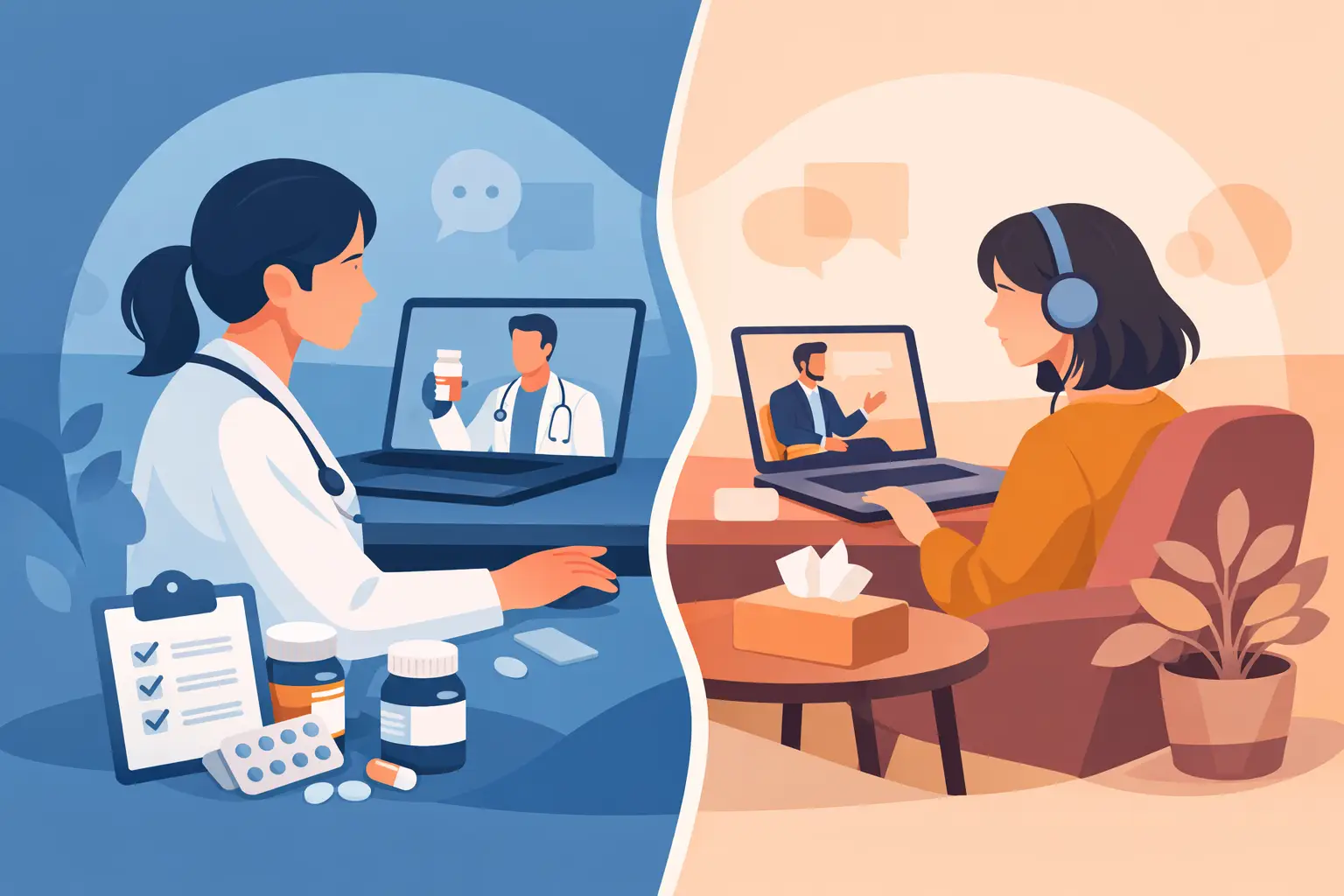
A restless night, a racing mind before work, or a sadness that will not lift can make one question feel urgent: what kind of help do I need? When considering medication management vs counseling online, the right answer is rarely about choosing the “better” option. It is about choosing care that fits your symptoms, history, preferences, and life right now.
Some people want to speak through a difficult season with a counselor. Others are looking for a licensed medical provider who can evaluate whether medication may ease symptoms of anxiety, depression, or sleep disruption. Many benefit from both. You do not have to sort it out alone, and you do not have to wait for the situation to become unbearable before asking for support.
Table of Contents
What Is Online Medication Management?
Online medication management is medical care for mental health symptoms provided through a secure telehealth platform. A licensed provider reviews your symptoms, medical history, current medications, past treatment experiences, and relevant health factors. If medication is clinically appropriate, they may prescribe it and create a plan for monitoring how you respond.
This is not simply receiving a prescription. Effective medication management includes a thoughtful assessment, education about potential benefits and side effects, follow-up visits, and adjustments when needed. Your provider may decide medication is not the right fit, recommend another level of care, or encourage counseling alongside treatment.
For many adults, this model is especially helpful when symptoms are persistent or are getting in the way of sleep, work, relationships, parenting, or basic daily routines. Medication may be considered for conditions such as anxiety, depression, panic symptoms, and certain sleep-related concerns, depending on your individual evaluation.
The convenience of online care can matter, too. Instead of arranging a commute and sitting in a waiting room, you can connect from a private place that works for your schedule. At My Healing 365, eligible patients can access licensed providers online, follow a personalized treatment plan, and use ongoing messaging to stay connected with care.
What medication can and cannot do
Medication can reduce the intensity or frequency of certain symptoms. For example, it may help make persistent worry feel more manageable, support a steadier mood, or improve sleep when a mental health condition is contributing to insomnia. When symptoms ease, many people find it easier to reengage with work, relationships, movement, routines, and counseling.
Elevate Your Health for Just $29.99/Month
Join the Precision Wellness Subscription at My Healing 365 and get discounted services, priority coaching access, virtual care, and exclusive wellness resources to support your physical, emotional, and hormonal health.
Join for $29.99/MonthStill, medication does not erase grief, solve a stressful job, repair a relationship, or automatically change long-standing thought patterns. It can be a valuable tool, but it is not a measure of willpower and it is not the only path to feeling better. The decision should be made with a qualified provider who understands your full picture.
What Is Online Counseling?
Online counseling, often called therapy or psychotherapy, focuses on helping you understand your emotions, thoughts, behaviors, relationships, and life experiences. A licensed counselor or therapist uses conversation and evidence-based approaches to help you build insight and practical coping skills.
Counseling can be a strong choice when you are processing a major life event, dealing with relationship stress, feeling overwhelmed by work or caregiving, or noticing patterns you want to change. It can also support people with diagnosed mental health conditions, whether or not they take medication.
In a virtual session, you may talk through what is happening, practice skills for managing anxiety, identify unhelpful thinking patterns, set boundaries, or create a plan for getting through a difficult week. The exact approach depends on the therapist and your goals. Some people value the dedicated time to be heard without judgment. Others appreciate having concrete strategies they can use between sessions.
Counseling usually works gradually. A single session can bring relief, but meaningful change often develops through consistency, honesty, and practice. That can be a strength, not a drawback: therapy is designed to help you build skills that remain useful long after a particular crisis has passed.
Medication Management vs Counseling Online: Key Differences
The biggest difference is the role each provider plays. Medication management is led by a qualified medical prescriber who evaluates whether medication may be appropriate and monitors your treatment. Counseling is led by a mental health professional who provides therapeutic support and helps you work through emotional and behavioral challenges.
Their goals can overlap. Both may help you feel more stable, less isolated, and better able to manage your life. But they get there differently. Medication management focuses on clinical assessment, medication decisions, symptom tracking, and safety. Counseling focuses on conversation, coping skills, self-awareness, and behavior change.
The appointment style is different as well. Medication follow-ups are often shorter and centered on how symptoms, sleep, side effects, and daily functioning have changed. Therapy sessions generally allow more time to explore experiences in depth. Neither format is automatically more personal or more effective. The best fit depends on what you need.
Cost, availability, and scheduling can also shape the decision. Online care may reduce the friction of getting started, particularly for people with full calendars, limited local options, or privacy concerns. However, coverage and out-of-pocket costs vary by provider and insurance plan, so it is worth understanding the details before committing to ongoing care.
When Medication Management May Make Sense
Medication management may be worth exploring if symptoms feel difficult to control despite your usual coping efforts. You may be having frequent anxiety, low mood that lingers for weeks, panic symptoms, loss of interest in things you normally enjoy, or sleep problems that are affecting your ability to function.
It may also be a practical first step if you are ready for medical guidance but are not sure whether therapy is right for you. A licensed provider can help assess your symptoms and discuss options without pressure. Starting an evaluation does not mean you are required to take medication.
Your provider should also know about other medications, supplements, health conditions, pregnancy plans, alcohol or substance use, and past mental health treatment. These details help them make safer, more informed recommendations. If a medication is prescribed, follow-up care is essential. Finding the right treatment can take time, and changes should be guided by your prescriber rather than made on your own.
When Counseling May Be the Better Starting Point
Counseling can be especially useful when a clear life stressor is at the center of what you are experiencing. A breakup, loss, job change, family conflict, caregiving pressure, or a major transition can bring up emotions that deserve space and support. Therapy can help you process the experience rather than simply push through it.
It may also be the better fit if you want to understand recurring relationship patterns, strengthen boundaries, work through trauma with an appropriately trained clinician, or learn ways to respond differently to stress. Counseling is not only for people in crisis. It can be proactive care for anyone who wants more emotional clarity and stronger tools.
If symptoms are mild to moderate and you are functioning day to day, many people begin with counseling and reassess over time. If symptoms intensify, a therapist may recommend adding a medication evaluation or seeking a higher level of support.
Why Combined Care Can Be Powerful
For some people, medication and counseling work better together than either option alone. Medication may reduce symptoms enough to make therapy feel more accessible. Counseling can then help you build routines, recognize triggers, practice coping skills, and address the circumstances that may be fueling distress.
Combined care is not mandatory, and it is not always necessary. Some people do well with counseling alone. Others need medication management but are not in a place to start therapy yet. The goal is not to check every treatment box. It is to create a plan you can realistically follow and revisit as your needs change.
A good question to ask yourself is not “Should I need medication or therapy?” Try asking, “What is making daily life hard, and what kind of support would help me move forward?” That shift can replace self-judgment with useful information.
How to Choose Online Mental Health Support
Start with the symptoms that are affecting you most. If you are concerned about anxiety, depression, mood changes, or sleep and want to discuss clinical treatment options, schedule a medication evaluation with a licensed provider. If you want space to process emotions, learn coping strategies, or work through a specific situation, counseling may be a natural next step.
Look for care that feels clear and safe. You should understand who is treating you, what communication options are available, how follow-up works, and what happens if your needs fall outside the service’s scope. A quality telehealth experience should feel private, guided, and respectful of your questions.
Online care is not appropriate for every situation. If you are thinking about harming yourself or someone else, feel unable to stay safe, or are experiencing a mental health emergency, call or text 988 in the United States for immediate crisis support, call 911, or go to the nearest emergency room. Telehealth medication management and routine counseling are not substitutes for emergency care.
You deserve support that meets you where you are, whether that means a conversation, a clinical evaluation, or both. Taking the first step can be simple: name what has been hard, choose a private time to ask for help, and let a qualified professional help you decide what comes next.

























