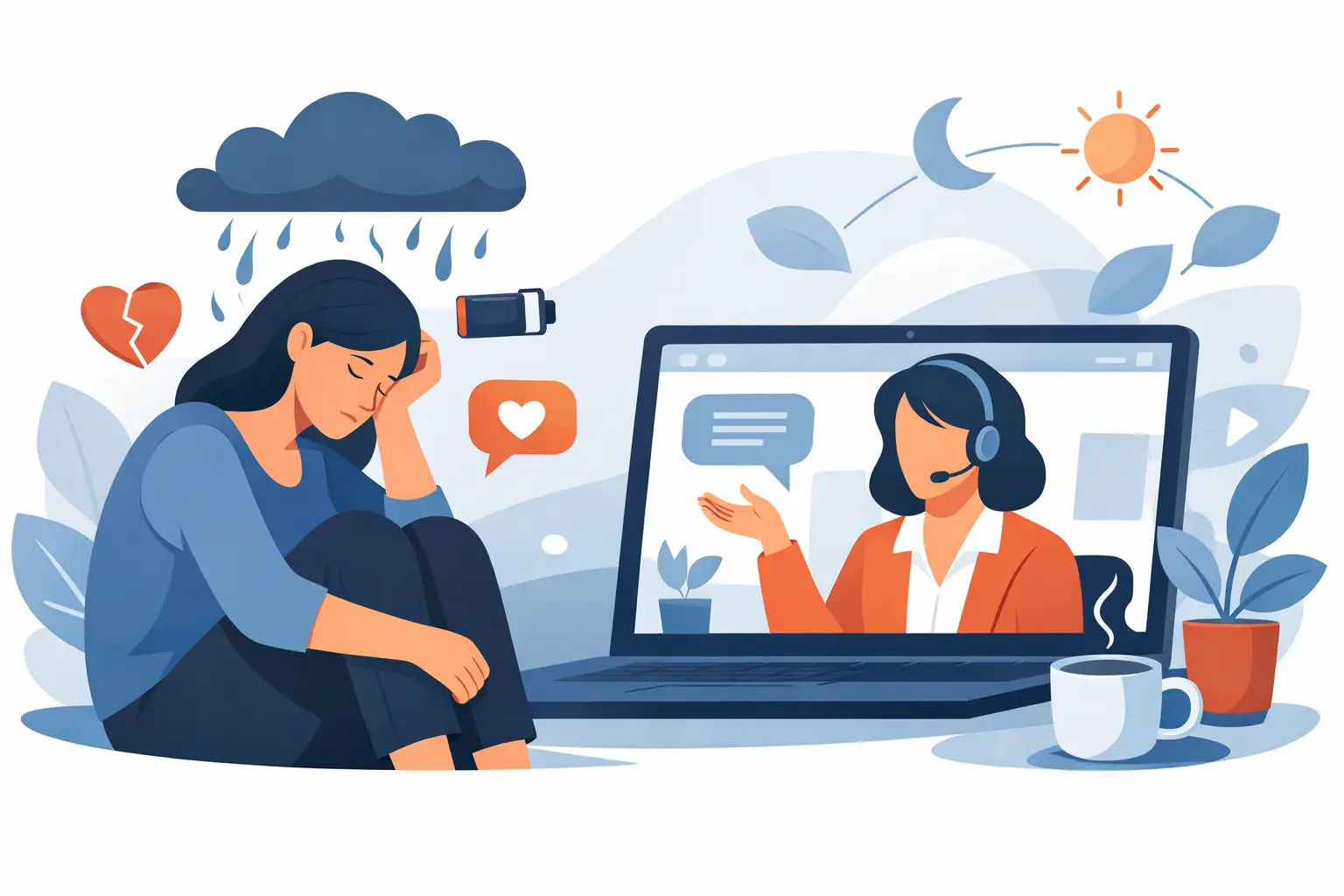
You answer texts, show up for work, handle dinner, keep the calendar moving – and still feel emotionally flat. Not dramatic. Not fully broken. Just used up. Online care for emotional burnout can help at this stage, when pushing through is no longer working but getting traditional in-person support feels too slow, too expensive, or too hard to fit into real life.
Emotional burnout is often mistaken for simple stress. Stress usually feels active – your mind races, your body stays tense, and everything feels urgent. Burnout tends to feel heavier. You may feel detached, numb, irritable, exhausted, or strangely guilty for not being able to care the way you used to. For many adults, it builds slowly after long periods of pressure, caregiving, workplace strain, sleep problems, or a major life change.
That matters because burnout does not always look like a mental health crisis. Sometimes it looks like missed messages, short patience, poor sleep, low motivation, and a constant sense that you have nothing left to give. People often wait too long to seek help because they think they should be able to handle it on their own.
Table of Contents
What online care for emotional burnout actually includes
Good online care is more than a quick questionnaire and a generic suggestion to rest. It should give you access to licensed providers who can look at the full picture – your symptoms, stress load, sleep, mood, medical history, and whether burnout may be overlapping with anxiety, depression, or another treatable concern.
That distinction matters. Emotional burnout can share symptoms with several mental health conditions. Trouble sleeping, low energy, hopelessness, brain fog, and irritability can point in more than one direction. A licensed provider helps sort out what you are dealing with so your treatment is not based on guesswork.
In a telehealth model, care often starts with a private online assessment followed by a personalized plan. Depending on your needs, that plan may include ongoing provider check-ins, symptom-specific treatment guidance, medication when clinically appropriate, and secure messaging for questions between visits. For people who feel too drained to navigate a complex healthcare system, that kind of structure can be a real relief.
Why burnout support online works for many adults
When someone is emotionally burned out, even small tasks can feel bigger than they should. Booking an appointment, driving across town, sitting in a waiting room, rearranging work, and explaining yourself from scratch can become one more thing you cannot manage.
Online care removes a lot of that friction. You can get started from home, on your schedule, with more privacy and less disruption. For busy professionals, parents, and people going through personal stress, convenience is not a luxury. It can be the reason care happens at all.
There is also the emotional side of accessibility. Some people avoid treatment because they do not want to be seen entering a clinic, or they worry their symptoms are not serious enough to justify help. Digital care feels more approachable. It meets people where they are, especially when they are functioning on the outside but struggling in private.
That said, online care is not identical to every in-person option. Some people prefer face-to-face visits or need a higher level of support. If symptoms are severe, include immediate safety concerns, or are affecting daily functioning in a major way, a more intensive level of care may be the better fit. The right approach depends on symptom severity, medical history, and how much support you need right now.
Signs you may need care, not just a weekend off
Rest helps. Time off helps. Better boundaries help. But burnout often reaches a point where recovery needs more than a few lighter days.
You may benefit from professional support if your emotional exhaustion has lasted for weeks, your sleep is off, your patience is gone, your motivation has dropped, or you feel disconnected from work, family, or yourself. The same is true if stress has tipped into persistent anxiety, low mood, panic, hopelessness, or a level of overwhelm that keeps coming back.
Another sign is when your coping strategies stop working. If exercise, journaling, a day off, or talking to friends no longer shifts the weight you are carrying, it may be time for more structured care. You do not have to wait until you are in a full crisis to get treatment.
How personalized treatment can help emotional burnout
Burnout is personal, so treatment should be too. One person may need support around anxious thoughts and sleep disruption. Another may be dealing with grief, relationship strain, or a work environment that has pushed them past capacity. Someone else may have symptoms that overlap with depression and need clinical treatment, not just stress advice.
A personalized treatment plan can address both symptoms and function. That means helping you sleep better, stabilize your mood, reduce mental overload, and regain enough energy to handle daily life without feeling constantly depleted. If medication is clinically appropriate, licensed providers can discuss options based on your symptoms and health history. If it is not the right fit, care may focus on monitoring, guidance, and practical strategies you can actually use.
This is one reason ongoing digital support can be useful. Burnout is rarely fixed in a single appointment. Symptoms shift. Energy comes and goes. Questions come up after you start treatment. Being able to message a provider and adjust your plan over time can make care feel more manageable and more responsive.
What to look for in online care for emotional burnout
Not all telehealth services are built the same. If you are comparing options, look for licensed providers, clear treatment steps, private and secure communication, and care that responds to your specific symptoms rather than forcing everyone into the same track.
It also helps to look for a service that is easy to start and easy to stay with. When you are burned out, complicated systems create dropout points. A simple intake process, straightforward pricing, and ongoing support can make a real difference in whether treatment feels sustainable.
For many people, affordability matters just as much as convenience. If care feels out of reach financially, they delay it. A digital model with accessible pricing can lower that barrier and make it easier to get help sooner rather than later.
Elevate Your Health for Just $29.99/Month
Join the Precision Wellness Subscription at My Healing 365 and get discounted services, priority coaching access, virtual care, and exclusive wellness resources to support your physical, emotional, and hormonal health.
Join for $29.99/MonthMy Healing 365 is built around that kind of practical access – licensed provider care, privacy, personalized treatment, and digital support that fits into everyday life rather than interrupting it.
What online treatment can and cannot do
Online care can help you feel supported, understood, and clinically guided without adding more stress to your week. It can reduce delays, improve access, and create a clear next step when you feel stuck. It can also be a strong fit for people who want discreet, evidence-based care and do better with messaging and structured follow-up.
But it is not magic, and it does not erase the causes of burnout overnight. If your life is overloaded, treatment may also involve hard conversations about boundaries, workload, family responsibilities, and what is no longer sustainable. Care can help you stabilize and recover, but recovery often includes changing the conditions that drained you in the first place.
That can be uncomfortable. It can also be where real progress begins.
Taking the first step when you already feel depleted
One of the hardest parts of burnout is that the moment you most need support is often the moment you have the least energy to seek it out. That is why low-friction care matters. You should not have to assemble a complicated plan while running on empty.
If you have been telling yourself to just get through this week, then the next one, then the next, it may be time to stop treating emotional burnout like a personal failure. It is a signal. Your mind and body are asking for care.
You do not have to go through it alone, and you do not have to wait until things get worse to get help. The right online support can give you a private, practical way to start feeling more steady again – one step, one message, and one personalized plan at a time.