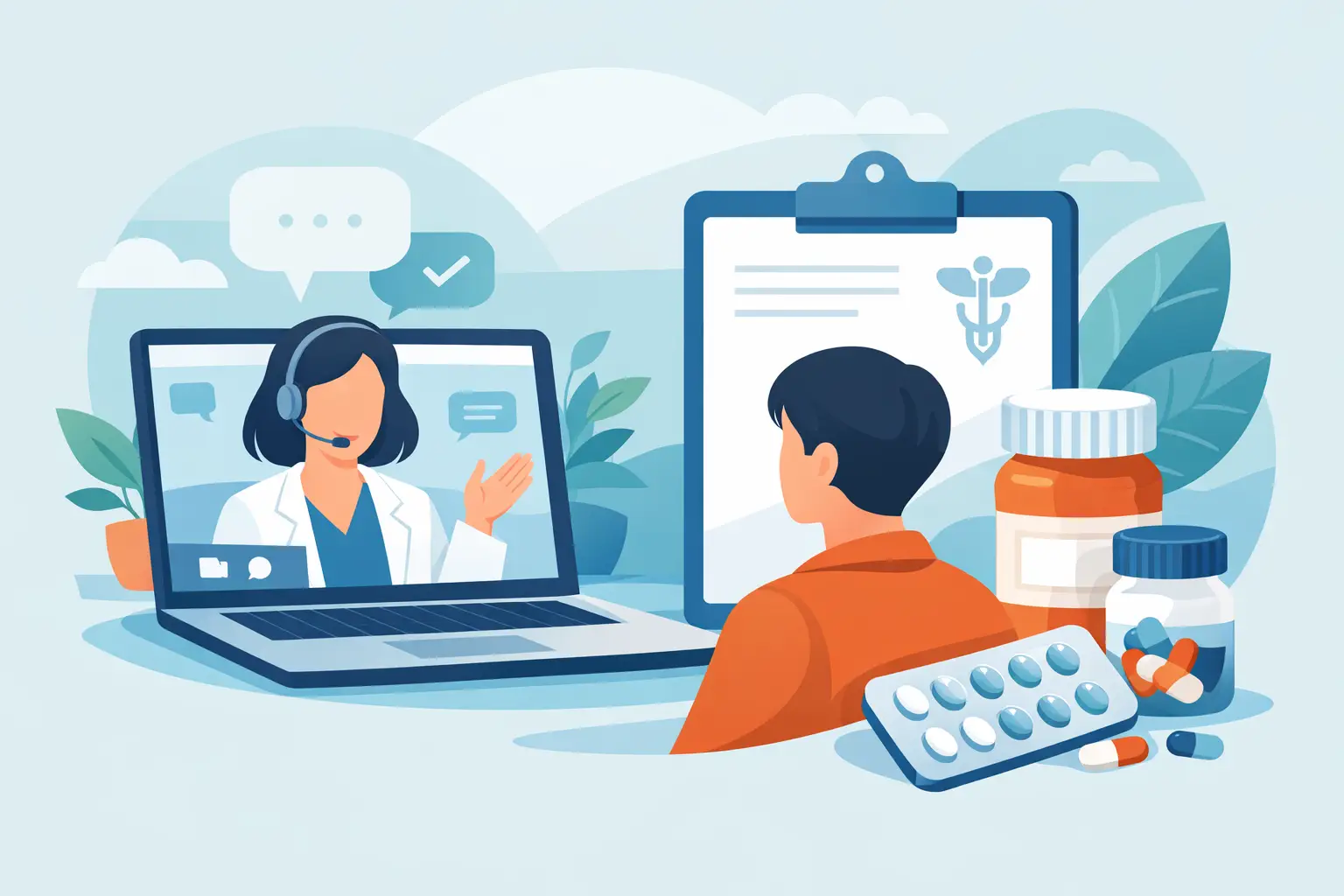
You can be lying awake at 2 a.m., feeling your heart race, knowing something is off, and still put off getting help because finding care feels like one more thing you cannot manage. That is exactly why online mental health services that can prescribe medication have become such a practical option for many adults. When care is secure, guided by licensed providers, and available from home, it removes some of the biggest barriers that keep people stuck.
Table of Contents
Why people look for online mental health services that can prescribe medication
For many people, the issue is not whether they want support. It is whether they can realistically fit care into real life. Taking time off work, finding childcare, driving to an appointment, sitting in a waiting room, and then waiting weeks for a follow-up can make treatment feel out of reach.
Online care changes that. A virtual mental health service can let you complete an intake from home, connect with a licensed provider, and get a treatment plan that matches your symptoms and goals. If medication is appropriate, some platforms can prescribe it as part of that plan. That means the process feels less overwhelming and often much faster.
Privacy matters too. Some people are not ready to discuss anxiety, depression, burnout, or sleep issues in person. Others simply want a more discreet option. Online treatment gives many patients a greater sense of control, which can make it easier to take the first step.
What these services actually do
The best online mental health services that can prescribe medication are not just digital prescription mills. They are structured care platforms built around evaluation, clinical judgment, ongoing monitoring, and communication.
Most begin with a health questionnaire that asks about your symptoms, history, current medications, and goals. A licensed provider then reviews that information and may meet with you virtually to better understand what is going on. That part matters because anxiety can look different from depression, sleep issues can be tied to stress or another condition, and emotional distress after a major life event may need a different approach than long-term mood symptoms.
From there, the provider may recommend medication, therapy support, lifestyle changes, educational resources, or a combination of these. Good care is rarely one-size-fits-all. Some people benefit from medication right away. Others may need monitoring first, or a different level of support.
Many digital platforms also include ongoing messaging, check-ins, and treatment guidance. That can make a real difference. Mental health treatment often works best when you are not left on your own after the first appointment.
Who online medication management may help
Online treatment can be a strong fit for adults dealing with common mental health concerns such as anxiety, depression, stress tied to major life transitions, or sleep-related issues. It can also work well for people who already know they respond well to medication and want a simpler way to stay consistent with care.
This model is especially useful for busy professionals, parents, caregivers, and anyone who needs flexibility. If your schedule changes week to week, virtual access can make ongoing care much easier to maintain.
That said, online treatment is not right for every situation. If someone is in immediate crisis, has severe symptoms, or needs urgent in-person psychiatric support, a digital platform may not be the best starting point. Safe services are clear about that. The goal is not to force every need into one format. The goal is to match the person to the right level of care.
What to expect from the prescribing process
A lot of people wonder whether getting a prescription online is legitimate. That is a fair question. The answer depends on the service.
A credible platform uses licensed medical providers, secure technology, a real clinical review process, and state-specific rules around prescribing. Providers should look at your symptoms, health history, current medications, and possible risks before recommending anything. If medication is prescribed, it should be based on medical appropriateness, not speed alone.
You should also expect follow-up. Mental health medications are not something to start and ignore. Providers often need to assess side effects, symptom changes, dose adjustments, and how the treatment is affecting your day-to-day life. A good online care model makes that easier through check-ins and messaging, instead of leaving you to chase answers.
Elevate Your Health for Just $29.99/Month
Join the Precision Wellness Subscription at My Healing 365 and get discounted services, priority coaching access, virtual care, and exclusive wellness resources to support your physical, emotional, and hormonal health.
Join for $29.99/MonthBenefits of getting mental health care online
The biggest benefit is access. When treatment is easier to start, more people actually start it. That may sound simple, but it matters. Delaying care can make anxiety feel bigger, depression feel heavier, and sleep problems more disruptive.
Convenience is another major advantage. You can often complete forms, meet with a provider, and manage follow-up care without rearranging your whole week. For people already stretched thin, that lower-friction experience can be the difference between getting help and continuing to wait.
Affordability can also play a role. While costs vary, many online services are designed to be more straightforward and budget-conscious than traditional care pathways. Clear pricing helps people make decisions sooner.
Then there is consistency. When you can message a provider, review treatment guidance on demand, and stay connected between appointments, care feels more active and supportive. That can help people stay engaged long enough to see meaningful change.
The trade-offs to understand
Online care is convenient, but it has limits. Not every medication can be prescribed through every telehealth platform, and rules vary by state and by provider type. Some services focus on common medications for anxiety or depression, while others may have narrower prescribing options.
There is also the human side. Some patients strongly prefer face-to-face care, especially when discussing complex symptoms or personal history. Others may need therapy, psychiatric specialization, or medical testing that works better in person. Virtual care can be highly effective, but it is not automatically the best fit for every person or every diagnosis.
Technology matters too. If a platform is hard to use, communication is slow, or follow-up feels generic, the experience can become frustrating fast. Convenience only helps when the care itself is responsive.
How to choose among online mental health services that can prescribe medication
The strongest choice is usually the one that makes treatment feel both safe and manageable. Look for licensed providers, secure communication, clear information about what conditions are treated, and a treatment model that includes more than a one-time prescription.
It also helps to pay attention to the patient experience. Can you communicate with your provider easily? Is the intake process simple? Do you know what happens after you start treatment? Is pricing easy to understand? Those details shape whether care feels supportive or confusing.
You may also want a service that sees mental health as part of overall wellness. Emotional health does not exist in a vacuum. Sleep, stress, physical health, hormones, and major life changes can all affect how you feel. A connected care model can be helpful when symptoms overlap or evolve over time.
For adults who want fast, discreet support, a platform like My Healing 365 can make treatment feel more approachable by combining licensed-provider access, personalized plans, secure online care, and medication when clinically appropriate.
Signs a service is built for real support
Good online care should make you feel guided, not rushed. The provider should ask thoughtful questions. The treatment plan should feel tailored to your symptoms. You should know how to reach out if something changes.
It is also a good sign when the platform acknowledges that medication is only one part of care. For some people, medication creates enough relief to function better and feel more like themselves. For others, it works best alongside coaching, therapy, better sleep habits, or stress management tools. Thoughtful services leave room for that reality.
Most of all, the right platform should reduce friction at every step. Getting help for anxiety, depression, emotional stress, or sleep issues should not feel like another impossible task on your list.
If you have been telling yourself to wait until things get worse, that is usually not the best threshold. Support is often most effective when you seek it before you hit a breaking point. You do not have to go through it alone, and getting care from home may be the step that finally makes treatment feel possible.

























