Medically Reviewed
Dr. Jose Rossello, MD, PhD, MHCM
Preventive Medicine & Public Health Specialist
Last Reviewed: April 29, 2026
Your kitchen shapes your eating habits more than you might realize. The layout, materials, appliances, and organization all work together to either support or hinder your health goals. A well-designed healthy kitchen combines safe materials, smart storage solutions, and the right tools to make nutritious cooking easier and more enjoyable every day.
Building a dream healthy kitchen doesn’t require a complete overhaul or unlimited budget. Small changes add up to create a space that encourages healthier choices[1] through thoughtful setup. From choosing non-toxic cookware to organizing pantries so whole foods stay visible and accessible, each improvement removes barriers to better eating.
Whether planning a full kitchen remodel or working with an existing space, the right approach makes healthy meal preparation simpler. This guide covers practical steps for creating a kitchen that reduces exposure to harmful chemicals, maximizes energy efficiency, and keeps nutritious ingredients within easy reach for the whole family.
Table of Contents
Key Takeaways
- A healthy kitchen combines safe materials, proper organization, and smart appliances that reduce chemical exposure while supporting better nutrition
- Strategic layout and accessible storage for whole foods makes choosing nutritious options easier during meal preparation
- Small improvements like using non-toxic cookware and organizing pantries create lasting changes that support healthier eating habits
The Core Principles of a Dream Healthy Kitchen
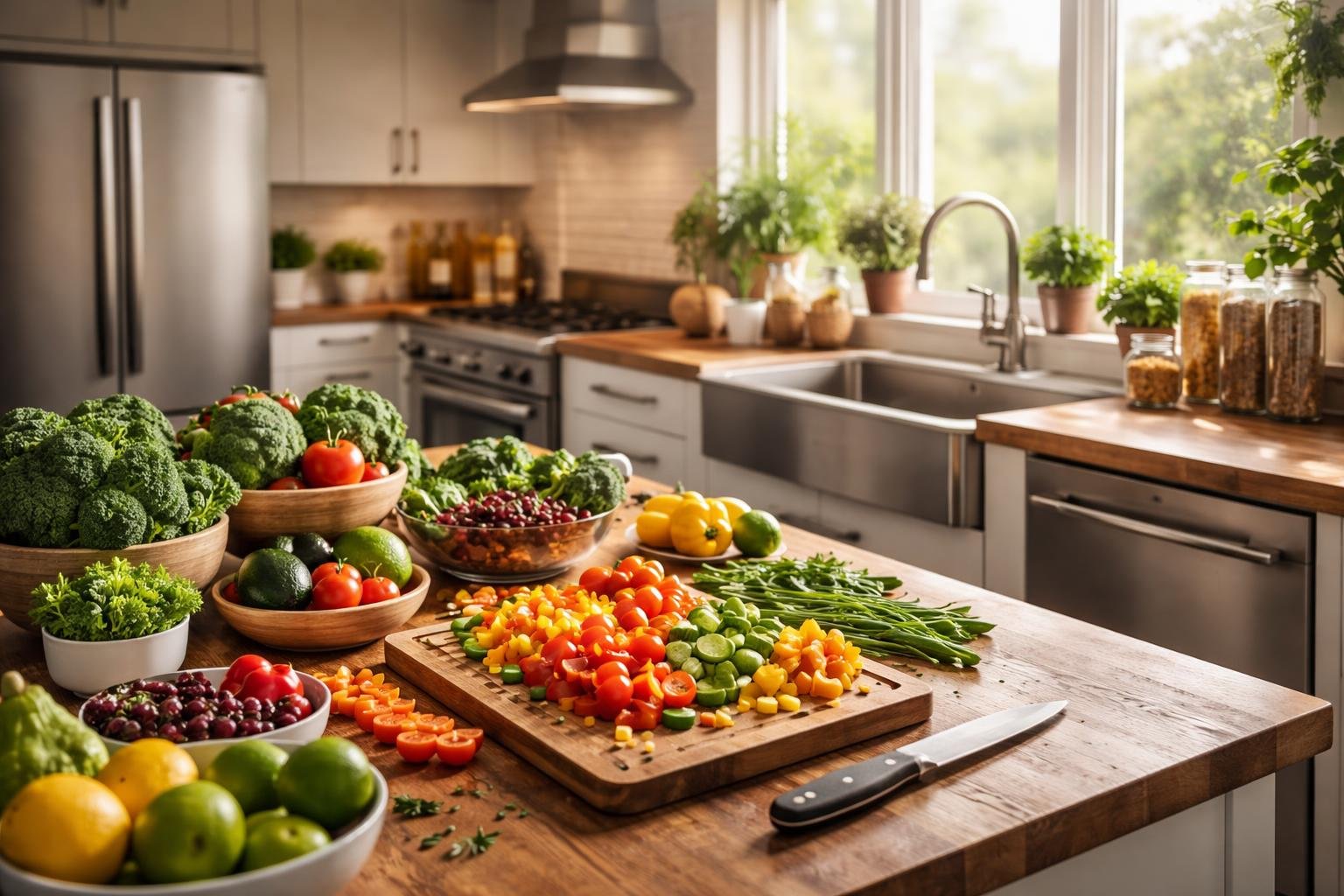
A healthy kitchen balances thoughtful design choices with practical features that support nutritious meal preparation. The space becomes more than a cooking area when it combines safe materials, wellness-focused layouts, and organization systems that make healthy eating the easy choice.
Defining a Healthy Kitchen
A healthy kitchen prioritizes non-toxic materials and smart organization to reduce chemical exposure while making nutritious foods accessible. The space uses cookware free from harmful coatings, cleaning products without harsh chemicals, and storage containers that don’t leach substances into food.
Safe countertop materials like stainless steel, natural stone, or sealed wood prevent bacteria growth without releasing volatile organic compounds. Cabinet selections matter too, with formaldehyde-free plywood or solid wood options protecting indoor air quality better than standard composite materials.
Storage plays a central role in this definition. Pull-out shelves, clear containers, and strategic placement of whole foods at eye level encourage better food choices. A well-organized kitchen makes it easier to access fresh, healthy ingredients[2] and prepare nutritious meals without searching through cluttered spaces.
Water filtration systems and proper ventilation complete the picture by removing contaminants from drinking water and clearing cooking fumes from the air.
Integrating Wellness with Kitchen Design
Kitchen layouts that reduce physical strain and support efficient meal preparation create an environment where cooking feels less like work. The classic work triangle connecting the refrigerator, stove, and sink minimizes unnecessary movement during food prep.
Natural lighting through windows and skylights improves mood while reducing dependence on artificial light during daytime hours. East-facing windows capture morning sun that encourages earlier wake times and breakfast habits. Skylights flood the space with overhead light that makes the cooking area more inviting.
Ergonomic features like varied counter heights accommodate different tasks and users. Lower surfaces work better for kneading dough, while higher counters suit chopping vegetables. Pull-out shelving eliminates the need to bend into deep cabinets, reducing back strain.
Kitchen islands add valuable workspace for assembling nutritious meals while providing extra storage for healthy staples within easy reach.
Benefits of Healthy Kitchen Spaces
A properly designed kitchen reduces exposure to harmful chemicals found in many standard building materials and products. Switching to low-VOC finishes, toxin-free cookware, and natural cleaning solutions protects family health over the long term.
Energy-efficient appliances like induction cooktops lower utility bills while offering precise temperature control for cooking. These features use 90% of generated energy compared to 65% for gas stoves, keeping kitchens cooler during meal prep.
The most significant benefit comes from how the space influences daily food choices. When healthy eating becomes the natural choice through smart organization and accessible storage, families consume more whole foods and fewer processed items. Visible fruit bowls on clear countertops and vegetables stored at eye level in refrigerators make nutritious options the convenient option.
Proper ventilation removes cooking fumes and moisture that can affect respiratory health. Clean air quality supports overall wellness beyond just the meals prepared in the space.
Planning Your Dream Healthy Kitchen Layout
A well-planned kitchen layout creates efficient cooking zones while maximizing natural light and workspace. The right design balances movement flow, prep areas, and lighting to support healthy meal preparation.
Work Triangle and Efficient Flow
The work triangle connects the sink, stove, and refrigerator in a layout that minimizes steps during food preparation. Each leg of the triangle should measure between 4 and 9 feet for optimal efficiency. This configuration reduces unnecessary movement and makes cooking less tiring.
An open-concept kitchen eliminates walls between cooking and living spaces, creating better traffic flow for families. However, the work triangle still applies within the cooking zone itself. A free online kitchen layout planner[3] can help visualize how appliances and work zones fit together before starting a kitchen remodel.
Adding a kitchen island enhances the work triangle by providing an additional prep station. Islands work best when positioned 42 to 48 inches from surrounding cabinets and appliances. This spacing allows cabinet doors to open fully while multiple people move through the space.
Maximizing Counter Space
Counter space directly impacts meal preparation efficiency and food safety. A healthy kitchen needs at least 158 inches of total counter space, with uninterrupted sections on both sides of the sink and stove.
Plan for these specific counter zones:
- Landing space: 15 inches on the latch side of the refrigerator for unloading groceries
- Prep zone: 36 inches of continuous counter for chopping and assembly
- Cooking clearance: 12-15 inches on each side of the cooktop
Corner spaces often go unused in traditional kitchen design. Installing a lazy Susan or pull-out shelving transforms these areas into functional storage for healthy pantry staples. Deep drawers near prep zones keep cutting boards and mixing bowls accessible.
Optimizing Natural and Smart Lighting
Natural light makes kitchens feel larger and helps accurately judge food freshness and color. Windows positioned above the sink or along prep areas maximize natural light during daytime cooking hours.
A skylight adds overhead illumination to kitchens without exterior walls. Tubular skylights work in smaller spaces and cost less than traditional models. They bring consistent daylight to central islands and cooking zones throughout the day.
Task lighting fills gaps where natural light cannot reach. Install under-cabinet LED strips to illuminate countertops without shadows. Pendant lights over islands should hang 30 to 36 inches above the surface. Dimmer switches allow adjustment based on time of day and activity level.
Material Choices for Health, Safety, and Sustainability
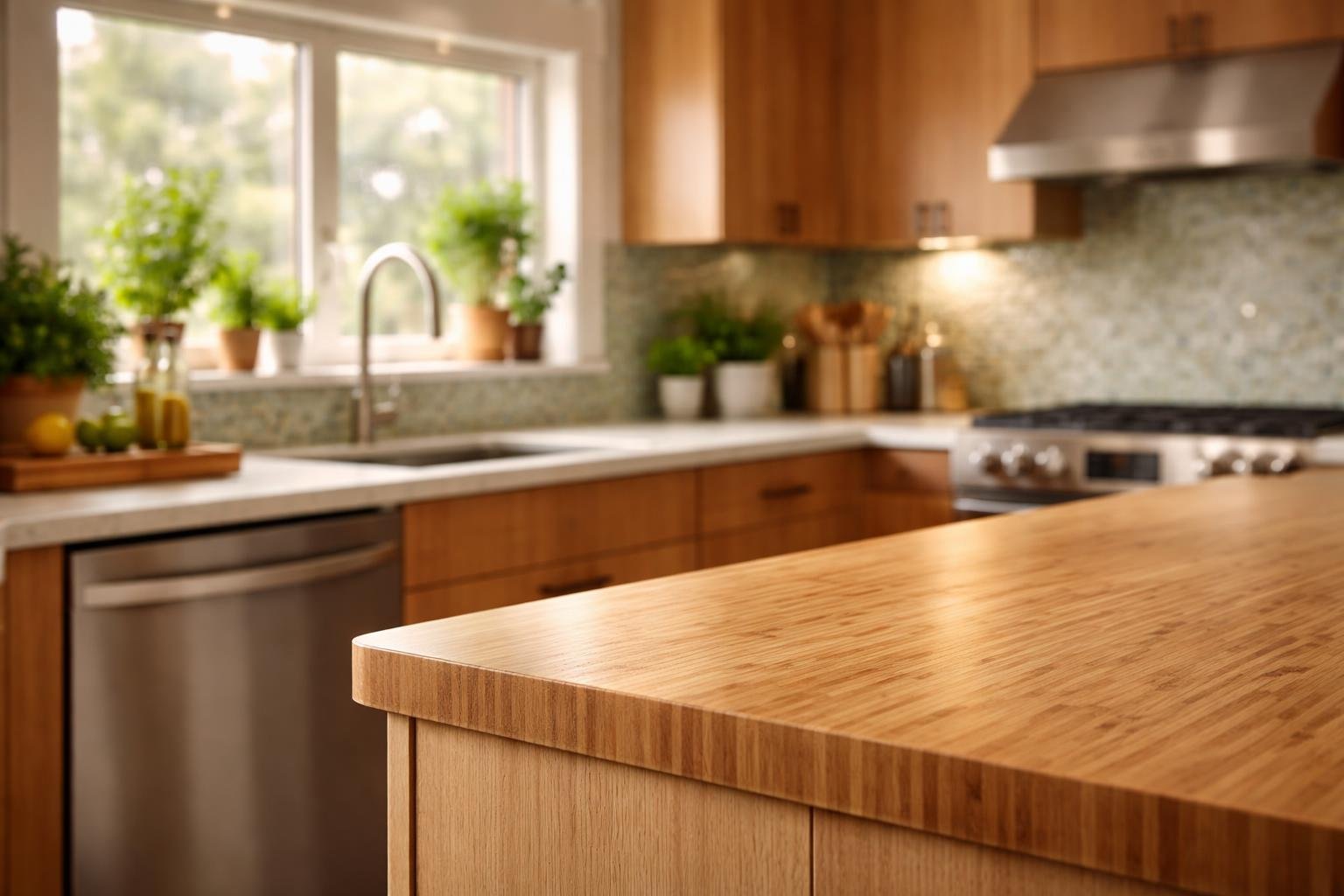
The materials you choose for your kitchen directly impact your family’s health and the environment. Selecting non-toxic, durable options protects indoor air quality while supporting long-term sustainability goals.
Non-Porous and Easy-to-Clean Surfaces
Non-porous surfaces prevent bacteria, mold, and moisture from penetrating the material. These surfaces are critical in kitchens where food preparation and spills occur daily.
Best non-porous options include:
- Stainless steel (sinks and backsplashes)
- Glazed porcelain tile
- Sealed stone
- Solid surface materials
Non-porous surfaces require simple cleaning with soap and water. They don’t harbor harmful bacteria in tiny cracks or pores. This makes them safer for food contact areas and reduces the need for harsh chemical cleaners.
These materials also resist staining and wear better over time. They maintain their appearance with minimal maintenance, making them practical choices for busy households.
Eco-Friendly Countertops and Flooring
Countertop materials like manufactured quartz and large-format porcelain combine durability with low environmental impact. These options resist scratches, heat, and moisture while avoiding harmful chemical emissions.
For kitchen flooring[4], cork provides comfort and natural antimicrobial properties. Cork flooring is made from 99% natural materials with a PVC-free layer for water resistance. It offers cushioning underfoot, which helps during long cooking sessions.
Porcelain tile works well for high-traffic kitchens. True linoleum made from linseed oil, cork dust, and pine resins creates a naturally antibacterial surface. This material lasts for decades and releases minimal emissions compared to vinyl flooring.
Bamboo offers another sustainable option. It grows rapidly and regenerates without replanting. When choosing any sustainable kitchen design[5] material, look for third-party certifications that verify environmental claims.
Safe Cabinetry and Hardware
Custom cabinetry[6] built with low-emitting substrates protects indoor air quality. Traditional cabinet boxes made from plywood or particleboard often contain formaldehyde, which releases toxic fumes for years.
Look for cabinets constructed with formaldehyde-free materials. The finishes matter just as much as the box construction. Conventional stains and clear coats emit chemicals that accumulate inside closed cabinets and release when doors open.
Key features to request:
- Ultra-low emitting substrates
- Water-based or formaldehyde-free finishes
- Third-party certifications (GreenGuard, CARB Phase 2)
Cabinet hardware should be durable and free from toxic coatings. Solid metal pulls and knobs in stainless steel or brass last longer than painted options. Many traditional building materials contain harmful chemicals[7] that affect indoor air quality, making careful selection essential for long-term health.
Modern kitchen technology makes healthy cooking easier and more efficient. Energy-efficient appliances reduce utility costs while smart devices help monitor nutrition and cooking methods that preserve food quality.
Choosing Energy-Efficient and Smart Appliances
Energy-efficient appliances cut electricity costs and reduce environmental impact. When selecting major appliances, the Energy Star rating indicates models that use less power without sacrificing performance.
Induction cooktops heat food faster than traditional electric or gas ranges while using 70% of their energy for cooking instead of heating the surrounding air. This precise temperature control helps prevent nutrient loss in vegetables and proteins.
A smart fridge tracks food inventory and expiration dates through internal cameras and apps. Some models suggest recipes based on available ingredients and adjust cooling zones to keep produce fresh longer.
Steam ovens cook vegetables, fish, and grains while retaining vitamins and minerals that boiling can wash away. Many modern units combine steam with convection heating for versatile cooking options.
For smaller households, smart appliances connect to phones and allow remote monitoring. A connected oven sends alerts when food reaches the correct internal temperature, preventing overcooking that destroys nutrients.
Essential Cooking Tools for Healthy Meal Preparation
The right tools make nutritious meal prep faster and simpler. A high-powered blender creates smoothies, soups, and sauces from whole fruits and vegetables in minutes. Look for models with at least 1000 watts for crushing frozen ingredients and breaking down fibrous greens.
An air fryer cooks crispy foods with up to 80% less oil than deep frying. These countertop devices circulate hot air around food, creating a crunchy exterior on chicken, vegetables, and potatoes.
Food processors chop, slice, and shred vegetables quickly for salads, stir-fries, and meal prep containers. A quality processor saves time and encourages using more fresh produce.
The Instant Pot and other multi-cookers combine a slow cooker, pressure cooker, rice cooker, and steamer in one device. Pressure cooking reduces cooking time by up to 70% while preserving nutrients better than boiling.
Sous-vide devices cook proteins and vegetables in temperature-controlled water baths. This method keeps food moist and prevents the formation of harmful compounds that occur with high-heat cooking.
Ventilation and Air Quality Solutions
Proper ventilation removes cooking fumes, smoke, and excess moisture that can harbor bacteria. A range hood positioned above the cooktop or oven pulls airborne grease particles and odors outside or through filters.
Range hoods should move at least 100 cubic feet of air per minute (CFM) for standard cooking. Homes with gas ranges need higher CFM ratings to remove combustion byproducts.
Recirculating hoods work in spaces without exterior venting but require regular filter changes. Ducted models that vent outside provide better air quality for kitchens with heavy cooking activity.
Some range hoods include heat sensors that automatically adjust fan speed based on cooktop temperature. This feature ensures adequate ventilation without constant manual adjustment.
Innovative Small Appliances
Compact devices expand healthy cooking options without taking up counter space. A countertop steam oven fits in small kitchens while offering the same nutrient-preserving benefits as full-size models.
Personal-sized air fryers (2-3 quarts) cook single portions quickly for people living alone or couples. These units preheat in 2-3 minutes compared to 10-15 minutes for conventional ovens.
Smart microwaves with sensor cooking detect moisture levels and adjust power automatically. This prevents overcooking that can reduce vitamin content in reheated leftovers.
Immersion blenders store easily and blend soups directly in the pot. They work well for making small batches of smoothies, sauces, and pureed baby food.
Compact dishwashers sanitize dishes at temperatures hot enough to kill bacteria without harsh chemicals. Some countertop models connect directly to the kitchen sink and use less water than hand washing.
Maximizing Storage and Kitchen Organization
A well-organized kitchen creates less stress during meal preparation and helps maintain a healthier cooking environment. Smart storage solutions make every inch of space work harder while keeping healthy foods visible and accessible.
Efficient Pantry and Cabinet Storage Solutions
Transforming pantry chaos starts with the right storage containers and systems. Airtight containers keep dry goods fresh longer and take up less space than bulky boxes and bags, especially for bulk purchases. These containers stack neatly and make it easy to see what needs restocking.
A pull-out pantry system allows access to items without reaching into dark corners. Installing a lazy susan in corner cabinets brings spices and condiments within easy reach. Adding vertical storage with shelf risers[8] doubles the usable space on existing shelves by creating additional levels for plates, glasses, and food items.
The pantry door offers valuable storage potential. Hooks and slim racks attached to the inside of the door hold pot lids, foil boxes, and measuring spoons. Glass-front cabinets keep healthy snacks and ingredients visible, serving as a reminder to use fresh produce before it spoils.
Decluttering for a Healthy Environment
A cluttered kitchen leads to unnecessary stress and slower meal preparation[9]. Single-use appliances that rarely get used take up valuable counter and cabinet space that could store healthier cooking tools.
Removing these items creates room for meal prep essentials. The waffle maker that sits unused for months belongs in storage or should be shared with friends and family. Kitchen gadgets that serve only one purpose often aren’t worth the space they occupy.
Seasonal items like holiday cookie cutters and themed serving dishes should move out of everyday storage. These pieces work better stored with seasonal decorations, freeing up kitchen space for items used regularly. Drawer organizers keep frequently used utensils separated and easy to grab during cooking.
Smart and Vertical Organization Techniques
Making use of vertical space[10] transforms kitchens with limited square footage. Open shelving displays frequently used dishes and glasses while keeping them accessible. A pot rack hung from the ceiling stores cookware without taking up cabinet space.
Drawer storage works better than stacking when organized with dividers. Installing hooks underneath cabinets creates hanging storage for mugs and cups. The space between countertops and upper cabinets often goes unused but can hold everyday items within arm’s reach.
Pull-out shelves under the sink organize cleaning supplies and make everything visible at once. Magnetic strips attached to the refrigerator hold spice jars and paper towels, clearing counter space. Step stools slim enough to slide beside appliances make upper storage practical for daily use.
Stocking the Kitchen for Nutritious Meal Preparation
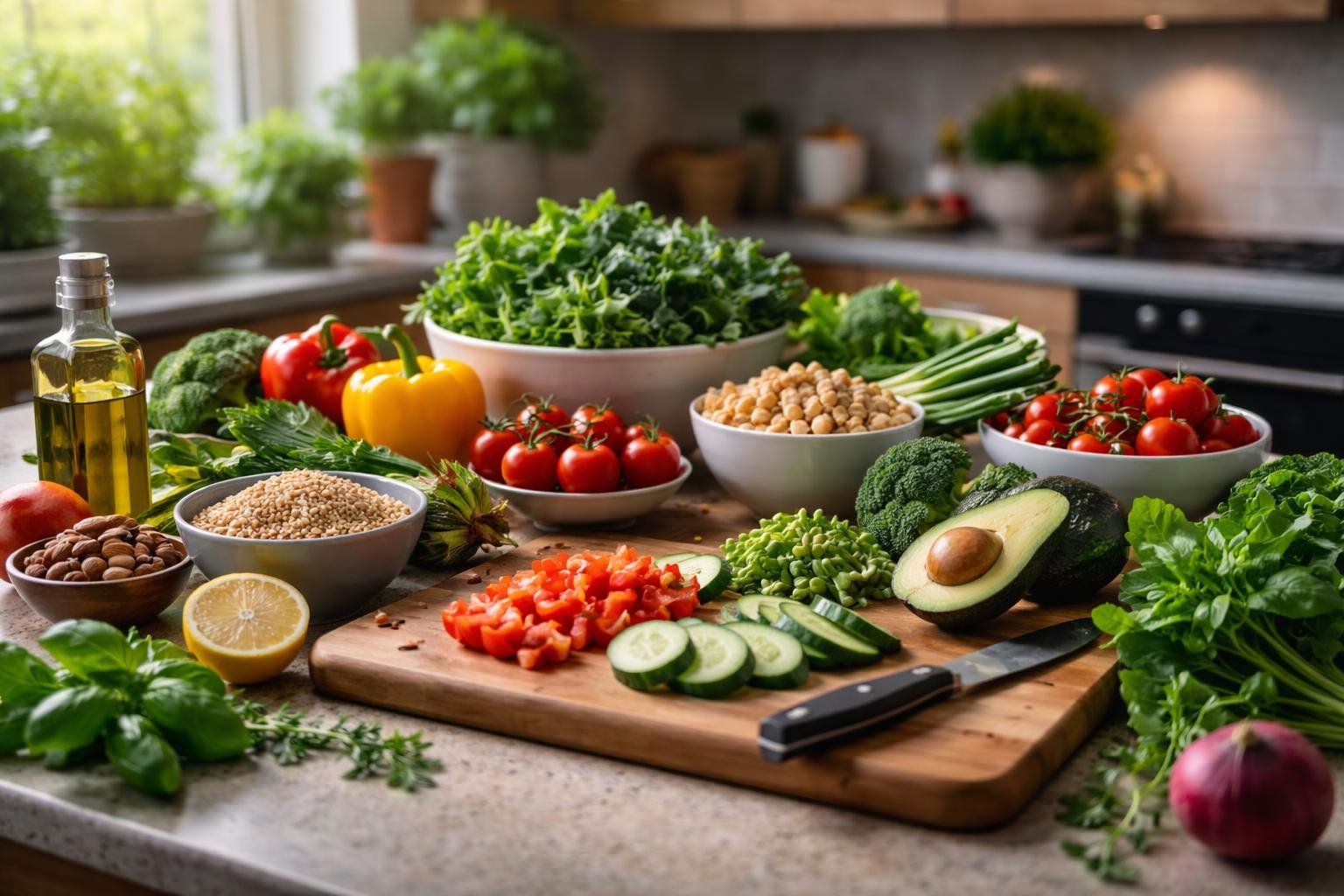
A well-stocked kitchen makes healthy meal preparation faster and more convenient. The right ingredients, bulk staples, and smart organization help anyone create nutritious meals without extra trips to the store.
Essential Healthy Ingredients
Every healthy kitchen needs core ingredients that work across multiple recipes. Whole grains like quinoa, brown rice, oats, and whole-wheat pasta provide fiber and sustained energy. These grains store well and serve as the base for countless meals.
Lean proteins include skinless chicken breast, fish fillets, tofu, and eggs. Canned or dried beans such as kidney, pinto, black, and navy beans[11] offer plant-based protein options that require no refrigeration.
Fresh produce should include a variety of colors and types. Leafy greens, bell peppers, tomatoes, carrots, and onions work in most recipes. Frozen vegetables without added salt or sauces provide the same nutrients as fresh options and last longer.
Cooking oils matter for heart health. Olive oil, canola oil, and other nontropical vegetable oils work for most cooking methods. Herbs and spices add flavor without sodium, including basil, oregano, cumin, garlic powder, and black pepper.
Bulk and Batch Cooking Staples
Watching for sales and coupons helps stock up on frequently used shelf-stable ingredients[12] like pasta, rice, lentils, and beans. Buying these items in larger quantities saves money and ensures ingredients stay available for meal prepping.
Canned goods extend shelf life for healthy meal preparation. Low-sodium canned tomatoes, tomato sauce, and broth work as bases for soups and sauces. Canned tuna and salmon provide quick protein for salads and sandwiches.
Nuts, seeds, and nut butters add healthy fats and protein to meals and snacks. Almonds, walnuts, chia seeds, and pumpkin seeds store well in sealed containers. These ingredients work in breakfast bowls, salads, and stir-fries.
Dried legumes cost less than canned versions and store for months. Lentils cook quickly without soaking. Dried beans require planning but provide flexibility for large batch cooking sessions.
Organizing for Freshness and Easy Access
Proper storage keeps ingredients fresh and visible. Airtight containers protect dry goods from moisture and pests while making it easy to see what needs restocking. Clear containers work better than opaque ones for quick visual checks.
Group similar items together in the pantry. Keep all grains in one area, canned goods in another, and oils and vinegars in a separate spot. This system speeds up meal prepping and prevents forgotten ingredients from expiring.
Store fresh produce correctly to extend its life. Leafy greens stay crisp in the refrigerator crisper drawer. Onions and potatoes need cool, dark spaces away from each other. Herbs last longer in water or wrapped in damp paper towels.
Place frequently used items at eye level. Reserve hard-to-reach spaces for ingredients used less often. This arrangement makes healthy choices more convenient during busy weekdays when quick decisions matter most.
Meal Planning, Prep, and Healthy Cooking Habits
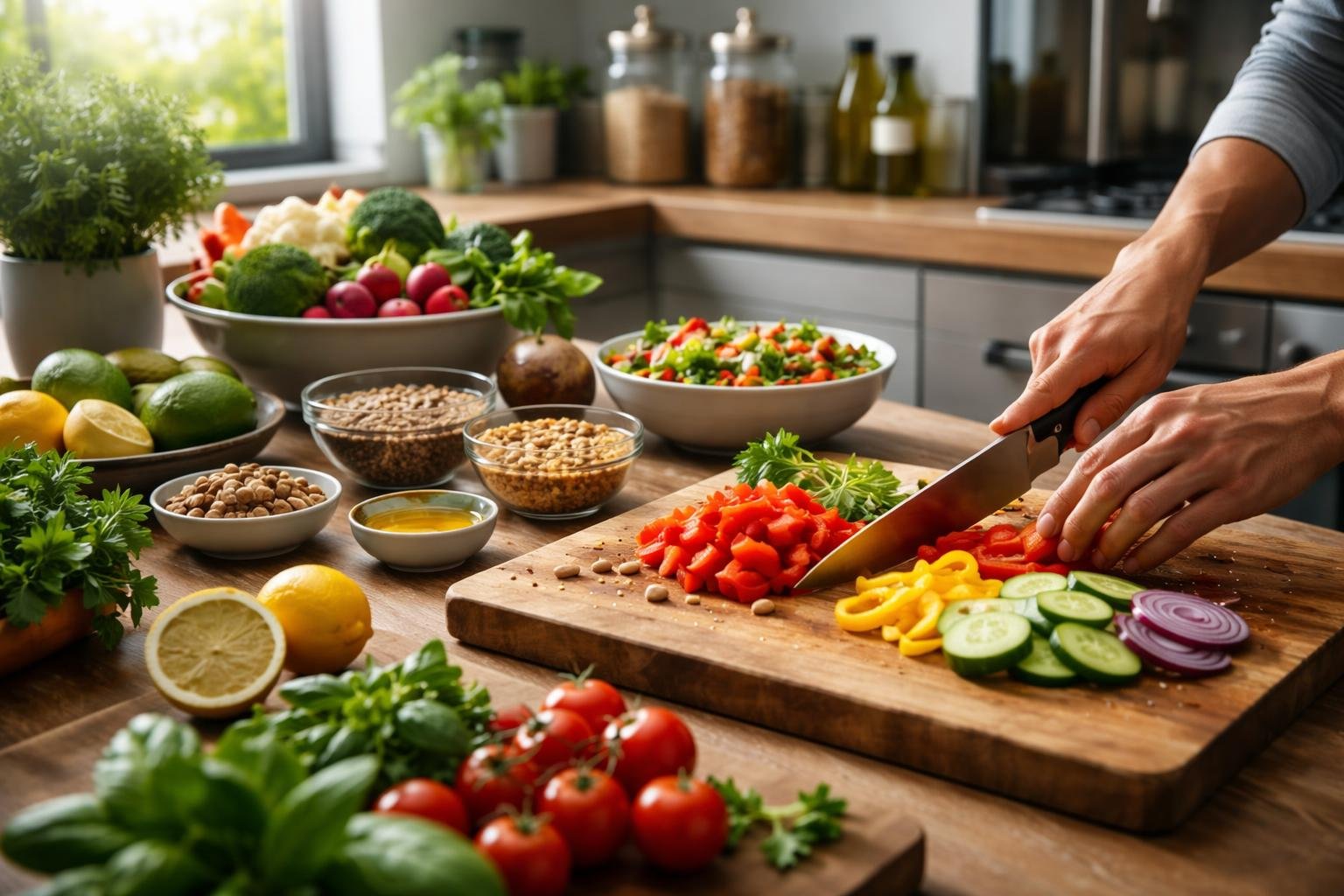
A well-organized approach to food preparation saves time during busy weekdays and supports better nutrition choices. Setting aside specific days for planning menus and cooking meals in advance creates a reliable system that reduces reliance on takeout and processed foods.
Weekly Meal Planning Strategies
Successful meal planning[13] starts with selecting one day each week to map out upcoming meals and create a shopping list. Many families find it helpful to assign themes to different days, such as Meatless Mondays or Stir-Fry Fridays, which simplifies decision-making and adds consistency.
Starting small works best for beginners. Planning just 2-3 dinners for the first week helps build confidence without feeling overwhelming. A monthly calendar or simple spreadsheet can track favorite recipes and ingredients needed.
Involving family members in the planning process ensures everyone’s preferences get considered. This increases the likelihood that prepared meals will actually get eaten. Keeping a collection of go-to recipes, whether in a binder or digital format, streamlines the weekly planning session and prevents last-minute scrambling.
Techniques for Efficient Meal Prep and Batch Cooking
Meal prep day[12] should focus first on foods requiring the longest cooking times. Proteins like chicken and fish, whole grains such as brown rice and quinoa, and roasted vegetables form the foundation of most prepared meals.
Priority cooking order:
- Proteins (chicken, fish, beans)
- Whole grains (rice, quinoa, farro)
- Roasted vegetables
- Chopped fresh produce
Multi-tasking during prep maximizes efficiency. While items bake in the oven, cooks can wash salad greens, chop vegetables, or portion out snacks. Making double or triple batches of recipes provides extra portions for freezing, creating ready-made meals for future weeks.
Individual meal containers work well for lunches. Dividing portions during prep day eliminates morning rush decisions. Labeling everything with dates prevents food waste and helps track freshness.
Establishing Lasting Healthy Eating Behaviors
Proper storage extends the life of prepared foods and maintains quality. Cooked meats last 3-4 days in the refrigerator, while cooked beans stay fresh for 5 days. Hard-boiled eggs and chopped vegetables in airtight containers keep for up to one week.
Freezing expands options further. Soups and stews maintain quality for 2-3 months frozen, while blanched vegetables last 8-12 months. Keeping older items at the front of the refrigerator and freezer ensures nothing gets forgotten.
Building these habits requires consistency rather than perfection. Starting with batch cooking[14] just once per week establishes a rhythm that becomes easier over time. The routine of shopping on one day, prepping on another, and having ready-to-eat meals throughout the week reduces stress and supports better food choices when hunger strikes.
Frequently Asked Questions
A healthy kitchen requires specific features, strategic planning, and the right equipment to make nutritious cooking practical for daily life. These common questions address the core elements needed to build and maintain a space that supports consistent healthy eating.
What are the essential features of a healthy kitchen setup for everyday cooking?
A healthy kitchen combines safe materials, proper organization, and smart design choices that reduce chemical exposure. The foundation starts with non-toxic cookware made from stainless steel, cast iron, or ceramic instead of non-stick coatings that can release harmful chemicals when heated.
Storage containers should be glass or stainless steel rather than plastic. These materials don’t leach chemicals into food and can be used safely in the microwave or oven.
Good ventilation removes cooking fumes and excess moisture from the air. A range hood that vents to the outside works better than recirculating models. It should move at least 100 cubic feet of air per minute.
Water filtration removes chlorine, lead, and other contaminants from tap water used in cooking and drinking. Under-sink systems or faucet-mounted filters provide clean water without the waste of bottled options.
Clear countertops with only essential items visible make meal prep less overwhelming. A fruit bowl displayed prominently encourages healthy snacking over processed foods.
How can I design my kitchen layout to support meal prep and clean eating habits?
The work triangle connecting the refrigerator, stove, and sink minimizes movement during cooking. This arrangement reduces the physical effort needed to prepare meals and makes the process more efficient.
A kitchen island adds workspace for chopping vegetables and assembling ingredients. Islands also provide storage for appliances and pantry staples within easy reach.
Open shelving displays fresh produce and whole grains at eye level. This visibility encourages healthier choices compared to storing these items behind closed cabinet doors.
Pull-out shelving eliminates the need to bend into deep cabinets. These features reduce strain and make it easier to see what ingredients are available without digging through cluttered spaces.
Counter heights between 32 and 42 inches accommodate different tasks. Lower surfaces work better for kneading dough while higher counters suit chopping vegetables.
Natural light from windows or skylights improves mood during cooking. East-facing windows capture morning light that encourages earlier wake times and healthier breakfast habits.
What are the best tools and appliances for making high-protein meals quickly at home?
An air fryer creates crispy textures without deep frying by using hot air circulation. It cooks chicken breast, fish fillets, and tofu with minimal oil in 15 to 20 minutes.
A multi-cooker handles pressure cooking, slow cooking, steaming, and sautéing in one device. It prepares dried beans in 30 minutes instead of hours of soaking and simmering.
An induction cooktop heats pans directly through magnetic fields for precise temperature control. It brings water to boil faster than gas or electric burners and maintains consistent heat for cooking lean proteins that can easily overcook.
A food scale measures portion sizes accurately for tracking protein intake. Digital scales show measurements in grams and ounces for following recipes precisely.
A blender makes protein smoothies and purees cooked chicken or beans for spreads and dips. High-powered models handle frozen fruits and ice without overheating.
Meal prep containers with divided compartments keep proteins separate from sides. Glass versions can go from refrigerator to microwave to dishwasher.
How do I create a weekly meal plan and grocery system that keeps healthy cooking consistent?
A meal planning routine starts with choosing one day each week to plan meals and create a shopping list. Sunday works well for many people who cook most meals at home during the week.
Planning should include breakfast, lunch, dinner, and snacks for each day. Writing down specific meals prevents decision fatigue during busy weeknights.
The grocery list groups items by store section: produce, proteins, dairy, pantry staples, and frozen foods. This organization speeds up shopping trips and reduces the chance of forgetting items.
Batch cooking on the planning day prepares proteins and grains in advance. Cooking chicken breasts, hard-boiling eggs, and making brown rice all at once saves time on weeknights.
A pantry inventory prevents buying duplicates and shows what needs restocking. Checking what’s already available before shopping reduces food waste and saves money.
Keeping a running list on the refrigerator or in a phone app captures items as they run low. This system ensures nothing gets forgotten between shopping trips.
Which brands or services offer the healthiest pre-made meals, and how do I evaluate them?
Pre-made meal services should list complete nutrition information including calories, protein, sodium, and added sugars per serving. Meals with at least 20 grams of protein and less than 600 milligrams of sodium per serving support health goals better.
The ingredient list reveals meal quality. Whole food ingredients like chicken, vegetables, and grains should appear first. Long lists with unfamiliar chemical names indicate heavy processing.
Meals should contain visible pieces of vegetables and proteins rather than heavily processed forms. A chicken and vegetable meal should show actual chicken chunks and recognizable vegetables.
Delivery frequency options allow customization based on cooking schedules. Some services deliver weekly while others offer bi-weekly or monthly options.
Flexible subscription terms let customers pause or cancel without penalties. This flexibility helps people adjust meal service use based on changing schedules.
Packaging should be recyclable or compostable rather than excessive plastic. Some services use insulated boxes made from recycled materials that can be returned.
What is the Healthy Kitchen Project, and what does it include or teach?
The Healthy Kitchen Project refers to various educational initiatives that teach people how to set up kitchens for better nutrition. These programs focus on practical skills rather than strict diets.
Most programs cover organizing pantries and refrigerators to make healthy options more accessible. They teach placement strategies that put nutritious foods at eye level and less healthy items out of immediate view.
Cooking technique instruction shows how to prepare vegetables, whole grains, and lean proteins using methods that preserve nutrients. Classes often demonstrate steaming, roasting, and sautéing instead of frying.
Shopping guidance helps participants read nutrition labels and choose products with minimal processing. This includes comparing similar items to find options with less sodium, sugar, and artificial ingredients.
Some programs provide recipes designed for busy schedules with prep times under 30 minutes. These recipes use affordable ingredients available at regular grocery stores.
Elevate Your Health for Just $29.99/Month
Join the Precision Wellness Subscription at My Healing 365 and get discounted services, priority coaching access, virtual care, and exclusive wellness resources to support your physical, emotional, and hormonal health.
Join for $29.99/MonthKitchen equipment recommendations focus on essential tools that make healthy cooking easier without requiring expensive specialty appliances.
Post Views: 3
References
- 15 Ways to Make Your Kitchen Support Healthy Habits. https://homedecorbliss.com/ways-to-make-your-kitchen-support-healthy-habits/ Accessed April 30, 2026
- Designing a Healthy Kitchen: The Complete Guide. https://www.soup.io/designing-a-healthy-kitchen-the-complete-guide Accessed April 30, 2026
- Kitchen Layout Planner (App). https://kitchendesign.io/kitchen-planner Accessed April 30, 2026
- Healthy Materials Lab. https://healthymaterialslab.org/ Accessed April 30, 2026
- Sustainable Kitchen Materials. https://scenarioarchitecture.com/advice/hard-wearing-materials-to-include-in-your-kitchen-for-sustainability/ Accessed April 30, 2026
- Designing a Healthy Kitchen: Expert Tips for Safe & Sustainable Choices. https://www.healthy-home.pro/post/designing-a-healthy-kitchen-expert-tips-for-safe-sustainable-choices Accessed April 30, 2026
- 15 Eco-Friendly Materials for a Sustainable Custom Kitchen. https://cypressdesignco.com/blog/15-eco-friendly-materials-for-a-sustainable-custom-kitchen/ Accessed April 30, 2026
- 21 Kitchen Organization Ideas for Decluttering in (2026). https://www.architecturaldigest.com/story/kitchen-organization-ideas Accessed April 30, 2026
- Attention Required!. https://suite101.com/30-kitchen-organization-ideas/ Accessed April 30, 2026
- 15 Smart Kitchen Storage Ideas to Maximize Space. https://www.liveneat.com/blog/kitchen-storage-ideas Accessed April 30, 2026
- Pantry Basics for Heart-Healthy Meals Infographic. https://www.heart.org/en/healthy-living/healthy-eating/cooking-skills/meal-planning/heart-healthy-kitchen-essentials-for-meal-prep Accessed April 30, 2026
- Meal Prep Guide • The Nutrition Source. https://nutritionsource.hsph.harvard.edu/meal-prep/ Accessed April 30, 2026
- 3 Strategies for Successful Meal Planning. https://www.eatright.org/food/planning/smart-shopping/3-strategies-for-successful-meal-planning Accessed April 30, 2026
- 60 Healthy Meal Prep Ideas. https://www.loveandlemons.com/healthy-meal-prep-ideas/ Accessed April 30, 2026

























