Medically Reviewed
Dr. Jose Rossello, MD, PhD, MHCM
Preventive Medicine & Public Health Specialist
Last Reviewed: June 23, 2026
Risk assessment helps organizations identify dangers and control them before they cause harm. A risk assessment is a simple record of who might be harmed and how, what controls are already in place, and what further action needs to be taken to manage risks. While the concept seems straightforward, many businesses struggle to create assessments that actually protect their workers and meet legal requirements.
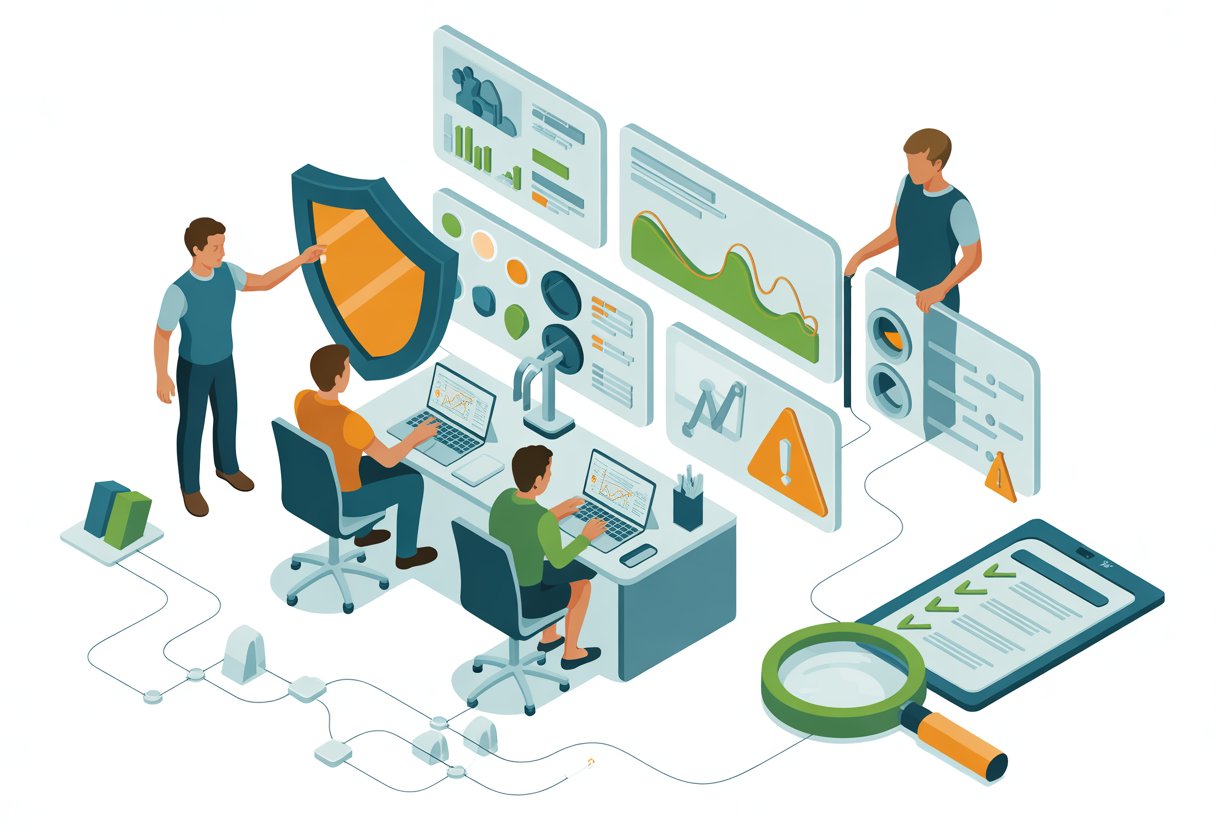
The good news is that effective risk assessment does not require complicated processes or expensive consultants. Risk analysis is a multi-step process that includes assessment, management, and communication to minimize vulnerability to unexpected events. With the right approach and tools, any organization can build a system that identifies hazards, prioritizes threats, and implements practical controls.
This guide breaks down risk assessments into clear, actionable steps that work for businesses of any size. It covers everything from basic concepts to advanced strategies for maintaining safety programs over time.
Table of Contents
Key Takeaways
- Risk assessments identify workplace hazards and establish controls to protect employees from harm
- Following a systematic process helps organizations prioritize risks and meet regulatory requirements
- Regular updates and employee involvement create a proactive safety culture that reduces incidents over time
Core Concepts of Risk Assessment
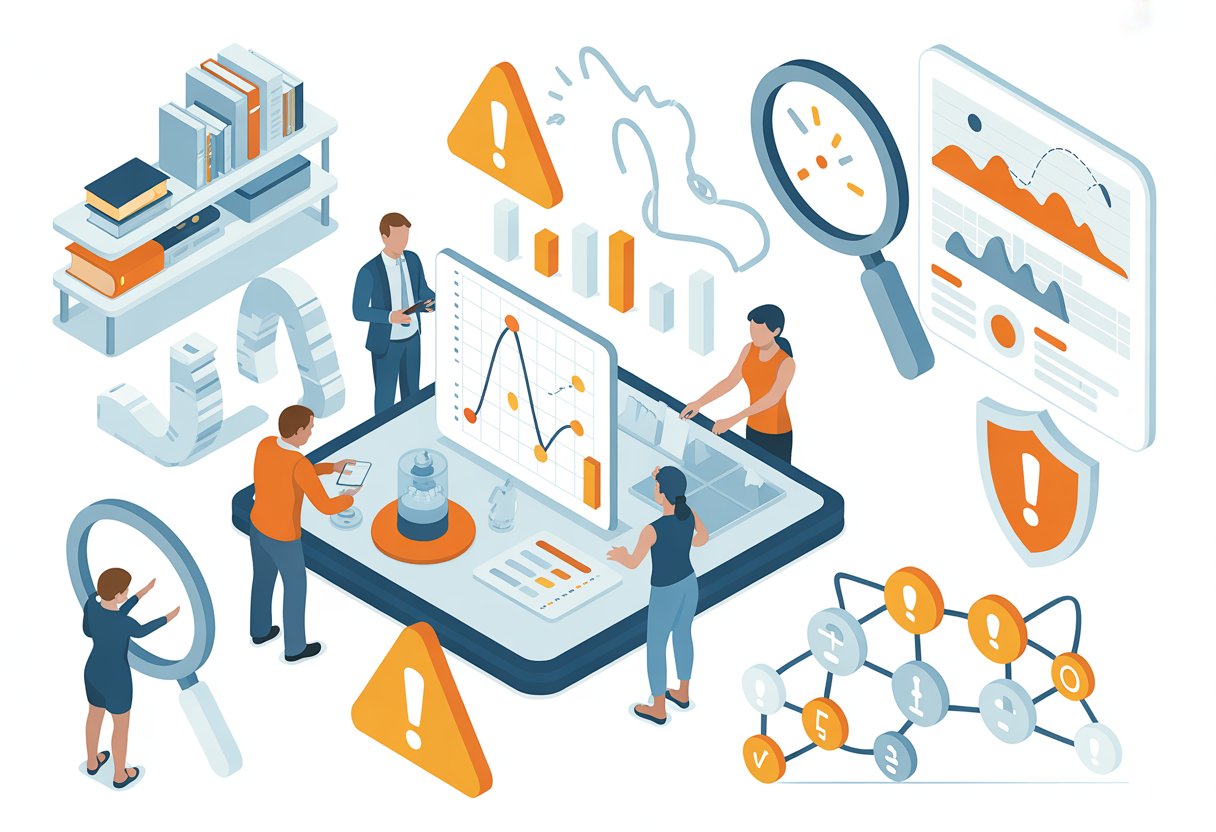
Risk assessment involves identifying potential hazards, understanding what could go wrong, and determining how likely and severe the consequences might be. Organizations use specific terms and processes to evaluate threats systematically and protect their people, assets, and operations.
Defining Hazards and Risks
A hazard is anything that has the potential to cause harm. This could be a physical object, a chemical substance, a work practice, or a situation. Examples include wet floors, faulty electrical equipment, or unguarded machinery.
A risk is the likelihood that a hazard will actually cause harm combined with the severity of that harm. The same hazard can present different levels of risk depending on factors like exposure time, protective measures in place, and who might be affected.
Understanding the difference matters for health and safety programs. A chemical stored properly in a locked cabinet is a hazard but presents low risk. That same chemical left open near workers without protective equipment creates high risk. The risk assessment process evaluates both the presence of hazards and the actual risk they pose under specific conditions.
The Purpose of Risk Assessments
Organizations conduct risk assessments to make informed decisions about protecting their workers, customers, and operations. The primary goal is to identify threats before they cause harm or losses.
What is a risk assessment helps businesses understand their vulnerabilities and prioritize where to focus resources. Rather than addressing every possible threat equally, companies can tackle the most serious risks first.
Risk assessments also support legal compliance. Many industries must conduct regular evaluations to meet regulatory requirements. Beyond compliance, these assessments inform strategic decisions by revealing operational weaknesses and opportunities for improvement.
The process feeds directly into risk management by providing the data needed to develop control measures and mitigation strategies.
Key Terminology Explained
Several terms appear frequently in risk assessment work:
- Risk register: A document that records identified risks, their severity ratings, and planned responses
- Likelihood: The probability that a specific risk event will occur
- Impact: The potential consequences or severity of harm if the risk occurs
- Control measures: Actions taken to eliminate or reduce risks
- Residual risk: The risk that remains after control measures are applied
The risk assessment process typically follows five steps: define the scope, identify hazards, analyze risks, evaluate and prioritize them, and implement controls. Risk management extends beyond assessment to include ongoing monitoring and review.
Qualitative assessment uses descriptive scales like high, medium, and low. Quantitative assessment relies on numerical data and calculations. Most organizations use both approaches depending on the situation and available information.
Five Fundamental Steps to Effective Assessments
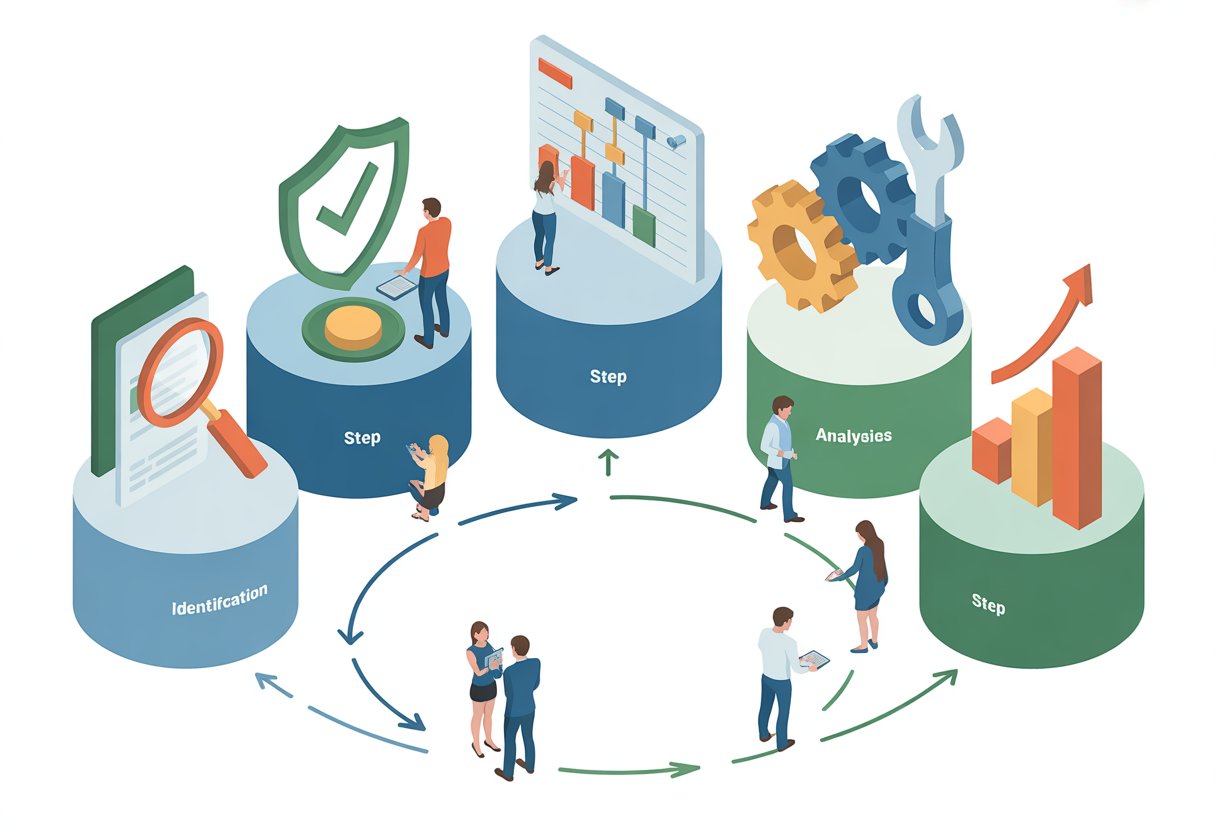
A systematic risk assessment process follows five distinct steps that transform workplace safety from theory into practice. Each step builds on the previous one, creating a comprehensive approach to identifying dangers and protecting workers from harm.
Identifying Hazards in the Workplace
The first step requires walking through the workplace to spot anything that could cause harm to people. This means looking at physical dangers like machinery, chemicals, work at heights, and confined spaces. It also includes less obvious risks such as repetitive motions, noise levels, and manual handling tasks that could injure workers over time.
Hazards often hide in plain sight during routine operations. Maintenance work, cleaning activities, and emergency repairs frequently present the greatest risks because normal safety measures may be bypassed. A thorough hazard identification considers what happens when equipment breaks down or when workers deviate from standard procedures.
Different work areas require different attention levels. Production floors might have moving machinery and forklift traffic. Warehouses often involve manual handling of heavy items and working at heights. Offices can present ergonomic hazards from poor workstation setup and psychosocial risks from workplace stress.
Understanding Who Might Be Harmed and How
After identifying hazards, the assessment must determine who might be harmed and how the harm could occur. The obvious answer is employees doing the work, but other groups face risks too. Maintenance staff enter danger zones that regular workers avoid. Contractors and visitors lack familiarity with site-specific hazards.
Young workers, pregnant employees, and those with disabilities may face heightened risks from certain hazards. A chemical that poses minimal risk to most workers might seriously harm someone who is pregnant. New employees lack the experience to recognize dangers that veteran workers instinctively avoid.
The “how” part requires specifics. A rotating machine part doesn’t just present a general danger—it could catch loose clothing and pull a worker into the machinery, or flying debris could strike someone in the eye. Manual handling of heavy boxes could cause back strain, shoulder injuries, or crush injuries if items fall. Detailing the injury mechanism helps identify the right control measures.
Evaluating Risks and Deciding on Control Measures
Risk evaluation combines two factors: how likely the harm is to occur and how severe the consequences would be. A risk matrix helps calculate this by multiplying likelihood against severity to produce a risk score. High-risk activities demand immediate action, while lower risks might be acceptable with existing precautions.
Control measures follow a specific hierarchy from most to least effective:
- Elimination – Remove the hazard completely
- Substitution – Replace with something safer
- Engineering controls – Install guards, barriers, or ventilation
- Administrative controls – Change work procedures or provide training
- Personal protective equipment – Provide safety gear as a last resort
Relying solely on PPE represents the weakest form of protection. If a hard hat is the only barrier between a worker and serious injury, the assessment has failed to implement stronger controls. Engineering controls that physically separate workers from hazards provide far more reliable protection than expecting perfect human behavior.
Recording and Implementing Findings
Documentation serves two purposes: communicating risks to workers and proving due diligence to regulators. The record must list identified hazards, affected workers, current controls, and additional actions needed. Each action item needs an owner and a deadline.
Effective records remain simple and practical. A 50-page document full of technical jargon will sit unread in a filing cabinet. The best assessments can be explained to a work crew in five minutes during a toolbox talk. Workers need to understand the specific hazards they face and the exact precautions that will keep them safe.
Implementation transforms written words into physical reality. Installing machine guards, revising procedures, providing training, and supplying PPE all require resources and management commitment. The assessment means nothing if the recommended control measures never get put in place.
Reviewing and Updating Risk Assessments
A risk assessment expires the moment workplace conditions change. New equipment, different materials, or modified procedures all invalidate previous assessments. Ground conditions that were dry and stable in summer might turn to mud in winter, making previously safe work suddenly dangerous.
Several triggers demand immediate review and update:
- Incidents or near-misses indicate the assessment failed to predict or control a risk
- Management of change when processes, equipment, or materials are altered
- New legislation that sets different safety standards or exposure limits
- Periodic reviews at least annually for ongoing operations
After any workplace accident, the assessment must be examined and revised. If the risk was already identified but controls failed, stronger measures are needed. If the hazard was missed entirely, the identification process requires improvement. Each incident provides a lesson that makes future assessments more accurate and protective.
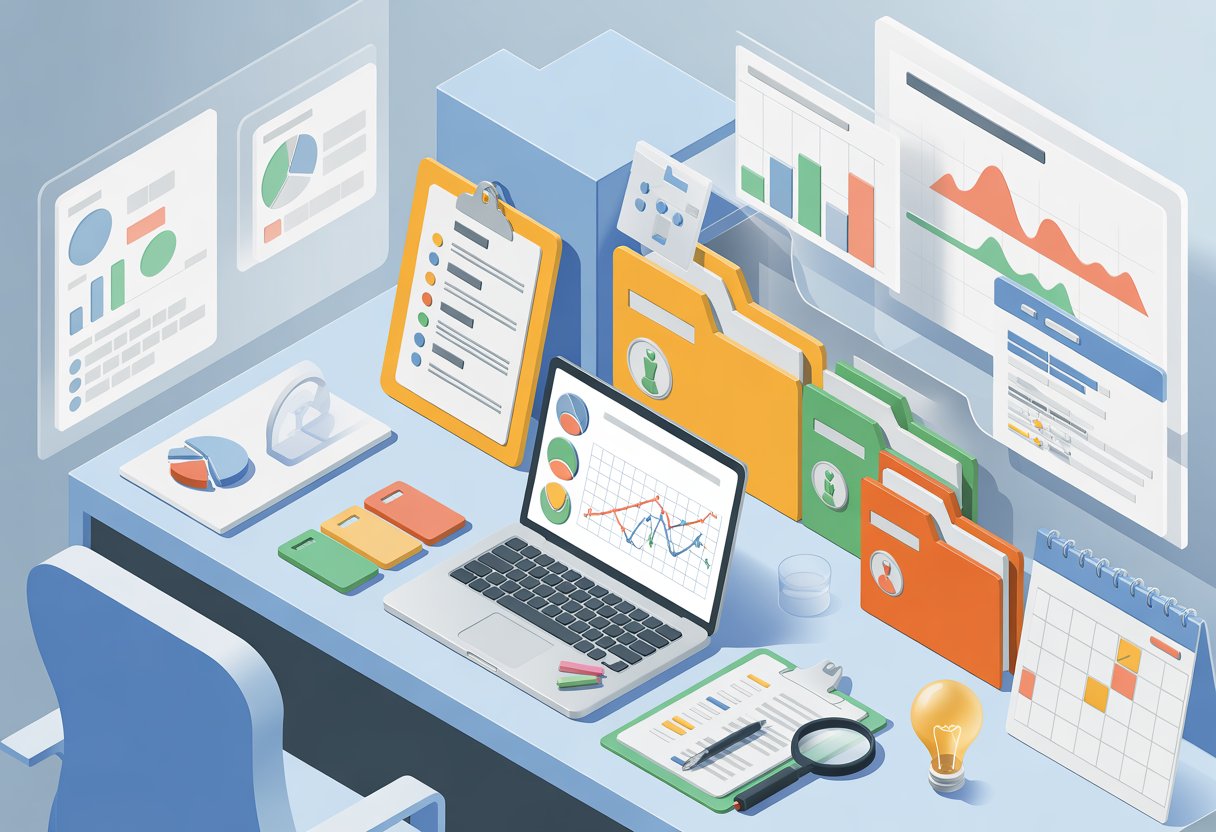
The right tools transform risk assessment from a complex task into a manageable process. Templates, matrices, and digital platforms provide structure that helps teams identify threats, assign risk ratings, and track mitigation efforts without unnecessary confusion.
Standard Risk Assessment Templates
Risk assessment templates standardize how organizations document and evaluate potential threats. These tools include columns for risk descriptions, likelihood rankings, impact scores, and mitigation strategies. Most templates use a 1 to 5 scale where users rank both the probability of a risk occurring and its potential impact on operations.
A typical template includes fields for the risk owner, current controls, and monitoring methods. The assessment framework guides teams through identifying risks, describing them clearly, and calculating priority scores. Organizations can find free risk management templates designed for different industries and use cases.
Templates work best when teams review and update them regularly. The highest-ranked risks require immediate attention and resources, while lower-ranked items may need only periodic monitoring.
Utilizing Risk Matrices
A risk matrix provides visual representation of how risks compare to each other. The tool plots likelihood on one axis and impact on the other, creating a grid that shows risk severity at a glance. Teams multiply the likelihood score by the impact score to calculate a risk rating that determines priority.
The matrix helps decision-makers see which threats need urgent action versus those that require simple monitoring. Color coding often highlights critical risks in red, moderate risks in yellow, and low risks in green. This visual approach makes it easier for stakeholders to understand the organization’s risk profile without analyzing complex data.
Digital Solutions and Automation
Digital platforms eliminate manual data entry and reduce errors in risk tracking. These systems automatically calculate risk scores, send alerts when risks change status, and generate reports for leadership review. A risk register maintained in digital format allows multiple team members to update information in real time.
Automation tools can monitor specific triggers and flag new risks as they emerge. Teams save hours previously spent updating spreadsheets and can focus on developing mitigation strategies instead.
Compliance and Regulatory Standards
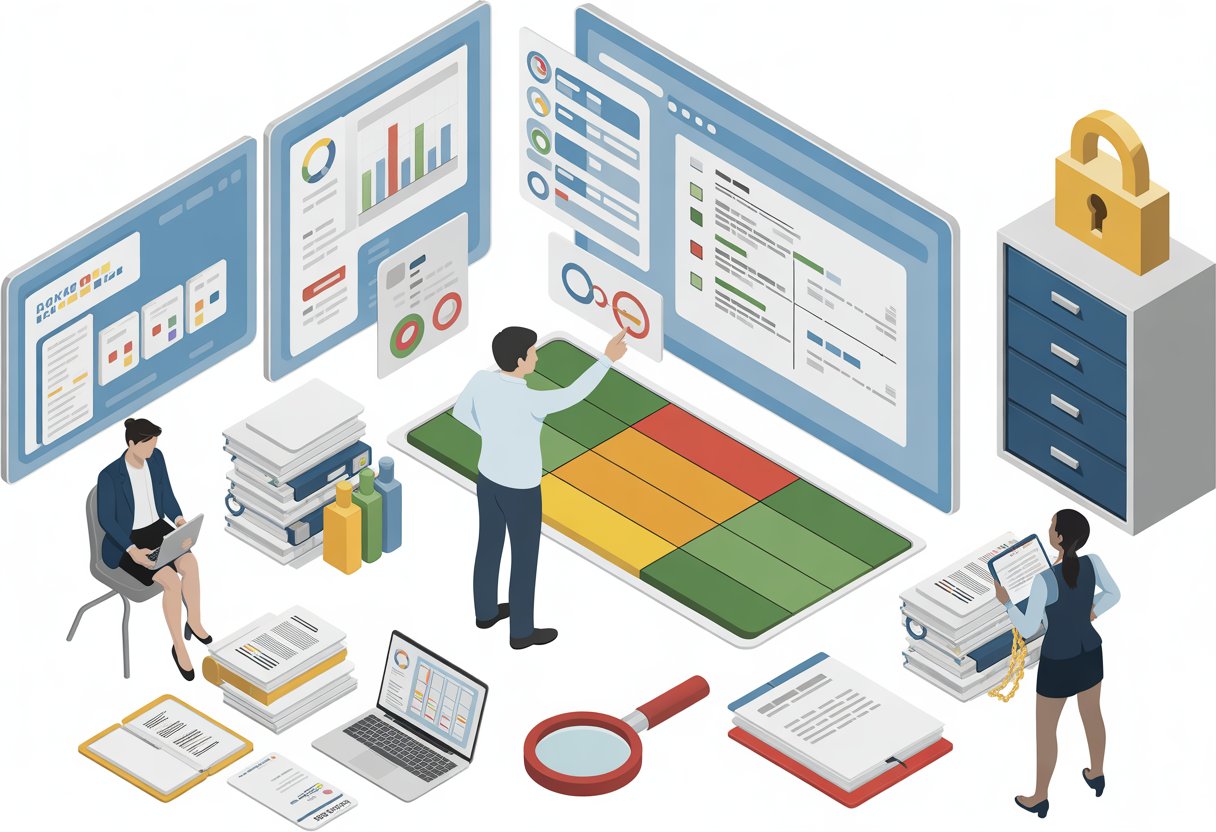
Organizations face legal obligations and industry standards that shape how they assess and manage workplace risks. Companies that operate across multiple regions must navigate different laws while maintaining consistent safety practices.
Legal and Regulatory Requirements
Every organization must follow specific laws and regulations based on their industry and location. These legal requirements set minimum standards for workplace safety and risk management practices.
Regulatory requirements vary significantly between countries and industries. Manufacturing facilities face different rules than healthcare providers or construction companies. Organizations operating in multiple jurisdictions must track requirements across all locations.
Compliance teams need to identify which laws apply to their operations. This includes federal, state, and local regulations. Many industries have specific regulatory bodies that enforce safety standards and conduct inspections.
Non-compliance leads to serious consequences. Organizations may face fines, legal penalties, or operational shutdowns. They also risk damage to their reputation and loss of stakeholder trust.
ISO 45001 and Other International Standards
ISO 45001 provides a globally recognized framework for occupational health and safety management systems. The standard helps organizations build systematic approaches to identifying hazards and reducing workplace risks.
This international standard requires companies to establish processes for hazard identification, risk assessment, and control measures. It emphasizes worker participation and continual improvement of safety performance.
Other relevant standards include ISO 31000 for enterprise risk management and industry-specific frameworks. These standards offer structured methodologies that complement legal requirements. Organizations often adopt multiple standards to create comprehensive risk management programs.
Certification to these standards demonstrates commitment to safety excellence. It helps companies compete globally and meet client expectations for safety performance.
Staying Up to Date with Compliance
Regulations continuously change, making it difficult for organizations to maintain compliance. New laws emerge while existing requirements get updated or replaced.
Organizations should implement horizon scanning processes to monitor regulatory developments. This involves regularly reviewing government announcements, industry publications, and regulatory agency updates. Many companies use compliance management software to track changes across multiple jurisdictions.
Training programs must reflect current requirements. Employees need regular updates when regulations change. Documentation and procedures require periodic review to ensure they align with the latest standards.
Companies typically allocate about 1.34% of total labor expenses to compliance-related tasks. These activities include recordkeeping, audits, training, and policy updates to maintain regulatory adherence.
Prioritizing and Quantifying Risks
Effective risk management depends on focusing attention where it matters most. Teams need clear methods to rank threats and assign meaningful values that guide decisions about time, money, and effort.
How to Prioritize Risks
Risk prioritization involves identifying, evaluating, and assessing risks based on their potential impact and likelihood. Organizations start by listing all identified risks from their assessments. Each risk gets examined for two key factors: how likely it is to happen and what damage it could cause.
Teams assign ratings to both factors using consistent scales. A common approach uses numbers from 1 to 5, where 1 represents very low and 5 represents very high. The likelihood rating multiplies by the impact rating to produce a risk score.
For example, a data breach might have a likelihood of 4 and an impact of 5, creating a risk score of 20. A minor software bug might rate 2 for likelihood and 1 for impact, scoring just 2. This numerical approach removes guesswork and creates clear priorities.
Organizations can then allocate resources to high-scoring risks first. They focus mitigation efforts on threats that combine high probability with serious consequences rather than spreading resources thin across every possible problem.
Risk Ranking Methodologies
A risk prioritization matrix provides a visual tool for comparing multiple risks at once. The matrix plots likelihood on one axis and impact on the other, creating zones that show risk severity.
Common Matrix Zones:
- Critical (Red): High likelihood and high impact
- High (Orange): Either high likelihood or high impact
- Moderate (Yellow): Medium values for both factors
- Low (Green): Low likelihood and low impact
Organizations can also use risk quantification methods that translate potential risks into concrete numerical values rather than relying on color-coded categories. This approach estimates actual dollar amounts for potential losses, making it easier to justify spending on controls and compare risks across different departments.
Some teams apply weighted scoring when certain factors matter more than others. They might double the impact score if consequences are more important than frequency for their specific situation.
Control Strategies for Workplace Safety
Effective control measures follow a specific order of priority, starting with complete hazard removal and ending with personal protection. Organizations must apply these strategies systematically to reduce workplace risks and protect employees from identified hazards.
Hierarchy of Controls: Elimination and Substitution
Elimination removes the hazard entirely from the workplace. This approach provides the most reliable protection because it completely gets rid of the danger. For example, a company might eliminate a fall hazard by redesigning a process so workers never need to work at heights.
Substitution replaces a hazardous material or process with a safer alternative. A manufacturing facility might substitute a toxic cleaning chemical with a non-toxic version. These two methods sit at the top of the hierarchy of controls because they address hazards at their source.
Both elimination and substitution require careful planning during the design phase. Employers should consider these options first when controlling risks identified during risk assessment. While these strategies may require higher initial investment, they typically reduce long-term costs and provide permanent solutions.
Engineering and Administrative Controls
Engineering controls physically change the workplace to reduce exposure to hazards. Common examples include machine guards, ventilation systems, and sound-dampening materials. Local exhaust ventilation (LEV) systems capture airborne contaminants at their source before workers can breathe them.
These controls work automatically without requiring worker action. A safety interlock on a machine prevents operation when guards are open. Barriers separate workers from moving equipment or hazardous processes.
Administrative controls change how workers perform their jobs. These include work rotation schedules, mandatory rest breaks, and standard operating procedures. Training programs ensure workers understand proper techniques and safety requirements. Warning signs and labels alert employees to specific hazards in different areas.
Organizations often combine both types of controls. A factory might install noise barriers (engineering) and limit exposure time (administrative) to protect workers from loud machinery.
Personal Protective Equipment and PPE Selection
Personal protective equipment serves as the last line of defense when other control measures cannot fully eliminate risk. PPE includes items like safety glasses, gloves, respirators, hard hats, and protective clothing. Employers must provide this equipment at no cost to workers.
Proper PPE selection depends on the specific hazard and work environment. Respirators vary based on contaminant type and concentration levels. Chemical-resistant gloves must match the chemicals workers handle. Eye protection ranges from basic safety glasses to full face shields.
Workers need training on correct PPE use, maintenance, and limitations. Equipment must fit properly to provide adequate protection. Regular inspection ensures PPE remains in good condition and continues to function as intended.
Reducing Human Error in Risk Management
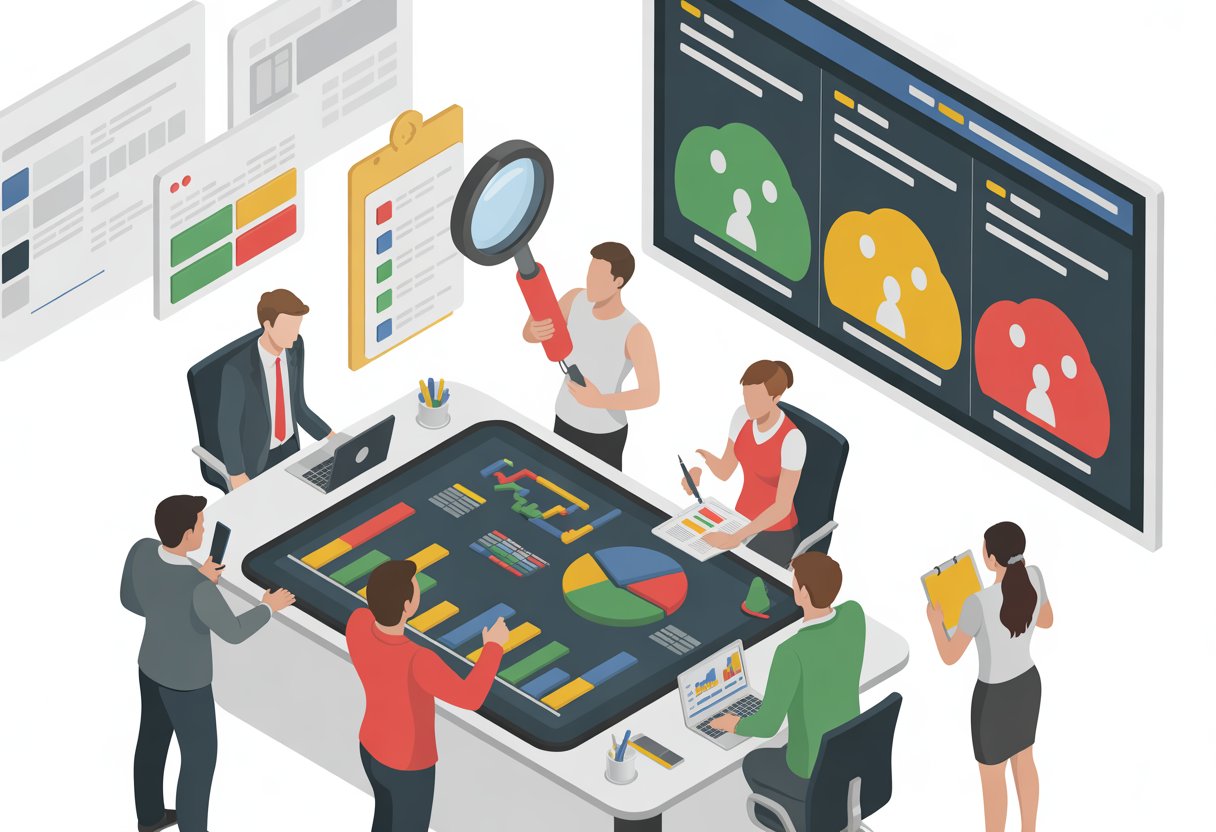
Human error remains a predictable part of workplace operations, but organizations can take specific steps to minimize its impact on safety and decision-making. Understanding where mistakes typically occur and applying proven techniques helps create more reliable systems.
Common Sources of Human Error
Human failures in risk management stem from several identifiable factors. Poor interface design forces workers to make unnecessary decisions or increases confusion during critical tasks. Time pressure pushes people to skip steps or make hasty judgments without proper evaluation.
Workload extremes create problems on both ends. Too much work overwhelms decision-makers and leads to shortcuts. Too little work causes complacency and reduced attention to detail.
Communication breakdowns represent another major issue. Unclear instructions, missing information, or failed handoffs between team members all contribute to mistakes. Environmental factors like excessive noise, poor lighting, or uncomfortable temperatures also degrade performance.
Insufficient training leaves workers unprepared for complex situations. When people lack the skills or knowledge needed for their tasks, errors become more frequent. Low morale and fatigue further reduce accuracy and increase the likelihood of oversights during the risk assessment process.
Mitigation Techniques
Organizations should prioritize designing out the potential for human failure rather than relying solely on procedures and training. This means creating systems where mistakes either cannot happen or can be easily caught and corrected.
Effective mitigation strategies include:
- Simplifying complex procedures and removing unnecessary steps
- Building checks and verification points into critical processes
- Creating clear visual indicators and intuitive controls
- Ensuring adequate staffing levels to prevent workload extremes
- Providing comprehensive training specific to actual job demands
Involving frontline workers in human risk management efforts improves results. These employees understand where problems occur and can suggest practical solutions. Regular reviews of control measures help identify gaps before they lead to incidents.
Organizations must recognize that human failure is normal and predictable. Building recovery mechanisms into systems allows teams to catch errors before they cause harm.
Building a Proactive Safety Culture
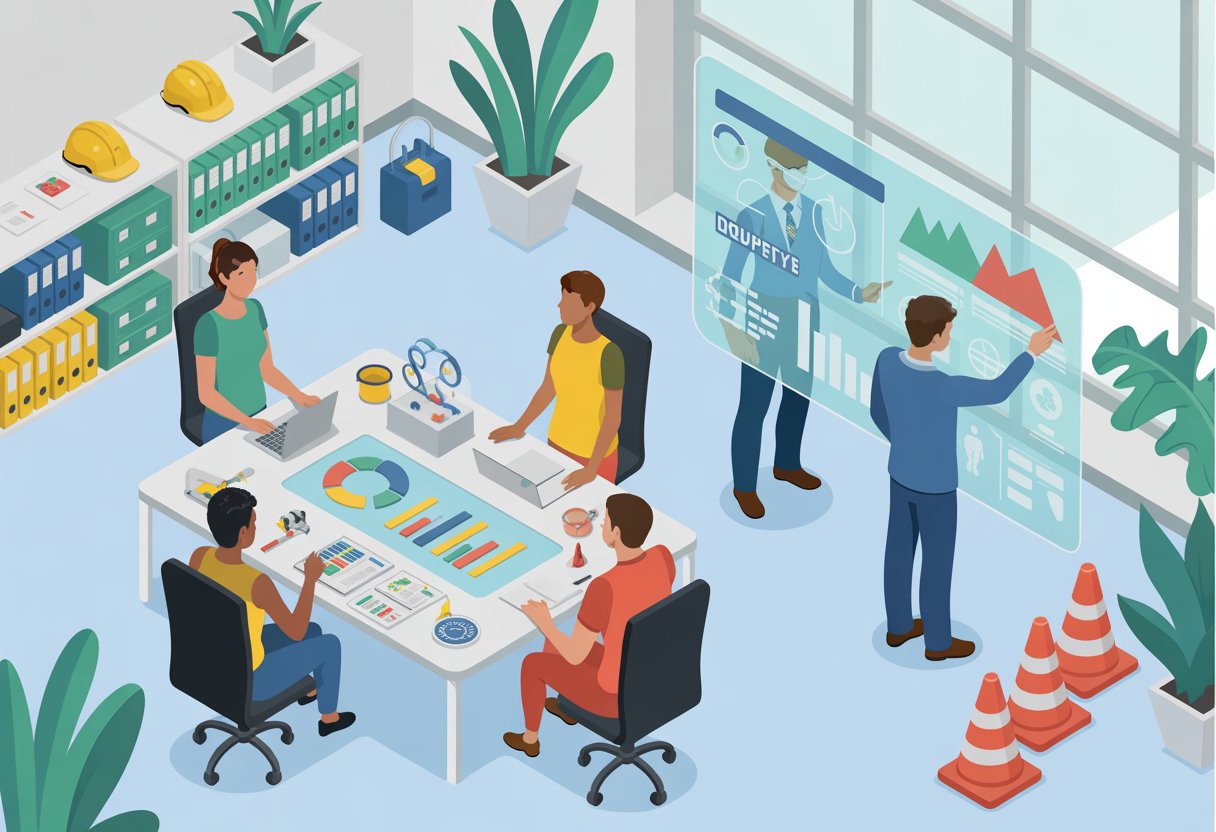
Creating a culture of prevention and employee engagement requires active participation from workers and systematic learning from close calls. Organizations that successfully implement these practices see measurable improvements in workplace health and safety outcomes.
Engaging Employees and Stakeholders
Frontline workers face the highest exposure to workplace hazards and provide valuable insights into potential risks. Companies strengthen their safety culture by giving employees the tools and authority to report concerns directly through mobile devices and digital platforms.
When workers participate actively in safety programs, the results are substantial. Organizations that involve employees in reporting observations achieve a 44% improvement in Total Recordable Incident Rate and a 48% reduction in Days Away, Restricted or Transferred rates.
Effective engagement requires more than just asking for input. Workers need proper training, timely information about work-related issues, and open channels to communicate safety concerns. This creates a two-way flow where employees both receive critical safety data and transmit observations from their daily work. Companies that empower their workforce this way see higher job commitment and stronger participation in safety practices.
Learning from Near-Miss Events
Near-miss events reveal hazards before they cause actual injuries or damage. These incidents occur when a dangerous situation happens but no harm results. Tracking and analyzing these events helps organizations identify patterns and fix problems before someone gets hurt.
Workers who report near-miss incidents in real time provide early warning signals about environmental, physical, and behavioral risks. This data serves as a leading indicator that helps safety teams strengthen protocols and prevent future accidents.
Organizations benefit most when they make near-miss reporting simple and accessible. Digital systems allow workers to quickly document what happened, where it occurred, and what conditions contributed to the close call. Safety leaders then use this information to implement preventive measures across similar work areas or processes.
Integrating Risk Assessment Software
Modern organizations move away from spreadsheets by connecting risk assessment workflows to evidence collection systems and approval routing. Digital tools standardize how teams identify, score, and track risks while maintaining audit-ready documentation.
Selecting the Right Software Tools
Organizations should match software capabilities to their existing governance workflows and evidence collection needs. Teams managing continuous control coverage and automated evidence gathering benefit from platforms that pull data from cloud systems, HR tools, and security applications. These integrations reduce manual work during audits.
Companies running governance processes inside existing enterprise platforms need tools that embed directly into those systems. Salesforce-based workflows require risk software with native CRM connectivity. ServiceNow environments perform best with risk modules that link assessments to incident management and compliance tracking.
The assessment framework determines software requirements. Organizations using standardized risk scoring models need configurable rating systems that maintain consistent likelihood and impact calculations. Teams managing vendor risks require different capabilities than security teams automating compliance evidence.
Configuration effort varies significantly across platforms. Some tools offer pre-built workflows for common frameworks like ISO 27001 or NIST. Others require extensive setup to map custom risk registers, control libraries, and approval chains to organizational needs.
Benefits of Digitalization
Digital risk assessment eliminates version control problems and scattered documentation. Centralized risk registers give stakeholders real-time visibility into risk status, ownership, and remediation progress. Teams spend less time consolidating spreadsheets and more time addressing actual risks.
Automated evidence collection maintains continuous control monitoring rather than point-in-time snapshots. Systems track when controls drift from policy requirements and alert responsible owners. This approach catches compliance gaps before audits rather than during them.
Workflow automation enforces consistent risk management processes. Digital systems route assessments through required approval steps and prevent incomplete submissions. Audit trails capture who reviewed each risk, when decisions occurred, and what evidence supported those choices.
Reporting capabilities transform raw assessment data into executive dashboards and regulatory reports. Automated reports link risks to controls, map remediation tasks to owners, and track metrics across business units without manual data compilation.
Maintaining and Updating Risk Registers
A risk register loses value when it becomes outdated or disorganized. Regular documentation practices and scheduled reviews keep the register accurate and useful for decision-making.
Documenting and Organizing Risks
Each risk entry needs a clear structure that others can understand and act on. The risk register should include a unique risk ID, a short risk title, a full description of what could go wrong, and the potential consequences.
Adding details about likelihood scores and impact ratings helps teams compare risks. Every entry should list the risk owner who manages that specific threat. Controls already in place need documentation alongside new mitigation actions.
Essential fields for each risk entry:
- Risk ID and category
- Likelihood and impact scores
- Current and target risk ratings
- Assigned owner and action dates
- Links to related incidents or controls
Organizations should use risk assessment templates that match their scoring model and governance needs. Consistent formatting across all entries makes the register easier to scan and report to leadership.
Scheduled Reviews and Improvements
Risk registers require regular reviews to stay current with changing threats and business conditions. High-priority risks typically need monthly or quarterly reviews, while lower-rated risks can follow annual cycles.
Each review session should verify that risk scores still reflect reality. Owners need to update mitigation progress and adjust ratings based on new controls or emerging threats.
External changes like new regulations, market shifts, or recent security incidents should trigger immediate updates outside the normal schedule. Teams can integrate risk register reviews into existing management meetings to maintain focus without adding extra workload.
The review process should check whether actions are on track and whether residual risk levels align with organizational tolerance. Outdated risks can be closed, and new threats added as they surface.
Best Practices for Ongoing Improvement
Organizations need to treat risk assessment as a continuous cycle rather than a one-time event. Regular monitoring and flexibility help businesses stay ahead of new threats while maintaining compliance with changing regulations.
Continuous Monitoring Strategies
Risk monitoring requires consistent attention to identify threats before they become serious problems. Organizations should establish regular review cycles that examine existing risks and scan for new ones that emerge from market changes, technology shifts, or regulatory updates.
Real-time data integration improves the accuracy of risk tracking. Teams can use dashboards and automated alerts to spot unusual patterns or warning signs immediately. This approach reduces the time between risk identification and response.
Key monitoring activities include:
- Weekly reviews of high-priority risks
- Monthly assessments of medium-level threats
- Quarterly comprehensive risk evaluations
- Annual full framework audits
Post-incident analysis provides valuable lessons for strengthening future responses. When risks materialize, teams should document what happened, why controls failed, and what changes will prevent recurrence. Risk assessment demands periodic updates to reflect changing risks as business conditions evolve.
Adapting to Changing Business Needs
Business environments shift constantly through mergers, new product launches, market expansions, and regulatory changes. Risk management frameworks must flex to accommodate these developments.
Organizations should trigger fresh risk assessments when major changes occur. New projects bring different threats than existing operations. Market entry into regulated industries requires updated compliance measures. Technology implementations create cyber vulnerabilities that need evaluation.
Teams benefit from incorporating third-party assessments into ongoing risk management processes to gain external perspectives. Industry benchmarking reveals gaps in current practices compared to competitors or sector standards.
Staff training keeps risk awareness current across the organization. Employees need updates on new threats, revised procedures, and emerging compliance requirements. Regular exercises test whether teams can execute response plans effectively when needed.
Frequently Asked Questions
Risk assessments raise common questions about formal requirements, practical application methods, and documentation standards across different industries and workplace settings.
What are the essential steps to conduct a risk assessment from start to finish?
The five-step risk assessment process provides a structured approach to managing workplace hazards. The first step involves identifying all hazards present in the work environment through walkarounds, worker consultation, and incident data review.
The second step requires assessing each risk by evaluating both likelihood and consequence using a risk matrix. Organizations must consider existing controls already in place when determining the current risk level.
Step three focuses on controlling unacceptable risks through the hierarchy of controls. The fourth step involves implementing the chosen control measures and documenting them in a formal register. The final step establishes regular reviews to verify controls remain effective over time.
Can you provide a clear example of a completed risk assessment for a real-world scenario?
A wet floor in a busy hallway demonstrates how the risk assessment process works in practice. The hazard is the wet surface itself, which exists as a static condition.
The risk involves someone slipping, falling, and sustaining a serious head injury. Without controls, a frequently used hallway with a wet floor would rank as high likelihood and major consequence on a risk matrix.
Controls might include placing warning signs, using absorbent mats, and restricting access until dry. After implementing these measures, the residual risk drops to a lower level because both likelihood and potential severity decrease.
Which risk assessment tools and templates are most effective for consistent results?
Risk matrices serve as the most widely used tool for evaluating workplace hazards. These visual aids combine likelihood ratings with consequence severity to produce overall risk scores such as low, medium, high, or extreme.
Standardized templates ensure assessors evaluate hazards consistently across different situations. Templates typically include fields for hazard description, existing controls, likelihood ratings, consequence ratings, risk scores, and additional control measures.
Digital platforms allow teams to access templates from mobile devices during workplace inspections. These systems often include pre-built libraries of common hazards and controls that speed up the assessment process.
How do you identify hazards, estimate likelihood and impact, and prioritize risks objectively?
Hazard identification requires systematic examination of the workplace through physical inspections, reviewing incident records, and consulting with workers who perform the tasks. Workers provide valuable insights into risks that managers might overlook during standard reviews.
When estimating likelihood, assessors consider how often people encounter the hazard and how easily an incident could occur. Frequency of exposure directly affects the probability rating assigned to each risk.
For consequence assessment, evaluators must consider the worst reasonable outcome rather than minor injuries. A hazard that could result in death or permanent disability receives a higher severity rating even if such outcomes seem unlikely. The combined likelihood and consequence scores determine which risks require immediate attention versus those that can be addressed later.
What are the best practices for performing a workplace safety risk assessment and documenting controls?
Involving workers in the assessment process produces more accurate and comprehensive results. Team members who perform tasks daily understand practical challenges and risks that others might miss.
Formal risk assessments are essential for new tasks, high-risk work, or situations where changes occur. Routine, low-risk tasks may only require a quick mental check rather than full documentation.
Organizations must document all assessments and maintain them in an accessible register. Records should include the date of assessment, personnel involved, identified hazards, risk ratings, implemented controls, and review schedules. This documentation serves both operational and legal compliance purposes.
Psychosocial hazards such as workplace stress, bullying, and unreasonable deadlines require the same formal assessment process as physical hazards. These risks often get overlooked despite their significant impact on worker health and safety.
How is risk assessment applied in healthcare to improve patient safety and clinical decision-making?
Healthcare facilities use risk assessment to evaluate potential harm to patients, staff, and visitors. Patient-specific assessments identify fall risks, pressure injury likelihood, and adverse medication reactions before incidents occur.
Clinical teams assess procedure-related risks by evaluating patient condition, equipment reliability, and environmental factors. These assessments inform treatment decisions and determine appropriate monitoring levels.
Healthcare organizations conduct facility-wide assessments for infection control, emergency preparedness, and medical device safety. Documentation requirements in healthcare often exceed general workplace standards due to regulatory oversight and accreditation requirements. Regular reviews ensure controls adapt to changing patient populations and emerging clinical evidence.
Post Views: 46

Elevate Your Health for Just $29.99/Month
Join the Precision Wellness Subscription at My Healing 365 and get discounted services, priority coaching access, virtual care, and exclusive wellness resources to support your physical, emotional, and hormonal health.
Join for $29.99/MonthMedically Reviewed
Dr. Jose Rossello, MD, PhD, MHCM
Preventive Medicine & Public Health Specialist
Last Reviewed: June 23, 2026
Risk assessment helps organizations identify dangers and control them before they cause harm. A risk assessment is a simple record of who might be harmed and how, what controls are already in place, and what further action needs to be taken to manage risks. While the concept seems straightforward, many businesses struggle to create assessments that actually protect their workers and meet legal requirements.
The good news is that effective risk assessment does not require complicated processes or expensive consultants. Risk analysis is a multi-step process that includes assessment, management, and communication to minimize vulnerability to unexpected events. With the right approach and tools, any organization can build a system that identifies hazards, prioritizes threats, and implements practical controls.
This guide breaks down risk assessments into clear, actionable steps that work for businesses of any size. It covers everything from basic concepts to advanced strategies for maintaining safety programs over time.
Key Takeaways
- Risk assessments identify workplace hazards and establish controls to protect employees from harm
- Following a systematic process helps organizations prioritize risks and meet regulatory requirements
- Regular updates and employee involvement create a proactive safety culture that reduces incidents over time
Core Concepts of Risk Assessment
Risk assessment involves identifying potential hazards, understanding what could go wrong, and determining how likely and severe the consequences might be. Organizations use specific terms and processes to evaluate threats systematically and protect their people, assets, and operations.
Defining Hazards and Risks
A hazard is anything that has the potential to cause harm. This could be a physical object, a chemical substance, a work practice, or a situation. Examples include wet floors, faulty electrical equipment, or unguarded machinery.
A risk is the likelihood that a hazard will actually cause harm combined with the severity of that harm. The same hazard can present different levels of risk depending on factors like exposure time, protective measures in place, and who might be affected.
Understanding the difference matters for health and safety programs. A chemical stored properly in a locked cabinet is a hazard but presents low risk. That same chemical left open near workers without protective equipment creates high risk. The risk assessment process evaluates both the presence of hazards and the actual risk they pose under specific conditions.
The Purpose of Risk Assessments
Organizations conduct risk assessments to make informed decisions about protecting their workers, customers, and operations. The primary goal is to identify threats before they cause harm or losses.
What is a risk assessment helps businesses understand their vulnerabilities and prioritize where to focus resources. Rather than addressing every possible threat equally, companies can tackle the most serious risks first.
Risk assessments also support legal compliance. Many industries must conduct regular evaluations to meet regulatory requirements. Beyond compliance, these assessments inform strategic decisions by revealing operational weaknesses and opportunities for improvement.
The process feeds directly into risk management by providing the data needed to develop control measures and mitigation strategies.
Key Terminology Explained
Several terms appear frequently in risk assessment work:
- Risk register: A document that records identified risks, their severity ratings, and planned responses
- Likelihood: The probability that a specific risk event will occur
- Impact: The potential consequences or severity of harm if the risk occurs
- Control measures: Actions taken to eliminate or reduce risks
- Residual risk: The risk that remains after control measures are applied
The risk assessment process typically follows five steps: define the scope, identify hazards, analyze risks, evaluate and prioritize them, and implement controls. Risk management extends beyond assessment to include ongoing monitoring and review.
Qualitative assessment uses descriptive scales like high, medium, and low. Quantitative assessment relies on numerical data and calculations. Most organizations use both approaches depending on the situation and available information.
Five Fundamental Steps to Effective Assessments
A systematic risk assessment process follows five distinct steps that transform workplace safety from theory into practice. Each step builds on the previous one, creating a comprehensive approach to identifying dangers and protecting workers from harm.
Identifying Hazards in the Workplace
The first step requires walking through the workplace to spot anything that could cause harm to people. This means looking at physical dangers like machinery, chemicals, work at heights, and confined spaces. It also includes less obvious risks such as repetitive motions, noise levels, and manual handling tasks that could injure workers over time.
Hazards often hide in plain sight during routine operations. Maintenance work, cleaning activities, and emergency repairs frequently present the greatest risks because normal safety measures may be bypassed. A thorough hazard identification considers what happens when equipment breaks down or when workers deviate from standard procedures.
Different work areas require different attention levels. Production floors might have moving machinery and forklift traffic. Warehouses often involve manual handling of heavy items and working at heights. Offices can present ergonomic hazards from poor workstation setup and psychosocial risks from workplace stress.
Understanding Who Might Be Harmed and How
After identifying hazards, the assessment must determine who might be harmed and how the harm could occur. The obvious answer is employees doing the work, but other groups face risks too. Maintenance staff enter danger zones that regular workers avoid. Contractors and visitors lack familiarity with site-specific hazards.
Young workers, pregnant employees, and those with disabilities may face heightened risks from certain hazards. A chemical that poses minimal risk to most workers might seriously harm someone who is pregnant. New employees lack the experience to recognize dangers that veteran workers instinctively avoid.
The “how” part requires specifics. A rotating machine part doesn’t just present a general danger—it could catch loose clothing and pull a worker into the machinery, or flying debris could strike someone in the eye. Manual handling of heavy boxes could cause back strain, shoulder injuries, or crush injuries if items fall. Detailing the injury mechanism helps identify the right control measures.
Evaluating Risks and Deciding on Control Measures
Risk evaluation combines two factors: how likely the harm is to occur and how severe the consequences would be. A risk matrix helps calculate this by multiplying likelihood against severity to produce a risk score. High-risk activities demand immediate action, while lower risks might be acceptable with existing precautions.
Control measures follow a specific hierarchy from most to least effective:
- Elimination – Remove the hazard completely
- Substitution – Replace with something safer
- Engineering controls – Install guards, barriers, or ventilation
- Administrative controls – Change work procedures or provide training
- Personal protective equipment – Provide safety gear as a last resort
Relying solely on PPE represents the weakest form of protection. If a hard hat is the only barrier between a worker and serious injury, the assessment has failed to implement stronger controls. Engineering controls that physically separate workers from hazards provide far more reliable protection than expecting perfect human behavior.
Recording and Implementing Findings
Documentation serves two purposes: communicating risks to workers and proving due diligence to regulators. The record must list identified hazards, affected workers, current controls, and additional actions needed. Each action item needs an owner and a deadline.
Effective records remain simple and practical. A 50-page document full of technical jargon will sit unread in a filing cabinet. The best assessments can be explained to a work crew in five minutes during a toolbox talk. Workers need to understand the specific hazards they face and the exact precautions that will keep them safe.
Implementation transforms written words into physical reality. Installing machine guards, revising procedures, providing training, and supplying PPE all require resources and management commitment. The assessment means nothing if the recommended control measures never get put in place.
Reviewing and Updating Risk Assessments
A risk assessment expires the moment workplace conditions change. New equipment, different materials, or modified procedures all invalidate previous assessments. Ground conditions that were dry and stable in summer might turn to mud in winter, making previously safe work suddenly dangerous.
Several triggers demand immediate review and update:
- Incidents or near-misses indicate the assessment failed to predict or control a risk
- Management of change when processes, equipment, or materials are altered
- New legislation that sets different safety standards or exposure limits
- Periodic reviews at least annually for ongoing operations
After any workplace accident, the assessment must be examined and revised. If the risk was already identified but controls failed, stronger measures are needed. If the hazard was missed entirely, the identification process requires improvement. Each incident provides a lesson that makes future assessments more accurate and protective.
The right tools transform risk assessment from a complex task into a manageable process. Templates, matrices, and digital platforms provide structure that helps teams identify threats, assign risk ratings, and track mitigation efforts without unnecessary confusion.
Standard Risk Assessment Templates
Risk assessment templates standardize how organizations document and evaluate potential threats. These tools include columns for risk descriptions, likelihood rankings, impact scores, and mitigation strategies. Most templates use a 1 to 5 scale where users rank both the probability of a risk occurring and its potential impact on operations.
A typical template includes fields for the risk owner, current controls, and monitoring methods. The assessment framework guides teams through identifying risks, describing them clearly, and calculating priority scores. Organizations can find free risk management templates designed for different industries and use cases.
Templates work best when teams review and update them regularly. The highest-ranked risks require immediate attention and resources, while lower-ranked items may need only periodic monitoring.
Utilizing Risk Matrices
A risk matrix provides visual representation of how risks compare to each other. The tool plots likelihood on one axis and impact on the other, creating a grid that shows risk severity at a glance. Teams multiply the likelihood score by the impact score to calculate a risk rating that determines priority.
The matrix helps decision-makers see which threats need urgent action versus those that require simple monitoring. Color coding often highlights critical risks in red, moderate risks in yellow, and low risks in green. This visual approach makes it easier for stakeholders to understand the organization’s risk profile without analyzing complex data.
Digital Solutions and Automation
Digital platforms eliminate manual data entry and reduce errors in risk tracking. These systems automatically calculate risk scores, send alerts when risks change status, and generate reports for leadership review. A risk register maintained in digital format allows multiple team members to update information in real time.
Automation tools can monitor specific triggers and flag new risks as they emerge. Teams save hours previously spent updating spreadsheets and can focus on developing mitigation strategies instead.
Compliance and Regulatory Standards
Organizations face legal obligations and industry standards that shape how they assess and manage workplace risks. Companies that operate across multiple regions must navigate different laws while maintaining consistent safety practices.
Legal and Regulatory Requirements
Every organization must follow specific laws and regulations based on their industry and location. These legal requirements set minimum standards for workplace safety and risk management practices.
Regulatory requirements vary significantly between countries and industries. Manufacturing facilities face different rules than healthcare providers or construction companies. Organizations operating in multiple jurisdictions must track requirements across all locations.
Compliance teams need to identify which laws apply to their operations. This includes federal, state, and local regulations. Many industries have specific regulatory bodies that enforce safety standards and conduct inspections.
Non-compliance leads to serious consequences. Organizations may face fines, legal penalties, or operational shutdowns. They also risk damage to their reputation and loss of stakeholder trust.
ISO 45001 and Other International Standards
ISO 45001 provides a globally recognized framework for occupational health and safety management systems. The standard helps organizations build systematic approaches to identifying hazards and reducing workplace risks.
This international standard requires companies to establish processes for hazard identification, risk assessment, and control measures. It emphasizes worker participation and continual improvement of safety performance.
Other relevant standards include ISO 31000 for enterprise risk management and industry-specific frameworks. These standards offer structured methodologies that complement legal requirements. Organizations often adopt multiple standards to create comprehensive risk management programs.
Certification to these standards demonstrates commitment to safety excellence. It helps companies compete globally and meet client expectations for safety performance.
Staying Up to Date with Compliance
Regulations continuously change, making it difficult for organizations to maintain compliance. New laws emerge while existing requirements get updated or replaced.
Organizations should implement horizon scanning processes to monitor regulatory developments. This involves regularly reviewing government announcements, industry publications, and regulatory agency updates. Many companies use compliance management software to track changes across multiple jurisdictions.
Training programs must reflect current requirements. Employees need regular updates when regulations change. Documentation and procedures require periodic review to ensure they align with the latest standards.
Companies typically allocate about 1.34% of total labor expenses to compliance-related tasks. These activities include recordkeeping, audits, training, and policy updates to maintain regulatory adherence.
Prioritizing and Quantifying Risks
Effective risk management depends on focusing attention where it matters most. Teams need clear methods to rank threats and assign meaningful values that guide decisions about time, money, and effort.
How to Prioritize Risks
Risk prioritization involves identifying, evaluating, and assessing risks based on their potential impact and likelihood. Organizations start by listing all identified risks from their assessments. Each risk gets examined for two key factors: how likely it is to happen and what damage it could cause.
Teams assign ratings to both factors using consistent scales. A common approach uses numbers from 1 to 5, where 1 represents very low and 5 represents very high. The likelihood rating multiplies by the impact rating to produce a risk score.
For example, a data breach might have a likelihood of 4 and an impact of 5, creating a risk score of 20. A minor software bug might rate 2 for likelihood and 1 for impact, scoring just 2. This numerical approach removes guesswork and creates clear priorities.
Organizations can then allocate resources to high-scoring risks first. They focus mitigation efforts on threats that combine high probability with serious consequences rather than spreading resources thin across every possible problem.
Risk Ranking Methodologies
A risk prioritization matrix provides a visual tool for comparing multiple risks at once. The matrix plots likelihood on one axis and impact on the other, creating zones that show risk severity.
Common Matrix Zones:
- Critical (Red): High likelihood and high impact
- High (Orange): Either high likelihood or high impact
- Moderate (Yellow): Medium values for both factors
- Low (Green): Low likelihood and low impact
Organizations can also use risk quantification methods that translate potential risks into concrete numerical values rather than relying on color-coded categories. This approach estimates actual dollar amounts for potential losses, making it easier to justify spending on controls and compare risks across different departments.
Some teams apply weighted scoring when certain factors matter more than others. They might double the impact score if consequences are more important than frequency for their specific situation.
Control Strategies for Workplace Safety
Effective control measures follow a specific order of priority, starting with complete hazard removal and ending with personal protection. Organizations must apply these strategies systematically to reduce workplace risks and protect employees from identified hazards.
Hierarchy of Controls: Elimination and Substitution
Elimination removes the hazard entirely from the workplace. This approach provides the most reliable protection because it completely gets rid of the danger. For example, a company might eliminate a fall hazard by redesigning a process so workers never need to work at heights.
Substitution replaces a hazardous material or process with a safer alternative. A manufacturing facility might substitute a toxic cleaning chemical with a non-toxic version. These two methods sit at the top of the hierarchy of controls because they address hazards at their source.
Both elimination and substitution require careful planning during the design phase. Employers should consider these options first when controlling risks identified during risk assessment. While these strategies may require higher initial investment, they typically reduce long-term costs and provide permanent solutions.
Engineering and Administrative Controls
Engineering controls physically change the workplace to reduce exposure to hazards. Common examples include machine guards, ventilation systems, and sound-dampening materials. Local exhaust ventilation (LEV) systems capture airborne contaminants at their source before workers can breathe them.
These controls work automatically without requiring worker action. A safety interlock on a machine prevents operation when guards are open. Barriers separate workers from moving equipment or hazardous processes.
Administrative controls change how workers perform their jobs. These include work rotation schedules, mandatory rest breaks, and standard operating procedures. Training programs ensure workers understand proper techniques and safety requirements. Warning signs and labels alert employees to specific hazards in different areas.
Organizations often combine both types of controls. A factory might install noise barriers (engineering) and limit exposure time (administrative) to protect workers from loud machinery.
Personal Protective Equipment and PPE Selection
Personal protective equipment serves as the last line of defense when other control measures cannot fully eliminate risk. PPE includes items like safety glasses, gloves, respirators, hard hats, and protective clothing. Employers must provide this equipment at no cost to workers.
Proper PPE selection depends on the specific hazard and work environment. Respirators vary based on contaminant type and concentration levels. Chemical-resistant gloves must match the chemicals workers handle. Eye protection ranges from basic safety glasses to full face shields.
Workers need training on correct PPE use, maintenance, and limitations. Equipment must fit properly to provide adequate protection. Regular inspection ensures PPE remains in good condition and continues to function as intended.
Reducing Human Error in Risk Management
Human error remains a predictable part of workplace operations, but organizations can take specific steps to minimize its impact on safety and decision-making. Understanding where mistakes typically occur and applying proven techniques helps create more reliable systems.
Common Sources of Human Error
Human failures in risk management stem from several identifiable factors. Poor interface design forces workers to make unnecessary decisions or increases confusion during critical tasks. Time pressure pushes people to skip steps or make hasty judgments without proper evaluation.
Workload extremes create problems on both ends. Too much work overwhelms decision-makers and leads to shortcuts. Too little work causes complacency and reduced attention to detail.
Communication breakdowns represent another major issue. Unclear instructions, missing information, or failed handoffs between team members all contribute to mistakes. Environmental factors like excessive noise, poor lighting, or uncomfortable temperatures also degrade performance.
Insufficient training leaves workers unprepared for complex situations. When people lack the skills or knowledge needed for their tasks, errors become more frequent. Low morale and fatigue further reduce accuracy and increase the likelihood of oversights during the risk assessment process.
Mitigation Techniques
Organizations should prioritize designing out the potential for human failure rather than relying solely on procedures and training. This means creating systems where mistakes either cannot happen or can be easily caught and corrected.
Effective mitigation strategies include:
- Simplifying complex procedures and removing unnecessary steps
- Building checks and verification points into critical processes
- Creating clear visual indicators and intuitive controls
- Ensuring adequate staffing levels to prevent workload extremes
- Providing comprehensive training specific to actual job demands
Involving frontline workers in human risk management efforts improves results. These employees understand where problems occur and can suggest practical solutions. Regular reviews of control measures help identify gaps before they lead to incidents.
Organizations must recognize that human failure is normal and predictable. Building recovery mechanisms into systems allows teams to catch errors before they cause harm.
Building a Proactive Safety Culture
Creating a culture of prevention and employee engagement requires active participation from workers and systematic learning from close calls. Organizations that successfully implement these practices see measurable improvements in workplace health and safety outcomes.
Engaging Employees and Stakeholders
Frontline workers face the highest exposure to workplace hazards and provide valuable insights into potential risks. Companies strengthen their safety culture by giving employees the tools and authority to report concerns directly through mobile devices and digital platforms.
When workers participate actively in safety programs, the results are substantial. Organizations that involve employees in reporting observations achieve a 44% improvement in Total Recordable Incident Rate and a 48% reduction in Days Away, Restricted or Transferred rates.
Effective engagement requires more than just asking for input. Workers need proper training, timely information about work-related issues, and open channels to communicate safety concerns. This creates a two-way flow where employees both receive critical safety data and transmit observations from their daily work. Companies that empower their workforce this way see higher job commitment and stronger participation in safety practices.
Learning from Near-Miss Events
Near-miss events reveal hazards before they cause actual injuries or damage. These incidents occur when a dangerous situation happens but no harm results. Tracking and analyzing these events helps organizations identify patterns and fix problems before someone gets hurt.
Workers who report near-miss incidents in real time provide early warning signals about environmental, physical, and behavioral risks. This data serves as a leading indicator that helps safety teams strengthen protocols and prevent future accidents.
Organizations benefit most when they make near-miss reporting simple and accessible. Digital systems allow workers to quickly document what happened, where it occurred, and what conditions contributed to the close call. Safety leaders then use this information to implement preventive measures across similar work areas or processes.
Integrating Risk Assessment Software
Modern organizations move away from spreadsheets by connecting risk assessment workflows to evidence collection systems and approval routing. Digital tools standardize how teams identify, score, and track risks while maintaining audit-ready documentation.
Selecting the Right Software Tools
Organizations should match software capabilities to their existing governance workflows and evidence collection needs. Teams managing continuous control coverage and automated evidence gathering benefit from platforms that pull data from cloud systems, HR tools, and security applications. These integrations reduce manual work during audits.
Companies running governance processes inside existing enterprise platforms need tools that embed directly into those systems. Salesforce-based workflows require risk software with native CRM connectivity. ServiceNow environments perform best with risk modules that link assessments to incident management and compliance tracking.
The assessment framework determines software requirements. Organizations using standardized risk scoring models need configurable rating systems that maintain consistent likelihood and impact calculations. Teams managing vendor risks require different capabilities than security teams automating compliance evidence.
Configuration effort varies significantly across platforms. Some tools offer pre-built workflows for common frameworks like ISO 27001 or NIST. Others require extensive setup to map custom risk registers, control libraries, and approval chains to organizational needs.
Benefits of Digitalization
Digital risk assessment eliminates version control problems and scattered documentation. Centralized risk registers give stakeholders real-time visibility into risk status, ownership, and remediation progress. Teams spend less time consolidating spreadsheets and more time addressing actual risks.
Automated evidence collection maintains continuous control monitoring rather than point-in-time snapshots. Systems track when controls drift from policy requirements and alert responsible owners. This approach catches compliance gaps before audits rather than during them.
Workflow automation enforces consistent risk management processes. Digital systems route assessments through required approval steps and prevent incomplete submissions. Audit trails capture who reviewed each risk, when decisions occurred, and what evidence supported those choices.
Reporting capabilities transform raw assessment data into executive dashboards and regulatory reports. Automated reports link risks to controls, map remediation tasks to owners, and track metrics across business units without manual data compilation.
Maintaining and Updating Risk Registers
A risk register loses value when it becomes outdated or disorganized. Regular documentation practices and scheduled reviews keep the register accurate and useful for decision-making.
Documenting and Organizing Risks
Each risk entry needs a clear structure that others can understand and act on. The risk register should include a unique risk ID, a short risk title, a full description of what could go wrong, and the potential consequences.
Adding details about likelihood scores and impact ratings helps teams compare risks. Every entry should list the risk owner who manages that specific threat. Controls already in place need documentation alongside new mitigation actions.
Essential fields for each risk entry:
- Risk ID and category
- Likelihood and impact scores
- Current and target risk ratings
- Assigned owner and action dates
- Links to related incidents or controls
Organizations should use risk assessment templates that match their scoring model and governance needs. Consistent formatting across all entries makes the register easier to scan and report to leadership.
Scheduled Reviews and Improvements
Risk registers require regular reviews to stay current with changing threats and business conditions. High-priority risks typically need monthly or quarterly reviews, while lower-rated risks can follow annual cycles.
Each review session should verify that risk scores still reflect reality. Owners need to update mitigation progress and adjust ratings based on new controls or emerging threats.
External changes like new regulations, market shifts, or recent security incidents should trigger immediate updates outside the normal schedule. Teams can integrate risk register reviews into existing management meetings to maintain focus without adding extra workload.
The review process should check whether actions are on track and whether residual risk levels align with organizational tolerance. Outdated risks can be closed, and new threats added as they surface.
Best Practices for Ongoing Improvement
Organizations need to treat risk assessment as a continuous cycle rather than a one-time event. Regular monitoring and flexibility help businesses stay ahead of new threats while maintaining compliance with changing regulations.
Continuous Monitoring Strategies
Risk monitoring requires consistent attention to identify threats before they become serious problems. Organizations should establish regular review cycles that examine existing risks and scan for new ones that emerge from market changes, technology shifts, or regulatory updates.
Real-time data integration improves the accuracy of risk tracking. Teams can use dashboards and automated alerts to spot unusual patterns or warning signs immediately. This approach reduces the time between risk identification and response.
Key monitoring activities include:
- Weekly reviews of high-priority risks
- Monthly assessments of medium-level threats
- Quarterly comprehensive risk evaluations
- Annual full framework audits
Post-incident analysis provides valuable lessons for strengthening future responses. When risks materialize, teams should document what happened, why controls failed, and what changes will prevent recurrence. Risk assessment demands periodic updates to reflect changing risks as business conditions evolve.
Adapting to Changing Business Needs
Business environments shift constantly through mergers, new product launches, market expansions, and regulatory changes. Risk management frameworks must flex to accommodate these developments.
Organizations should trigger fresh risk assessments when major changes occur. New projects bring different threats than existing operations. Market entry into regulated industries requires updated compliance measures. Technology implementations create cyber vulnerabilities that need evaluation.
Teams benefit from incorporating third-party assessments into ongoing risk management processes to gain external perspectives. Industry benchmarking reveals gaps in current practices compared to competitors or sector standards.
Staff training keeps risk awareness current across the organization. Employees need updates on new threats, revised procedures, and emerging compliance requirements. Regular exercises test whether teams can execute response plans effectively when needed.
Frequently Asked Questions
Risk assessments raise common questions about formal requirements, practical application methods, and documentation standards across different industries and workplace settings.
What are the essential steps to conduct a risk assessment from start to finish?
The five-step risk assessment process provides a structured approach to managing workplace hazards. The first step involves identifying all hazards present in the work environment through walkarounds, worker consultation, and incident data review.
The second step requires assessing each risk by evaluating both likelihood and consequence using a risk matrix. Organizations must consider existing controls already in place when determining the current risk level.
Step three focuses on controlling unacceptable risks through the hierarchy of controls. The fourth step involves implementing the chosen control measures and documenting them in a formal register. The final step establishes regular reviews to verify controls remain effective over time.
Can you provide a clear example of a completed risk assessment for a real-world scenario?
A wet floor in a busy hallway demonstrates how the risk assessment process works in practice. The hazard is the wet surface itself, which exists as a static condition.
The risk involves someone slipping, falling, and sustaining a serious head injury. Without controls, a frequently used hallway with a wet floor would rank as high likelihood and major consequence on a risk matrix.
Controls might include placing warning signs, using absorbent mats, and restricting access until dry. After implementing these measures, the residual risk drops to a lower level because both likelihood and potential severity decrease.
Which risk assessment tools and templates are most effective for consistent results?
Risk matrices serve as the most widely used tool for evaluating workplace hazards. These visual aids combine likelihood ratings with consequence severity to produce overall risk scores such as low, medium, high, or extreme.
Standardized templates ensure assessors evaluate hazards consistently across different situations. Templates typically include fields for hazard description, existing controls, likelihood ratings, consequence ratings, risk scores, and additional control measures.
Digital platforms allow teams to access templates from mobile devices during workplace inspections. These systems often include pre-built libraries of common hazards and controls that speed up the assessment process.
How do you identify hazards, estimate likelihood and impact, and prioritize risks objectively?
Hazard identification requires systematic examination of the workplace through physical inspections, reviewing incident records, and consulting with workers who perform the tasks. Workers provide valuable insights into risks that managers might overlook during standard reviews.
When estimating likelihood, assessors consider how often people encounter the hazard and how easily an incident could occur. Frequency of exposure directly affects the probability rating assigned to each risk.
For consequence assessment, evaluators must consider the worst reasonable outcome rather than minor injuries. A hazard that could result in death or permanent disability receives a higher severity rating even if such outcomes seem unlikely. The combined likelihood and consequence scores determine which risks require immediate attention versus those that can be addressed later.
What are the best practices for performing a workplace safety risk assessment and documenting controls?
Involving workers in the assessment process produces more accurate and comprehensive results. Team members who perform tasks daily understand practical challenges and risks that others might miss.
Formal risk assessments are essential for new tasks, high-risk work, or situations where changes occur. Routine, low-risk tasks may only require a quick mental check rather than full documentation.
Organizations must document all assessments and maintain them in an accessible register. Records should include the date of assessment, personnel involved, identified hazards, risk ratings, implemented controls, and review schedules. This documentation serves both operational and legal compliance purposes.
Psychosocial hazards such as workplace stress, bullying, and unreasonable deadlines require the same formal assessment process as physical hazards. These risks often get overlooked despite their significant impact on worker health and safety.
How is risk assessment applied in healthcare to improve patient safety and clinical decision-making?
Healthcare facilities use risk assessment to evaluate potential harm to patients, staff, and visitors. Patient-specific assessments identify fall risks, pressure injury likelihood, and adverse medication reactions before incidents occur.
Clinical teams assess procedure-related risks by evaluating patient condition, equipment reliability, and environmental factors. These assessments inform treatment decisions and determine appropriate monitoring levels.
Healthcare organizations conduct facility-wide assessments for infection control, emergency preparedness, and medical device safety. Documentation requirements in healthcare often exceed general workplace standards due to regulatory oversight and accreditation requirements. Regular reviews ensure controls adapt to changing patient populations and emerging clinical evidence.
Post Views: 46

























