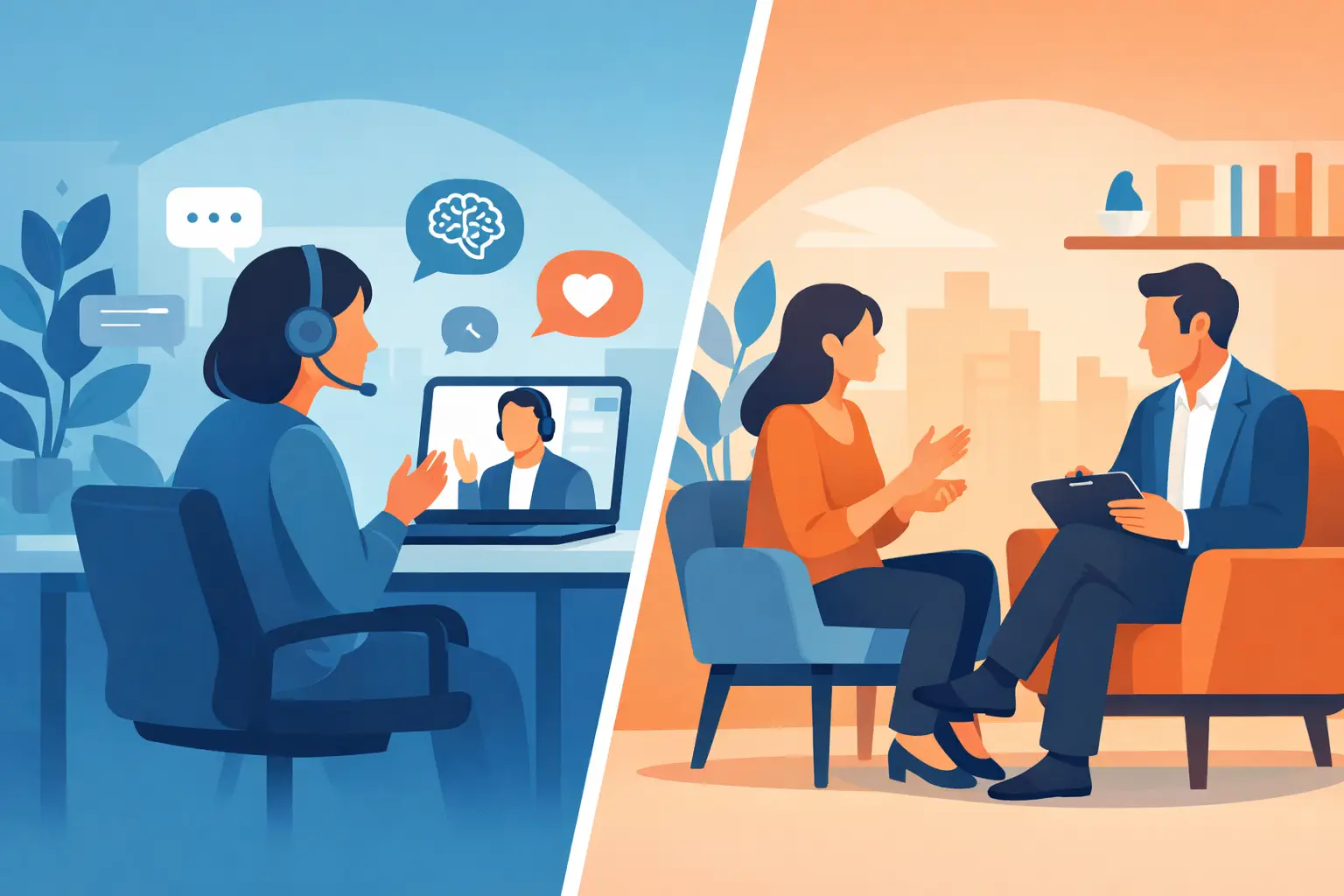
Some people know they need support the moment getting through the day starts to feel harder than it should. The real question is often not whether to get help, but whether telehealth mental health vs in person care will fit their life, budget, and comfort level best.
For many adults, the barrier is not motivation. It is time, privacy, scheduling, commute stress, or the idea of sitting in a waiting room when they already feel overwhelmed. That is why this comparison matters. The right format can make the difference between putting off care for months and starting treatment this week.
Table of Contents
Telehealth mental health vs in person: what actually changes?
At the core, both models aim to do the same thing. They connect you with a licensed provider who evaluates symptoms, discusses treatment options, and helps you move toward feeling more stable. The difference is how that care is delivered and how easy it is to stay consistent with it.
With telehealth, appointments, follow-up, and communication happen online. Depending on the platform, care may also include secure messaging, digital treatment guides, and medication support when appropriate. In-person care happens face-to-face in a clinic or office, which some people prefer because it feels more traditional and structured.
The better choice depends on what tends to get in your way. If your biggest challenge is access, telehealth often wins. If your biggest concern is wanting a physical office environment or needing a type of support that requires in-person observation, traditional care may feel more comfortable.
When telehealth mental health care makes the most sense
Telehealth works especially well for people who need support but cannot keep rearranging their lives to get it. Working professionals, parents, caregivers, and anyone juggling a packed schedule often benefit from being able to connect from home, from a private office, or even from a parked car during a break.
It can also feel easier emotionally. If anxiety, depression, stress from a major life change, or sleep disruption has already drained your energy, removing travel time and waiting rooms lowers the effort required to begin. That lower friction matters more than people think. Starting care should not feel like another obstacle course.
Privacy is another reason many people choose online treatment. Not everyone wants to explain regular appointments to a boss, coordinate childcare, or risk running into someone they know. Telehealth gives people more control over when and where they receive care, which can make asking for help feel less exposed.
For symptom-based treatment, telehealth can be a strong fit. Concerns like anxiety, depression, mood changes, sleep issues, and emotional distress often begin with a detailed conversation, symptom review, and a personalized treatment plan. Those first steps do not always require an office visit. In many cases, what people need most is timely access to a licensed provider, a clear path forward, and consistent follow-up.
Where in-person care still has an advantage
In-person care is not outdated. For some patients, it is the better choice.
If someone feels more grounded talking face-to-face in the same room, that preference matters. Some people open up more easily in person, especially if they are new to treatment or have had past healthcare experiences that make trust harder to build. A physical office can also create a dedicated mental boundary between daily life and treatment, which some patients find helpful.
There are also cases where in-person evaluation is more appropriate. If symptoms are severe, highly complex, or tied to safety concerns, a higher-touch care setting may be needed. And if someone needs services that rely on physical presence, such as certain therapies, testing, or coordinated psychiatric care beyond what a digital model offers, in-person support may be the right next step.
Choosing in-person care does not mean telehealth failed. It just means your needs call for a different level or style of support.
Cost, speed, and consistency matter more than people expect
People often compare telehealth and in-person care based on comfort. Just as often, the deciding factor is practical.
In-person mental health care can involve longer wait times, transportation costs, time away from work, and less flexibility for follow-up. Even when the appointment itself is manageable, the effort around it can become the reason people cancel or stop going.
Telehealth usually reduces that burden. When care is easier to access, people are more likely to stay engaged. That consistency can be especially important for depression, anxiety, and stress-related symptoms, where momentum matters. A treatment plan works better when you can actually follow it.
Speed also matters. If you have spent weeks telling yourself to push through, a long wait for care can make symptoms feel even more isolating. Fast access to a licensed provider, clear next steps, and ongoing communication can create relief early, even before symptoms fully improve, because you know you are no longer handling it alone.
For cost-conscious adults, online care can also feel more predictable. Some telehealth services offer straightforward pricing and structured plans that are easier to budget than a patchwork of office visits, pharmacy coordination, and missed work time. That does not mean telehealth is always cheaper in every situation, but it often lowers the total effort and expense around care.
Elevate Your Health for Just $29.99/Month
Join the Precision Wellness Subscription at My Healing 365 and get discounted services, priority coaching access, virtual care, and exclusive wellness resources to support your physical, emotional, and hormonal health.
Join for $29.99/MonthWhat about medication and treatment quality?
A common concern is whether online mental health treatment is as real or effective as in-person care. For many people, yes, it can be.
The quality of care depends less on the building and more on the clinical process. Are you being treated by a licensed provider? Is your plan based on your symptoms and history? Do you have ongoing support, not just a one-time conversation? Is medication offered thoughtfully, when appropriate, rather than casually? Those are the questions that matter.
A strong telehealth model can provide personalized treatment plans, provider oversight, symptom tracking, and medication support grounded in evidence-based care. That can be a very good fit for adults dealing with common but disruptive concerns such as persistent anxiety, low mood, sleep struggles, and emotional burnout.
The limitation is that not every person or every condition belongs in a fully digital workflow. Good online care should be clear about that. Trustworthy platforms do not try to force every need into one format. They assess, guide, and direct patients toward the level of care that fits their situation.
How to decide what is right for you
The best choice is usually the one you will actually use.
If you have been delaying treatment because you cannot find the time, do not want the visibility of office visits, or need a simpler way to talk with a provider, telehealth may be the most realistic and supportive option. If you want convenient care for anxiety, depression, sleep-related concerns, or stress tied to major life changes, online treatment can remove enough barriers to help you start.
If you know you strongly prefer face-to-face visits, need more intensive support, or have symptoms that make remote care feel too limited, in-person treatment may be worth the extra effort. There is no gold star for choosing the harder route, and no weakness in choosing the one that feels safer.
It also does not have to be permanent. Some people start with telehealth because it is fast and accessible, then transition later if their needs change. Others try in-person care, struggle with the logistics, and move online so treatment becomes easier to maintain. Mental health care is not one-size-fits-all, and your plan can evolve.
For adults who want discreet, licensed, digital support without the friction of traditional appointments, platforms like My Healing 365 reflect why telehealth has become such a practical option. The appeal is not just convenience. It is the ability to get real care in a format that fits real life.
If you are choosing between telehealth mental health vs in person care, try asking a simpler question: which option makes it easiest for you to begin, stay consistent, and feel supported? The right answer is the one that helps you take the next step with less resistance and more confidence.