
Medically Reviewed
Dr. Jose Rossello, MD, PhD, MHCM
Preventive Medicine & Public Health Specialist
Last Reviewed: April 18, 2026
You don’t need a gym membership or expensive equipment to get in shape. Home workouts offer a practical and effective way to build strength, lose weight, and improve overall fitness without stepping outside your door. Many people have transformed their bodies using nothing more than their living room floor and a commitment to consistency.
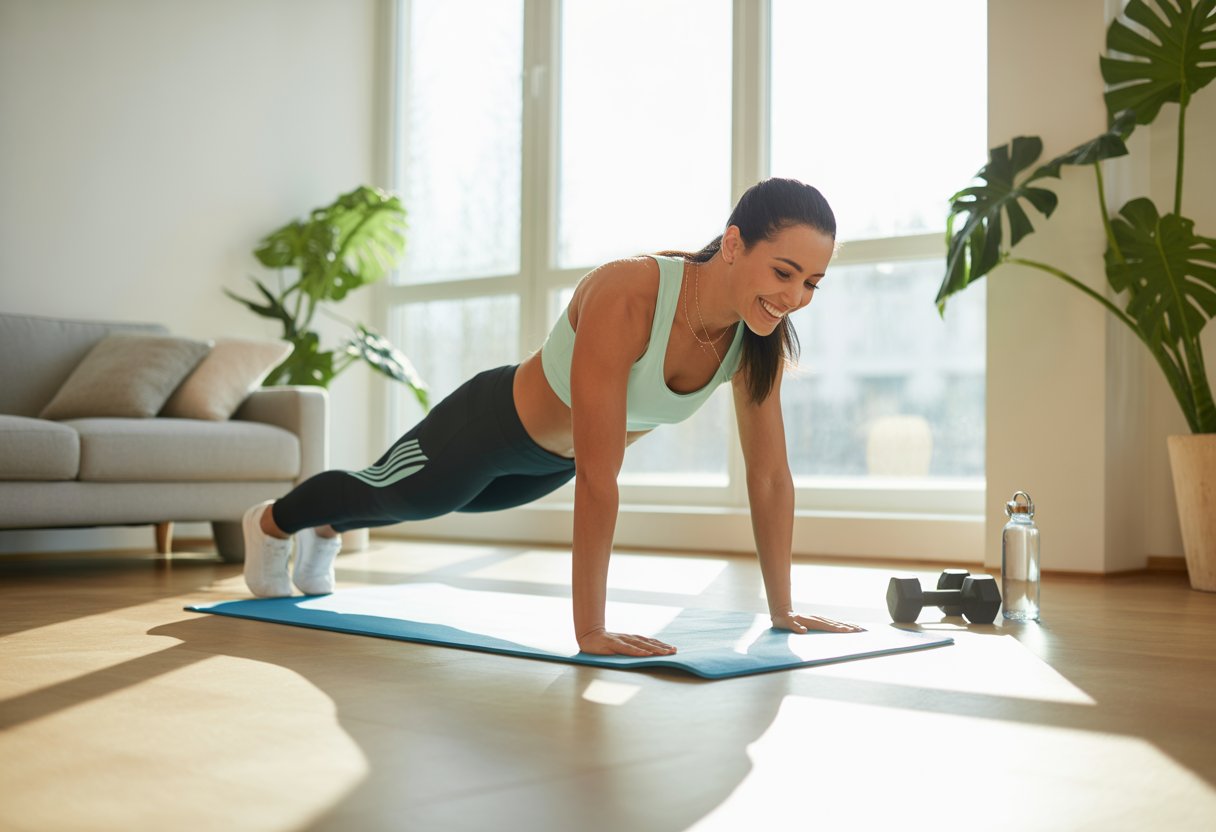
The key to success with at-home workouts[1] lies in understanding proper exercise techniques and creating a structured plan. Whether someone wants to build muscle, improve flexibility, or boost their cardiovascular health, they can achieve their goals from home. The variety of exercise options available means anyone can design a program that fits their fitness level and personal goals.
This guide covers everything needed to transform your body at home. From setting up a workout space to choosing the right exercises and nutrition strategies, readers will learn how to create lasting results without leaving their house.
Table of Contents
Key Takeaways
- You can achieve significant fitness results using bodyweight exercises and minimal equipment at home
- A structured workout plan with proper progression and rest days is essential for building strength and avoiding injury
- Combining regular exercise with smart nutrition habits creates sustainable long-term body transformation
Establishing Your Fitness Goals and Tracking Progress
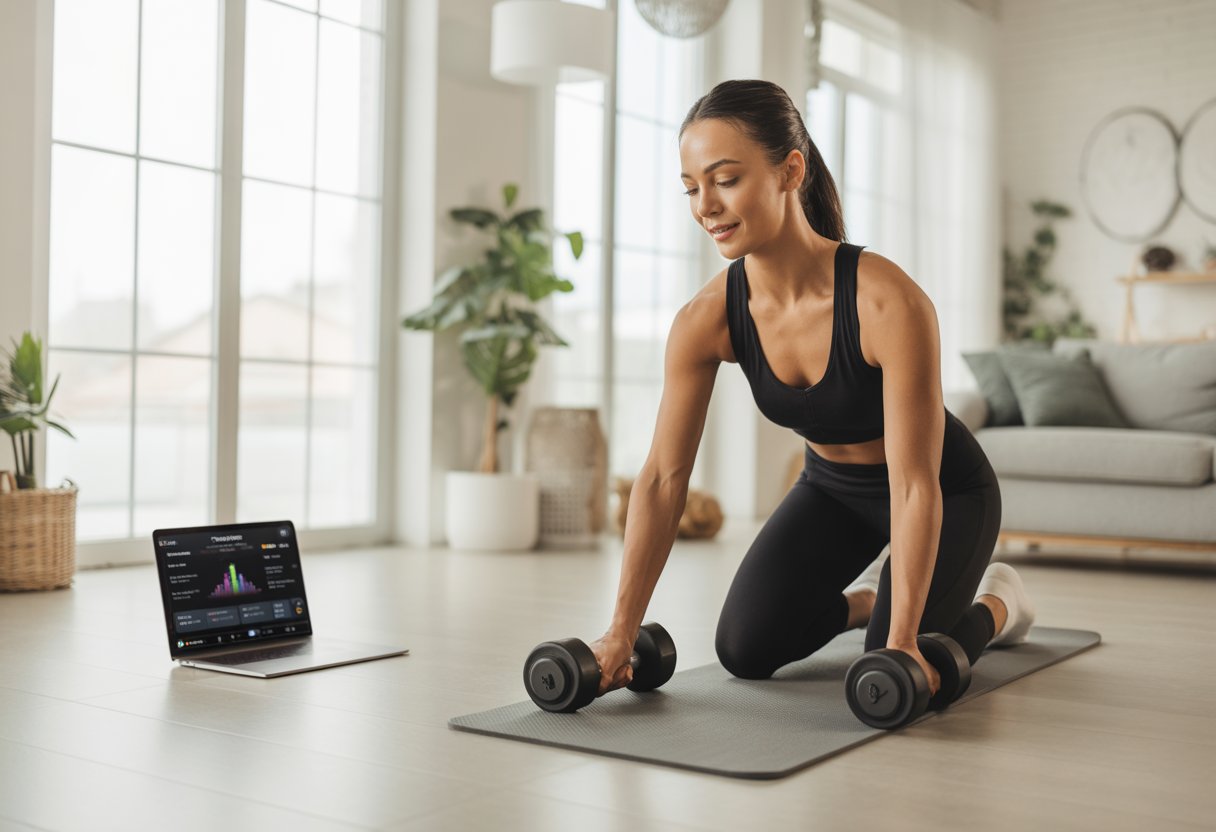
Setting clear fitness goals and monitoring body measurements creates a foundation for home workout success. Tracking methods range from basic measurements to advanced apps that help individuals stay accountable throughout their transformation journey.
Defining Realistic and Specific Objectives
Effective fitness goals follow a SMART framework that includes specific, measurable criteria[2]. Instead of vague aims like “get healthier,” individuals should set concrete targets such as “complete 20 push-ups without stopping” or “exercise for 30 minutes five days per week.”
Goals must match current fitness levels. Someone new to exercise might start with 6,000 steps daily rather than jumping to 10,000 steps. Short-term goals typically span six months or less, while long-term objectives extend beyond that timeframe.
Each goal needs a clear timeline with milestones. Breaking down larger aims into weekly or monthly checkpoints prevents overwhelm and maintains focus. The “why” behind each goal matters just as much as the goal itself, whether that reason involves building strength, improving flexibility, or increasing energy levels.
Measuring Body Metrics and Progress
Body measurements provide tangible evidence of changes that scales cannot detect. Taking measurements of the waist, hips, arms, and thighs[3] reveals fat loss and muscle gain that weight alone misses.
Progress photos taken in consistent lighting and clothing offer visual documentation of transformation. These images should be captured weekly or bi-weekly from multiple angles.
Key metrics to track:
- Waist circumference at navel level
- Hip measurement at widest point
- Upper arm size (flexed and unflexed)
- Thigh circumference at mid-point
- Chest measurement across nipple line
Clothing fit serves as another practical indicator. Noting how garments feel around the waist, shoulders, and legs throughout the month reveals progress between formal measurements. Performance benchmarks like the number of squats, plank duration, or running distance completed also demonstrate improvement.
Utilizing Fitness Apps for Monitoring Progress
Digital tools simplify progress tracking through automated recording and visual graphs. Most fitness apps allow users to log workouts, record body measurements, and set reminders for exercise sessions.
Popular features include workout libraries, customizable exercise plans, and progress charts. Many apps sync with wearable devices to capture heart rate, steps, calories burned, and sleep patterns. This data provides insights into recovery needs and overall activity levels.
Calendar functions within apps help individuals schedule workouts and build consistency. Push notifications serve as accountability partners, reminding users when it’s time to exercise. Photo storage features let people compare before-and-after images directly within the app interface.
Maintaining Motivation Over 30 Days
Writing down completed workouts and achieved milestones builds momentum during the first month. Even small victories deserve recognition, whether that means adding five more seconds to a plank or completing an extra repetition.
Sharing fitness goals with family or friends creates external accountability. Having someone check in on progress makes skipping workouts harder and celebrating wins more meaningful.
When motivation dips, revisiting the original purpose behind the fitness journey helps. Individuals should ask themselves what they wanted to achieve and why it mattered. If goals feel out of reach, adjusting them to smaller, more attainable targets prevents discouragement.
Blocking specific times for exercise on a calendar treats workouts as non-negotiable appointments. This structure removes daily decision-making about when to exercise. Focusing on one goal at a time rather than multiple objectives simultaneously reduces overwhelm and increases the likelihood of success.
Creating a Home Workout Space and Essential Equipment
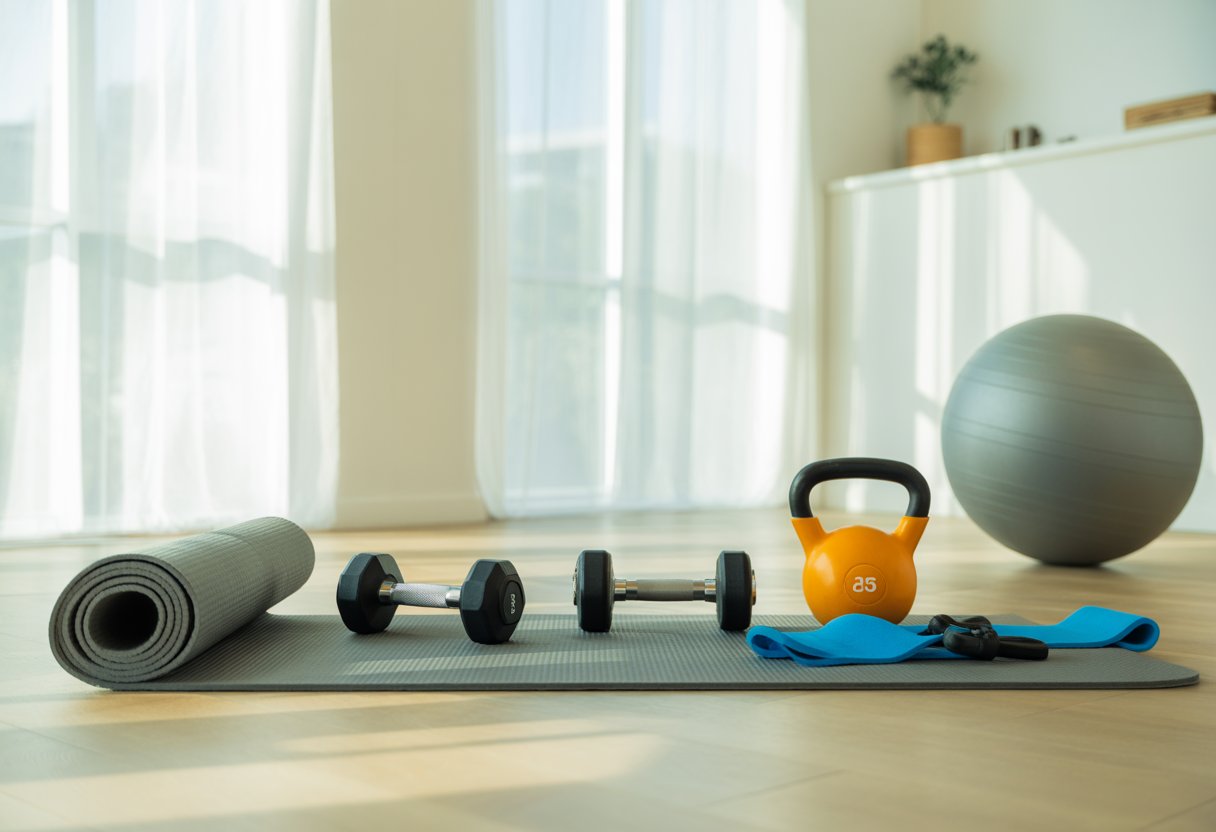
A dedicated workout area and the right tools make home fitness sustainable and effective. The space doesn’t need to be large, but it should support consistent movement and accommodate basic equipment that targets multiple muscle groups.
Choosing Your Dedicated Workout Area
A functional workout space can fit in as little as 10×10 feet. Spare bedrooms, garages, basements, or even corners of living rooms work well when set up thoughtfully.
The ceiling should be high enough for overhead movements. A minimum of 8 feet allows for exercises like overhead presses and jump rope without restriction. Ventilation matters for comfort during intense sessions. Opening windows or using a fan prevents the space from becoming stuffy.
Flooring protects both the person and the floor beneath. Rubber mats or interlocking foam tiles[4] absorb impact and prevent equipment damage. These options cost less than custom flooring and install easily without professional help.
Good lighting creates a safer environment. Natural light works during the day, but overhead lights or lamps ensure visibility during early morning or evening workouts.
Investing in Versatile Equipment
A few quality pieces cover most training needs without cluttering the space.
Dumbbells provide resistance for dozens of exercises targeting arms, shoulders, chest, back, and legs. Adjustable sets save space and money compared to buying multiple fixed-weight pairs.
Resistance bands offer variable tension levels for strength work and mobility exercises. They pack away easily and cost significantly less than weights while still building muscle effectively.
A pull-up bar that mounts in a doorway enables upper body pulling movements. It requires no floor space and supports bodyweight exercises like chin-ups and hanging leg raises.
An exercise mat cushions the body during floor work, yoga, stretching, and core exercises. It defines the workout zone and protects knees and elbows during planks or push-ups.
A jump rope delivers intense cardio in minimal space. It improves coordination and burns calories quickly in short intervals.
Budget-Friendly Alternatives at Home
Home items replace expensive equipment without sacrificing results.
Filled water bottles or laundry detergent jugs substitute for light dumbbells. Backpacks loaded with books create weighted vests for squats and lunges.
Towels work as sliders for exercises like mountain climbers on smooth floors. Chairs support tricep dips, step-ups, and incline push-ups.
Stairs provide cardio through repeated climbs and serve as platforms for elevated exercises. Wall space enables handstands, wall sits, and incline push-ups without any purchase required.
Bodyweight movements like push-ups, squats, lunges, and planks build strength without equipment. Progressions increase difficulty as fitness improves through tempo changes, single-leg variations, or added repetitions.
Elevate Your Health for Just $29.99/Month
Join the Precision Wellness Subscription at My Healing 365 and get discounted services, priority coaching access, virtual care, and exclusive wellness resources to support your physical, emotional, and hormonal health.
Join for $29.99/MonthFundamental Bodyweight Exercises for Full-Body Fitness
Mastering basic movements like squats, push-ups, and planks creates the foundation for effective home workouts without equipment. These exercises target multiple muscle groups simultaneously and can be modified to match any fitness level.
Core Movements for Beginners
New exercisers should start with simple movements that build strength and coordination. The basic squat[5] works the legs and glutes while teaching proper hip movement patterns. Push-ups strengthen the chest, shoulders, and arms using just body weight.
The plank is essential for core stability. Beginners should hold this position for 20-30 seconds and gradually increase time. Side planks add variety by targeting the obliques on each side of the torso.
Reverse lunges offer better balance control than forward lunges for those just starting out. Walking lunges challenge coordination as each step requires moving the body through space. These movements prepare the body for more challenging exercises.
Mountain climbers combine core work with cardio benefits. Start slowly to learn the proper form before increasing speed.
Building Strength With Home Workouts
Progressive overload happens when exercises become more challenging over time. Diamond push-ups place hands close together to emphasize triceps more than standard push-ups. Decline push-ups with feet elevated increase difficulty by shifting more weight to the upper body.
Single-leg variations of squats and lunges double the challenge on each leg. Pull-ups and chin-ups require a bar but deliver exceptional back and arm development. Chin-ups use an underhand grip that allows most people to complete more repetitions than traditional pull-ups.
| Exercise Type | Primary Muscles | Difficulty Level |
|---|---|---|
| Squats | Legs, glutes | Beginner |
| Push-ups | Chest, arms | Beginner |
| Pull-ups | Back, biceps | Advanced |
| Burpees | Full body | Intermediate |
Burpees combine a squat, plank, push-up, and jump into one movement. This creates a powerful full-body exercise[6] that burns significant calories.
Incorporating Compound Movements
Compound exercises work multiple joints and muscle groups at once. They create the most efficient workouts for building strength and burning fat. Squats engage the hips, knees, and ankles while activating the core for stability.
Russian twists combine core rotation with isometric holding. This trains the abs and obliques through a natural twisting motion. Lunges in all variations require balance and coordination between upper and lower body.
Bodyweight exercises allow smooth transitions between movements. A circuit might flow from push-ups to mountain climbers to burpees without any equipment changes. This keeps heart rate elevated while working different muscle groups.
The combination of planks, squats, and push-ups in one session targets nearly every major muscle. Adding pull-ups or chin-ups completes the picture by training the back muscles that pulling movements develop.
Progressive Overload and Workout Structure
Building muscle and strength at home requires gradually increasing the stress placed on muscles[7] during each exercise routine. A well-structured home workout routine incorporates specific strategies for adding intensity while tracking key metrics to ensure consistent progress.
Strategies for Increasing Intensity
Progressive overload works by changing one variable at a time in an exercise routine. The most common approach involves adding 5 pounds of weight when someone can complete at least five extra repetitions on their final set.
Another effective strategy focuses on increasing repetitions while maintaining proper form. Most people should aim for six to 15 reps per exercise. Once 15 reps become easy, they can reduce the rep count and add more weight.
Four key methods for progressive overload:
- Weight: Add 5-pound increments every 2-3 weeks
- Repetitions: Increase from 6 to 15 reps before adding weight
- Duration: Extend workout time from 30 to 60 minutes gradually
- Rest periods: Decrease rest from 60 seconds to 30 seconds between sets
Training intensity can also increase through tempo changes. Performing 15 reps in 60 seconds instead of six reps in the same timeframe challenges muscles differently without requiring additional equipment.
Sample Home Workout Routine Structure
An effective home workout routine includes five to six exercises targeting both upper and lower body muscles. Each exercise should involve three sets of six to 15 repetitions.
Basic 4-week structure:
| Week | Sets | Reps | Rest | Weight |
|---|---|---|---|---|
| 1 | 3 | 6 | 60 sec | Starting |
| 2 | 3 | 8 | 60 sec | Starting |
| 3 | 3 | 10 | 45 sec | Starting |
| 4 | 3 | 6 | 60 sec | +5 lbs |
Each session should last 30 to 60 minutes depending on fitness level. People should schedule a deload week every four to six weeks where they either extend rest times or reduce weight to allow proper recovery.
Tracking Reps, Sets, and Rest Intervals
Recording workout data helps identify when to increase difficulty. A downloadable workout tracker[8] allows someone to log weights, repetitions, and rest periods for every session.
Essential metrics to track:
- Weight used for each exercise
- Number of reps completed per set
- Rest time between sets
- Overall workout duration
- How the exercises felt (easy, moderate, challenging)
Someone should increase intensity when they can finish all sets with proper form and feel they could do five more reps. Pain during any movement signals the weight is too heavy or form needs correction.
Advanced Bodyweight and Equipment-Based Variations
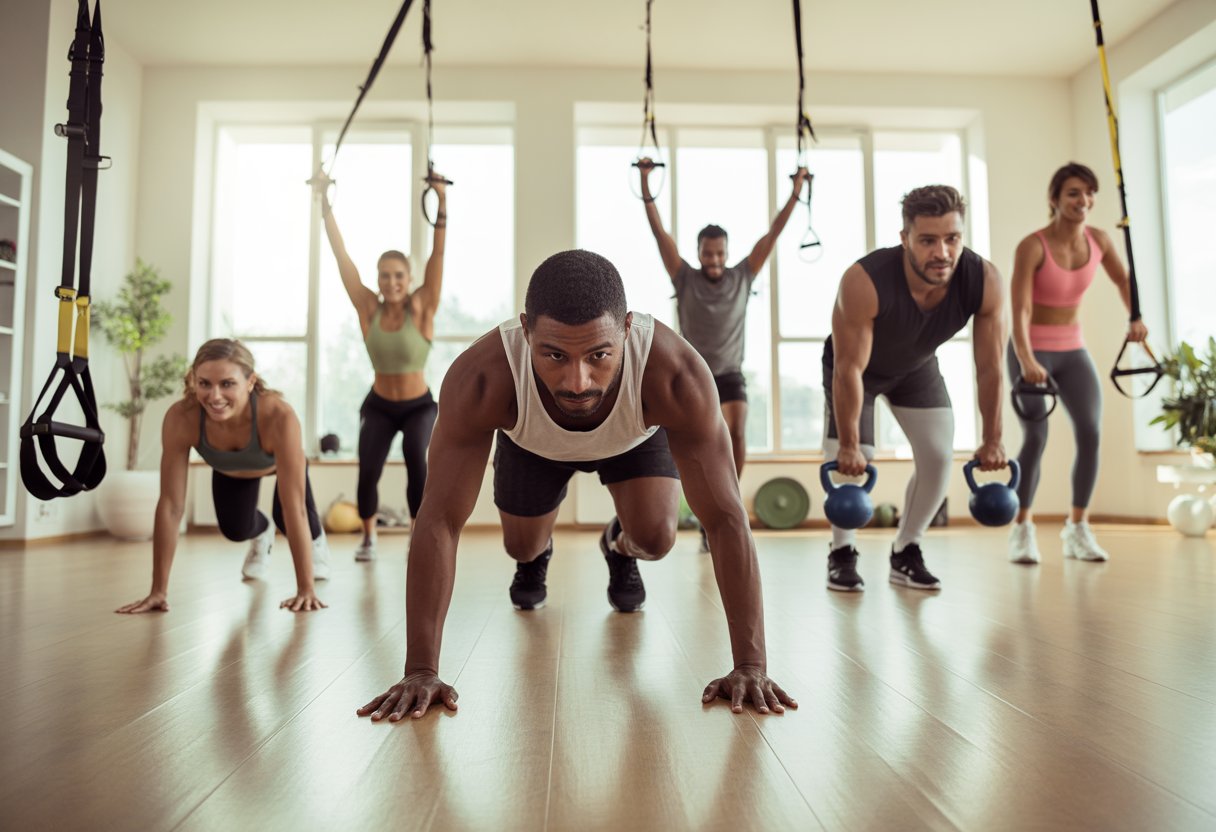
Once someone masters basic movements, they can progress to more demanding exercises that build serious strength and muscle. These advanced variations challenge the body through increased range of motion, explosive power, or added instability.
Challenging Push-Up Variations
Pike push-ups shift more weight onto the shoulders by placing the hips high in the air with hands and feet on the ground. This variation targets the deltoids and upper chest more than regular push-ups. The exerciser should form an inverted V-shape with their body and lower their head toward the ground between their hands.
Clapping push-ups develop explosive power in the chest and arms. The person pushes up with enough force to lift their hands off the ground, claps once, then lands back in the starting position. This plyometric movement builds fast-twitch muscle fibers.
Decline push-ups elevate the feet on a chair or bench to increase difficulty. This angle places more resistance on the upper chest and shoulders compared to standard push-ups.
Lower-Body Progressions
Jump squats turn a basic squat into a plyometric exercise that builds power and burns more calories. The person squats down then explodes upward, jumping off the ground before landing softly and immediately moving into the next repetition.
Bulgarian split squats isolate each leg by elevating the rear foot on a bench or chair. This single-leg exercise improves balance while targeting the quads, glutes, and hamstrings intensely. The front knee should stay aligned over the ankle throughout the movement.
One-legged squats represent one of the most challenging bodyweight exercises[9] that requires significant strength and balance. The person extends one leg forward while squatting on the other leg until their thigh is parallel to the ground.
Core and Cardio-Boosting Moves
Leg raises target the lower abdominals by having someone lie on their back and lift both legs from the ground to a 90-degree angle. Keeping the legs straight increases difficulty, while the lower back should stay pressed against the floor throughout.
Jumping jacks provide cardiovascular conditioning while warming up the entire body. This classic exercise involves jumping while spreading the legs and raising the arms overhead, then returning to the starting position.
Bench dips work the triceps using a sturdy chair or bench. The exerciser places their hands on the edge behind them, extends their legs forward, and lowers their body by bending the elbows to 90 degrees before pushing back up.
Integrating Flexibility and Mobility Work

Regular flexibility and mobility training helps prevent injury and improves performance in strength workouts. These practices prepare muscles for exercise and speed up recovery between training sessions.
Dynamic Warm-Ups and Stretching
Dynamic stretching involves moving through a full range of motion rather than holding static positions. This type of movement increases blood flow to muscles and prepares joints for exercise. Leg swings, arm circles, and hip rotations activate key muscle groups before workouts.
A 10-minute mobility routine[10] can address the full body from fingers to toes without equipment. Common dynamic movements include walking lunges, high knees, and torso twists. These exercises raise body temperature and improve joint mobility.
Dynamic warm-ups should target the specific areas a person plans to work during their main workout. Someone preparing for lower body training should focus on hip circles, leg swings, and bodyweight squats. Upper body workouts require shoulder rolls, arm swings, and thoracic rotations.
Cool-Down Routines for Recovery
Active recovery after workouts helps muscles return to their resting state and reduces soreness. Static stretches held for 20-30 seconds allow muscles to relax and lengthen. This practice improves flexibility over time when done consistently.
Foam rolling releases tension in tight muscles and breaks up adhesions in connective tissue. A person should roll slowly over each muscle group, pausing on tender spots for 30-60 seconds. Common areas to target include calves, quadriceps, hamstrings, and upper back.
Yoga and Pilates workouts[11] focus on stabilizing muscles around major joints like hips, knees, and shoulders. These practices combine flexibility and mobility work into a single session. Even 15 minutes of dedicated cool-down work supports better recovery and prepares the body for the next training session.
Scheduling Workouts, Rest Days, and Active Recovery
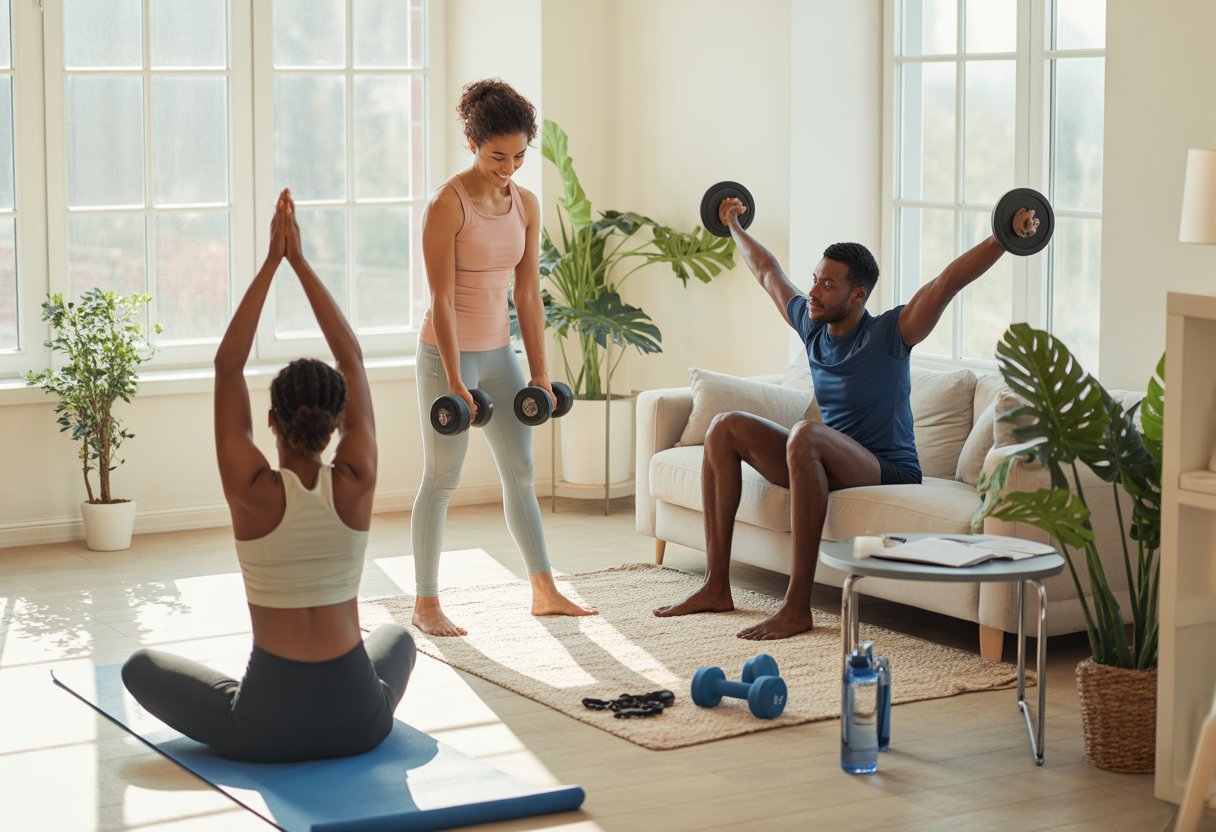
A successful home workout plan needs proper timing between training sessions and recovery periods. Your body adapts and grows stronger during rest, not during the actual workout.
Balancing Exercise and Recovery for Optimal Results
Most people should space out strength training sessions with 1-2 rest days in between[12]. This gives muscles time to repair the small tears that occur during exercise.
A balanced weekly schedule might include three to four days of strength training with rest and recovery days in between. For example, someone lifting weights on Monday, Wednesday, and Friday can use Tuesday, Thursday, and the weekend for recovery activities.
The key is matching recovery time to workout intensity. Higher intensity sessions need more recovery time. Someone doing light resistance training might recover faster than someone doing heavy lifting.
People should monitor how they feel when returning to workouts. Feeling refreshed and ready indicates proper recovery. Continued soreness or fatigue means more rest is needed.
Benefits of Rest and Active Recovery Days
Active recovery involves low-intensity movement[13] that keeps heart rate at 30-60% of maximum. This approach helps the body return to normal faster than complete rest.
Light activities bring oxygen-rich blood to muscles while removing waste products from exercise. Walking, easy cycling, swimming, or gentle yoga all work well for active recovery.
Benefits of active recovery include:
- Reduced muscle soreness
- Faster removal of exercise waste products
- Maintained blood flow to healing tissues
- Prevention of complete workout routine interruption
The talk test helps determine proper intensity. If someone can hold a steady conversation during the activity, the pace is right for recovery. Losing breath means the intensity is too high and won’t help recovery.
Rest day workouts[14] should leave people feeling energized rather than exhausted. The goal is adding back energy reserves, not depleting them further.
Nutrition Strategies to Maximize Results

Proper nutrition fuels home workouts and drives body transformation through strategic protein consumption, balanced macronutrient intake, and adequate hydration. These fundamental nutrition principles support muscle growth, fat loss, and sustained energy throughout the day.
Optimizing Protein Intake
Protein intake serves as the foundation for building and maintaining muscle mass during home-based training programs. Most adults need 0.7 to 1 gram of protein per pound of body weight daily to support muscle recovery and growth.
High-quality protein sources include chicken breast, fish, eggs, Greek yogurt, and lean beef. Plant-based options like lentils, chickpeas, and tofu provide excellent alternatives for those following vegetarian or vegan diets.
Spreading protein consumption across three to five meals helps maximize muscle protein synthesis throughout the day. Each meal should contain 25 to 40 grams of protein to optimize absorption and utilization.
Protein-Rich Food Options:
- Chicken breast: 31g per 4 oz
- Greek yogurt: 20g per cup
- Eggs: 6g per large egg
- Lentils: 18g per cooked cup
- Salmon: 25g per 4 oz
Incorporating Healthy Fats and Carbs
Healthy fats support hormone production, vitamin absorption, and sustained energy levels during workouts. Sources like avocados, olive oil, nuts, and fatty fish provide omega-3 fatty acids that reduce inflammation and support recovery.
Carbohydrates fuel high-intensity workouts and replenish glycogen stores after training. Complex carbs from whole grains, sweet potatoes, and oats provide steady energy without blood sugar spikes.
The body needs different macronutrient ratios based on specific goals. Weight loss typically requires a moderate calorie deficit with higher protein, while muscle building demands adequate carbs and calories. Planning weekly meals[15] helps maintain consistent nutrient intake and supports long-term healthy habits.
Supplements and Hydration Essentials
Hydration affects performance, recovery, and metabolic function during home workouts. Adults should drink half their body weight in ounces of water daily, plus additional fluids during and after exercise.
Creatine monohydrate stands out as one of the most researched and effective supplements for strength and muscle gains. Taking 3 to 5 grams daily improves workout performance and supports muscle growth.
BCAAs (branched-chain amino acids) may help reduce muscle soreness and support recovery, though whole food protein sources often provide adequate amounts. Vitamin D, omega-3s, and magnesium address common nutritional gaps that affect training performance. People should consult healthcare providers before starting new supplement regimens.
Effective Home Cardio and Conditioning Techniques
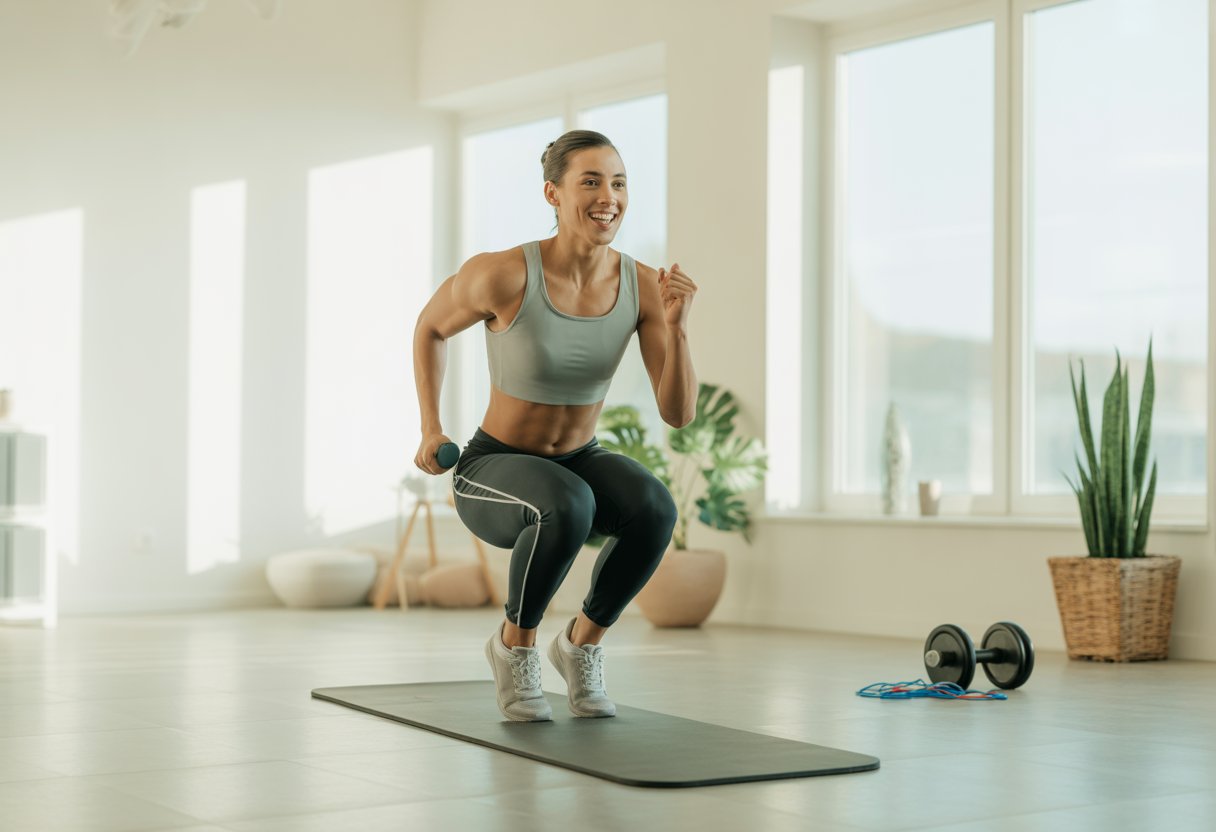
Getting your heart rate up at home builds endurance and burns calories without gym equipment or complex setups. Simple bodyweight movements and structured workout formats deliver results when performed consistently.
Cardio Workouts Without Equipment
Bodyweight exercises provide effective cardiovascular training using natural movement patterns. Jumping jacks raise the heart rate quickly while engaging the entire body through rhythmic arm and leg movements. A person can perform these for 30 to 60 seconds as part of a warmup or standalone cardio session.
Burpees combine a squat, plank, and jump into one compound movement that challenges the heart and lungs. These full-body cardio exercises[16] increase intensity rapidly and require no equipment. Mountain climbers work similarly by alternating knee drives from a plank position, building both core strength and cardiovascular endurance.
Jump rope offers another equipment-light option that improves coordination and burns significant calories. High knees, running in place, and squat jumps round out a complete home cardio routine. Each exercise can be modified by adjusting speed, range of motion, or adding brief rest periods between sets.
Circuit and HIIT Sessions for Fat Loss
Circuit training combines multiple exercises performed back-to-back with minimal rest between movements. A basic circuit might include 30 seconds each of jumping jacks, mountain climbers, burpees, and squat jumps, repeated for three to five rounds. This format keeps the heart rate elevated while preventing boredom.
HIIT alternates short bursts of maximum effort with recovery periods. Cardio exercises done at home[17] work well in 20-second sprint intervals followed by 10 seconds of rest, repeated for four minutes. This training style burns calories during and after the workout through increased metabolic activity.
Both formats save time compared to steady-state cardio. A person can complete an effective fat-loss session in 15 to 25 minutes. The key is maintaining high intensity during work intervals and choosing exercises that engage large muscle groups like the legs, core, and shoulders.
Utilizing Technology and Apps for Accountability
Technology makes it easier to stick with home workout routines by providing structured guidance and measurable feedback. Apps and digital tools help users track their progress, maintain consistency, and adjust their plans based on real data.
Best Fitness Apps for Home Workouts
Fitness apps provide structured workout plans that eliminate guesswork for home exercisers. Many platforms offer video demonstrations, timer functions, and personalized routines based on fitness level and available equipment.
Popular app features include:
- Pre-built workout programs for different goals
- Video tutorials with proper form guidance
- Customizable exercise libraries
- Rest timers and interval training support
- Integration with wearable devices
Some apps focus on specific training styles like bodyweight exercises, yoga, or high-intensity interval training. Others provide comprehensive programs that combine strength training, cardio, and flexibility work.
Free versions typically offer basic features, while premium subscriptions unlock personalized coaching and advanced tracking. Users should choose apps that match their current fitness level and preferred workout style. The interface should be simple enough to navigate during active training sessions without complicated menus or overwhelming options.
Smart Progress Tracking Solutions
Progress tracking tools[18] transform vague fitness goals into measurable outcomes. Digital platforms record workout completion, weight lifted, repetitions performed, and body measurements over time.
Tracking solutions typically include:
- Workout logs that record exercises, sets, and reps
- Photo progress galleries for visual comparisons
- Body measurement tracking for weight, circumferences, and body fat percentage
- Performance graphs showing strength gains and endurance improvements
Many apps sync with smart scales and fitness trackers to automatically log data. This reduces manual entry and creates a complete picture of activity levels, sleep quality, and recovery patterns.
Visual representations of progress help users identify plateaus and recognize improvements that might not be immediately obvious. Consistent monitoring reveals patterns in performance, showing which approaches work best for individual bodies and schedules.
Building Sustainable Healthy Habits for Long-Term Success
The first month of a new routine feels exciting, but the real challenge begins when that initial motivation fades. People who successfully transform their bodies at home understand that consistency matters more than perfection, and they learn to adapt their approach based on what their body tells them.
Staying Consistent Beyond 30 Days
Most people quit their exercise routine within the first six weeks. The key to pushing past this critical period is creating systems that don’t rely on willpower alone.
Setting specific workout times creates automatic behavior. When someone exercises at the same time each day, their body and mind begin to expect it. Morning workouts at 6:00 AM become as routine as brushing teeth.
Habit stacking connects new behaviors to existing ones. A person might do 20 squats right after making their morning coffee or complete a set of push-ups immediately after closing their laptop for lunch.
Tracking progress in multiple ways keeps motivation high when the scale doesn’t move. They can measure improvements in how many push-ups they complete, how long they hold a plank, or how quickly they recover between sets.
Finding an accountability partner makes skipping workouts harder. Whether through video calls, shared workout logs, or simple daily check-ins, having someone else involved creates external motivation that carries them through low-energy days.
Evaluating and Adjusting Your Routine
Bodies adapt to exercise routines within 4-6 weeks, which means what worked initially may stop producing results. Regular evaluation prevents plateaus and reduces injury risk.
They should assess their routine every month using concrete metrics. Questions to ask include: Are workouts still challenging? Has energy improved or decreased? Do any movements cause pain? Is sleep quality better or worse?
Signs a routine needs adjustment:
- Exercises feel too easy or boring
- Progress has stalled for three weeks
- Persistent soreness in the same areas
- Decreased energy throughout the day
- Loss of interest in working out
When making changes, they should modify one element at a time. Adding five more reps, increasing resistance, or swapping one exercise helps identify what drives improvement. Building sustainable habits[19] requires this type of thoughtful progression rather than complete overhauls that rarely stick.
Rest weeks every 8-12 weeks allow the body to recover fully. During these periods, they can reduce workout intensity by 50% while maintaining their schedule to preserve the healthy habits they’ve built.
Frequently Asked Questions
Home workouts can deliver real results when done correctly, and certain exercises work multiple muscle groups at once for maximum efficiency. Anyone can start building strength and burning fat at home with the right approach and consistency.
What is the most effective full-body workout I can do at home without equipment?
Burpees stand out as one of the most effective full-body exercises available. This movement combines a squat, plank, push-up, and jump into one continuous motion that works the legs, core, chest, arms, and cardiovascular system.
A person performs a burpee by starting in a standing position, dropping into a squat with hands on the floor, kicking the feet back into a plank position, doing a push-up, jumping the feet back to the squat position, and then jumping up with arms overhead. This single exercise burns calories quickly while building strength across all major muscle groups.
Mountain climbers also provide exceptional full-body benefits. They engage the core, shoulders, and legs while elevating the heart rate. These exercises require no equipment and can be modified to match any fitness level.
Which exercises should I do every day to build strength and improve fitness at home?
Push-ups build upper body strength by targeting the chest, shoulders, triceps, and core. A person can start with wall push-ups or knee push-ups and progress to standard push-ups as they get stronger.
Squats develop leg and glute strength while improving balance and mobility. They should be performed with feet shoulder-width apart, sitting back as if lowering into a chair, and keeping the chest up.
Planks strengthen the entire core and improve posture. Holding a plank position for 20-60 seconds several times daily builds endurance in the abdominal muscles, lower back, and shoulders. Lunges, glute bridges, and dead bugs round out a daily routine that covers all major muscle groups.
How can a complete beginner start working out at home safely without any equipment?
Beginners should start with basic bodyweight movements at a comfortable pace. Walking in place or marching with high knees for 5-10 minutes warms up the muscles and prepares the body for exercise.
Starting with modified versions of exercises reduces injury risk. Wall push-ups are easier than floor push-ups. Sitting down onto a chair and standing back up teaches proper squat form. Holding onto a counter during lunges helps with balance.
A beginner might do 5-10 repetitions of each exercise and rest as needed. The goal is to learn proper form rather than rush through movements. Adding one or two repetitions each week allows the body to adapt safely.
What is a simple 10-minute at-home workout routine for beginners to follow consistently?
A 10-minute routine should alternate between different muscle groups to prevent fatigue. Starting with 30 seconds of marching in place warms up the body.
The routine continues with 10 squats, 5 push-ups (wall or knee), 10 lunges (5 per leg), and a 20-second plank. This sequence repeats twice with 30 seconds of rest between rounds. The workout ends with 1 minute of gentle stretching.
This format takes exactly 10 minutes and works the legs, chest, arms, and core. Consistency matters more than intensity for beginners, and completing this routine five days per week builds a solid fitness foundation.
What are the best at-home fat-burning exercises for women that require no equipment?
Jumping jacks burn calories quickly by engaging the entire body and raising the heart rate. They can be done for 30-60 second intervals with short rest periods.
High knees involve running in place while lifting the knees to hip height. This exercise burns fat while strengthening the core and legs. Squat jumps add an explosive element to regular squats, increasing calorie burn.
Mountain climbers combine cardio with core work. A woman alternates bringing her knees toward her chest while in a plank position. Burpees remain one of the top calorie-burning exercises when someone wants exercises that transform your body[20] efficiently.
How can I get in shape and see noticeable results without leaving the house?
Getting in shape at home requires consistent exercise combined with attention to nutrition. A person needs to work out at least 3-5 times per week for 20-45 minutes to see changes in their body composition.
Results typically become noticeable within 4-8 weeks when someone follows a structured program. Combining strength exercises like push-ups, squats, and lunges with cardio movements like jumping jacks and burpees creates balanced fitness progress.
Tracking workouts helps maintain consistency. Writing down exercises completed and gradually increasing repetitions or time shows measurable progress. Changing your environment[21] by keeping workout clothes visible and scheduling exercise like an appointment increases the likelihood of following through.
Nutrition plays a major role in visible results. Eating whole foods, controlling portion sizes, and staying hydrated supports the work done during exercise. Someone can expect to see improved muscle tone, increased energy, better posture, and potentially weight loss when combining regular home workouts with healthy eating habits.
Post Views: 5
References
- The best ways to exercise without leaving your house. https://www.mindfood.com/article/top-home-workouts-the-best-ways-to-exercise-without-leaving-your-house/ Accessed April 18, 2026
- SMART Fitness Goals You Can Actually Keep. https://health.clevelandclinic.org/smart-fitness-goals Accessed April 18, 2026
- Proven Methods to Track Fitness Progress and Reach Goals. https://gearuptofit.com/fitness/how-to-track-your-fitness-progress/ Accessed April 18, 2026
- Complete Home Gym Setup Guide: Build Your Perfect Gym- Mywowfit. https://mywowfit.com/blog/home-gym-setup-guide Accessed April 18, 2026
- The 15 Best Bodyweight Exercises for Full Body Training. https://barbend.com/best-bodyweight-exercises/ Accessed April 18, 2026
- Bodyweight Workout for Beginners (20-Minute at Home Routine). https://www.nerdfitness.com/blog/beginner-body-weight-workout-burn-fat-build-muscle/ Accessed April 18, 2026
- Should You Try Progressive Overload Training?. https://health.clevelandclinic.org/progressive-overload Accessed April 18, 2026
- Progressive Overload Workout Plan (PDF Workout Tracker). https://www.nourishmovelove.com/progressive-overload-workout-plan/ Accessed April 18, 2026
- Advanced Bodyweight Workout Circuit (Full Body Routine). https://www.nerdfitness.com/blog/advanced-body-weight-workout-warning-this-will-kick-your-ass/ Accessed April 18, 2026
- 10-Minute Mobility Routine For Full Body Flexibility. https://www.builtlean.com/mobility-routine/ Accessed April 18, 2026
- 15-Minute Mobility Workout (Video). https://www.nourishmovelove.com/15-minute-mobility-workout/ Accessed April 18, 2026
- Active Recovery: Benefits & Best Practices. https://www.nasm.org/resource-center/blog/active-recovery Accessed April 18, 2026
- Blog: Active Recovery. https://www.bodyspec.com/blog/post/the_importance_of_rest_days_and_active_recovery Accessed April 18, 2026
- Safeguarding Your Website — BigScoots. https://marathonhandbook.com/rest-day-workouts/ Accessed April 18, 2026
- Science-Backed Nutrition Strategies That Transform Your Health (Without Strict Diets). https://www.healthcouncilcanada.ca/science-backed-nutrition-strategies-that-transform-your-health-without-strict-diets/ Accessed April 18, 2026
- These full-body cardio exercises. https://www.health.com/fitness/cardio-workout-at-home Accessed April 18, 2026
- 9 Cardio Exercises You Can Do at Home. https://www.onepeloton.com/blog/cardio-at-home Accessed April 18, 2026
- 9 Best Accountability Apps for Health and Wellness. https://www.nutrisense.io/blog/accountability-apps Accessed April 18, 2026
- Steps to Build Sustainable Habits for Long-Term Lifestyle Improvement. https://realitypathing.com/steps-to-build-sustainable-habits-for-long-term-lifestyle-improvement/ Accessed April 18, 2026
- 5 Simple Exercises That Transform Your Body in 30 Days. https://bodynetwork.com/5-simple-exercises-that-transform-your-body-in-30-days/ Accessed April 18, 2026
- 18 ways to start transforming your body immediately. Train your environment and your habits will follow.. https://www.precisionnutrition.com/18-ways-to-transform-your-body Accessed April 18, 2026

























