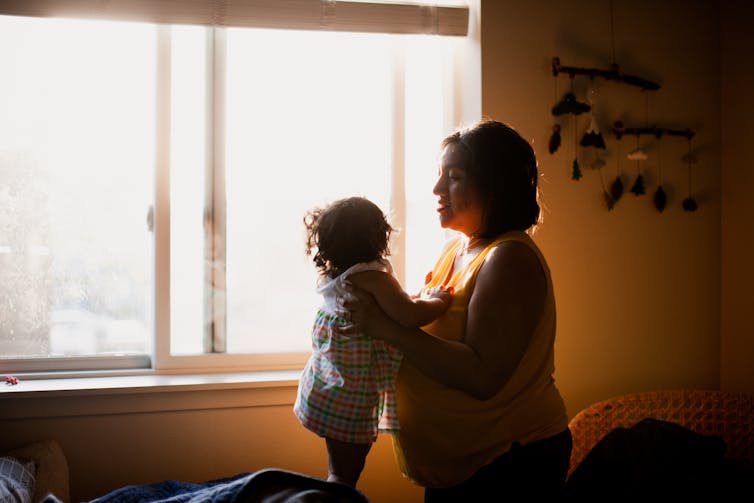
Late in her pregnancy in the fall of 2025, Jacqueline, a Guatemalan immigrant living in North Florida, began planning for labor alone.
After her husband was detained and deported by Immigration and Customs Enforcement, she stopped leaving her home except when absolutely necessary. Even routine prenatal visits felt risky, she told the news site The 19th. A local clinic eventually arranged Uber pickups and drop-offs so she could continue care, but each trip required calculation: Was it safe to leave? When labor began, she asked hospital staff a question few patients ever have to consider: Were immigration agents nearby?
Stories like Jacqueline’s were widely reported in the news through early 2026.
And although such stories are less frequently in the headlines now, immigration enforcement is ongoing, and health providers say the fear it generates continues to deter patients from seeking care. Since mid-2025, clinics in several states have documented increases in appointment cancellations, missed follow-ups and disruptions to time-sensitive services, including prenatal care and cancer screenings.
As a scholar of reproductive justice and public health, I write about how systems meant to provide care can instead cause harm in my book, “Ill Erotics: Black Jamaican Women and Self-Making in Times of HIV/AIDS.” Reproductive justice, a set of ideas developed by Black women activists, defines three core rights: the right to have a child, the right not to have a child and the right to parent children in safe and sustainable communities. My work explores not only the legality of these rights but also how social, economic and political conditions make it possible for people to access them.
Emerging evidence suggests immigration enforcement is reshaping access to healthcare in ways that limit each of these core rights. It is also redefining institutions such as clinics, hospitals and detention centers as sites of surveillance rather than sites of care.
Table of Contents
The right to carry and birth a child safely
Consistent medical care is not optional in pregnancy. Major medical and public health organizations, including the American College of Obstetricians and Gynecologists and the Centers for Disease Control and Prevention, identify regular prenatal visits, proper nutrition and monitoring for complications as essential to reducing maternal and infant mortality and other preventable complications.
In an executive order issued on Jan. 20, 2025, the Trump administration rescinded a federal policy that discouraged immigration enforcement actions in “sensitive locations,” such as hospitals, clinics, schools and places of worship.
According to health providers and advocacy organizations, patients may be avoiding clinics because they don’t trust the healthcare system, don’t want to share their data with the government and fear the presence of immigration officials near health facilities. Healthcare providers across the country report rising no-show rates for prenatal appointments.
When people avoid prenatal and other medical care out of fear, their right to carry a pregnancy safely – with the best chance for a healthy outcome – is constrained. In this way, immigration enforcement doesn’t just limit immigrants’ legal rights – it actually shapes who gets to have a safe and healthy pregnancy. The result is that healthcare systems end up prioritizing the lives and pregnancies of some people, while immigration enforcement and other policies can lead others to experience barriers in accessing the same kind of care.
For pregnant people in immigrant detention, this right is even more compromised. Pregnant detainees routinely face inconsistent or inadequate care in custody.
ICE’s own standards require that the agency provide comprehensive prenatal services, including routine checkups, access to specialists and proper nutrition. But interviews with detained women and their attorneys, along with a report published in March 2026 from the Women’s Refugee Commission and Physicians for Human Rights, describe a different reality: sporadic medical visits, delayed responses to urgent symptoms and limited access to basic prenatal resources.

timnewman/E+ via Getty Images
ICE detention facilities fail to meet even the minimum standards of care outlined in the agency’s own policies. People detained while pregnant have reported bleeding, pain or other warning signs of miscarriage without receiving timely follow-up care. Others described being transferred between facilities without their medical history, seriously disrupting their medical care.
The right not to have a child
The right not to have a child depends on access to contraception and abortion services. These forms of care are often highly time sensitive, which means that constrained access to healthcare has an especially big impact.
Elevate Your Health for Just $29.99/Month
Join the Precision Wellness Subscription at My Healing 365 and get discounted services, priority coaching access, virtual care, and exclusive wellness resources to support your physical, emotional, and hormonal health.
Join for $29.99/MonthWithout access to contraception, unintended pregnancies – or worries that they will happen – can drive up financial stress and mental health risks.
Immigration enforcement disrupts access to these healthcare services. People who are exposed to heightened surveillance and who are at risk of being detained often cannot get reproductive health services, even when those serves are legal.
Delays in abortion care can limit the reproductive health options available in pregnancy, potentially leading to more medically complex procedures as well as higher costs and farther travel for healthcare. When access is restricted, some patients are forced to continue pregnancies against their intentions, while others may attempt to manage abortions outside clinical settings, which can increase medical risk.
From a reproductive justice perspective, these unevenly distributed and compounding risks can function as a form of forced birth. In this way, immigration enforcement policy thwarts reproductive autonomy.
The right to parent children in safe and sustainable communities
Parenting children in safe and sustainable communities doesn’t just require proper medical care, but also broader social conditions that support family well-being.
Immigrant parents’ constant stress of dealing with immigration enforcement – particularly the enduring sense that they are not safe and the fear that they could be separated from family at any time – can take a toll on their mental and physical health. Studies have linked such stress with chronic conditions such as hypertension and anxiety.
For children, that stress can affect long-term development and school performance and can disrupt family networks.
In communities experiencing heavy immigration enforcement, people often avoid using essential services and activities. They may keep children home from school, stay home from work, avoid shopping and social welfare programs, and forgo healthcare appointments. That leads to lost income for local businesses and weakening the social structures that neighborhoods rely on, harming the community overall.
Community consequences
Immigration policies shape health in ways that go beyond hospitals or doctors’ offices and ripple across entire communities. Viewing immigration enforcement through a reproductive justice lens reveals how access to care, bodily autonomy and community stability are deeply connected – and how obstructing them has real health consequences.

























