Medically Reviewed
Dr. Jose Rossello, MD, PhD, MHCM
Preventive Medicine & Public Health Specialist
Last Reviewed: April 16, 2026
Your kitchen generates more waste and uses more energy than almost any other room in your home. From the food you buy to the appliances you run daily, every choice impacts the environment. The good news is that small changes can make a big difference without requiring a complete renovation or breaking your budget.
Making your kitchen more green involves three main areas: choosing sustainable materials and energy-efficient appliances, reducing waste through smart shopping and composting habits, and selecting eco-friendly cleaning products and practices. Green kitchen design[1] has become more than just a trend. It represents a practical way to lower utility bills, reduce environmental impact, and create a healthier space for cooking and gathering.
Whether someone wants to start with simple swaps like reusable shopping bags and cloth towels or tackle bigger projects like installing energy-star appliances and recycled countertops, there are options for every budget and skill level. These changes help the planet while making the kitchen more efficient and pleasant to use.
Table of Contents
Key Takeaways
- Sustainable materials like bamboo flooring and recycled countertops reduce environmental impact while adding style to the kitchen
- Energy-efficient appliances and water-saving fixtures lower utility bills and decrease energy consumption significantly
- Simple habits like composting food waste, shopping with reusable bags, and making homemade cleaning products create lasting positive change
Choosing Green Kitchen Colors and Design Elements
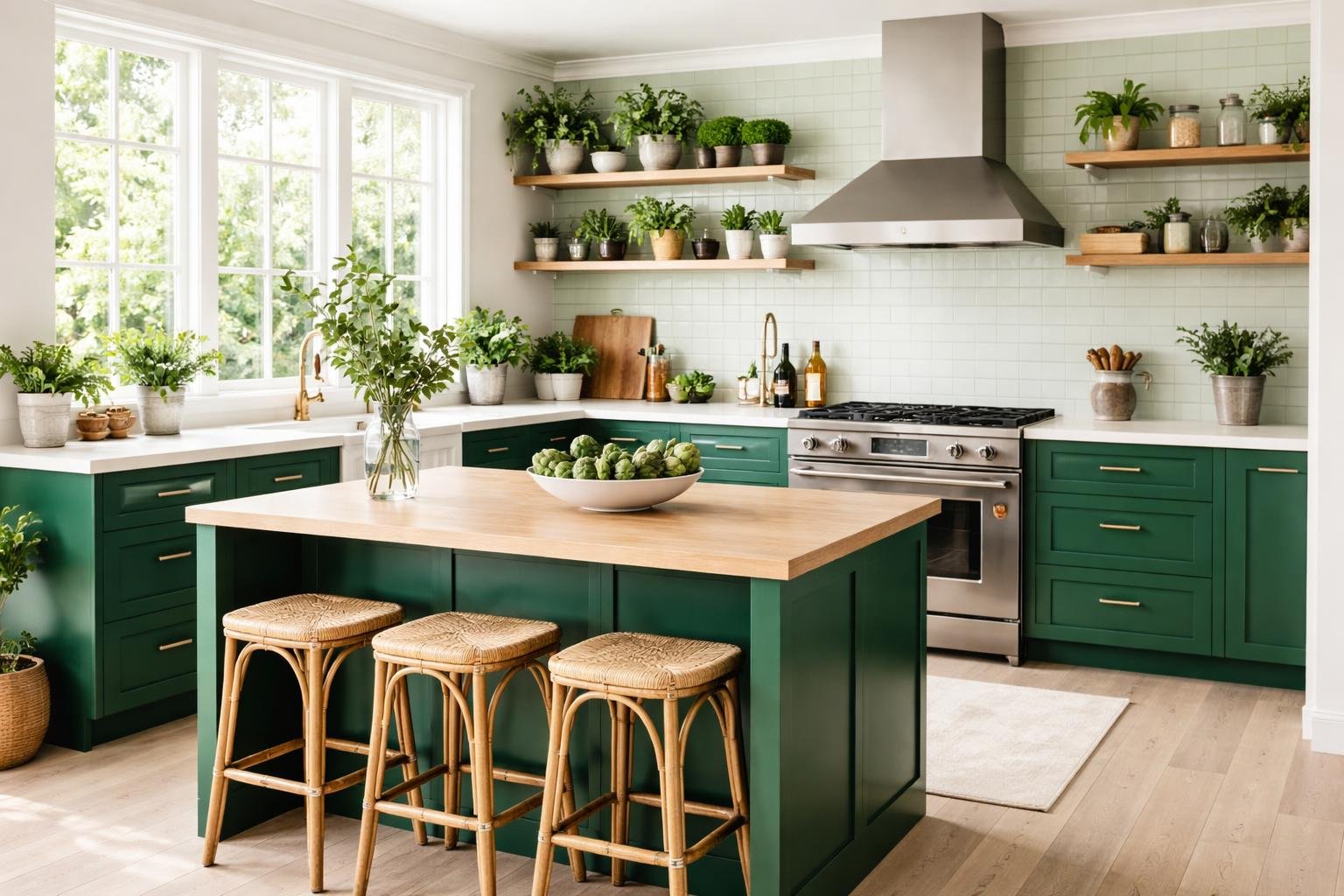
Green brings natural beauty into kitchen spaces through careful color selection and thoughtful design choices. The right shade of green paired with complementary materials creates a cohesive look that ranges from subtle to bold.
Selecting the Right Green Shade
Different green tones create distinct moods in kitchen spaces. Sage green offers a soft, calming effect that works well in cottage and farmhouse-style kitchens[2]. This muted shade pairs nicely with white cabinets and natural wood elements.
Elevate Your Health for Just $29.99/Month
Join the Precision Wellness Subscription at My Healing 365 and get discounted services, priority coaching access, virtual care, and exclusive wellness resources to support your physical, emotional, and hormonal health.
Join for $29.99/MonthDark green kitchens featuring forest or hunter green cabinets deliver drama and sophistication. These deeper tones function similarly to neutral colors, providing a rich backdrop for metallic finishes like brass or gold hardware. Olive green creates an earthy atmosphere that complements wood countertops and rustic design elements.
Mint green appliances and pastel shades add playful touches without overwhelming the space. These lighter options work particularly well as accent colors on kitchen islands or breakfast bars. Homeowners can also choose gray-green shades that blend green undertones with neutral tones for a timeless look that won’t feel dated in five years.
Green Cabinets and Cabinetry Options
Green cabinetry serves as the foundation for most green kitchen ideas. Pine green cabinets enhance metallic finishes[2] like brass pendant lights and highlight natural veining in marble countertops. Hunter green cabinets create a luxurious feel when paired with gold hardware and open wood shelving.
Two-tone kitchens combine green lower cabinets with white or cream upper cabinets for visual balance. This approach allows homeowners to incorporate bold green shades without committing to an entirely green space. Custom-paneled built-in refrigerators with matching green finishes extend the cohesive look throughout the kitchen.
Beaded-board cabinet panels in sea green or seafoam tones suit cottage kitchen styles. These lighter cabinet colors pair well with white countertops and subway tile backsplashes. For a minimalist green kitchen, choose cabinets in muted sage or gray-green with clean lines and simple hardware.
Incorporating Green Backsplashes and Countertops
Green backsplashes add color without requiring a full kitchen renovation. Peel-and-stick wallpaper in botanical patterns creates an instant green kitchen transformation when paired with white cabinetry. Geometric green tile backsplashes[2] introduce pattern and visual interest behind stoves and sinks.
Variegated green subway tiles bring depth through multiple shades within a single backsplash. These tiles complement both green and wood-toned cabinets while tying together various design elements. Mosaic tile backsplashes in pastel greens balance bolder design choices elsewhere in the kitchen.
Green marble countertops feature natural veining that adds organic movement to kitchen surfaces. These stone options work with both light and dark green cabinetry choices. For smaller updates, green kitchen accessories like bar stools, containers, and serving pieces introduce the color without permanent changes. Mint and seafoam green accessories stand out against neutral backdrops while maintaining flexibility for future design shifts.
Sustainable Materials for a Greener Kitchen
Choosing the right materials transforms a kitchen into an eco-friendly space while maintaining style and durability. FSC-certified wood, low-VOC paints, and recycled surfaces reduce environmental impact without sacrificing quality.
Natural Wood Tones and FSC-Certified Wood
Natural wood tones bring warmth and character to any kitchen while supporting sustainable forestry practices. FSC-certified wood ensures that cabinets, flooring, and countertops come from responsibly managed forests that protect biodiversity and prevent deforestation.
Butcher block countertops made from FSC-certified hardwoods offer a renewable alternative to synthetic materials. These surfaces are durable enough for daily food preparation and can be sanded and refinished multiple times, extending their lifespan significantly.
Bamboo represents another excellent option for cabinetry and flooring. This grass grows incredibly fast and reaches maturity in just three to five years, making it one of the most renewable building materials available. Its natural resistance to moisture and pests makes it particularly suitable for kitchen environments.
Reclaimed wood provides unique character while preventing healthy trees from being cut down. Each piece carries its own history and distinctive grain patterns that add rustic charm to kitchen designs.
Low-VOC Paints and Eco-Friendly Finishes
Low-VOC paint improves indoor air quality by reducing harmful chemical emissions that conventional paints release into the home. These paints contain minimal volatile organic compounds, which can cause headaches, respiratory issues, and other health problems.
Zero-VOC options take this protection further by eliminating nearly all toxic emissions. They perform just as well as traditional paints while creating a healthier environment for families. Many brands now offer extensive color selections in low-VOC formulations.
Eco-friendly finishes for cabinets and countertops should also meet strict emission standards. Natural materials like solid wood and bamboo[3] create more relaxing environments when paired with non-toxic sealants and adhesives.
Water-based finishes provide excellent protection without the harsh chemicals found in oil-based products. They dry faster and clean up easily with soap and water.
Recycled and Renewable Surfaces
Recycled glass countertops transform post-consumer waste into stunning kitchen surfaces. Brands like Vetrazzo and IceStone incorporate shattered glass bottles and other glass waste to create durable, heat-resistant countertops with brilliant colors and textures.
These surfaces contain up to 90% recycled content, diverting significant waste from landfills[4] while conserving natural resources. They resist scratches, stains, and heat better than many traditional materials.
Concrete countertops offer customizable options when made with recycled aggregates. Their thermal mass properties help regulate indoor temperatures, which can reduce energy costs in climate-controlled homes.
Cork and linoleum flooring provide renewable alternatives made from rapidly replenishing materials. Cork comes from tree bark that regenerates naturally, while linoleum is manufactured from linseed oil, cork powder, and wood flour. Both materials are biodegradable, comfortable underfoot, and naturally antimicrobial.
Recycled metal tiles and backsplashes add industrial style while reusing aluminum, copper, or stainless steel. These materials last for decades and can be recycled again at the end of their useful life.
Energy-Efficient Appliances and Fixtures
Kitchen appliances account for a significant portion of home energy use, but modern energy-efficient options can cut consumption by 30-50%. Switching to ENERGY STAR rated models, induction cooking technology, and LED lighting reduces both utility bills and environmental impact.
Upgrading to ENERGY STAR Appliances
ENERGY STAR appliances meet strict energy efficiency guidelines and use less power than standard models. A refrigerator with this certification uses about 15% less energy than non-certified models, while an ENERGY STAR dishwasher can save nearly 3,800 gallons of water over its lifetime.
The refrigerator runs 24/7, making it one of the biggest energy consumers in the kitchen. Modern energy-efficient refrigerators with inverter technology adjust compressor speed based on cooling needs rather than running at full power constantly. This feature alone can reduce energy consumption by 20-40%.
Upgrading to energy-efficient appliances[5] may cost more initially, but users see long-term savings through lower energy bills. Many models qualify for tax incentives or utility rebates that offset the purchase price. Dishwashers with soil sensors and half-load options further minimize water and electricity waste by adjusting cycle intensity based on actual dish cleanliness.
Induction Cooktops and Pressure Cookers
Induction cooktops use electromagnetic energy[6] to heat pots and pans directly, achieving up to 90% efficiency compared to gas stoves at 40% efficiency. The cooktop surface stays cool while the cookware heats rapidly, reducing wasted energy and cooking time. Induction technology only works with magnetic cookware like cast iron or stainless steel.
Pressure cookers complement energy-efficient cooking by reducing cooking time by 70% compared to conventional methods. They trap steam to build pressure, which raises the boiling point of water and cooks food faster at lower energy levels. Electric pressure cookers offer precise temperature control and automatic shut-off features.
Combining an induction cooktop with a pressure cooker creates the most energy-efficient cooking setup available. Both technologies cook food faster while using less electricity than traditional ovens and stovetops.
Eco-Friendly Lighting Solutions
LED bulbs use up to 90% less energy than incandescent bulbs and last 25 times longer. In a kitchen with multiple light fixtures, switching to LEDs can save $75-100 annually on electricity costs. LEDs also produce less heat, which reduces air conditioning costs in warm months.
Under-cabinet LED strips provide focused task lighting for food preparation while using minimal power. Dimmer switches paired with LED bulbs allow users to adjust brightness based on needs, further reducing energy consumption. Motion-sensor LEDs in pantries and cabinets ensure lights turn off automatically when not in use.
Natural light reduces the need for artificial lighting[7] during daytime hours. Installing larger windows, skylights, or solar tubes brings daylight into the kitchen workspace. Light-colored walls and reflective surfaces help bounce natural light throughout the space, maximizing its effectiveness.
Waste Reduction and Green Kitchen Habits
Cutting down kitchen waste involves three main actions: recycling materials properly, turning food scraps into compost, and switching from disposable products to reusable alternatives. These changes reduce landfill contributions and save money over time.
Effective Recycling Strategies
Most kitchens generate recyclable materials every day, but not all items belong in the same bin. Paper, cardboard, glass jars, aluminum cans, and certain plastics can be recycled when cleaned and sorted correctly.
Rinsing food containers before placing them in the recycle bin prevents contamination that can ruin entire batches of recyclable materials. Greasy pizza boxes should go in the trash or compost, not recycling. Plastic bags need to be returned to grocery stores that have special collection bins rather than mixed with curbside recycling.
Setting up a multi-stream recycling system[8] with separate containers for paper, glass, and plastics makes sorting easier for everyone in the household. Labels on each bin help family members know exactly where each item belongs. This simple organization prevents recyclable materials from ending up in the trash by mistake.
Composting Food Scraps
A built-in compost bin[9] integrated into the counter or cabinet makes it easy to collect vegetable peels, fruit cores, coffee grounds, and eggshells while cooking. These organic materials break down naturally and create nutrient-rich soil for gardens instead of producing methane gas in landfills.
Compost bins with tight-fitting lids control odors and keep fruit flies away. Small countertop containers work well for apartments, while larger outdoor bins suit homes with yards. Adding composted material back to garden soil completes a natural cycle of growth and reuse.
Compostable items:
- Fruit and vegetable scraps
- Coffee grounds and filters
- Eggshells
- Tea bags
- Nut shells
Non-compostable items:
- Meat and fish
- Dairy products
- Oils and fats
- Pet waste
Reusable Towels and Storage Solutions
Replacing paper towels with cloth towels eliminates hundreds of disposable products each year. Cotton or linen towels can be washed and reused for years, making them far more economical than buying paper products repeatedly.
Switching to glass storage jars[9] for pantry items eliminates plastic packaging waste from the grocery store. These containers keep food fresh, allow visibility of contents, and can be recycled infinitely without quality loss. Buying grains, nuts, and spices in bulk using reusable containers further reduces packaging waste.
Beeswax wraps offer a washable alternative to plastic wrap for covering bowls or wrapping sandwiches. Silicone storage bags replace disposable plastic bags and last for years with proper care. These simple swaps reduce the amount of single-use plastics entering the waste stream.
Eco-Friendly Cleaning and Maintenance
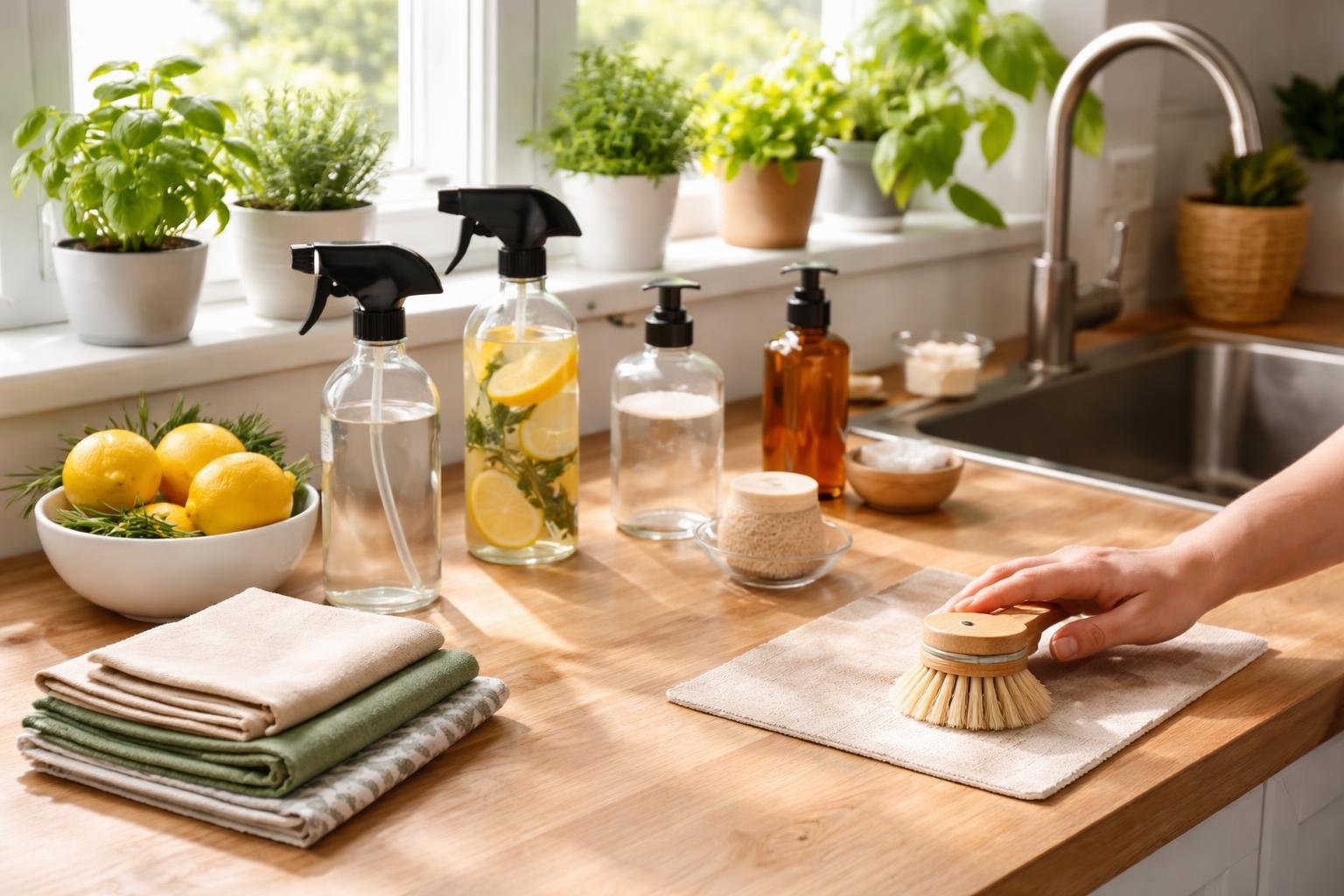
Switching to non-toxic cleaners and water-saving methods protects both household health and the environment. Simple changes like using plant-based products and maintaining sustainable surfaces can eliminate harmful chemicals while reducing waste.
Choosing Non-Toxic, Eco-Friendly Cleaning Products
Traditional cleaning products often contain harsh chemicals that harm indoor air quality and pollute waterways after washing down drains. Plant-based cleaning solutions[10] clean effectively while supporting a more sustainable kitchen without environmental damage.
Many common pantry items work as powerful cleaners. White vinegar cuts through grease and removes odors. Baking soda scrubs surfaces and absorbs smells. Lemon juice dissolves mineral deposits and adds natural antibacterial properties. These ingredients cost less than commercial products and come without plastic packaging.
For those who prefer ready-made options, look for products certified by EPA’s Safer Choice program. These cleaners meet strict environmental and health standards while performing as well as conventional alternatives. Swedish dishcloths replace up to 17 rolls of paper towels[10] and can be washed hundreds of times before composting.
Reducing Water and Chemical Usage
Installing a low-flow faucet aerator reduces water flow by 50% without affecting pressure. This simple upgrade costs between $5-10 and pays for itself quickly through lower water bills.
When washing dishes by hand, fill one basin with soapy water and another for rinsing instead of letting the tap run continuously. This method cuts water usage in half compared to running water. For dishwasher users, running full loads on the eco-setting saves both water and energy while achieving clean results.
Concentrated cleaning products require less packaging and reduce shipping emissions. Mix them with water in reusable spray bottles to create ready-to-use cleaners. This approach eliminates single-use plastic bottles that end up in landfills.
Maintaining Sustainable Surfaces
Different eco-friendly kitchen surfaces require specific care to extend their lifespan. Wood cutting boards need regular oiling with food-safe mineral oil to prevent cracking and bacterial growth. This simple maintenance keeps them functional for decades.
Stainless steel countertops and appliances stay shiny with a mixture of water and white vinegar applied with a microfiber cloth. Avoid abrasive scrubbers that scratch surfaces and create spaces for bacteria to hide.
For sealed stone countertops, use pH-neutral cleaners to avoid damaging the protective seal. Resealing granite or marble every 1-2 years prevents staining and makes daily cleaning easier. Bamboo and reclaimed wood surfaces benefit from gentle cleaning with mild soap and immediate drying to prevent water damage.
Maintenance Schedule for Sustainable Surfaces:
- Daily: Wipe surfaces with damp cloth
- Weekly: Deep clean with appropriate eco-friendly cleaner
- Monthly: Oil wood surfaces, polish stainless steel
- Annually: Reseal stone countertops, check for damage
Finishing Touches: Accessories and Accents for a Green Kitchen
Small details make a green kitchen feel complete and pull the whole design together. The right accessories add personality while metallic finishes bring warmth and sophistication to green tones.
Green Kitchen Accessories and Decor
Green kitchen accessories[11] like canisters, vases, and decorative bowls create a coordinated look on open shelving. These items work well in shades that either match or contrast with existing cabinetry.
Small appliances in green hues serve as both functional tools and design elements. A retro-style mixer or modern toaster in sage or mint adds visual interest to countertops without permanent commitment.
Textiles offer an easy way to introduce or strengthen green tones. Dish towels, pot holders, and table runners in botanical prints or solid greens tie the color scheme together. Kitchen linens can be swapped seasonally to refresh the space.
Plants bring living green elements indoors and connect the kitchen to nature. Herbs in matching planters on windowsills provide fresh ingredients while enhancing the green palette. Larger potted plants in corners or on counters add height and texture.
Storage containers and canisters in coordinated green shades keep counters organized while maintaining aesthetic appeal.
Calming Colors and Metallic Accents
Pairing green with calming colors creates a balanced, serene kitchen environment. Soft whites and creams lighten darker green cabinets and prevent the space from feeling too enclosed. These neutral tones reflect light and make smaller kitchens appear larger.
Brass and copper hardware complement green cabinetry beautifully. Cabinet pulls, faucets, and light fixtures in warm metallic finishes add elegance and catch light throughout the day. These metals age gracefully and develop a rich patina over time.
Gold-toned accents work particularly well with olive and sage greens. Bar stools with brass legs or pendant lights with copper details enhance the natural warmth of these earthy shades.
Marble countertops or backsplashes with subtle veining provide sophisticated contrast to green surfaces. The cool stone balances warmer green tones while adding luxury to the space. Matte black fixtures offer a modern alternative to warm metals and create striking definition against lighter green shades.
Frequently Asked Questions
Making a kitchen greener involves specific product swaps, material choices, and habit changes that directly reduce environmental impact. These common questions address the most practical concerns about creating a sustainable kitchen space.
What are the most effective changes to reduce waste in a kitchen?
Starting a composting system for food scraps ranks as one of the most impactful waste-reduction steps. Food waste in landfills produces methane, a greenhouse gas 25 times more potent than carbon dioxide. A simple countertop bin or outdoor compost pile diverts organic matter from landfills while creating nutrient-rich soil.
Switching from single-use items to reusable alternatives eliminates significant waste. Beeswax wraps replace plastic wrap, silicone bags replace zip-top bags, and cloth napkins replace paper versions. These swaps prevent hundreds of disposable items from entering landfills each year.
Meal planning prevents food from spoiling before it gets used. Creating a weekly menu based on what’s already in the refrigerator and pantry reduces the 32% of food that average households waste. Shopping with a detailed list based on planned meals keeps impulse purchases and forgotten ingredients to a minimum.
Buying products in bulk using reusable containers cuts packaging waste dramatically. Grains, nuts, spices, and other dry goods can be purchased without any packaging when shoppers bring their own jars or bags to stores with bulk sections.
Which eco-friendly kitchen materials are best for countertops, cabinets, and flooring?
Reclaimed wood offers an excellent choice for cabinets and flooring because it gives existing materials new life instead of requiring fresh lumber. This option reduces demand for new tree harvesting while adding unique character to a kitchen. Bamboo provides another sustainable alternative since it grows rapidly and regenerates without replanting.
For countertops, recycled glass surfaces combine durability with sustainability. These counters use post-consumer glass mixed with concrete or resin binders to create attractive, long-lasting work surfaces. Paper composite countertops made from recycled paper and non-petroleum resins offer another eco-friendly option that resists heat and stains.
Cork flooring works well in kitchens because it’s harvested from tree bark without cutting down the tree itself. The bark regrows every nine years, making cork a renewable resource. Cork naturally resists mold and mildew while providing comfortable cushioning underfoot.
Linoleum made from natural materials like linseed oil, cork dust, and wood flour provides a biodegradable flooring option. True linoleum differs from vinyl flooring and lasts for decades with proper care.
How can I make my kitchen more energy-efficient without a full renovation?
Matching pot sizes to burner sizes prevents wasted heat since a small pot on a large burner loses 40% of the heat produced. Using lids when cooking traps heat and reduces cooking time by up to 25%. These simple adjustments lower energy consumption without any equipment purchases.
Switching to LED bulbs in all kitchen light fixtures cuts lighting energy use by 75% compared to incandescent bulbs. LEDs last significantly longer, reducing both replacement costs and waste.
Unplugging small appliances when not in use eliminates phantom energy drain. Coffee makers, toasters, and other countertop devices continue drawing power even when turned off. A power strip makes it easy to cut power to multiple devices at once.
Running the dishwasher only when full and using the eco-setting reduces both water and energy consumption. Modern dishwashers use less water than hand-washing when properly loaded with a full load.
Keeping the refrigerator at 37-40 degrees Fahrenheit and the freezer at 0-5 degrees maintains food safety without wasting energy on excessive cooling. Cleaning refrigerator coils twice yearly helps the appliance run more efficiently.
What should I look for when choosing sustainable kitchen appliances?
Energy Star certification indicates that an appliance meets strict energy efficiency standards set by the EPA. Energy Star refrigerators use 15% less energy than non-certified models, while dishwashers use 12% less energy and 30% less water.
Size matters when selecting appliances since larger models consume more energy even when efficient. A household should choose the smallest capacity that meets their actual needs rather than buying excess capacity.
Durability and repairability extend an appliance’s lifespan and prevent premature disposal. Models with available replacement parts and reasonable repair costs prove more sustainable than cheap appliances designed for short-term use.
Induction cooktops transfer energy more efficiently than gas or standard electric ranges. They heat cookware directly through electromagnetic fields, wasting less energy as ambient heat. Induction cooking uses 30-50% less energy[10] than conventional cooking methods.
Water consumption specifications matter for dishwashers. Models using 4 gallons or less per cycle represent the most efficient options available today.
How can I reduce water usage at the kitchen sink while maintaining performance?
Installing a low-flow faucet aerator reduces water flow by 30-50% without affecting water pressure. These inexpensive devices cost between $5 and $10 and screw directly onto existing faucets. Most people don’t notice any difference in performance after installation.
Filling one basin with soapy water and another with rinse water for hand-washing dishes uses half the water of letting the tap run continuously. This traditional method cleans dishes effectively while conserving significant amounts of water.
Keeping a pitcher of drinking water in the refrigerator eliminates running the tap until water gets cold. This simple habit saves several gallons per day in most households.
Scraping food scraps into compost instead of using a garbage disposal reduces water use since disposals require running water during operation. Composting also prevents organic matter from entering water treatment systems.
Running the dishwasher instead of hand-washing full loads actually saves water in most cases. Modern dishwashers use 4-6 gallons per cycle while hand-washing the same number of dishes typically uses 27 gallons.
Is $10,000 enough to make meaningful sustainability upgrades to a kitchen?
A $10,000 budget allows for substantial sustainability improvements without a complete renovation. This amount covers one or two major upgrades plus several smaller changes that collectively reduce environmental impact.
Replacing an old refrigerator with an Energy Star model costs $1,000-$2,500 and significantly reduces energy consumption since refrigerators account for a large portion of kitchen energy use. Adding a high-efficiency dishwasher for $600-$1,200 further decreases water and energy consumption.
Installing recycled glass countertops over existing cabinets costs $40-$100 per square foot.
Post Views: 5
References
- Attention Required!. https://suite101.com/30-green-kitchen-ideas/ Accessed April 16, 2026
- cottage and farmhouse-style kitchens. https://www.bhg.com/kitchen/color-schemes/inspiration/green-kitchen-design-ideas/ Accessed April 16, 2026
- 15 Sustainable Materials for a Green Kitchen Makeover. https://northernservicestoday.com/blog/15-sustainable-materials-for-a-green-kitchen-makeover/ Accessed April 16, 2026
- Essential Sustainable Kitchen Design Guide. https://decoriety.com/articles/sustainable-kitchen-design-eco-friendly-choices-for-a-greener-home/ Accessed April 16, 2026
- 10 Ways to Make Your Home More Energy Efficient. https://www.rate.com/mortgage/resource/energy-efficiency-tips Accessed April 16, 2026
- The Anatomy of a Green Kitchen: Energy-Efficient Appliances and Sustainable Materials – Architecture with Angie. https://architecturewithangie.com/2024/09/18/the-anatomy-of-a-green-kitchen-energy-efficient-appliances-and-sustainable-materials/ Accessed April 16, 2026
- 10 Ways to Make Your Kitchen More Energy-Efficient. https://www.thishouseofjoy.com/10-ways-to-make-your-kitchen-more-energy-efficient/ Accessed April 16, 2026
- Attention Required!. https://www.conserve-energy-future.com/make-kitchen-green.php Accessed April 16, 2026
- Attention Required!. https://suite101.com/30-eco-friendly-kitchen-ideas/ Accessed April 16, 2026
- Eco-Friendly Kitchen Practices: 25 Proven Ways to Go Green 2026. https://greenwashingindex.com/eco-friendly-kitchen-practices/ Accessed April 16, 2026
- 33 Gorgeous Green Kitchens And Ways To Accessorize Them. https://decorreport.com/33-gorgeous-green-kitchens-and-ways-to-accessorize-them Accessed April 16, 2026

























