Disclosure: This site contains some affiliate links. We might receive a small commission at no additional cost to you.
Medically Reviewed
Dr. Jose Rossello, MD, PhD, MHCM
Preventive Medicine & Public Health Specialist
Last Reviewed: May 15, 2026
A blood pressure reading that falls outside the normal range is one of the most common findings in medicine — and one of the most important to address. High blood pressure (hypertension) often produces no symptoms for years, earning it the label “silent killer.” It is a leading modifiable risk factor for heart attack, stroke, heart failure, kidney disease, and other serious conditions. This article explains what blood pressure measures, what the numbers mean, why major guidelines pay attention, and the questions worth raising at your next visit.
Table of Contents
What blood pressure actually measures
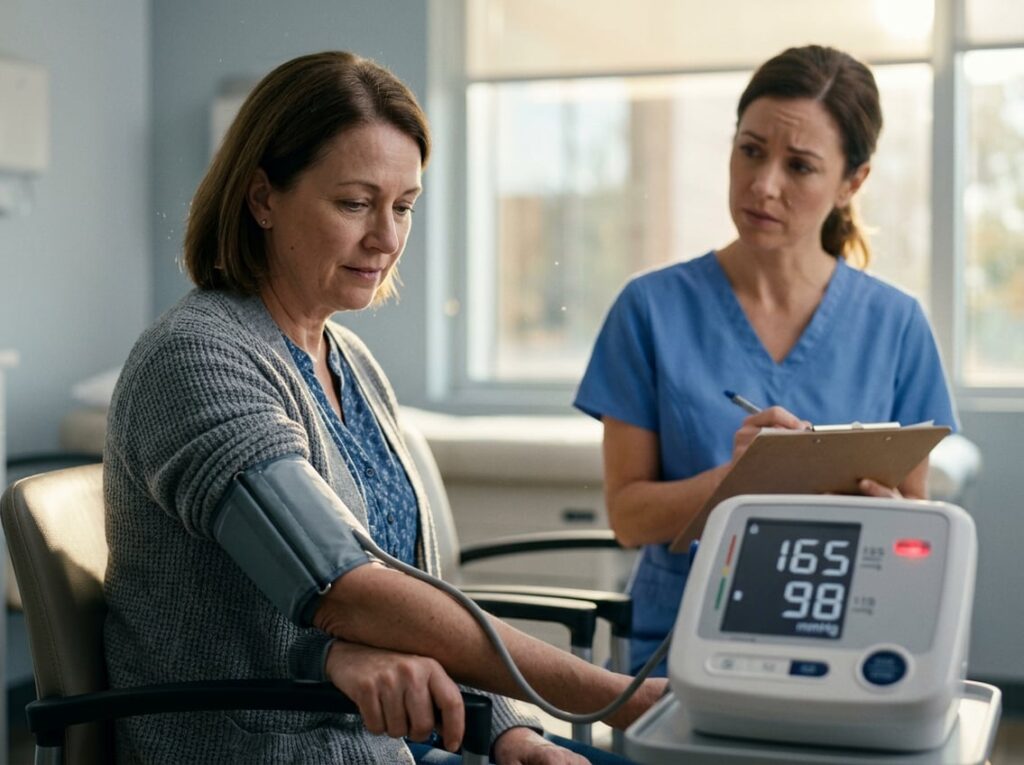
Blood pressure is the force your blood exerts against the walls of your arteries as your heart pumps. It is measured with two numbers:
- Systolic pressure (the top number) — the pressure when your heart beats and pushes blood out
- Diastolic pressure (the bottom number) — the pressure between heartbeats when the heart is at rest
These are reported in millimeters of mercury (mm Hg). A reading of 125/82 mm Hg, for example, means a systolic of 125 and a diastolic of 82.
Blood pressure fluctuates naturally throughout the day — it rises during physical activity, emotional stress, or caffeine consumption and falls during sleep. A single elevated reading in a clinic does not necessarily mean someone has hypertension. Clinicians typically look for consistently elevated readings across multiple visits or measurements taken in a standardized way.
White coat hypertension — elevated blood pressure in a clinical setting that is normal at home — is a recognized phenomenon. This is one reason the USPSTF[1] and the ACC/AHA 2017 guideline[2] both recommend confirming hypertension with out-of-office measurements (home monitoring or ambulatory blood pressure monitoring) before starting treatment.
What the numbers generally mean
The 2017 ACC/AHA Hypertension Guideline[3] — the most widely used U.S. framework — revised the blood pressure classification that had been in place since 2003:
This 2017 update lowered the threshold for hypertension from 140/90 to 130/80 mm Hg. This change was significant: it reclassified millions of Americans from “prehypertension” (a category eliminated in 2017) to Stage 1 hypertension, while also shifting the emphasis toward earlier lifestyle intervention and more individualized risk assessment before medication.
It is worth noting that not all major guidelines worldwide use the same thresholds. Some international and older U.S. frameworks still use 140/90 as the hypertension cutoff. And the treatment implications at Stage 1 differ from Stage 2: for Stage 1 in adults without established cardiovascular disease, lifestyle change is typically the first step, with medication added depending on overall ASCVD risk. Your clinician will apply the framework they use to your specific situation.
A note on the SPRINT trial: The SPRINT (Systolic Blood Pressure Intervention Trial) found that targeting a systolic below 120 mm Hg significantly reduced major cardiovascular events compared to a target below 140 mm Hg in adults at high cardiovascular risk. However, SPRINT excluded people with diabetes and stroke history, and the lower target came with more medication-related side effects. The 2017 guideline incorporated SPRINT’s findings but maintained a balanced approach, recommending different targets based on risk level.
Why guidelines pay attention
The USPSTF[1] assigns an “A” grade recommendation (highest level) to blood pressure screening in all adults 18 and older, based on evidence that screening and treatment substantially reduce cardiovascular events.
The burden of untreated hypertension is enormous:
- It is the single most important modifiable risk factor for stroke worldwide.
- It contributes significantly to heart attack, heart failure, kidney failure, and cognitive decline.
- In the U.S., approximately half of adults have high blood pressure by the 2017 ACC/AHA definition.
- Despite this high prevalence, many people are not aware of their blood pressure status — hypertension typically produces no symptoms.
The CDC[4] estimates that hypertension-related costs — in health care and lost productivity — run into the hundreds of billions of dollars annually in the U.S., underscoring why early detection matters.
Common drivers at the population level
American Heart Association resources[5] identify several categories of blood pressure drivers:
- Age. Blood pressure tends to rise with age as arteries stiffen. Isolated systolic hypertension (elevated systolic with normal diastolic) is particularly common in older adults.
- Excess body weight. Each increment of weight gain increases the force the heart must exert and is one of the strongest modifiable risk factors for hypertension.
- High sodium intake. Sodium causes the body to retain water, increasing blood volume and arterial pressure. Not everyone is equally sensitive to sodium, but reducing intake benefits most people with high blood pressure.
- Low potassium intake. Potassium counteracts sodium’s effect on blood pressure. Most Americans eat far less potassium than recommended.
- Physical inactivity. Regular aerobic exercise strengthens the heart and reduces arterial stiffness.
- Alcohol. Consistent heavy drinking raises blood pressure; this effect appears dose-dependent.
- Tobacco. Each cigarette temporarily spikes blood pressure, and chronic use damages blood vessels. Nicotine also activates the sympathetic nervous system.
- Chronic stress. Persistent psychological stress activates hormonal pathways that raise blood pressure over time.
- Sleep apnea. Obstructive sleep apnea is strongly linked to hypertension; addressing it often improves blood pressure readings.
- Family history. Genetics contribute substantially to blood pressure regulation; a family history of early hypertension or cardiovascular disease increases risk.
- Certain medications and substances. NSAIDs, oral contraceptives, decongestants, stimulant medications, caffeine (acutely), and illicit stimulants can all raise blood pressure.
- Secondary causes. In some people — especially younger adults or those with resistant hypertension — an underlying condition (kidney disease, adrenal tumors, thyroid disease) is driving the elevated blood pressure.
What follow-up evaluation may be considered

When a blood pressure reading is elevated, clinicians typically consider:
- Confirmatory measurements. Repeating readings on more than one occasion, ideally with proper technique (five minutes of seated rest, no recent caffeine or smoking), and often with out-of-office monitoring (home readings or 24-hour ambulatory monitoring).
- Evaluating overall cardiovascular risk. Blood pressure treatment decisions are heavily influenced by overall 10-year ASCVD risk. A 50-year-old with Stage 1 hypertension and diabetes may have a very different conversation with their clinician than a 30-year-old with the same reading and no other risk factors.
- Kidney function. Blood pressure and kidneys are deeply interconnected. A creatinine and eGFR give a baseline picture.
- Urinalysis. Checking for protein in the urine can reveal early signs of blood pressure-related kidney damage.
- Fasting blood glucose or A1C. Diabetes and prediabetes commonly travel with hypertension.
- Lipid panel. High blood pressure and high LDL together substantially compound cardiovascular risk.
- Electrocardiogram (ECG/EKG). Can detect early signs of left ventricular hypertrophy — a sign the heart has been working against elevated pressure.
- Evaluation for secondary causes. If blood pressure is difficult to control or the pattern is unusual, testing for kidney artery stenosis, primary aldosteronism, pheochromocytoma, or other conditions may be appropriate.
Lifestyle and prevention factors evidence supports
The ACC/AHA 2017 guideline[6] and AHA/ACC[5] both emphasize that lifestyle changes are first-line and often profoundly effective:
- DASH diet. The Dietary Approaches to Stop Hypertension (DASH) eating plan consistently lowers blood pressure in clinical trials. It emphasizes vegetables, fruits, whole grains, low-fat dairy, and limits red meat, sodium, and added sugar. Reducing sodium to 1,500–2,300 mg/day is associated with meaningful blood pressure reductions.
- Regular aerobic exercise. 150 minutes of moderate-intensity exercise per week (brisk walking, cycling, swimming) is associated with systolic blood pressure reductions of 4–9 mm Hg in people with hypertension.
- Weight loss. Losing even 5–10 pounds can measurably reduce blood pressure in people who are overweight.
- Limiting alcohol. Reducing alcohol to no more than 1 drink per day for women and 2 for men can lower systolic blood pressure by 2–4 mm Hg.
- Smoking cessation. Essential for overall cardiovascular risk, even if the direct blood pressure effect is modest.
- Stress management. Consistent mindfulness practices, adequate sleep, and addressing chronic stress sources may have modest but real effects on blood pressure.
- Potassium-rich foods. Beans, sweet potatoes, bananas, leafy greens, and low-fat dairy are potassium-rich and complement sodium restriction.
- Monitoring at home. Home blood pressure monitoring helps people and their clinicians understand real-world patterns beyond the clinical setting. Consistent home monitoring is now considered part of good hypertension management.
Questions to bring to your appointment
- What was my exact reading, and was it taken using proper technique? Should we repeat it today or have me monitor at home?
- Is my blood pressure elevated enough to be classified as hypertension, or is it in the “elevated” category?
- Given my overall cardiovascular risk, does this reading change what you recommend for me?
- Should I do home blood pressure monitoring or ambulatory monitoring to confirm the reading?
- Are there secondary causes we should investigate, especially if my blood pressure is significantly elevated or difficult to control?
- What kidney function tests and other labs would be helpful to get a baseline?
- Which lifestyle changes would you prioritize for my situation — dietary changes, exercise, weight management?
- What is a realistic timeline to expect improvement from lifestyle changes before we reassess?
- Are there symptoms that should prompt a sooner return visit or an urgent call?
- How does my family history factor in?
- Are any of my current medications or supplements known to raise blood pressure?
- If medication is eventually discussed, what general types are commonly used, and what would monitoring look like?
- How often should I be checking my blood pressure, and what should I do if a reading is very high?
Red flags warranting prompter follow-up
Seek emergency care immediately (call 911) if:
- Blood pressure is 180/120 mm Hg or higher with symptoms: severe headache, vision changes, shortness of breath, chest pain, confusion, or signs of stroke (facial drooping, arm weakness, speech difficulty)
- Any of the above stroke symptoms at any blood pressure level
Contact your clinician promptly (same day or within 24 hours) if:
- Blood pressure is consistently above 180/120 mm Hg even without symptoms (hypertensive urgency)
- Sudden significant rise above your usual numbers, especially with any associated symptoms
- Symptoms like persistent severe headache at the back of the skull, nosebleed that won’t stop, or visual changes
Key takeaways
- The 2017 ACC/AHA guideline defines hypertension as 130/80 mm Hg or higher — a threshold lower than the prior 140/90 cutoff, with the intent to encourage earlier lifestyle intervention.
- A single elevated reading should be confirmed with repeated measurements; white coat hypertension is common.
- High blood pressure is often asymptomatic, making regular screening — especially as recommended by the USPSTF — essential.
- Stage 1 hypertension in lower-risk adults is typically addressed first with lifestyle change; Stage 2 or high-risk Stage 1 often warrants medication alongside lifestyle change.
- Lifestyle approaches — DASH diet, sodium reduction, weight loss, exercise, and limiting alcohol — can produce clinically meaningful reductions.
- Home blood pressure monitoring is a useful tool for understanding your real-world pattern.
Disclaimer
This content is for general educational purposes only and is not medical advice. It does not create a doctor-patient relationship. Always talk to your licensed healthcare professional about your specific situation.
Post Views: 2
Elevate Your Health for Just $29.99/Month
Join the Precision Wellness Subscription at My Healing 365 and get discounted services, priority coaching access, virtual care, and exclusive wellness resources to support your physical, emotional, and hormonal health.
Join for $29.99/MonthDisclosure: This site contains some affiliate links. We might receive a small commission at no additional cost to you.
Medically Reviewed
Dr. Jose Rossello, MD, PhD, MHCM
Preventive Medicine & Public Health Specialist
Last Reviewed: May 15, 2026
A blood pressure reading that falls outside the normal range is one of the most common findings in medicine — and one of the most important to address. High blood pressure (hypertension) often produces no symptoms for years, earning it the label “silent killer.” It is a leading modifiable risk factor for heart attack, stroke, heart failure, kidney disease, and other serious conditions. This article explains what blood pressure measures, what the numbers mean, why major guidelines pay attention, and the questions worth raising at your next visit.
What blood pressure actually measures
Blood pressure is the force your blood exerts against the walls of your arteries as your heart pumps. It is measured with two numbers:
- Systolic pressure (the top number) — the pressure when your heart beats and pushes blood out
- Diastolic pressure (the bottom number) — the pressure between heartbeats when the heart is at rest
These are reported in millimeters of mercury (mm Hg). A reading of 125/82 mm Hg, for example, means a systolic of 125 and a diastolic of 82.
Blood pressure fluctuates naturally throughout the day — it rises during physical activity, emotional stress, or caffeine consumption and falls during sleep. A single elevated reading in a clinic does not necessarily mean someone has hypertension. Clinicians typically look for consistently elevated readings across multiple visits or measurements taken in a standardized way.
White coat hypertension — elevated blood pressure in a clinical setting that is normal at home — is a recognized phenomenon. This is one reason the USPSTF[1] and the ACC/AHA 2017 guideline[2] both recommend confirming hypertension with out-of-office measurements (home monitoring or ambulatory blood pressure monitoring) before starting treatment.
What the numbers generally mean
The 2017 ACC/AHA Hypertension Guideline[3] — the most widely used U.S. framework — revised the blood pressure classification that had been in place since 2003:
This 2017 update lowered the threshold for hypertension from 140/90 to 130/80 mm Hg. This change was significant: it reclassified millions of Americans from “prehypertension” (a category eliminated in 2017) to Stage 1 hypertension, while also shifting the emphasis toward earlier lifestyle intervention and more individualized risk assessment before medication.
It is worth noting that not all major guidelines worldwide use the same thresholds. Some international and older U.S. frameworks still use 140/90 as the hypertension cutoff. And the treatment implications at Stage 1 differ from Stage 2: for Stage 1 in adults without established cardiovascular disease, lifestyle change is typically the first step, with medication added depending on overall ASCVD risk. Your clinician will apply the framework they use to your specific situation.
A note on the SPRINT trial: The SPRINT (Systolic Blood Pressure Intervention Trial) found that targeting a systolic below 120 mm Hg significantly reduced major cardiovascular events compared to a target below 140 mm Hg in adults at high cardiovascular risk. However, SPRINT excluded people with diabetes and stroke history, and the lower target came with more medication-related side effects. The 2017 guideline incorporated SPRINT’s findings but maintained a balanced approach, recommending different targets based on risk level.
Why guidelines pay attention
The USPSTF[1] assigns an “A” grade recommendation (highest level) to blood pressure screening in all adults 18 and older, based on evidence that screening and treatment substantially reduce cardiovascular events.
The burden of untreated hypertension is enormous:
- It is the single most important modifiable risk factor for stroke worldwide.
- It contributes significantly to heart attack, heart failure, kidney failure, and cognitive decline.
- In the U.S., approximately half of adults have high blood pressure by the 2017 ACC/AHA definition.
- Despite this high prevalence, many people are not aware of their blood pressure status — hypertension typically produces no symptoms.
The CDC[4] estimates that hypertension-related costs — in health care and lost productivity — run into the hundreds of billions of dollars annually in the U.S., underscoring why early detection matters.
Common drivers at the population level
American Heart Association resources[5] identify several categories of blood pressure drivers:
- Age. Blood pressure tends to rise with age as arteries stiffen. Isolated systolic hypertension (elevated systolic with normal diastolic) is particularly common in older adults.
- Excess body weight. Each increment of weight gain increases the force the heart must exert and is one of the strongest modifiable risk factors for hypertension.
- High sodium intake. Sodium causes the body to retain water, increasing blood volume and arterial pressure. Not everyone is equally sensitive to sodium, but reducing intake benefits most people with high blood pressure.
- Low potassium intake. Potassium counteracts sodium’s effect on blood pressure. Most Americans eat far less potassium than recommended.
- Physical inactivity. Regular aerobic exercise strengthens the heart and reduces arterial stiffness.
- Alcohol. Consistent heavy drinking raises blood pressure; this effect appears dose-dependent.
- Tobacco. Each cigarette temporarily spikes blood pressure, and chronic use damages blood vessels. Nicotine also activates the sympathetic nervous system.
- Chronic stress. Persistent psychological stress activates hormonal pathways that raise blood pressure over time.
- Sleep apnea. Obstructive sleep apnea is strongly linked to hypertension; addressing it often improves blood pressure readings.
- Family history. Genetics contribute substantially to blood pressure regulation; a family history of early hypertension or cardiovascular disease increases risk.
- Certain medications and substances. NSAIDs, oral contraceptives, decongestants, stimulant medications, caffeine (acutely), and illicit stimulants can all raise blood pressure.
- Secondary causes. In some people — especially younger adults or those with resistant hypertension — an underlying condition (kidney disease, adrenal tumors, thyroid disease) is driving the elevated blood pressure.
What follow-up evaluation may be considered
When a blood pressure reading is elevated, clinicians typically consider:
- Confirmatory measurements. Repeating readings on more than one occasion, ideally with proper technique (five minutes of seated rest, no recent caffeine or smoking), and often with out-of-office monitoring (home readings or 24-hour ambulatory monitoring).
- Evaluating overall cardiovascular risk. Blood pressure treatment decisions are heavily influenced by overall 10-year ASCVD risk. A 50-year-old with Stage 1 hypertension and diabetes may have a very different conversation with their clinician than a 30-year-old with the same reading and no other risk factors.
- Kidney function. Blood pressure and kidneys are deeply interconnected. A creatinine and eGFR give a baseline picture.
- Urinalysis. Checking for protein in the urine can reveal early signs of blood pressure-related kidney damage.
- Fasting blood glucose or A1C. Diabetes and prediabetes commonly travel with hypertension.
- Lipid panel. High blood pressure and high LDL together substantially compound cardiovascular risk.
- Electrocardiogram (ECG/EKG). Can detect early signs of left ventricular hypertrophy — a sign the heart has been working against elevated pressure.
- Evaluation for secondary causes. If blood pressure is difficult to control or the pattern is unusual, testing for kidney artery stenosis, primary aldosteronism, pheochromocytoma, or other conditions may be appropriate.
Lifestyle and prevention factors evidence supports
The ACC/AHA 2017 guideline[6] and AHA/ACC[5] both emphasize that lifestyle changes are first-line and often profoundly effective:
- DASH diet. The Dietary Approaches to Stop Hypertension (DASH) eating plan consistently lowers blood pressure in clinical trials. It emphasizes vegetables, fruits, whole grains, low-fat dairy, and limits red meat, sodium, and added sugar. Reducing sodium to 1,500–2,300 mg/day is associated with meaningful blood pressure reductions.
- Regular aerobic exercise. 150 minutes of moderate-intensity exercise per week (brisk walking, cycling, swimming) is associated with systolic blood pressure reductions of 4–9 mm Hg in people with hypertension.
- Weight loss. Losing even 5–10 pounds can measurably reduce blood pressure in people who are overweight.
- Limiting alcohol. Reducing alcohol to no more than 1 drink per day for women and 2 for men can lower systolic blood pressure by 2–4 mm Hg.
- Smoking cessation. Essential for overall cardiovascular risk, even if the direct blood pressure effect is modest.
- Stress management. Consistent mindfulness practices, adequate sleep, and addressing chronic stress sources may have modest but real effects on blood pressure.
- Potassium-rich foods. Beans, sweet potatoes, bananas, leafy greens, and low-fat dairy are potassium-rich and complement sodium restriction.
- Monitoring at home. Home blood pressure monitoring helps people and their clinicians understand real-world patterns beyond the clinical setting. Consistent home monitoring is now considered part of good hypertension management.
Questions to bring to your appointment
- What was my exact reading, and was it taken using proper technique? Should we repeat it today or have me monitor at home?
- Is my blood pressure elevated enough to be classified as hypertension, or is it in the “elevated” category?
- Given my overall cardiovascular risk, does this reading change what you recommend for me?
- Should I do home blood pressure monitoring or ambulatory monitoring to confirm the reading?
- Are there secondary causes we should investigate, especially if my blood pressure is significantly elevated or difficult to control?
- What kidney function tests and other labs would be helpful to get a baseline?
- Which lifestyle changes would you prioritize for my situation — dietary changes, exercise, weight management?
- What is a realistic timeline to expect improvement from lifestyle changes before we reassess?
- Are there symptoms that should prompt a sooner return visit or an urgent call?
- How does my family history factor in?
- Are any of my current medications or supplements known to raise blood pressure?
- If medication is eventually discussed, what general types are commonly used, and what would monitoring look like?
- How often should I be checking my blood pressure, and what should I do if a reading is very high?
Red flags warranting prompter follow-up
Seek emergency care immediately (call 911) if:
- Blood pressure is 180/120 mm Hg or higher with symptoms: severe headache, vision changes, shortness of breath, chest pain, confusion, or signs of stroke (facial drooping, arm weakness, speech difficulty)
- Any of the above stroke symptoms at any blood pressure level
Contact your clinician promptly (same day or within 24 hours) if:
- Blood pressure is consistently above 180/120 mm Hg even without symptoms (hypertensive urgency)
- Sudden significant rise above your usual numbers, especially with any associated symptoms
- Symptoms like persistent severe headache at the back of the skull, nosebleed that won’t stop, or visual changes
Key takeaways
- The 2017 ACC/AHA guideline defines hypertension as 130/80 mm Hg or higher — a threshold lower than the prior 140/90 cutoff, with the intent to encourage earlier lifestyle intervention.
- A single elevated reading should be confirmed with repeated measurements; white coat hypertension is common.
- High blood pressure is often asymptomatic, making regular screening — especially as recommended by the USPSTF — essential.
- Stage 1 hypertension in lower-risk adults is typically addressed first with lifestyle change; Stage 2 or high-risk Stage 1 often warrants medication alongside lifestyle change.
- Lifestyle approaches — DASH diet, sodium reduction, weight loss, exercise, and limiting alcohol — can produce clinically meaningful reductions.
- Home blood pressure monitoring is a useful tool for understanding your real-world pattern.
Disclaimer
This content is for general educational purposes only and is not medical advice. It does not create a doctor-patient relationship. Always talk to your licensed healthcare professional about your specific situation.
Post Views: 2

























