Disclosure: This site contains some affiliate links. We might receive a small commission at no additional cost to you.
Medically Reviewed
Dr. Jose Rossello, MD, PhD, MHCM
Preventive Medicine & Public Health Specialist
Last Reviewed: June 10, 2026
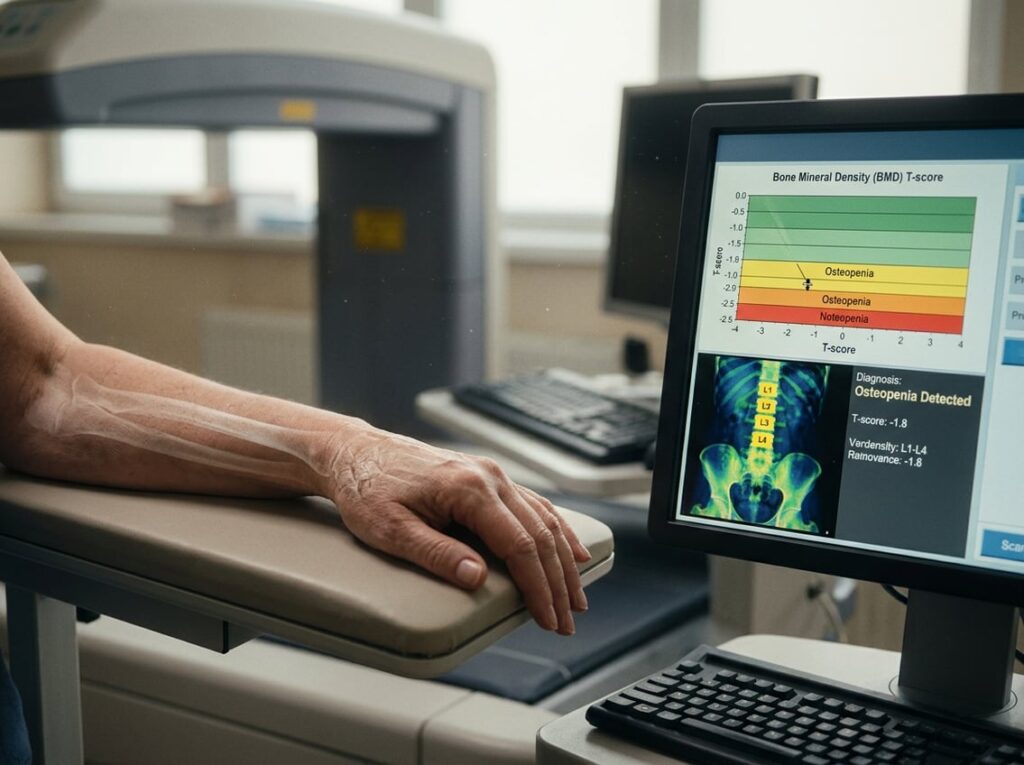
Receiving a DEXA scan result that shows osteopenia can feel alarming — but it is worth understanding what that finding actually means and what it does not mean before drawing conclusions. Osteopenia is a term used to describe bone mineral density that is lower than the average for a young healthy adult, but not yet low enough to meet the definition of osteoporosis. It is common, and in many cases is managed with lifestyle measures and monitoring rather than medication. This article explains what the DEXA result means, what guidelines say, and which questions to bring to your clinician.
Table of Contents
What This Means in Plain Language
A DEXA (dual-energy X-ray absorptiometry) scan measures bone mineral density (BMD) at the hip and spine — the sites most relevant for fracture risk. The results are reported as a T-score, which compares your bone density to the average peak bone density of a young, healthy reference population.
The World Health Organization (WHO) and most major guideline bodies use the following T-score framework (for postmenopausal women and men aged 50 and older):
- Normal: T-score above −1.0
- Osteopenia (low bone mass): T-score between −1.0 and −2.5
- Osteoporosis: T-score at or below −2.5
As described by the International Society for Clinical Densitometry (ISCD)[1], T-scores are most reliably applied to postmenopausal women and men aged 50 and older. For younger adults and premenopausal women, Z-scores (which compare bone density to age-matched peers) are more appropriate, and the terms osteopenia and osteoporosis should generally not be applied in the same way.
An osteopenia T-score does not automatically mean fracture is imminent or that medication is needed. It is one data point among many. As the Cleveland Clinic’s bone health resource[2] notes, T-scores do not always correlate perfectly with fracture risk — clinical risk factors and overall health context matter substantially.
Why Guidelines Pay Attention
USPSTF: The U.S. Preventive Services Task Force[3] recommends screening for osteoporosis with DEXA for women aged 65 and older (Grade B), and for younger postmenopausal women at increased risk based on a clinical risk assessment. For men, USPSTF notes there is insufficient evidence to make a formal recommendation, leaving it to clinical judgment.
ISCD: The 2023 ISCD Official Positions[1] on bone mineral density testing provide detailed guidance on who should have testing, how to interpret results, and appropriate intervals for follow-up scans. ISCD recommends testing for women aged 65+, postmenopausal women under 65 with risk factors (low body weight, prior fracture, high-risk medications), men aged 70+, and adults with medical conditions associated with bone loss or taking medications that affect bone.
Bone Health and Osteoporosis Foundation (BHOF): The BHOF[4] recommends FRAX (Fracture Risk Assessment Tool) as a key step in evaluating osteopenia, because the majority of fragility fractures actually occur in people with osteopenia rather than osteoporosis — simply because osteopenia is much more prevalent.
ACR: The American College of Radiology (ACR)[5] criteria specify that vertebral fracture assessment (DXA VFA) may be appropriate alongside BMD testing in certain patients with T-scores below −1.0 and specific additional risk factors, such as age over 70, significant height loss, or glucocorticoid use.
The FRAX tool and pharmacologic thresholds: The National Osteoporosis Foundation (now BHOF) guidelines support considering pharmacologic therapy for osteopenia when the 10-year FRAX fracture probability reaches 3% or higher for hip fracture, or 20% or higher for major osteoporotic fracture — levels that incorporate age, sex, BMI, prior fracture, family history, smoking, alcohol use, glucocorticoid exposure, and secondary causes of osteoporosis, along with the T-score itself.
Common Drivers and Causes (Population-Level)
Bone density naturally peaks in early adulthood and then gradually declines with age. Factors that contribute to lower bone density include:
- Age and menopause. The decline of estrogen at menopause accelerates bone loss significantly for women. Testosterone decline in aging men also contributes more gradually.
- Genetic factors. Bone density has a strong heritable component. Family history of osteoporosis or hip fracture is a recognized risk factor.
- Low calcium and vitamin D intake. These nutrients are essential for bone mineralization. Inadequate dietary intake over years contributes to lower bone density.
- Low body weight. Having a low body mass index (BMI below 18.5 kg/m²) is associated with lower bone density.
- Sedentary lifestyle. Weight-bearing physical activity stimulates bone formation. A lifetime of limited physical activity contributes to lower peak bone density.
- Smoking. Smoking is associated with lower bone density and higher fracture risk.
- Alcohol use. Excessive alcohol consumption is associated with increased fracture risk and lower bone density.
- Medications. Glucocorticoids (such as prednisone), certain cancer treatments, some anticonvulsants, proton pump inhibitors (especially with long-term use), and some other drugs can reduce bone density.
- Medical conditions. Inflammatory bowel disease, celiac disease, rheumatoid arthritis, hyperthyroidism, hyperparathyroidism, and other conditions can accelerate bone loss.
- Prior fractures. A history of a low-trauma fracture (fracturing from a minor fall or bump) is itself a risk factor for future fracture.
What Screening, Labs, or Follow-Up Evaluations May Be Considered
The following is general educational information; what applies depends on age, T-score, risk factors, and clinician assessment.
- FRAX calculation. The 10-year fracture probability tool incorporates the T-score along with multiple clinical risk factors. Clinicians use FRAX to determine whether the fracture risk is low, moderate, or high — which guides management discussions. NIH StatPearls[6] notes that FRAX is especially valuable for osteopenia because most fractures occur in this population.
- Vertebral fracture assessment (VFA). This DXA-based imaging can detect vertebral fractures that may not be clinically apparent. It is considered in patients with additional risk factors alongside an osteopenia T-score.
- Trabecular bone score (TBS). An additional analysis of the DXA image that assesses bone microarchitecture and can be incorporated into FRAX for improved risk classification.
- Laboratory workup for secondary causes. Clinicians may check calcium, vitamin D (25-OH vitamin D), complete blood count, kidney function, thyroid function (TSH), and other tests to identify underlying medical conditions contributing to bone loss.
- Follow-up DXA timing. For most people with osteopenia, guidelines support repeat DXA at an interval that reflects their individual rate of bone loss — often every 1–2 years for those at higher risk, or every 2–5 years for those at lower risk.
- Fall risk assessment. For older adults, evaluating balance, muscle strength, vision, and home hazards is an important part of fracture prevention — independent of bone density.
Lifestyle and Prevention Factors Evidence Supports
There is strong evidence for lifestyle interventions in maintaining bone density and reducing fracture risk:
- Adequate calcium intake. For most adults, 1,000–1,200 mg of calcium per day (from food and supplements combined) is recommended. Food sources — dairy products, fortified plant milks, sardines with bones, leafy greens — are generally preferred over supplements when possible.
- Adequate vitamin D. Vitamin D is essential for calcium absorption. Many adults, particularly those with limited sun exposure, have insufficient levels. The appropriate target and supplementation dose should be discussed with a clinician based on individual 25-OH vitamin D levels.
- Weight-bearing and resistance exercise. High-intensity resistance training has been consistently shown to improve BMD and reduce fracture risk, according to NIH StatPearls research[6]. Walking, hiking, dancing, and resistance training are all weight-bearing activities that stimulate bone formation.
- Balance and fall prevention exercise. Tai chi, yoga, and other balance-focused activities reduce fall risk — and falls are the proximate cause of most fractures, making fall prevention as important as bone density itself.
- Not smoking. Smoking is associated with lower bone density and higher fracture risk.
- Limiting alcohol. Alcohol in excess impairs calcium absorption, can affect bone-forming cells, and increases fall risk.
- Maintaining a healthy body weight. Being underweight is a more significant bone health risk than overweight; however, very high body weight affects fracture risk in complex ways.
- Protein intake. Adequate dietary protein supports bone matrix and muscle maintenance, both of which are relevant to fracture risk in older adults.
Questions to Bring to Your Appointment
Questions you may want to discuss with your clinician include:
- What was my specific T-score, and at which sites — spine and hip — was the osteopenia found?
- Has my FRAX fracture risk score been calculated, and what does it show for my 10-year probability of hip and major osteoporotic fracture?
- Are there any secondary causes of bone loss that should be checked — such as vitamin D levels, thyroid function, or other blood tests?
- Are any of my current medications known to affect bone density?
- What follow-up bone density scan interval is appropriate for me, and what would trigger an earlier recheck?
- What level of FRAX risk would prompt a discussion about pharmacologic treatment options?
- How much calcium and vitamin D am I actually getting from food, and should we discuss whether supplementation is appropriate?
- What type of exercise is most relevant for my bone health and fracture risk profile?
- How important is fall prevention in my situation, and are there specific balance or strength exercises I should focus on?
- Are there any vertebral fractures I should be screened for that I might not know about?
- Given my family history and other risk factors, does my osteopenia picture look more or less concerning than a T-score alone might suggest?
Red Flags Warranting Prompter Follow-Up
Contact your clinician sooner if you experience:
- Sudden, severe back pain, especially in the middle or lower back — this can indicate a vertebral (spine) compression fracture, which can happen without a significant fall
- A fracture from a minor fall or bump — this is called a fragility fracture and warrants evaluation regardless of your T-score
- Significant height loss over time (more than 1–2 inches), which can indicate vertebral compression fractures
- Hip pain after a fall, especially with difficulty bearing weight — this requires immediate emergency evaluation
- New or worsening back pain in combination with weakness or numbness in the legs, which may indicate nerve involvement
Key Takeaways
- Osteopenia describes a T-score between −1.0 and −2.5 — lower than average bone density but not yet meeting the osteoporosis threshold.
- A T-score alone does not determine fracture risk. The FRAX tool integrates clinical risk factors with bone density to estimate 10-year fracture probability and guide management decisions.
- Pharmacologic treatment is generally considered when FRAX shows a 10-year major osteoporotic fracture risk of 20% or higher, or a hip fracture risk of 3% or higher — but individualized assessment with a clinician is essential.
- Lifestyle factors — adequate calcium and vitamin D, weight-bearing and resistance exercise, not smoking, limiting alcohol, and fall prevention — are the first-line approach for most people with osteopenia.
- Secondary causes of bone loss (low vitamin D, thyroid disorders, medication effects, and others) should be evaluated with a targeted laboratory workup.
- Most fragility fractures occur in people with osteopenia because osteopenia is much more common than osteoporosis — which is why taking the finding seriously, even in the absence of osteoporosis, matters.
Disclaimer: This content is for general educational purposes only and is not medical advice. It does not create a doctor-patient relationship. Always talk to your licensed healthcare professional about your specific situation.
Post Views: 4
Elevate Your Health for Just $29.99/Month
Join the Precision Wellness Subscription at My Healing 365 and get discounted services, priority coaching access, virtual care, and exclusive wellness resources to support your physical, emotional, and hormonal health.
Join for $29.99/MonthDisclosure: This site contains some affiliate links. We might receive a small commission at no additional cost to you.
Medically Reviewed
Dr. Jose Rossello, MD, PhD, MHCM
Preventive Medicine & Public Health Specialist
Last Reviewed: June 10, 2026
Receiving a DEXA scan result that shows osteopenia can feel alarming — but it is worth understanding what that finding actually means and what it does not mean before drawing conclusions. Osteopenia is a term used to describe bone mineral density that is lower than the average for a young healthy adult, but not yet low enough to meet the definition of osteoporosis. It is common, and in many cases is managed with lifestyle measures and monitoring rather than medication. This article explains what the DEXA result means, what guidelines say, and which questions to bring to your clinician.
What This Means in Plain Language
A DEXA (dual-energy X-ray absorptiometry) scan measures bone mineral density (BMD) at the hip and spine — the sites most relevant for fracture risk. The results are reported as a T-score, which compares your bone density to the average peak bone density of a young, healthy reference population.
The World Health Organization (WHO) and most major guideline bodies use the following T-score framework (for postmenopausal women and men aged 50 and older):
- Normal: T-score above −1.0
- Osteopenia (low bone mass): T-score between −1.0 and −2.5
- Osteoporosis: T-score at or below −2.5
As described by the International Society for Clinical Densitometry (ISCD)[1], T-scores are most reliably applied to postmenopausal women and men aged 50 and older. For younger adults and premenopausal women, Z-scores (which compare bone density to age-matched peers) are more appropriate, and the terms osteopenia and osteoporosis should generally not be applied in the same way.
An osteopenia T-score does not automatically mean fracture is imminent or that medication is needed. It is one data point among many. As the Cleveland Clinic’s bone health resource[2] notes, T-scores do not always correlate perfectly with fracture risk — clinical risk factors and overall health context matter substantially.
Why Guidelines Pay Attention
USPSTF: The U.S. Preventive Services Task Force[3] recommends screening for osteoporosis with DEXA for women aged 65 and older (Grade B), and for younger postmenopausal women at increased risk based on a clinical risk assessment. For men, USPSTF notes there is insufficient evidence to make a formal recommendation, leaving it to clinical judgment.
ISCD: The 2023 ISCD Official Positions[1] on bone mineral density testing provide detailed guidance on who should have testing, how to interpret results, and appropriate intervals for follow-up scans. ISCD recommends testing for women aged 65+, postmenopausal women under 65 with risk factors (low body weight, prior fracture, high-risk medications), men aged 70+, and adults with medical conditions associated with bone loss or taking medications that affect bone.
Bone Health and Osteoporosis Foundation (BHOF): The BHOF[4] recommends FRAX (Fracture Risk Assessment Tool) as a key step in evaluating osteopenia, because the majority of fragility fractures actually occur in people with osteopenia rather than osteoporosis — simply because osteopenia is much more prevalent.
ACR: The American College of Radiology (ACR)[5] criteria specify that vertebral fracture assessment (DXA VFA) may be appropriate alongside BMD testing in certain patients with T-scores below −1.0 and specific additional risk factors, such as age over 70, significant height loss, or glucocorticoid use.
The FRAX tool and pharmacologic thresholds: The National Osteoporosis Foundation (now BHOF) guidelines support considering pharmacologic therapy for osteopenia when the 10-year FRAX fracture probability reaches 3% or higher for hip fracture, or 20% or higher for major osteoporotic fracture — levels that incorporate age, sex, BMI, prior fracture, family history, smoking, alcohol use, glucocorticoid exposure, and secondary causes of osteoporosis, along with the T-score itself.
Common Drivers and Causes (Population-Level)
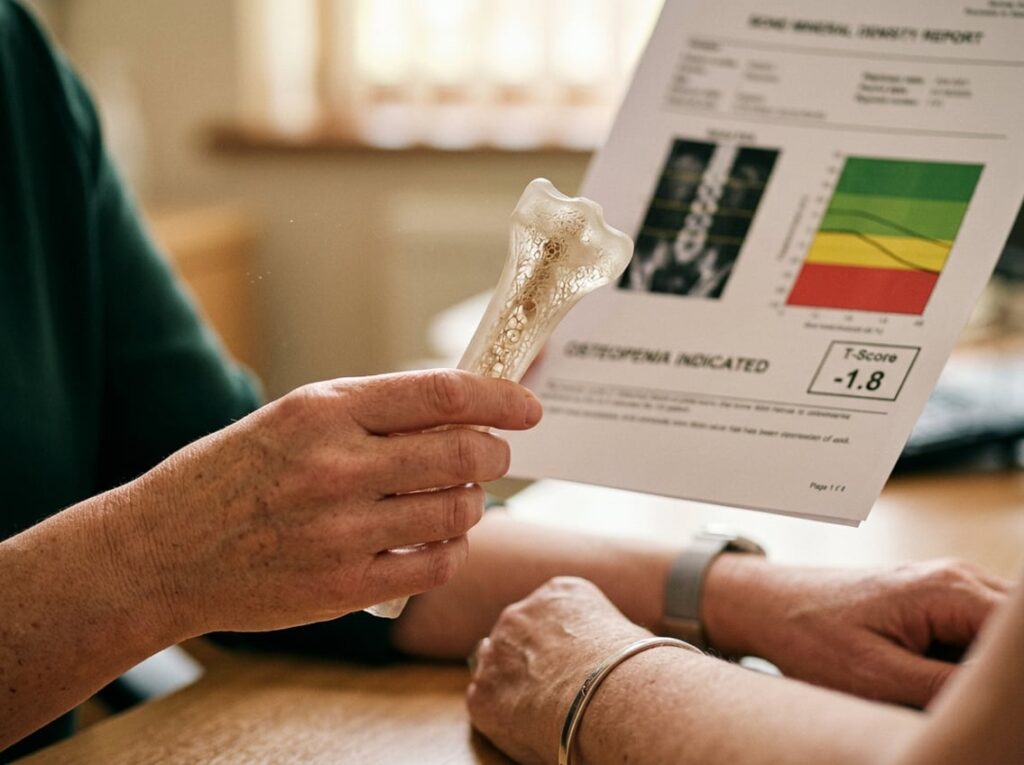
Bone density naturally peaks in early adulthood and then gradually declines with age. Factors that contribute to lower bone density include:
- Age and menopause. The decline of estrogen at menopause accelerates bone loss significantly for women. Testosterone decline in aging men also contributes more gradually.
- Genetic factors. Bone density has a strong heritable component. Family history of osteoporosis or hip fracture is a recognized risk factor.
- Low calcium and vitamin D intake. These nutrients are essential for bone mineralization. Inadequate dietary intake over years contributes to lower bone density.
- Low body weight. Having a low body mass index (BMI below 18.5 kg/m²) is associated with lower bone density.
- Sedentary lifestyle. Weight-bearing physical activity stimulates bone formation. A lifetime of limited physical activity contributes to lower peak bone density.
- Smoking. Smoking is associated with lower bone density and higher fracture risk.
- Alcohol use. Excessive alcohol consumption is associated with increased fracture risk and lower bone density.
- Medications. Glucocorticoids (such as prednisone), certain cancer treatments, some anticonvulsants, proton pump inhibitors (especially with long-term use), and some other drugs can reduce bone density.
- Medical conditions. Inflammatory bowel disease, celiac disease, rheumatoid arthritis, hyperthyroidism, hyperparathyroidism, and other conditions can accelerate bone loss.
- Prior fractures. A history of a low-trauma fracture (fracturing from a minor fall or bump) is itself a risk factor for future fracture.
What Screening, Labs, or Follow-Up Evaluations May Be Considered
The following is general educational information; what applies depends on age, T-score, risk factors, and clinician assessment.
- FRAX calculation. The 10-year fracture probability tool incorporates the T-score along with multiple clinical risk factors. Clinicians use FRAX to determine whether the fracture risk is low, moderate, or high — which guides management discussions. NIH StatPearls[6] notes that FRAX is especially valuable for osteopenia because most fractures occur in this population.
- Vertebral fracture assessment (VFA). This DXA-based imaging can detect vertebral fractures that may not be clinically apparent. It is considered in patients with additional risk factors alongside an osteopenia T-score.
- Trabecular bone score (TBS). An additional analysis of the DXA image that assesses bone microarchitecture and can be incorporated into FRAX for improved risk classification.
- Laboratory workup for secondary causes. Clinicians may check calcium, vitamin D (25-OH vitamin D), complete blood count, kidney function, thyroid function (TSH), and other tests to identify underlying medical conditions contributing to bone loss.
- Follow-up DXA timing. For most people with osteopenia, guidelines support repeat DXA at an interval that reflects their individual rate of bone loss — often every 1–2 years for those at higher risk, or every 2–5 years for those at lower risk.
- Fall risk assessment. For older adults, evaluating balance, muscle strength, vision, and home hazards is an important part of fracture prevention — independent of bone density.
Lifestyle and Prevention Factors Evidence Supports
There is strong evidence for lifestyle interventions in maintaining bone density and reducing fracture risk:
- Adequate calcium intake. For most adults, 1,000–1,200 mg of calcium per day (from food and supplements combined) is recommended. Food sources — dairy products, fortified plant milks, sardines with bones, leafy greens — are generally preferred over supplements when possible.
- Adequate vitamin D. Vitamin D is essential for calcium absorption. Many adults, particularly those with limited sun exposure, have insufficient levels. The appropriate target and supplementation dose should be discussed with a clinician based on individual 25-OH vitamin D levels.
- Weight-bearing and resistance exercise. High-intensity resistance training has been consistently shown to improve BMD and reduce fracture risk, according to NIH StatPearls research[6]. Walking, hiking, dancing, and resistance training are all weight-bearing activities that stimulate bone formation.
- Balance and fall prevention exercise. Tai chi, yoga, and other balance-focused activities reduce fall risk — and falls are the proximate cause of most fractures, making fall prevention as important as bone density itself.
- Not smoking. Smoking is associated with lower bone density and higher fracture risk.
- Limiting alcohol. Alcohol in excess impairs calcium absorption, can affect bone-forming cells, and increases fall risk.
- Maintaining a healthy body weight. Being underweight is a more significant bone health risk than overweight; however, very high body weight affects fracture risk in complex ways.
- Protein intake. Adequate dietary protein supports bone matrix and muscle maintenance, both of which are relevant to fracture risk in older adults.
Questions to Bring to Your Appointment
Questions you may want to discuss with your clinician include:
- What was my specific T-score, and at which sites — spine and hip — was the osteopenia found?
- Has my FRAX fracture risk score been calculated, and what does it show for my 10-year probability of hip and major osteoporotic fracture?
- Are there any secondary causes of bone loss that should be checked — such as vitamin D levels, thyroid function, or other blood tests?
- Are any of my current medications known to affect bone density?
- What follow-up bone density scan interval is appropriate for me, and what would trigger an earlier recheck?
- What level of FRAX risk would prompt a discussion about pharmacologic treatment options?
- How much calcium and vitamin D am I actually getting from food, and should we discuss whether supplementation is appropriate?
- What type of exercise is most relevant for my bone health and fracture risk profile?
- How important is fall prevention in my situation, and are there specific balance or strength exercises I should focus on?
- Are there any vertebral fractures I should be screened for that I might not know about?
- Given my family history and other risk factors, does my osteopenia picture look more or less concerning than a T-score alone might suggest?
Red Flags Warranting Prompter Follow-Up
Contact your clinician sooner if you experience:
- Sudden, severe back pain, especially in the middle or lower back — this can indicate a vertebral (spine) compression fracture, which can happen without a significant fall
- A fracture from a minor fall or bump — this is called a fragility fracture and warrants evaluation regardless of your T-score
- Significant height loss over time (more than 1–2 inches), which can indicate vertebral compression fractures
- Hip pain after a fall, especially with difficulty bearing weight — this requires immediate emergency evaluation
- New or worsening back pain in combination with weakness or numbness in the legs, which may indicate nerve involvement
Key Takeaways
- Osteopenia describes a T-score between −1.0 and −2.5 — lower than average bone density but not yet meeting the osteoporosis threshold.
- A T-score alone does not determine fracture risk. The FRAX tool integrates clinical risk factors with bone density to estimate 10-year fracture probability and guide management decisions.
- Pharmacologic treatment is generally considered when FRAX shows a 10-year major osteoporotic fracture risk of 20% or higher, or a hip fracture risk of 3% or higher — but individualized assessment with a clinician is essential.
- Lifestyle factors — adequate calcium and vitamin D, weight-bearing and resistance exercise, not smoking, limiting alcohol, and fall prevention — are the first-line approach for most people with osteopenia.
- Secondary causes of bone loss (low vitamin D, thyroid disorders, medication effects, and others) should be evaluated with a targeted laboratory workup.
- Most fragility fractures occur in people with osteopenia because osteopenia is much more common than osteoporosis — which is why taking the finding seriously, even in the absence of osteoporosis, matters.
Disclaimer: This content is for general educational purposes only and is not medical advice. It does not create a doctor-patient relationship. Always talk to your licensed healthcare professional about your specific situation.
Post Views: 4