Medically Reviewed
Dr. Jose Rossello, MD, PhD, MHCM
Preventive Medicine & Public Health Specialist
Last Reviewed: April 13, 2026
A healthy kitchen starts with the right ingredients and tools on hand. When someone stocks their space with nutritious staples and useful equipment, they make it easier to prepare meals that support their wellbeing. The foundation of healthy eating lies in having essential ingredients[1] and practical tools readily available, which transforms cooking from a chore into a simple daily habit.
Building a kitchen that supports good health does not require buying every trendy superfood or gadget. Instead, it means choosing versatile items that work across many recipes and cooking styles. Fresh, whole-food meals[2] become more achievable when the basics are already in place.
The items covered in this guide range from pantry staples to fresh ingredients and helpful kitchen equipment. Each one serves multiple purposes and helps create balanced, nutritious meals without complicated steps or hard-to-find ingredients.
Table of Contents
Key Takeaways
- Stocking versatile whole foods and healthy fats makes nutritious cooking simpler and more convenient
- Basic kitchen tools and flavor-boosting ingredients help prepare balanced meals efficiently
- Planning ahead with pantry essentials[3] and fresh produce supports consistent healthy eating habits
Healthy Pantry Staples
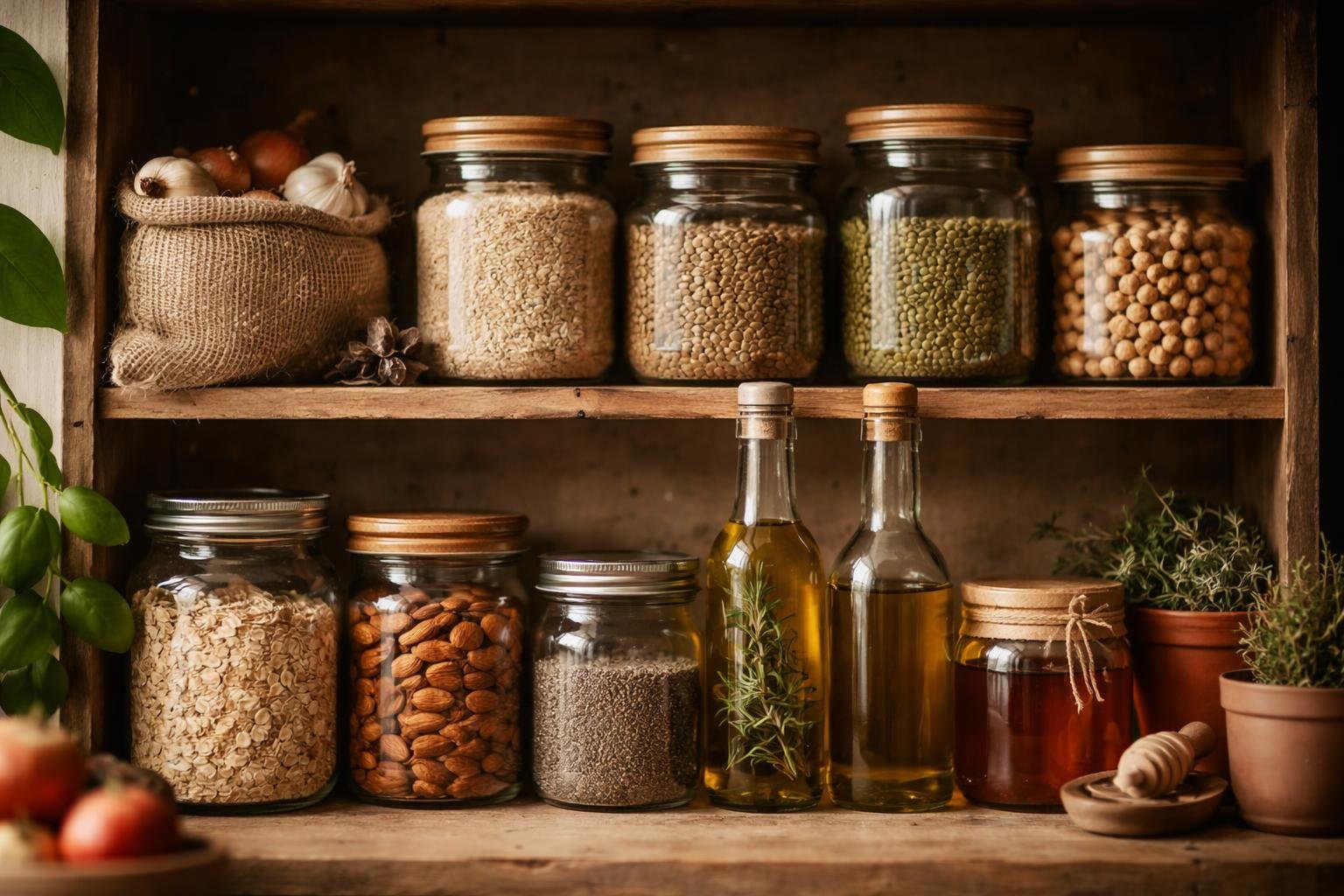
Stocking a kitchen with nutrient-dense ingredients creates the foundation for quick, healthy meals. Whole grains like quinoa and oats[4], protein-rich legumes, and versatile nuts and seeds provide essential nutrients while offering endless meal possibilities.
Whole Grains and Ancient Grains
Whole grains retain their bran, germ, and endosperm, delivering more fiber, vitamins, and minerals than refined versions. Brown rice serves as a versatile base for bowls, stir-fries, and side dishes, cooking in about 45 minutes and storing well in the refrigerator for meal prep.
Quinoa stands out as a complete protein containing all nine essential amino acids. It cooks in just 15 minutes and works equally well in salads, breakfast bowls, or as a rice substitute.
Oats and oatmeal provide soluble fiber that supports heart health and stable blood sugar levels. Steel-cut oats offer a heartier texture, while rolled oats cook faster for busy mornings.
Farro brings a nutty flavor and chewy texture to grain salads and soups. This ancient grain contains protein, fiber, and important minerals[4] that support overall wellness.
Storage tip: Keep whole grains in airtight containers in a cool, dark place to maintain freshness for up to six months.
Legumes and Beans
Legumes deliver plant-based protein, fiber, and essential minerals at a low cost. Chickpeas work in everything from hummus to roasted snacks, providing about 15 grams of protein per cooked cup.
Black beans, kidney beans, and pinto beans add substance to tacos, chili, and grain bowls. Canned versions offer convenience, though dried beans cost less and allow better control over sodium content.
Lentils cook faster than most legumes, requiring no pre-soaking. Red lentils break down into creamy soups in 20 minutes, while green and brown varieties hold their shape for salads.
Beans and legumes support digestive health, help regulate blood sugar, and provide protein with a lower environmental impact[4] than animal sources. Keep both canned and dried varieties on hand for flexibility in meal planning.
Nuts and Seeds
Nuts and seeds pack healthy fats, protein, and micronutrients into small servings. Almonds and walnuts make excellent snacks, with walnuts offering omega-3 fatty acids that support brain and heart health.
Chia seeds and flaxseeds add nutrition to smoothies, oatmeal, and baked goods. Ground flaxseeds provide better nutrient absorption than whole seeds and can replace eggs in vegan recipes.
| Type | Key Benefit | Best Uses |
|---|---|---|
| Almonds | Vitamin E, magnesium | Snacking, baking |
| Walnuts | Omega-3 fatty acids | Salads, oatmeal |
| Chia seeds | Fiber, complete protein | Puddings, smoothies |
| Flaxseeds | Lignans, omega-3s | Baking, egg substitute |
Store nuts and seeds in airtight containers in a cool, dark location[5] to prevent oils from going rancid. Refrigeration extends shelf life, especially for flaxseeds and walnuts. Buy raw, unsalted versions when possible to control added sodium and customize flavoring.
Essential Cooking Oils and Healthy Fats
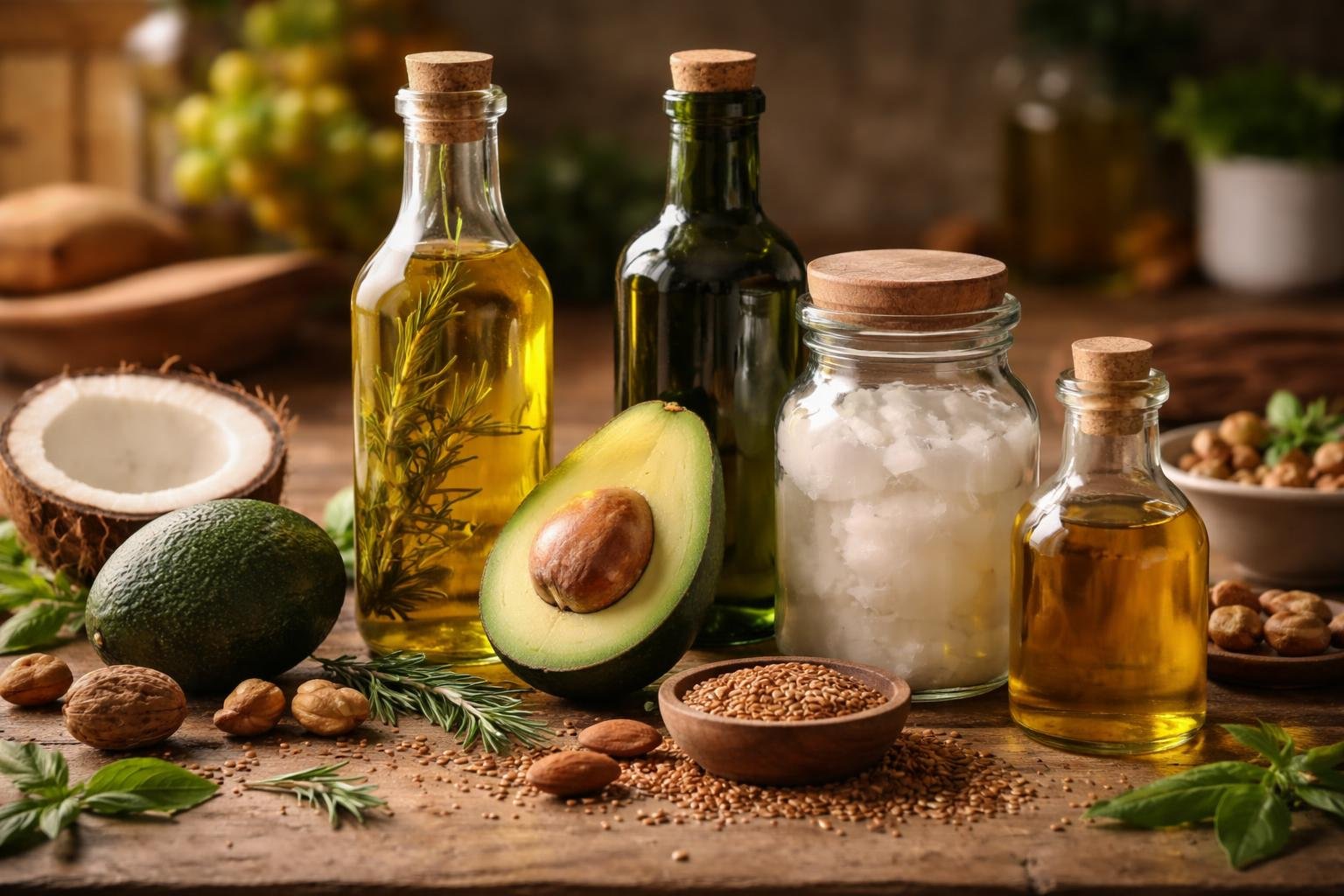
Extra virgin olive oil[6] provides heart-protective monounsaturated fats and powerful antioxidants, while avocado oil offers a high smoke point for versatile cooking. Nut butters deliver healthy fats along with protein and important nutrients.
Extra Virgin Olive Oil and Olive Oil
Extra virgin olive oil stands out as the healthiest cooking oil[6] because it contains monounsaturated fats that lower LDL cholesterol while maintaining HDL cholesterol levels. This oil is rich in polyphenol antioxidants that reduce inflammation and protect against heart disease.
Extra virgin olive oil provides 20% of the daily value for vitamin E per tablespoon. It works well for low to medium heat cooking methods like sautéing, with a smoke point between 325°F and 410°F.
For maximum nutritional benefits, use extra virgin olive oil in its raw form. Drizzle it over salads, pasta, soups, or bread. Heat can reduce the phenolic compounds by 40% to 75% depending on temperature and cooking time.
Regular olive oil goes through more refining and has a higher smoke point of 465°F. This makes it suitable for higher-heat cooking applications while still offering health benefits.
Elevate Your Health for Just $29.99/Month
Join the Precision Wellness Subscription at My Healing 365 and get discounted services, priority coaching access, virtual care, and exclusive wellness resources to support your physical, emotional, and hormonal health.
Join for $29.99/MonthAvocado Oil and Coconut Oil
Avocado oil contains heart-healthy monounsaturated fats similar to olive oil but with a much higher smoke point of 520°F. This makes it ideal for grilling, frying, baking, and roasting without breaking down. The oil has a mild, buttery flavor that works in any dish without overpowering other ingredients.
This oil helps reduce bad cholesterol and increase good cholesterol levels. It also contains vitamin E and anti-inflammatory properties that protect cells from damage.
Use avocado oil to sauté vegetables, eggs, fish, and meat. It can replace butter in baked goods like muffins and breads.
Coconut oil has a smoke point of 350°F and works well for baking and moderate heat cooking. However, it contains high levels of saturated fats, which can raise LDL cholesterol levels and increase heart disease risk.
Nut Butters and Spreads
Nut butters made from almonds and walnuts provide healthy fats along with protein, fiber, and important vitamins and minerals. These spreads contain monounsaturated and polyunsaturated fats that support heart health.
Almond butter offers vitamin E, magnesium, and calcium. It contains primarily monounsaturated fats that help lower bad cholesterol levels. Spread it on toast, add it to smoothies, or use it as a dip for fruit.
Walnut butter provides omega-3 fatty acids that reduce inflammation in the body. Walnuts contain the highest amount of plant-based omega-3s among tree nuts. This makes walnut butter particularly beneficial for brain health and reducing chronic disease risk.
Choose natural nut butters without added sugars, oils, or hydrogenated fats. The ingredient list should contain only nuts and perhaps a small amount of salt.
Fresh Produce and Nutrient-Rich Vegetables
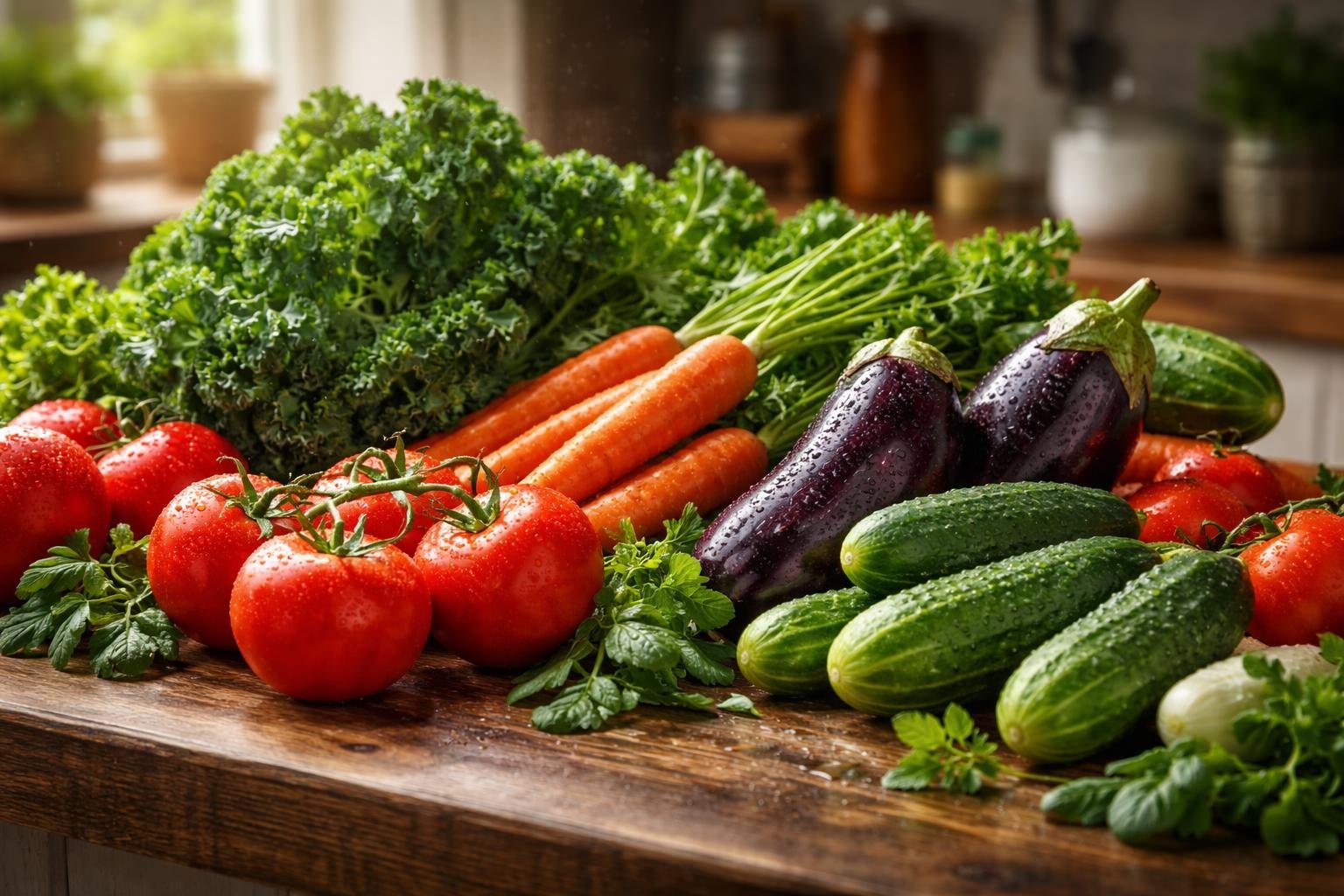
Stocking a kitchen with the right vegetables and fruits provides essential vitamins, minerals, and antioxidants that support overall health. Eating three servings of vegetables daily[7] helps people get more nutrients directly from food while making weight management easier.
Leafy Greens and Cruciferous Vegetables
Leafy greens form the foundation of a nutrient-dense kitchen. Spinach provides substantial amounts[7] of vitamins A, B, and K, along with manganese, magnesium, iron, and calcium. Kale offers high levels of vitamins K, C, A, and B6, plus fiber and beneficial carotenoids.
Cruciferous vegetables deliver powerful health benefits. Broccoli contains fiber and vitamins A, C, and K, along with calcium, potassium, and iron. Brussels sprouts provide about half the daily value for vitamin C plus fiber, potassium, and folate. Cauliflower supplies large amounts of vitamins C and K, folate, and B vitamins.
These vegetables offer anti-inflammatory and anti-cancer properties. Raw kale and lightly steamed broccoli retain more nutrients than boiled versions. People taking blood-thinning medications should monitor their intake of vitamin K-rich greens.
Colorful Vegetables
Bell peppers are rich in bioactive compounds[7] with antioxidant, antibacterial, and anti-diabetic properties. Red, yellow, orange, and green varieties each offer slightly different nutritional profiles but all support immune system function.
Carrots deliver large amounts of vitamin A and beta carotene, which the body absorbs better when carrots are cooked. The phytochemicals in carrots provide anti-cancer and anti-inflammatory benefits. Sweet potatoes offer 122% of the daily value[7] for vitamin A in one medium baked potato, plus vitamin C, fiber, and potassium.
Beets contain fiber and vitamins A, B, C, and K, along with folate and nitrates. They may help reduce the risk of cardiovascular disease and protect against memory loss.
Seasonal Fruits and Berries
Berries provide concentrated sources of antioxidants and vitamin C in small servings. They contain compounds that help reduce inflammation and oxidative stress throughout the body. Fresh berries deliver more nutrients than frozen options, though both forms offer health benefits.
Seasonal fruits change throughout the year and often cost less when purchased in season. Spring brings strawberries and cherries. Summer offers melons, peaches, and plums. Fall provides apples, pears, and grapes. Winter features citrus fruits like oranges and grapefruits.
No single fruit or vegetable provides all necessary nutrients[8], making variety essential. Rotating different fruits ensures a wide range of vitamins, minerals, and beneficial plant compounds.
Lean and Plant-Based Protein Sources
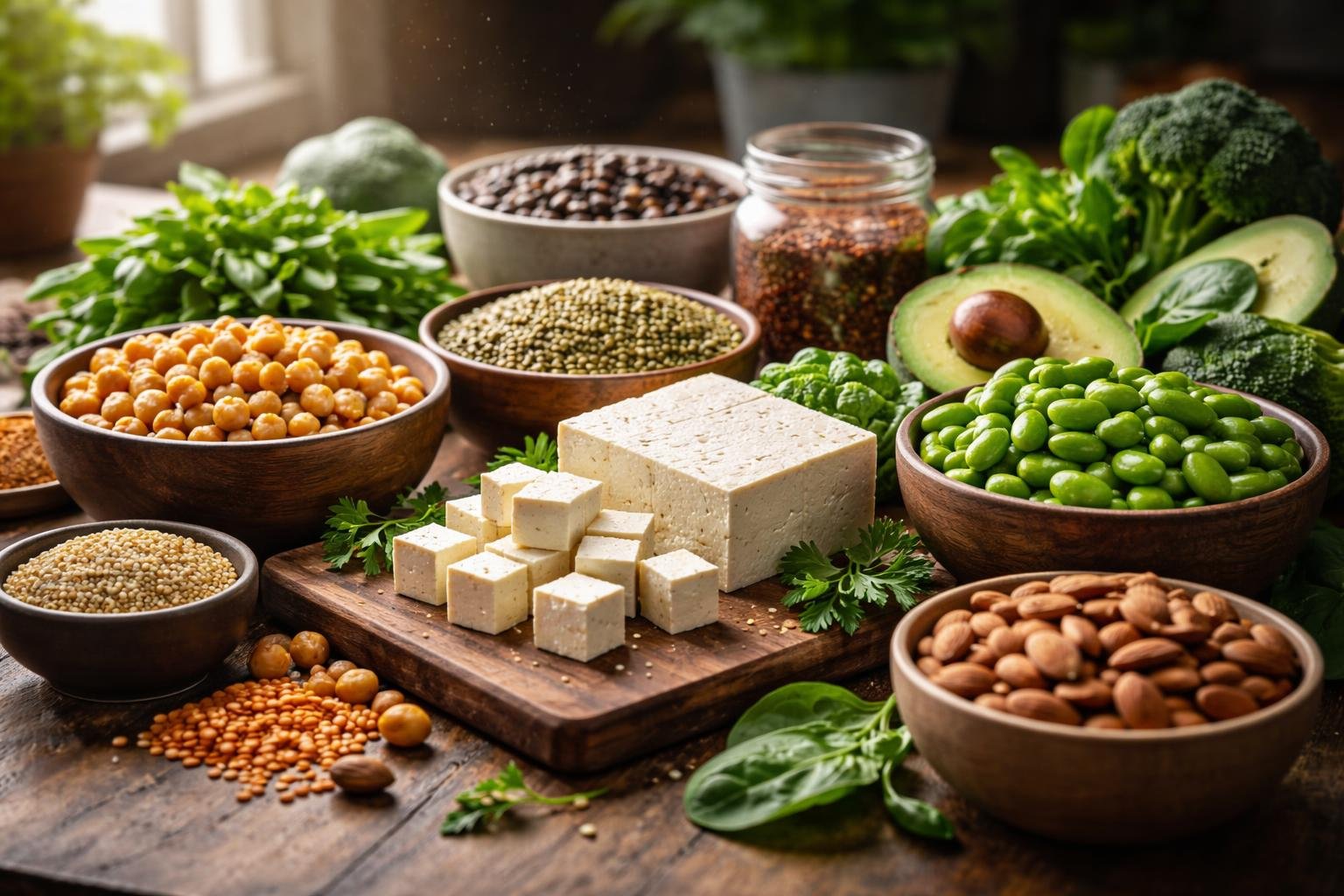
Stocking lean proteins helps build meals that support muscle health and satiety without excess saturated fat. Fresh poultry and fatty fish deliver complete amino acids, while legumes, soy foods, and fortified dairy alternatives offer versatile plant-forward options.
Poultry and Fish
Skinless chicken breast and turkey are classic lean proteins that cook quickly and absorb marinades well. A 100-gram serving of chicken breast provides roughly 31 grams of protein with minimal fat.
Fish stands out for both protein and omega-3 fatty acids. Salmon, mackerel, sardines, and trout contain EPA and DHA, which support heart and brain health. Aim for two servings of fatty fish per week to meet omega-3 recommendations from the American Heart Association[9].
White fish like cod, tilapia, and haddock offer lean protein with a milder flavor. Keep frozen fillets on hand for fast weeknight dinners. Season with lemon, garlic, and herbs, then bake or pan-sear.
Plant-Based Proteins
Legumes like beans, lentils, and chickpeas[10] form the backbone of plant-based eating. A cooked cup delivers 15 to 18 grams of protein plus fiber that supports digestion and blood sugar control.
Tofu and tempeh provide complete protein with all essential amino acids. Firm tofu works well in stir-fries and scrambles, while tempeh adds a nutty flavor to grain bowls and tacos. Press tofu for 15 minutes before cooking to improve texture.
Nuts, seeds, and nut butters add protein and healthy fats. Hemp seeds offer 9 to 10 grams per three tablespoons, and pumpkin seeds provide 7 to 8 grams per ounce. Sprinkle them on oatmeal, salads, or yogurt for an easy protein boost.
Eggs, Dairy, and Alternatives
Eggs are one of the most affordable complete proteins at roughly 6 grams per large egg. Hard-boil a batch at the start of the week for quick snacks and salad toppings.
Greek yogurt delivers nearly double the protein of regular yogurt, with around 15 to 20 grams per cup. Choose plain varieties to avoid added sugars, then sweeten with fresh fruit or a drizzle of honey. Cottage cheese offers similar protein density and pairs well with both sweet and savory toppings.
Milk and cheese contribute protein and calcium. For those avoiding dairy, fortified soy milk matches dairy milk’s protein content at 7 to 8 grams per cup. Oat milk and almond milk typically contain only 1 to 3 grams, so check labels when protein matters. Many brands now fortify plant milks with calcium, vitamin D, and B12 to match dairy nutrition.
Herbs, Spices, and Flavor Boosters
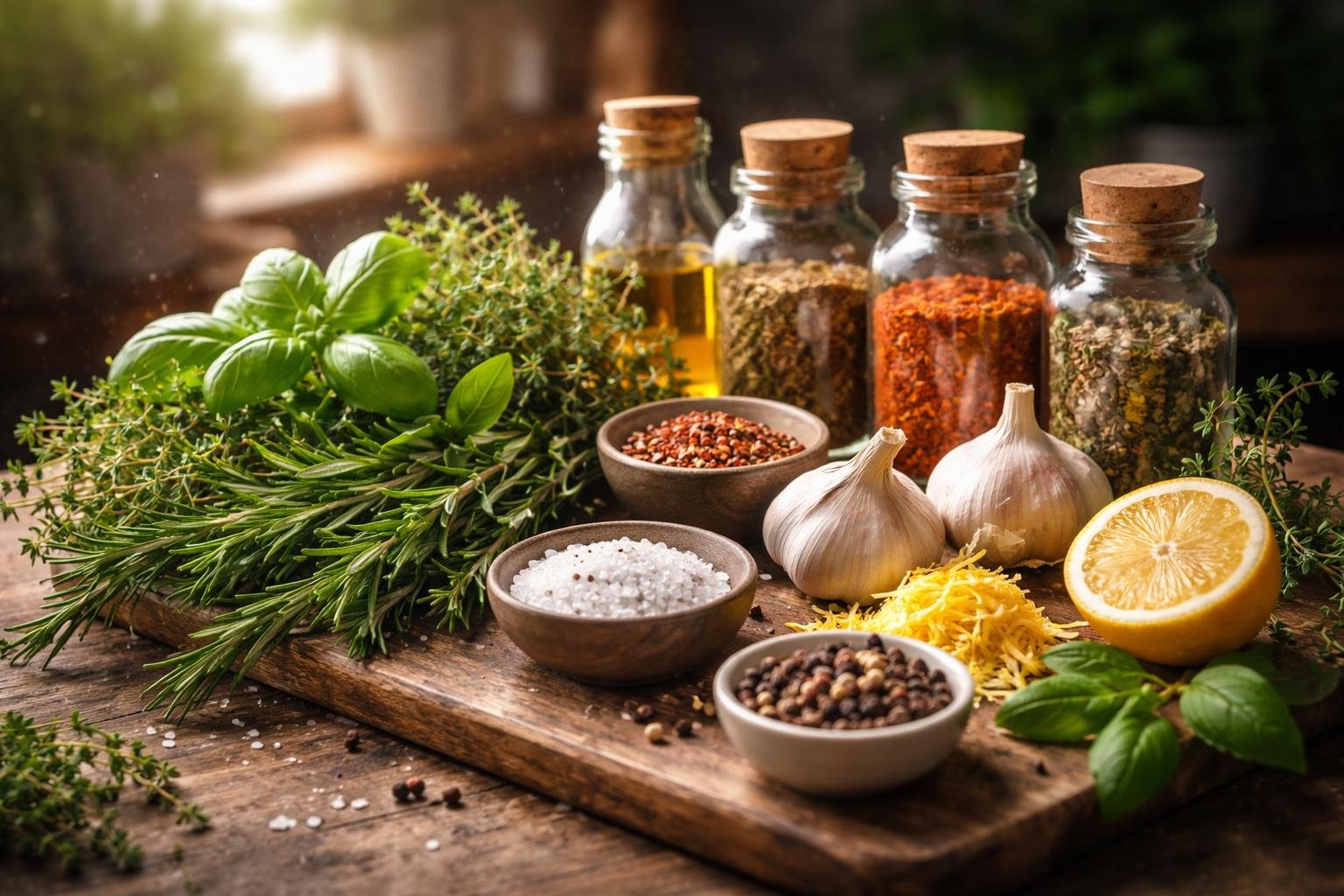
A well-stocked collection of herbs and spices transforms basic ingredients into flavorful meals while reducing the need for excess salt and sugar. These ingredients add depth to dishes and provide various health benefits that support overall wellness.
Fresh Herbs
Fresh herbs bring bright flavors and aromas to dishes that dried versions cannot fully replicate. Basil offers a sweet, peppery taste that works well in pasta dishes, salads, and sauces. Parsley provides a clean, fresh flavor that brightens soups, grain bowls, and roasted vegetables.
Oregano delivers an earthy, slightly bitter taste perfect for Mediterranean and Mexican cooking. Thyme has a subtle, woodsy flavor that enhances roasted meats, vegetables, and bean dishes.
Fresh herbs should be stored properly to maintain their quality. Most varieties last longer when their stems are placed in water like a bouquet and covered loosely with a plastic bag in the refrigerator. Alternatively, wrapping them in a damp paper towel inside a container keeps them fresh for several days.
Using fresh herbs in cooking[11] elevates the taste of meals without adding calories or sodium. They can be chopped and added at the end of cooking to preserve their delicate flavors, or incorporated earlier for deeper flavor integration.
Dried Spices
Dried spices offer concentrated flavors and longer shelf lives than fresh herbs. Cinnamon helps improve blood sugar control and contains antioxidants that promote heart health and reduce inflammation[12]. It works in both sweet and savory applications, from oatmeal to curries.
Cumin provides an earthy, warm flavor essential for Mexican, Indian, and Middle Eastern dishes. Paprika adds color and a mild, sweet pepper flavor to proteins and vegetables. Black pepper enhances nearly any savory dish and may improve nutrient absorption.
Common dried spices lose potency over time. They should be stored in airtight containers away from heat and light. Most ground spices maintain quality for about two to three years, while whole spices last even longer.
Building a collection of essential spices[13] allows cooks to create diverse flavors without relying on premade seasoning blends that often contain added sodium and preservatives.
Garlic, Ginger, and Turmeric
Garlic is rich in allicin, which may help fight infections and boost the immune system. It has been associated with heart health, helping to lower blood pressure and improve cholesterol levels. Fresh garlic cloves provide the strongest flavor, while garlic powder offers convenience for quick meals.
Ginger serves as a remedy for nausea and digestive discomfort. Its zesty flavor works in stir-fries, marinades, teas, and baked goods. Fresh ginger root can be grated, minced, or sliced, while ground ginger works well in spice blends.
Turmeric is a powerful anti-inflammatory ingredient[12] with a vibrant golden color. Its active compound, curcumin, helps alleviate joint pain and supports brain health. The earthy, slightly bitter spice enhances curries, rice dishes, and smoothies.
These three ingredients form the foundation of many global cuisines and provide significant health benefits beyond their culinary applications.
Fermented Foods and Gut-Health Essentials
A healthy kitchen needs foods that support the digestive system and provide beneficial bacteria. Fermented options deliver live probiotics and enzymes that strengthen gut health naturally.
Probiotic-Rich Foods
Greek yogurt stands out as one of the most accessible probiotic foods. It contains live bacteria cultures that help maintain digestive balance. When shopping, people should look for labels that say “live and active cultures” to ensure the bacteria are still alive.
Kefir offers even more probiotic diversity than yogurt. This fermented milk drink contains up to 30 different strains of bacteria and yeast. Most people who are lactose intolerant can handle kefir since fermentation breaks down nearly all the lactose.
Miso paste made from fermented soybeans provides probiotics along with savory flavor. It works well in soups, dressings, and marinades. The key is to avoid boiling miso because high heat kills the beneficial bacteria.
Tempeh is another fermented soy product that delivers both probiotics and protein. Unlike tofu, it goes through fermentation that makes it easier to digest. It absorbs flavors well and works as a meat substitute in many dishes.
Fermented Vegetables and Drinks
Sauerkraut must be raw or unpasteurized to contain live probiotics. The fermented cabbage provides digestive support[14] along with vitamin C and fiber. Pasteurized versions sold on warm shelves lack living bacteria.
Kimchi combines fermented vegetables with garlic, ginger, and chili peppers. These ingredients add anti-inflammatory benefits beyond the probiotics. Research shows that kimchi supports healthy cholesterol levels[15] and may help with weight management.
Kombucha is fermented tea that contains B vitamins and antioxidants. Buyers should check sugar content because some brands add excessive fruit juice. The best options have less than 5 grams of sugar per serving.
Salt-brined pickles differ from vinegar pickles. True fermented pickles use only salt and water, which creates an environment for beneficial bacteria to grow. These provide the probiotic benefits that vinegar-soaked versions lack.
The right equipment makes preparing nutritious meals easier and faster. Quality cookware, powerful blending tools, and proper storage containers help anyone create healthier dishes at home.
Essential Cookware
Stainless steel cookware stands as one of the best choices for healthy cooking because it doesn’t leach chemicals into food and distributes heat evenly. A good set typically includes various pot sizes and pans that work on all cooktop types including induction. These pots and pans last for years with proper care.
A cast iron skillet offers excellent heat retention and naturally adds small amounts of iron to food. It works great for searing meats, cooking vegetables, and even baking cornbread in the oven. Cast iron requires seasoning to maintain its non-stick surface.
A Dutch oven serves multiple purposes from braising meat to making soups and stews. The heavy lid traps moisture and creates tender, flavorful dishes. Most Dutch ovens transition safely from stovetop to oven.
Non-stick pans work well for cooking eggs and delicate fish with minimal oil. Look for BPA-free options that use ceramic or other safer coatings instead of traditional teflon. Silicone baking mats replace disposable parchment paper and create non-stick surfaces for roasting vegetables.
Blenders and Food Processors
A high-speed blender transforms whole fruits and vegetables into smooth drinks and sauces. Vitamix leads the market for power and durability, though other brands offer quality alternatives at lower prices. These blenders crush ice easily and make nut butters from scratch.
Food processors chop vegetables in seconds and save significant prep time. They mix dough, shred cheese, and slice produce with different blade attachments. A quality processor handles both small tasks like mincing garlic and larger jobs like making hummus.
An immersion blender offers convenience for pureeing soups directly in the pot. It takes up minimal storage space and cleans quickly. This tool works well for making smoothies in single-serve portions.
Modern tools like the Instant Pot[16] combine multiple functions including pressure cooking, slow cooking, and steaming. An electric pressure cooker reduces cooking time for beans, grains, and tough cuts of meat. An air fryer creates crispy textures using hot air instead of oil.
Meal Prep and Storage Solutions
Stasher bags provide reusable, BPA-free storage for chopped vegetables, marinated proteins, and leftovers. These silicone bags work in the freezer, microwave, and dishwasher. They replace single-use plastic bags and keep food fresh for days.
Glass containers with secure lids stack neatly in the refrigerator and reheat safely. Clear containers make it easy to see what needs eating first. Different sizes accommodate various portion needs.
Basic tools support accurate cooking and efficient prep work. Measuring cups ensure proper ingredient ratios for recipes. Mixing bowls in several sizes handle everything from whisking dressings to tossing salads. A salad spinner removes excess water from greens so dressings stick better.
Sharp knives including a quality paring knife make vegetable prep safer and faster. A good vegetable peeler removes skins quickly with less waste than a knife.
Sensible Sweeteners and Flavor Additions
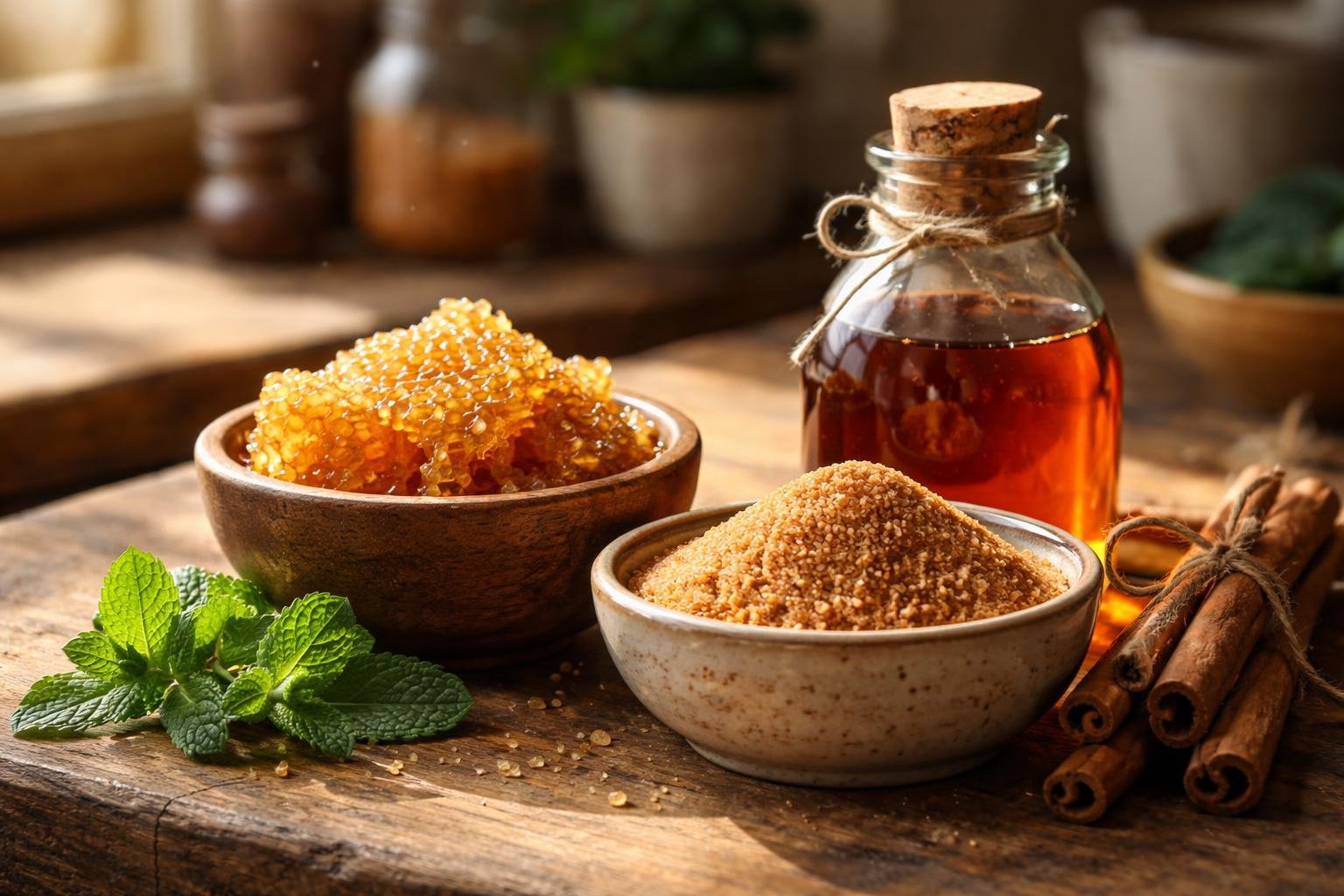
Smart sweeteners provide taste without refined sugar’s drawbacks, while nutritive additions deliver both flavor and health benefits. These kitchen staples transform ordinary meals into satisfying dishes that support wellness goals.
Natural Sweeteners
Date paste stands out as the top natural sweetener[17] because it contains fiber, potassium, copper, and vitamin B6 from whole dates. It works as a 1:1 substitute for cane sugar in most recipes. Home cooks can make it by blending soaked dates with water until smooth.
Maple syrup offers a convenient liquid sweetener with a lower glycemic index than table sugar. It contains minerals and works well in dressings, marinades, and baked goods. Pure maple syrup provides the best quality and flavor.
Unsweetened applesauce serves double duty as both a sweetener and fat replacer in baking. It adds fiber, vitamins, and antioxidants to recipes. Ripe bananas bring natural sweetness plus potassium and vitamin C to smoothies and baked items.
Date sugar provides whole-food nutrition[17] with 1 gram of fiber per 2 teaspoons. Its toffee-like flavor enhances oatmeal and quick breads, though it costs more than other options.
Nutritive Additions
Fresh herbs and spices boost both flavor and wellness[12]. Garlic supports immune function while adding depth to savory dishes. Turmeric delivers anti-inflammatory benefits and earthy warmth to soups and rice.
Cinnamon helps regulate blood sugar and adds sweetness without calories. Ginger aids digestion and provides a spicy kick to stir-fries and teas. Fresh basil, cilantro, and parsley contribute vitamins A and K while brightening finished dishes.
Citrus zest and juice add vitamin C along with bright, acidic notes that enhance vegetables and proteins. Lemon juice balances rich flavors in dressings and sauces. Nutritional yeast provides B vitamins and a savory, cheese-like taste for plant-based cooking.
Low-sodium vegetable broth builds flavor in grains, beans, and vegetables without added fat. Vinegars like balsamic and apple cider create tangy depth in marinades and slaws.
Balanced Meal Prep and Healthy Cooking Strategies
Planning meals in advance and using proper cooking techniques helps people eat better while saving time during busy weeks. Simple systems for organizing ingredients and creating nutritious combinations make healthy eating[18] more manageable.
Meal Planning Systems
A structured approach to meal prep starts with selecting recipes and making shopping lists before heading to the store. People should choose a consistent day each week to plan their meals and prepare ingredients in bulk.
The most effective meal planning strategies[19] include:
- Batch cooking grains and proteins for multiple meals
- Pre-cutting vegetables to reduce daily cooking time
- Portioning meals into containers immediately after cooking
- Labeling and dating all prepared foods
Different meal prep methods work for different lifestyles. Some people cook complete meals on Sundays, while others prefer preparing individual ingredients to mix throughout the week. The key is finding a routine that fits personal schedules and cooking abilities.
Storage matters just as much as preparation. Glass containers keep food fresh and make reheating simple. Meals stored in the refrigerator stay good for three to four days, while frozen portions last several weeks.
Nutritious Meal Creation
Building balanced meals requires combining foods from multiple groups on each plate. A nutritious meal includes lean protein, whole grains, vegetables, and healthy fats in appropriate portions.
Heart-healthy kitchen essentials[20] make creating balanced meals easier. Stocking pantry staples like canned beans, brown rice, and olive oil provides quick options for healthy meal prep.
Cooking methods affect the nutritional value of prepared foods. Steaming, roasting, and grilling preserve more vitamins than frying. Adding herbs and spices boosts flavor without extra calories or sodium.
Simple balanced meal combinations:
| Protein | Grain | Vegetable | Healthy Fat |
|---|---|---|---|
| Grilled chicken | Quinoa | Roasted broccoli | Avocado slices |
| Baked salmon | Brown rice | Steamed spinach | Olive oil dressing |
| Black beans | Whole wheat pasta | Bell peppers | Nuts |
People can mix and match ingredients based on preferences and what they already have at home. This flexibility prevents food waste and keeps meals interesting throughout the week.
Frequently Asked Questions
Setting up a kitchen for healthy eating requires specific tools, appliances, and ingredients that make nutritious cooking practical and efficient. Many people have similar questions about which items are truly necessary and how to make smart choices when stocking their space.
What are the must-have tools and utensils every healthy kitchen should include?
Every healthy kitchen needs a few basic tools to make food preparation easier. Sharp knives are essential for cutting vegetables, fruits, and proteins safely and quickly. A good cutting board provides a stable surface for all prep work.
Measuring cups and spoons help with portion control and following recipes accurately. A set of stainless steel measuring cups[21] works well and lasts for years. Mixing bowls in various sizes are needed for combining ingredients and preparing meals.
A colander or strainer makes washing produce and draining pasta simple. Wooden spoons and silicone spatulas are useful for stirring and cooking without scratching pans.
Which kitchen appliances are most useful for preparing healthy meals at home?
A blender helps create smoothies, soups, and sauces with fresh ingredients. High-quality blenders can puree vegetables and crush ice for healthy drinks.
Food processors save time by chopping vegetables and making fresh salsas or pestos in seconds. They take the manual effort out of slicing and dicing large amounts of produce.
Pressure cookers and multi-cookers like the Instant Pot make cooking healthy meals faster. These appliances can prepare beans, whole grains, and lean proteins with minimal supervision.
A food steamer cooks vegetables[21] while preserving nutrients better than boiling. Steaming requires no added fats and keeps food’s natural flavors intact.
What healthy pantry staples should always be kept on hand for quick, balanced cooking?
Whole grains like brown rice, quinoa, and oats provide fiber and sustained energy. These grains store well and form the base of many healthy meals.
Canned beans and lentils offer quick protein options for vegetarian and meat-based dishes. They require no soaking and can be added directly to soups and salads.
Healthy oils like olive oil and avocado oil are needed for cooking and dressing salads. Nuts and seeds provide healthy fats and can be used as snacks or recipe ingredients.
Having basic ingredients stocked[22] in the pantry saves time during busy weeknights. Herbs, spices, and vinegars add flavor without extra calories or sodium.
How can you stock a new kitchen with essentials without overspending?
Start with the most frequently used items rather than buying everything at once. Focus on one good knife, one versatile pan, and basic measuring tools first.
Buy quality items for tools used daily and save money on items used less often. A good chef’s knife is worth the investment, but specialty gadgets can wait.
Shop sales and compare prices at different stores before making purchases. Many kitchen essentials go on sale during certain times of the year.
Consider buying gently used items from thrift stores or online marketplaces for things like mixing bowls and baking dishes. Glass storage containers and basic utensils often cost much less secondhand.
Which cookware materials are best for healthier cooking and easier cleanup?
Stainless steel cookware resists rust and doesn’t react with acidic foods. Stainless steel knives[21] can be sharpened repeatedly and stay safe for food preparation.
Cast iron and carbon steel pans develop natural nonstick surfaces without synthetic coatings. These materials distribute heat evenly and last for decades with proper care.
Glass and ceramic containers are best for food storage because they don’t absorb stains or smells. They work well for acidic foods like tomato sauce and can go from fridge to microwave safely.
Avoid nonstick pans with damaged coatings, as they may release harmful chemicals into food. When nonstick surfaces start to peel or scratch, it’s time to replace them.
What are the most common mistakes people make when setting up a kitchen for healthy eating?
Many people buy too many single-purpose gadgets that take up space and rarely get used. Simple, multi-purpose tools are more practical for daily cooking.
Some cooks invest in expensive appliances before knowing which ones they’ll actually use regularly. It’s better to start with basics and add specialty items as specific needs arise.
People often overlook the importance[23] of spending consistent time in the kitchen for good health. Having the right tools means nothing without making time to use them.
Another mistake is not maintaining tools and cookware properly. Dull knives, dirty cutting boards, and worn-out pans make healthy cooking harder and less safe.
Post Views: 3
References
- 10 Essential Ingredients for a Healthy Kitchen — Solid at My Core. https://www.solidatmycore.com/blog/10-essential-ingredients Accessed April 14, 2026
- 429 Too Many Requests. https://mealprepify.com/clean-eating-kitchen/ Accessed April 14, 2026
- 10 Staple Foods Every Kitchen Needs for Simple, Healthy Meals. https://nutrabalancelife.com/essential-staple-foods-kitchen-healthy-meals/ Accessed April 14, 2026
- The Ultimate Guide To 10 Best Whole Food Pantry Staples For 2025. https://wholefoodvalue.com/whole-food-pantry-staples/ Accessed April 14, 2026
- 429 Too Many Requests. https://upgradedhealth.net/top-10-healthiest-pantry-staples-always/ Accessed April 14, 2026
- What Is the Healthiest Oil to Cook With? Top Choices for Your Kitchen. https://dietitianlive.com/blog/discover-the-healthiest-oils-for-your-kitchen/ Accessed April 14, 2026
- Eating three servings of vegetables daily. https://www.verywellhealth.com/healthiest-vegetables-8415670 Accessed April 14, 2026
- Vegetables and Fruits • The Nutrition Source. https://nutritionsource.hsph.harvard.edu/what-should-you-eat/vegetables-and-fruits/ Accessed April 14, 2026
- New Heart Association Guidance Emphasizes Plant Protein: 9 Foods to Try. https://www.today.com/health/diet-fitness/best-plant-protein-sources-heart-health-rcna265927 Accessed April 14, 2026
- 12 Essential Sources and Tips for Protein on a Plant-Based Diet. https://thehealthyhabithub.life/protein-on-a-plant-based-diet-12-sources-and-tips/ Accessed April 14, 2026
- 10 Essential Spices & Herbs to Add Flavour & Fun to Daily Meals. https://www.healthstandnutrition.com/essential-spices/ Accessed April 14, 2026
- The Health Benefits of 10 Flavorful Herbs and Spices. https://www.atlantichealth.org/health-articles/healthy-living/the-health-benefits-of-10-flavorful-herbs-and-spices Accessed April 14, 2026
- Flavor Boosters Guide: 10 Powerful Ways to Elevate Meals. https://www.sidesimplicity.com/flavor-boosters-guide/ Accessed April 14, 2026
- 10 Best Fermented Foods for Gut Health: MD’s 2026 Guide. https://www.federa.org/conditions/gut-health/fermented-foods-for-gut-health/ Accessed April 14, 2026
- Page Not Found. https://healthierup.com/10-fermented-foods-for-gut-health-you-need-to-try-now/ Accessed April 14, 2026
- 10 Must-Have Smart Kitchen Tools for Healthier Cooking. https://www.expertreviewsbestricecooker.com/smart-kitchen-tools-for-healthier-cooking/ Accessed April 14, 2026
- The Healthiest Natural Sweeteners, Ranked, and How Best to Use Them. https://www.forksoverknives.com/how-tos/healthy-natural-sweeteners-ranked-best-uses/ Accessed April 14, 2026
- Meal Prep Guide • The Nutrition Source. https://nutritionsource.hsph.harvard.edu/meal-prep/ Accessed April 14, 2026
- Meal Prep and Cooking Tips. https://www.nutrition.gov/topics/shopping-cooking-and-meal-planning/meal-prep-and-cooking-tips Accessed April 14, 2026
- Pantry Basics for Heart-Healthy Meals Infographic. https://www.heart.org/en/healthy-living/healthy-eating/cooking-skills/meal-planning/heart-healthy-kitchen-essentials-for-meal-prep Accessed April 14, 2026
- 10 Kitchen Essentials for Healthy Eating and Healthy Cooking. https://happybellyfish.com/2021/12/21/10-kitchen-essentials-for-healthy-eating-and-healthy-cooking/ Accessed April 14, 2026
- Having basic ingredients stocked. https://cpr.heart.org/en/-/media/Healthy-Living-Files/Infographics/Kitchen_Essential_Ingredients_english.pdf Accessed April 14, 2026
- 10 Kitchen Essentials for Good Health. https://elissagoodman.com/healthy-tips/10-kitchen-essentials/ Accessed April 14, 2026

























