Medically Reviewed
Dr. Jose Rossello, MD, PhD, MHCM
Preventive Medicine & Public Health Specialist
Last Reviewed: April 13, 2026
Your bedroom affects how well you sleep each night. The colors on your walls, the temperature of your room, and even the placement of your bed all play a role in sleep quality. Many people struggle to fall asleep or stay asleep without realizing their bedroom setup is working against them.

Creating a sleep-friendly bedroom involves controlling light, managing noise, maintaining the right temperature, and choosing comfortable bedding that supports the body. Research shows that ventilation and fresher air is associated with better sleep[1], while factors like excess heat and external noise can disrupt rest throughout the night. Small changes to the sleep environment can make a real difference in how rested someone feels each morning.
Turning a bedroom into a true sleep sanctuary doesn’t require expensive renovations. Simple adjustments to layout, lighting, and organization can transform any space into a room that promotes relaxation and quality rest.
Table of Contents
Key Takeaways
- The bedroom environment directly impacts sleep quality through factors like light, temperature, noise, and air quality
- Practical changes like blackout curtains, decluttering, and proper bed placement create a more restful space
- Controlling the sleep environment with the right bedding, ventilation, and lighting helps promote consistent quality rest
Optimize Bedroom Layout for Restful Sleep
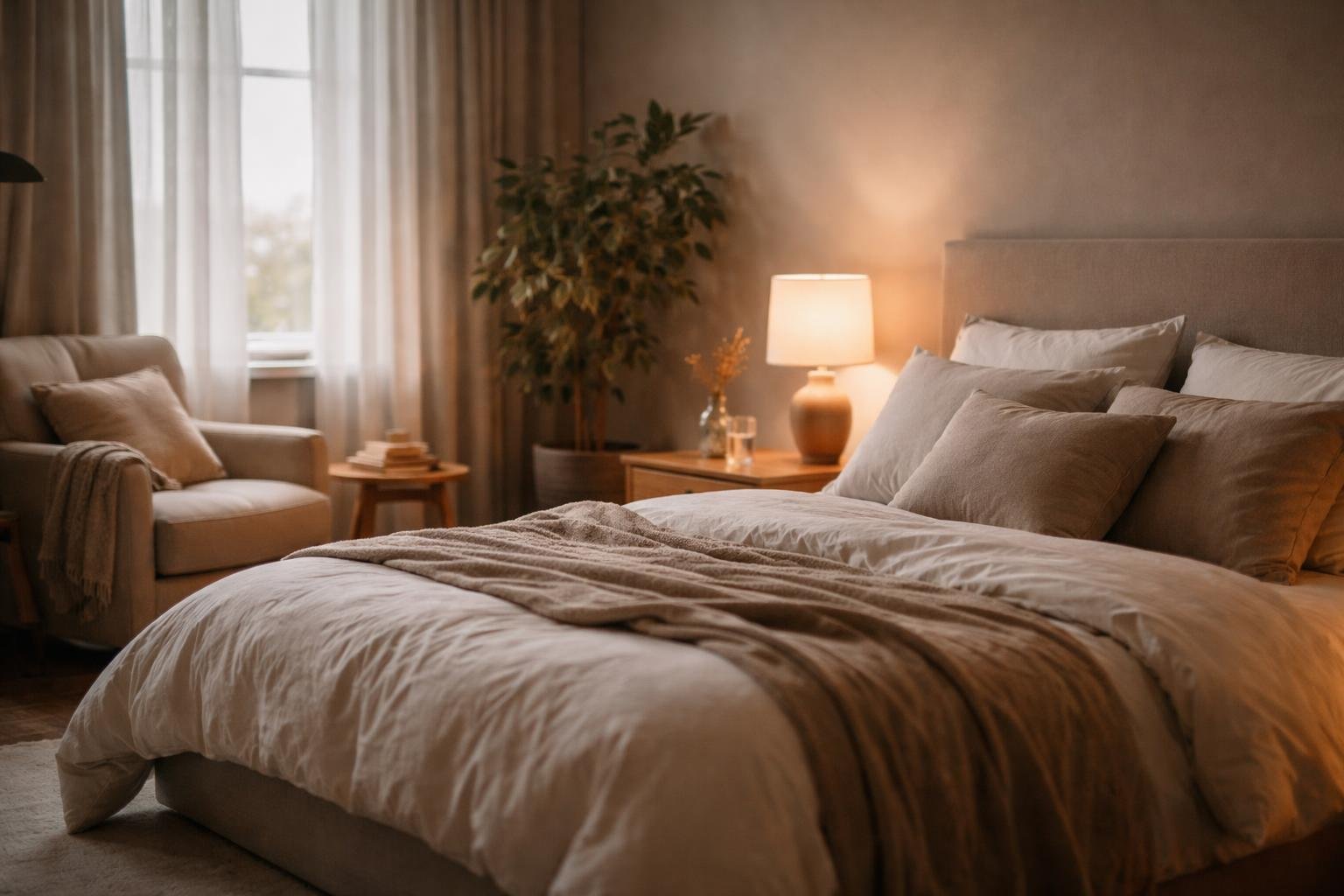
The way furniture is arranged in a bedroom affects both comfort and sleep quality. Proper bed placement, smart furniture choices, and open spaces work together to create a calm environment that supports rest.
Bed Placement for Maximum Comfort
Placing the bed against a wall[2] maximizes floor space and creates a sense of security. The bed should be positioned where sleepers can see the door without being directly in line with it.
Distance from windows helps reduce light and noise disruptions during sleep. A bed placed too close to exterior walls may expose sleepers to temperature changes that interfere with rest.
The headboard placement matters for stability and comfort. Positioning it on a solid wall rather than under a window prevents drafts and provides better support for reading or relaxing in bed.
Choosing Appropriate Bedroom Furniture
A nightstand on each side of the bed provides convenient access to essentials like water, glasses, or medications. These pieces should be at mattress height or slightly lower for easy reach.
Essential bedroom furniture includes:
- Dresser or wardrobe for clothing storage
- Bedside tables with at least one drawer
- Comfortable seating like a chair or bench
- Reading lamp for task lighting
Storage solutions keep the room organized and reduce visual clutter. Under-bed storage containers, wall-mounted shelves, or a storage ottoman provide places for extra bedding and personal items without taking up floor space.
Furniture size should match room dimensions. Oversized pieces make small bedrooms feel cramped and can create obstacles when moving around in low light.
Creating Balanced and Open Spaces
A well-organized layout makes every action frustration-free[1], from getting ready in the morning to walking to the bathroom at night. Clear pathways prevent trips and falls.
Floor space between furniture pieces should allow for comfortable movement. A minimum of 24 inches on each side of the bed provides adequate walking space.
Strategic placement of plush rugs defines different zones in the bedroom. A rug beside the bed creates a soft landing spot for bare feet while adding warmth to the space.
Balance visual weight by distributing furniture evenly throughout the room. Avoid clustering all large pieces on one side, which creates an unbalanced and uncomfortable feeling.
A reading nook in an unused corner adds function without crowding the main sleeping area. A comfortable chair with good lighting transforms dead space into a relaxing retreat.
Control Light to Improve Sleep Quality

Light is the most powerful signal for your circadian rhythm, which controls when you feel awake or sleepy. Making your bedroom as dark as possible at night helps your body produce melatonin and prepare for rest.
Using Blackout Curtains and Shades
Blackout curtains block outside light from entering the bedroom, creating the darkness needed for quality sleep. These window treatments use thick, tightly woven fabric or special backing materials that prevent light from passing through. They work especially well for people who sleep during daytime hours or live in areas with bright streetlights.
Blackout shades offer another effective option for controlling bedroom light. They mount close to the window frame and block light from entering around the edges. Many people combine both curtains and shades for maximum darkness.
When choosing blackout window treatments, the fit matters as much as the material. Light can leak through gaps at the top, bottom, or sides of poorly installed curtains. Installing curtain rods that extend several inches beyond the window frame helps eliminate these gaps. Floor-length curtains that touch the ground also prevent light from entering underneath.
Layered Window Treatments for Versatility
Layered bedroom lighting[3] gives people control over how much light enters their space throughout the day. This approach combines different types of window coverings that work together.
A typical layered setup includes:
- Sheer curtains for daytime privacy while letting natural light in
- Blackout shades or curtains for complete darkness at night
- Dimmer switches on bedroom lamps for adjustable artificial light
This system allows people to adjust their bedroom environment based on the time of day. Natural light during morning hours helps signal the body to wake up. Complete darkness at bedtime supports melatonin production.
Reducing Blue Light Exposure Before Bed
Blue light from phones, tablets, computers, and televisions disrupts the circadian rhythm more than other light types. This wavelength tells the brain to stay alert and awake. Screen time before bed[1] makes falling asleep harder and reduces sleep quality.
Experts recommend avoiding electronic devices for at least one hour before bedtime. People who must use devices in the evening can reduce blue light exposure by turning on night mode settings or wearing blue light blocking glasses.
Bedroom lighting should use bulbs with low color temperature in the evening hours. Warm-toned lights with yellow or orange hues have less impact on melatonin production than bright white or blue-toned bulbs. Bedside lamps with low wattage bulbs help people read or complete nighttime routines without disrupting their sleep preparation.
Create a Calming and Restful Atmosphere
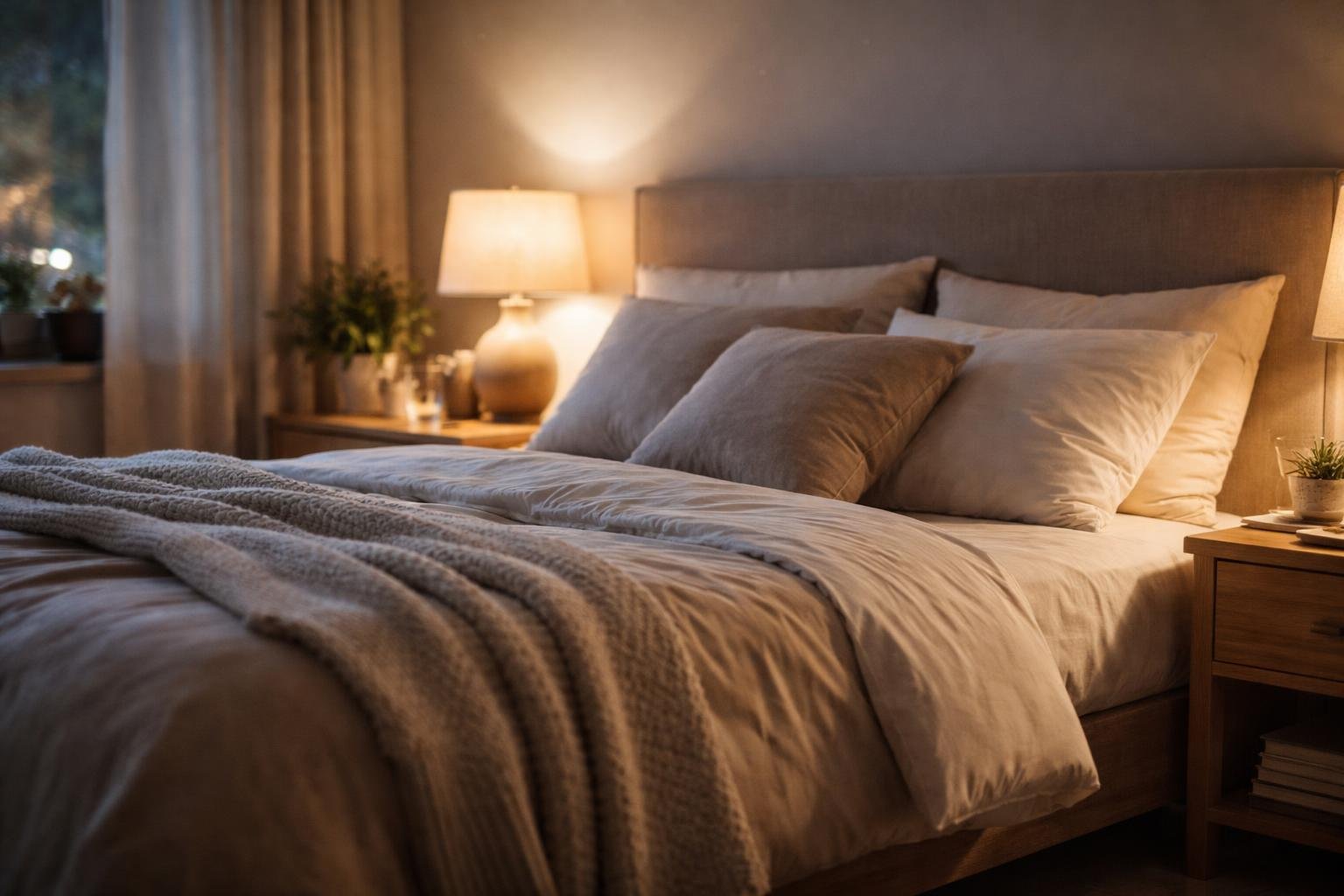
A restful atmosphere combines visual comfort with physical coziness to help the mind and body relax before sleep. The right colors, textures, and dedicated spaces for unwinding work together to transform a bedroom environment into a true sleep sanctuary.
Selecting Relaxing Colors and Textures
Warm, appealing colors[1] form the foundation of calming bedroom design. Soft, muted tones like sage green, dusty blue, warm gray, and cream create a peaceful backdrop that helps the mind settle. These colors work better than bright or bold shades for promoting relaxation.
Renters and those on limited budgets can incorporate soothing colors without painting walls. Accent pieces like throw pillows, blankets, and wall art introduce calming hues without major expense. A well-placed area rug or duvet cover can shift the entire color scheme of a room.
Texture matters just as much as color. Natural materials like cotton, linen, and wool add depth and comfort to the space. Layering different textures creates visual interest while maintaining a serene feel. Smooth sheets paired with a chunky knit throw or a velvet pillow provides both comfort and style.
Incorporating Plush Rugs and Soft Furnishings
Plush rugs transform cold, hard floors into warm landing spots for bare feet. A thick, soft rug placed beside the bed cushions morning steps and adds a layer of luxury to the room. The rug also helps absorb sound, making the space quieter.
Soft furnishings[4] extend beyond basic bedding. Upholstered headboards, padded bench seats, and overstuffed chairs create multiple touchpoints of comfort. These pieces invite relaxation and make the bedroom feel like a retreat rather than just a place to sleep.
Curtains in heavy, soft fabrics serve double duty by blocking light and adding warmth. Floor-length drapes in natural fibers create a cocooning effect that enhances the sense of safety and comfort needed for quality rest.
Designing a Cozy Reading Nook
A dedicated reading nook provides a screen-free wind-down space separate from the bed. This area signals to the brain that it’s time to transition from the day’s activities to rest. A comfortable chair positioned near a window or corner creates this special zone.
Good lighting is essential for a reading nook. A floor lamp or adjustable wall sconce with warm-toned bulbs provides adequate light without being too bright. Positioning the light source over the shoulder prevents eye strain while reading.
Small additions make the nook more inviting. A small side table holds books, glasses, and a cup of herbal tea. A soft throw blanket draped over the chair arm stays within reach for added warmth. Built-in shelving or a nearby bookcase keeps reading materials organized and accessible.
Reduce Noise and Enhance Sleep Sanctuary
Unwanted sounds disrupt sleep cycles and prevent the deep rest your body needs. Strategic soundproofing materials and consistent background noise create a protective acoustic environment that supports uninterrupted sleep.
Soundproofing With Materials and Rugs
Heavy curtains, thick wall hangings, and plush rugs absorb sound waves before they reach sleeping ears. These soft materials prevent noise from bouncing off hard surfaces like walls and floors.
Carpets and area rugs placed throughout the bedroom reduce sound transmission from floors below. A thick rug under the bed absorbs footsteps and other vibrations. Layering rugs creates even better sound absorption in high-traffic areas near doorways.
Wall-mounted fabric panels or tapestries dampen noise from adjacent rooms. Heavy blackout curtains serve double duty by blocking light and muffling outside traffic sounds. Door draft stoppers seal the gap under bedroom doors to prevent hallway noise from entering.
Furniture placement also affects sound levels. Bookshelves filled with books act as natural sound barriers when positioned against shared walls. Upholstered headboards absorb more sound than wooden or metal frames.
Using a White Noise Machine
External noise causes frequent awakenings[1] that reduce sleep quality throughout the night. A white noise machine masks these disruptive sounds with consistent, gentle background audio.
White noise machines produce steady sound frequencies that drown out sudden noises like car horns or barking dogs. The constant hum helps the brain ignore environmental sounds that would otherwise trigger awareness.
Many sleepers find that white noise creates a cocoon effect that defines their sleep sanctuary as separate from the outside world. The machine should be placed several feet from the bed at a comfortable volume that masks noise without being loud.
Some white noise machines offer different sound options like rain, ocean waves, or fan sounds. Testing various sounds helps identify which creates the most relaxing environment for individual preferences.
Improve Air Quality and Ventilation
Clean air and proper airflow directly impact sleep quality by reducing allergens, controlling humidity, and maintaining oxygen levels. Research shows that better ventilation and fresher air lead to improved sleep outcomes.
Adding an Air Purifier
An air purifier removes dust, pollen, pet dander, and other particles that interfere with breathing during sleep. These devices work by pulling air through filters that trap contaminants before recirculating clean air back into the room.
HEPA filters capture 99.97% of particles as small as 0.3 microns. This includes common bedroom allergens that trigger congestion and sneezing. People with allergies or asthma often notice immediate improvements in their sleep quality after adding a purifier.
The device should run continuously for best results, especially during sleep hours. Position it at least a few feet from the bed to avoid noise disruption while still benefiting from cleaner air circulation. Regular filter changes maintain effectiveness and prevent the buildup of trapped particles.
Beneficial Houseplants for Bedrooms
A snake plant releases oxygen at night, unlike most plants that only produce oxygen during daylight hours. This makes it particularly valuable for bedroom environments where fresh oxygen supports better breathing during sleep.
Elevate Your Health for Just $29.99/Month
Join the Precision Wellness Subscription at My Healing 365 and get discounted services, priority coaching access, virtual care, and exclusive wellness resources to support your physical, emotional, and hormonal health.
Join for $29.99/MonthThe snake plant also filters toxins like formaldehyde and benzene from indoor air. It requires minimal maintenance, tolerating low light and infrequent watering. One or two plants per bedroom provides measurable air quality benefits without overwhelming the space.
Other suitable options include spider plants and peace lilies, which remove airborne pollutants. However, people with pets should verify that chosen plants are non-toxic to animals before placing them in sleeping areas.
Tips for Proper Ventilation
Opening windows for 10-15 minutes daily refreshes stale air and reduces carbon dioxide buildup. Even during colder months, brief ventilation periods exchange indoor air without significantly affecting room temperature.
Studies have found that ventilation and fresher air is associated with better sleep[1], while poor air circulation correlates with sleep disturbances. Cross-ventilation works best by opening windows or doors on opposite sides of the room to create airflow.
Ceiling fans or standing fans improve air circulation when opening windows isn’t practical. Running a fan on low speed prevents air stagnation without creating uncomfortable drafts. Keep bedroom doors slightly open at night to allow air exchange with other rooms in the home.
Smart Storage Solutions for a Clutter-Free Space
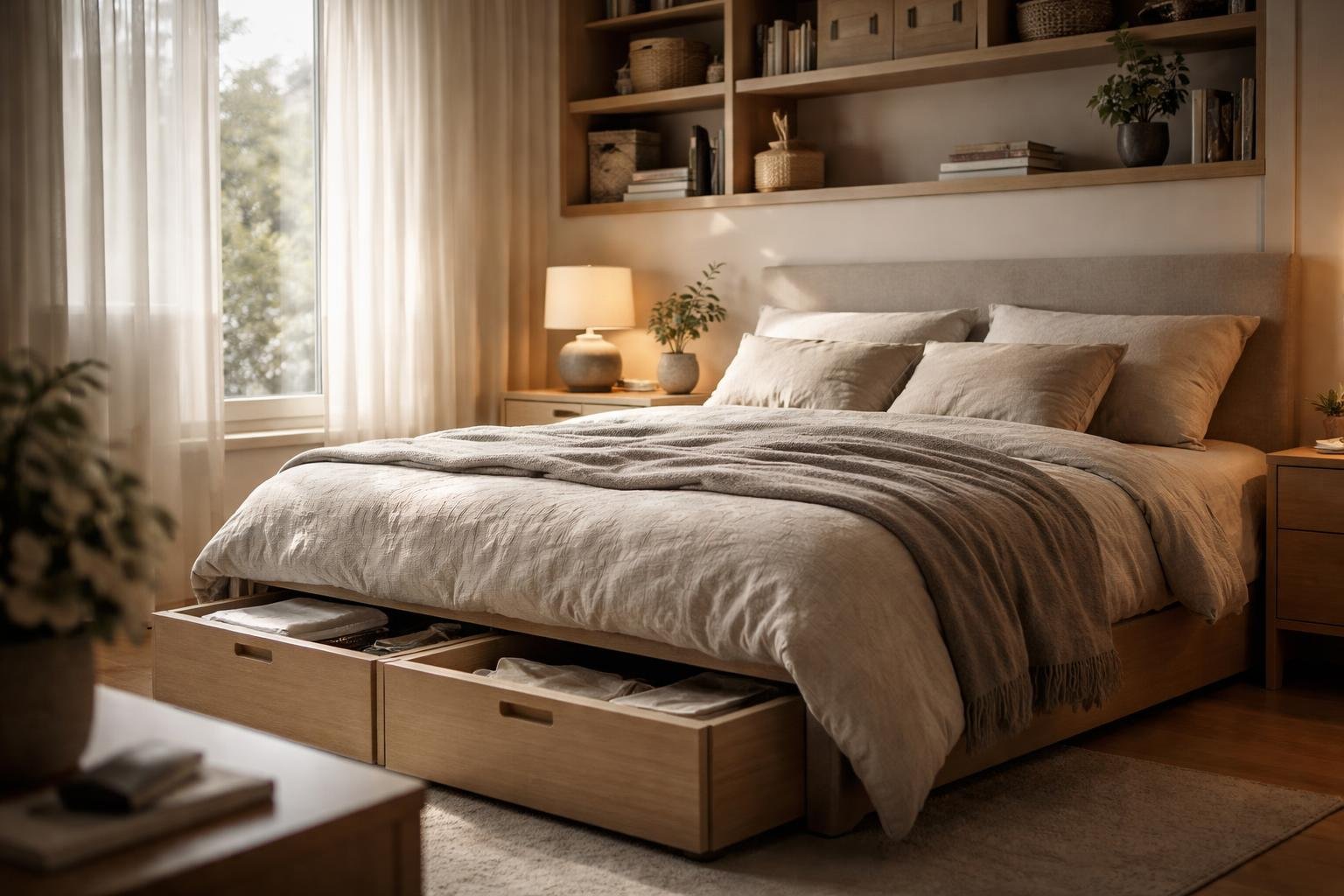
A bedroom filled with clutter disrupts sleep quality and creates visual stress. Strategic storage choices eliminate mess while keeping essential items within reach.
Nightstands With Built-In Storage
Nightstands with drawers, shelves, or compartments provide dedicated spots for bedtime essentials while maintaining a clean surface. A clutter-free nightstand[5] should hold only a reasonable number of neatly stacked books, with a tray for small items like jewelry or change.
Built-in drawers keep sleep aids, reading glasses, and medications hidden from view. Open lower shelves work well with baskets to store extra blankets or magazines. Models with charging stations eliminate tangled cords that create visual chaos.
Key features to look for:
- At least one enclosed drawer for privacy
- A flat top surface for a lamp and alarm clock
- Proper height alignment with the mattress top
- Sufficient depth to prevent items from falling behind
The right nightstand balances accessibility with concealment. Items used before bed stay within arm’s reach without cluttering the bedroom’s visual landscape.
Maximizing Closet and Under-Bed Space
Closet organization starts with honest assessment of what deserves space. Keeping three towels per person and two sheet sets per bed, plus one guest set, prevents linen closet overflow[5]. Monochromatic bins create visual calm while storing accessories, toiletries, and seasonal items.
Under-bed storage captures wasted vertical space. Rolling bins slide easily for accessing off-season clothing or extra bedding. Measure the clearance height before purchasing containers to ensure proper fit.
Effective closet strategies include:
- Seasonal rotation to keep current items accessible
- Uniform hangers for a streamlined appearance
- Shelf dividers to prevent sweater piles from toppling
- Door-mounted organizers for shoes or small accessories
Smart storage solutions[6] transform awkward corners and unused spaces into functional areas. Custom shelving fits odd-sized alcoves that standard furniture cannot accommodate.
Layer Lighting for a Restful Ambience
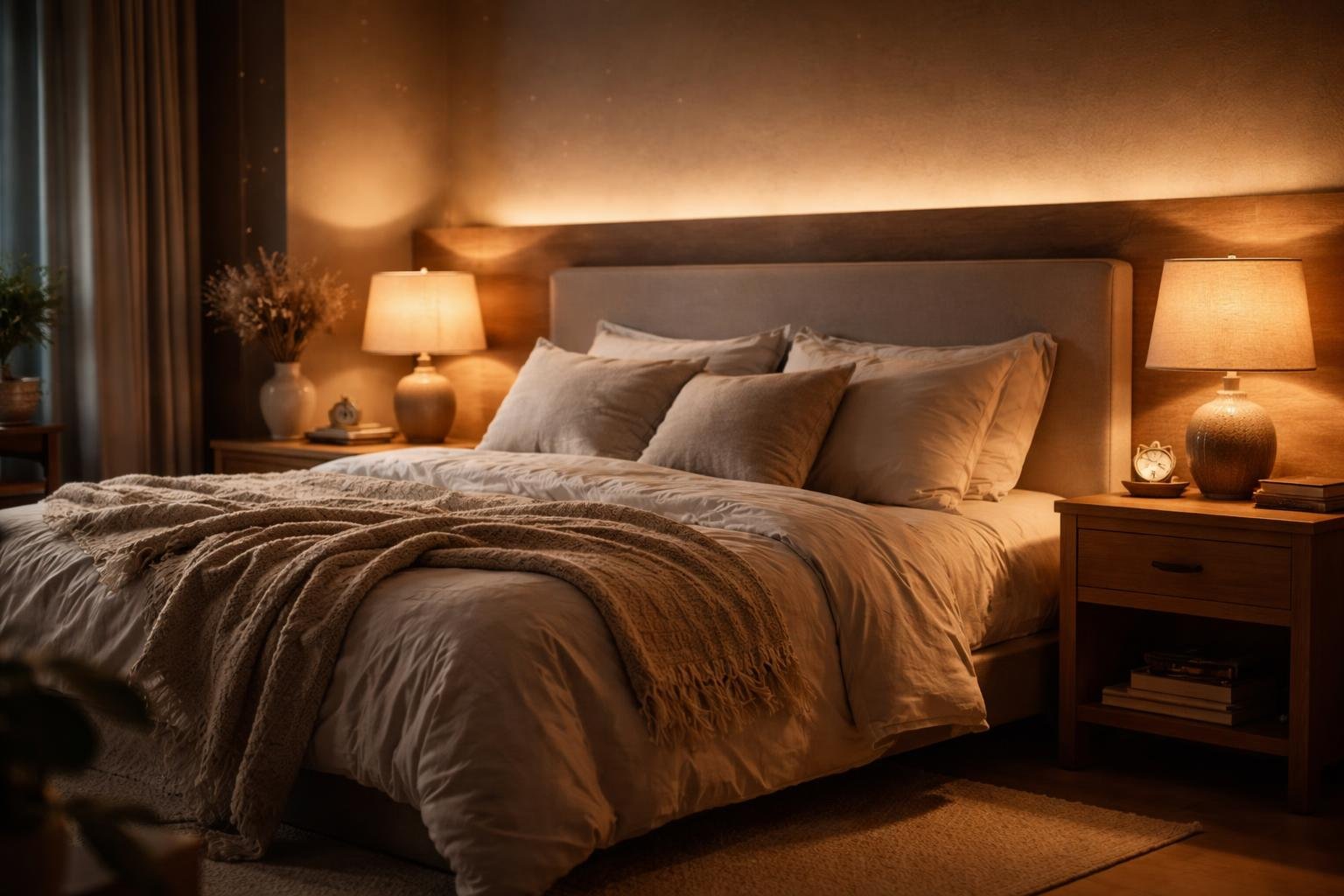
Good bedroom lighting requires multiple light sources at different heights and brightness levels. Layered lighting combines ambient, task, and accent lights[3] to give people control over their bedroom environment throughout the day and evening.
Installing Sconces and Dimmable Lights
Wall-mounted sconces work better than table lamps for many bedroom designs because they free up nightstand space and position light at the right height. The bottom of each sconce shade should sit 26 to 30 inches above the mattress top when someone sits up in bed. This angle directs light onto reading material without shining into a partner’s eyes.
Dimmer switches are essential for sleep-friendly lighting. They let people reduce brightness from 100 percent down to 10 percent in the 90 minutes before sleep. This gradual decrease helps signal the body that it’s time to rest.
Standard bedrooms need bulbs between 400 and 600 lumens for bedside reading. The color temperature should stay at 2700K or lower. Warmer tones in the 2200K to 2400K range work even better for the hour before sleep since they contain less blue light.
Creating Zones With Soft Lighting
Different zones in the bedroom need different types of lighting[7] to support various activities. A reading corner might use a small floor lamp at 2700K. The area near a dresser or closet needs brighter task lighting during morning routines but should have its own switch to keep it off at night.
Accent lighting adds depth without being too bright. LED strip lights behind a headboard or along the bed frame base create a soft glow when set to 2200K. This indirect lighting provides just enough visibility for moving around the room at night without triggering the full wake response.
Each zone should have independent controls so people can adjust what’s on and how bright it is based on what they’re doing.
Frequently Asked Questions
The right bedroom conditions involve specific temperature ranges, strategic lighting choices, and thoughtful design decisions that directly impact how well someone sleeps each night.
What bedroom temperature, humidity, and ventilation settings best support uninterrupted sleep?
The ideal bedroom temperature falls between 60 to 71 degrees Fahrenheit, though most sleep experts recommend staying on the cooler side[1] of this range. Lower temperatures help the body’s natural drop in core temperature that occurs during sleep.
Humidity levels should stay between 30 and 50 percent to prevent both dryness and excess moisture. Too much humidity can lead to mold growth and discomfort, while too little can cause dry skin and respiratory irritation.
Fresh air and proper ventilation are linked to better sleep quality[1]. Opening a window when weather permits or using a fan helps circulate air and maintain optimal temperature. Regular air circulation also reduces allergen buildup and keeps the bedroom environment healthier.
How should lighting be arranged in a bedroom to promote melatonin production and reduce nighttime awakenings?
Light serves as the most powerful signal for the body’s circadian rhythm, which controls sleep-wake cycles. The bedroom should be as dark as possible at night to support natural melatonin production.
Blackout curtains block exterior light from street lamps and early morning sun. Any bedside lamps should use bulbs with low color temperature and brightness levels to avoid disrupting drowsiness.
Electronic devices emit blue light that interferes with melatonin production. Screens from tablets, phones, and TVs should be avoided for at least an hour before bedtime[1]. If devices must stay in the bedroom, they should be placed out of arm’s reach and turned face-down to eliminate light.
Which colors, materials, and finishes create a calmer bedroom environment for better rest?
Soft, warm colors on walls, floors, and bedding help most people feel relaxed at bedtime[1]. Neutral tones, blues, greens, and earth tones work well for creating a peaceful atmosphere.
Natural materials like cotton, linen, and wood bring texture without overwhelming the senses. These materials are breathable and comfortable against the skin. Matte finishes on walls and furniture reduce glare and create a softer visual effect than glossy surfaces.
Personal preference matters when selecting colors and materials. Someone should choose what genuinely makes them feel calm rather than following trends that don’t resonate with their taste.
What are the most effective ways to reduce noise and improve soundproofing in a bedroom?
External noise causes frequent awakenings and reduces overall sleep quality[1]. Heavy curtains, rugs, and upholstered furniture absorb sound and dampen echoes within the room.
White noise machines mask disruptive sounds from traffic, neighbors, or household activity. These devices create consistent background sound that makes sudden noises less jarring. Fans also provide white noise while improving air circulation.
Playing calming music through speakers can help create a soothing environment[1] for falling asleep. Several mobile apps offer nature sounds, ambient music, or guided meditation designed for sleep.
How should furniture placement and room layout be planned to minimize clutter and encourage relaxation?
The bed should fit comfortably in the room without making the space feel cramped. A nightstand within easy reach provides a spot for essentials like water, glasses, or a book.
Vertical storage and underbed organizers maximize space in smaller bedrooms[1]. This approach keeps floor space clear and creates a more open feeling. Organized drawers and closets make morning routines smoother and reduce visual stress.
A clear path from the bed to the bathroom prevents tripping hazards during nighttime trips. Visual clutter creates stress and makes it harder to relax mentally[1], so keeping surfaces relatively clear supports better sleep.
What items and technologies should be removed or avoided in a bedroom to improve sleep quality?
Electronic devices represent the biggest category of items to remove from the bedroom. Televisions, computers, tablets, and smartphones all emit sleep-disrupting blue light and encourage mental stimulation when the brain should be winding down.
Work-related materials like laptops, files, and paperwork create mental associations between the bedroom and stress. The bedroom should be reserved for sleep and relaxation only. Exercise equipment can also make the space feel less restful.
Allergen sources need regular attention. Dust mites accumulate in bedding, carpets, and upholstery[1], so washing sheets weekly and vacuuming regularly reduces exposure. Air purifiers help people with allergies breathe easier at night.
Post Views: 15

























