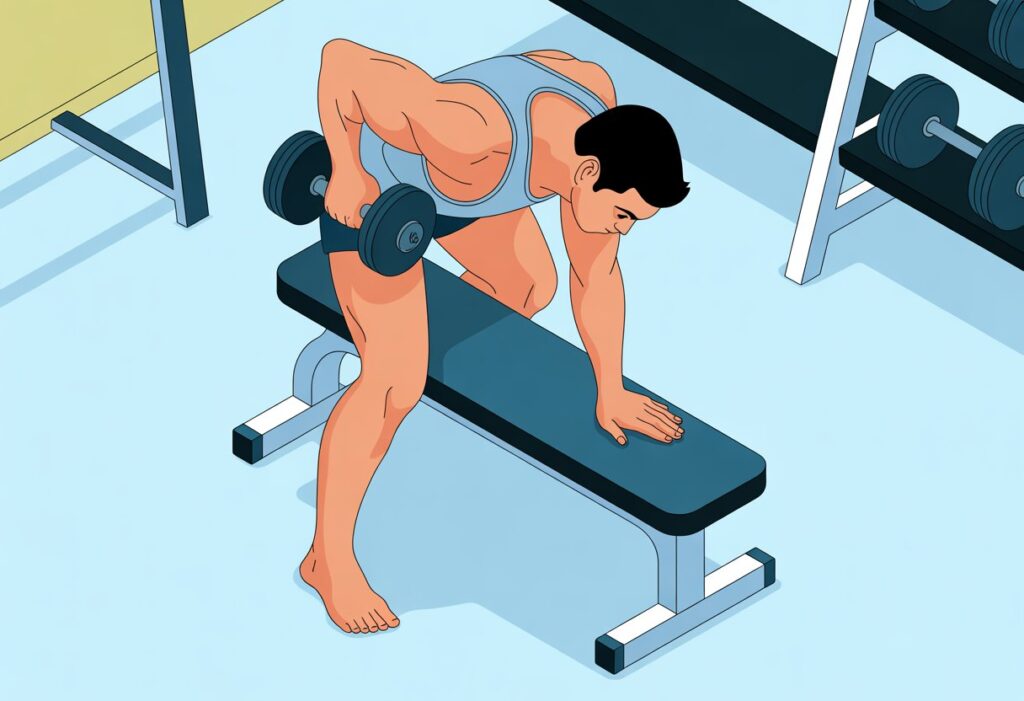
Medically Reviewed
Dr. Jose Rossello, MD, PhD, MHCM
Preventive Medicine & Public Health Specialist
Last Reviewed: May 5, 2026
A strong back supports good posture and helps people move through daily activities with less pain and discomfort. Building back strength through regular exercise can reduce injury risk and improve overall body stability[1]. Many people experience back weakness from sitting too much or not using the right muscles during movement.
Daily back exercises take only a few minutes and can be done at home with minimal equipment. These movements target different muscle groups in the upper back, lower back, and core. Simple exercises help strengthen the muscles that support the spine and protect it from strain.
Table of Contents
1) Cat-Cow spinal mobilization
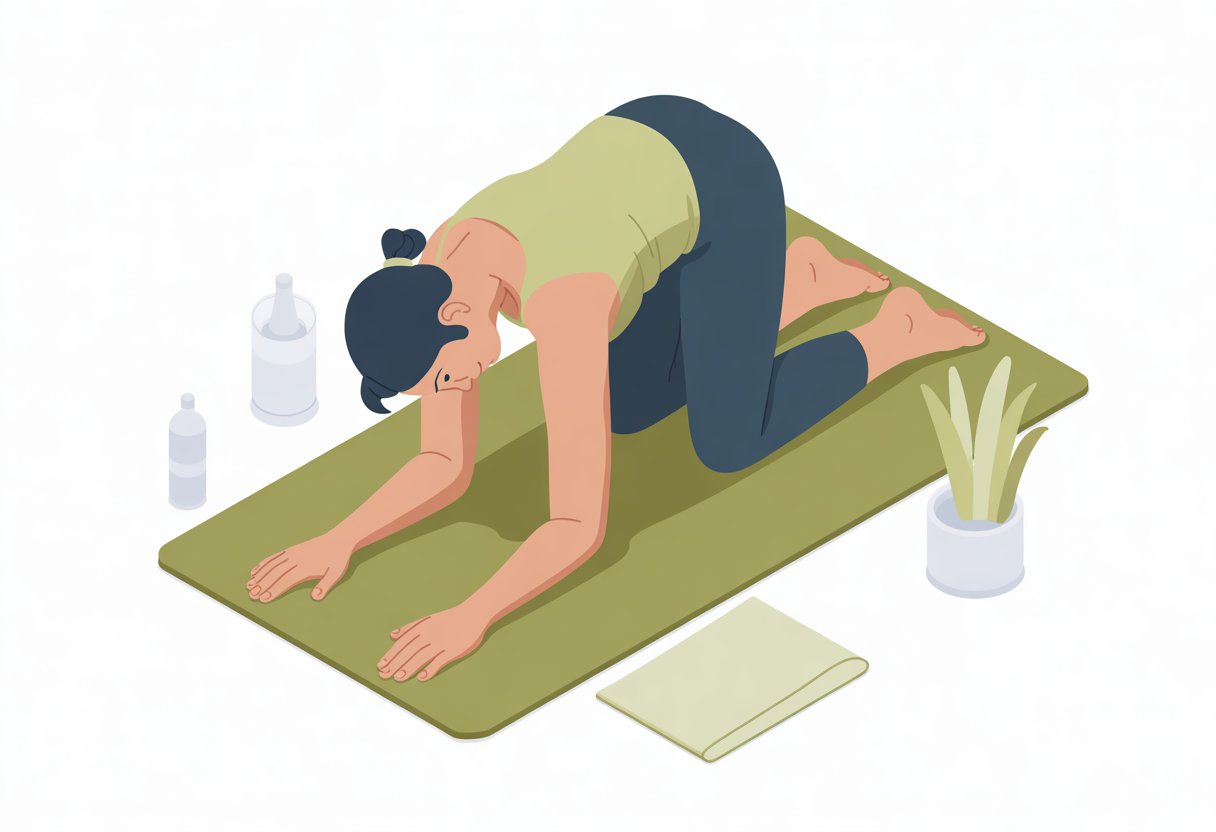
The cat-cow stretch helps arch and round the spine[2] to improve flexibility and strengthen the core. This exercise works each section of the spine to increase mobility.
To perform cat-cow, a person starts on their hands and knees. The hands should be directly under the shoulders. The knees should be under the hips.
For the cow position, the person arches their back and lets their belly drop toward the floor. The head lifts up and the gaze goes forward.
Elevate Your Health for Just $29.99/Month
Join the Precision Wellness Subscription at My Healing 365 and get discounted services, priority coaching access, virtual care, and exclusive wellness resources to support your physical, emotional, and hormonal health.
Join for $29.99/MonthFor the cat position, the spine rounds up toward the ceiling. The chin tucks toward the chest. The belly button pulls in.
The cat-cow stretch boosts upper body flexibility[3] when done regularly. Each movement should match with breathing. A person inhales during cow pose and exhales during cat pose.
This beginner-friendly stretch involves flexing and extending the spine[4] on hands and knees. Repeating this movement for one to two minutes helps ease tension in the back.
2) Bird Dog (opposite arm/leg extension)
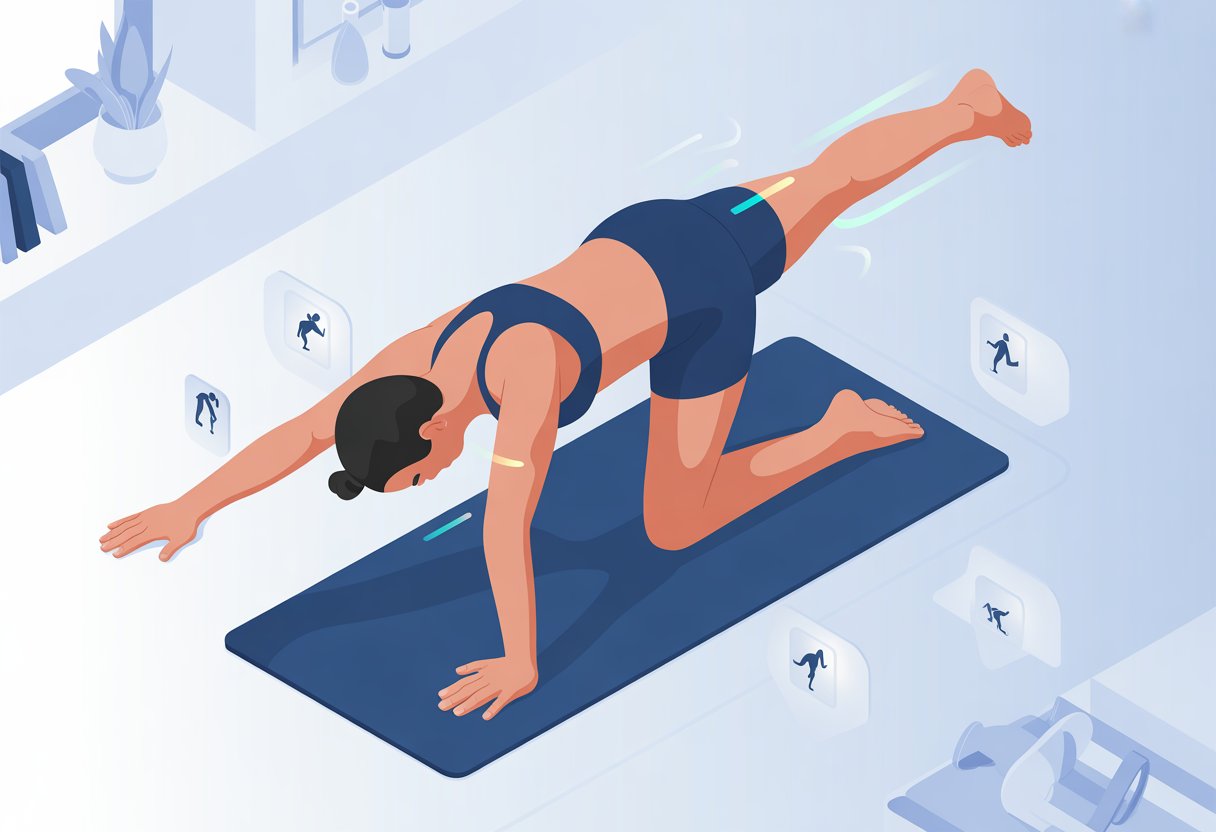
The bird dog exercise targets the erector spinae muscles[5] that run along both sides of the spine. It also works the rectus abdominis, commonly known as the six-pack muscle.
To start, a person should kneel on a mat with their knees hip-width apart and hands flat on the ground at shoulder-width. The core muscles need to stay tight throughout the movement.
The bird dog involves raising an arm and the opposite leg[6] while maintaining a neutral spine position. For example, lifting the right arm means extending the left leg at the same time. Both limbs should form a straight line with the back.
This exercise trains the body to stabilize the lower back[7] during arm and leg movements. The position should be held for a few seconds before returning to the starting position.
Each side should be worked evenly. A person should avoid arching their back or letting their hips rotate during the movement. The focus stays on controlled, steady motion rather than speed.
3) Glute Bridge Hold
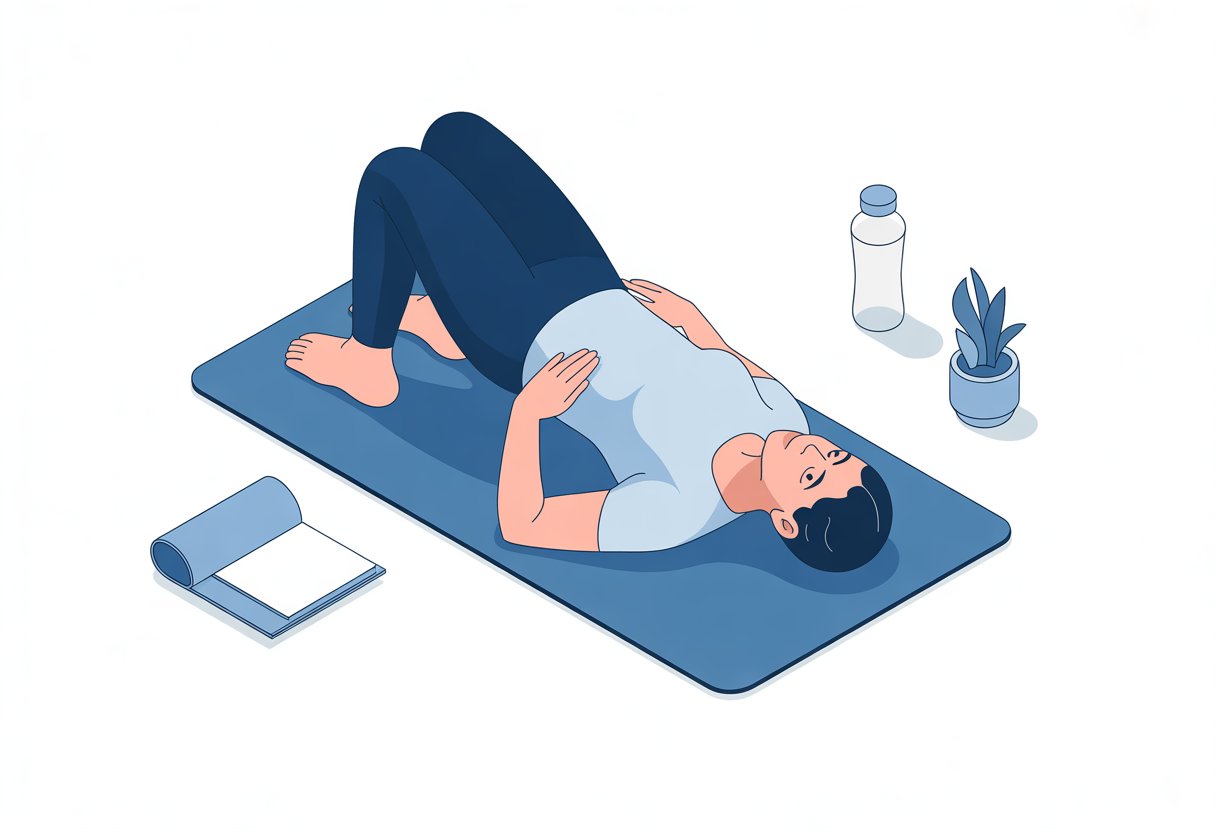
The glute bridge hold targets the posterior chain, including the glutes, hamstrings, and lower back. This exercise builds strength in muscles that support the spine during daily movements.
To perform a glute bridge[8], a person lies on their back with knees bent and feet flat on the floor. The feet should be hip-width apart and positioned close to the glutes. They press through their heels to lift the hips toward the ceiling until the body forms a straight line from shoulders to knees.
The key difference with the hold variation is maintaining this top position. Instead of immediately lowering back down, they hold the bridge for 20 to 30 seconds while keeping the core engaged and glutes squeezed.
Stronger glutes can reduce pain[9] and lower the risk of injury by supporting the hips, back, and knees. The exercise makes everyday activities like walking and climbing stairs feel easier.
People can make the glute bridge more challenging[10] by extending the hold time or elevating the feet on a step. Beginners should start with shorter holds and gradually increase duration as they build strength.
4) Standing T-band pull-apart
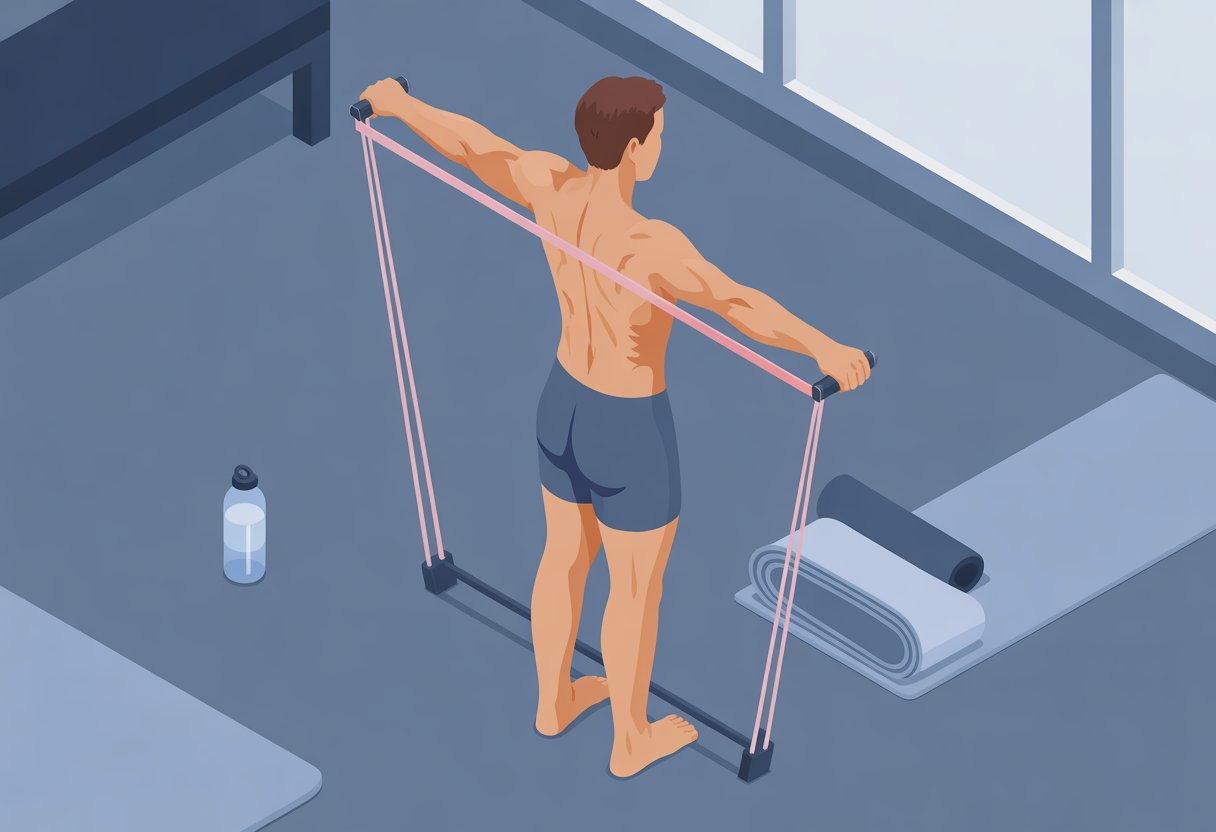
The standing T-band pull-apart targets the upper back and shoulders while promoting better posture. This variation adds a vertical component to the traditional band pull-apart exercise[11].
To perform this movement, a person starts by standing with feet shoulder-width apart. They hold a resistance band with both hands at chest height, arms extended straight out in front. The hands should grip the band about shoulder-width apart.
The exerciser pulls the band apart by moving both arms out to the sides until their body forms a T shape. The arms stay parallel to the floor throughout the movement. They squeeze their shoulder blades together at the end position.
Strengthening the upper back muscles[12] like the posterior deltoids, trapezius, and rhomboids helps support daily activities. These muscles work together to stabilize the shoulders and maintain good posture.
The person holds the T position for one to two seconds before slowly returning to the starting position. They should maintain control of the band during both the pulling and releasing phases. This exercise works well as part of a warm-up routine or as a high-repetition finishing movement.
5) Bent-over single-arm dumbbell row
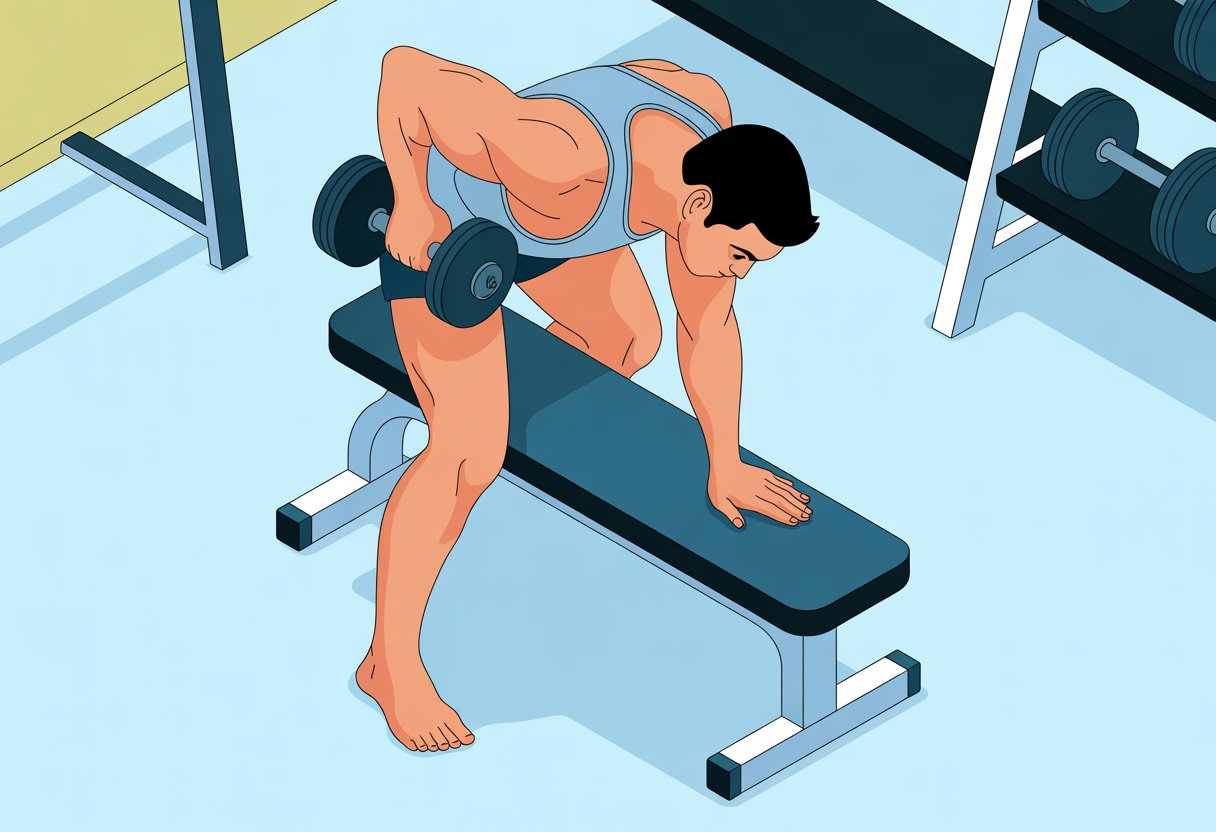
The bent-over single-arm dumbbell row targets the upper and middle back muscles. It works one side at a time, which helps fix strength imbalances between the left and right sides.
To perform this exercise, a person places one knee and hand on a bench for support. They hold a dumbbell in the opposite hand and let it hang straight down. The back stays flat and nearly parallel to the floor.
The movement involves pulling the dumbbell up toward the hip while keeping the elbow close to the body. The shoulder blade squeezes toward the spine at the top of the movement. They lower the weight back down with control.
Single-arm bent-over rows[13] allow for a greater range of motion compared to using both arms at once. This exercise also engages the core muscles, which work to keep the body stable during the rowing motion.
Most people should start with a moderate weight they can control for 8 to 12 repetitions. The focus should be on proper form rather than lifting the heaviest weight possible.
6) Resistance-band face pull
The resistance-band face pull targets the upper back muscles and rear shoulders. This exercise strengthens the rhomboids, rear deltoids, and rotator cuff muscles.
To perform the movement, a person anchors a resistance band at face height. They grasp both ends of the band and step back to create tension. The individual pulls the band toward their face while keeping their elbows high and squeezing their shoulder blades together.
Face pulls improve shoulder stability and posture[14], making them valuable for daily activities. The exercise counteracts the forward shoulder position that develops from desk work and phone use.
Most people should perform 3-4 sets of 12-20 repetitions. Training this movement 2-3 times per week builds stronger shoulders[15] and a more balanced upper body.
The band provides constant tension throughout the entire movement. This makes it effective for building muscle endurance and strength. Anyone can adjust the difficulty by choosing different band resistance levels or changing their distance from the anchor point.
7) Prone Superman Hold
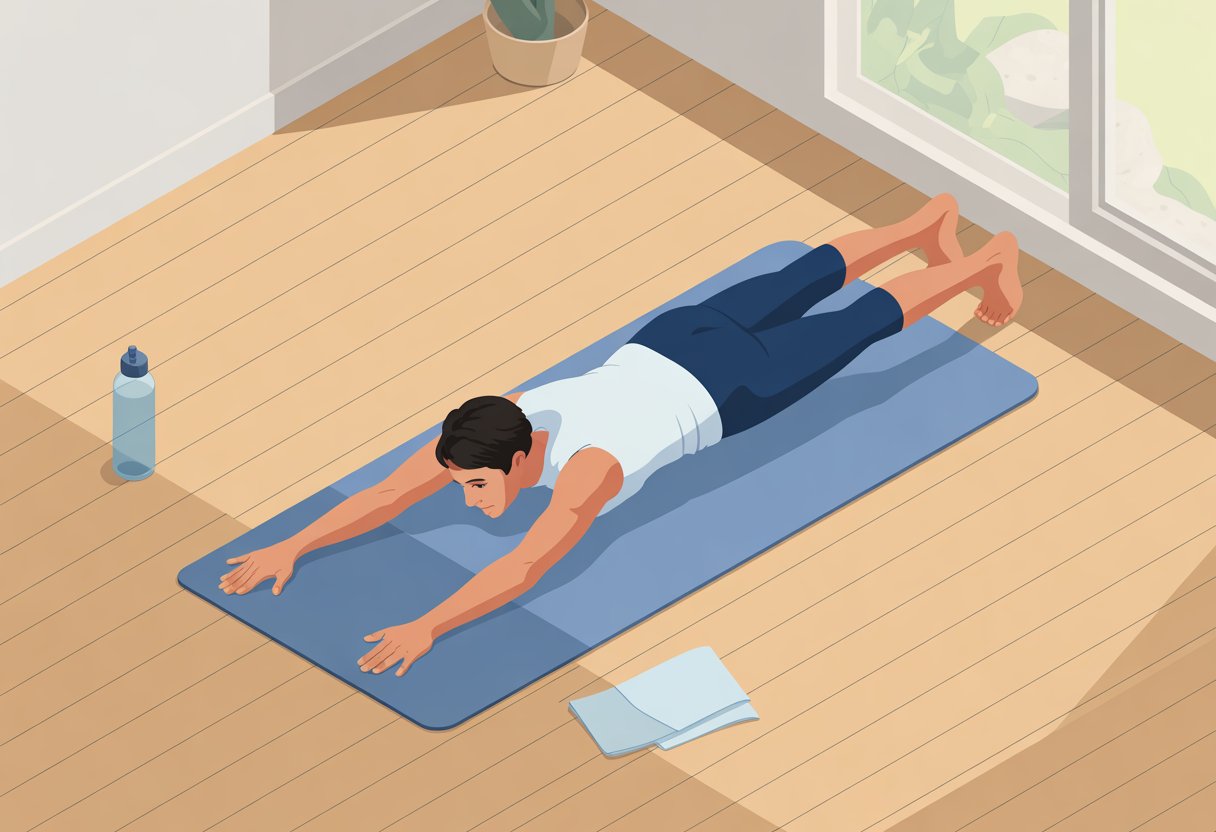
The prone Superman hold targets the lower back muscles and helps build strength throughout the entire posterior chain. This bodyweight movement improves spine health[16] and requires no equipment.
To perform this exercise, a person lies face down on the floor with arms extended overhead. They lift both arms and legs off the ground at the same time by contracting the lower back muscles. The body forms a gentle arc shape during the hold.
The position should be held for 15 to 30 seconds before lowering back down with control. Strong back muscles from exercises like this can help reduce pain and increase mobility[17].
Beginners can modify the movement by lifting just the arms or just the legs until they build enough strength. The exercise strengthens the posterior chain and improves flexibility[18] when done regularly.
People should keep their neck in a neutral position and avoid straining. The movement focuses on controlled muscle contraction rather than height. Three sets of holds work well for most fitness routines.
8) Dead Bug with Toe Taps
The dead bug with toe taps adds movement to the basic dead bug exercise[19]. This variation helps build core strength while improving coordination and balance.
To start, a person lies flat on their back with arms extended straight up toward the ceiling. They bend their knees at 90 degrees with shins parallel to the floor. This is the starting position.
The movement begins by slowly lowering one foot to tap the floor while keeping the knee bent. The opposite arm stays extended upward. After the toe touches down, they return to the starting position and repeat on the other side.
The key is maintaining a flat lower back pressed against the floor throughout the exercise. This protects the lower back[20] while working the core muscles effectively.
Beginners should perform 8 to 10 taps per side. They can rest between sets as needed. As strength improves, they can increase repetitions or slow down the movement for added challenge.
This exercise trains the deep core muscles that support the spine during daily activities.
9) Reverse fly on incline bench
The reverse fly on an incline bench[21] targets the upper back muscles and rear shoulders. This exercise helps improve posture and builds strength in areas that often get neglected.
To perform this movement, a person sets an adjustable bench to a 30-45 degree angle. They lie face down on the bench with their chest against the pad and feet planted firmly on the floor.
The person holds a dumbbell in each hand with arms hanging straight down. Palms should face each other to start. They lift both arms out to the sides while keeping a slight bend in the elbows. The movement stops when the arms reach shoulder height.
The incline reverse fly strengthens the back and shoulders[22] through controlled motion. A person should squeeze their shoulder blades together at the top of the movement. They lower the weights back down with control to complete one repetition.
This exercise works best with lighter weights and higher repetitions. Starting with 8-12 reps helps build endurance in the upper back muscles.
Understanding Common Causes of Back Weakness
Back weakness develops from specific lifestyle factors and physical habits that affect muscle strength and spinal alignment. Poor sitting habits, uneven muscle development, and incorrect body positioning create strain that weakens the back over time.
Muscle Imbalances
Muscle imbalances occur when certain muscle groups become stronger or tighter than their opposing muscles. The most common pattern involves weak back extensors paired with tight hip flexors and chest muscles.
When a person sits for long periods, their hip flexors shorten while their glutes and lower back muscles lengthen and weaken. This creates an uneven pull on the pelvis and spine. The abdominal muscles also play a key role—weak core muscles can cause stress on the back[23] and increase injury risk.
Upper back imbalances happen when chest muscles tighten from hunching forward while the upper back muscles stretch and weaken. This pulls the shoulders forward and strains the neck and mid-back. People who do repetitive movements or favor one side of their body often develop these imbalances.
Sedentary Lifestyle Effects
Extended sitting weakens back muscles because they remain inactive for hours each day. Muscles need regular movement and resistance to maintain their strength and function.
A sedentary lifestyle reduces blood flow to the back muscles, which limits nutrient delivery and waste removal. This makes the muscles less resilient to stress. The spinal discs also suffer from prolonged sitting as they rely on movement to stay hydrated and healthy.
People who sit for more than six hours daily face higher rates of back weakness and pain. Their stabilizing muscles lose the ability to support the spine properly during movement. Even simple tasks like lifting groceries or bending down become harder when back muscles lack regular activation.
Posture and Ergonomics
Poor posture creates ongoing strain that weakens back structures over time. Strain and poor posture[24] rank among the leading causes of back problems.
Slouching while sitting places extra pressure on the lower spine and stretches the back muscles into weakened positions. Standing with excessive lower back arch or forward head position also creates damaging stress patterns. These positions force certain muscles to work constantly while others barely engage.
Workplace ergonomics directly impact back health. A monitor placed too low causes neck and upper back strain. Chairs without proper lumbar support allow the lower back to round. Desks at the wrong height force awkward arm and shoulder positions that affect the entire spine. Making ergonomic adjustments helps maintain neutral spine alignment and reduces unnecessary muscle fatigue.
Tips for Safe and Effective Daily Exercise
Starting with a proper warm-up and using correct form protects the back from injury while building strength. Knowing when to rest prevents overtraining that can lead to setbacks.
Warm-Up Recommendations
A good warm-up increases blood flow to the back muscles and prepares them for exercise. Five to ten minutes of light activity raises body temperature and reduces injury risk.
Walking, marching in place, or doing arm circles gets the body ready. These activities should feel easy and comfortable. The person should break a light sweat but not feel tired.
Dynamic stretches work better than static stretches before exercise. Cat-cow stretches, gentle torso twists, and shoulder rolls prepare the spine for movement. These movements should flow smoothly without any jerking or bouncing.
The warm-up should target the specific muscles that will be used during the workout. Someone planning to do back strengthening exercises[25] should focus on loosening the shoulders, spine, and core muscles.
Proper Technique Essentials
Correct form matters more than the number of repetitions completed. Poor technique puts unnecessary stress on the spine and increases injury risk.
The core should stay engaged during all back exercises. This means pulling the belly button slightly toward the spine to create stability. A stable core protects the lower back from strain.
Movements should be slow and controlled in both directions. Rushing through exercises or using momentum reduces effectiveness and raises injury risk. Each repetition should take at least two to three seconds in each direction.
Key technique points:
- Keep the neck in a neutral position aligned with the spine
- Breathe steadily throughout each exercise
- Stop immediately if sharp pain occurs
- Start with easier variations before progressing to harder ones
Signs of Overtraining
The body needs rest days to repair and strengthen muscles. Exercising the same muscle groups every day prevents proper recovery and leads to decreased performance.
Persistent muscle soreness lasting more than 48 hours signals inadequate recovery time. Normal soreness should decrease within a day or two after exercise. Pain that worsens or doesn’t improve needs attention.
Fatigue, irritability, and trouble sleeping can indicate overtraining. Decreased motivation to exercise or a plateau in strength gains also suggests the body needs more rest. Most people should limit back-focused workouts to three or four days per week.
Sharp or shooting pain differs from normal muscle fatigue. Any pain that radiates down the legs, causes numbness, or feels like a stabbing sensation requires medical evaluation before continuing exercise.
Frequently Asked Questions
Back strengthening requires consistent practice with proper form and appropriate exercise selection based on individual needs and limitations. Most people can build significant strength with just bodyweight movements, though adding resistance helps target specific muscle groups more effectively.
Which daily exercises are most effective for building back strength at home?
The Cat-Cow spinal mobilization and Bird Dog are two of the most effective daily exercises for building back strength without equipment. These movements target the entire posterior chain while improving spinal mobility and stability.
Glute Bridges work the lower back, glutes, and hamstrings to create a strong foundation. Standing T-band pull-aparts strengthen the upper back muscles between the shoulder blades. When performed together, these exercises address all major back muscle groups.
What are the best no-equipment movements to strengthen the lower back and core?
Bird Dog stands out as one of the best calisthenics exercises[26] for strengthening both the lower back and core simultaneously. This movement requires the person to maintain a stable spine while extending opposite limbs.
Glute Bridge holds activate the erector spinae muscles along the spine while engaging the deep core stabilizers. Cat-Cow mobilizations prepare the spine for movement while building awareness of proper spinal positioning. These three exercises create a complete no-equipment routine for lower back and core development.
How can I modify back-strengthening exercises if I have lower back pain?
People with lower back pain should reduce the range of motion in exercises like Cat-Cow and Bird Dog until they can move without discomfort. Holding positions for shorter durations allows the muscles to adapt gradually without causing strain.
Glute Bridges can be modified by keeping the hips lower and focusing on gentle squeezes rather than maximum height. Someone experiencing pain should avoid holding their breath during exercises, as proper breathing helps stabilize the spine. If pain persists during any movement, they should stop and consult a healthcare provider.
Which weighted exercises are most effective for strengthening the back and hips?
Bent-over single-arm dumbbell rows target the latissimus dorsi, rhomboids, and trapezius muscles while requiring hip stability. This exercise builds both strength and coordination throughout the posterior chain.
Weighted Glute Bridges can be performed with a dumbbell or barbell across the hips to increase resistance. Romanian deadlifts strengthen the entire back and hip extension pattern when proper form is maintained. These weighted movements provide progressive overload that bodyweight exercises alone cannot match.
What are the safest core and back exercises for someone with scoliosis, and which should be avoided?
Cat-Cow mobilizations are generally safe for people with scoliosis because they promote controlled spinal movement in both directions. Bird Dog exercises help balance muscle development on both sides of the spine without forcing rotation.
Glute Bridges strengthen the supporting muscles around the spine with minimal spinal stress. People with scoliosis should avoid exercises that involve twisting under load or extreme spinal extension. They should also skip movements that cause them to lean heavily to one side or create uneven muscle tension.
How often should I do back-strengthening exercises to improve posture without overtraining?
Improving strength and mobility[27] requires performing back exercises three to four times per week with at least one rest day between sessions. This frequency allows muscles to recover while building strength progressively.
Daily practice of gentle mobilizations like Cat-Cow is safe and can help reduce pain[17] and improve posture awareness. However, strength exercises like Bird Dog and weighted rows need recovery time to prevent muscle fatigue and strain. Someone new to back training should start with two sessions per week and gradually increase frequency as their body adapts.
Post Views: 3
References
- The 10 Best Back Exercises (Updated 2026). https://jackedgorilla.com/best-back-exercises/ Accessed May 6, 2026
- Cat-Cow Stretch: How To Do It and Benefits. https://health.clevelandclinic.org/cat-cow-stretch Accessed May 6, 2026
- The Cat Cow stretch boosts upper body flexibility and strengthens your back and spine — here’s how to do it. https://www.tomsguide.com/wellness/fitness/the-cat-cow-stretch-boosts-upper-body-flexibility-and-strengthens-your-back-and-spine-heres-how-to-do-it Accessed May 6, 2026
- Back feeling weak or stiff? This is my favorite exercise to mobilize my spine first thing in the morning and last thing at night. https://www.fitandwell.com/exercise/flexibility/back-feeling-weak-or-stiff-this-is-my-favorite-exercise-to-mobilize-my-spine-first-thing-in-the-morning-and-last-thing-at-night Accessed May 6, 2026
- How to Do the Bird Dog Exercise: Tips and Variations. https://www.hingehealth.com/resources/articles/bird-dog/ Accessed May 6, 2026
- bird dog involves raising an arm and the opposite leg. https://www.womenshealthmag.com/uk/fitness/a61993976/bird-dog-exercise/ Accessed May 6, 2026
- Bird Dog | Exercise Library. https://www.acefitness.org/resources/everyone/exercise-library/14/bird-dog/ Accessed May 6, 2026
- glute bridge. https://www.verywellfit.com/how-to-do-the-bridge-exercise-3120738 Accessed May 6, 2026
- How to Do the Glute Bridge Exercise: Tips and Variations. https://www.hingehealth.com/resources/articles/bridge-exercise/ Accessed May 6, 2026
- Glute Bridge: How-to, Tips, Variations, Mistakes & More. https://www.hevyapp.com/exercises/how-to-glute-bridge/ Accessed May 6, 2026
- Resistance Band Pull-Aparts: Muscles Worked & Proper Form. https://legionathletics.com/band-pull-aparts/ Accessed May 6, 2026
- How To Do Resistance Band Pull Apart 2026: Tips, Benefits & More. https://www.endomondo.com/exercise/resistance-band-pull-apart Accessed May 6, 2026
- Dumbbell Rows for a Sculpted Back: Mastering the Bent Over Single Arm Row. https://julielohre.com/dumbbell-row-single-arm-bent-over-rows/ Accessed May 6, 2026
- Face Pulls with Resistance Band | Biceps, Biceps Brachii, Deltoid and more. https://nielasher.com/blogs/strength-and-conditioning/face-pulls-with-resistance-band Accessed May 6, 2026
- Face Pulls with Resistance Bands: Target Your Upper Back Muscles – Fitness Volt. https://fitnessvolt.com/resistance-band-face-pulls/ Accessed May 6, 2026
- Superman Exercise | Exercise Library. https://www.acefitness.org/resources/everyone/exercise-library/9/supermans/ Accessed May 6, 2026
- The Best At-Home Exercises for a Stronger Back. https://www.everydayhealth.com/fitness/best-home-exercises-stronger-back/ Accessed May 6, 2026
- No, not deadlifts — this exercise strengthens your posterior chain and improves flexibility, using just your bodyweight. https://www.tomsguide.com/wellness/fitness/no-not-deadlifts-this-exercise-strengthens-your-posterior-chain-and-improves-flexibility-using-just-your-bodyweight Accessed May 6, 2026
- basic dead bug exercise. https://www.menshealth.com/uk/how-tos/a61885316/dead-bug-exercise/ Accessed May 6, 2026
- I Did Dead Bugs Every Day For A Week. https://www.marieclaire.co.uk/life/health-fitness/dead-bugs-every-day Accessed May 6, 2026
- Incline Reverse Fly | Exercise Library. https://www.acefitness.org/resources/everyone/exercise-library/34/incline-reverse-fly/ Accessed May 6, 2026
- Incline Rear Delt Fly: Video Exercise Guide & Tips. https://www.muscleandstrength.com/exercises/dumbbell-reverse-fly-on-incline-bench.html Accessed May 6, 2026
- Best Exercises to Keep Your Back Strong and Pain-Free. https://mainstaymedical.com/best-exercises-to-keep-your-back-strong-and-pain-free/ Accessed May 6, 2026
- Back Pain Relief Exercises for Different Causes. https://www.physiomed.ca/back-pain-relief-exercises-best-moves-for-different-causes/ Accessed May 6, 2026
- 12 Best Back Strengthening Exercises to Prevent Injuries. https://www.hingehealth.com/resources/articles/back-strengthening-exercises/ Accessed May 6, 2026
- Build Strong Back at Home: 9 Calisthenics Back Exercises No Equipment. https://bodyweighttrainingarena.com/calisthenics-back-exercises-no-equipment/ Accessed May 6, 2026
- Improving strength and mobility. https://www.health.com/back-exercise-how-tos-11841759 Accessed May 6, 2026

























