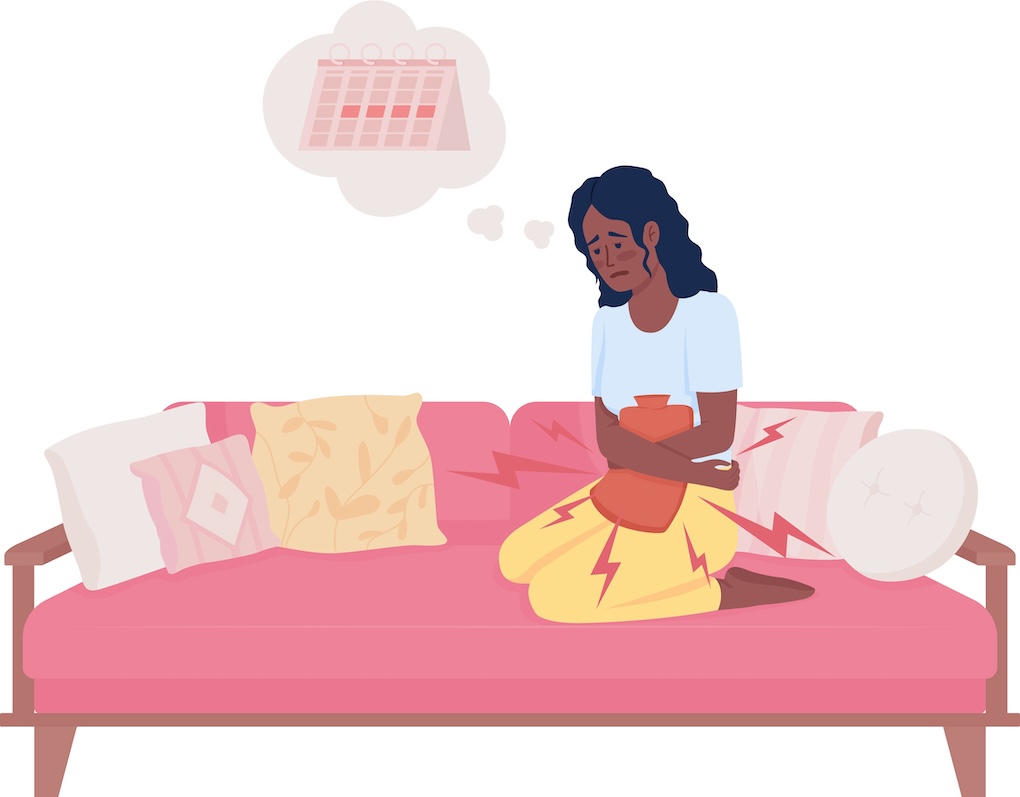
As conversations about reproductive justice and equitable care continue to grow, the American College of Obstetricians and Gynecologists’ (ACOG) new 2026 guidelines on endometriosis diagnosis arrive at a critical time. These guidelines mark a major shift in how endometriosis is diagnosed, moving away from surgical findings and toward symptom‑based evaluation. For Black women and girls, whose pain is too often overlooked, this shift could be life‑changing. Black Health Matters spoke with Dr. Charis Chambers, a board-certified OB-GYN and specialty-certified Pediatric & Adolescent Gynecologist, about the impact of these changes, the power of believing patients, and the importance of creating safe spaces for honest stories about women’s pain.
Table of Contents
BHM: The new 2026 ACOG guidance allows doctors to diagnose endometriosis based on symptoms and exam rather than requiring surgery. Can you explain what this shift really means for people who may not know, and why it matters for early diagnosis?
Dr. Chambers: It is important to understand what endometriosis is. By definition, it is when cells similar to the uterine lining are found outside the uterus—on the bladder, bowel, tubes, ovaries, even the lungs or brain. Historically, we required laparoscopy to diagnose it: entering the pelvis, visualizing lesions, and obtaining a biopsy for pathology.
There were two major problems with that. First, delay in care. Surgery is still surgery—patients must be medically optimized, take time off work, coordinate schedules, and meet insurance requirements. All of that delays diagnosis. Second, endometriosis is not limited to the pelvis, so relying on pelvic surgery alone meant we were missing cases.
The new guidelines redefine endometriosis as a systemic condition that affects the whole body, not just a gynecologic one. Naming it correctly matters. It allows us to diagnose earlier, treat sooner, and avoid unnecessary suffering.
BHM: How did the old system—especially the requirement for surgical confirmation—worsen delays for patients?
Dr. Chambers: It worsened delays because providers had to decide whether to take someone to the OR, and patients were not always believed. That threshold varied widely. We know Black women’s pain is less likely to be believed or treated, so getting a provider to advocate for surgery created huge barriers.
The average delay was seven years, sometimes ten or fifteen. That is devastating because endometriosis is chronic and progressive—it does not go away on its own.
Delays mean years of pain, missed work, lost wages, strained relationships, and impaired fertility. An earlier diagnosis could have changed many outcomes.
BHM: Severe period pain has been normalized for generations. How has this normalization disproportionately harmed Black women, whose symptoms are more likely to be dismissed?
Dr. Chambers: Normalizing period pain is incredibly harmful. It leads people to tolerate things they should never have tolerated. In my book, The Puberty and Period Parenting Revolution, I discuss the importance of understanding the difference between normal and abnormal.
If you cannot do your daily activities—school, work, sports—that is not normal. But stigma, patriarchy, and silence around periods have taught women, especially Black and Brown women, to endure suffering. Because our communities have been historically mistreated and made to feel “less feminine,” we often do not talk about our bodies. That silence perpetuates harm, and our youngest girls grow up believing pain is what they have to endure.
BHM: Can you explain the difference between normal and abnormal period pain?
Dr. Chambers: About 80–90% of people with periods will have some cramping that improves with rest, heat, or over-the-counter meds. That is normal.
Abnormal pain includes:
Elevate Your Health for Just $29.99/Month
Join the Precision Wellness Subscription at My Healing 365 and get discounted services, priority coaching access, virtual care, and exclusive wellness resources to support your physical, emotional, and hormonal health.
Join for $29.99/Month- Pain with nausea or vomiting
- Pain radiating down the legs
- Severe back pain
- Pain with urination or bowel movements
- Pain with intercourse
- Pain that worsens as bleeding continues
- Pain that persists even when you are not bleeding
Those symptoms should prompt evaluation. Understanding this difference helps people seek care sooner.
BHM: Many teens are prescribed birth control for severe period pain. What is your perspective on being over‑prescribed or overlooked when the underlying issue might be endometriosis?
Dr. Chambers: Birth control is an appropriate treatment for period pain. It stabilizes hormone levels, keeps the uterine lining thinner, and reduces bleeding and pain. The issue is not the medication—it is how it is prescribed.
Too often, people are put on birth control without understanding why, and without a proper evaluation. I always try to diagnose the cause by ultrasounds, exams, and whatever tools we have. But we cannot always find the root cause because science is still evolving.
I tell patients I will not withhold effective treatment just because I do not have a perfect diagnosis. Birth control is medicine. It is unfairly critiqued because it involves the female body.
BHM: What should Black families and caregivers know about advocating for teens whose pain is dismissed as “normal”?
Dr. Chambers: Families should know that suffering is not required. Periods should not derail a child’s life. And parents deserve grace because many were never taught this themselves.
That is why I wrote my book: to give families the language and tools they never received. If we care for our youngest Black girls—the most vulnerable—we will care for everyone better.
Parents do not need to be experts. They just need to be aware, informed, and willing to bring in specialists. I see patients as young as four. If your child has the anatomy, they can have the condition. Endometriosis and ovarian cysts start far younger than we once believed.
Ignoring symptoms leads to diagnostic delay and unnecessary suffering. This generation has the opportunity and responsibility to do better.
BHM: What systemic changes are still needed to close racial and socioeconomic gaps in endometriosis diagnosis and pain care?
Dr. Chambers: I am encouraged by the new guidelines because they explicitly name systemic bias and racism, but we need a bigger change. Future physicians must be trained to:
- Understand the importance of early, accurate diagnosis
- Recognize how their bias affects patient outcomes
- Believe patients
- Practice compassion, curiosity, and competence
If someone cannot do that, they should choose another career. We must demand more from physicians.
BHM: What about physicians who have been practicing for decades? How do you see them responding to new guidelines and reducing racial bias?
Dr. Chambers: Most people do not willingly change, especially if they are comfortable. That is why the field must apply pressure—by holding colleagues accountable, bringing it up in meetings, and elevating it in continuing medical education.
Guidelines matter. They are protective. They define the standard of care. I hope that as these guidelines become more widely known, physicians will adopt them because they are well-written, clear, and backed by professional societies. Reinforcing this at every step is necessary.
BHM: How can families become aware of the new guidelines, especially when there are health literacy barriers or when physicians are not following them?
Dr. Chambers: It is difficult because ACOG guidelines are behind a paywall. This is a long‑standing issue in medicine because our most important discoveries are often only accessible to physicians.
ACOG posted the guideline on Instagram, so that is how I found out. None of my colleagues had seen it yet. So those who know must share widely.
People do not read medical journals. It must be accessible, understandable, and public. That is my biggest hope.
BHM: What additional details or advice do you want readers to know?
Dr. Chambers: This is a moment of change, possibility, and opportunity. We must acknowledge how the system has failed Black women and people with endometriosis for years, but I am cautiously optimistic.
Change must happen in hospitals, medical schools, families, and communities. It must be led with honesty and grace. Talk about your pain. Make sure your children feel safe talking about theirs. Believe them. Get them the help they need.

























