
Medically Reviewed
Dr. Jose Rossello, MD, PhD, MHCM
Preventive Medicine & Public Health Specialist
Last Reviewed: April 4, 2026
Your hair probably isn’t living up to its potential, and the problem isn’t genetics or luck. Most people use random products without a clear plan, washing too often or too little, and wondering why their hair looks dull or damaged. Building a perfect hair routine means understanding your specific hair type, choosing products that match your needs, and following consistent steps for washing, conditioning, and protecting your strands.
The difference between good hair days and great hair weeks comes down to structure. A well-designed hair care routine[1] isn’t about buying expensive products or spending hours in front of the mirror. It’s about knowing what your hair actually needs and giving it the right care at the right time.
This guide breaks down everything needed to create a routine that works. From identifying hair texture and porosity to choosing the right washing schedule and treatments, each step builds on the last to create healthier, stronger, and better-looking hair.
Table of Contents
Key Takeaways
- Identify your hair type and specific concerns to choose products and techniques that actually work for your texture
- Follow a consistent routine with proper washing frequency, conditioning methods, and regular deep treatments
- Protect hair from heat and environmental damage while adjusting your routine based on seasonal changes and results
Understanding Your Hair: Type, Texture, and Porosity
Your hair’s behavior depends on three core factors working together: its natural curl pattern, the thickness and density of individual strands, and how well it absorbs and holds moisture. Getting these basics right means you stop buying products that don’t work and start building routines that actually fit your hair’s needs.
How to Identify Your Hair Type
Hair type refers to the natural shape and pattern hair forms as it grows from the scalp. The standard system runs from Type 1 to Type 4, with subcategories A, B, and C marking increasing texture intensity.
Straight hair (Type 1) lies flat without bends or waves. Type 1A appears ultra-fine and sleek, 1B has medium thickness with slight body, and 1C features coarse strands with subtle bends near the ends.
Wavy hair (Type 2) forms loose S-shaped patterns. Type 2A shows gentle waves starting mid-length, 2B creates more defined S-curves from roots down, and 2C produces thick waves that border on curls.
Curly hair (Type 3) creates distinct spirals. Type 3A forms loose, bouncy ringlets about sidewalk chalk-sized in diameter. Type 3B produces tighter springy curls around Sharpie marker width. Type 3C develops tight corkscrew patterns.
Coily hair (Type 4) coils tightly with significant shrinkage. Type 4A has soft, defined coils. Type 4B forms Z-shaped angles. Type 4C features the tightest, densest coil pattern with minimal definition.
Most people have multiple hair types across different areas of their scalp[2] due to genetic variations in follicle shape.
Determining Hair Texture and Density
Hair texture measures the thickness of individual strands, which affects manageability and product needs. Fine hair measures less than 50 microns in diameter and feels soft and silky but breaks easily. Normal hair ranges between 60-80 microns with moderate strength. Coarse hair exceeds 80 microns, feeling thick and resilient to damage.
Hair density describes how many strands grow per square inch of scalp. Low density shows visible scalp when hair is parted. Medium density covers the scalp without appearing overly thick. High density creates full volume with minimal scalp visibility.
To test texture, take a single strand between fingers. If it’s barely noticeable, the hair is fine. If it feels present but not rough, it’s normal. If it feels thick and wiry, it’s coarse.
Density affects styling differently than texture does. Fine, high-density hair can appear fuller than coarse, low-density hair despite thinner individual strands.
Understanding Hair Porosity and Elasticity
Hair porosity measures how well strands absorb and retain moisture, directly impacting which products work. Low porosity hair has tightly closed cuticles that resist water absorption. Products sit on the surface rather than penetrating. Heat helps open cuticles for better product absorption.
Normal porosity maintains balanced moisture levels with moderately open cuticles. Hair accepts and retains products well without special techniques.
High porosity features raised or damaged cuticles that absorb moisture quickly but lose it just as fast. Hair feels dry shortly after washing and benefits from heavier, sealing products.
The float test reveals porosity: place a clean strand in water. Hair that sinks immediately has high porosity. Hair that floats has low porosity. Hair that suspends in the middle has normal porosity.
Hair elasticity indicates strand strength and follicle health. Healthy hair stretches 30-50% when wet and returns to its original length. Hair that snaps immediately lacks moisture. Hair that stretches without returning has protein damage. Proper moisture balance between protein and hydration keeps elasticity optimal for managing different hair textures[3] effectively.
Setting Your Hair Care Goals
Before building an effective hair care routine, a person needs to identify what they want to achieve and understand their current hair health. Pinpointing specific concerns and setting achievable targets creates a foundation for choosing the right products and methods.
Assessing Hair Concerns and Needs
The first step involves examining hair for common issues like dryness, breakage, frizz, thinning, or split ends. Someone should also identify their hair type[1]—whether it’s straight, wavy, curly, or coily—since texture affects which products work best.
Hair concerns vary widely between individuals. A person with color-treated hair might need extra moisture and UV protection, while someone with an oily scalp requires different washing habits. Noting whether hair feels brittle, lacks shine, or tangles easily helps narrow down what the routine should address.
Physical signs tell the story. Split ends indicate damage that needs regular trims. Flaking or itching points to scalp health issues. Slow hair growth might mean focusing on scalp care and nutrition[1]. Writing down these observations creates a clear picture of where hair health stands today.
Creating Realistic Hair Objectives
Once concerns are clear, setting specific and achievable goals guides the entire hair care routine. Instead of vague wishes like “better hair,” a person should aim for measurable targets such as reducing breakage by half within three months or adding one inch of hair growth in six months.
Goals should match the hair’s current condition. Someone with severely damaged hair won’t see overnight transformation. They might set a goal to restore moisture and strength before focusing on length. Building consistency into the routine[4] for several weeks allows time to see real changes.
Short-term objectives keep motivation high. These might include using a deep conditioning mask weekly or reducing heat styling to twice per week. Long-term goals could involve growing hair to a specific length or maintaining healthy hair after color treatment. Breaking larger aims into smaller steps makes progress easier to track and adjust as needed.
The Foundations: Cleansing and Conditioning
Cleansing and conditioning[5] form the core of any effective hair care routine. These two steps work together to remove buildup, restore moisture, and maintain healthy hair from root to tip.
Choosing the Right Shampoo and Conditioner
Selecting products that match specific hair needs makes a significant difference in hair health. Fine hair benefits from lightweight formulas that cleanse without weighing down strands, while coarse or curly hair requires more moisturizing options to combat dryness and frizz.
Sulfate-free shampoo offers gentler cleansing for color-treated or sensitive scalps. Those dealing with product buildup should use a clarifying shampoo once or twice monthly to remove residue from styling products and hard water minerals. A co-wash (cleansing conditioner) works well for very dry or curly hair types that don’t need frequent traditional shampooing.
People with oily scalps need products that thoroughly cleanse the scalp without stripping natural oils. Those experiencing flaking may need a dandruff shampoo with active ingredients like zinc pyrithione or salicylic acid. However, dry scalp often requires a hydrating conditioner rather than medicated formulas, since flaking frequently results from dehydration rather than dandruff.
The right shampoo and conditioner pair should address both scalp health and hair texture needs simultaneously.
Mastering Your Wash Day Routine
The double wash method[6] maximizes cleansing effectiveness while minimizing product waste. The first wash with a pea-sized to quarter-sized amount loosens dirt, oil, and buildup from the scalp. This initial cleanse rarely produces many suds, especially on dirty hair.
The second wash actually cleanses the hair and should create the expected lather. Both applications should focus on the scalp rather than the hair lengths, using fingertips to massage gently in circular motions.
Wash day frequency depends on hair type and lifestyle factors. Oily or fine hair may need washing every one to two days, while thick, curly, or coily hair often does well with weekly washing. People who exercise frequently or live in humid climates might need more frequent cleansing to manage sweat and oil.
Water temperature matters during the cleansing process. Warm water opens the hair cuticle for thorough cleaning, while a cool rinse at the end helps seal the cuticle and add shine.
Conditioning Techniques for Optimal Results
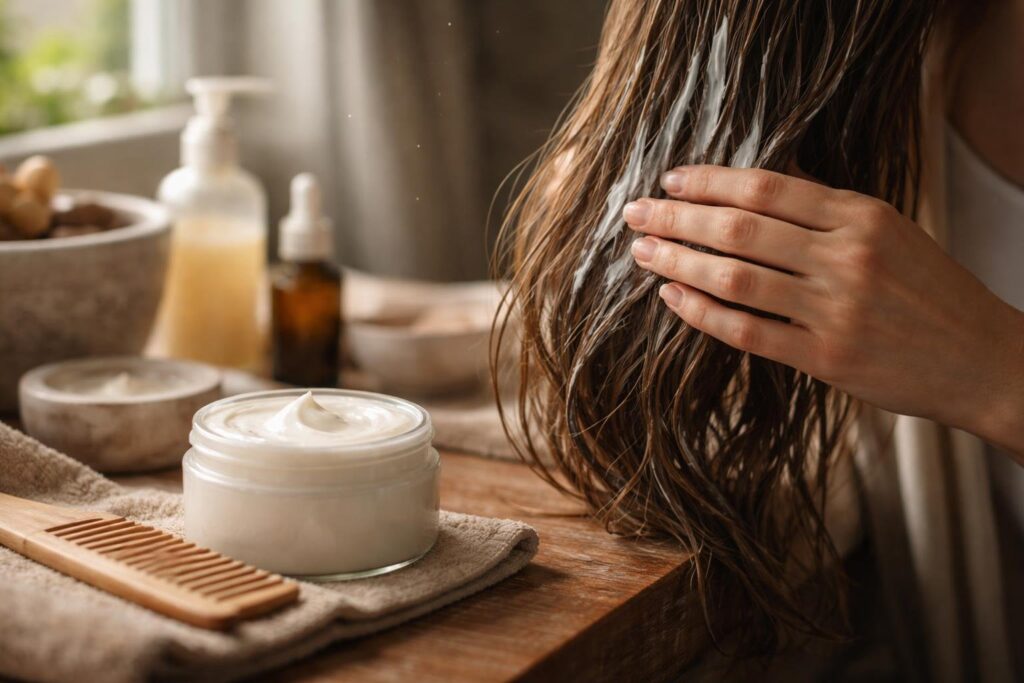
Conditioning hair properly requires applying product from mid-length to ends, avoiding the scalp unless using a specific scalp treatment. The cuticle opens slightly during shampooing, and conditioner helps lower the pH back to normal levels while sealing the cuticle closed.
Leaving conditioner on for three to five minutes allows ingredients to penetrate the hair shaft. Those with very dry or damaged hair can benefit from leaving it on longer or applying a deep conditioning treatment weekly.
Different hair types need varied amounts of product. Fine hair requires lighter application to prevent limpness, while thick or coarse textures can handle more generous amounts. Curly and coily hair particularly benefits from thorough conditioning to maintain moisture and reduce frizz.
Rinsing thoroughly removes excess product that could cause buildup or greasiness. A final cool water rinse adds extra shine and helps lock in moisture from the conditioning treatment.
Detangling and Prepping for Styling
Proper detangling protects hair from breakage and improves manageability before styling. Using the right techniques and tools makes this process easier and less damaging for all hair types.
Elevate Your Health for Just $29.99/Month
Join the Precision Wellness Subscription at My Healing 365 and get discounted services, priority coaching access, virtual care, and exclusive wellness resources to support your physical, emotional, and hormonal health.
Join for $29.99/MonthGentle Detangling Methods
Working in small sections[7] helps prevent unnecessary pulling and tension on the hair. This method works especially well for curly and coily textures that tangle easily.
Always start detangling from the ends and work up toward the roots. This approach prevents knots from getting tighter as you brush or comb through the hair. Pulling a comb from root to tip forces tangles downward and creates more knots.
Wet hair detangles better than dry hair for most textures. Adding a leave-in conditioner or detangling spray creates slip, which helps the comb glide through tangles more smoothly. The extra moisture softens knots and reduces friction between strands.
Patience matters during this step. Rushing through tangles leads to broken strands and split ends. Taking extra time to gently work through each knot preserves hair strength and length.
Tools for Safe Detangling
A wide-tooth comb remains the safest option for detangling, particularly for curly and coily hair types. The wider spacing between teeth reduces breakage by working through tangles without pulling out healthy strands.
Paddle brushes work well for straight and wavy textures. Look for brushes with flexible bristles that bend when they hit resistance. Some brushes feature both coarser bristles at the base and softer ones in between to handle different tangle types.
Never use small-tooth combs or round brushes for detangling. These tools grab too much hair at once and create tension that leads to breakage. Save fine-tooth combs for styling finished looks instead of your daily hair maintenance[8] tasks.
Deep Care: Masks, Treatments, and Scalp Health
Regular shampooing and conditioning only address surface-level needs, while deep treatments penetrate the hair shaft to repair damage and restore moisture. A healthy scalp provides the foundation for strong hair growth and prevents common issues like flaking, excess oil, and irritation.
Incorporating Hair Masks and Deep Conditioning
A hair mask differs from regular conditioner by containing concentrated ingredients that work over 10 to 30 minutes instead of just a few seconds. Deep conditioning treatments restore moisture to dry, damaged strands while protein-based masks rebuild weakened hair structure.
People with dry or curly hair benefit from weekly hydrating masks containing coconut oil, argan oil, or shea butter. Those with chemically treated or heat-damaged hair should alternate between moisture and protein treatments to prevent brittleness or limpness.
Application matters as much as product choice. The mask should be applied to damp, towel-dried hair from mid-lengths to ends, avoiding the roots unless treating the scalp. Covering hair with a shower cap traps heat and helps ingredients penetrate deeper into the hair shaft.
Most people see results after four weeks of consistent weekly use. Hair masks provide deep nourishment[9] when integrated into a regular routine, making them essential rather than optional for maintaining hair health.
Caring for Your Scalp
Scalp health determines how well hair grows and how it looks at the roots. A balanced scalp produces the right amount of natural oils without excess buildup or dryness.
Scalp care routines[10] should include weekly treatments that address individual needs. Dry scalp responds well to masks containing aloe vera, tea tree oil, or hydrating ingredients. Oily scalp benefits from clarifying treatments with salicylic acid or charcoal that remove buildup without stripping essential moisture.
Massaging the scalp during treatment application improves blood circulation and helps products absorb better. People should section hair and apply products directly to the scalp, leaving them on for 10 to 20 minutes before rinsing thoroughly.
Natural oils like rosemary oil, olive oil, and jojoba oil nourish the scalp when used in moderation. These should be applied sparingly and massaged in gently to avoid weighing down hair or creating greasiness.
Handling Scalp Issues
Common scalp problems include flaking, itching, excess oil production, and sensitivity. Each issue requires specific treatments rather than generic solutions.
A scalp scrub removes dead skin cells and product buildup that regular shampooing misses. These exfoliating treatments work best when used once or twice monthly, not weekly, to avoid irritation. People with sensitive scalps should choose gentler formulas without harsh physical scrubbers.
Scalp irritation often stems from product reactions, environmental factors, or imbalanced pH levels. Scalp treatments designed for sensitive skin[11] contain soothing ingredients like chamomile or centella asiatica that calm inflammation without harsh chemicals.
Persistent issues like severe flaking, pain, or unusual hair loss require professional evaluation. A dermatologist can diagnose underlying conditions like seborrheic dermatitis or psoriasis that need medical treatment beyond over-the-counter products.
Protecting and Styling Your Hair
Heat styling tools and environmental factors can weaken hair over time, but the right products and techniques keep strands healthy while achieving any desired look. Proper protection, controlled heat application, and targeted styling products make the difference between damaged hair and a polished finish.
Using Heat Protectant and Styling Products
A heat protectant spray forms a barrier between hair and hot tools, reducing moisture loss and preventing damage. Users should apply heat protectant before styling[1] with blow dryers, flat irons, or curling tools to shield the cuticle from temperatures that can reach 400°F or higher.
The product works best when distributed evenly through damp hair, from roots to ends. Spray formulas provide light coverage for fine hair, while cream-based protectants suit thicker or coarser textures.
Styling products should layer in a specific order for best results. After heat protection, users can add volumizing mousse at the roots or smoothing cream through the lengths. Leave-in conditioners boost moisture, while gels or pomades define curls and control flyaways. Each formula absorbs differently, so applying them in the right sequence prevents buildup and ensures every product performs as intended.
Safe Heat Styling and Blow Drying
Setting heat tools to the lowest effective temperature protects hair from unnecessary damage. Fine or damaged hair responds well to settings between 250°F and 300°F, while thick or coarse hair may need temperatures up to 350°F.
When blow drying, users should keep the nozzle moving and maintain at least six inches of distance from the scalp. A round brush lifts roots for volume and smooths the cuticle as hair dries. Cool settings on the blow dryer seal the cuticle after styling, which locks in shine and reduces frizz.
A diffuser attachment works well for curly hair, dispersing airflow to dry curls without disturbing their pattern. Straighteners and flat irons should glide through sections just once or twice to avoid heat exposure. Limiting heat styling to two or three times per week gives hair time to recover between sessions.
Daily Frizz Control and Shine
Smoothing serums and lightweight oils tame frizz without weighing hair down. A small amount rubbed between palms and applied to the mid-lengths and ends adds instant shine and seals the cuticle.
Humidity causes the hair shaft to swell and frizz, so anti-frizz products with silicones or plant oils create a moisture barrier. Users with curly or wavy hair benefit from curl creams that define texture while controlling flyaways.
Finishing sprays lock styles in place and add shine[12] for a polished look. Dry shampoo absorbs excess oil at the roots between washes, maintaining volume and freshness. Regular use of these targeted products keeps hair manageable throughout the day, regardless of weather or activity level.
Special Considerations & Customization
Building a hair care routine[13] requires adjustments based on individual hair characteristics and changing conditions throughout the year. Different hair types need specific approaches, while seasonal shifts demand protective strategies to maintain healthy hair.
Tailoring Routines for Different Hair Types
Fine hair needs lightweight products that won’t weigh it down. People with this hair type should use volumizing shampoos and skip heavy oils or creams. They benefit from washing more frequently to prevent buildup.
Curly and coily hair requires extra moisture and gentle handling. These textures thrive with sulfate-free cleansers and rich conditioners. A basic hair care routine[14] for curly hair includes deep conditioning treatments weekly and leave-in products to define curls.
Oily hair types need balancing products that cleanse the scalp without stripping it completely. Washing every other day with a clarifying shampoo helps manage oil production. Light conditioners applied only to the ends prevent the roots from becoming greasy.
Color-treated hair demands special attention to prevent fading and damage. Color-safe shampoos, UV protection, and regular protein treatments keep dyed hair vibrant. Heat styling should be limited to protect the hair’s weakened structure.
Managing Seasonal and Environmental Changes
Winter weather strips moisture from hair, causing dryness and static. During cold months, people should increase their use of deep conditioning masks and hair oils. Wearing protective styles and hats helps shield hair from harsh winds.
Summer brings different challenges with sun exposure and humidity. Protecting your hair from UV rays prevents color fading and protein breakdown. Weekly clarifying treatments remove chlorine and salt buildup from swimming.
Humidity levels affect how products perform throughout the year. Anti-frizz serums work better in humid climates, while moisturizing products become essential in dry environments. Seasonal needs[15] change every few months, so adjusting product selection and frequency of treatments ensures hair stays healthy year-round.
Maintenance and Long-Term Hair Health
Keeping hair healthy over time requires regular upkeep and careful observation. Consistent trims prevent damage from spreading, while tracking changes helps refine product choices and techniques for better results.
Regular Trims and Preventing Split Ends
Trimming every 6-8 weeks[1] stops split ends from traveling up the hair shaft and causing more damage. Even a quarter inch cut makes a difference in maintaining strength and appearance.
Split ends happen when the protective outer layer of hair wears away. Heat styling, chemical treatments, and friction from brushing all contribute to this breakdown. Once the hair splits, it cannot repair itself.
People who wear hair extensions need to pay extra attention to their natural hair underneath. Clip-in hair extensions should be removed before bed to reduce tension on the roots. The attachment points need gentle handling during washing and styling.
To prevent breakage between trims, individuals should use wide-tooth combs on damp hair and avoid tight hairstyles. Sleeping on silk or satin pillowcases reduces friction that can weaken strands overnight. Products with proteins and moisturizers help reinforce the hair structure from within.
Tracking Progress and Adjusting Your Routine
Monitoring how hair responds to a routine reveals what works and what needs changing. Taking photos every few weeks helps track improvements in shine, thickness, and overall condition that might not be obvious day to day.
Signs that adjustments are needed include increased dryness, excess oiliness, or more shedding than usual. These changes often mean products are too heavy, too stripping, or not matched to current hair needs. Seasons also affect hair, requiring lighter products in summer and richer formulas in winter.
A simple journal noting wash days, products used, and how hair feels helps identify patterns. If hair becomes limp, switching to a clarifying shampoo once a month removes buildup. If it feels rough, adding a leave-in treatment or adjusting to seasonal needs[1] with more moisture helps restore softness.
Giving new products at least three to four weeks allows enough time to see real changes before making another switch.
Frequently Asked Questions
Building a hair routine requires understanding basic steps, identifying your specific hair needs, and using the right products and techniques. Most people have similar questions about wash frequency, product selection, and how to style without causing damage.
What essential steps should be included in a basic hair care routine?
A basic hair care routine includes cleansing the scalp with shampoo, conditioning from mid-lengths to ends, detangling when damp, and applying a heat protectant before styling. These fundamental steps create the foundation for healthy hair[16] regardless of texture or type.
Weekly deep conditioning treatments provide extra moisture and repair. A leave-in product or serum helps seal the cuticle and protect strands between washes.
Regular trims every 6-8 weeks prevent split ends from traveling up the hair shaft. Scalp care through massage or occasional exfoliation supports follicle health and circulation.
How can one determine their hair type and the specific needs associated with it?
Hair type falls into four main categories: straight, wavy, curly, or coily. Each type has different needs for moisture, styling products, and washing frequency.
Straight hair tends to get oily faster and benefits from lighter products. Wavy hair needs moisture without weight to maintain its pattern.
Curly and coily hair requires more hydration and heavier creams or oils. These textures are naturally drier because oil from the scalp has trouble traveling down the shaft.
Beyond texture, porosity affects how hair absorbs and retains moisture. Low porosity hair resists moisture and needs heat to open the cuticle, while high porosity hair absorbs quickly but loses moisture fast.
What are the best practices for washing and conditioning different hair types?
Oily hair types should wash 2-3 times per week[1] using a clarifying or balancing shampoo focused on the scalp. Curly and coily hair needs washing only once per week to preserve natural oils.
Lukewarm water opens the cuticle for cleansing, while a cool rinse at the end seals it for shine. Sulfate-free formulas work best for curly, color-treated, or dry hair.
Conditioner should stay away from roots and focus on the mid-lengths to ends. Let it sit for 2-5 minutes before rinsing with cool water.
Those with fine hair need lighter conditioners to avoid weighing down strands. Thick or damaged hair benefits from rich, moisturizing formulas.
How often should hair be trimmed to maintain its health and appearance?
Hair should be trimmed every 6-8 weeks to prevent split ends from worsening. Even removing a quarter inch helps maintain shape and stops damage from moving up the shaft.
People growing their hair out still need regular trims to keep ends healthy. Skipping trims leads to more breakage and requires cutting off more length later.
Those with shorter styles or blunt cuts may need trims every 4-6 weeks to maintain their shape. Layered cuts can sometimes go longer between appointments.
Which hair products are considered must-haves for protecting and nourishing hair?
A heat protectant is essential before using any hot tools like blow dryers, flat irons, or curling wands. This product creates a barrier that reduces damage from high temperatures.
Deep conditioning masks or treatments used weekly restore moisture and improve elasticity. They work especially well for dry, damaged, or heat-exposed hair.
Leave-in conditioner or detangling spray makes combing easier and adds a layer of protection. Hair oil or serum applied to ends seals moisture and adds shine.
Pre-shampoo oils like coconut, castor, or rosemary nourish the scalp and protect hair during washing. These oils work best when massaged in for 10-15 minutes before shampooing.
What techniques should be used for heat styling to minimize damage?
Always apply heat protectant to damp or dry hair before using any hot tools. This step is not optional for preventing heat damage.
Use the lowest effective temperature setting on styling tools. Fine hair needs lower heat around 300°F, while thick or coarse hair can handle up to 400°F.
Limit blow drying by air-drying hair until it reaches 60-70% dry. Keep the dryer moving and hold it at least six inches away from hair.
Avoid going over the same section repeatedly with flat irons or curling tools. One or two passes should be enough when the tool is at the right temperature.
Post Views: 25
References
- 12 Steps On How To Build A Hair Routine That Actually Works For You. https://hairstylism.com/12-steps-on-how-to-build-a-hair-routine-that-actually-works-for-you/ Accessed April 10, 2026
- Hair Texture Types Explained: Your Complete Guide to Every Type. https://theglossylocks.com/hair-texture-types-explained/ Accessed April 10, 2026
- The Complete Hair Chart: Identify Your Texture, Porosity & Routine. https://www.perfectcorp.com/business/blog/hair/hair-chart Accessed April 10, 2026
- The Ultimate Haircare Routine: Best Plan for Your Hair Goals. https://hastehair.com/haircare-routine/ Accessed April 10, 2026
- The Fundamentals of Natural Haircare: Cleansing and Conditioning. https://mylivara.com/the-fundamentals-of-healthy-hair-cleansing-and-conditioning/ Accessed April 10, 2026
- The Foundations of Your Hair Care Routine: Shampoo and Conditioner. https://www.emilystrangehair.com/post/the-foundations-of-your-hair-care-routine-shampoo-and-conditioner Accessed April 10, 2026
- Tips For Detangling Your Hair From a Pro. https://www.popsugar.com/beauty/detangle-hair-tips-49342566 Accessed April 10, 2026
- Your Daily Hair Maintenance Schedule: a Step-by-Step Routine. https://theglossylocks.com/daily-hair-maintenance-schedule/ Accessed April 10, 2026
- Hair Masks: How To Integrate Deep Treatments Into Your Weekly Hair-Car. https://kreafolk.com/blogs/news/hair-masks-how-to-integrate-deep-treatments-into-your-weekly-hair-care-routine Accessed April 10, 2026
- forbes.com. https://www.forbes.com/sites/biancasalonga/2025/03/25/scalp-care-routines-for-healthy-hair-growth/ Accessed April 10, 2026
- Scalp treatments designed for sensitive skin. https://www.health.com/beauty/hair/best-scalp-treatments Accessed April 10, 2026
- Hair Care Routine Guide for Every Hair Type. https://beautymarketonline.com/blogs/all/hair-care-routine-guide Accessed April 10, 2026
- How to take care of your hair with a custom haircare routine. https://www.lorealprofessionnel.com/hair-mag-ultimate-haircare-routine Accessed April 10, 2026
- How to Build Customized Hair Care Routine for Specific Hair Type
– Beauty Market Online. https://beautymarketonline.com/blogs/all/build-customized-hair-care-routine-for-hair-type Accessed April 10, 2026 - How to Personalise Your Haircare Routine for Your Unique Hair Type. https://hairfolli.com/blogs/news/personalise-haircare-routine-hair-type Accessed April 10, 2026
- Hair Care Routine: How To Build The Perfect Hair Care Routine. https://www.luxyhair.com/blogs/hair-blog/how-to-build-a-hair-care-routine Accessed April 10, 2026

























