Medically Reviewed
Dr. Jose Rossello, MD, PhD, MHCM
Preventive Medicine & Public Health Specialist
Last Reviewed: April 17, 2026
Light streaming into your bedroom can wreck your sleep quality and leave you feeling tired all day. Blocking light in your bedroom involves covering windows with blackout curtains, sealing gaps under doors, removing electronics that emit light, and using eye masks when needed. Your body produces melatonin in response to darkness, which tells your brain it’s time to sleep, but exposure to light blocks this important hormone.
Creating a pitch-black sleep space doesn’t require expensive renovations or complicated installations. Simple fixes like blocking light from bedroom windows[1] and covering small light sources can make a big difference in how well you rest. Many people don’t realize that even tiny amounts of light from alarm clocks, phone chargers, or street lights outside can disrupt their natural sleep-wake cycle.
This guide walks through practical methods to eliminate all light sources in your bedroom. From choosing the right window treatments to handling stubborn light leaks around doors, these strategies help create the dark environment your body needs for deep, restful sleep.
Table of Contents
Key Takeaways
- Install blackout curtains or window films to block outside light from entering your bedroom
- Cover or remove electronic devices that emit light and seal gaps under doors with towels or door sweeps
- Use eye masks as a backup solution when complete darkness isn’t possible through other methods
Selecting the Best Window Treatments for Complete Darkness
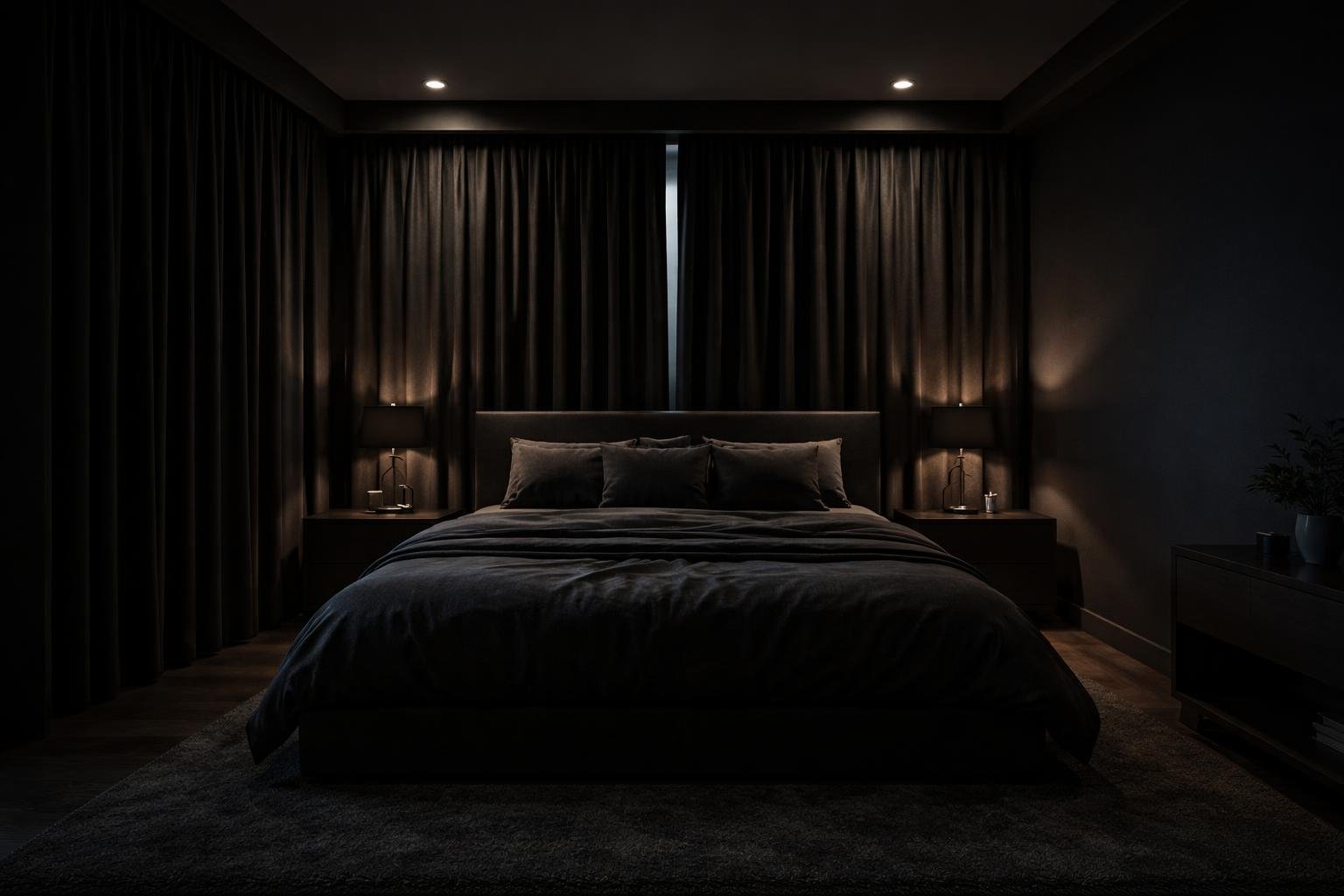
Window treatments designed to block out light come in several forms, each with distinct installation methods and material considerations. The right choice depends on window size, room purpose, and how much darkness is needed.
Blackout Curtains vs. Blackout Shades
Blackout curtains hang from a rod and use thick, layered fabric to block sunlight. They typically extend beyond the window frame to prevent light leaks along the edges. Most blackout curtains feature a foam-backed or triple-weave construction that stops light from passing through the material.
Blackout shades offer the highest level of darkness[2] compared to regular light-filtering options. These mount directly to the window frame and create a tighter seal against light intrusion. Roller shades, cellular shades, and Roman shades all come in blackout versions.
The main difference lies in coverage and flexibility. Curtains provide better edge coverage when hung properly but take up more visual space. Shades fit snugly within or just outside the window frame, offering a cleaner look with less fabric bulk.
Key differences:
- Coverage: Curtains block side gaps better; shades fit tighter to frame
- Installation: Curtains need a rod; shades mount to wall or frame
- Appearance: Curtains add softness; shades provide minimalist look
- Layering: Curtains work well over other treatments; shades typically stand alone
Installing Blackout Blinds
Proper installation determines how well blackout blinds[3] block light. The two main mounting options are inside mount and outside mount. Inside mount places the blind within the window frame, creating a flush appearance but potentially allowing light gaps. Outside mount positions the blind above and beyond the frame edges, covering the entire opening for better light control.
Measure the window width and height at three points each, using the smallest measurement for inside mounts. For outside mounts, add 3-4 inches to the width and height to ensure adequate overlap. Most roller and cellular blinds come with mounting brackets that attach with screws.
The installation process typically takes 15-30 minutes per window. Mark bracket positions with a level to ensure the blind hangs straight. Cordless options eliminate light holes created by pull cords and improve safety around children.
Choosing Blackout Fabric and Materials
Blackout fabric[4] must have specific construction to block 100% of light effectively. The most common materials include polyester, vinyl, and foam-backed textiles. Polyester offers durability and comes in various textures and colors. Vinyl provides excellent light blocking and heat reduction, though it appears more clinical.
Cellular or honeycomb structures trap air in pockets, adding insulation while blocking light. These materials work particularly well in wide windows where energy efficiency matters. The fabric thickness directly impacts light blocking ability—thicker materials perform better but may limit style options.
Material comparison:
| Material | Light Blocking | Energy Efficiency | Appearance | Durability |
|---|---|---|---|---|
| Polyester | Excellent | Good | Soft, varied | High |
| Vinyl | Superior | Very Good | Clean, smooth | Very High |
| Cellular | Excellent | Superior | Textured | Good |
Quality blackout fabric should feel substantial when handled. Cheaper options may allow pinpoints of light through the weave or fade quickly in direct sun exposure.
Optimizing Layered Light Blocking Strategies
Multiple window treatments work together more effectively than single solutions, with layered approaches blocking up to 99.9% of external light[5]. The key lies in combining different products strategically and eliminating gaps where light typically escapes.
Combining Curtains, Shades, and Blinds
Pairing blinds with curtains[6] creates superior light control compared to using either treatment alone. The blind or shade serves as the primary barrier against incoming light, while curtains seal the edges and add an extra layer of protection.
Blackout shades or blinds should be mounted inside the window frame to fit snugly against the glass. This positioning minimizes side gaps and creates the first line of defense. Cellular or honeycomb blackout shades work particularly well because their structure traps air and light within the cells.
Blackout curtains then hang on the outside of the window frame, extending several inches beyond on all sides. This overlap prevents light from sneaking around the edges of the shade or blind. The curtain panels should meet in the middle with at least three inches of overlap to prevent center light leakage.
Optimal layering order from window outward:
Elevate Your Health for Just $29.99/Month
Join the Precision Wellness Subscription at My Healing 365 and get discounted services, priority coaching access, virtual care, and exclusive wellness resources to support your physical, emotional, and hormonal health.
Join for $29.99/Month- Blackout blinds or shades (inside mount)
- Blackout curtains (outside mount, extending 4-6 inches beyond frame)
For maximum effectiveness, both treatments should use dark colors that absorb rather than reflect light. Navy, charcoal, or black fabrics deliver the best results for complete darkness.
Using Wraparound Curtain Rods
Standard curtain rods leave gaps between the curtain edge and the wall, allowing light to spill into the room from the sides. Wraparound rods solve this problem by curving back toward the wall at each end, forcing the curtain fabric flush against the surface.
These specialized rods typically feature a 90-degree return that measures 3-6 inches deep. The return section holds the curtain tight to the wall, eliminating the vertical light strips that appear with conventional straight rods. Some models include adjustable returns that accommodate different wall depths and curtain thicknesses.
Installation requires mounting the brackets slightly farther from the window frame than standard rods to allow room for the return section. The curtain panels slide along the entire rod length, including around the curved ends. This design ensures complete coverage without manual tucking or adjustment.
Wraparound rods work best when combined with blackout curtains that have enough fabric width to drape smoothly around the returns. Measure the full rod length including both curved sections when selecting curtain panels to ensure adequate coverage.
Adding Magnetic Light Blocking Tracks
Magnetic tracks attach directly to the wall around the window perimeter, creating a sealed channel for curtain edges to snap into place. Small magnets sewn into the curtain hems connect with metal strips mounted on the wall, forming a light-tight seal along the sides and bottom.
This system eliminates the most common source of light leakage in traditional curtain setups. The magnetic connection holds the fabric firmly against the wall without gaps, even when air conditioning or heating vents create air movement in the room.
Installation involves adhering thin metal tracks to the wall using industrial-strength adhesive or small mounting screws. The tracks run vertically down both sides of the window and horizontally along the bottom. Lightweight magnets get sewn into corresponding positions along the curtain edges at 6-8 inch intervals.
The magnetic approach works with existing curtain rods and doesn’t require special hardware replacement. Users can still open and close curtains normally, with the magnets automatically reconnecting when panels close. For rental properties, adhesive-mounted tracks remove cleanly without wall damage.
Alternative Window Solutions for Light Control
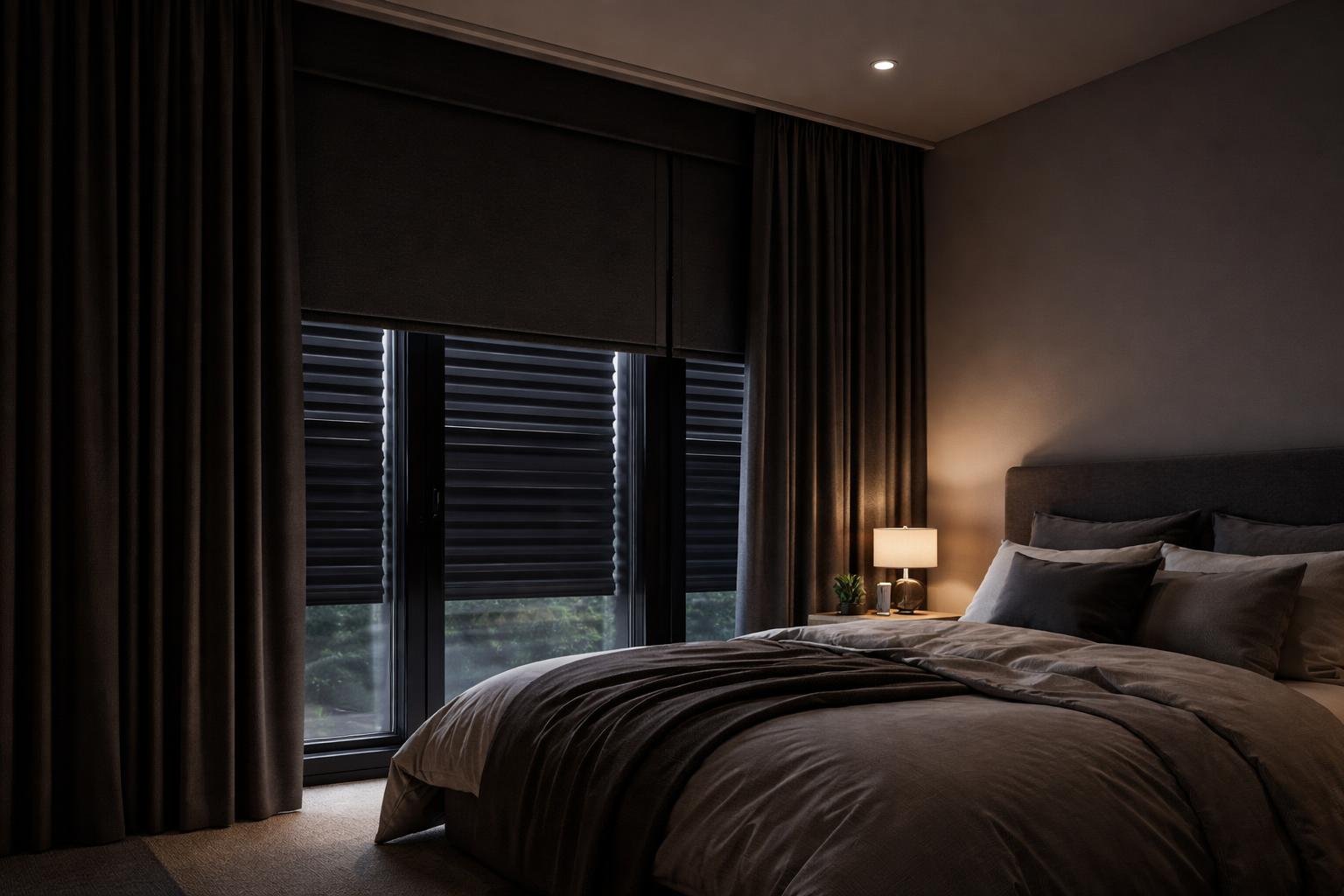
Window films and portable options provide effective ways to block sunlight without installing permanent fixtures. These solutions work well for renters or anyone who wants flexibility in their light control setup.
Applying Blackout Window Film
Blackout window film offers a permanent solution that can eliminate nearly all light coming through windows. The film adheres directly to glass surfaces and blocks up to 100% of daylight[7] while also filtering harmful UV rays.
Installation requires clean windows and moderate temperatures for best results. A person should spray the window lightly with water before applying the film. They’ll need to use a squeegee to remove air bubbles and ensure proper adhesion.
Key benefits include:
- Costs under $1 per square foot for most products
- No drilling or hardware required
- Adds insulation to reduce energy costs
- Removes cleanly when needed
The film works similarly to blackout fabric used in traditional curtains but takes up no space. Some users find corner curling frustrating during installation, but the blackout quality at night makes the effort worthwhile.
Portable Blackout Curtains and Temporary Options
Portable curtains with suction cups[8] attach directly to windows without damaging walls or frames. These temporary solutions let people block out light in rental properties or when traveling.
Adhesive hook-and-loop strips provide another mounting method that removes cleanly. Some products can be trimmed to fit awkward window shapes and sizes. A DIY cardboard cover[7] cut from large boxes offers the most budget-friendly temporary option.
Temporary blocking materials:
- Aluminum foil for complete darkness
- Shower curtains with thumbtacks
- Large fabric pieces like scarves or saris
These alternatives to blackout curtains give renters and temporary residents the same light-blocking benefits without permanent installation.
Personal Sleep Accessories for Light Blocking
Sleep masks provide a portable solution for creating darkness anywhere, while offering specific health benefits through light exposure control. The right mask depends on individual comfort needs and sleeping habits.
Benefits of Eye Masks and Sleep Masks
Light acts as a signal to the body to stay awake and alert. Sleep masks block out distractions[9] to help people fall asleep faster and maintain sleep throughout the night.
These accessories work well for shift workers who need to sleep during daylight hours. Travelers also benefit from using sleep masks on planes, trains, and in hotel rooms with poor window coverings.
A sleep mask creates complete darkness regardless of the environment. This helps the body produce melatonin, the hormone responsible for regulating sleep cycles. Many people use masks at home when blackout curtains are not available or when a partner needs light to read or work.
Sleep masks are designed to block out light[10] with materials like cotton, polyester, silk, or foam padding. Some designs include weighted features or cooling properties for added comfort.
Selecting the Right Mask for Comfort
The material of a sleep mask affects both comfort and effectiveness. Silk options feel smooth against skin and hair, while foam-padded versions provide better light blocking around the edges.
An adjustable strap allows the wearer to customize the fit. The Manta Pro Sleep Mask features foam eye cups that are ventilated[10] for airflow and uses an angled strap to prevent ear irritation.
Side sleepers need masks that stay in place without creating pressure points. Back sleepers have more flexibility in choosing bulkier designs with additional padding. The shape matters too – contoured masks prevent contact with eyelashes while maintaining a light-blocking seal.
Machine-washable options require less maintenance than hand-wash-only materials. Price ranges vary significantly, with basic cotton masks starting at low costs and smart masks with sleep-tracking features reaching higher price points.
Managing Light Leaks from Other Bedroom Sources
Windows aren’t the only places where unwanted light enters a bedroom. Light seeps through door gaps, glows from electronics, and reflects off certain surfaces throughout the room.
Blocking Light Under Doors
Door gaps let in significant amounts of hallway light that can disturb sleep. A door sweep or draft stopper placed at the bottom of the door creates a barrier that blocks both light and noise.
People can install adhesive-backed door sweeps permanently or use temporary fabric draft stoppers filled with sand or rice. These solutions typically cost between $10 and $30 and require minimal installation effort.
For doors with larger gaps on the sides or top, weatherstripping foam tape works well. The tape compresses when the door closes, sealing the space completely. Users should measure their door gaps before purchasing to ensure they get the right thickness.
A rolled towel placed against the door bottom offers a quick temporary fix for overnight guests or travel situations.
Covering Electronics and Small Light Sources
Electronic devices emit surprising amounts of light through LED indicators, displays, and charging lights. Alarm clocks, televisions, phone chargers, and power strips all contribute to bedroom brightness.
Small pieces of black electrical tape placed over LED lights eliminate these distractions without damaging equipment. For devices that need to remain visible, red LED lights affect sleep less than blue or white ones.
Power strips with individual switches let people turn off devices completely at night. This approach blocks light while reducing energy consumption.
Alarm clocks with dimmable displays or those that face away from the bed reduce light exposure. Some models offer red display options that are easier on eyes during nighttime.
Charging stations placed inside drawers or behind furniture keep device lights out of sight while maintaining functionality.
Adjusting Room Layout and Decor
Room arrangement and decorative choices affect how light bounces and accumulates in a space. Reflective surfaces like mirrors, glass picture frames, and glossy furniture amplify existing light sources.
Moving mirrors away from windows and electronic devices prevents light multiplication. Matte finishes on walls and furniture absorb rather than reflect light, creating a darker environment.
Dark-colored bedding and curtains help block sunlight and absorb ambient light better than light-colored fabrics. Navy, charcoal, and black textiles work particularly well for this purpose.
Positioning the bed away from windows and doors reduces direct light exposure on the sleeping area. Headboards can act as additional light barriers when placed against walls that face light sources.
Removing or relocating decorative items with metallic or glass elements eliminates unnecessary reflection points that scatter light throughout the room.
Additional Tips for a Darker, Restful Sleep Environment
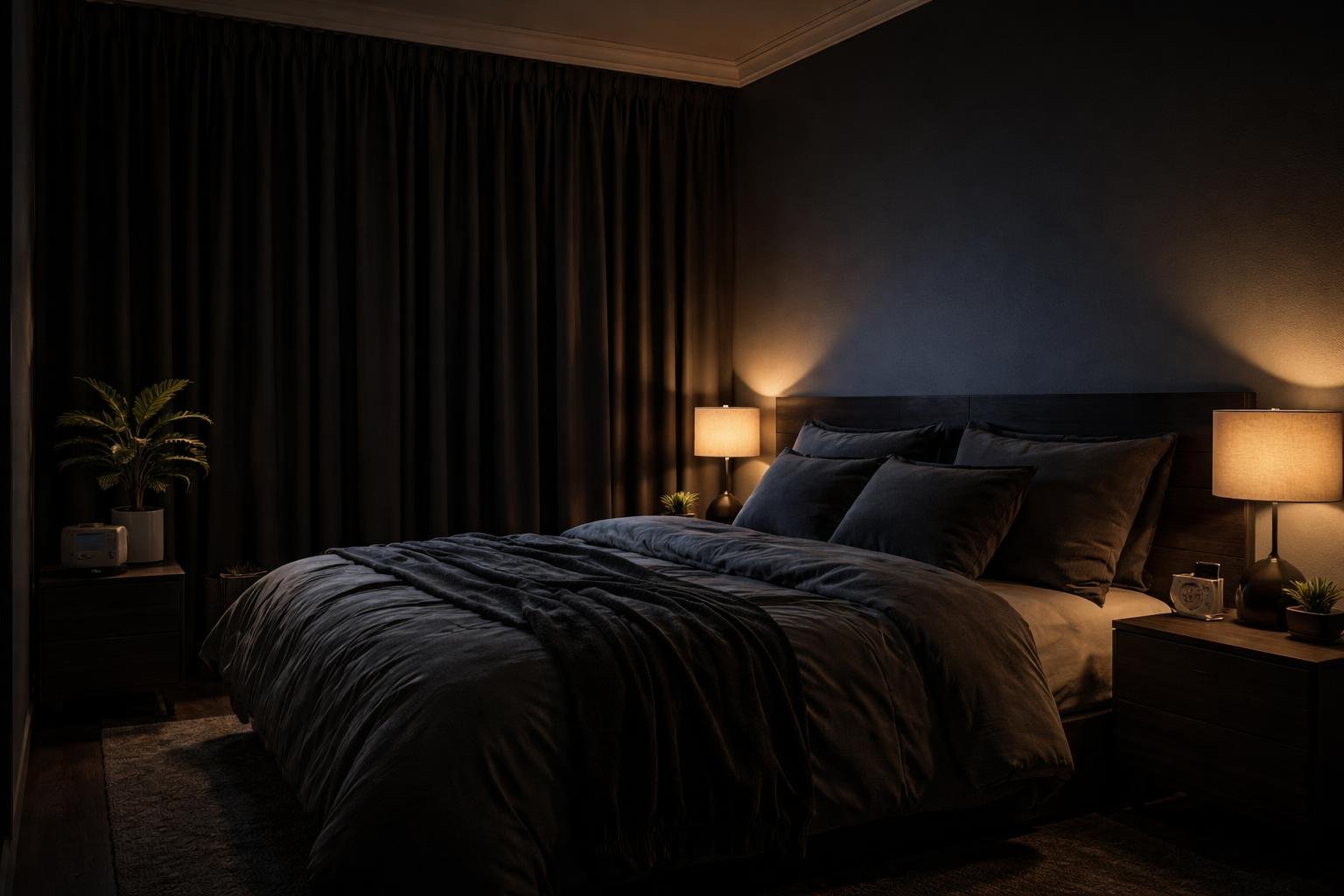
Beyond curtains and blinds, wall colors and lighting habits play important roles in creating darkness for quality sleep. These changes work together to block out light[11] more effectively and signal the body when it’s time to rest.
Painting Walls with Darker Colors
Darker wall colors absorb light rather than reflect it back into the room. Light-colored walls bounce artificial light and early morning sunlight around the bedroom, making the space brighter even with window coverings in place.
Deep blues, grays, charcoals, and navy tones work well for bedroom walls. These colors reduce the amount of ambient light that reflects throughout the space during nighttime hours.
Matte or flat paint finishes absorb more light than glossy or semi-gloss options. Shiny paint surfaces reflect light particles, which can create unwanted brightness even in a dark room.
People who rent or cannot paint entire walls can use darker bedding and furniture to achieve similar effects. Dark headboards, comforters, and wall hangings near the bed reduce light reflection in the immediate sleep area.
Establishing a Pre-Bedtime Lighting Routine
The body produces melatonin in response to darkness, so dimming lights before bedtime[11] helps prepare for sleep. Bright overhead lights delay melatonin production and make falling asleep more difficult.
Switching to dim ambient lighting 60 to 90 minutes before bed signals the brain that sleep time approaches. Table lamps with warm-toned bulbs or wall sconces set on low settings work better than bright ceiling fixtures.
Electronic devices should be put away[11] at least 30 minutes before sleep. Phones, tablets, and laptops emit blue light that blocks melatonin production and disrupts natural sleep patterns.
Motion-sensor nightlights provide safe navigation for bathroom trips without fully waking the body. These low-level lights prevent the need to turn on bright overhead lighting during the night.
Frequently Asked Questions
Blocking unwanted light involves understanding which methods work best for different situations and budgets. The most effective solutions range from blackout curtains to simple DIY fixes using household materials.
What are the most effective ways to block light from windows at night?
Blackout curtains remain one of the most popular and effective solutions for blocking light from entering the bedroom[11] through windows. These specially designed curtains use thick, tightly woven fabric with multiple layers that prevent outside light from street lamps, security lights, and the moon from disrupting sleep.
Blackout shades offer another highly effective option. They can be installed inside the window frame or mounted outside to cover the entire window area and surrounding wall space.
Combining blackout curtains with blackout shades provides maximum light blocking power. This dual-layer approach ensures nearly complete darkness even in rooms facing bright street lights or early morning sun.
How can I block light from windows without using curtains?
Covering windows with aluminum foil provides a low-cost alternative that blocks outdoor light[11] effectively. The foil can be attached directly to the window glass using tape or spray adhesive.
Cardboard pieces cut to fit the window frame create another curtain-free solution. They can be wedged into place or secured with removable adhesive strips for easy installation and removal.
Window film designed for light blocking offers a more permanent option. These films adhere directly to the glass and can be trimmed to fit any window size while maintaining a cleaner appearance than foil or cardboard.
How do I stop light from leaking in around the edges and top of curtains?
Installing curtain rods that extend several inches beyond the window frame on each side helps eliminate light gaps. The extra width allows the curtains to wrap around and block light that would otherwise leak in from the sides.
Mounting curtains closer to the ceiling rather than directly above the window frame prevents light from entering at the top. This approach also makes the room appear taller while solving the light leak problem.
Velcro strips attached to both the wall and the curtain edges create a seal that stops light from sneaking around the sides. This method works particularly well when complete darkness is needed.
What is the cheapest way to block out sunlight in a bedroom?
Aluminum foil remains the most budget-friendly option for blocking sunlight in bedrooms[12]. A single roll costs just a few dollars and can cover multiple windows completely.
Black trash bags or dark-colored fabric can be taped or pinned over windows for minimal cost. While not the most attractive solution, this method works well for temporary situations or rental properties where permanent changes aren’t allowed.
Layering existing curtains with dark bedsheets creates additional light blocking without purchasing specialized blackout curtains. The sheets can be hung on the same rod or attached with clothespins or binder clips.
Do light-blocking strips work for gaps around blinds, doors, or windows?
Light-blocking strips effectively seal gaps when properly installed around door frames and window edges. These adhesive foam or rubber strips compress to fill spaces where light typically leaks through.
The strips work best on smooth, clean surfaces where they can create a tight seal. They need to be replaced periodically as the adhesive weakens or the material compresses over time.
For door gaps, placing a rolled-up towel against the space between the door and floor[11] blocks light from hallways without any installation required. This simple solution can be moved easily and costs nothing if towels are already available.
What DIY methods can I use to darken a room quickly for better sleep?
An eye mask provides the fastest solution for creating darkness without modifying the room itself. The mask must stay in place throughout the night to remain effective since light penetrates the eyelids and inhibits melatonin production[11].
Covering or unplugging electronic devices eliminates small sources of light from digital clocks, charging stations, and standby indicators. These minor light sources can interfere with sleep quality even though they seem insignificant.
Hanging dark blankets over curtain rods or tension rods provides immediate light blocking. This temporary solution works well for travel, new living situations, or testing how much darkness helps before investing in permanent window treatments.
Post Views: 5
References
- Redirecting…. https://housepulp.com/how-to-block-out-light-from-bedroom-window/ Accessed April 18, 2026
- The Top Blackout Shades for Ultimate Light Control and Privacy. https://eastendblinds.com/the-top-blackout-shades-for-ultimate-light-control-and-privacy/ Accessed April 18, 2026
- Best Blackout Blinds 2026: 5 Types Tested & Compared. https://www.ublockout.com/blog/best-blackout-blinds Accessed April 18, 2026
- Blackout Window Treatments – Blinds, Shades & Curtains for 100% Light Block. https://www.selectblinds.com/blackout-window-treatments.html Accessed April 18, 2026
- How to Layer Curtains for Maximum Light Blocking – Spacire. https://spacire.com/blogs/journal/how-to-layer-curtains-for-maximum-light-blocking Accessed April 18, 2026
- Layering Window Treatments for Light Control. https://www.blindsgalore.com/blog/index.php/beyond-basics/how-to-layer-window-treatments/ Accessed April 18, 2026
- The Best Blackout Curtain Alternatives To Consider (& What To Shop For). https://www.housedigest.com/1710064/best-blackout-curtain-alternatives-block-light/ Accessed April 18, 2026
- A Comprehensive Guide to Temporary Window Blackout Solutions – Sleepout. https://sleepoutcurtains.com/blogs/home/how-to-blackout-windows-temporarily Accessed April 18, 2026
- Sleep masks block out distractions. https://www.byrdie.com/best-sleep-masks-11781885 Accessed April 18, 2026
- Best Sleep Masks for Blocking out Light and Staying Asleep. https://www.sleepfoundation.org/best-sleep-products/best-sleep-masks Accessed April 18, 2026
- How To Make Your Room Dark for a Good Night’s Sleep. https://www.sleepfoundation.org/bedroom-environment/making-your-room-dark Accessed April 18, 2026
- How To Make Your Room Dark for Better Sleep. https://amerisleep.com/blog/how-to-make-your-room-darker/ Accessed April 18, 2026