
• Twenty47HealthNews
  • Health & Wellness
  • Disclaimer
    • Terms of Use
    • Privacy Policy
    • DMCA Notice
  • Twenty47HealthNews
  • Health & Wellness
  • Disclaimer
    • Terms of Use
    • Privacy Policy
    • DMCA Notice
24/7 Health News
No Result
View All Result
Home Animals

Canine carer: how guide dog school dropout Marcus came to comfort cancer patients for a living

March 1, 2026
in Animals, Article, Australian lifestyle, Cancer, Health & wellbeing, Life and style, Pets
Canine carer: how guide dog school dropout Marcus came to comfort cancer patients for a living

Marcus is a very good boy.

He’s a four-year-old, 32kg labrador with lustrous black hair, soulful brown eyes and a bodacious bottom.

He’s sensitive and food-motivated; if given the choice between a distressed person and a tasty treat, he might have a hard time picking.

Oh, and don’t mention guide dog school; it’s a touchy subject.

When Marcus was a puppy, he began training with Guide Dogs NSW, in Australia, with the expectation that he would graduate from their world-class program and match with a person who has low vision or blindness. A noble profession for a dog but not guaranteed to all who enrol.

Marcus was purpose-bred at the Guide Dogs Centre in Glossodia – a small town at the foot of the Blue Mountains, 68km north-west of Sydney.

In April 2020, at the start of our most recent global pandemic, when Marcus was eight weeks old, he went to live with puppy raisers Alex and Alison. At this stage, Alex says he was “tiny and funny”, with – do not repeat this to Marcus – “a stubby little face and very short legs”.

Marcus as a puppy

He was a cautious fellow, unsure of his new surroundings. Needed to be fished out of his cage by large human hands and set upright.

He proved himself to be proficient at the basics; in under two weeks he could sit, drop, stay and come when called. He was well behaved; with the exception of one hole-digging incident, there was very little mischief. No kitchen intruding, no counter surfing, no pantry raiding.

One of his favourite extracurricular activities was sticking his face into a nearly empty yoghurt tub to lick it clean, though he was not always able to extract his head afterwards.

For six months, Marcus did training once a week via Zoom and practised his skills every day. He was given his own bed but preferred to sleep near or on top of his foster brother, Baxter, a patient chocolate lab who has welcomed and tolerated many guide dog hopefuls in his time.

Marcus was a quick learner but a slow mover. He was a “dawdler”.

In his official file, it was noted that Marcus showed an “unwillingness to work”, which, while relatable and endearing, is not ideal for a guide dog.

Rather than, say, guide someone firmly and safely without distraction, Marcus preferred sitting in puddles, playing fetch, having naps, seeking out snuggles and trying out his sweetest facial expressions in hope of securing some chicken as a snack.

Marcus the therapy dog as a puppy

After 14 months, Marcus was assessed. We do not use the word “fail” – Marcus was “reclassified” (the paperwork for this process used to include the word “rejected”, says Guide Dogs NSW’s alternate pathways manager, Sam O’Keefe, but it now says “career path change” because that’s much nicer).

Being a guide dog was not his destiny, on account of being “a bit slow” and “a sloth with a low drive to work”.

So, Marcus became a therapy dog, for which he is perfectly suited on account of being affectionate, friendly and polite.

In 2025, 39 dogs made it through guide dog training and 93 were placed as therapy dogs across NSW and the ACT. There are currently more than 650 therapy dogs at work in the community, all of them aged 12 years and younger. They have been placed in court rooms, schools, aged care facilities, rehab clinics, psychologist offices and with emergency or frontline services. Some have been placed with individuals or families affected by PTSD, autism, or mental illness.

Therapy dog Marcus works with clients at Cancer Fit in St Leonards

To qualify, these dogs must demonstrate the right temperament and that they can settle and relax in various environments, respond well to handler cues and enjoy physical touch. They’re put next to wheelchairs, canes and medical equipment to test their reactions, and they’re often asked to un-learn their training not to jump up on furniture. In their new line of work, they’re usually required on laps, beds, sofas and chairs – anywhere a person might be found who needs the soothing presence of a dog like Marcus.

In 2022, Marcus was matched with oncologist Dr Lina Pugliano, who founded cancer care and rehabilitation centre Cancer Fit.

Marcus now lives with Pugliano, her husband and their two children, aged 10 and seven. It had taken two years for the application for Marcus to go through – the alternate pathways team at Guide Dogs NSW are meticulous in their matchmaking – so she kept it a secret from her kids to manage their expectations. Needless to say, the family was thrilled.
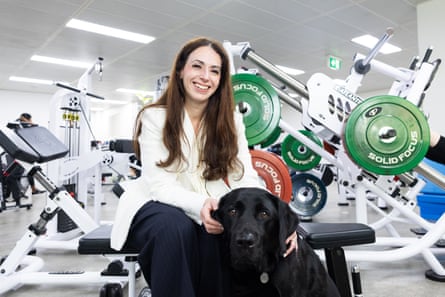
Oncologist Dr Lina Pugliano with Marcus

At night, Marcus has snuggles on the bed before he retreats to his own but Pugliano can hear the tap-tap of his paws on the floor as he makes his rounds to check on the children, stopping at their bedroom doors to make sure they’re safe.

Every weekday morning, Marcus goes into work at Cancer Fit with Pugliano. They stop off at a cafe on the way, where the barista sneaks Marcus a treat. Then it’s straight into clinic to greet his patients, patrol the exercise machines, check if anyone needs assurance and loop past the kitchen in case there’s any chicken to be had.

He’s never been explicitly told what to do; he follows his instincts. If someone is upset, Marcus is by their side in moments, head resting on their leg, or bottom offered up for scratches. He often sits underneath the desk during oncology consultations and otherwise offers comfort simply by asking existing calmly, stolidly, sweetly, nearby.
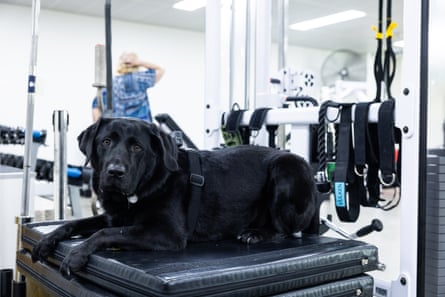
Therapy dog Marcus at Cancer Fit

His only complaint about the job might be the recently enforced nutritional guidance, as outlined on posters across the clinic.

When Marcus first started there, clients would sneak him snacks and the old boy put on weight. On veterinary advice, he is now only allowed to receive treats from an approved shortlist: carrot chunks, cucumber sticks, apple slices, or strawberry tops (“not even the good part of the strawberry,” a client tells me, then confesses that she may, on occasion, defy these rules).

Marcus has his favourites (the ones who feed him) but he is generous and indiscriminate with his affection. For those in need of comfort, Marcus will be there to provide it, whether or not you have cheese in your pocket.


ShareTweetSharePin

Most Read

What causes stuttering? A speech pathology researcher explains the science and the misconceptions around this speech disorder

What causes stuttering? A speech pathology researcher explains the science and the misconceptions around this speech disorder

December 15, 2022
morning back pain

Morning Again Ache Trigger Is Not the Mattress

October 11, 2021

Why Circadian Rhythms Matter for Your Health

July 30, 2024
lower back pain relief exercises

5 decrease again ache aid workouts

October 11, 2021

4 steps to building a healthier relationship with your phone

January 28, 2025
Nasal vaccines promise to stop the COVID-19 virus before it gets to the lungs – an immunologist explains how they work

Nasal vaccines promise to stop the COVID-19 virus before it gets to the lungs – an immunologist explains how they work

December 14, 2022
3 years after legalization, we have shockingly little information about how it changed cannabis use and health harms

3 years after legalization, we have shockingly little information about how it changed cannabis use and health harms

October 15, 2021
bleeding in gum

When The Bleeding in gum Is Severe ?

October 11, 2021
Good Night Sleep

6 Causes of Good Evening Sleep

October 11, 2021
Kick up your heels – ballroom dancing offers benefits to the aging brain and could help stave off dementia

Kick up your heels – ballroom dancing offers benefits to the aging brain and could help stave off dementia

January 3, 2023
3 women stroke prevention

Silent Stroke Symptoms in Women: What You Might Be Overlooking

February 27, 2026
Ten small changes you can make today to prevent weight gain

Ten small changes you can make today to prevent weight gain

October 12, 2021
Biden is getting prostate cancer treatment, but that’s not the best choice for all men − a cancer researcher describes how she helped her father decide

Biden is getting prostate cancer treatment, but that’s not the best choice for all men − a cancer researcher describes how she helped her father decide

May 20, 2025

COVID vaccines: how one can pace up rollout in poorer international locations

October 5, 2021

This Simple Hygiene Habit Could Cut Your Risk of Stroke, New Research Reveals

February 1, 2025
Five ways to avoid pain and injury when starting a new exercise regime

Five ways to avoid pain and injury when starting a new exercise regime

December 30, 2022
Support and collaboration with health-care providers can help people make health decisions

Support and collaboration with health-care providers can help people make health decisions

December 16, 2021
Greece to make COVID vaccines mandatory for over-60s, but do vaccine mandates work?

Greece to make COVID vaccines mandatory for over-60s, but do vaccine mandates work?

December 1, 2021

Multiple sclerosis: the link with earlier infection just got stronger – new study

October 12, 2021
woman covered with white blanket

Exploring the Impact of Sleep Patterns on Mental Health

August 4, 2024

Maximize Your Performance – Sync with Your Circadian Rhythms

August 9, 2024
Backlash to transgender health care isn’t new − but the faulty science used to justify it has changed to meet the times

Backlash to transgender health care isn’t new − but the faulty science used to justify it has changed to meet the times

January 30, 2024
Nurses’ attitudes toward COVID-19 vaccination for their children are highly influenced by partisanship, a new study finds

Nurses’ attitudes toward COVID-19 vaccination for their children are highly influenced by partisanship, a new study finds

December 2, 2022
GPs don’t give useful weight-loss advice – new study

GPs don’t give useful weight-loss advice – new study

December 16, 2022
As viral infections skyrocket, masks are still a tried-and-true way to help keep yourself and others safe

As viral infections skyrocket, masks are still a tried-and-true way to help keep yourself and others safe

December 14, 2022
Four ways to avoid gaining weight over the festive period – but also why you shouldn’t fret about it too much

Four ways to avoid gaining weight over the festive period – but also why you shouldn’t fret about it too much

December 22, 2022
Why are some people faster than others? 2 exercise scientists explain the secrets of running speed

Why are some people faster than others? 2 exercise scientists explain the secrets of running speed

April 29, 2024
Nutrition advice is rife with misinformation − a medical education specialist explains how to tell valid health information from pseudoscience

Nutrition advice is rife with misinformation − a medical education specialist explains how to tell valid health information from pseudoscience

January 28, 2025
News of war can impact your mental health — here’s how to cope

Binge-eating disorder is more common than many realise, yet it’s rarely discussed – here’s what you need to know

December 2, 2022
The promise of repairing bones and tendons with human-made materials

The promise of repairing bones and tendons with human-made materials

January 4, 2022
  • Twenty47HealthNews
  • Health & Wellness
  • Disclaimer

© 2020 DAILY HEALTH NEWS

  • Twenty47HealthNews
  • Health & Wellness
  • Disclaimer
    • Terms of Use
    • Privacy Policy
    • DMCA Notice

© 2020 DAILY HEALTH NEWS










