Medically Reviewed
Dr. Jose Rossello, MD, PhD, MHCM
Preventive Medicine & Public Health Specialist
Last Reviewed: May 4, 2026
Getting fit doesn’t require a pricey gym membership or fancy machines. Many people assume they need expensive equipment to build strength, lose weight, or improve their health, but that’s simply not true. Bodyweight exercises, household items, and creative workouts can deliver the same results as costly gym equipment while helping anyone get fit on a budget.
Working out at home eliminates barriers[1] like travel time and membership fees, making fitness accessible to everyone. The key to frugal fitness is understanding how to use what’s already available. Push-ups, squats, and planks require zero equipment but build real strength. Stairs, water bottles, and chairs can replace machines. With the right approach, anyone can create an effective workout routine without spending a fortune.
This guide covers everything needed to get fit without equipment, from setting clear goals to building sustainable habits. Whether someone wants to build muscle, improve endurance, or simply feel healthier, these strategies work for all fitness levels[2]. The focus is on practical, proven methods that fit into busy lives and tight budgets.
Table of Contents
Key Takeaways
- Bodyweight exercises and household items can replace expensive gym equipment for effective workouts
- Setting clear fitness goals and creating a consistent schedule helps maintain long-term progress
- Free online resources and everyday activities provide countless opportunities to stay active without spending money
Defining Your Fitness Goals and Staying Accountable
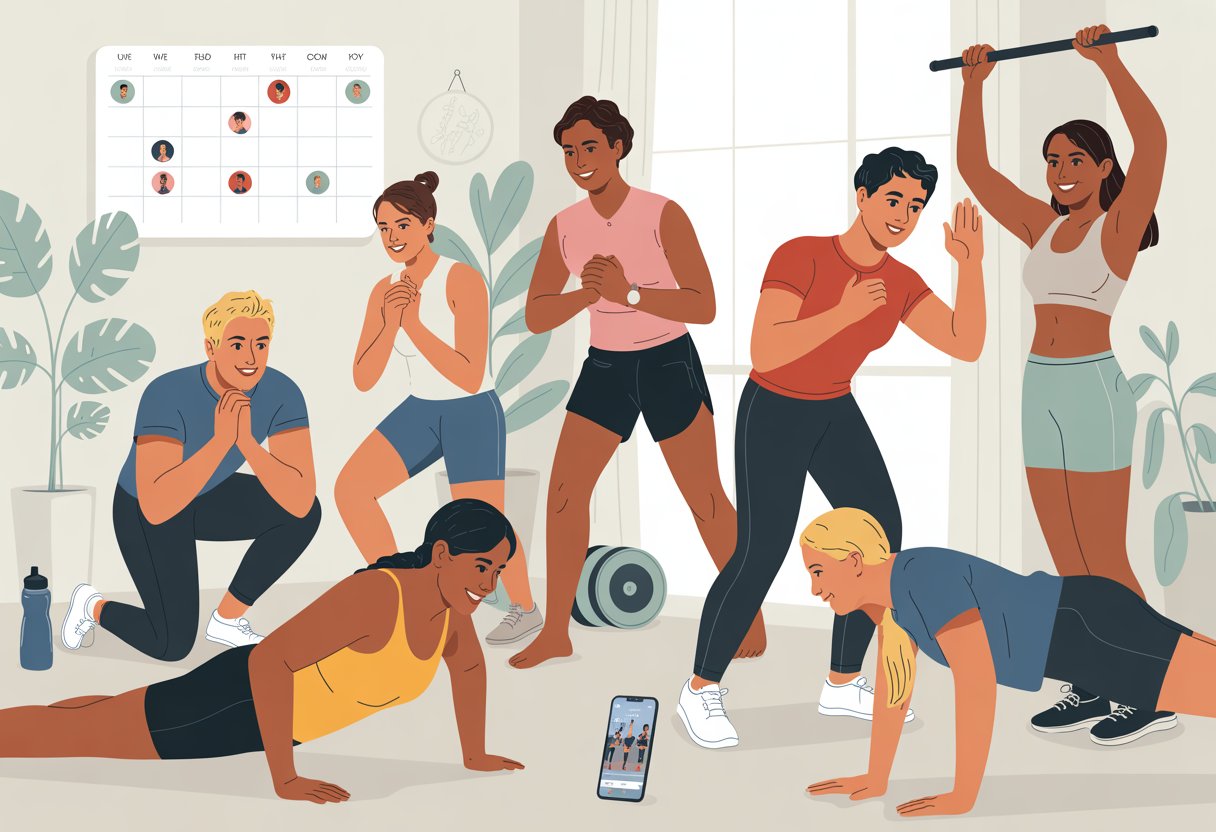
Clear fitness goals provide direction and purpose when working out without expensive equipment. Consistent tracking and built-in accountability systems help maintain momentum even when motivation decreases.
Identifying and Setting Actionable Fitness Goals
Setting fitness goals[3] requires specificity rather than vague intentions. Instead of saying “get in shape,” a person should aim for concrete targets like “complete 20 push-ups without stopping in six weeks” or “hold a plank for two minutes by the end of the month.”
The SMART framework makes goals more achievable. Each goal should be specific (run three times weekly), measurable (track distance covered), achievable (realistic for current fitness level), relevant (aligned with personal health needs), and time-bound (within eight weeks).
Bodyweight training offers numerous goal options. Someone might work toward their first unassisted pull-up, master a pistol squat, or improve flexibility enough to touch their toes. These targets don’t require gym memberships or expensive machines.
Breaking larger goals into smaller milestones creates regular wins. A person training for 50 consecutive squats might start with sets of 10, then 15, gradually building capacity over time.
Tracking Progress Consistently
Regular progress monitoring keeps people aware of improvements and identifies areas needing adjustment. A simple notebook or phone app can record workouts, repetitions completed, and how the body feels during exercise.
Maintaining a fitness journal[4] creates a written record of the journey. This documentation captures workout details, energy levels, and emotional state. People often discover patterns that help them optimize training times or identify exercises that deliver the best results.
Tracking methods include:
- Daily workout logs listing exercises, sets, and reps
- Weekly measurements of body metrics or performance benchmarks
- Progress photos taken every two to four weeks
- Timed exercises showing improvement in endurance or speed
Physical changes often happen gradually. Written records reveal progress that might otherwise go unnoticed, like completing an extra five squats or shaving 30 seconds off a running mile.
Building Accountability and Motivation
A workout buddy provides mutual encouragement and makes skipping sessions harder. When someone commits to exercising with a friend, they’re less likely to cancel because another person depends on them showing up.
Community fitness groups create social connections around shared goals. Local running clubs, park workout meetups, or online fitness communities offer support without membership fees. These groups provide consistent ways to stay accountable[5] through regular check-ins and shared experiences.
Public commitment increases follow-through. Sharing goals with family, friends, or social media connections creates external accountability. Some people post workout updates or join challenge groups where participants report daily activity.
Scheduled workout times treated as non-negotiable appointments help build consistency. Setting phone reminders or calendar blocks designates specific exercise periods. Consistency matters more than intensity when establishing long-term habits.
Rewarding milestone achievements reinforces positive behavior. These rewards should support fitness goals rather than undermine them—new workout clothes, a massage, or a special healthy meal celebration work better than rewards that conflict with health objectives.
Building an Effective Home Workout Routine
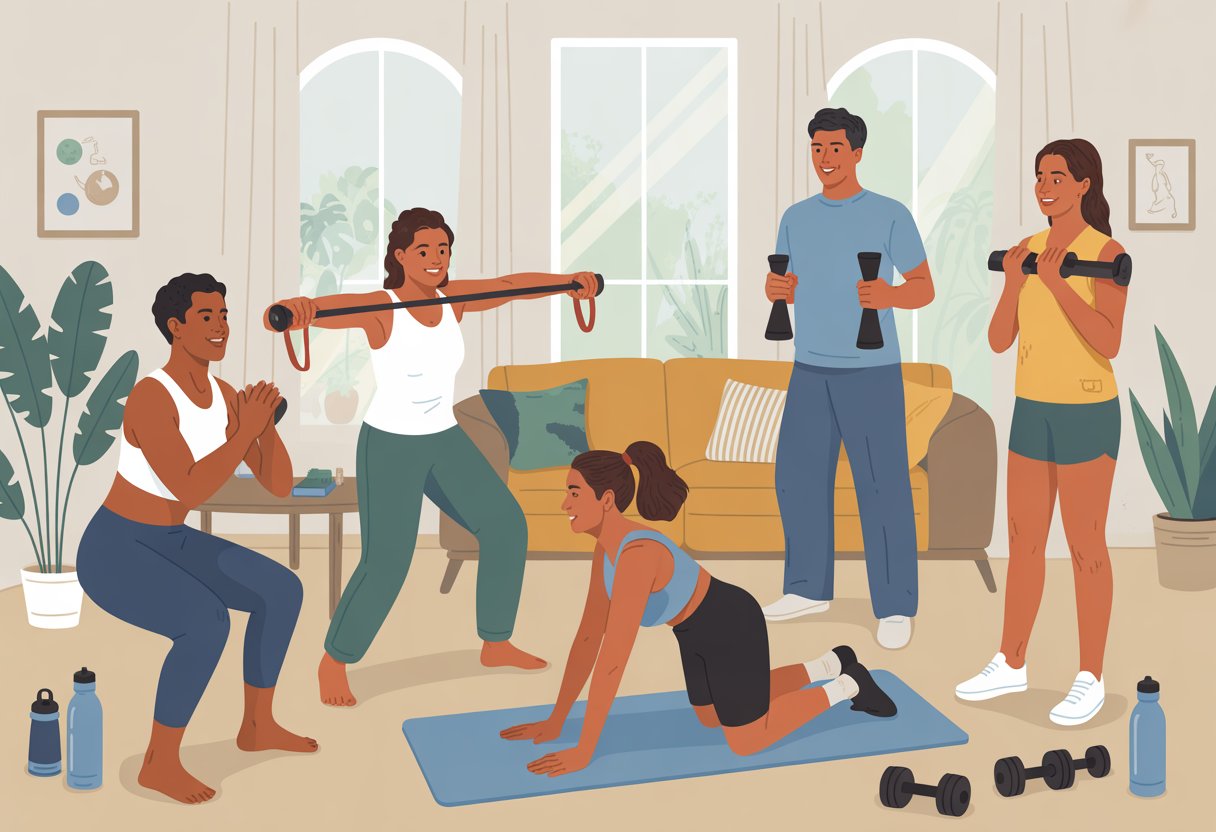
A successful home workout plan requires three key elements: a structured weekly schedule that fits your lifestyle, a balanced mix of different exercise types, and strategic rest periods to allow your body to recover and adapt.
Planning Your Weekly Workout Schedule
The most effective workout schedule depends on how many days per week someone can realistically commit to exercise. Beginners should start with three days of training, while more experienced individuals can handle four to six sessions.
A simple three-day schedule might include full-body workouts on Monday, Wednesday, and Friday. This allows 48 hours between sessions for muscle recovery. People with more time can split their training by focusing on different movements each day.
Four-day schedules work well when alternating between upper and lower body exercises. For example, Monday and Thursday could focus on push-ups and planks, while Tuesday and Friday emphasize squats and lunges.
The key is consistency over intensity. Training at the same times each week helps build a lasting habit. Morning workouts often have higher completion rates because fewer conflicts arise early in the day.
Each session should last 20 to 45 minutes for bodyweight workouts[6]. Shorter workouts done regularly produce better results than occasional marathon sessions.
Balancing Cardio, Strength, and Flexibility
A well-rounded fitness program includes cardiovascular exercise, strength training, and mobility work. Each component serves a different purpose and supports overall health.
Strength training should form the foundation of most at-home workout[7] plans. Exercises like squats, push-ups, and planks build muscle and increase metabolism. Two to four strength sessions per week allows adequate recovery time.
Cardio activities raise heart rate and improve endurance. Burpees, jumping jacks, and high knees require no equipment and limited space. Adding 15 to 30 minutes of cardio two to three times weekly supports heart health and burns calories.
Flexibility work often gets overlooked but prevents injury and improves movement quality. Five to ten minutes of stretching after each workout helps maintain range of motion. Yoga or dedicated mobility sessions once or twice per week provide additional benefits.
The specific ratio depends on individual goals. Someone focused on weight loss might emphasize cardio, while muscle building requires more strength work.
Incorporating Rest Days and Active Recovery
Rest days are not optional. They allow muscles to repair, adapt, and grow stronger. Without adequate recovery, performance declines and injury risk increases.
Complete rest days involve no structured exercise. The body needs at least one full day off each week. Beginners may need two or three rest days initially.
Active recovery offers an alternative to complete rest. Light activities like walking, gentle stretching, or easy yoga keep blood flowing without creating additional stress. These sessions should feel refreshing rather than exhausting.
Sleep quality dramatically affects recovery. Adults need seven to nine hours per night for optimal muscle repair and hormone regulation. Poor sleep undermines even the best training program.
Nutrition supports recovery as much as indoor workouts[8] themselves. Protein intake helps rebuild muscle tissue, while carbohydrates restore energy. Adequate hydration prevents cramping and supports all bodily functions.
Listening to your body prevents overtraining. Persistent fatigue, decreased performance, or unusual soreness signals the need for extra recovery time.
Foundational Bodyweight Strength Exercises
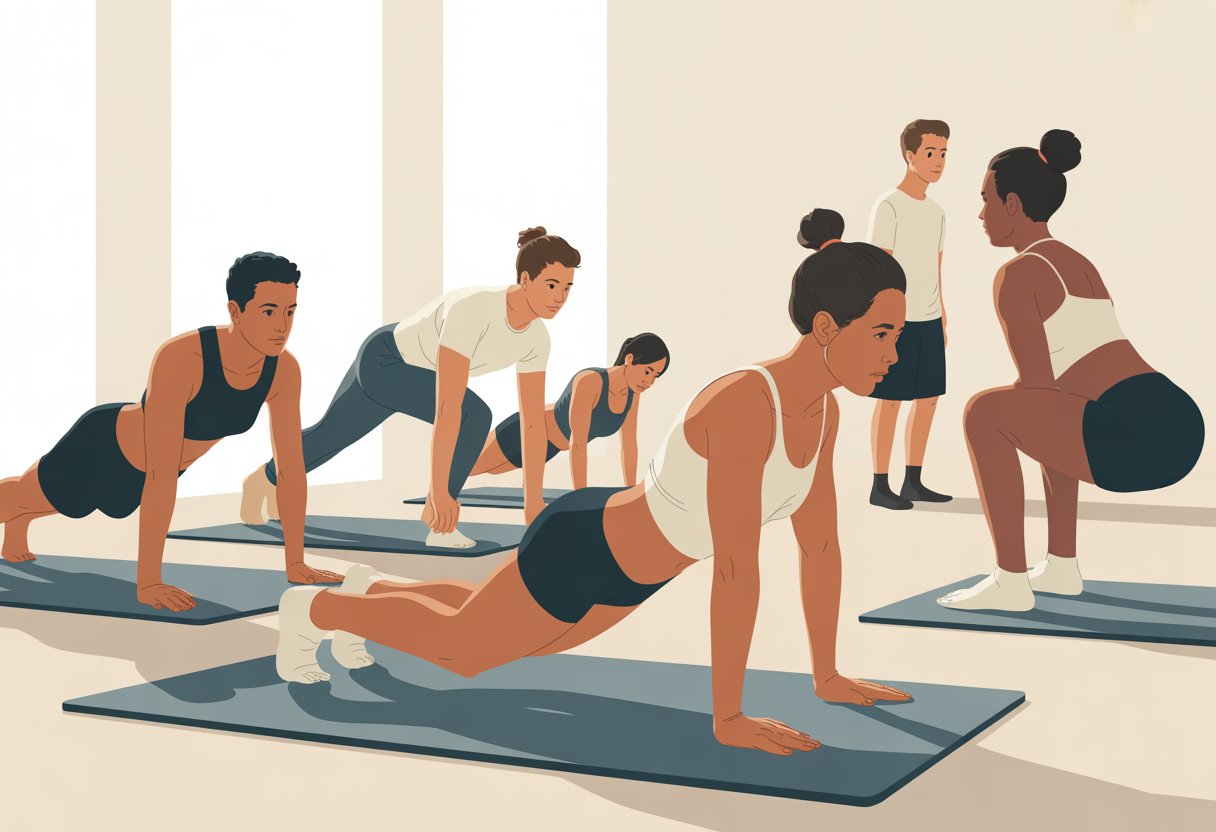
Bodyweight exercises form the core of any equipment-free fitness routine, targeting major muscle groups through movements like squats for legs, push-ups for chest and arms, and planks for core stability. These bodyweight workouts[9] build strength and muscle effectively when performed with proper form and consistent progression.
Squats, Lunges, and Step-Ups for Lower Body
Squats work the quadriceps, glutes, and adductors simultaneously, making them one of the most effective exercises for lower body strength. A person should stand with feet shoulder-width apart and lower down until thighs are parallel to the ground or deeper if mobility allows.
Lunges address muscle imbalances by working one leg at a time. The basic version involves stepping forward and sinking down until the back knee nearly touches the floor, then pushing back to the starting position. Variations include reverse lunges, walking lunges, and side lunges that target different angles of the leg muscles.
Step-ups require only a sturdy chair, bench, or stair. Research indicates that step-ups activate the glutes more effectively[9] than squats or hip thrusts. A person places one foot on the elevated surface, steps up until the leg straightens, then lowers back down with control.
Key Form Tips:
- Keep knees tracking over toes during squats
- Maintain an upright torso during lunges
- Step onto a surface that brings the thigh parallel to the ground
Push-Ups, Dips, and Planks for Upper Body and Core
Push-ups build chest, shoulder, and tricep strength while engaging core muscles for stability. Standard pushups require lowering the body until the chest nearly touches the floor, then pressing back to full arm extension. Beginners can start with knee push-ups or wall push-ups before progressing to the standard version.
Dips target the triceps using a chair or bench. A person sits on the edge, places hands beside the hips, extends legs forward, and lowers the body by bending the elbows before pressing back up. Bent knees make the exercise easier, while elevated feet increase difficulty.
Planks strengthen the entire core through static holds. The basic plank position involves holding the body in a straight line from head to heels while resting on forearms and toes. Side planks work the obliques by balancing on one forearm with feet stacked.
Common Mistakes to Avoid:
- Sagging hips during planks
- Flaring elbows too wide during push-ups
- Moving hips too far from the bench during dips
Progressions and Modifications for All Levels
Making bodyweight exercises harder without equipment[9] involves several strategies. Adding more repetitions increases volume—moving from 10 push-ups to 12 or 15 creates new stimulus for muscle growth.
Tempo changes make exercises significantly more challenging. Lowering down for 3 to 5 seconds during push-ups or squats before exploding back up increases time under tension. This method builds strength without adding external weight.
Exercise variations provide another progression path. Decline push-ups with feet elevated work the upper chest harder than standard versions. Pistol squats performed on one leg dramatically increase difficulty compared to regular squats. Bulgarian split squats elevate the back foot on a chair for an advanced lunge variation.
Adding weight through household items works effectively. A backpack filled with books, water bottles, or canned goods provides resistance during squats, lunges, or push-ups. Reducing rest periods between sets from 90 seconds to 60 or 30 seconds increases workout intensity without changing the exercises themselves.
Developing Cardiovascular Fitness at Home
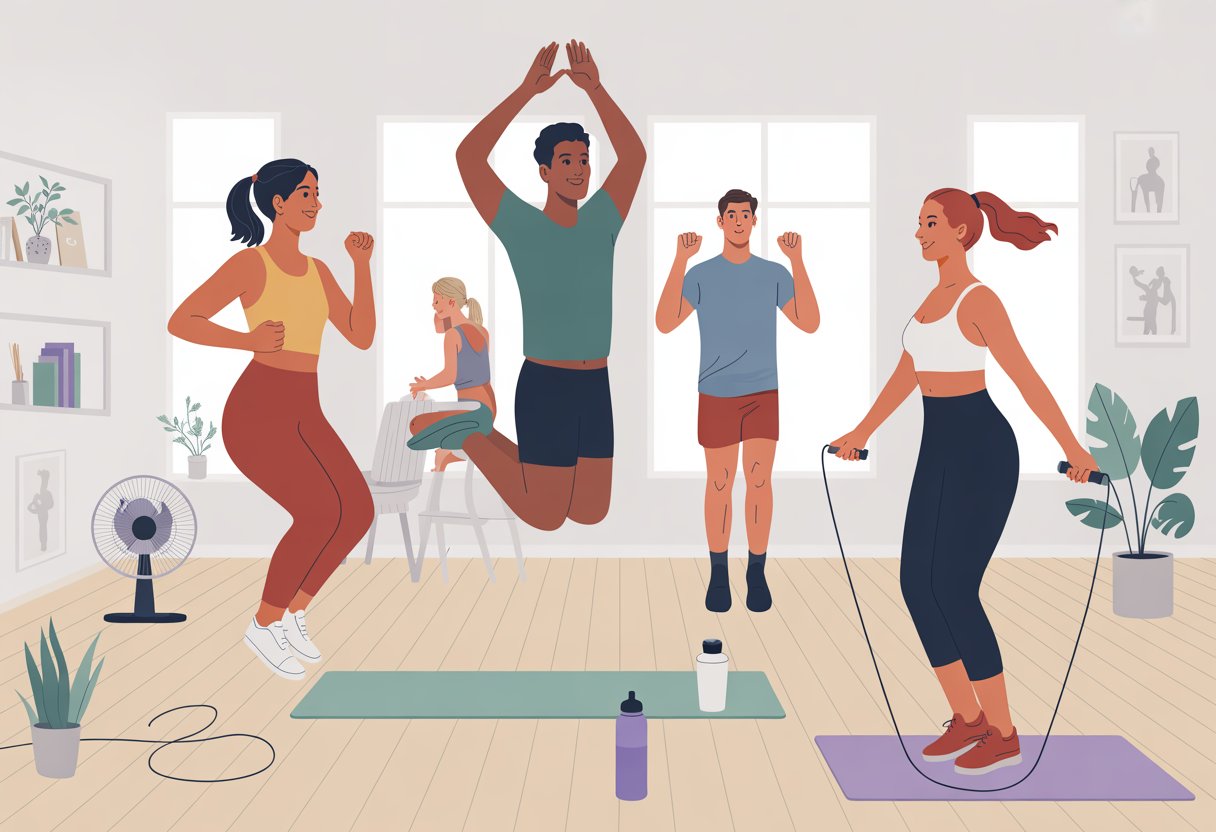
Building cardiovascular endurance doesn’t require a treadmill or gym membership. Simple bodyweight exercises, strategic workout structures, and creative movement patterns can effectively improve cardiovascular fitness in any living space.
Interval Training and High-Intensity Circuits
Interval training alternates between periods of intense effort and recovery, making it one of the most efficient ways to boost heart health at home. A basic structure involves 30 seconds of intense work followed by 30 seconds of rest, repeated for 10-20 minutes.
Cardio exercises like burpees, mountain climbers, and squat jumps[10] work well in circuit formats. Someone might perform burpees for 40 seconds, rest for 20 seconds, then move to mountain climbers for the same timing. These explosive movements use bodyweight to generate maximum intensity without equipment.
The key is maintaining high effort during work periods. Heart rate should rise significantly during active intervals and partially recover during rest. Beginners can start with longer rest periods and gradually decrease them as fitness improves.
Sample Circuit:
- Burpees: 30 seconds
- Rest: 30 seconds
- Squat jumps: 30 seconds
- Rest: 30 seconds
- Mountain climbers: 30 seconds
- Rest: 30 seconds
Repeat this cycle 3-5 times depending on fitness level.
Indoor Cardio: Jumping Jacks and High Knees
Jumping jacks provide a straightforward way to elevate heart rate quickly. The movement involves jumping feet apart while raising arms overhead, then returning to the starting position. This exercise engages multiple muscle groups and requires minimal space.
High knees involve jogging in place while lifting knees to hip height. This targets the core, hip flexors, and quadriceps while challenging cardiovascular endurance. Pumping arms overhead increases intensity further.
Both exercises can be performed for timed intervals or specific rep counts. Someone might do jumping jacks for 60 seconds, rest briefly, then perform high knees for another 60 seconds. These movements work well as warm-ups or as part of larger workout routines.
Progression Tips:
- Start with 30-second intervals
- Increase to 45 seconds as endurance builds
- Eventually reach 60-90 second intervals
- Add these between strength exercises for extra challenge
The beauty of these exercises lies in their simplicity. No learning curve exists, making them accessible for any fitness level.
Fun Cardio: Dance Workouts and Jump Rope
Dance workouts turn cardiovascular exercise into entertainment. Following along with online dance videos or simply moving to music for 20-30 minutes provides excellent cardio benefits. The varied movements work different muscle groups while keeping the mind engaged.
Jumping rope delivers serious cardiovascular benefits in a compact package. A basic jump rope costs less than most gym equipment and stores easily. Just 10 minutes of jumping rope can match the cardiovascular impact of 30 minutes of jogging.
Beginners should start with basic two-foot jumps, focusing on rhythm rather than speed. As coordination improves, variations like alternating feet, high knees while jumping, or double-unders add challenge. Even without an actual rope, mimicking the jumping motion provides cardiovascular benefits.
Both options break the monotony of traditional cardio. Dance workouts offer creative expression, while jump rope provides quick, efficient sessions perfect for tight schedules.
Enhancing Flexibility, Mobility, and Balance
Working on flexibility and balance doesn’t require fancy gym memberships or costly equipment. Regular stretching routines, simple yoga practices, and targeted balance exercises can all be done at home with minimal or no equipment while delivering real improvements in how the body moves and functions.
Stretching Routines and Warm-Up/Cool-Down
A proper warm-up prepares muscles for activity and reduces injury risk. Before exercise, people should do dynamic movements like arm circles, leg swings, and gentle torso twists for 5-10 minutes.
After workouts, static stretches help improve range of motion[11] and flexibility. Hold each stretch for 20-30 seconds without bouncing. Key stretches include:
- Hamstring stretch: Sit with one leg straight, bend forward toward toes
- Quad stretch: Stand on one leg, pull opposite foot toward buttocks
- Shoulder stretch: Pull one arm across chest with opposite hand
- Hip flexor stretch: Kneel on one knee, push hips forward gently
People who want better results can hold stretches for up to one or two minutes. The stretch should feel uncomfortable but never painful. Consistency matters more than intensity[11] when building flexibility.
Simple Yoga Sequences at Home
Yoga builds strength, flexibility, and body awareness without any equipment beyond a yoga mat or towel. Beginners can follow free online videos or practice basic poses independently.
Child’s Pose stretches the hips, thighs, and back. Kneel with knees apart, sit back on heels, then fold forward with arms extended.
Downward Dog forms an inverted V shape that stretches the entire backside. Start on hands and knees, then lift hips up and back while straightening arms and legs.
Cat-Cow improves spinal mobility. On hands and knees, alternate between arching the back and rounding it while breathing deeply.
People can practice these poses for 10-15 minutes daily. Many find that starting with structured guidance helps build proper form and confidence in their practice.
Balance Exercises for Stability
Balance training reduces fall risk[11] and strengthens stabilizer muscles. These exercises require no equipment and take just minutes.
Tree Pose challenges single-leg stability. Stand on one foot and place the other foot against the inner thigh or calf. Hold for 30 seconds then switch sides.
Heel-to-Toe Walk mimics a sobriety test but builds coordination. Walk in a straight line, placing one foot directly in front of the other so the heel touches the toes.
Single-Leg Stands are the simplest option. Stand on one leg for 30-60 seconds while performing daily tasks like brushing teeth or washing dishes. Progress by closing eyes or standing on an unstable surface like a folded towel.
Practicing balance exercises three times per week shows noticeable improvements within a few weeks.
Creative Use of Minimal or No Equipment
Equipment-free fitness relies on bodyweight exercises and common household items to build strength and endurance. Resistance bands offer an affordable upgrade, while strategic workout planning helps people train effectively in apartments and small living spaces.
Getting the Most Out of Equipment-Free Fitness
Bodyweight exercises form the foundation of no-equipment full-body exercises[12] that target multiple muscle groups simultaneously. Push-ups work the chest, shoulders, and triceps without any tools. Squats build leg and glute strength using only body weight as resistance.
Planks strengthen the core while engaging the shoulders and back. Mountain climbers combine cardio with core work in a single movement. Burpees elevate the heart rate while working the entire body.
People can increase difficulty by adjusting tempo, adding pauses, or changing angles. Slowing down each repetition increases time under tension. Elevating the feet during push-ups shifts more weight to the upper body. Single-leg variations of squats and lunges demand greater balance and strength from each leg.
Progressive overload without weights includes:
- Increasing repetitions per set
- Adding more sets to each workout
- Reducing rest time between exercises
- Performing harder exercise variations
- Combining movements into complex sequences
Home Alternatives: Household Items and Resistance Bands
Water bottles, backpacks filled with books, and laundry detergent containers serve as makeshift weights for exercises like bicep curls and shoulder presses. A sturdy chair supports tricep dips and step-ups. Towels create sliding discs on smooth floors for core exercises and lunges.
Resistance bands provide variable tension throughout each movement at a fraction of gym equipment costs. Light bands work for rehabilitation and smaller muscle groups. Heavy bands challenge larger muscles like the back and legs. Loop bands around door anchors, sturdy furniture, or the exerciser’s own body to create different resistance angles.
Common household items for workouts:
| Item | Exercise Applications |
|---|---|
| Filled backpack | Weighted squats, lunges, push-ups |
| Chair or couch | Tricep dips, step-ups, incline push-ups |
| Towel | Sliding planks, hamstring curls, resistance rows |
| Gallon water jug | Shoulder presses, lateral raises, goblet squats |
Tips for Small Spaces and Noisy Environments
A space roughly six feet by three feet provides enough room for most bodyweight exercises. Vertical movements like jump squats require adequate ceiling height, but low-impact alternatives work in any space. Wall sits and glute bridges deliver results without requiring floor space beyond a yoga mat.
Apartment dwellers can replace high-impact jumping exercises with quieter alternatives. Step-backs substitute for jump lunges. Slow mountain climbers reduce noise while maintaining muscle engagement. Resistance band exercises create virtually no sound while still building strength.
Furniture arrangement creates workout zones even in cramped quarters. Moving a coffee table opens floor space temporarily. Hallways accommodate walking lunges and bear crawls. Doorframes support resistance band anchors for pulling exercises.
Elevate Your Health for Just $29.99/Month
Join the Precision Wellness Subscription at My Healing 365 and get discounted services, priority coaching access, virtual care, and exclusive wellness resources to support your physical, emotional, and hormonal health.
Join for $29.99/MonthQuiet exercise swaps for apartments:
- Replace jumping jacks with stepping jacks
- Substitute burpees with walkout planks
- Use glute bridges instead of jump squats
- Perform reverse lunges rather than jump lunges
Integrating Everyday Activity Into Your Routine
Physical activity doesn’t require a gym membership or special equipment when people learn to use their daily routines as opportunities for movement. Simple choices like choosing stairs over elevators or walking instead of driving can add up to significant fitness gains over time.
Walking, Jogging, and Taking the Stairs
Walking remains one of the most accessible forms of exercise because it requires no equipment beyond comfortable shoes. A person can start with short 10-minute walks during lunch breaks or after dinner. As endurance builds, they can increase duration or add jogging intervals.
Jogging provides more cardiovascular benefits than walking in less time. Beginners should start with a walk-jog combination, alternating between one minute of jogging and two minutes of walking. This approach follows exercise science principles that prevent injury while building stamina.
Taking the stairs instead of elevators[13] offers an easy way to strengthen leg muscles and improve heart health during a regular day. Even climbing just one or two floors burns calories and engages major muscle groups. People who work in tall buildings can start by taking stairs for part of their journey and using the elevator for remaining floors.
Active Living: Chores, Outdoor Play, and Commuting
Household chores provide built-in workout opportunities without any extra time commitment. Vacuuming, mopping, gardening, and yard work all engage multiple muscle groups and elevate heart rate. A person can increase the intensity by adding lunges while vacuuming or doing squats while picking up items.
Parking farther from destinations turns every errand into a chance for extra steps. Walking or biking to nearby locations[14] eliminates parking hassles while building daily activity levels. Someone who lives too far to walk the entire distance can park halfway and walk the rest.
Outdoor activities like playing with children, washing the car, or walking a dog combine social time with physical movement. These activities feel less like formal exercise but still contribute to the recommended 150 minutes of weekly activity. People stuck indoors can perform indoor workouts like marching in place during phone calls or doing wall push-ups between tasks.
Leveraging Free and Affordable Fitness Resources
Getting fit doesn’t require spending money on expensive gym memberships or personal trainers. Free fitness resources like YouTube workout videos, mobile apps, and local community groups provide quality instruction and motivation at no cost.
Online Classes, Fitness Apps, and Community Groups
YouTube fitness tutorials[15] offer thousands of workout videos for every fitness level. Personal trainers and fitness influencers share complete routines that people can follow from home. These videos range from beginner-friendly sessions to advanced training programs.
Fitness apps provide structured workout plans, progress tracking, and exercise demonstrations. Many apps offer free versions with basic features that include workout timers, exercise libraries, and simple tracking tools. Users can upgrade to premium versions later if they want additional features.
Community fitness groups meet in parks, recreation centers, and public spaces. These groups often organize free group runs, outdoor boot camps, and walking clubs. Local parks and recreation departments frequently sponsor these activities at no charge to participants.
Social media platforms host fitness communities where members share tips, progress photos, and encouragement. Facebook groups and Reddit forums connect people with similar fitness goals. These online spaces provide accountability and support without any membership fees.
Finding and Joining Free Workouts
Local libraries often host free fitness classes in their meeting rooms or outdoor spaces. Community centers schedule regular exercise sessions including yoga, aerobics, and strength training. People can check their city’s recreation department website for class schedules and locations.
Running clubs welcome new members regardless of speed or experience level. These groups meet regularly at designated spots and provide a social element to exercise. Many sporting goods stores sponsor weekly group runs that anyone can join.
Outdoor spaces like parks and beaches offer natural workout locations. People can use park benches for step-ups and tricep dips, playground equipment for pull-ups, and open fields for sprints. Public outdoor fitness equipment is available in many parks at no cost.
The Power of Virtual Support and Challenges
Online fitness challenges create accountability through shared goals and friendly competition. Participants track their workouts, steps, or other metrics over a set period. These challenges often take place in free Facebook groups or through basic app features.
Virtual workout partners help people stay consistent with their exercise routines. Video calls allow friends to exercise together even when separated by distance. This connection provides motivation and makes workouts more enjoyable.
Free online communities celebrate member achievements and offer troubleshooting advice. Members post questions about form, nutrition, and workout modifications. Experienced community members share their knowledge to help beginners avoid common mistakes and stay safe.
Maintaining Motivation and Consistency Over Time
Staying committed to fitness requires strategic approaches to rewards, building support systems with others, and adapting when progress slows down.
Setting Rewards and Celebrating Achievements
Creating a reward system helps reinforce positive exercise habits and provides tangible motivation. Small rewards work best when tied to specific milestones rather than distant goals. A person might treat themselves to new workout clothes after completing 20 workouts, or enjoy a favorite healthy meal after exercising consistently for two weeks.
The key is choosing rewards that align with fitness goals rather than undermine them. Non-food rewards like a relaxing bath, a movie night, or time spent on a hobby create positive associations with exercise without conflicting with health objectives.
Effective reward examples:
- New resistance bands or jump rope after one month of consistency
- A massage or spa day after reaching a fitness milestone
- A day trip or activity after three months of regular workouts
- Updated workout playlist or fitness app subscription
Tracking progress through photos, measurements, or a workout journal makes achievements visible and concrete. This documentation provides motivation during difficult periods by showing how far someone has come.
Creating Accountability Systems
Building a support system[16] with friends, family, or a workout buddy significantly increases the likelihood of maintaining an exercise routine. A workout buddy creates mutual accountability where both people encourage each other and make it harder to skip sessions.
Sharing fitness goals with others adds external motivation beyond personal willpower. When someone knows others are aware of their commitments, they feel more compelled to follow through. This accountability can take many forms, from informal check-ins with friends to structured arrangements with exercise partners.
Ways to build accountability:
- Schedule regular workout times with a partner
- Join online fitness communities or local exercise groups
- Share progress updates with supportive friends or family
- Use fitness apps that connect with others for challenges
Even family members who don’t participate directly can provide encouragement and help protect workout time. Taking turns watching children with a friend allows both people to exercise while supporting each other’s goals.
Overcoming Plateaus and Staying Inspired
Fitness plateaus occur when the body adapts to a routine and progress stalls. Breaking through requires changing exercise variables like intensity, duration, or activity type. Someone doing the same bodyweight routine for months might add variations, increase repetitions, or try completely different exercises.
Mental plateaus differ from physical ones but feel equally discouraging. When motivation wanes, returning to the original reason for starting can reignite commitment. Whether the goal was better health, more energy, or improved sleep, reconnecting with that purpose provides direction.
Trying new activities prevents boredom and challenges the body differently. A person focused on running might incorporate bodyweight strength training, or someone doing home workouts might explore outdoor activities like hiking or cycling. This variety keeps both mind and body engaged while working different muscle groups.
Healthy Habits to Support Your Fitness Journey
Exercise alone won’t deliver optimal results without proper nutrition, hydration, and recovery. Building sustainable habits around eating, drinking enough water, and getting adequate rest creates the foundation for long-term fitness success.
Meal Prep and Budget-Friendly Nutrition
Meal prep saves both time and money while ensuring nutritious options are always available. Spending a few hours each week preparing meals in bulk prevents reliance on expensive takeout or processed foods when hunger strikes.
Budget-friendly proteins like eggs, canned tuna, dried beans, and chicken thighs provide essential nutrients without straining finances. Buying seasonal produce and frozen vegetables keeps costs low while maintaining nutritional value. Oats, rice, and pasta in bulk offer affordable carbohydrate sources that fuel workouts effectively.
Planning meals around what’s on sale helps maximize grocery budgets. Cooking larger batches and freezing portions eliminates waste and creates ready-made meals for busy days. Simple recipes with minimal ingredients reduce both preparation time and expense.
Tracking food intake through a basic journal or free app helps people understand their eating patterns. This awareness makes it easier to adjust portions and make healthier choices without purchasing expensive meal plans or supplements.
Staying Hydrated and Rested
Water intake directly impacts workout performance and recovery. Drinking water throughout the day, especially before, during, and after physical activity, maintains energy levels and prevents fatigue. A reusable water bottle makes hydration convenient and eliminates the cost of bottled water.
Sleep quality affects muscle recovery, hormone regulation, and metabolism. Aiming for 7-8 hours of sleep each night[17] allows the body to repair tissues and restore energy. Creating a consistent sleep schedule strengthens this recovery process.
Simple habits like limiting screen time before bed and keeping the bedroom cool and dark improve sleep quality without spending money. Adequate rest reduces injury risk and helps maintain motivation for regular physical activity.
Making Fitness a Sustainable Lifestyle Habit
Consistency matters more than intensity when building lasting fitness habits. Starting with small, manageable changes prevents burnout and makes progress feel achievable. Adding a 10-minute walk daily or doing five push-ups each morning creates momentum.
Setting realistic goals and tracking progress[17] keeps motivation high. Writing down achievements, whether it’s walking an extra block or completing more repetitions, provides tangible evidence of improvement. Free apps or simple notebooks work equally well for monitoring activity.
Finding enjoyable activities increases the likelihood of sticking with them long-term. Whether it’s dancing, hiking, or bodyweight exercises, choosing movements that feel good rather than punishing makes fitness sustainable. Involving friends or family members adds accountability and makes workouts more social and fun.
Adapting Your Approach for Different Needs and Abilities
Fitness routines work best when they match a person’s current ability level and physical limitations. Simple adjustments to bodyweight exercises make them accessible for everyone, while proper safety practices help prevent setbacks.
Exercise Modifications for Beginners and Advanced
Beginners often struggle with standard exercises, but simple changes make movements more manageable. Knee push-ups reduce the load compared to traditional push-ups by keeping the knees on the ground. This modification builds upper body strength without overwhelming someone new to fitness.
For exercises like squats, beginners can hold onto a chair for balance or reduce the depth of the movement. The wall sit works well as a starting point since the wall provides support while building leg strength. Advanced exercisers can increase difficulty by holding the position longer or lifting one leg.
Other bodyweight exercises adapt easily to different levels. Planks become easier when performed on the knees or against a wall at an angle. Advanced individuals can add arm or leg lifts while holding the plank position. Simplifying or complexifying tasks[18] helps match the exercise to each person’s current fitness level.
Staying Safe and Preventing Injuries
Proper form matters more than the number of repetitions completed. Rushing through exercises with poor technique increases injury risk and reduces effectiveness.
A gradual approach protects joints and muscles from strain. Adding no more than 10 percent to workout intensity each week gives the body time to adapt. Rest days allow muscles to recover and rebuild stronger.
Pain signals a problem that needs attention. Discomfort during exercise differs from the burning sensation in working muscles. Sharp or shooting pain means stopping the activity immediately. Stretching before and after workouts keeps muscles flexible and reduces soreness.
Inclusive Fitness for All Ages
Age should not limit physical activity participation. Older adults benefit from adapting movement to their bodies[19] rather than following rigid programs designed for younger people.
Low-impact exercises like walking, chair exercises, and gentle stretching suit older individuals or those with joint concerns. Younger people often handle more intense activities, but they still need modifications if recovering from injury or new to exercise.
Physical limitations require thoughtful adjustments rather than complete activity avoidance. Someone with limited mobility can perform seated versions of many bodyweight exercises. Balance issues call for exercises near a wall or sturdy furniture for support. The key is finding movements that challenge the body safely without risking harm.
Frequently Asked Questions
Getting fit without equipment raises practical questions about effectiveness, routines, and progress. These answers address the most common concerns people have when starting bodyweight training.
Can you get fit at home with no equipment?
Yes, people can get fit at home without any equipment using bodyweight exercises. Bodyweight exercises improve the cardiovascular system, strength, and stamina[20] while strengthening various muscle groups throughout the body.
Studies show that lower body bodyweight exercises strengthen lower limb muscle force effectively. The exercises help tone muscles and increase muscle power without requiring gym access or special tools.
Home workouts offer full-body training at any time. Push-ups, squats, planks, and lunges work multiple muscle groups and build real strength.
What is the best no-equipment workout routine for beginners?
Beginners should start with basic movements that target all major muscle groups. A simple routine includes squats for legs, push-ups for chest and arms, planks for core, and lunges for lower body strength.
The best approach involves doing exercises three to four times per week. Each workout should include a 10-minute warm-up with neck tilts, shoulder rotations, arm circles, and spot jogging.
New exercisers should focus on proper form before increasing repetitions. Starting with 2 sets of 10 repetitions for each exercise builds a foundation. As strength improves, they can add more sets or reps.
How often should you do bodyweight workouts to build strength and endurance?
Most people should do bodyweight workouts three to five days per week for best results. This frequency allows muscles time to recover while maintaining consistent progress.
Beginners may start with three days per week, taking rest days between sessions. More experienced exercisers can train five to six days weekly by alternating muscle groups or exercise types.
Recovery matters as much as training. Muscles grow and strengthen during rest periods, not during the actual workout.
Which calisthenics exercises work the full body without weights?
Burpees combine squats, push-ups, and jumps into one movement that works legs, core, chest, and arms. Mountain climbers engage the core, shoulders, and legs while raising heart rate.
Push-ups target the chest, shoulders, triceps, and core muscles. Squats work the quads, hamstrings, glutes, and calves in a single movement.
Planks strengthen the entire core along with shoulders and back muscles. Pull-ups or modified versions using a sturdy bar work the back, biceps, and shoulders.
How can you progressively overload bodyweight exercises without equipment?
Progressive overload happens by increasing repetitions, adding sets, or slowing down movement speed. Someone doing 10 push-ups can progress to 15, then 20, building strength over time.
Changing exercise angles creates new challenges. Regular push-ups become harder when feet are elevated. Squats get tougher when done on one leg.
Reducing rest time between sets increases workout intensity. Pausing at the hardest part of each movement, like the bottom of a squat, adds difficulty without equipment.
What are common mistakes that prevent progress when training without a gym?
Poor form is the biggest mistake that limits results and increases injury risk. Letting knees cave inward during squats or arching the back excessively during push-ups reduces effectiveness.
Skipping warm-ups prevents muscles from preparing for exercise. A proper warm-up elevates body temperature, metabolic rate, and oxygen uptake for better performance.
Doing the same routine without variation stops progress. Muscles adapt to repeated movements, so changing exercises or increasing difficulty every few weeks maintains growth.
Not training consistently enough slows results. Bodyweight training requires regular effort, ideally with exercises practiced daily[20] or at least several times per week for visible changes.
Post Views: 6
References
- How to Stay Fit Without a Gym: Ultimate Home Workout Guide. https://sweethealthyliving.com/fitness-tips/how-to-stay-fit-without-a-gym/ Accessed May 5, 2026
- How To Become Fit Without Gym: 10 Proven Ways To Get In Shape At Home. https://fitsero.com/how-to-become-fit-without-gym/ Accessed May 5, 2026
- How to Define SMART Fitness Goals and Stick to Achievable Routines. https://www.crunch.com/thehub/how-to-define-smart-fitness-goals-and-stick-to-achievable-routines/ Accessed May 5, 2026
- 6 Consistent Ways To Keep Yourself Accountable For Your Fitness Goals. https://www.gymbuddynow.com/6-consistent-ways-to-keep-yourself-accountable-for-your-fitness-goals/ Accessed May 5, 2026
- 7 Ways To Hold Yourself Accountable Towards Your Fitness Goals. https://artofhealthyliving.com/7-ways-to-hold-yourself-accountable-towards-your-fitness-goals/ Accessed May 5, 2026
- The 10 Best at Home Workouts (No-Equipment!). https://www.nerdfitness.com/blog/the-7-best-at-home-workout-routines-the-ultimate-guide-for-training-without-a-gym/ Accessed May 5, 2026
- At-Home Workout Without Equipment: 8 Exercises to Choose From. https://betterme.world/articles/at-home-workout-plan-without-equipment/ Accessed May 5, 2026
- 8 At-Home Exercises to Stay Fit Without the Gym. https://www.zing.coach/fitness-library/8-at-home-exercises-to-stay-fit-without-the-gym Accessed May 5, 2026
- 10 Home Strength Training Exercises Without Equipment – StrengthLog. https://www.strengthlog.com/strength-training-exercises-at-home/ Accessed May 5, 2026
- Cardio exercises like burpees, mountain climbers, and squat jumps. https://www.verywellfit.com/step-by-step-cardio-exercises-for-home-workouts-1230827 Accessed May 5, 2026
- Benefits of Flexibility and How To Improve It. https://health.clevelandclinic.org/how-to-improve-flexibility-and-benefits Accessed May 5, 2026
- 15 Best No-Equipment Full-Body Exercises You Can Do At Home. https://fitnessprogramer.com/no-equipment-full-body-exercises/ Accessed May 5, 2026
- No Time for Exercise? Here Are Seven Easy Ways to Move More!. https://www.heart.org/en/healthy-living/fitness/getting-active/no-time-for-exercise-here-are-7-easy-ways-to-move-more Accessed May 5, 2026
- 23 Ways to Sneak More Exercise into Your Daily Routine Without It Feeling Miserable. https://homeaddict.io/23-ways-to-sneak-more-exercise-into-your-daily-routine-without-it-feeling-miserable/ Accessed May 5, 2026
- Just a moment…. https://www.savethestudent.org/save-money/health/cheap-ways-lose-weight.html Accessed May 5, 2026
- Building a support system. https://www.verywellhealth.com/how-to-stay-consistent-with-working-out-8665913 Accessed May 5, 2026
- 14 Habits of Fit People Who Don’t Go To A Gym. https://health.yahoo.com/wellness/fitness/articles/14-habits-fit-people-dont-100056466.html Accessed May 5, 2026
- Adapting Exercises for All: A Guide to Modified Activities. https://www.numberanalytics.com/blog/adapting-exercises-for-all-modified-activities-guide Accessed May 5, 2026
- Inclusive Fitness: Adapting Movement For Different Bodies And Abilities. https://expatnetwork.com/inclusive-fitness-adapting-movement-for-different-bodies-and-abilities/ Accessed May 5, 2026
- 22 Effective No-Equipment Workouts You Can Do at Home. https://www.stylecraze.com/articles/no-equipment-workouts-you-can-do-at-home/ Accessed May 5, 2026

























