
Medically Reviewed
Dr. Jose Rossello, MD, PhD, MHCM
Preventive Medicine & Public Health Specialist
Last Reviewed: May 9, 2026
Getting results from workouts doesn’t require endless hours in the gym or following complicated routines. The most effective exercises are those backed by scientific research that target multiple muscle groups, challenge the body progressively, and match specific fitness goals like building strength, improving endurance, or losing fat. Research shows that certain movements and training methods consistently produce faster gains when combined with proper technique and recovery.
Many people waste time on ineffective exercises or poorly structured workouts. Understanding which exercises actually work and why they work helps eliminate guesswork and speeds up progress. Science-backed training methods[1] focus on proven principles like progressive overload, proper nutrition timing, and strategic rest periods that maximize muscle growth and fat loss.
The key to faster results lies in choosing the right exercises and applying them correctly. This guide breaks down the most effective movements for strength, muscle building, and endurance, along with practical strategies for workout planning, nutrition, and tracking progress to ensure consistent gains.
Table of Contents
Key Takeaways
- Compound exercises that work multiple muscle groups simultaneously produce faster strength and hypertrophy gains than isolation movements
- Combining proper nutrition timing with progressive overload training accelerates muscle growth and fat loss results
- Consistency in following a structured workout plan with adequate recovery periods is more important than workout intensity alone
Foundational Principles for Accelerated Progress
Building strength and muscle requires applying specific training principles that maximize adaptation while minimizing wasted effort. These core strategies create the mechanical tension and metabolic stress needed to trigger muscle protein synthesis and drive measurable improvements.
Progressive Overload Strategies
Progressive overload means gradually increasing the demands placed on muscles over time. This principle drives all strength gains and muscle growth.
The most straightforward method involves adding weight to the bar. A lifter might squat 135 pounds for three sets of eight reps one week, then attempt 140 pounds the next. Even small increases of 2.5 to 5 pounds per session accumulate into significant progress.
Adding reps provides another effective path. If someone benches 185 pounds for three sets of six reps, they could aim for seven reps per set the following week. Once they reach 10 reps, they increase the weight and drop back to six reps.
Additional overload methods include:
- Increasing total sets per muscle group
- Reducing rest periods between sets
- Slowing down the tempo of each rep
- Improving exercise form to increase range of motion
Building muscle and strength[2] requires systematic progression rather than random workout variations.
Training Closer to Failure
Training closer to failure means continuing a set until few or no additional reps remain possible with good form. This approach maximizes mechanical tension on muscle fibers.
Research shows sets taken within 0-3 reps of failure produce similar muscle growth. A set of 10 reps where 11 or 12 would be impossible stimulates adaptation effectively. Going to complete failure every set creates excessive fatigue without proportional benefits.
Beginners should leave 3-4 reps in reserve while learning proper form. Intermediate lifters can train 1-2 reps from failure on most compound movements. Advanced trainees might occasionally reach true failure on isolation exercises like bicep curls or leg extensions.
The strategy changes based on exercise type. Barbell squats performed to failure carry higher injury risk and central nervous system fatigue. Machine leg presses allow safer training closer to complete exhaustion.
Optimizing Time Under Tension
Time under tension refers to how long muscles work during each set. A 10-rep set taking 30 seconds creates different stimulus than the same reps completed in 15 seconds.
Controlled rep speeds of 2-3 seconds lowering and 1-2 seconds lifting work well for most goals. A bench press might take two seconds to lower the bar and one second to press it up. This 3-second cadence on 10 reps produces 30 seconds of productive tension.
Excessively slow tempos like 10 seconds per rep force lighter weights that may not provide sufficient mechanical tension. Very fast reps can reduce tension and increase injury risk through momentum.
Effective tempo guidelines:
- Eccentric (lowering): 2-4 seconds
- Bottom position: 0-1 seconds
- Concentric (lifting): 1-2 seconds
- Top position: 0-1 seconds
Monitoring Training Volume
Training volume represents the total work performed, typically calculated as sets multiplied by reps multiplied by weight. A workout with three sets of 10 reps at 150 pounds equals 4,500 pounds of volume.
Most research shows 10-20 sets per muscle group per week optimizes growth for trained individuals. Someone training chest might perform four sets of bench press, three sets of incline press, and three sets of flies across two weekly sessions.
Volume needs increase as lifters advance. Beginners might grow from 6-8 sets per muscle weekly. Intermediate lifters often require 12-16 sets. Advanced athletes sometimes need 20+ sets when properly managing recovery.
Science-based training approaches[3] emphasize finding individual volume thresholds through careful tracking. If strength stalls or fatigue accumulates, volume may exceed recovery capacity. If progress stops despite feeling fresh, volume might be insufficient to drive continued muscle protein synthesis.
Compound Movements and Functional Strength
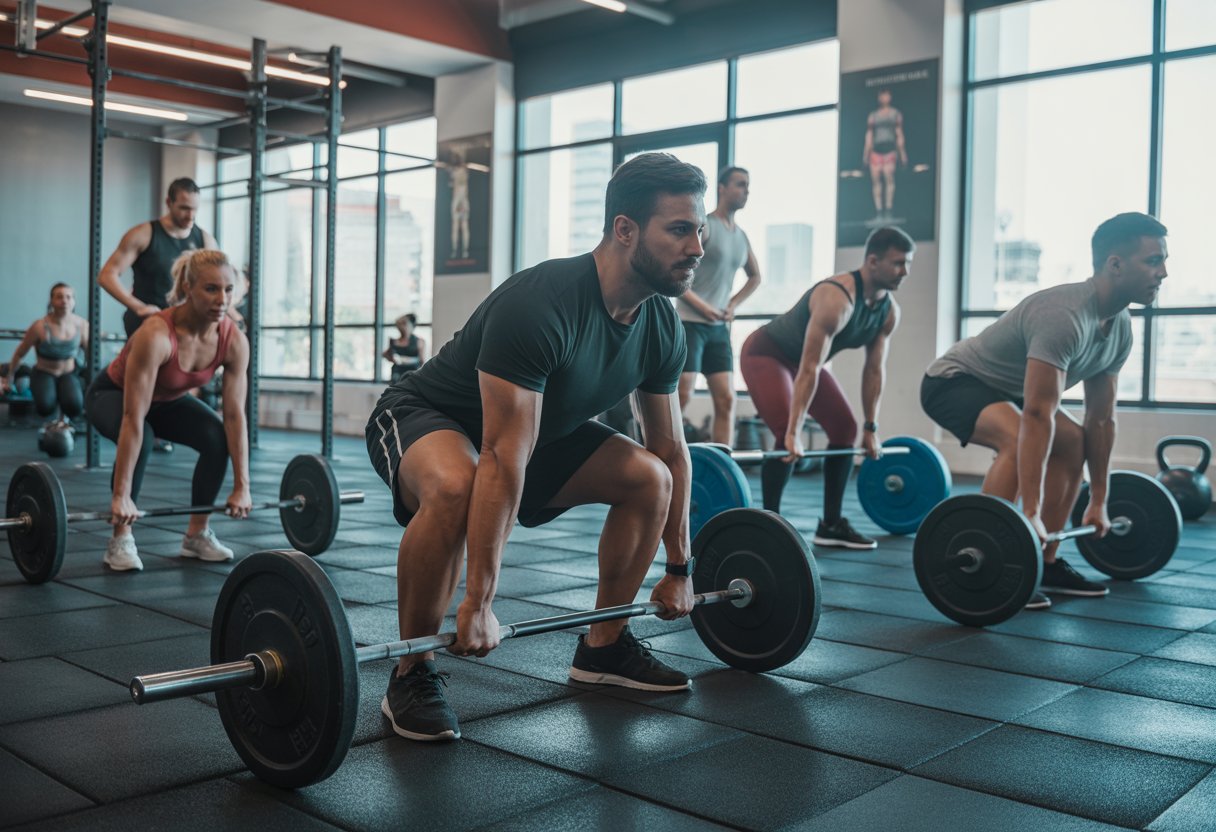
Compound exercises involve multiple joints and muscle groups[4], making them far more efficient than isolation work for building strength and muscle mass. These movements mirror how the body naturally functions in daily activities and athletic performance.
Squats and Variations
The squat stands as one of the most effective compound lifts for developing lower body strength and power. This movement works the quadriceps, hamstrings, glutes, and lower back simultaneously through a full range of motion.
Barbell back squats allow lifters to handle heavy loads, which triggers significant muscle growth and strength gains. The movement requires proper form to maximize benefits and prevent injury. Feet should be positioned slightly wider than shoulder width, with toes pointed slightly outward.
Front squats shift more emphasis to the quadriceps and require greater core engagement. Goblet squats work well for beginners learning proper squat mechanics. Each variation offers unique benefits while maintaining the core principles of the squat pattern.
Deadlifts for Total-Body Power
Deadlifts engage the glutes, hamstrings, erector spinae, and quadriceps[4] while also challenging grip strength and core stability. This compound movement translates directly to real-world activities like lifting objects from the ground.
The conventional deadlift starts with the bar over mid-foot, a neutral spine, and tension throughout the body before the lift begins. Lifters should pull the bar close to their body as they stand up straight.
Sumo deadlifts place more demand on the quadriceps and glutes compared to conventional style. Trap bar deadlifts reduce lower back stress and often feel more natural for those with mobility limitations. Both variations provide excellent alternatives while still delivering powerful strength training benefits.
The Bench Press and Upper Body Drive
The bench press reigns as the primary upper body compound movement for building chest, shoulder, and tricep strength. Powerlifters use it as a competition lift, while bodybuilders rely on it for developing muscle mass across the entire pressing musculature.
Proper setup requires shoulder blades pulled together and down, with a slight arch in the lower back. The bar should touch the chest near the sternum before pressing back to lockout. Grip width typically falls just outside shoulder width for most lifters.
Incline variations emphasize the upper chest[4] and front deltoids more than flat pressing. Dumbbell bench presses allow for a greater range of motion and can feel easier on the shoulder joints compared to barbell work.
Overhead Press Essentials
The overhead press builds shoulder strength and stability through a complete vertical pressing motion. This movement works the deltoids, triceps, and upper chest while demanding significant core control to maintain proper position.
Standing overhead presses engage more stabilizer muscles than seated variations. The bar should start at shoulder height and press straight overhead until the arms reach full extension. Elbows should stay slightly in front of the bar throughout the movement.
Keeping the core tight prevents excessive back arching during the press. A controlled descent back to the shoulders completes each repetition and maintains tension in the working muscles.
Bodyweight and Calisthenics for Rapid Gains
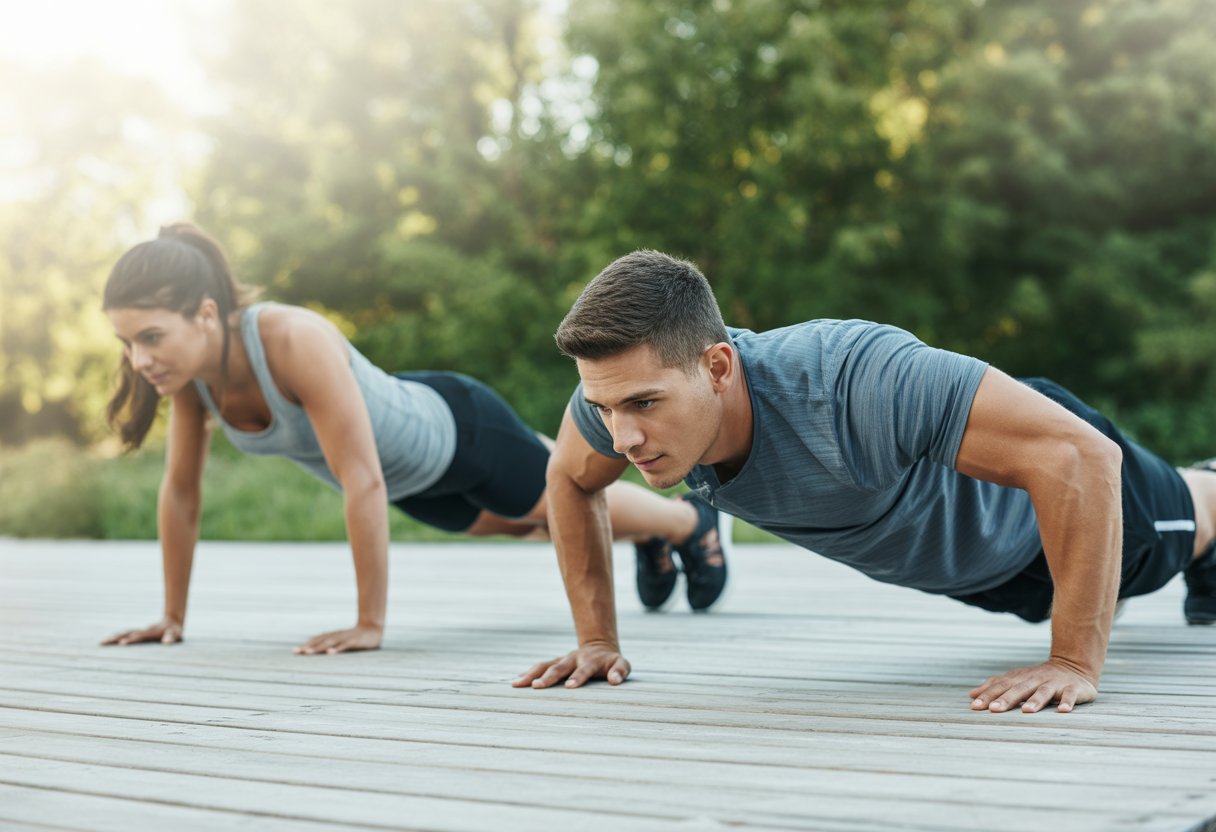
Bodyweight training builds muscle through tension and progressive overload, with research showing that high-rep bodyweight exercises can produce similar muscle growth to heavy lifting[5] when sets are taken close to failure. These movements improve both strength and mobility while requiring minimal equipment.
Plank for Core Strength
The plank strengthens the entire core by forcing the abs, obliques, and lower back to work together to maintain a rigid position. This isometric exercise builds endurance in the stabilizing muscles that support the spine during other movements.
Proper form requires the body to form a straight line from head to heels. The elbows should sit directly under the shoulders, and the core must stay tight to prevent the hips from sagging or rising too high.
Key plank variations include:
- Standard forearm plank
- Side plank for obliques
- Plank with shoulder taps
- Extended-arm plank
Beginners should start with 20-30 second holds and gradually increase duration. Advanced lifters can add movement or elevate the feet to increase difficulty.
Elevate Your Health for Just $29.99/Month
Join the Precision Wellness Subscription at My Healing 365 and get discounted services, priority coaching access, virtual care, and exclusive wellness resources to support your physical, emotional, and hormonal health.
Join for $29.99/MonthPush-Ups for Chest and Triceps
Push-ups target the chest, triceps, and shoulders while engaging the core for stability. This compound movement builds upper body strength and can be modified for all fitness levels.
The hands should be placed slightly wider than shoulder-width apart. The body lowers until the chest nearly touches the ground, then presses back up while maintaining a straight line from head to heels. The elbows should track at a 45-degree angle from the body.
Progression options:
| Level | Variation |
|---|---|
| Beginner | Incline or knee push-ups |
| Intermediate | Standard push-ups |
| Advanced | Decline, diamond, or one-arm push-ups |
Training to failure on each set maximizes muscle growth. Adding tempo changes or pauses at the bottom increases time under tension.
Lunge and Its Functional Benefits
The lunge develops single-leg strength and improves balance and mobility. This movement pattern translates directly to everyday activities like walking and climbing stairs.
To perform a lunge, one steps forward and lowers the back knee toward the ground until both legs form 90-degree angles. The front knee should track over the toes without extending past them. The torso stays upright throughout the movement.
Lunges strengthen the quads, glutes, and hamstrings while challenging stability. They also identify and correct strength imbalances between legs that bilateral exercises might miss.
Common lunge variations:
- Forward lunge
- Reverse lunge
- Walking lunge
- Bulgarian split squat
Each variation emphasizes different muscles and movement patterns.
Advanced Bodyweight Progressions
Advanced lifters need increased difficulty to continue building muscle with bodyweight training. Progressive overload comes from adding reps, sets, frequency, or movement complexity rather than external weight.
Skill-based movements like handstand push-ups, pistol squats, and muscle-ups require significant strength and coordination. These exercises provide enough stimulus to challenge even experienced athletes.
Advanced techniques include:
- Rest-pause training: Brief rest periods during a set to squeeze out more reps
- Mechanical drop sets: Switching to easier variations when failure is reached
- Density circuits: Performing more work in less time
Proper form remains critical as exercises become harder. Poor technique increases injury risk and reduces muscle activation. Advanced movements should be learned progressively, mastering easier variations before attempting harder ones.
Science-Driven Cardio and Endurance Workouts
Aerobic exercise strengthens the heart and improves the body’s ability to use oxygen during physical activity. Research shows that 150 minutes of moderate cardio or 75 minutes of intense aerobic exercise[6] each week builds cardiovascular endurance and reduces disease risk.
Running and Jogging Protocols
Running stands as one of the most effective methods for building cardiovascular fitness quickly. The activity increases heart rate significantly and improves the body’s maximum oxygen uptake.
Beginners should start with 20 to 30 minute sessions at a comfortable pace. They can gradually increase duration and speed as their endurance improves over several weeks.
More experienced runners benefit from varied pacing strategies. Some sessions should focus on steady-state runs at a moderate intensity. Others can incorporate tempo runs where the runner maintains a challenging but sustainable pace for 20 to 40 minutes.
The heart recovers faster between exercise sessions as cardiovascular fitness improves. A lower resting heart rate typically indicates better endurance capacity.
Walking for Overall Health
Walking requires no special equipment and fits easily into daily routines. Studies demonstrate that regular walking lowers blood pressure, improves cholesterol levels, and reduces the risk of type 2 diabetes.
People new to exercise should begin with 10 to 15 minute walks daily. They can add five minutes each week until reaching 30 to 60 minutes per session.
Increasing intensity maintains progress as fitness improves. Walking faster or choosing routes with hills elevates heart rate more than flat, slow-paced walks. Treadmill users can adjust incline settings to add challenge without increasing speed.
Walking also benefits individuals with joint pain or mobility limitations. The low-impact nature protects joints while still providing cardiovascular benefits.
Swimming for Low-Impact Fitness
Swimming builds both cardiovascular endurance and muscle strength simultaneously. The water supports body weight and reduces stress on joints and bones.
Swimmers can choose from multiple strokes including freestyle, breaststroke, and sidestroke. Starting with one lap followed by rest allows beginners to build stamina gradually.
A practical progression involves swimming for 10 minutes with frequent breaks as needed. Adding five minutes weekly helps reach the target of 30 to 60 minutes of continuous activity.
Pool walking offers another option for people with chronic pain conditions. Walking laps in chest-deep water provides resistance training while protecting painful joints from impact.
Interval Training for Efficiency
High-intensity interval training alternates short bursts of maximum effort with recovery periods. This approach delivers cardiovascular benefits in less time[7] than traditional steady-state cardio.
A basic protocol involves 30 seconds of sprinting followed by 60 to 90 seconds of walking or light jogging. Repeating this pattern for 15 to 20 minutes provides a complete workout.
The intervals push heart rate to 80-95% of maximum during work periods. Heart rate then drops during recovery phases, training the cardiovascular system to adapt quickly to changing demands.
As fitness improves, exercisers can extend work intervals to 45 or 60 seconds while shortening rest periods. This progression continues to challenge the cardiovascular system and drive endurance gains.
Maximizing Fat Loss With HIIT and Tabata

High-intensity interval training delivers significant fat loss through short bursts of maximum effort followed by brief recovery periods. This training approach elevates metabolism for hours after workouts end while preserving muscle mass during weight loss.
HIIT and High-Intensity Interval Training Explained
HIIT alternates between intense work periods and recovery intervals to burn calories efficiently. A typical session lasts 20-30 minutes but produces results comparable to longer steady-state cardio workouts.
The method works by pushing training intensity to 85-90% of maximum effort during work intervals. These short bursts recruit more muscle fibers than moderate exercise. Recovery periods allow partial restoration before the next intense interval begins.
Research shows HIIT triggers the afterburn effect, scientifically known as EPOC. The body continues burning extra calories for hours after the workout ends. Studies demonstrate that participants doing HIIT workouts for weight loss[8] three times weekly reduced visceral fat by nearly 20% over 12 weeks.
Common HIIT formats include:
- 30 seconds hard effort / 60-90 seconds recovery
- 1 minute hard / 1 minute easy
- 20 seconds all-out / 10 seconds rest (Tabata)
Tabata for Quick Fat Loss
Tabata represents one of the most time-efficient fat loss protocols available. This specific HIIT variation consists of 8 rounds of 20 seconds maximum effort followed by 10 seconds rest, totaling just 4 minutes of work.
The structure demands true all-out intensity during each 20-second interval. Exercises can include burpees, mountain climbers, or any movement that elevates heart rate rapidly. Multiple Tabata rounds with 1-2 minutes rest between them create a complete workout in 15-20 minutes.
A 20-minute HIIT workout for fat loss[9] can torch calories while building lean muscle. The extreme intensity of Tabata makes it suitable for advanced exercisers who have built a fitness foundation first.
Beginners should start with easier intervals before attempting Tabata protocols. The body needs time to adapt to high-intensity demands.
Jumping Jacks and High Knees
Jumping jacks provide a full-body cardio movement perfect for HIIT intervals. They engage the legs, core, and shoulders while rapidly increasing heart rate. The exercise requires no equipment and works in any space.
High knees deliver powerful lower body conditioning while spiking metabolism. Participants drive their knees toward chest height while pumping arms in a running motion. This movement activates the hip flexors, quads, and core intensely.
Both exercises work exceptionally well in circuit formats. A simple routine might include:
Round 1: 30 seconds jumping jacks / 30 seconds rest
Round 2: 30 seconds high knees / 30 seconds rest
Repeat 6-8 times
These bodyweight movements allow individuals to train anywhere without gym access. They scale easily by adjusting speed and intensity based on fitness level.
Integrating Sprints and Circuits
Sprints represent one of the most effective fat-burning exercises available. Running at maximum speed for 20-30 seconds followed by 60-90 seconds of walking creates a potent interval workout. Hill sprints add resistance while reducing joint impact compared to flat sprints.
Circuit training combines multiple exercises performed back-to-back with minimal rest. A fat loss circuit might include sprints, push-ups, squats, and mountain climbers rotated for 3-5 rounds.
The combination keeps training intensity high throughout the session. Different muscle groups work during each exercise, allowing some recovery while maintaining an elevated heart rate. This approach burns significant calories during the workout while boosting metabolism afterward.
Limiting high-intensity sessions to 2-3 times weekly prevents overtraining. Recovery days allow the body to adapt and rebuild, which is when actual fat loss and fitness improvements occur.
Building Muscle Mass and Hypertrophy Faster

Strategic training methods that emphasize muscle stretch and controlled lowering phases can accelerate hypertrophy beyond traditional lifting approaches. Exercises like Romanian deadlifts and chest-supported rows maximize muscle tension through specific mechanical advantages.
Stretch-Mediated Hypertrophy Techniques
Stretch-mediated hypertrophy occurs when muscles experience significant tension while lengthened. This mechanical stress triggers unique growth signals that complement traditional muscle-building approaches[10].
Research shows muscles grow faster when trained in stretched positions. Exercises that emphasize the lengthened phase create more muscle damage and metabolic stress. This happens because muscle fibers work hardest when stretched under load.
Lifters can apply this by pausing at the bottom of movements. A dumbbell fly held at full stretch or a deep overhead extension both maximize this effect. The key is maintaining tension while the muscle reaches its longest position.
Practical applications include:
- Holding the stretched position for 2-3 seconds per rep
- Using a controlled tempo during the lengthening phase
- Selecting exercises with a full range of motion
- Prioritizing movements where stretch occurs under tension
Eccentric Training Methods
Eccentric training focuses on the lowering portion of each repetition. Muscles can handle more weight during this phase compared to lifting. This creates greater mechanical tension, which drives hypertrophy through muscle fiber damage[1].
The eccentric phase should last 3-4 seconds for optimal muscle growth. Lifters often rush this portion, missing significant growth potential. Slowing down the descent increases time under tension and muscle fiber recruitment.
Training programs can incorporate eccentric emphasis in multiple ways. One method involves using heavier weights than normal for the lowering phase only. Another approach extends the eccentric duration while keeping the same load.
Athletes should note that eccentric training causes more muscle soreness. Recovery between sessions becomes more important. Starting with 1-2 eccentric-focused exercises per workout prevents overtraining.
Utilizing Romanian Deadlifts
Romanian deadlifts combine eccentric training with stretch-mediated hypertrophy. The hamstrings and glutes experience maximum stretch at the bottom position. This makes the exercise particularly effective for building muscle in the posterior chain.
The movement starts from a standing position with the bar at hip height. Lifters push their hips back while maintaining straight legs. The bar travels down the front of the legs until a deep hamstring stretch occurs.
Key form points:
- Keep the bar close to the body throughout
- Maintain a neutral spine position
- Stop when hamstrings reach full stretch
- Drive through the heels to return to start
The Romanian deadlift works better for hypertrophy than conventional deadlifts. It keeps constant tension on the target muscles. Traditional deadlifts include a pause on the floor that reduces this tension.
Chest-Supported Row Benefits
Chest-supported rows eliminate momentum and lower back involvement. This isolation allows lifters to focus entirely on back muscle development. The setup removes the need to stabilize the torso during pulling movements.
The exercise positions the chest against an angled bench. This support lets athletes use heavier weights safely. Back muscles work harder because they cannot receive help from other muscle groups.
Research indicates chest-supported rows produce more muscle activation in the lats and rhomboids. The fixed position also allows for better eccentric control. Lifters can slowly lower the weight over 3-4 seconds without compromising form.
The variation works well for those following evidence-based hypertrophy recommendations[11]. It allows proper execution near muscular failure. Form remains consistent across all sets, maximizing the growth stimulus per repetition.
Flexibility, Mobility, and Injury Prevention
Building strength and endurance matters little if poor mobility or tight muscles lead to injury. Proper flexibility training, strategic warm-ups, and recovery protocols keep the body moving efficiently while reducing strain on joints and connective tissue.
Yoga for Whole-Body Wellness
Yoga addresses flexibility and mobility simultaneously through controlled movements that lengthen muscles and improve joint function. Downward dog stretches the entire posterior chain while building shoulder stability. Child’s pose targets the hips, thighs, and back muscles that tighten from prolonged sitting.
Regular yoga practice helps with posture[12] by lengthening shortened muscles and strengthening the core. The spinal twist mobilizes the thoracic spine and releases tension in the mid-back. Butterfly pose opens the hip flexors and inner thighs, areas that become restricted in people who sit for extended periods.
Holding poses for 30 to 60 seconds allows muscles to relax into deeper ranges of motion. Practitioners should feel mild discomfort but never sharp pain. Breathing deeply during holds helps the nervous system release muscle tension naturally.
Effective Stretching Routines
Static stretching works best after workouts when muscles are warm and pliable. The hamstring stretch addresses one of the most commonly tight muscle groups by having the person sit with one leg extended and reach toward the toes. The piriformis stretch relieves tension in the hip rotators that often contribute to lower back discomfort.
Improving flexibility[12] requires consistency rather than intensity. Stretching twice daily produces better results than occasional long sessions. Each stretch should last 20 to 30 seconds for maintenance or up to two minutes for increasing range of motion.
The chin tuck exercise improves neck mobility by gently pushing the chin toward the throat. This movement stretches the posterior neck muscles and counters forward head posture. Toe touches lengthen the hamstrings, lower back, and calves in one efficient movement.
Dynamic Warm-Up and Cool Down
Dynamic movements before exercise prepare muscles and joints for activity without the risks associated with static stretching cold tissues. Leg swings, arm circles, and walking lunges increase blood flow and gradually expand range of motion. These movements activate the nervous system and improve coordination.
A proper warm-up raises core body temperature and lubricates joints through synovial fluid production. Five to ten minutes of progressive movement reduces injury risk by preparing tissues for the demands ahead. The intensity should gradually build from gentle to moderate.
Cool-down protocols transition the body from high-intensity work back to rest. Light movement like walking or slow cycling helps clear metabolic waste products from muscles. This period provides an ideal time for static stretching when tissues remain warm and receptive to lengthening.
Active Recovery Protocols
Active recovery uses low-intensity movement to promote healing between training sessions. Swimming, walking, or cycling at easy effort levels increases blood flow to muscles without creating additional damage. This enhanced circulation delivers nutrients and removes waste products more efficiently than complete rest.
Foam rolling breaks up adhesions in muscle tissue that stretching alone cannot address. Rolling the quadriceps, hamstrings, and upper back for 30 to 60 seconds per area reduces muscle tension. Applying moderate pressure to tight spots while breathing deeply allows tissues to release.
Mobility drills targeting specific joints maintain movement quality during recovery periods. Hip circles, shoulder dislocations with a resistance band, and ankle rotations preserve range of motion. These activities support the body’s repair processes while preventing the stiffness that comes from extended inactivity.
Optimizing Workout Structure and Planning

The right workout structure maximizes training stimulus while preventing burnout. Exercise order, intensity changes, and movement selection all affect how quickly someone reaches their fitness goals.
Creating a Balanced Workout Plan
A balanced workout plan targets all major muscle groups throughout the week. Most people see good results training each muscle group 2-3 times per week with at least 48 hours of rest between sessions for the same muscles.
The total weekly volume matters more than squeezing everything into one session. Someone training three days per week might do full-body workouts, while someone training six days could split muscle groups across different days.
The best gym schedule[13] depends on individual recovery ability and time availability. Beginners often start with 3-4 sessions per week, while advanced lifters may train 5-6 days with proper planning.
Each workout should include:
- 3-5 exercises per session
- 3-4 sets per exercise
- 6-12 reps for muscle growth
- 1-3 reps for maximum strength
Adjusting Training Intensity
Training intensity needs to change over time to keep making progress. Lifting the same weights for the same reps every week leads to plateaus within a few months.
Periodization training[14] involves planned changes in volume and intensity. Linear periodization gradually increases weight while decreasing reps over several weeks. Undulating periodization varies intensity within the same week.
A simple approach alternates between heavy, moderate, and light days. Heavy days use 85-90% of max weight for 3-5 reps. Moderate days use 70-80% for 6-10 reps. Light days use 50-65% for 12-15 reps.
Incorporating Compound and Isolation Work
Compound movements should come first in most workouts. These exercises work multiple muscle groups and require the most energy and focus.
Research shows that exercise sequence affects performance[15], with strength dropping 21% when prioritized exercises are done last instead of first. Fatigue impacts results even when exercises target different muscles.
Primary compound movements:
- Squats
- Deadlifts
- Bench press
- Overhead press
- Rows
- Pull-ups
Isolation exercises work best after compound movements. These single-joint exercises target specific muscles without causing as much overall fatigue. Examples include bicep curls, tricep extensions, and leg curls.
Someone building overall strength might do 70% compound movements and 30% isolation work. Someone focusing on specific muscle development might use a 50-50 split.
Preventing Overtraining and Burnout
Overtraining happens when training volume exceeds recovery capacity. Warning signs include decreased performance, constant soreness, poor sleep, increased injuries, and loss of motivation.
Most people need at least one full rest day per week. Active recovery days with light walking or stretching can replace complete rest for some individuals.
A workout routine becomes counterproductive when it includes more than 20-25 hard sets per muscle group weekly. Beginners should start with 10-12 sets per muscle group and add volume gradually.
Signs someone needs more recovery:
- Strength decreases for two consecutive workouts
- Resting heart rate increases by 10+ beats per minute
- Mood changes or irritability
- Persistent muscle soreness lasting 72+ hours
Deload weeks every 4-6 weeks help prevent overtraining. During a deload, training volume drops by 40-50% while maintaining intensity to allow full recovery.
Essential Nutrition for Faster Results
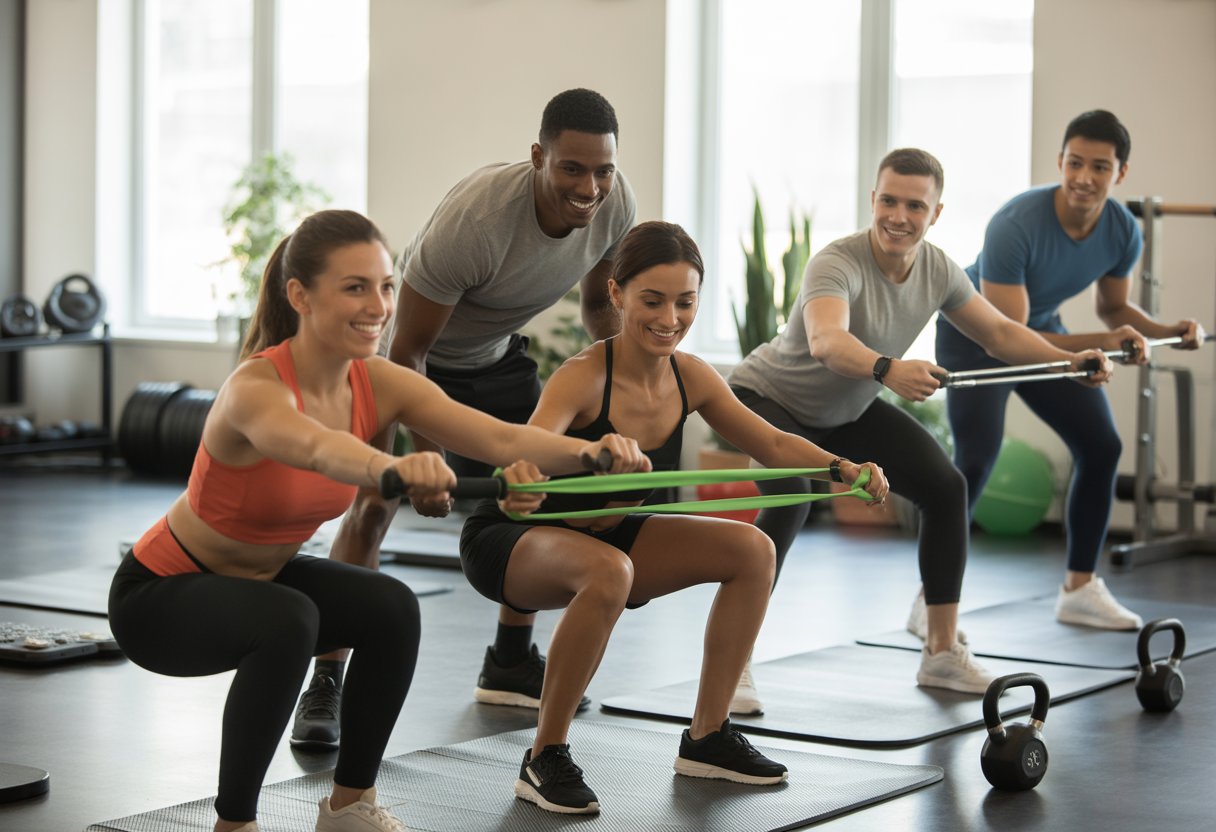
Proper nutrition determines how quickly the body builds muscle and recovers from training. The right balance of protein, calories, and strategic supplementation accelerates progress when combined with consistent exercise.
Protein Intake and Timing
Protein serves as the building block for muscle tissue repair and growth. Research shows that consuming 0.7 to 1.0 grams of protein per pound of bodyweight[16] optimizes muscle protein synthesis without providing additional benefits at higher amounts.
Athletes should distribute their daily protein intake across at least four meals throughout the day. This approach keeps muscle protein synthesis elevated for longer periods compared to consuming the same amount in fewer meals.
Effective protein sources include:
- Chicken breast
- Eggs and egg whites
- Greek yogurt
- Lean beef
- Fish (salmon, tuna, cod)
- Whey protein powder
Timing protein around workouts offers particular benefits. Consuming protein before and after training sessions produces greater muscle protein synthesis compared to eating it at other times during the day.
Caloric Surplus for Muscle Gain
Building muscle requires eating more calories than the body burns. However, eating too far above maintenance calories[16] causes excess fat gain rather than faster muscle growth.
The body has a limited rate at which it can build new muscle tissue. A moderate approach of gaining 2 to 4 pounds per month prevents unnecessary fat accumulation while supporting steady muscle development.
Beginners should aim for the higher end of this range since they have greater muscle growth potential. Intermediate lifters benefit more from the lower end with smaller caloric surpluses.
A simple starting point involves multiplying bodyweight in pounds by 15, then adding 200 to 400 calories. Beginners add closer to 400 calories while experienced lifters add around 200 calories.
Athletes should monitor their weight weekly and adjust their caloric intake based on actual progress rather than sticking to initial calculations.
Supplements That Support Growth
Whole foods should form the foundation of any nutrition plan, but certain supplements help fill gaps and enhance recovery. Not all supplements deliver on their marketing promises, so focusing on evidence-based options matters.
Supplements with strong research support:
- Creatine monohydrate: Increases strength and muscle mass when combined with resistance training
- Whey protein: Convenient way to meet daily protein targets
- Omega-3 fatty acids: Support muscle repair and reduce inflammation
- Vitamin D: Important for muscle function, especially for those with limited sun exposure
Most other supplements lack sufficient evidence to justify their cost. Athletes should prioritize sleep, nutrition, and training consistency before investing heavily in supplements.
Pre-workout supplements containing caffeine can improve training performance, but they work best when used strategically rather than daily to prevent tolerance buildup.
Fueling Recovery and Performance
Carbohydrates fuel intense training sessions and replenish glycogen stores after workouts. Athletes should consume 0.25 to 0.5 grams of fat per pound of bodyweight, then fill remaining calories with carbohydrates.
Pre-workout nutrition that includes both protein and carbohydrates[16] produces better training performance than eating protein alone. High glycemic carbohydrates like white rice or rice cakes provide quick energy without causing digestive discomfort.
Post-workout meals should contain protein to support muscle repair and carbohydrates to restore depleted glycogen. The exact timing is more flexible than previously thought, but eating within a few hours after training remains beneficial.
Hydration significantly affects both performance and recovery. Athletes should drink enough water to maintain clear or light yellow urine throughout the day. During intense training sessions, replacing fluids lost through sweat becomes critical for maintaining strength and endurance.
The Role of Consistency, Progress Tracking, and Safety
Getting fast results from exercise requires more than just picking the right workouts. A person needs to show up regularly, perform movements correctly, track their improvements, and protect themselves from injury through smart training habits.
Ensuring Proper Form in Every Exercise
Proper form serves as the foundation for any effective workout program. When someone performs exercises with correct technique, they activate the right muscle groups and reduce the risk of strain or injury.
Full range of motion matters significantly for muscle development. Moving through the complete movement pattern ensures that muscles work through their entire length, leading to better strength gains and flexibility. A squat performed halfway down produces fewer results than one that reaches proper depth.
Posture plays a critical role in exercise safety and effectiveness. The spine should maintain its natural curves during most movements. Shoulders stay back and down, the core remains engaged, and the neck aligns with the spine. Poor posture shifts stress to joints and connective tissues instead of muscles.
Key form elements to monitor:
- Controlled movement speed during both lifting and lowering phases
- Stable joint alignment throughout the exercise
- Engaged core muscles to protect the spine
- Balanced weight distribution between both sides of the body
Tracking Progress and Adjusting Workouts
Monitoring progress[17] helps maintain motivation and shows when adjustments are needed. A training log should record weights lifted, repetitions completed, and how the person felt during each session.
Progressive overload drives continuous improvement. This means gradually increasing the demands placed on muscles through heavier weights, more repetitions, additional sets, or shorter rest periods. Without this principle, the body adapts to the current stress level and stops making gains.
Most people benefit from changing exercise variations every 3-5 weeks. Switching from regular squats to goblet squats or Bulgarian split squats challenges muscles differently and prevents plateaus. The core movement pattern stays similar, but the body experiences new stimuli.
Listening to Your Body and Avoiding Injury
Smart training requires distinguishing between productive discomfort and harmful pain. Muscle fatigue and mild soreness indicate effective work. Sharp pain, joint discomfort, or pain that worsens during movement signals a problem that needs attention.
Rest days allow muscles to repair and grow stronger. Training the same muscle groups intensely every day prevents recovery and increases injury risk. Most programs work well with 2-4 training sessions per week, depending on experience level and goals.
Warning signs that require stopping exercise include dizziness, chest pain, severe shortness of breath, or sudden sharp pains. A person should also reduce intensity if they notice decreased performance over multiple sessions, persistent soreness lasting more than 72 hours, or disrupted sleep patterns.
Breathing Techniques and Focus
Breathing techniques directly affect exercise performance and safety. The general rule involves exhaling during the hardest part of the movement and inhaling during the easier phase. During a push-up, a person exhales while pushing up and inhales while lowering down.
Holding breath during heavy lifts raises blood pressure dangerously. The Valsalva maneuver, where someone briefly holds their breath while bracing the core, works for very heavy lifts but shouldn’t become the default pattern. Normal breathing maintains oxygen flow to muscles and the brain.
Mental focus improves results by strengthening the mind-muscle connection. Concentrating on the specific muscles being worked increases their activation. Instead of just moving weight from point A to point B, thinking about squeezing and controlling the target muscle enhances the training effect.
Frequently Asked Questions
Training programs backed by research consistently emphasize progressive overload, compound movements, and adequate recovery for measurable improvements in strength, endurance, and body composition. Specific workout structures and exercise selections vary based on individual goals, available equipment, and training experience.
What workout methods are scientifically proven to deliver the fastest fitness improvements?
Compound exercises like squats, deadlifts, bench presses, and pull-ups form the foundation of effective training programs[18]. These movements engage multiple muscle groups simultaneously, creating greater mechanical tension and hormonal responses that accelerate results.
Progressive overload remains the most critical principle for continued improvement. Trainees must gradually increase weight, repetitions, or training intensity to force adaptation.
High-intensity interval training delivers significant cardiovascular and metabolic benefits in shorter time periods compared to steady-state cardio. HIIT sessions typically involve 20-30 seconds of maximum effort followed by brief recovery periods.
Advanced intensity techniques like supersets and dropsets increase metabolic stress when used strategically. These methods involve pairing exercises back-to-back[1] or reducing weight immediately after reaching failure to extend sets.
How can I get noticeably fitter in 30 days with an evidence-based training plan?
A 30-day transformation requires consistent training frequency of 4-6 sessions per week combined with proper nutrition. Beginners often see the most dramatic changes during their first month due to neuromuscular adaptations and initial strength gains.
Prioritizing compound movements in each session maximizes efficiency. A typical workout should include 3-4 compound exercises followed by 2-3 isolation movements targeting specific muscle groups.
Training volume matters significantly for progress. Most individuals benefit from 10-20 sets per muscle group per week, distributed across multiple sessions.
Adequate protein intake of 0.7-1 gram per pound of body weight supports muscle repair and growth. Consuming protein throughout the day, particularly around workouts, optimizes results.
Sleep quality directly impacts recovery and adaptation. Individuals should aim for 7-9 hours of quality sleep in a dark, cool environment to maximize growth hormone release and tissue repair.
Which training approach is most effective for improving speed and sprint performance?
Sprint-specific training requires a combination of maximal effort runs and explosive power exercises. Athletes should perform short sprints of 10-40 meters at maximum intensity with full recovery between repetitions.
Plyometric exercises like box jumps, broad jumps, and bounding drills develop the explosive power necessary for acceleration. These movements train the stretch-shortening cycle that occurs during sprinting.
Strength training with heavy compound lifts builds the foundational force production capacity needed for speed. Exercises like back squats, Romanian deadlifts, and hip thrusts develop the posterior chain muscles critical for sprinting.
Hill sprints provide natural resistance that improves acceleration mechanics and leg drive. The incline forces proper forward lean and powerful leg extension without requiring additional equipment.
Rest periods between speed training sessions must be adequate to prevent overtraining. Speed work demands full neuromuscular recovery, typically requiring 48-72 hours between intense sprint sessions.
What are the best at-home exercises for getting in shape quickly with limited equipment?
Bodyweight exercises provide effective resistance training without equipment requirements. Push-ups, pull-ups, squats, lunges, and planks target major muscle groups while allowing for progressive difficulty through variations.
Single-leg movements like Bulgarian split squats and pistol squats increase intensity without added weight. These exercises challenge balance and stability while building unilateral strength.
Isometric holds create significant muscle tension using only body position. Wall sits, plank variations, and hollow body holds develop muscular endurance and core strength.
Jump training exercises elevate heart rate while building explosive power. Burpees, jumping lunges, and jump squats combine strength and cardiovascular conditioning in one movement.
Minimal equipment like resistance bands or a single pair of dumbbells expands exercise options dramatically. These tools enable progressive overload for continued strength development at home.
How should women structure workouts to get in shape fast while staying safe and avoiding burnout?
Women respond to the same training principles as men, requiring progressive overload and adequate recovery. The primary difference lies in recovery capacity, as women typically tolerate higher training volumes relative to intensity.
Full-body workouts performed 3-4 times per week allow for balanced development and sufficient recovery. Each session should include compound movements followed by targeted exercises for specific goals.
Proper menstrual cycle awareness can optimize training intensity. Many women experience peak strength during the follicular phase and may benefit from slightly reduced training volume during the luteal phase.
Incorporating deload weeks every 4-6 weeks prevents accumulated fatigue and reduces injury risk. During deload periods, training volume or intensity decreases by 40-50% while maintaining movement patterns.
Adequate caloric intake supports training demands and hormonal health. Excessive caloric restriction combined with high training volume can disrupt metabolic function and recovery.
What is the most effective weekly workout split for rapid results in strength and conditioning?
Upper/lower splits allow for training frequency of 4-6 days per week with adequate recovery. This approach enables individuals to hit each muscle group twice weekly, which research supports for optimal growth.
Push/pull/legs splits divide training into three movement patterns performed over 3-6 days. This structure prevents overlap between sessions and allows targeted recovery for specific muscle groups.
Full-body routines work well for beginners and those limited to 3 training days weekly. These sessions include compound movements for all major muscle groups with balanced volume distribution.
Training frequency should match recovery capacity and schedule constraints. Most individuals achieve better results training 4 days per week consistently than attempting 6 days with frequent missed sessions.
Strategic exercise selection within each split maximizes efficiency. Each session should begin with compound movements when energy levels are highest, followed by isolation work for specific development areas.
Post Views: 7
References
- Science-Backed Ways to Build Muscle Faster. https://healthprep.com/articles/fitness-nutrition/21-ways-science-says-you-can-actually-build-muscle-faster/ Accessed May 10, 2026
- The Complete Strength Training Guide • Stronger by Science. https://www.strongerbyscience.com/complete-strength-training-guide/ Accessed May 10, 2026
- Foundational Fitness Protocol. https://www.hubermanlab.com/newsletter/foundational-fitness-protocol Accessed May 10, 2026
- The 15 Best Compound Exercises for Muscle and Strength – StrengthLog. https://www.strengthlog.com/compound-exercises-list/ Accessed May 10, 2026
- high-rep bodyweight exercises can produce similar muscle growth to heavy lifting. https://www.menshealth.com/uk/building-muscle/a65297118/build-muscle-with-bodyweight/ Accessed May 10, 2026
- Research shows that 150 minutes of moderate cardio or 75 minutes of intense aerobic exercise. https://www.verywellhealth.com/cardiovascular-endurance-8349067 Accessed May 10, 2026
- Science-Backed Workouts: The Best Exercises for Strength, Endurance & Health. https://blog.mavigadget.com/science-backed-workouts-the-best-exercises-for-strength-endurance-health/ Accessed May 10, 2026
- Best HIIT Running Workouts for Fat Loss – Science Meets Sweat —. https://www.runnersblueprint.com/hiit-workouts-for-weight-loss/ Accessed May 10, 2026
- 20 Min HIIT Workout for Fat Loss – HASfit. https://hasfit.com/workouts/home/advanced-high-intensity/20-min-hiit-workout-for-fat-loss/ Accessed May 10, 2026
- The Ultimate “Cheat Code” for Faster Muscle Growth (Science Says So) – Fitness Volt. https://fitnessvolt.com/faster-muscle-growth/ Accessed May 10, 2026
- These Researchers Reveal the Right Way to Train for More Muscle Mass. https://barbend.com/training-for-muscle-mass-according-to-researchers/ Accessed May 10, 2026
- Benefits of Flexibility and How To Improve It. https://health.clevelandclinic.org/how-to-improve-flexibility-and-benefits Accessed May 10, 2026
- Best Gym Schedule: A Science-Backed Guide for Peak Results. https://betterme.world/articles/best-gym-schedule/ Accessed May 10, 2026
- Train Smarter, Not Harder: The Power of Periodization Training. https://www.anytimefitness.com/blog/train-smarter-not-harder-the-power-of-periodization-training Accessed May 10, 2026
- Just a moment…. https://fitbod.me/blog/the-science-of-workout-programming/ Accessed May 10, 2026
- Muscle Building Diet: What To Eat To Build Muscle (10 Studies). https://builtwithscience.com/diet/muscle-building-diet/ Accessed May 10, 2026
- Performance Enhancement: Consistency Training: Reliable Results: The Power of Consistency Training. https://fastercapital.com/content/Performance-Enhancement–Consistency-Training—Reliable-Results–The-Power-of-Consistency-Training.html Accessed May 10, 2026
- 10 Fastest Ways to Gain Muscle: Science-Backed Guide 2025. https://activeman.com/10-fastest-ways-to-gain-muscle-science-backed-guide-2025/ Accessed May 10, 2026

























