Medically Reviewed
Dr. Jose Rossello, MD, PhD, MHCM
Preventive Medicine & Public Health Specialist
Last Reviewed: April 19, 2026
A home gym puts fitness on your own terms. Building a home gym eliminates travel time to commercial facilities, provides 24/7 access to workouts, and can save money over time compared to ongoing membership fees. Working out at home means no waiting for equipment, no crowded locker rooms, and complete control over the workout environment.
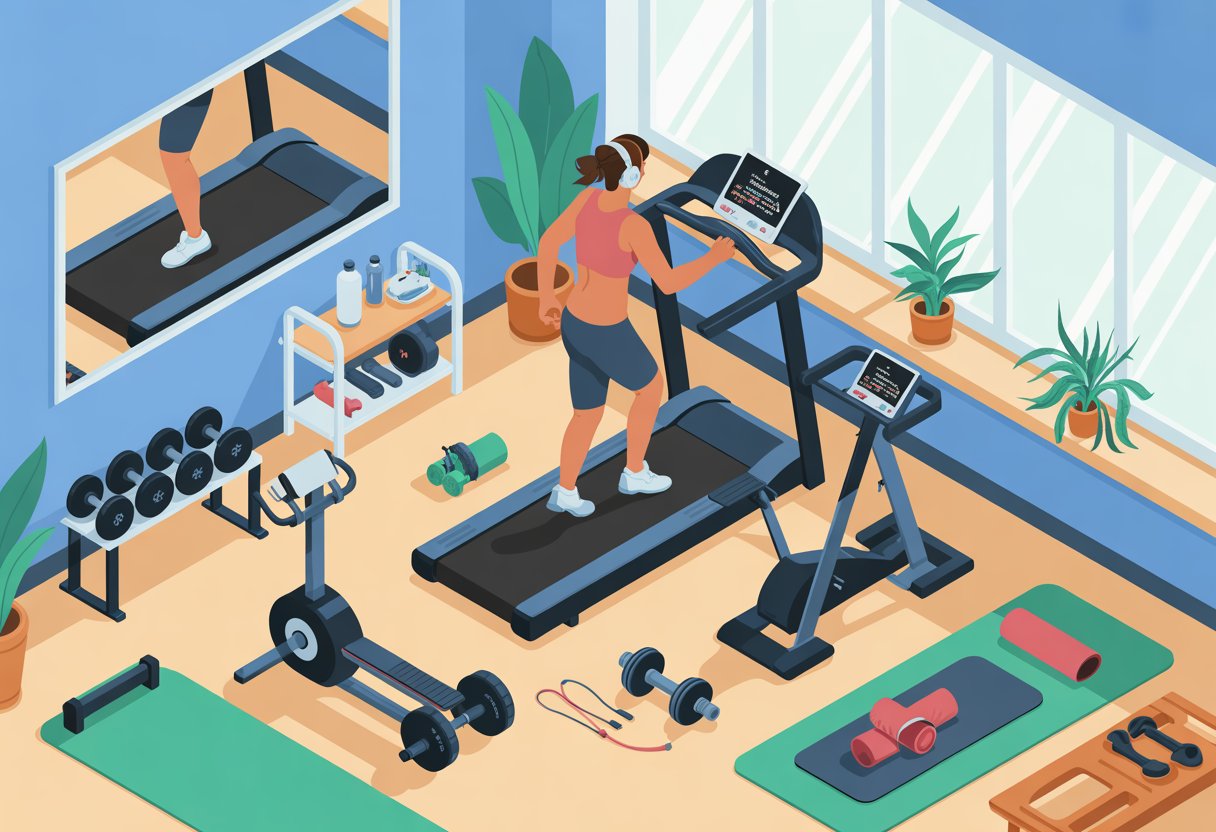
Setting up a home gym requires planning and smart choices. The space can be as simple as a corner with basic equipment or as advanced as a smart home gym with technology features[1]. The key is matching the setup to specific fitness goals and available space. A well-designed home gym grows with changing needs and keeps workouts interesting.
The right approach makes all the difference. This guide covers everything from choosing equipment and designing layouts to creating effective workout programs. Whether someone wants to lift weights, do yoga, or combine different training styles, a home gym can deliver results without the hassle of traditional gyms.
Table of Contents
Key Takeaways
- A home gym saves time and money while providing complete control over workout schedules and environments
- Successful setups start with clear fitness goals and gradually add versatile equipment that fits the available space
- Smart planning for layout, safety, and programming ensures long-term use and continuous fitness progress
Benefits of Building a Home Gym
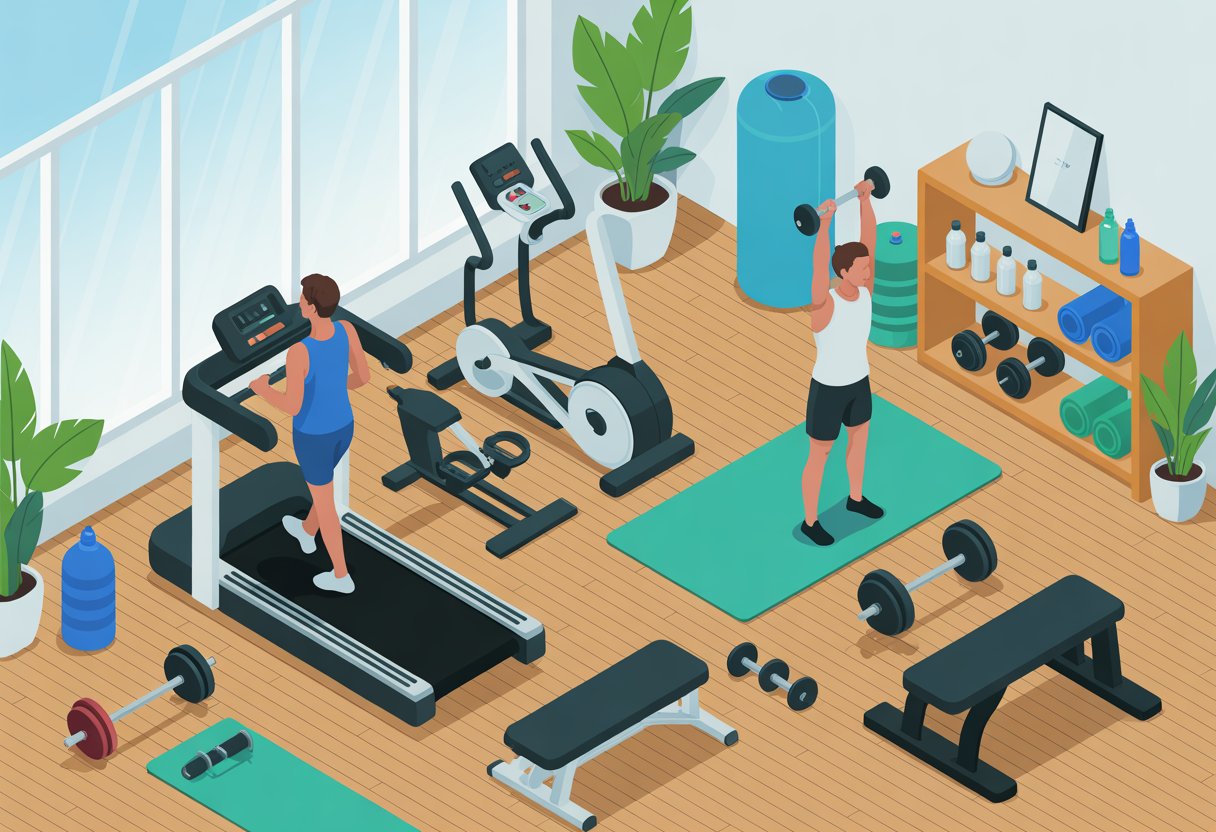
A home gym offers practical advantages that go beyond just having equipment at home. From eliminating commute times to creating a space that fits specific training needs, these benefits directly impact workout frequency and results.
Save Time and Boost Consistency
The elimination of travel time stands as one of the most significant advantages of building a home gym[2]. A 45-minute workout stays at 45 minutes instead of stretching to 90 minutes when factoring in driving, parking, and locker room preparation.
This time savings translates to better workout consistency. When someone can train immediately after waking up or during a lunch break, they’re more likely to stick with their routine. Missing a scheduled morning session doesn’t end the day’s training possibilities since the equipment remains accessible at any hour.
Parents find particular value in this setup. They can complete home workouts while kids play nearby or while dinner cooks in the oven. The garage gym becomes available whenever a 20-minute window opens up, making it easier to maintain regular training despite busy schedules.
Personalize Your Fitness Journey
A home gym allows complete customization based on individual training goals and preferences. Someone training for powerlifting can invest in a quality power rack and barbell without wasting money on cardio machines they won’t use. CrossFit enthusiasts can prioritize open floor space and Olympic lifting platforms.
Equipment selection grows strategically over time. Athletes can start with basic barbells and plates, then add specialized items like kettlebells, plyo boxes, or battle ropes as their budget allows and interests evolve.
The space itself becomes fully customizable. Music plays at any volume. Chalk gets used freely. Weights can be dropped safely with proper flooring. The environment supports the exact type of training someone wants to do without restrictions from gym policies or other members’ preferences.
Control Your Environment and Privacy
Privacy in a home gym creates a judgment-free zone for training. New lifters can practice form with lighter weights without feeling self-conscious. People recovering from injuries can rehab at their own pace without external pressure to lift heavier.
The increased safety and privacy[3] benefits extend to various populations who may not feel comfortable in commercial gym settings. Women can avoid harassment. BIPOC athletes can train without being one of few people of color in the facility. Trans and nonbinary individuals have safe access to training spaces without concerns about locker rooms or discrimination.
Environmental control includes temperature, cleanliness, and equipment availability. The barbell only has one person’s germs on it. The squat rack never has someone curling in it. Equipment gets cleaned on a known schedule.
Long-Term Cost Savings
The budget home gym requires upfront investment but typically costs less than ongoing gym memberships over time. Monthly memberships at $30-50 add up to $360-600 annually, plus gas expenses for commuting.
Quality equipment retains value well. Barbells, plates, and racks can be resold if needed or last for decades with proper care. Someone can start small with used equipment found on Craigslist or similar platforms, then upgrade pieces gradually as their budget allows.
The home gym cost varies based on training needs and available space. A basic setup with a barbell, plates, and simple rack can start around $500-1000. More elaborate configurations with multiple stations and specialized equipment may cost several thousand dollars but still represent savings compared to years of membership fees at premium facilities.
Planning an Effective Home Gym Setup

A successful home gym setup requires careful consideration of available space, budget constraints, location selection, and safety measures. Proper planning ensures the gym meets fitness goals while fitting comfortably within the home environment.
Assessing Space and Layout Options
The first step in planning a home gym setup involves measuring the available area and determining how equipment will fit. A compact home gym can work in spaces as small as 6×6 feet for basic equipment like resistance bands and dumbbells. Larger setups with cardio machines and weight racks typically need at least 10×10 feet.
Space optimization becomes critical in smaller areas. Vertical storage solutions help maximize floor space by mounting resistance bands, yoga mats, and accessories on walls. Foldable equipment like collapsible benches and wall-mounted racks provide flexibility for multi-use rooms.
- Basic setup: 36-50 square feet
- Mid-level gym: 100-150 square feet
- Full garage gym: 200+ square feet
Garage gyms offer advantages for those with limited indoor space. They provide room for larger equipment and heavy weights without concerns about floor damage or noise. However, temperature control and insulation may require additional investment.
Budgeting and Investment Strategies
Creating a budget home gym starts with identifying fitness priorities and essential equipment. A basic setup costs under $200 with resistance bands, a stability ball, and a yoga mat. Mid-range gyms run between $600-$2,000 when adding dumbbells and a cardio machine. Premium setups exceed $5,000 for treadmills, rowers, and comprehensive weight systems.
The equipment selection and layout plan[4] should align with long-term fitness goals rather than impulse purchases. Buying quality equipment upfront prevents replacement costs later. Adjustable dumbbells save money compared to buying multiple weight sets.
A phased approach works well for budget-conscious buyers. Start with essential items and add equipment over time as fitness needs evolve and finances allow.
Selecting the Ideal Location
The ideal location for a home gym depends on available space, noise considerations, and convenience. Basements provide privacy and soundproofing but may lack natural light and ventilation. Spare bedrooms offer climate control and easy access but limit equipment size.
Ceiling height matters for exercises like overhead presses and pull-ups. A minimum of 8 feet works for most activities, though 9-10 feet provides more comfort. The location should allow for equipment assembly and future expansion.
Proximity to daily routines increases workout consistency. Setting up your ideal home gym[5] in a visible, accessible area makes it easier to maintain regular exercise habits. Avoid placing the gym in areas requiring extensive setup or cleanup before each workout.
Optimizing for Safety and Comfort
Safety considerations begin with proper gym flooring. Rubber mats protect floors from damage and provide cushioning for dropped weights. They also reduce noise and create a non-slip surface. Interlocking foam tiles work well for yoga and bodyweight exercises but may not support heavy equipment.
Essential Safety Features:
- Non-slip flooring
- Adequate lighting (natural or artificial)
- Proper ventilation or air circulation
- Emergency shutoff switches on cardio equipment
- Clear pathways around equipment
Good ventilation prevents overheating and maintains air quality during intense workouts. A fan or open windows help with temperature control in spaces without central air. Mirrors help check form during exercises but should be securely mounted to prevent accidents.
The gym area needs sufficient lighting to see equipment clearly and maintain proper form. Natural light improves mood but may require window treatments to reduce glare on screens or mirrors.
Identifying Your Fitness Goals and Priorities
Building a home gym starts with understanding what someone wants to achieve. Different fitness goals require different equipment, training approaches, and space considerations.
Goal-Oriented Equipment Selection
The right equipment depends entirely on what someone wants to accomplish. A person focused on building muscle needs barbells, weight plates, and a sturdy bench. Someone training for cardiovascular health might prioritize a treadmill, rowing machine, or stationary bike.
Setting SMART fitness goals[6] helps narrow down equipment choices. A runner training for a 5K needs different tools than a powerlifter preparing for competition. Home gym owners should list their top three fitness goals before buying anything.
Budget also plays a role in equipment selection. A basic setup for strength training might include adjustable dumbbells, resistance bands, and a pull-up bar. These items cost less than $500 but support dozens of exercises. More advanced lifters might need a power rack, Olympic barbell, and 300+ pounds of plates.
Storage space matters too. Foldable equipment works well in apartments or shared spaces. Wall-mounted racks keep floors clear when not in use.
Balancing Strength, Cardio, and Flexibility
A complete workout routine addresses all three fitness components. Adults benefit from at least 150 minutes of moderate-intensity aerobic activity each week[7], plus strength training sessions.
Strength training builds muscle and bone density. It requires weights, resistance bands, or bodyweight exercises. Two to three sessions per week targets major muscle groups effectively.
Cardio improves heart health and burns calories. Options include jump ropes, stationary bikes, or simply running in place. Even 10-minute sessions add up throughout the week.
Flexibility work prevents injuries and improves movement quality. Yoga mats, foam rollers, and stretching straps support this training. Daily stretching takes just 5-10 minutes but yields significant benefits.
Progressive Overload and Adaptation
Progressive overload means gradually increasing workout difficulty over time. Muscles need new challenges to grow stronger. This principle applies whether someone lifts weights, does cardio, or practices yoga.
For strength training, progressive overload looks like adding weight to the bar, doing more repetitions, or reducing rest time between sets. A beginner might start with 10-pound dumbbells and progress to 20 pounds within months.
Cardio progression involves running faster, cycling longer, or increasing resistance levels. Someone who walks 20 minutes today might jog 30 minutes in six weeks.
Tracking progress makes adaptation visible. A simple notebook recording weights lifted, distances covered, or flexibility improvements shows what works. Many people also use apps or workout plans to monitor their development and adjust routines based on results.
Essential Home Gym Equipment
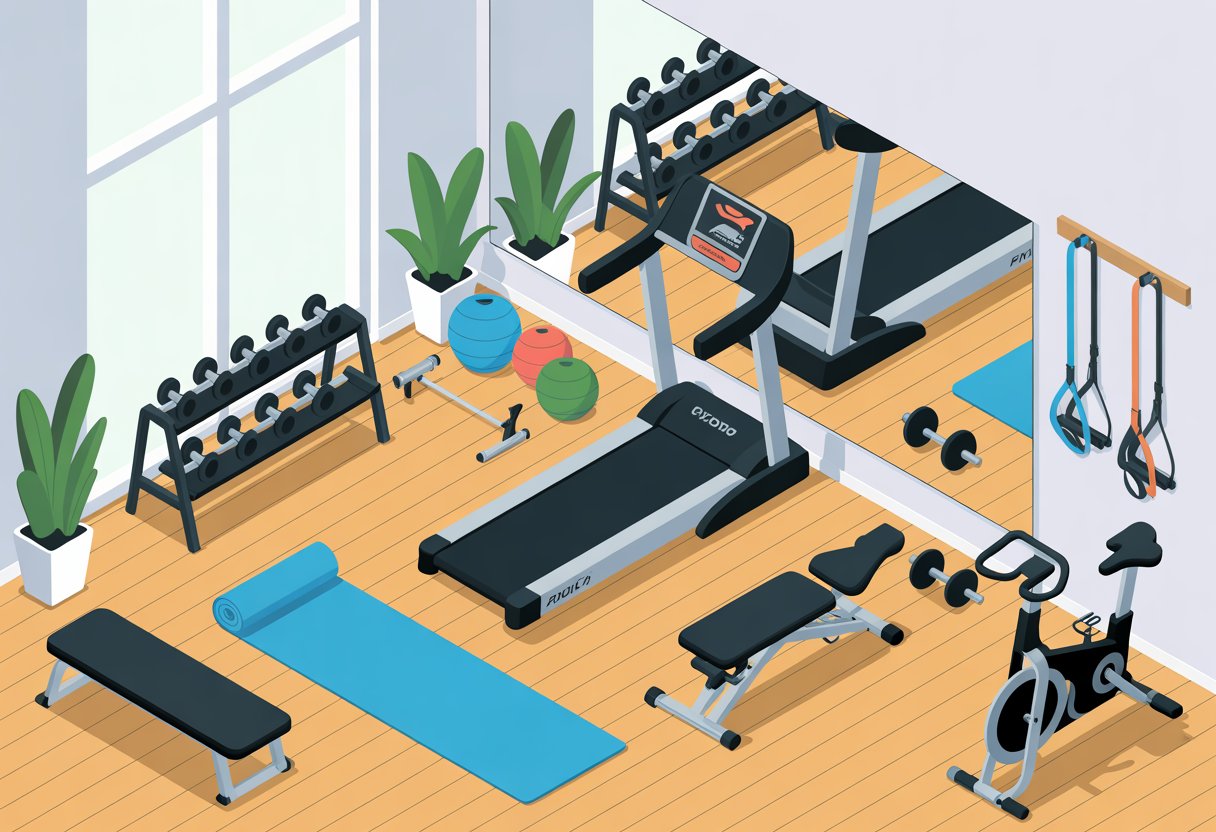
Building an effective home gym requires selecting equipment that matches fitness goals while fitting available space and budget. A well-rounded setup includes strength training tools, cardio machines, flexibility aids, and practical accessories that support diverse workout routines.
Must-Have Strength Training Tools
Free weights form the foundation of most home gyms. Dumbbells allow users to perform dozens of exercises targeting every major muscle group. Adjustable dumbbells[8] save space by replacing multiple weight pairs in one compact design, with some models adjusting from 5 to 80 pounds.
A barbell paired with weight plates enables compound movements like squats, deadlifts, and bench presses. These exercises build total-body strength efficiently. Most home gym owners benefit from bumper plates, which feature rubber coating to reduce noise and protect floors when dropped.
An adjustable bench provides versatility for pressing movements, rows, and core work. The best models offer multiple backrest and seat positions to target muscles from different angles. A power rack or squat rack adds safety and functionality, supporting heavy lifts while offering attachment points for pull-up bars and other accessories.
Resistance bands, kettlebells, and medicine balls round out a complete strength setup. Bands work well for warm-ups, mobility exercises, and travel workouts. Kettlebells excel at dynamic movements that improve cardio and strength simultaneously.
Cardio Equipment for All Levels
A treadmill suits runners, walkers, and hikers of all fitness levels. Modern units include incline settings, speed controls, and tracking displays. A folding treadmill works well in smaller spaces, storing upright when not in use.
Rowing machines deliver full-body, low-impact workouts that challenge both strength and endurance. Studies show rowing puts less stress on joints compared to running while still providing excellent cardiovascular benefits.
Stationary bikes offer another low-impact option for people with joint sensitivity or knee issues. An elliptical machine combines upper and lower body movement in a single cardio session. These machines typically require less space than treadmills while still providing effective workouts.
Jump ropes[8] represent the most budget-friendly cardio tool available. They improve coordination, balance, and endurance while taking up almost no storage space. A quality speed rope costs under $30 and travels easily in a gym bag.
Flexibility and Recovery Gear
A yoga mat creates a comfortable surface for stretching, core work, and bodyweight exercises. Quality mats provide cushioning and grip to prevent slipping during movements. Rubber mats protect floors under heavy equipment while reducing vibration and noise.
Foam rollers help release muscle tension and improve mobility before and after workouts. Rolling tight areas increases blood flow and can reduce soreness. Different densities serve different purposes, with firmer rollers providing deeper tissue work.
A massage gun offers targeted muscle recovery through percussive therapy. These devices reach areas that foam rolling cannot address effectively. Most models include multiple attachments and speed settings to customize treatment.
Battle ropes add both cardio intensity and recovery variety when used in wave patterns or slams. The thick ropes build grip strength while providing a unique movement pattern that challenges stability.
Recommended Accessories
A pull-up bar mounts in doorways or attaches to power racks for bodyweight pulling exercises. Pull-ups and chin-ups build back and arm strength without requiring weights.
Storage solutions keep equipment organized and accessible:
- Wall-mounted plate racks
- Dumbbell trees
- Barbell holders
- Resistance band hooks
Mirrors help users monitor form during exercises. A functional trainer with adjustable cable positions enables hundreds of exercises in minimal space. These machines replace multiple pieces of equipment for those with limited room.
Water bottle holders, workout timers, and exercise charts enhance the training experience. Proper lighting and ventilation make the space more comfortable during intense sessions.
Comparing Equipment Brands and Models
Selecting the right equipment means understanding which manufacturers excel in different categories. Strength training equipment, cardio machines, and smart gym systems each have standout brands known for quality and performance.
Top Strength and Functional Training Brands
Rogue Fitness stands as a leader in commercial-grade strength equipment, offering barbells, racks, and plates used in professional gyms worldwide. Their products feature heavy-duty construction and precise manufacturing tolerances. Rep Fitness provides similar quality at lower price points, making them popular for home gym builders on a budget.
Titan Fitness appeals to those seeking basic equipment without premium pricing. While their products may lack some refinements found in higher-end brands, they offer solid value for beginners. Fringe Sport specializes in functional fitness gear, including bumper plates and Olympic lifting equipment.
For all-in-one systems, the Force USA lineup deserves attention. The Force USA X15 Pro includes a Smith machine, cable crossover, and multiple attachment points. The Force USA G12 offers similar versatility in a more compact footprint. The Force USA G3 serves as an entry-level option with fewer stations but still provides comprehensive workout options.
When choosing the best home gyms[9], buyers should consider their available space and training goals. The best weight plates vary by use—bumper plates for Olympic lifting, iron plates for traditional strength training, and urethane-coated options for durability and noise reduction.
Recommended Cardio Machine Brands
NordicTrack produces interactive cardio equipment with built-in screens and training programs. The NordicTrack Commercial 1750 treadmill features a powerful motor, incline and decline capabilities, and iFit integration for guided workouts.
Concept2 dominates the rowing machine market with their RowErg model. The Concept2 RowErg uses air resistance and delivers smooth, consistent pulls that closely mimic on-water rowing. It breaks down for storage and tracks detailed performance metrics.
Bowflex manufactures treadmills, ellipticals, and bikes suitable for home use. Their machines typically cost less than commercial-grade alternatives while maintaining decent build quality. Other reputable cardio brands include Schwinn, Keiser, and Assault Fitness, each offering specific advantages in their respective categories.
Smart and All-in-One Gym Systems
Tonal represents the cutting edge of smart home gym equipment[10] with electromagnetic resistance mounted to a wall. The system uses digital weight up to 200 pounds, tracks every rep, and adjusts resistance automatically. It requires no weight plates or external loading.
The Bowflex Xtreme 2 SE uses a rod-based resistance system that provides up to 210 pounds of resistance across multiple exercises. This design eliminates weight changes between movements but feels different from free weights.
Centr offers a complete digital platform with workouts, meal plans, and meditation content. While not physical equipment, it pairs well with basic home gym setups. These systems work best for exercisers who value guided programming and progress tracking over traditional weight training.
Designing Your Home Gym Layout
A well-planned layout maximizes available space while ensuring safe movement between equipment. Proper lighting, airflow, and smart storage keep the gym functional and inviting for daily workouts.
Optimizing Floor Plan and Equipment Placement
The first step in a home gym setup involves measuring the available space and mapping out equipment zones. A garage gym typically offers more square footage than a spare bedroom, but both require careful planning.
Creating a functional workout room[11] starts with designating separate areas for cardio and strength training. Treadmills and stationary bikes need at least 2-3 feet of clearance on all sides for safe mounting and dismounting. Weight benches require 6-7 feet of space to accommodate a full barbell with plates.
A compact home gym benefits from multi-purpose equipment like adjustable dumbbells and foldable benches. Wall-mounted pull-up bars and resistance band anchor points use vertical space without taking up floor area. Power racks should sit against walls to create an open center zone for bodyweight exercises and stretching.
Traffic flow matters as much as equipment placement. Keep a clear path between workout stations to prevent accidents during circuit training. Place mirrors on walls opposite weight areas to check form without repositioning.
Lighting, Ventilation, and Ambiance
Natural light from windows boosts energy levels during morning workouts, while overhead LED fixtures provide even illumination throughout the space. Task lighting near weight racks helps users see weight plates clearly and prevents loading errors.
Poor ventilation turns any workout space into an uncomfortable environment. A ceiling fan or portable floor fan keeps air circulating during intense training sessions. Opening windows when weather permits brings fresh air into enclosed spaces like basements or converted bedrooms.
Temperature control affects workout consistency. Space heaters warm cold garage gyms in winter, while air conditioning units make summer training bearable. Wall-mounted fans work well in compact home gym setups where floor space is limited.
Sound matters too. Bluetooth speakers mounted high on walls deliver music without cluttering surfaces. Gym flooring with rubber mats dampens noise from dropped weights, which matters in shared living spaces or apartments.
Storage Solutions and Organization
Organizing cardio and strength zones[11] becomes easier with dedicated storage systems. Storage racks keep weight plates organized by size and readily accessible during workouts. Vertical storage solutions like wall-mounted plate holders free up floor space while displaying equipment neatly.
Smaller accessories need designated homes to prevent clutter. Resistance bands, jump ropes, and yoga blocks fit in wall-mounted bins or pegboard systems. Foam rollers and yoga mats slide into narrow vertical slots between larger equipment pieces.
Gym flooring protects both equipment and the underlying surface. Rubber mats interlock to cover entire rooms or create dedicated lifting platforms. These mats reduce vibration, prevent equipment damage, and provide cushioning for floor exercises.
A towel rack near the entrance keeps clean towels accessible while a hamper collects used ones. Water bottle holders mounted at waist height eliminate the need for side tables. These small touches maintain organization without sacrificing workout space.
Safety, Durability, and Maintenance
A home gym requires equipment that can handle regular use and proper care to prevent injuries. Weight capacity limits and quality materials determine how long your equipment lasts, while regular cleaning and inspection keep everything working safely.
Ensuring Equipment Durability
Quality construction makes the difference between equipment that lasts years and gear that breaks down quickly. Most durable home gym equipment[12] features heavy-gauge steel frames, reinforced cables, and commercial-grade pulleys that resist wear.
Weight capacity matters more than many people realize. A power rack rated for 1,000 pounds provides safety margins for heavy lifters, while lighter equipment may wobble or fail under stress. Check weight ratings before buying any machine or bench.
Steel thickness directly affects durability. Equipment with 11-gauge or 12-gauge steel frames holds up better than thinner materials. A functional trainer with solid welds and powder-coated finish resists rust and damage over time.
Maintaining Structural Safety
Regular inspections catch problems before they cause injuries. Check all bolts, cables, and connection points monthly for signs of loosening or wear. Tighten any loose hardware immediately and replace frayed cables without delay.
Rubber mats protect both floors and equipment while reducing noise in a garage gym. They also prevent equipment from sliding during use, which improves stability and safety. Place mats under all heavy equipment and in areas where weights might drop.
Keep clearance space around each piece of equipment. Allow at least two feet on all sides of machines for safe entry and exit. This spacing also provides room for proper form during exercises.
Cleaning and Upkeep Tips
Wipe down benches, handles, and padding after each workout to prevent bacteria growth and material breakdown. Use a mild soap solution or fitness equipment cleaner rather than harsh chemicals that damage vinyl or rubber surfaces.
Lubricate moving parts every three to six months depending on use frequency. Apply silicone spray to guide rods and machine joints to keep them operating smoothly. Cable machines need special attention to prevent squeaking and binding.
Dust and vacuum the gym area weekly to keep debris away from equipment. Check floor mats for wear and replace them when they show cracks or thin spots. Store weights properly on racks to prevent floor damage and tripping hazards.
Programming Home Workout Routines
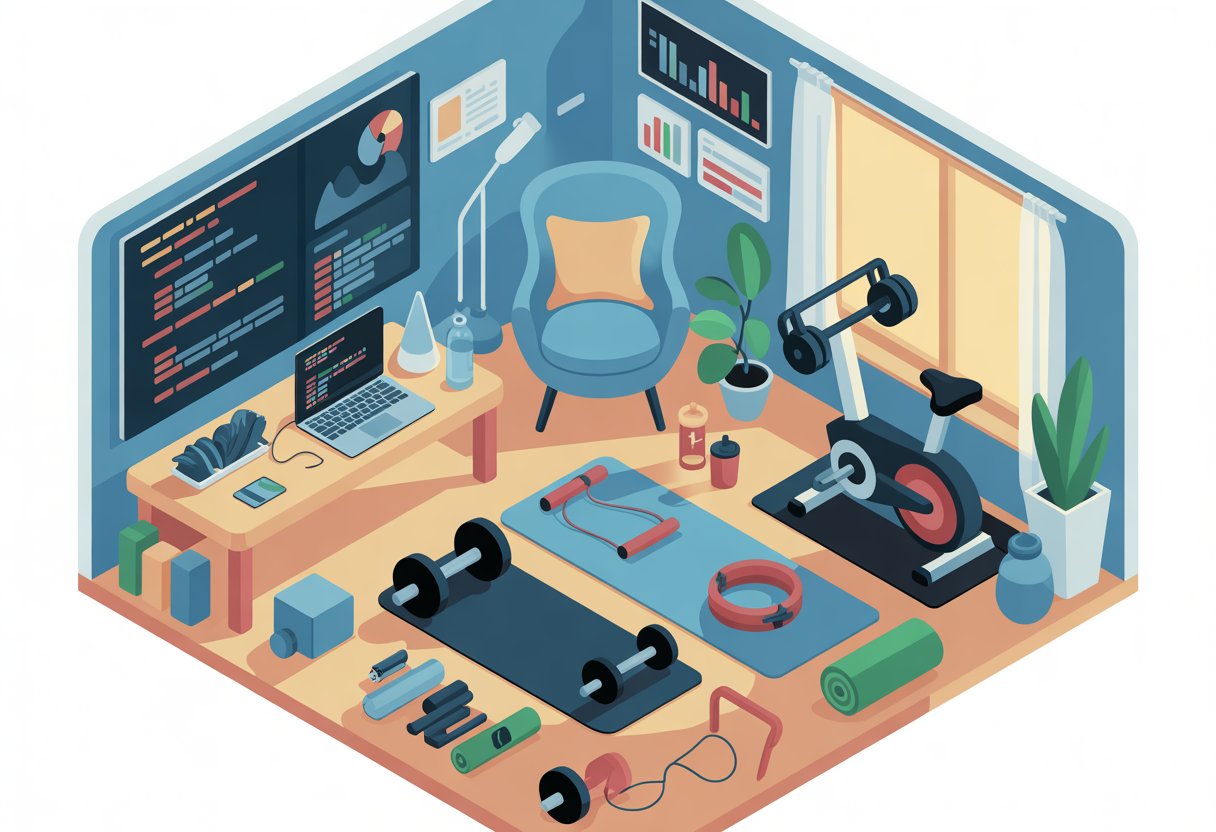
Effective home workouts require structured programming that balances strength work, cardiovascular training, and proper progression across all fitness levels. A well-designed routine incorporates compound movements like the squat and deadlift while adjusting intensity through progressive overload principles.
Sample Strength and Conditioning Workouts
A balanced strength program centers on four main compound movements: the squat, bench press, deadlift, and overhead press. These exercises work multiple muscle groups and deliver the most results in limited time.
Basic Strength Template:
- Day 1: Squat 3×5, Bench Press 3×5, Rows 3×8
- Day 2: Deadlift 3×3, Overhead Press 3×5, Pull-ups 3×8
- Day 3: Squat 3×8, Bench Press 3×8, Accessory work
Programming your own workouts[13] requires progressive overload by increasing weight, reps, or reducing rest periods each week. Someone who performs three sets of 10 deadlifts at 150 pounds should aim for three sets of 12 reps or increase to 155-160 pounds the following week.
Rest periods matter. Strength work demands two to three minutes between sets, while conditioning circuits need 45 to 90 seconds.
Incorporating Cardio and Functional Training
Cardio equipment like the rowing machine, treadmill, and jump rope fits into strength programs without interfering with muscle gains. Battle ropes add high-intensity intervals that build both conditioning and upper body endurance.
Weekly Integration:
- Add 20-30 minute steady-state cardio on non-lifting days
- Include 10-15 minute HIIT sessions using jump rope or battle ropes after strength work
- Use the rowing machine for full-body conditioning twice weekly
The key is avoiding cardio that undermines strength goals. Running a long distance the day before heavy squats reduces performance and increases injury risk.
Dynamic warmups using functional movements prepare joints for loaded exercises. Two sets of 10 Cossack squats, lunges, and arm circles before workouts improve mobility and reduce injury risk.
Adapting for Beginners to Advanced Athletes
Beginners should start with bodyweight movements and lighter weights to learn proper form. A beginner home workout program[14] builds confidence before adding heavy loads.
Beginner Modifications:
- Replace barbell bench press with push-ups or dumbbell press
- Perform goblet squats instead of barbell back squats
- Use Romanian deadlifts to learn hip hinge patterns
- Complete 2-3 sets of 8-12 reps per exercise
Advanced athletes increase training volume and complexity. They might perform five sets of five reps at higher percentages of their one-rep max, add variations like pause squats or tempo work, and train four to six days weekly.
Training programs that adapt to your environment[15] adjust automatically based on available equipment. Someone can switch between a fully equipped home gym and minimal gear without losing progress by modifying exercise selection while maintaining the same movement patterns.
Integrating Technology and Smart Features
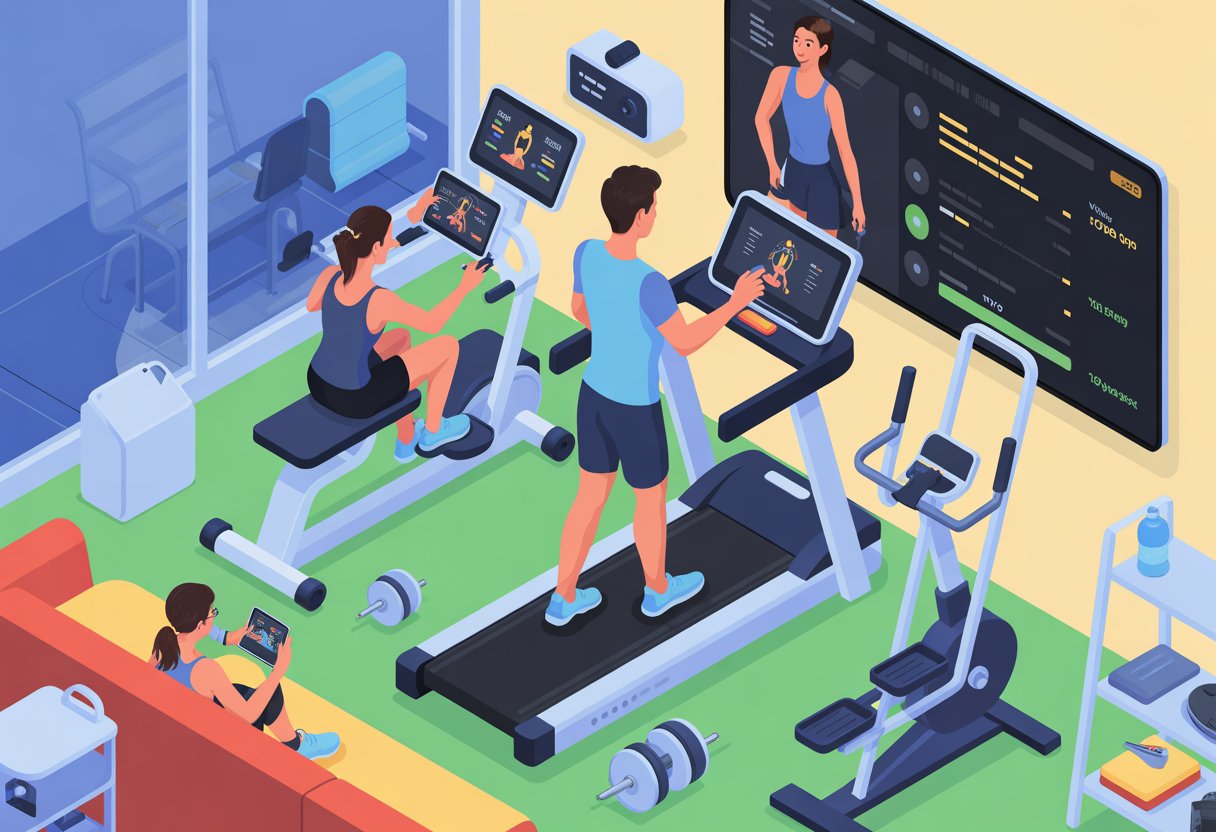
Modern home gyms now include advanced technology that provides personalized coaching, real-time feedback, and detailed performance tracking. These smart features transform basic equipment into interactive training systems that adapt to individual fitness levels and goals.
Fitness Apps and AI Coaching
Fitness apps connect directly to home gym equipment to deliver customized workout plans based on user data and performance metrics. An AI coach analyzes movement patterns, suggests form corrections, and adjusts difficulty levels automatically as users progress.
Apps like Centr offer guided workouts with professional trainers who demonstrate proper technique for each exercise. The AI technology learns from completed sessions and modifies future workouts to address weak points or prevent plateaus.
Many smart home gym equipment options[1] feature built-in coaching that responds to real-time performance. The system tracks rep speed, range of motion, and power output to provide immediate feedback during sets.
Interactive Training Mirrors and Smart Equipment
A fitness mirror displays workout videos while allowing users to see their own form reflected on the screen simultaneously. These devices include cameras that track body position and alert users when alignment needs correction.
Tonal uses electromagnetic resistance that adjusts weight automatically during exercises to maintain optimal muscle tension. The system stores strength data from every workout and recommends weight increases when users are ready to progress.
Smart home gym equipment[16] connects to phones and fitness trackers to sync data across all devices. This connectivity allows users to monitor heart rate, calories burned, and workout duration from a single dashboard.
Tracking Progress and Motivation
Smart equipment records every metric from each training session and displays trends over weeks or months. Users can view strength gains, endurance improvements, and consistency patterns through detailed graphs and charts.
The technology sets milestone alerts and achievement badges to maintain engagement during long-term fitness programs. Many systems include leaderboards where users compete with friends or global communities on specific challenges.
A significant consideration is that many smart features require monthly subscriptions[10] to access full functionality. These fees typically range from $30 to $50 per month and cover access to workout libraries, live classes, and advanced analytics.
Maximizing Home Gym Versatility and Expansion
A well-designed home gym grows with its owner through smart equipment choices and strategic upgrades. The right pieces serve multiple functions while taking up minimal space, allowing for progression without constant replacement.
Multi-Purpose Equipment and Attachments
An all-in-one trainer or functional trainer gives users access to dozens of exercises in a single footprint. These machines typically include a cable machine setup with adjustable pulleys for movements like lat pulldown, chest flies, and tricep extensions.
Elevate Your Health for Just $29.99/Month
Join the Precision Wellness Subscription at My Healing 365 and get discounted services, priority coaching access, virtual care, and exclusive wellness resources to support your physical, emotional, and hormonal health.
Join for $29.99/MonthKey versatile additions include:
- Adjustable benches that move from flat to incline to decline positions
- Dip stations that attach to power racks for bodyweight training
- Leg press attachments that convert squat stands into lower body stations
- Cable attachments like rope handles, straight bars, and single handles
A squat stand with compatible attachments transforms into a complete training station. Users can add pull-up bars, dip handles, and band pegs without buying separate equipment. Smith machines offer guided barbell movements for those training alone, though they limit natural movement patterns compared to free weights.
Adapting as Needs Evolve
Beginners often start with basic equipment and expand as their training knowledge grows. Someone focused on strength training might add specialty barbells or heavier plates after mastering fundamental movements.
Training goals change over time. A lifter recovering from injury might need cable machines for controlled movements, while someone preparing for competition requires heavier loads and specialized bars. Building a home gym on any budget[17] becomes easier when purchasing quality pieces that accommodate changing programs.
Modular equipment systems let users swap components without replacing entire setups. A half rack can upgrade to a full power rack by adding uprights and cross members when budget allows.
Space-Saving Upgrades
Folding racks mount to walls and collapse when not in use, reclaiming floor space in garages or spare rooms. These units handle heavy loads while offering the same safety features as full-size racks.
Compact solutions include:
- Wall-mounted pull-up bars that fold flat
- Adjustable dumbbells replacing entire rack sets
- Plate-loaded machines instead of selectorized stacks
- Vertical storage for barbells and plates
Integrating high-end equipment efficiently[18] requires measuring the space before purchasing. Users should account for bar length during exercises and clearance for overhead movements. Corner placements and wall mounts maximize usable floor area while keeping equipment accessible.
Flexibility, Recovery, and Wellness at Home
Building strength matters, but taking care of your body through stretching, recovery, and mindful movement helps prevent injuries and improves overall performance. A complete home gym includes tools that support flexibility work, speed up muscle recovery, and create space for low-impact training.
Stretching and Mobility Essentials
A yoga mat provides cushioning and grip for stretching routines, yoga flows, and mobility drills. Most mats are 68 to 72 inches long and come in different thicknesses, with thicker options offering more joint support during floor exercises.
Gymnastic rings attach to a sturdy overhead structure and allow users to work on shoulder mobility, body control, and upper body flexibility through exercises like ring turns and support holds. A suspension trainer offers similar benefits with adjustable straps that make it easier for beginners to modify stretches and controlled movements.
Medicine balls work well for dynamic stretching routines where someone rotates or reaches while holding weight. These movements improve range of motion in the hips, spine, and shoulders while building functional strength.
Recovery Tools and Techniques
Foam rollers help release muscle tension through self-massage techniques called myofascial release. Users roll slowly over tight areas like the quads, calves, and back to reduce soreness after workouts.
A massage gun delivers rapid pulses to muscle tissue, targeting specific spots with adjustable speed and pressure settings. These devices work faster than foam rolling for deep tissue relief and help improve blood flow to recovering muscles.
Other recovery tools include resistance bands for gentle stretching, lacrosse balls for pinpoint pressure on trigger points, and ice packs or heating pads for managing inflammation and promoting healing.
Mind-Body Training Options
Yoga combines stretching, breathing, and balance work on a yoga mat to reduce stress while improving flexibility and core strength. Many people practice at home using online classes or apps that guide them through different styles and difficulty levels.
Tai chi and qigong involve slow, controlled movements that build body awareness and calm the mind. These practices require minimal equipment and fit easily into small spaces.
Meditation and breathing exercises support mental recovery by lowering stress hormones and helping the nervous system reset after intense training sessions. Setting aside even five to ten minutes daily creates noticeable improvements in focus and mood.
Frequently Asked Questions
Building a home gym requires smart decisions about equipment selection, space planning, and workout programming. These common questions address budget priorities, equipment choices, and training strategies for home fitness success.
What essential equipment should I prioritize when building a home gym on a budget?
A barbell, weight plates, and a rack form the foundation of most budget home gyms. These three items allow for squats, deadlifts, bench presses, and overhead presses.
An adjustable bench adds versatility for incline and decline movements. A set of resistance bands costs less than $50 and provides options for accessory work and warm-ups.
Dumbbells offer another affordable choice for home training. Adjustable dumbbells save space and money compared to buying multiple fixed-weight pairs.
A pull-up bar mounted in a doorway costs around $30 and enables bodyweight pulling exercises. Gym mats protect floors and reduce noise for about $1 to $2 per square foot.
Many lifters find good deals on used equipment through Facebook Marketplace or garage sales. Quality matters more than quantity when building a gym on a tight budget[19].
How do I choose the best all-in-one home gym machine for my goals and available space?
Space measurements come first when selecting an all-in-one machine. Most systems need at least 6 feet by 8 feet of floor space plus clearance for movement.
Weight stack machines work well for beginners who want guided movements. These systems typically include a lat pulldown, chest press, leg extension, and cable stations.
Plate-loaded systems cost less and allow for heavier loads. They require the user to add and remove weight plates between exercises.
Cable crossover stations provide the most exercise variety. They enable movements in multiple planes and angles but take up more room than compact units.
The machine should match specific training goals. Someone focused on bodybuilding needs different features than someone training for general fitness.
Reading reviews from actual users helps identify quality issues before purchase. Warranty terms indicate how long the manufacturer expects the equipment to last.
What is an effective multi-gym workout plan for full-body strength training at home?
A three-day-per-week full-body routine fits most schedules and allows proper recovery. Each session should include one exercise for legs, chest, back, shoulders, and arms.
Day one might include squats, bench press, barbell rows, overhead press, and bicep curls. Day two switches to deadlifts, incline press, pull-ups, lateral raises, and tricep extensions.
Day three returns to front squats, dumbbell press, cable rows, face pulls, and hammer curls. This rotation hits muscles from different angles throughout the week.
Each exercise needs 3 to 4 sets of 6 to 12 repetitions for muscle growth. Rest periods of 2 to 3 minutes between sets support strength development.
Compound movements come first in each workout when energy levels are highest. Isolation exercises for smaller muscles work better at the end of sessions.
Progressive overload drives results by gradually increasing weight, reps, or sets. Adding 5 pounds to the bar every week or two keeps progress moving forward.
How can I generate a weekly workout routine based on the equipment I already have?
List all available equipment first to understand training options. This inventory reveals which muscle groups can be trained and which movements are possible.
A barbell and plates enable squats, deadlifts, presses, and rows. Dumbbells add variety through unilateral movements and different grip positions.
Split the week by movement patterns or muscle groups. A push day covers chest, shoulders, and triceps while a pull day targets back and biceps.
Leg days focus on squats, lunges, and deadlift variations. This three-day split allows each muscle group to recover between sessions.
Upper and lower body splits work well with four training days per week. Monday and Thursday train the upper body while Tuesday and Friday focus on legs.
Bodyweight exercises fill gaps when equipment is limited. Push-ups, dips, and inverted rows build strength without any gear.
What are the best home gym layout and setup ideas for a small room or apartment?
Wall-mounted racks save floor space compared to freestanding power racks. These systems fold against the wall when not in use, leaving room for other activities.
Vertical storage keeps weights organized and off the floor. Wall-mounted plate holders and dumbbell racks maximize available space.
Multi-purpose equipment reduces clutter in tight quarters. An adjustable bench serves for pressing, rowing, and step-ups instead of buying separate pieces.
Mirrors create the illusion of more space while helping with form checks. A single large mirror costs less than multiple small ones and reflects more light.
Rubber flooring protects floors from dropped weights and dampens sound. Interlocking tiles install easily and can be removed when moving.
Planning the layout carefully[20] prevents buying equipment that doesn’t fit. Measure the space and map out placement before making purchases.
Corner setups use often-wasted space efficiently. A squat stand in the corner with weights stored along adjacent walls keeps the center open.
How can I structure a progressive overload plan to keep making gains with a home gym?
Progressive overload means gradually increasing training stress over time. This forces muscles to adapt and grow stronger.
Adding weight to the bar is the most straightforward method. Increase the load by 5 to 10 pounds once all sets reach the target rep range.
Adding repetitions works when weight increases aren’t possible. Moving from 3 sets of 8 reps to 3 sets of 10 reps increases total volume.
Adding sets provides another progression path. Going from 3 sets to 4 sets of the same weight and reps creates more training stimulus.
Reducing rest periods makes workouts more challenging without changing load. Cutting rest from 3 minutes to 2 minutes increases workout density.
Increasing training frequency hits muscles more often each week. Moving from two leg days to three provides more growth stimulus.
Tracking workouts in a notebook or app shows progress over time. Written records reveal when to increase difficulty and prevent stagnation.
Training logs should include exercises, weights, sets, reps, and how the workout felt. This data guides programming decisions for future sessions.
Post Views: 3
References
- Page Not Found. https://www.garagegymreviews.com/best-smart-home-gym-equipment Accessed April 19, 2026
- 14 Benefits of Owning a Home Gym to Convince You to Build Your Iron Oasis. https://barbend.com/benefits-of-home-gym/ Accessed April 19, 2026
- 15 Reasons Why a Home Gym Is Worth It
– REP Fitness. https://repfitness.com/blogs/inspiration/15-benefits-of-building-a-home-gym Accessed April 19, 2026 - Build Your Dream Home Gym: Equipment, Layout, and Setup Plan. https://www.ritfitsports.com/blogs/article/build-your-dream-home-gym-equipment-layout-and-setup-plan Accessed April 19, 2026
- How to Set Up Your Ideal Home Gym. https://www.consumerreports.org/health/exercise-fitness/how-to-set-up-your-ideal-home-gym-a1233110764/ Accessed April 19, 2026
- SMART Fitness Goals You Can Actually Keep. https://health.clevelandclinic.org/smart-fitness-goals Accessed April 19, 2026
- Set Your Fitness Goals. https://www.heart.org/en/healthy-living/fitness/staying-motivated/set-your-fitness-goals Accessed April 19, 2026
- Top Home Gym Essentials of 2026. https://barbend.com/best-home-gym-essentials/ Accessed April 19, 2026
- Page Not Found. https://www.garagegymreviews.com/best-home-gyms Accessed April 19, 2026
- smart home gym equipment. https://www.menshealth.com/fitness/g69841021/best-smart-home-gym-equipment/ Accessed April 19, 2026
- Home Gym Layout Plans: Best Ways to Organize Cardio & Strength Zones. https://designingidea.com/home-gym-layout/ Accessed April 19, 2026
- Most Durable Home Gym Equipment: A Review. https://fitnessgearscan.com/most-durable-home-gym-equipment-a-review/ Accessed April 19, 2026
- Page Not Found. https://www.garagegymreviews.com/program-your-own-workouts Accessed April 19, 2026
- 30 Days to Fit: The Ultimate Beginner Home Workout Program. https://fitnessvolt.com/beginner-home-workout-program/ Accessed April 19, 2026
- SHRED: Elite Training Plans, Personalized by AI. https://www.shred.app/ Accessed April 19, 2026
- Best Smart Home Gyms of 2026. https://barbend.com/best-smart-home-gyms/ Accessed April 19, 2026
- Page Not Found. https://www.garagegymreviews.com/ultimate-home-gym-guide Accessed April 19, 2026
- Maximizing Your Home Gym Space: Tips for Integrating High-End Equipment. https://blog.landice.com/blog/maximizing-your-home-gym-space-tips-for-integrating-high-end-equipment Accessed April 19, 2026
- The Ultimate Guide To Home Gyms In 2025
– SET FOR SET. https://www.setforset.com/blogs/news/the-ultimate-guide-to-home-gyms Accessed April 19, 2026 - Designing Your Ideal Home Gym: A Comprehensive Guide. https://famoustarz.com/designing-your-ideal-home-gym-a-comprehensive-guide/ Accessed April 19, 2026