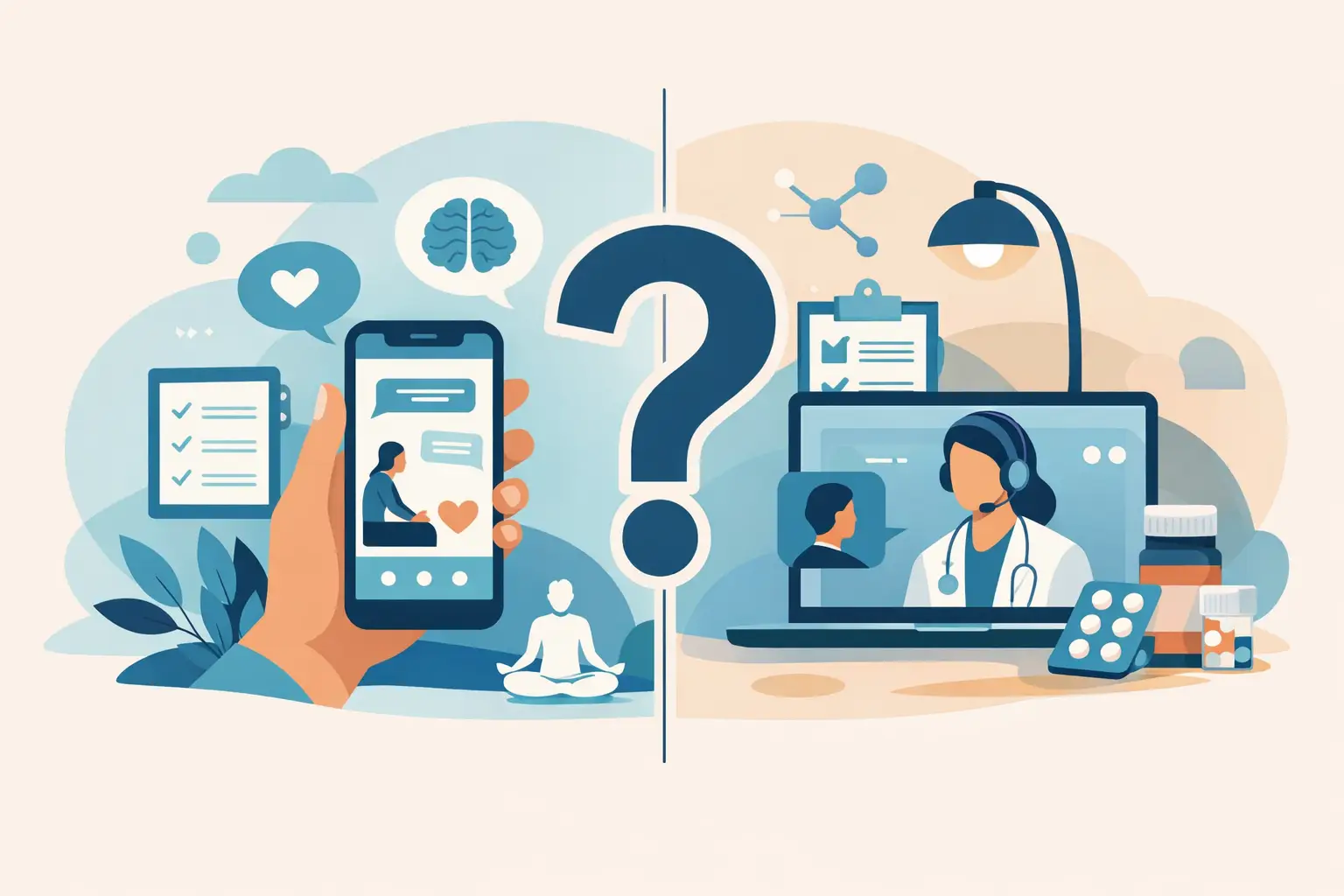
When your mind feels crowded at 11 p.m., the difference between getting help and putting it off often comes down to one question: what kind of care can you actually start right now? That is where therapy apps vs online psychiatry becomes more than a search term. It becomes a real decision about how much support you need, how quickly you need it, and whether symptoms like anxiety, depression, or sleep disruption call for guided self-help or licensed medical treatment.
Both options can make mental health care more accessible. Both can be private, convenient, and easier to fit into a busy life than a traditional office visit. But they are not interchangeable, and choosing the wrong one can leave you under-supported or paying for features that do not match your needs.
Table of Contents
Therapy apps vs online psychiatry: the core difference
The simplest way to think about therapy apps vs online psychiatry is this: therapy apps often focus on emotional support, habit-building, journaling, coaching, or talk-based therapy tools, while online psychiatry centers on evaluation, diagnosis, and medical treatment from licensed prescribing providers.
A therapy app may give you meditation exercises, mood tracking, cognitive behavioral tools, text-based support, or virtual sessions with a counselor or therapist. For some people, that is exactly enough. If you are dealing with stress, mild anxiety, a difficult season of life, or you want help building healthier thought patterns, an app-based therapy experience can feel approachable and low pressure.
Online psychiatry is different because it can include a formal psychiatric assessment and, when clinically appropriate, prescription medication as part of treatment. That matters if symptoms are more persistent, disruptive, or physically affecting your day-to-day life. If you are having trouble sleeping, feeling emotionally flat for weeks, struggling to focus, or noticing that anxiety is affecting work, parenting, or relationships, psychiatric care may be the more fitting next step.
What therapy apps do well
Therapy apps have grown quickly because they lower the barrier to starting care. You can often sign up fast, message from your phone, and get support without commuting, sitting in a waiting room, or explaining to your employer why you need time off.
That convenience is not minor. For adults balancing work, family responsibilities, and constant mental load, a digital tool that helps you process emotions in short, manageable moments can be genuinely useful. Many therapy apps also feel less intimidating than medical care. If you are unsure whether you need treatment, starting with a self-guided or talk-based option can feel like a safer first step.
Elevate Your Health for Just $29.99/Month
Join the Precision Wellness Subscription at My Healing 365 and get discounted services, priority coaching access, virtual care, and exclusive wellness resources to support your physical, emotional, and hormonal health.
Join for $29.99/MonthThey also tend to be helpful for maintenance. Someone who already understands their triggers and mainly needs structure, reflection, coping tools, or consistent check-ins may benefit from an app that supports those routines.
The trade-off is depth of care. Many therapy apps are not designed to assess whether your symptoms point to a condition that may need medical oversight. Some offer access to licensed therapists, while others rely more on coaches, prompts, or educational content. That does not make them bad. It just means the level of clinical support varies widely.
Where online psychiatry can offer more
Online psychiatry is often a better fit when symptoms are not just emotionally uncomfortable but functionally disruptive. If you are waking up exhausted, struggling to calm panic symptoms, feeling persistently down, or noticing that your mental health is affecting your ability to work, focus, or stay engaged with daily life, medical evaluation can add clarity.
A licensed psychiatric provider can help determine whether what you are experiencing looks like anxiety, depression, insomnia-related concerns, or emotional distress tied to a major life event. From there, treatment may include medication, ongoing monitoring, provider messaging, and a plan based on your symptoms rather than a one-size-fits-all wellness approach.
That is one of the biggest advantages. Good online psychiatry is not just about getting a prescription quickly. It is about having a licensed professional assess what is happening, explain your options, monitor your progress, and adjust treatment if needed.
For many adults, that combination of convenience and medical oversight is the point. You do not have to choose between getting real care and fitting treatment into your schedule.
Cost matters, but value matters more
People often compare these options based on price alone, and that makes sense. Mental health care needs to be affordable enough to continue. But the lower-cost option is not always the better-value option if it does not actually address what you are dealing with.
A therapy app may look less expensive upfront, especially if it offers self-guided tools or limited messaging. But if your symptoms continue, worsen, or require medication that the app cannot provide, you may end up delaying the treatment that would help most.
Online psychiatry can cost more than a basic app subscription, especially when it includes provider evaluations and medication management. At the same time, that higher level of care may save time, reduce trial and error, and help you feel better sooner if your symptoms need clinical attention.
The right question is not just what costs less this month. It is what gives you a realistic path toward relief.
Privacy and comfort are part of the decision
A lot of people avoid care because they do not want to be seen walking into a clinic or they feel overwhelmed by the process of finding a provider, making a call, and waiting weeks for an appointment. That hesitation is real, and digital care helps reduce it.
Both therapy apps and online psychiatry can offer a more private starting point. You can engage from home, on your lunch break, or after the kids are asleep. For people who value discretion, that can make treatment feel more possible.
But privacy is only one part of comfort. Some people feel more comfortable starting with app-based support because it feels informal. Others feel better when they know a licensed provider is reviewing their symptoms and creating a treatment plan. If reassurance matters to you, provider-led care may feel more grounding than a general wellness platform.
When therapy apps may be enough
If you are going through a stressful period, feeling mildly overwhelmed, or looking for tools to better manage mood and habits, a therapy app may be a reasonable place to begin. It can also work well if you already know that talk support, guided exercises, and regular reflection help you stay steady.
This option tends to fit people who want flexibility, lower commitment, and support that feels easy to access in small moments throughout the week. It can be especially helpful if you are not looking for medication and your symptoms are not significantly interfering with daily life.
That said, if you start with an app and notice that you are still struggling to sleep, function, concentrate, or cope after a few weeks, it may be time to move beyond self-guided support.
When online psychiatry may be the better choice
Online psychiatry usually makes more sense when your symptoms feel persistent, heavier, or harder to manage on your own. If anxiety keeps showing up physically, your mood has shifted for more than a short stretch, or emotional distress is starting to affect your routine, relationships, or work, provider-led treatment can be a stronger fit.
It may also be the better option if you want a clear diagnosis, need medication support, or want ongoing access to a licensed professional who can adjust treatment over time. For adults who want fast, discreet care without the friction of traditional appointments, this model can offer structure without adding more chaos to an already difficult season.
Platforms like My Healing 365 are built around that need for practical, clinically grounded support. Instead of leaving you to sort through disconnected tools, the experience can include licensed-provider access, individualized treatment, secure online communication, and evidence-based medication when appropriate.
The best choice depends on the level of care you need
The real issue in therapy apps vs online psychiatry is not which one is more modern or more convenient. Both are modern. Both can be convenient. The better question is whether you need support, treatment, or both.
If you mainly want coping tools, reflection, and non-medical emotional support, a therapy app may fit well. If you need evaluation, diagnosis, and a treatment plan that may include medication, online psychiatry is likely the stronger option.
There is no gold star for choosing the lighter-touch route if your symptoms call for more. And there is no need to over-medicalize a rough patch if guided support is enough. The right choice is the one that meets you where you are now, not where you think you should be.
If you have been putting off help because the process felt too complicated, let this simplify it: support is good, but the right level of support is better. You do not have to go through it alone, and you do not have to wait until things get worse to choose care that actually fits.

























