Medically Reviewed
Dr. Jose Rossello, MD, PhD, MHCM
Preventive Medicine & Public Health Specialist
Last Reviewed: April 29, 2026
Your kitchen does more than just serve as a place to cook meals. A healthy kitchen protects your family from foodborne illnesses, prevents pest problems, and creates a safe space where good eating habits can develop. When surfaces stay clean and food gets stored properly, harmful bacteria like Salmonella and E. coli have fewer chances to spread and cause sickness.
A dirty kitchen brings real health risks that go beyond just looking messy. Cross-contamination from unclean surfaces can lead to foodborne illnesses[1], while food spills and crumbs attract unwanted pests like ants and roaches. The good news is that simple daily cleaning habits and smart organization can transform any kitchen into a healthier space.
Understanding why kitchen hygiene matters for health and safety[2] helps families make better choices about food preparation and storage. This guide covers the practical steps anyone can take to maintain a clean kitchen that supports both physical health and peace of mind.
Table of Contents
Key Takeaways
- A clean kitchen prevents harmful bacteria from causing foodborne illnesses and keeps pests away from your home
- Regular cleaning and proper food storage practices create a safer cooking environment for the whole family
- Simple daily habits and good organization extend the life of kitchen appliances while making meal preparation easier
The Link Between a Healthy Kitchen and Well-Being
A healthy kitchen shapes both physical health and mental state in measurable ways. The space where food gets prepared directly affects what people eat, how they feel, and their overall quality of life.
A Healthy Kitchen as the Heart of a Healthy Home
The kitchen serves as the central hub where health habits form and strengthen. When this space stays clean and organized, it becomes more inviting for meal preparation rather than relying on takeout or processed foods.
A well-maintained kitchen encourages people to cook more often at home. Home cooking provides control over ingredients[3] and helps manage what goes into each meal. This matters especially for those dealing with diabetes, high blood pressure, or heart disease.
The physical state of the kitchen affects behavior. Clutter and mess create stress that reduces motivation to prepare nutritious meals. An organized space with proper storage makes healthy ingredients more visible and accessible.
When family members gather in a clean, functional kitchen, they’re more likely to share meals together. These shared experiences build stronger connections while promoting better eating patterns across the household.
Impact on Physical and Mental Health
Cooking can improve mental health and emotional balance[4] through several mechanisms. The act of preparing food allows people to enter a state of deep focus where time passes quickly and pleasantly.
This focused state reduces anxiety and provides a sense of accomplishment. People who regularly cook at home report feeling more confident and in control of their health.
The benefits extend beyond the person cooking. Research shows that people who eat with others report feeling happier, more supported, and less lonely. Even sharing one meal per week with someone else can improve well-being noticeably.
Health promotion programs can use the connection between food choices and well-being[5] to encourage better habits. A kitchen designed to support healthy cooking makes it easier for people to maintain these positive changes long-term.
Health Risks of an Unclean Kitchen
Dirty kitchens create environments where harmful bacteria multiply rapidly and dangerous allergens accumulate on surfaces. These conditions lead directly to foodborne illnesses and respiratory problems that affect household members.
Bacteria and Germ Growth
An unclean kitchen becomes a breeding ground for dangerous bacteria like Salmonella, E. coli, and Listeria. These pathogens thrive on unwashed cutting boards, dirty sponges, and contaminated countertops. Cross-contamination occurs when raw meat juices[6] spread to other foods or surfaces.
Crumbs left on counters and dishes sitting in the sink provide food sources for bacteria to multiply. Within hours, a single bacterium can grow into millions. This rapid growth makes kitchen hygiene critical for food safety.
Regular cleaning with hot water and soap helps kill germs on contact. Sanitizing high-touch areas like handles, faucets, and drawer pulls prevents the spread of illness-causing microorganisms. Dishcloths and sponges need replacement every few days since they harbor more bacteria than most other kitchen items.
Allergens and Contaminants
Dust, mold spores, and food particles accumulate in neglected kitchens and trigger allergic reactions. These allergens cause sneezing, itching, watery eyes, and breathing difficulties for sensitive individuals. Mold grows in damp areas[7] around sinks and under appliances when moisture is not addressed.
Food allergen particles remain on surfaces after meal preparation. For people with severe allergies, even tiny amounts of allergen residue can cause dangerous reactions. Proper cleaning between food preparation tasks prevents cross-contact.
Pest infestations add another layer of contamination. Cockroaches, ants, and rodents leave droppings and bacteria throughout the kitchen. Their presence indicates serious health hazards that require immediate attention[8]. Keeping surfaces clean and food stored properly helps prevent these unwanted visitors.
Food Safety and Hygiene Practices
Proper food safety measures protect against harmful bacteria and foodborne illness. Using separate tools for different food types and following safe handling procedures reduces the risk of contamination in the kitchen.
Preventing Cross-Contamination
Cross-contamination happens when harmful bacteria transfer from one food item to another. Raw meat, poultry, and seafood contain bacteria that can cause serious illness if they come into contact with ready-to-eat foods.
Kitchen staff should use separate cutting boards and utensils[9] for raw and cooked foods. Surfaces need cleaning and sanitizing between uses. Storing raw meat at the bottom of the refrigerator prevents juices from dripping onto other foods.
Clean hands serve as the first line of defense. Washing with warm water and soap for at least 20 seconds removes most harmful bacteria. This becomes especially important after handling raw meat or touching the face and hair.
Safe Food Handling Techniques
Safe food handling[10] includes proper storage, temperature control, and preparation methods. Food thermometers ensure that meat, poultry, and seafood reach 165°F (74°C) to kill dangerous bacteria.
The FIFO method (first in, first out) helps maintain freshness. Older food items move to the front while newer items go behind them. All containers need labels with the food name and storage date.
Refrigeration slows bacterial growth. Perishable foods should not sit at room temperature for more than two hours. Ready-to-eat foods belong on top shelves, while raw items stay on lower levels in sealed containers.
Importance of Separate Cutting Boards
Separate cutting boards prevent cross-contamination[11] between raw and ready-to-eat foods. Many kitchens use color-coded boards to avoid confusion. Red boards might designate raw meat, while green boards handle vegetables.
Wooden and plastic boards require different care methods. Plastic boards go in the dishwasher for high-heat sanitization. Wooden boards need hand washing with hot soapy water and thorough drying.
Replacing cutting boards when they develop deep grooves prevents bacteria from hiding in cracks. These worn surfaces become impossible to clean properly, even with sanitizing solutions.
Daily Habits for Maintaining a Clean Kitchen
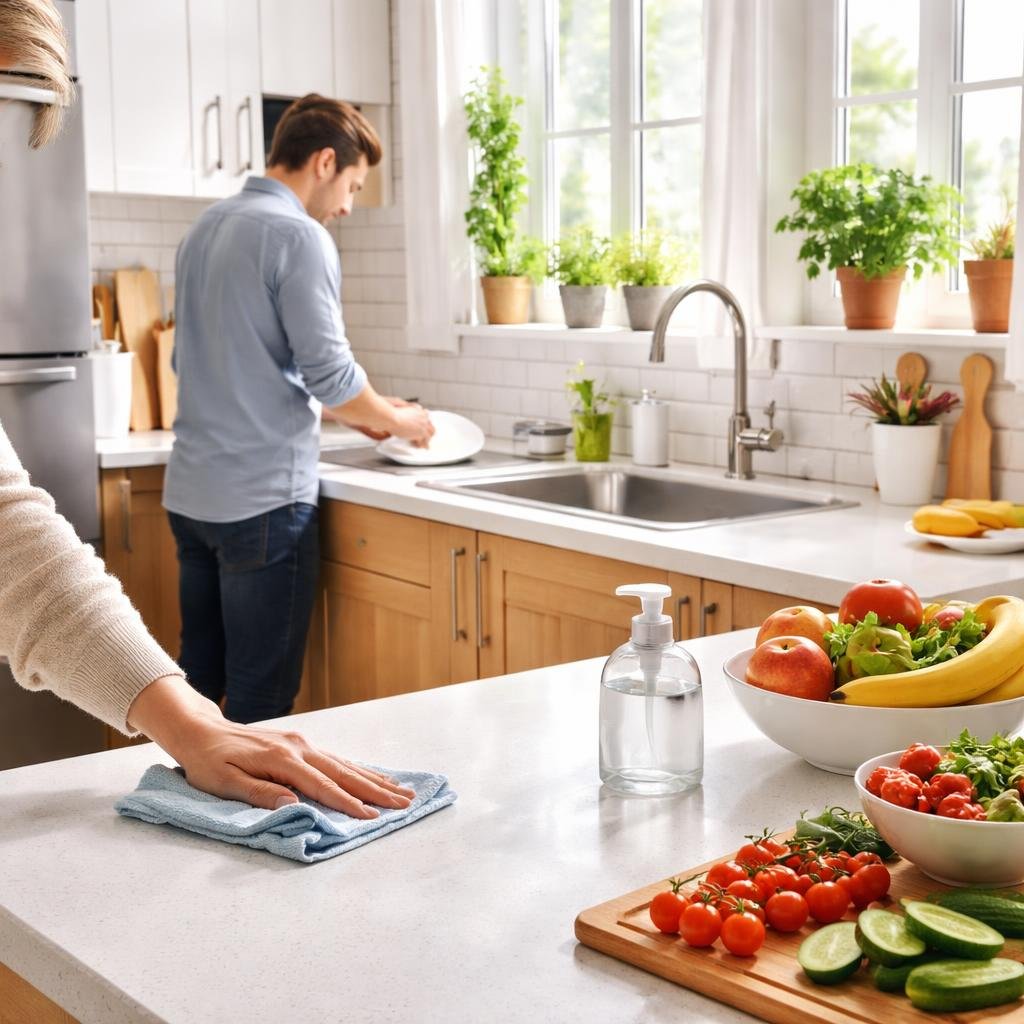
Building simple daily habits prevents germs from spreading and keeps food preparation areas safe. Regular attention to surfaces, hands, storage practices, and equipment stops bacteria before it becomes a problem.
Effective Cleaning Routines
A consistent cleaning routine keeps the kitchen hygienic without requiring hours of work. Wiping down surfaces[7] after each meal removes food particles and spills that attract bacteria and pests.
Countertops, stovetops, and tables should be cleaned with hot soapy water or a food-safe disinfectant. Pay special attention to areas where raw meat was prepared. Crumbs and spills left overnight create breeding grounds for harmful microbes.
The sink needs daily attention since it contacts dirty dishes and food waste. Scrub the basin, faucet handles, and drain area with disinfectant to eliminate bacteria buildup. Empty and rinse the dish rack to prevent mold growth.
Sweeping or vacuuming the floor daily removes dropped food that attracts insects and rodents. Spot-clean spills immediately to prevent sticky residue. A quick daily sweep takes less than five minutes but makes a significant difference in kitchen cleanliness.
Handwashing and Surface Sanitization
Handwashing with soap and water[12] for at least 20 seconds prevents germs from contaminating food and kitchen surfaces. Hands should be washed before cooking, after handling raw meat, and after touching garbage or cleaning supplies.
Clean surfaces must be sanitized to kill bacteria that soap alone might miss. Cleaning removes visible dirt while sanitizing eliminates invisible germs like Salmonella and E. coli.
Use a diluted bleach solution or commercial sanitizer on cutting boards, countertops, and other food-contact surfaces. Apply the sanitizer after cleaning with soap and water. Let it sit for the time specified on the product label before wiping or air-drying.
Focus sanitization efforts on high-touch areas like refrigerator handles, cabinet knobs, and light switches. These spots collect germs from multiple family members throughout the day.
Proper Food Storage
Proper food storage[7] prevents spoilage and stops bacteria from multiplying on leftovers. Refrigerate perishable foods within two hours of cooking to keep them safe to eat.
Store leftovers in airtight containers labeled with the date. This practice helps track freshness and reduces food waste. Keep raw meat on the bottom shelf of the refrigerator to prevent juices from dripping onto ready-to-eat foods.
Check the refrigerator temperature regularly. It should stay at 40°F or below to slow bacterial growth. The freezer should maintain 0°F or lower for long-term storage.
Organize pantry items by expiration date and rotate older products to the front. Throw away expired foods and wipe down shelves monthly to remove dust and spilled ingredients.
Cleaning Appliances and Tools
Cleaning appliances[7] daily prevents grease buildup and keeps equipment working efficiently. Wipe down the microwave interior after each use to remove food splatters before they harden.
The stovetop requires attention after every cooking session. Remove burner grates and drip pans to clean underneath where grease accumulates. This prevents fire hazards and unpleasant odors.
Cutting boards and knives need immediate washing after contact with raw meat, poultry, or seafood. Use separate boards for raw proteins and fresh produce to avoid cross-contamination. Replace cutting boards when they develop deep grooves that trap bacteria.
Elevate Your Health for Just $29.99/Month
Join the Precision Wellness Subscription at My Healing 365 and get discounted services, priority coaching access, virtual care, and exclusive wellness resources to support your physical, emotional, and hormonal health.
Join for $29.99/MonthClean small appliances like toasters, coffee makers, and blenders weekly. Empty crumb trays, descale coffee pots, and wash blender blades thoroughly. These steps extend appliance life and maintain food quality.
Organization, Longevity, and Efficiency
A well-organized kitchen directly impacts how long appliances and tools last, how safely people can work, and how efficiently they can prepare meals. These three factors work together to create a space that functions better and costs less to maintain over time.
Benefits of an Organized Kitchen
An organized kitchen makes meal preparation faster and less stressful. When everything has a designated spot, cooks spend less time searching for tools and ingredients. This setup creates efficient work triangles between the stove, sink, and refrigerator[13], which reduces unnecessary steps during cooking.
A clean and organized kitchen also improves food safety. Proper storage prevents cross-contamination between raw and cooked foods. Clear countertops provide adequate space for safe food preparation.
Organization helps reduce food waste too. When people can see what ingredients they have, they use items before expiration dates pass. This saves money and cuts down on trips to the grocery store.
The mental benefits matter as well. A tidy kitchen creates a more pleasant cooking atmosphere[14] and reduces the stress that comes from working in cluttered spaces.
Extending the Life of Kitchen Items
Proper storage and maintenance significantly extend how long kitchen items last. Storing knives in blocks or on magnetic strips prevents blade damage that occurs when they rattle around in drawers. Pots and pans last longer when hung or stacked with protective dividers between them.
Regular cleaning prevents buildup that damages appliances. Deep cleaning major appliances monthly and smaller items weekly maintains their performance. Keeping the refrigerator at or below 40°F (4°C) protects both food and the appliance itself.
Maintaining a tidy kitchen means items get returned to their proper places after each use. This reduces the chance of accidental damage from items falling or being knocked over. It also makes it easier to spot when something needs repair or replacement.
Reducing Clutter for Safety
Clutter creates real safety hazards in kitchens. Clear countertops prevent items from being knocked into hot burners or onto the floor. Organized cabinets reduce the risk of heavy items falling when doors open.
A clean kitchen prevents slips and falls. Spills get noticed and cleaned up quickly when floors stay clear. Proper storage of cleaning products and sharp objects keeps them away from children and prevents accidents.
Kitchen design layout affects circulation paths[15] and prevents bottlenecks where people might bump into each other while carrying hot dishes. Clear pathways between work zones allow safe movement throughout the space during busy cooking times.
Prevention of Pests and Odors
A dirty kitchen attracts unwanted pests and creates unpleasant smells that can spread throughout the home. Regular cleaning stops both problems before they start.
Preventing Pest Infestations
Kitchens provide pests with food, water, and shelter. Ants, cockroaches, rodents, and flies search for crumbs, spills, and food particles left on counters and floors.
Pests eat and spoil food[16] while also carrying germs that spread diseases. The best defense is keeping them out in the first place.
People should wipe down surfaces after each meal to remove crumbs and sticky spots. Countertops, tables, and stovetops need daily attention. Sweeping and mopping floors removes dropped food before pests find it.
Storing food in airtight containers keeps pests away from pantry items. Trash bins need tight lids and regular emptying to stop odors that attract bugs and rodents.
Water sources also draw pests into kitchens. Fixing leaky faucets and dripping pipes removes the moisture that cockroaches and other insects need. Pet food bowls should be cleaned daily and stored in sealed containers.
Small cracks and gaps around windows, doors, and pipes give pests easy entry points. Sealing these openings blocks their access to the kitchen.
Odor Control and Cleanliness
Food smells build up quickly in kitchens without proper cleaning. Rotting produce, old spills, and dirty garbage create bad odors that linger.
Regular dish washing prevents odor buildup[17] from dirty plates and pans sitting in the sink. Washing dishes right after meals stops food from hardening and smelling.
Garbage disposals and drains trap food waste that starts to smell over time. Running hot water and disposal cleaners weekly keeps these areas fresh. Wiping down the inside of trash cans removes stuck-on food residue.
Refrigerators need weekly checks for expired items. Old leftovers and spoiled produce create strong smells that spread to other foods. Deep cleaning the fridge interior removes spills that cause odors.
Cleaning appliances like microwaves, ovens, and dishwashers stops grease and food buildup. These spots create smells during cooking and can attract pests looking for food sources.
A Healthy Kitchen’s Role in Family Life and Habits
A well-organized kitchen serves as the foundation for building lasting healthy behaviors and strengthening family connections. The space where meals are prepared directly influences what people eat and how families interact during mealtimes.
Promoting Healthy Eating Habits
A healthy kitchen makes nutritious choices easier for everyone in the household. When fresh fruits and vegetables are visible and accessible, family members naturally reach for them more often. Organizing your kitchen for healthy eating[18] creates an environment that supports good nutrition and balanced meal choices.
Children who participate in kitchen activities develop important food skills early. Even young kids can help with simple tasks like washing produce or stirring ingredients. Teaching children how to cook[19] gives them abilities they will use throughout their lives.
Parents set examples through their own food choices in the kitchen. When adults prepare balanced meals and choose whole foods, children learn to value similar eating patterns. This modeling effect helps establish preferences that continue into adulthood.
Encouraging Family Meals and Connection
Family meals build stronger relationships[20] by creating time for conversation without outside distractions. The dinner table becomes a place where family members share their day and connect with each other.
Research shows that children and adolescents who share family meals[21] eat more fruits and vegetables than those who eat alone. These shared meals also link to better academic performance and lower rates of risky behaviors in young people.
Regular family dinners help establish predictable routines. When families gather consistently for meals, everyone knows they have dedicated time together. This structure provides stability that benefits both children and adults.
Frequently Asked Questions

A healthy kitchen protects against illness while supporting better nutrition and mental well-being. Understanding proper cleaning techniques, cooking practices, and organization strategies helps create a safer and more enjoyable cooking space.
How does a clean kitchen help prevent foodborne illness and cross-contamination?
A clean kitchen stops harmful bacteria and viruses from spreading to food and surfaces. Regular cleaning removes food particles where germs can grow and multiply.
Proper sanitation kills germs[22] and reduces the risk of food poisoning. When surfaces stay clean, there is less chance for contamination to occur during meal preparation.
Cross-contamination happens when bacteria from raw meat, poultry, or seafood spreads to ready-to-eat foods. Using separate cutting boards for raw and cooked items prevents this transfer. Washing hands between tasks also stops germs from moving around the kitchen.
Cleaning countertops and utensils with hot soapy water after each use keeps bacteria levels low. Disinfecting high-touch areas like refrigerator handles and faucets further reduces health risks.
What are the main health benefits of cooking at home compared with eating out?
Home cooking gives people control over ingredients and portion sizes. They can choose fresh vegetables, lean proteins, and whole grains instead of processed options.
Restaurant meals often contain more salt, sugar, and unhealthy fats than homemade versions. These extra ingredients can lead to weight gain and health problems over time.
Cooking at home allows people to avoid allergens and foods they cannot eat. They know exactly what goes into each dish and can adjust recipes to meet dietary needs.
Home-cooked meals typically cost less than eating out. This savings can be used to buy higher quality ingredients that support better health.
Why is home-cooked food often considered healthier than restaurant or takeaway meals?
Home cooks can control the amount of oil, butter, and salt used in recipes. Restaurants often add extra fat and sodium to make food taste better and keep customers coming back.
Portion sizes at restaurants tend to be much larger than what people need. A well-maintained kitchen[13] allows families to prepare right-sized servings that meet their actual hunger levels.
Fresh ingredients lose fewer nutrients during home cooking. Restaurant food sometimes sits under heat lamps or travels long distances before being served.
People who cook at home eat more fruits and vegetables than those who rely on takeout. They also consume fewer calories overall while getting better nutrition from their meals.
What daily habits keep a kitchen clean, sanitary, and safe for food preparation?
Wiping down countertops and cutting boards after each use prevents bacteria buildup. Using hot soapy water or a disinfectant solution removes food residue and kills germs.
Washing hands with warm water and soap for at least 20 seconds before handling food is essential. Keeping hands clean[2] protects against spreading illness through food.
Taking out the trash daily keeps pests away and reduces bad odors. Cleaning up spills immediately prevents slippery floors and mold growth.
Washing dishes promptly stops food from drying on plates and utensils. Sanitizing sponges and dish towels regularly prevents them from spreading bacteria around the kitchen.
Storing food at proper temperatures slows bacterial growth. Refrigerating leftovers within two hours keeps them safe to eat later.
How can a well-organized kitchen support healthier eating choices and portion control?
An organized kitchen makes healthy foods easy to find and use. When fruits and vegetables sit at eye level in the refrigerator, people reach for them more often.
Clear containers for whole grains, nuts, and seeds help people see what they have on hand. This visibility encourages using nutritious ingredients instead of ordering takeout.
Having measuring cups and food scales nearby supports accurate portion sizes. People who measure servings eat less than those who guess amounts.
A clean, clutter-free counter provides space for meal preparation. This makes cooking at home feel less stressful and more appealing than it would in a messy space.
Keeping junk food out of sight or out of the kitchen entirely reduces temptation. People tend to eat what they see first, so displaying healthy options leads to better choices.
What mental health benefits can cooking and meal preparation provide?
Cooking offers a creative outlet that reduces stress and anxiety. The process of chopping vegetables, mixing ingredients, and creating something new helps people focus on the present moment.
Preparing meals gives people a sense of accomplishment and control. Finishing a recipe from start to finish builds confidence and self-esteem.
Cooking for others strengthens social connections and relationships. Sharing a homemade meal shows care and brings people together around the table.
Following recipes and trying new techniques keeps the mind active and engaged. Learning new cooking skills provides mental stimulation similar to solving puzzles or playing games.
The repetitive motions involved in cooking can be calming and meditative. Activities like kneading dough or stirring a pot help quiet racing thoughts and promote relaxation.
Post Views: 3
References
- 429 Too Many Requests. https://refindkitchens.com/why-a-clean-kitchen-is-vital-for-your-well-being/ Accessed April 30, 2026
- Why is Kitchen Hygiene Important: Key to Health & Safety. https://kitchenasking.com/advice-and-tips/general-advice/why-is-kitchen-hygiene-important/ Accessed April 30, 2026
- Three Ways Cooking Is Good for Your Well-Being. https://greatergood.berkeley.edu/article/item/three_ways_cooking_is_good_for_your_well_being Accessed April 30, 2026
- From Kitchen to Calm: How Cooking Improves Your Mental Well-being – Health Starts in the Kitchen. https://healthstartsinthekitchen.com/from-kitchen-to-calm-how-cooking-improves-your-mental-well-being/ Accessed April 30, 2026
- Culinary Comfort: Understanding the Connection between Food and Well-Being. https://pmc.ncbi.nlm.nih.gov/articles/PMC11206277/ Accessed April 30, 2026
- The Vital Connection Between a Clean Kitchen and Your Health. https://www.hirecrews.com/post/the-vital-connection-between-a-clean-kitchen-and-your-health Accessed April 30, 2026
- Why is Cleaning Important in the Kitchen: Essential Health Tips. https://purekitchenstyle.com/why-is-cleaning-important-in-the-kitchen/ Accessed April 30, 2026
- 5 Dangers of Neglecting Deep Cleaning in Your Kitchen. https://homemaidbetter.com/what-dangerous-consequences-dirty-kitchen/ Accessed April 30, 2026
- 18 Kitchen Hygiene Best Practices & Rules (+ Checklist). https://operandio.com/kitchen-hygiene/ Accessed April 30, 2026
- Food Hygiene: An Introductory Guide. https://safetyculture.com/topics/food-hygiene/ Accessed April 30, 2026
- Preventing Food Poisoning | Food Safety. https://www.cdc.gov/food-safety/prevention/index.html Accessed April 30, 2026
- About Handwashing as a Healthy Habit in the Kitchen | Clean Hands. https://www.cdc.gov/clean-hands/prevention/about-handwashing-a-healthy-habit-in-the-kitchen.html Accessed April 30, 2026
- Everything You Need to Know About Kitchen Health. https://beyondappliances.in/blogs/healthy-kitchen-living/everything-you-need-to-know-about-kitchen-health Accessed April 30, 2026
- Why Organize Your Kitchen: Benefits and Impact. https://simpleneathome.com/why-organise-kitchen/ Accessed April 30, 2026
- How Kitchen Design Layout Impacts Workflow and Longevity < Bryan & College Station Remodeling & Custom Homes. https://stearnsdesignbuild.com/blog/how-kitchen-design-layout-impacts-workflow-and-longevity/ Accessed April 30, 2026
- A Clean, Safe, Healthy Kitchen & Home: Controlling the Critters. https://hgic.clemson.edu/factsheet/a-clean-safe-healthy-kitchen-home-controlling-the-critters/ Accessed April 30, 2026
- 429 Too Many Requests. https://kitchennprep.com/why-is-kitchen-hygiene-important/ Accessed April 30, 2026
- Nourishing Spaces: The Art of Organizing Your Home for Healthy Eating Success. https://chear.ucsd.edu/blog/nourishing-spaces-the-art-of-organizing-your-home-for-healthy-eating-success Accessed April 30, 2026
- Building Healthy Family Food Habits That Last. https://www.cuindependent.com/building-healthy-family-food-habits-that-last/ Accessed April 30, 2026
- Family meals: Building relationships. https://www.mayoclinichealthsystem.org/hometown-health/speaking-of-health/family-meals-building-relationships Accessed April 30, 2026
- Diet and Health Benefits Associated with In-Home Eating and Sharing Meals at Home: A Systematic Review. https://pmc.ncbi.nlm.nih.gov/articles/PMC7915304/ Accessed April 30, 2026
- Why is Safety And Sanitation Important in the Kitchen: Essential Tips. https://purekitchenstyle.com/why-is-safety-and-sanitation-important-in-the-kitchen/ Accessed April 30, 2026

























