Medically Reviewed
Dr. Jose Rossello, MD, PhD, MHCM
Preventive Medicine & Public Health Specialist
Last Reviewed: April 17, 2026
Choosing between a home gym and a commercial gym membership is a decision many fitness enthusiasts face. Both options offer ways to stay active and healthy, but they come with different benefits and drawbacks. Understanding these differences helps people make the right choice for their fitness journey.
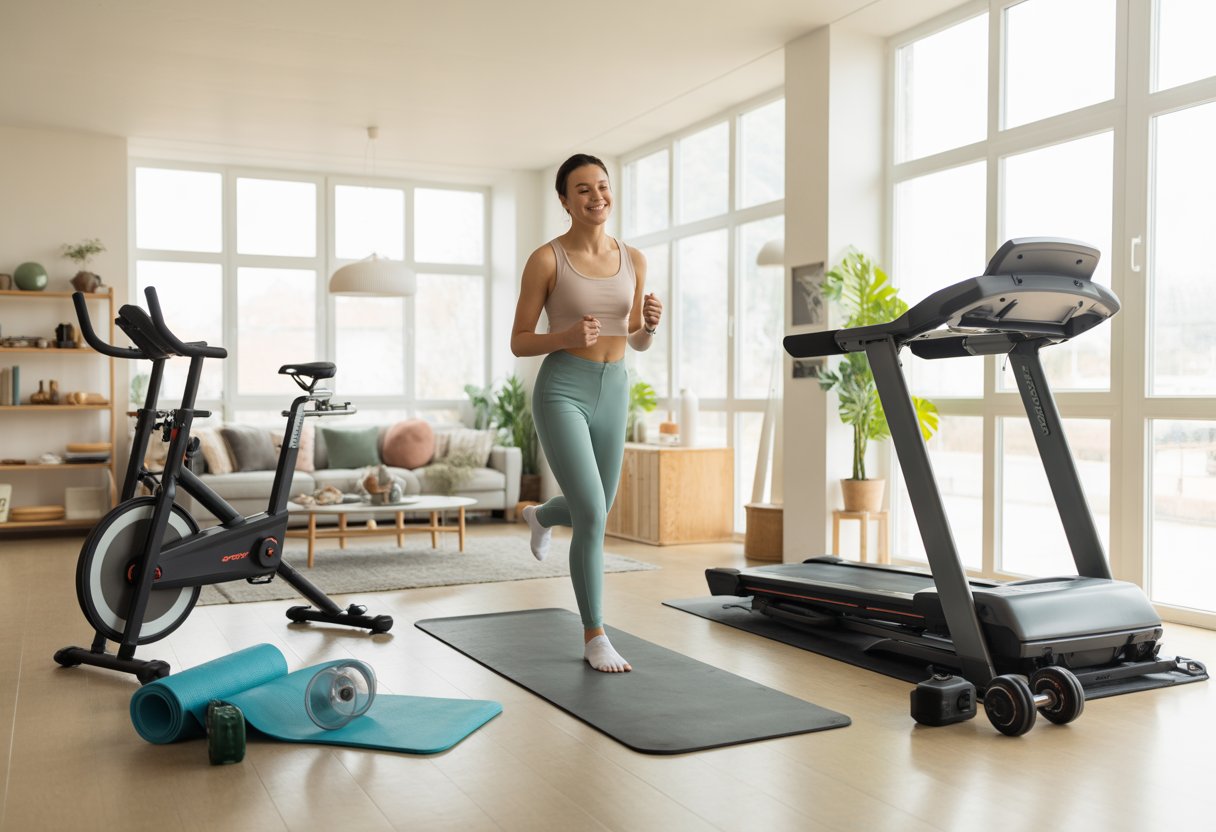
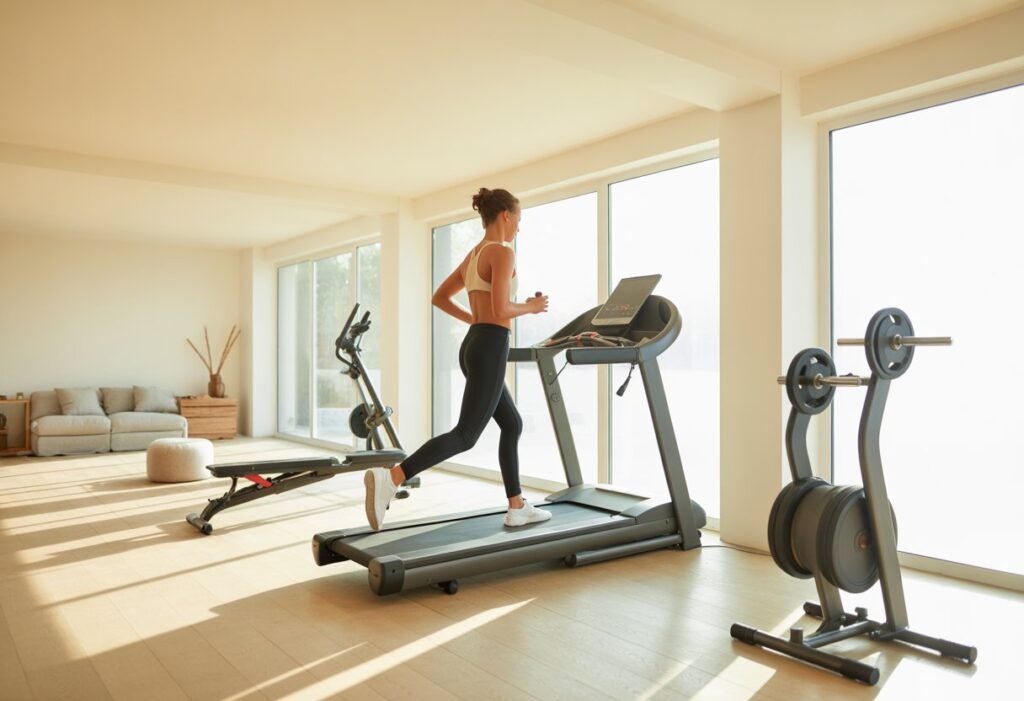
A home gym offers long-term cost savings, complete convenience, and total control over the workout environment, making it a better option for many people who want to exercise on their own schedule without commuting or waiting for equipment. While gym memberships provide access to various machines and social opportunities, home gyms eliminate common obstacles[1] like travel time, shared bathrooms, and crowded spaces. The average gym membership costs just over $30 per month, which adds up to $360 per year—enough to buy quality equipment that becomes a permanent asset.
The shift toward home workouts has grown significantly, and the reasons go beyond just saving money. People who train at home enjoy privacy, flexibility, and the ability to customize their space exactly how they want it. This article explores why a home gym might be the better choice for achieving fitness goals.
Table of Contents
Key Takeaways
- Home gyms save money over time since equipment becomes an asset instead of ongoing membership fees
- Working out at home provides complete schedule flexibility and eliminates commute time and waiting for equipment
- Home gyms offer total control over cleanliness, music, environment, and workout style without following gym rules
Convenience and Accessibility
A home gym eliminates the barriers that make consistent workouts difficult. Working out at home means no waiting for equipment and complete control over when and how to exercise.
Workout on Your Own Schedule
A home gym lets people exercise whenever they want. Early morning lifters can start their routine at 5 AM without checking gym hours. Night owls can work out at midnight if that fits their schedule better.
Parents can squeeze in a quick session while kids nap. Remote workers can exercise during lunch breaks without rushing. This flexibility is especially valuable for people with irregular work schedules or unpredictable commitments.
The convenience of working out anytime[2] gives users total control over their environment and fitness routine. There’s no pressure to finish quickly because others are waiting for equipment. Sessions can be 15 minutes or two hours based on what the day allows.
Zero Commute and Time-Saving
Driving to a commercial gym takes time that adds up quickly. A 15-minute drive each way equals 30 minutes lost per workout. Over a year, that’s roughly 130 hours spent just traveling.
A garage gym or home workout space eliminates this completely. The walk from the bedroom to the equipment might take 30 seconds. This makes it easier to stay consistent since there’s less friction between the decision to exercise and actually starting.
Short on time? A home workout can happen in the gaps between other activities. No packing a gym bag, finding parking, or waiting for locker room space. The equipment is always ready and available the moment someone decides to use it.
Financial Comparison
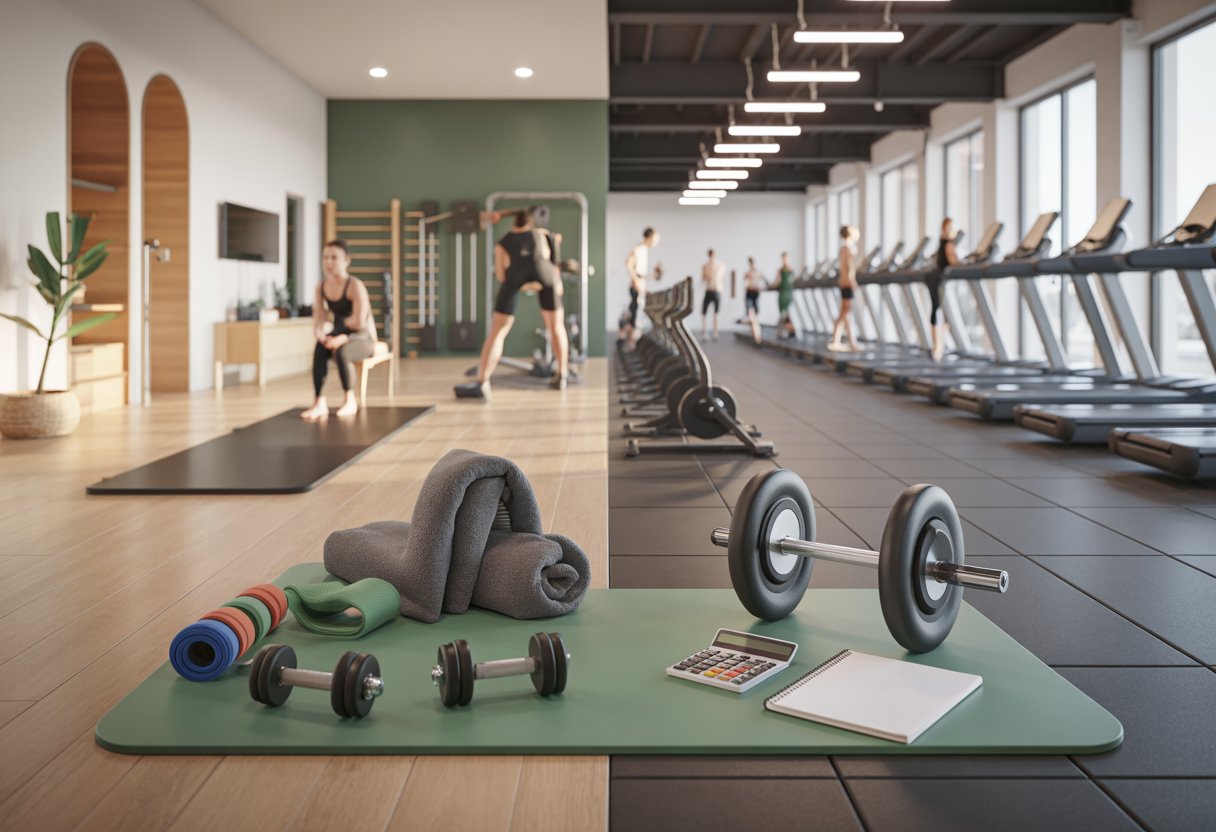
A home gym requires a larger initial payment but eliminates monthly fees, while gym memberships cost less to start but add up over years of continuous payments.
Upfront Investment vs. Ongoing Costs
Home gym equipment typically costs between $300 and $3,000 for a basic setup. This includes essential items like dumbbells, a weight bench, resistance bands, and a pull-up bar. More advanced setups with squat racks and cardio machines can reach $5,000 or more.
A gym membership averages $40 to $60 per month at most commercial gym locations. This totals $480 to $720 annually. Over five years, a person pays $2,400 to $3,600 in membership fees alone.
The cost comparison between a home gym and gym membership[3] shows that home equipment pays for itself within one to three years for most people. Additional gym expenses like gas, parking fees, and protein shakes from the gym cafe increase the total cost of a commercial gym even more.
Long-Term Value of Equipment
Quality home gym equipment lasts 10 to 20 years with proper care. Barbells, weight plates, and power racks rarely need replacement. Even treadmills and ellipticals function for a decade when maintained correctly.
Home gym equipment becomes more cost-effective when multiple household members use it[4]. A family of four would pay $160 to $240 monthly for separate gym memberships, but shares a single home gym investment. The equipment also retains resale value, with used weights and benches selling for 50% to 70% of their original price.
Equipment options remain available indefinitely with a home gym. Commercial gym members lose access immediately after canceling, despite years of payments made.
Control Over the Workout Environment
A home gym gives complete control over the physical space and atmosphere during workouts. This means making personal choices about privacy levels and environmental factors that affect performance and comfort.
Privacy and Comfort
Working out in a private home gym[5] eliminates the self-consciousness that many people feel in crowded commercial facilities. Beginners can learn new exercises without worrying about judgment from others. Advanced lifters can grunt, drop weights, or film form checks without disturbing anyone.
The comfort extends beyond just avoiding crowds. A person can wear whatever feels comfortable, from old t-shirts to no shirt at all. They don’t need to worry about finding gym attire or feeling underdressed compared to others.
Privacy also means freedom to focus entirely on the workout. There’s no waiting for equipment or adjusting a workout schedule around peak gym hours. A garage gym or dedicated workout space stays available 24/7, ready whenever the person wants to train.
Customized Atmosphere
A home gym allows complete customization of the workout environment to match personal preferences. The temperature, lighting, and ventilation can all be adjusted to ideal levels. Someone who runs hot can crank up the air conditioning, while others might prefer a warmer space for yoga sessions.
Music selection becomes entirely personal. Loud heavy metal, quiet podcasts, or complete silence are all options without headphones or compromise. The playlist never gets interrupted by commercial gym announcements or other people’s speaker choices.
Equipment placement and flooring choices reflect individual needs. A yoga mat can stay rolled out in a dedicated corner. Hydration stations can be set up exactly where needed. Wall mirrors, motivational posters, or minimalist blank walls all become viable options based on what helps that person perform best.
No Waiting or Sharing Equipment
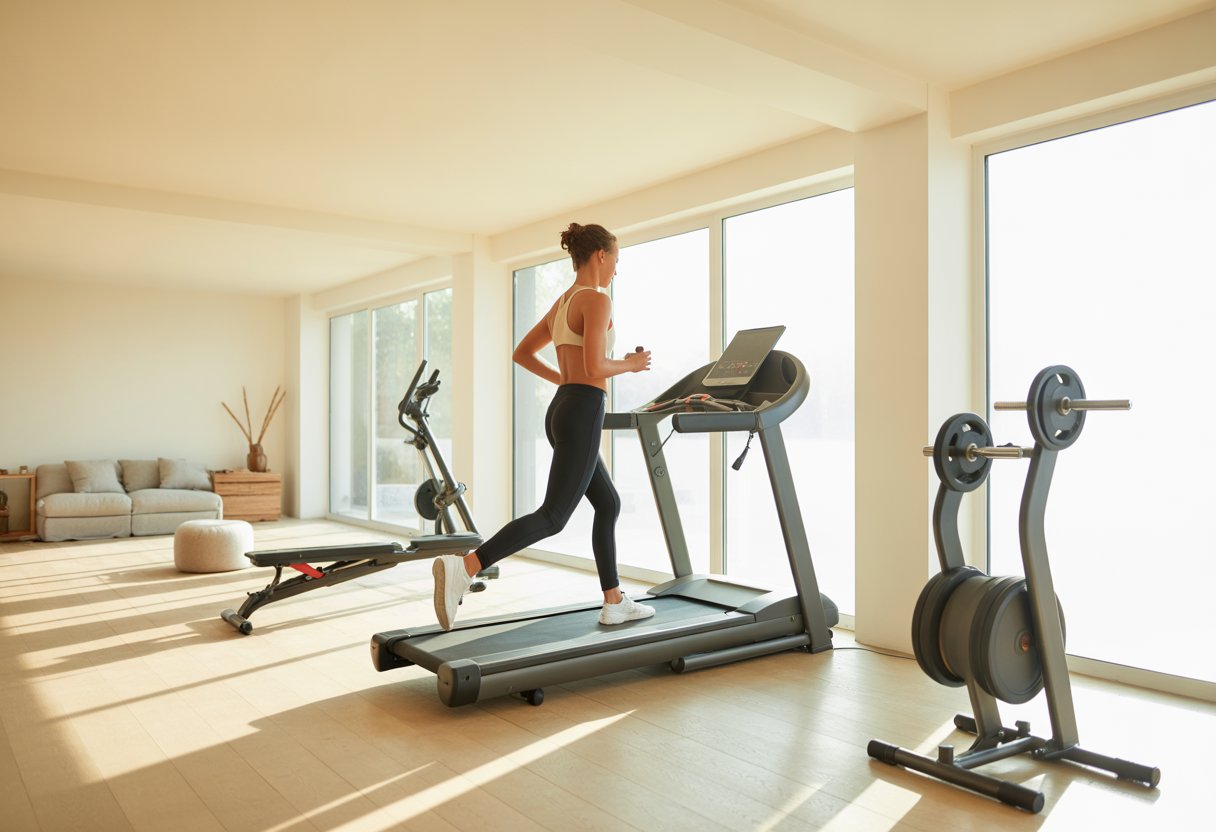
When someone owns their home gym, they have instant access to every piece of equipment whenever they want it. They never lose workout time standing around or adjusting their routine because another person is using what they need.
Eliminate Queueing for Machines
Commercial gym members often spend 5 to 10 minutes waiting for popular equipment during peak hours. The squat rack typically has the longest wait times, especially in the early morning and after work hours. Someone might plan to do bench press as their main lift, only to find all the benches occupied for 20 minutes or more.
Avoiding equipment wait times[6] means a person can move directly from one exercise to the next without interruption. They don’t need to hover awkwardly near the dumbbells or ask strangers how many sets they have left. Cardio machines during January and peak evening hours can have 30-minute waits at busy facilities.
A home gym owner walks directly to their equipment and starts training. They can superset exercises without worrying about losing their spot or inconveniencing others.
Efficient Training Sessions
Working out at home cuts actual training time significantly because there’s no downtime between exercises. A 45-minute workout at a commercial gym might only include 25 minutes of actual exercise once waiting time gets removed.
Someone can complete their full routine in less time when they control all the equipment. They can leave dumbbells out between sets, keep their water bottle on the bench press, and move between stations without cleanup requirements. Circuit training and timed workouts become much easier to execute.
Elevate Your Health for Just $29.99/Month
Join the Precision Wellness Subscription at My Healing 365 and get discounted services, priority coaching access, virtual care, and exclusive wellness resources to support your physical, emotional, and hormonal health.
Join for $29.99/MonthThis efficiency means they finish workouts faster or fit more volume into the same timeframe. They don’t need to modify their planned exercises because equipment isn’t available.
Personalization and Flexibility
A home gym allows complete control over equipment choices and workout design. Users can purchase exactly what they need and modify their setup as their fitness journey evolves.
Selecting Your Equipment
Building a home gym[6] means choosing equipment that matches specific training styles rather than settling for whatever a commercial facility offers. Someone focused on strength training might invest in an olympic barbell, weight plates, and an adjustable bench. Athletes interested in functional fitness could prioritize kettlebells, resistance bands, and a pull-up bar.
The beauty of home gym equipment lies in its customization potential. Adjustable dumbbells save space while providing multiple weight options in one compact unit. A rowing machine or stationary bike serves cardio needs without requiring a separate gym membership.
Common home gym essentials include:
- Barbell and weight plates for compound lifts
- Adjustable dumbbells for versatile training
- Resistance bands for mobility and warm-ups
- Pull-up bar for bodyweight exercises
- Adjustable bench for pressing movements
Each piece serves a purpose tailored to individual needs. There’s no paying for equipment that sits unused.
Adapting to Your Fitness Goals
Home gym owners can shift their training focus without constraint. When goals change from bodybuilding to endurance training, the equipment adapts accordingly. Adding a stationary bike or rowing machine takes minutes, not a new membership contract.
The flexibility extends to workout timing and structure. Someone training for powerlifting can set up their barbell for multiple sets without rushing. A parent might squeeze in quick kettlebell circuits between household tasks. The space molds to the user’s schedule and objectives rather than forcing conformity to class times or peak hours.
Equipment selection grows with experience. Beginners might start with resistance bands and a pull-up bar, then gradually add an olympic barbell and adjustable bench as they progress.
Hygiene and Cleanliness
When someone works out at home, they have complete control over the cleanliness of their equipment and space. This eliminates concerns about shared surfaces and allows for immediate cleaning after each workout.
Managing Your Space
A home gym owner decides when and how to clean their gym equipment. They can wipe down machines, weights, and mats right after use. This means no waiting for staff to sanitize stations between users.
Home gym germs are easier to control[7] than those at commercial facilities. The exerciser knows exactly who has touched each piece of equipment. They can establish a cleaning routine that fits their schedule and preferences.
Personal items like water bottles and towels stay in one location. There’s no risk of accidentally grabbing someone else’s hydration bottle or using a questionable towel from a communal bin. The home gym user can keep their space organized with designated spots for all exercise equipment and accessories.
Minimizing Exposure to Germs
Public gyms have multiple people touching the same surfaces throughout the day. Sweat, bacteria, and other contaminants build up on shared exercise equipment even with regular cleaning schedules.
At home, exposure to germs comes only from household members. There are no strangers coughing near the weight rack or leaving sweat pools on the bench press. The risk of picking up infections drops significantly.
The home exerciser doesn’t have to worry about the quality of cleaning products used or whether previous users actually sanitized their stations. They choose their own cleaning supplies and know the job gets done properly. This level of cleanliness control provides peace of mind during every workout session.
Motivation and Accountability
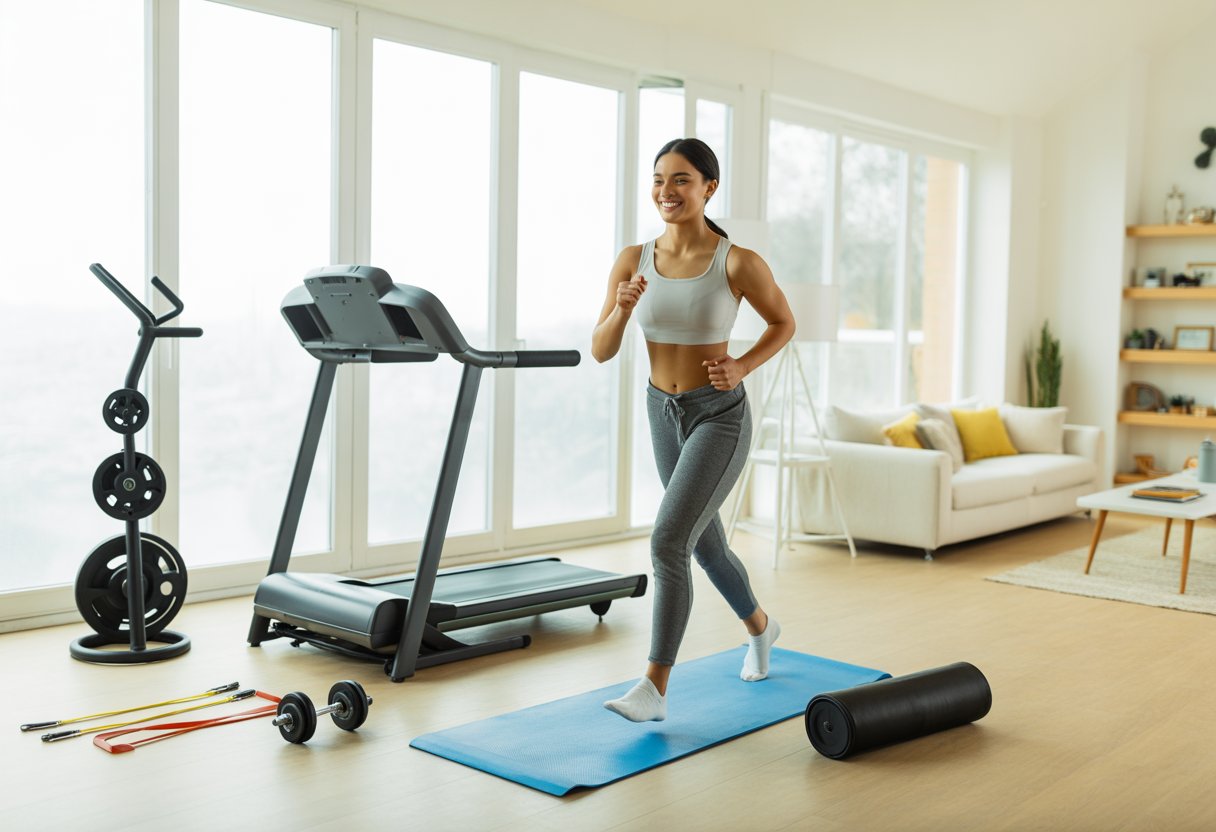
Home gym users need different strategies to stay committed than gym members who benefit from a built-in community. Success comes from building personal systems that create structure and track progress consistently.
Overcoming Home Distractions
Home workouts face unique challenges because the same space used for exercise also contains daily responsibilities and entertainment. A person might plan to work out but then notice laundry that needs folding or a pet that wants attention.
Creating a dedicated workout space helps separate exercise time from household tasks. This area doesn’t need to be large, but it should signal that fitness is the current priority. Setting a specific workout schedule works better than exercising whenever time appears available.
Key strategies to maintain focus:
- Turn off phone notifications during workouts
- Inform family members about exercise times
- Prepare equipment the night before
- Use a timer to create fixed workout windows
The lack of accountability when working out at home[8] can derail even well-planned fitness routines. Building personal accountability requires treating home workouts with the same commitment as gym appointments.
Using Workout Apps and Tracking Tools
Technology provides the structure that home exercisers need to maintain their fitness routine. Workout apps deliver guided sessions that eliminate guesswork about exercises, sets, and rest periods.
Progress tracking turns abstract effort into concrete data. Recording completed workouts, weight lifted, or repetitions performed shows improvement over weeks and months. This visible progress creates motivation that feelings alone cannot sustain.
Popular tracking methods include:
- Smartphone apps that log exercises and calculate volume
- Smart watches that monitor heart rate and calories
- Simple spreadsheets for recording weights and repetitions
- Photo documentation taken at regular intervals
Many people who track their progress stick with their programs longer than those who don’t. Apps also send reminder notifications that prompt workouts at scheduled times. Some platforms include virtual challenges or communities where users share achievements, which adds a social element similar to working out among others at the gym[1].
Adapting Workouts to Different Levels
A home gym allows people to start at their current fitness level and progress at their own pace without pressure or comparison to others. Both beginners and advanced athletes can customize their training intensity using equipment they already own or bodyweight exercises.
From Beginners to Advanced Training
Beginners can start with simple bodyweight exercises like pushups, squats, and lunges without needing any equipment. These movements build foundational strength and help new exercisers learn proper form in a comfortable environment.
As fitness improves, people can apply progressive overload by adding more repetitions, slowing down movements, or reducing rest time between sets. This gradual increase in difficulty supports muscle growth over time.
Advanced athletes can continue challenging themselves at home by adding resistance bands, dumbbells, or kettlebells to their routine. They can also incorporate explosive movements, single-leg exercises, or complex movement patterns that require balance and coordination. Many CrossFit athletes train effectively at home using minimal equipment and focusing on high-intensity intervals.
Bodyweight and Strength Training Options
Bodyweight workouts offer complete flexibility for all fitness levels without requiring machines or weights. A beginner might do wall pushups while an advanced person performs one-arm pushups or plyometric variations.
Home gym owners can adjust strength training intensity by changing exercise variations rather than needing different machines. For example, goblet squats work for beginners while pistol squats challenge advanced exercisers.
People can also modify exercises by adjusting tempo, adding pauses, or increasing range of motion. These changes create new challenges that support continued muscle growth and help individuals reach their fitness goals. The ability to experiment with different movements and training styles makes home workouts highly adaptable.
Professional Guidance and Social Dynamics
Home gym users can still access professional instruction through digital platforms, while online fitness communities provide motivation that replaces traditional gym social experiences. Many exercisers successfully build accountability and learn proper techniques without stepping into a commercial facility.
Working Without a Personal Trainer
Home gym owners can access professional guidance through online coaching programs and video platforms. Many certified fitness instructors offer virtual personal training sessions at lower costs than in-person appointments. These digital options provide form checks, customized workout plans, and regular accountability.
Exercise apps and YouTube channels deliver instruction from experienced professionals. Users can pause, rewind, and replay demonstrations until they master each movement. This flexibility allows people to learn at their own pace without the pressure of a personal trainer watching.
Benefits of self-directed learning include:
- Lower costs compared to traditional personal training
- Ability to choose from multiple instructors and teaching styles
- Freedom to practice movements without time constraints
- Access to specialized programs for specific goals
The main challenge is maintaining proper form without immediate feedback. Recording workout videos for self-review helps identify technique issues. Some online coaches offer form analysis services where users submit videos for professional assessment.
Finding Online Communities and Support
Digital fitness communities replace the social aspects of group fitness classes[1] and gym friendships. Social media groups, fitness forums, and app-based communities connect home exercisers worldwide. These platforms offer encouragement, answer questions, and celebrate achievements.
Virtual workout buddies provide accountability through scheduled video sessions or shared fitness tracking. Many apps allow users to compete with friends, share progress photos, and exchange workout tips. This digital connection often proves more convenient than coordinating gym schedules with others.
Popular online support options:
- Facebook groups focused on specific workout programs
- Reddit fitness communities for advice and motivation
- Strava or similar apps for tracking and comparing workouts
- Discord servers dedicated to home fitness
Live streaming platforms let users participate in real-time classes from home. These sessions create a sense of community similar to in-person group fitness without commuting. Participants can interact with instructors and other members through chat features.
Potential Drawbacks and Considerations
While home gyms offer many advantages, they come with challenges that can affect someone’s fitness journey. Space limitations, setup requirements, and maintaining motivation without others around are real factors that deserve careful thought before investing in home gym essentials.
Space Constraints
Doing a full workout in a small enclosed space[2] presents one of the biggest challenges when setting up a home gym. A person needs enough room for equipment and movement during exercises.
Someone living in a small apartment faces tough decisions about what equipment to include. A power rack, bench, and weights require significant floor space. Cardio machines like treadmills and ellipticals take up even more room.
The available space often determines what type of exercise program someone can follow at home. Limited square footage might mean choosing between strength training equipment and cardio machines. Some people get creative by using foldable equipment or wall-mounted systems, but these solutions still require dedicated storage areas.
Initial Setup Effort
Building a home gym requires substantial upfront work beyond just buying equipment. Someone needs to plan the layout, ensure proper flooring is installed, and confirm adequate ventilation exists in the workout area.
The selection process takes time and research. A person must identify which equipment matches their fitness goals and budget. They need to compare brands, read reviews, and make decisions about quality versus cost.
Assembly and installation add another layer of effort. Many pieces of equipment arrive in boxes requiring hours of setup. Heavy items like squat racks and cable machines may need two people to move and position safely. Electrical outlets might need installation for certain machines.
Staying Motivated at Home
Working out alone removes the social energy and accountability that commercial gyms provide. Research completed during the COVID-19 pandemic shows that working out with others contributes to physical and mental health[2], including self-esteem.
Distractions at home can derail workout plans. Family members, pets, household chores, and entertainment options compete for attention during exercise time. Someone might find it easier to skip a session when no one notices their absence.
The lack of external guidance affects proper form and technique. Mirrors, trainers, or workout partners at the gym help ensure exercises are done correctly[2] and safely to avoid injury. A person working out alone must develop strong self-monitoring habits or use technology like workout apps and video guides to maintain proper form throughout their fitness journey.
Choosing What Works for You
The right fitness setup depends on personal schedules, preferences, and what helps someone stay consistent with their training. Neither option is universally better, so the decision comes down to matching the choice with daily routines and what keeps motivation high.
Aligning with Your Lifestyle
A person’s daily schedule often determines whether training at home[9] or choosing to join a gym makes more sense. Someone with unpredictable work hours or family responsibilities may find home workouts easier to fit in. There’s no commute time, no operating hours to work around, and no need to pack a gym bag.
Others thrive on structure and accountability. For them, the act of going to the gym creates a clear boundary between work life and fitness time. The commute and environment of a gym[1] can signal that it’s time to focus on exercise.
Budget also plays a role. Home workouts require minimal or no monthly fees, while gym memberships add recurring costs. However, gyms provide access to equipment and amenities that might be too expensive or space-consuming to keep at home.
A person should consider their workout schedule and how much flexibility they need before deciding.
Balancing Convenience and Community
Home workouts offer maximum convenience and privacy. Someone can exercise without worrying about others watching or waiting for equipment. This setup works well for people who prefer working out alone or feel uncomfortable in group settings.
Gyms provide social interaction and professional guidance. The presence of other people can increase motivation and push someone to work harder. Group fitness classes, personal trainers, and workout partners create accountability that’s harder to replicate at home.
Some people succeed by combining both approaches[9]. They might do cardio or mobility work at home on busy days and go to the gym for strength training when they have more time. This hybrid model lets someone maintain a consistent workout program while adapting to changing schedules.
The key is identifying which environment supports long-term commitment to gym workouts or home training.
Frequently Asked Questions
People often have specific questions about costs, results, and practical concerns when deciding between home and commercial gym options. These common questions help clarify what to expect from each choice.
How does the total cost of a home gym compare to a gym membership over time?
The average gym membership costs about $30 per month, which adds up to $360 per year. Over five years, that equals $1,800 in membership fees alone.
A basic home gym setup can cost between $1,000 and $2,000 upfront. This means the initial investment in home gym equipment[10] typically pays for itself within three to six years.
Home gym owners also save money on gas, car maintenance, and time spent commuting. These additional costs can add another $10 to $20 per month for people who drive to the gym regularly.
Unlike gym memberships that provide no return, home gym equipment retains value. Owners can sell or trade their equipment later to recover some of their investment.
What are the biggest advantages of a home gym versus a commercial gym?
Convenience ranks as the top benefit of home gyms. People can work out any time without packing a bag, driving, or waiting for equipment.
Privacy provides another major advantage. Exercisers avoid feeling self-conscious or intimidated, which particularly helps beginners learn new movements.
Nearly 60% of women report experiencing harassment in commercial gyms[6], making home gyms a safer option. Men also experience harassment at a rate of about 21%.
Time efficiency improves dramatically at home. People skip the commute, avoid waiting for machines, and don’t lose workout time to small talk with other gym members.
Equipment customization lets owners choose exactly what they need for their goals. Someone focused on powerlifting can buy barbells and plates, while others might prefer resistance bands or adjustable dumbbells.
Can you get the same strength and muscle-building results at home as in a gym?
Yes, people can build strength and muscle effectively at home with proper equipment and programming. The body responds to progressive overload regardless of location.
A basic barbell, weight plates, and a power rack provide everything needed for compound movements like squats, deadlifts, and bench presses. These exercises form the foundation of most strength programs.
Bodyweight exercises also build significant strength, especially for beginners. Pull-ups, push-ups, and pistol squats challenge muscles without any equipment.
The main difference comes down to equipment variety rather than results. Commercial gyms offer specialized machines that some people prefer, but these aren’t necessary for muscle growth.
What essential equipment should you buy first to build an effective home gym?
A pull-up bar or resistance bands make excellent first purchases. These items cost less than $100 and enable dozens of effective exercises.
An Olympic barbell and weight plates should come next for people serious about strength training. A quality barbell costs $200 to $400 and lasts for years.
A power rack or squat stand provides safety for heavy lifts. This equipment allows people to train without a spotter while protecting them during failed reps.
Adjustable dumbbells offer versatility in a compact space. They replace multiple sets of fixed-weight dumbbells and work well for isolation exercises.
A flat bench rounds out a basic setup. Combined with a barbell and dumbbells, it enables bench presses, rows, and many other movements.
How do convenience and scheduling impact workout consistency with a home gym compared to a gym?
Home gyms eliminate barriers that prevent people from exercising[1], including commute time, gym hours, and preparation. This removal of obstacles typically increases workout frequency.
A 10-minute drive to the gym five days per week adds up to nearly two hours of driving time. That time disappears with a home gym setup.
People can exercise during early mornings or late nights without leaving their house. This flexibility helps those with unpredictable schedules maintain consistent training.
The lack of travel time means even a quick 20-minute workout becomes practical. At a commercial gym, the same session might require an hour when factoring in the commute and preparation.
What are the most common drawbacks of a home gym, and how can you mitigate them?
Limited equipment variety presents the biggest challenge for home gym owners. People can address this by starting with versatile equipment like adjustable dumbbells and resistance bands.
Lack of social interaction affects those who enjoy the community aspect of commercial gyms. Joining online fitness communities or working out with family members helps fill this gap.
Space constraints limit what equipment people can fit in their homes. Focusing on compact options like folding benches and wall-mounted pull-up bars maximizes small areas.
The upfront cost stops some people from building a home gym. Buying equipment gradually and starting with budget-friendly options makes the investment more manageable.
Missing spotters for heavy lifts creates safety concerns. Installing a power rack with safety bars allows people to train heavy without assistance.
Post Views: 6
References
- home gyms eliminate common obstacles. https://www.verywellfit.com/in-the-forum-join-a-gym-or-workout-at-home-3976890 Accessed April 18, 2026
- Is a Home Gym Worth It? (Pros and Cons of Having One). https://totalshape.com/equipment/is-a-home-gym-worth-it/ Accessed April 18, 2026
- Home Gym vs. Gym Membership (Which One Is Better for You?). https://totalshape.com/equipment/gym-membership-vs-home-gym/ Accessed April 18, 2026
- Home Gym vs. Gym Membership: Which Is the Better Investment for Your Lifestyle?. https://www.realtor.com/advice/home-improvement/home-gym-membership-investment-roi/ Accessed April 18, 2026
- 15 Reasons Why a Home Gym Is Worth It
– REP Fitness. https://repfitness.com/blogs/inspiration/15-benefits-of-building-a-home-gym Accessed April 18, 2026 - Page Not Found. https://www.garagegymreviews.com/home-gym-vs-gym-membership Accessed April 18, 2026
- Page Not Found. https://www.garagegymreviews.com/home-gym-germs Accessed April 18, 2026
- Gym vs. Home Workout: Which is Better for You?. https://www.ulike.com/blogs/sports-fitness/gym-vs-home-workout-which-is-better-for-you Accessed April 18, 2026
- training at home. https://www.health.com/home-workouts-vs-gym-11903217 Accessed April 18, 2026
- Home Gym vs Gym Membership: Which Is Right For You?. https://powerliftingtechnique.com/home-gym-vs-gym-membership/ Accessed April 18, 2026

























