Medically Reviewed
Dr. Jose Rossello, MD, PhD, MHCM
Preventive Medicine & Public Health Specialist
Last Reviewed: April 19, 2026
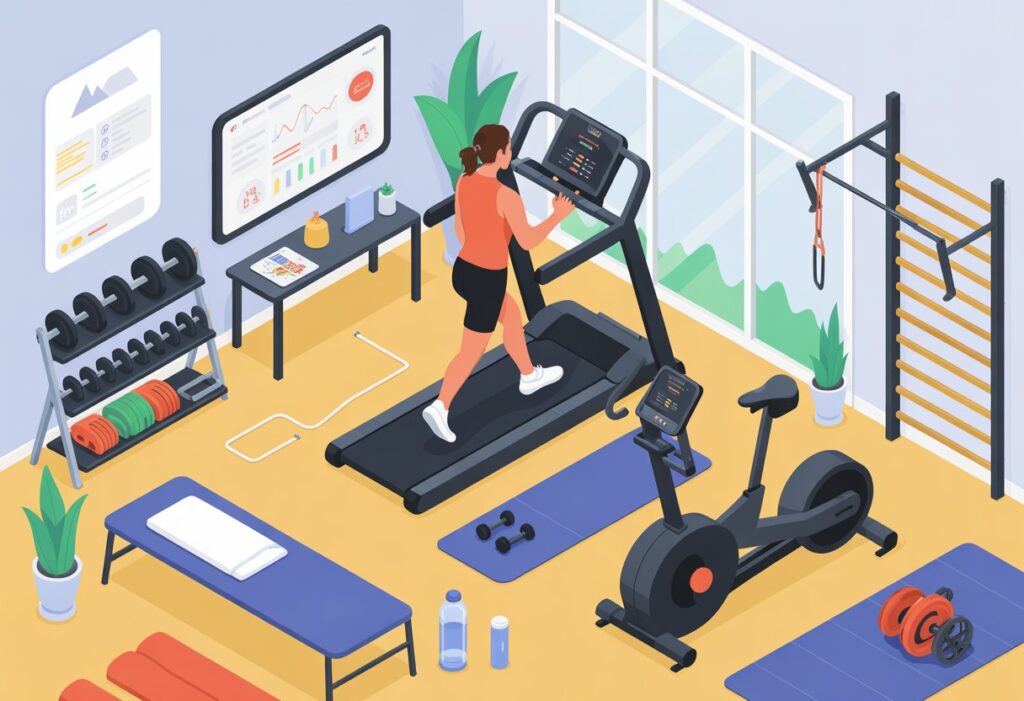
You don’t need a gym membership to get in great shape. Creating a home gym workout plan[1] can be just as effective as going to a traditional fitness center, and it saves both time and money. A well-designed home gym lets people work out on their own schedule, skip the commute, and build a fitness routine that matches their personal goals.
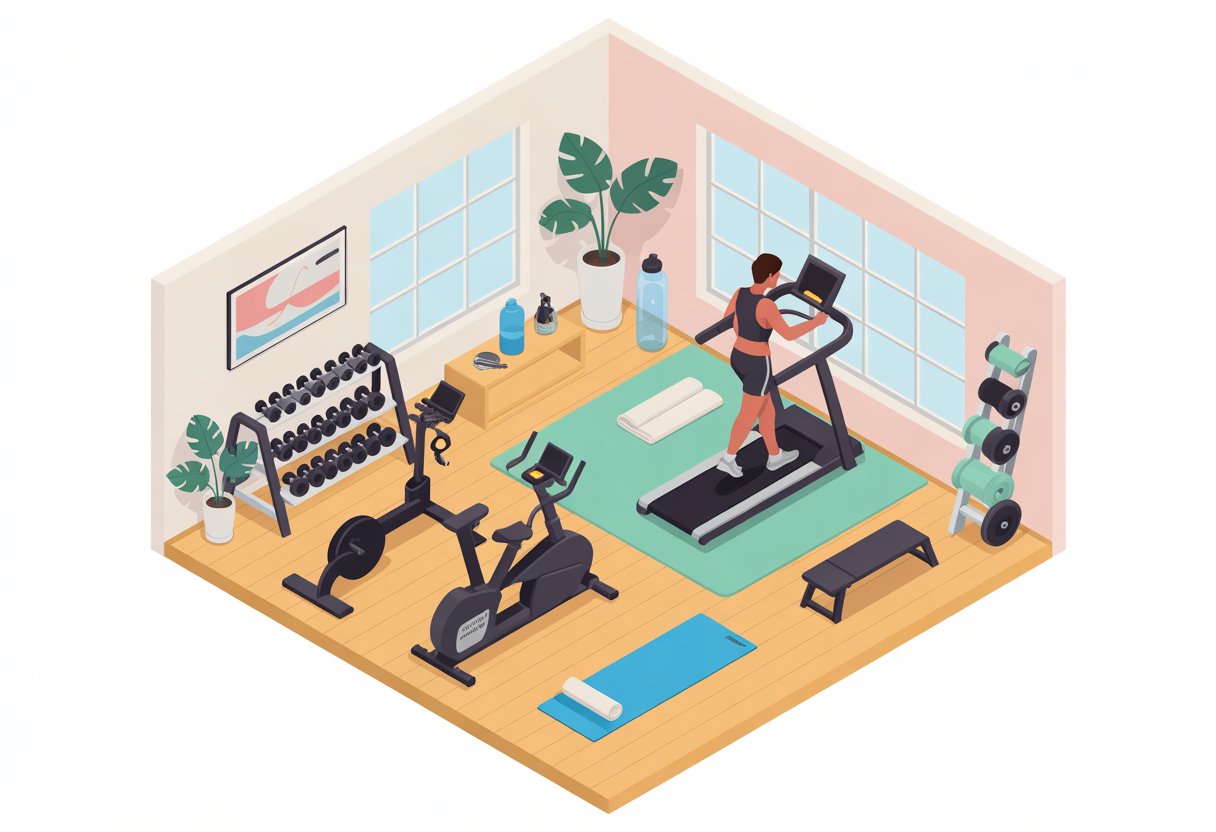
Working out at home offers real benefits beyond just convenience. People can choose exactly what equipment they want to use and design a space that keeps them motivated. Whether someone wants to lose weight, build muscle, or just stay healthy, a home workout routine can deliver results with the right approach.
Setting up a home gym[2] doesn’t have to be complicated or expensive. Simple equipment like resistance bands, dumbbells, and a workout mat can provide everything needed for effective strength training and cardio. The key is understanding how to create a routine that fits individual fitness goals and keeps progress moving forward.
Table of Contents
Key Takeaways
- Home gyms save time and money while providing flexible workout options that fit any schedule
- Effective home workouts combine strength training, cardio, and flexibility exercises using minimal equipment
- Setting clear fitness goals and building a progressive routine helps maintain motivation and delivers real results
Setting Up Your Home Gym Space
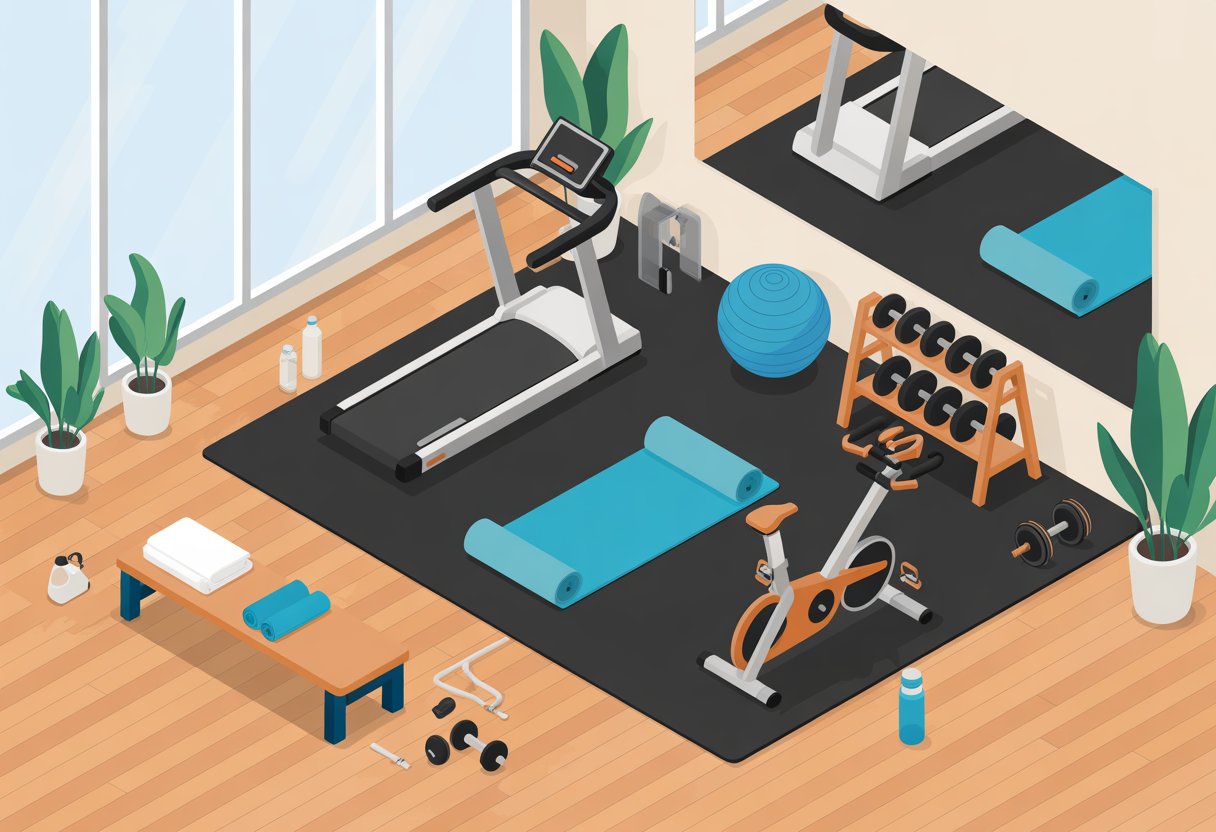
A successful home gym starts with smart space selection and the right equipment for your fitness level. The key is matching your workout goals with practical gear that fits your budget and available area.
Choosing the Right Area
Most people can create an effective workout area[3] in a spare bedroom, garage, basement, or even a corner of the living room. The space needs good air flow and enough ceiling height for overhead movements like pull-ups or kettlebell swings.
Floor protection matters more than most people realize. Rubber flooring prevents damage from dropped weights and cuts down on noise. A space of 50 to 100 square feet works well for basic strength training and bodyweight exercises.
Wall mirrors help with proper form and make small areas feel larger. The room should have enough space to move freely in all directions without hitting walls or furniture.
Essential Equipment for Beginners
Adjustable dumbbells offer the best value for new gym owners because they replace multiple sets of fixed weights. Light dumbbells work for warm-ups and isolation exercises, while heavier options handle compound movements.
A yoga mat provides cushioning for floor exercises, stretching, and core work. Resistance bands add variety to strength training without taking up much storage space. They work well for both upper and lower body exercises.
Basic cardio can start with a simple jump rope. Kettlebells deliver full-body conditioning in a compact package. A foldable bench expands exercise options for chest presses, step-ups, and seated movements.
Optional Upgrades for Advanced Training
Serious lifters benefit from a compact squat rack for barbell exercises. A pull-up bar mounts in doorways or on walls for upper body pulling movements.
Cardio machines like a treadmill or rowing machine provide indoor training options regardless of weather. Stationary bikes take up less space than treadmills while still delivering effective cardio workouts. Step platforms add variety for plyometric training and HIIT circuits.
Recovery tools include foam rollers and massage balls for muscle maintenance. A Bluetooth speaker or small TV supports guided workout programs and keeps training sessions engaging.
Establishing Effective Fitness Goals
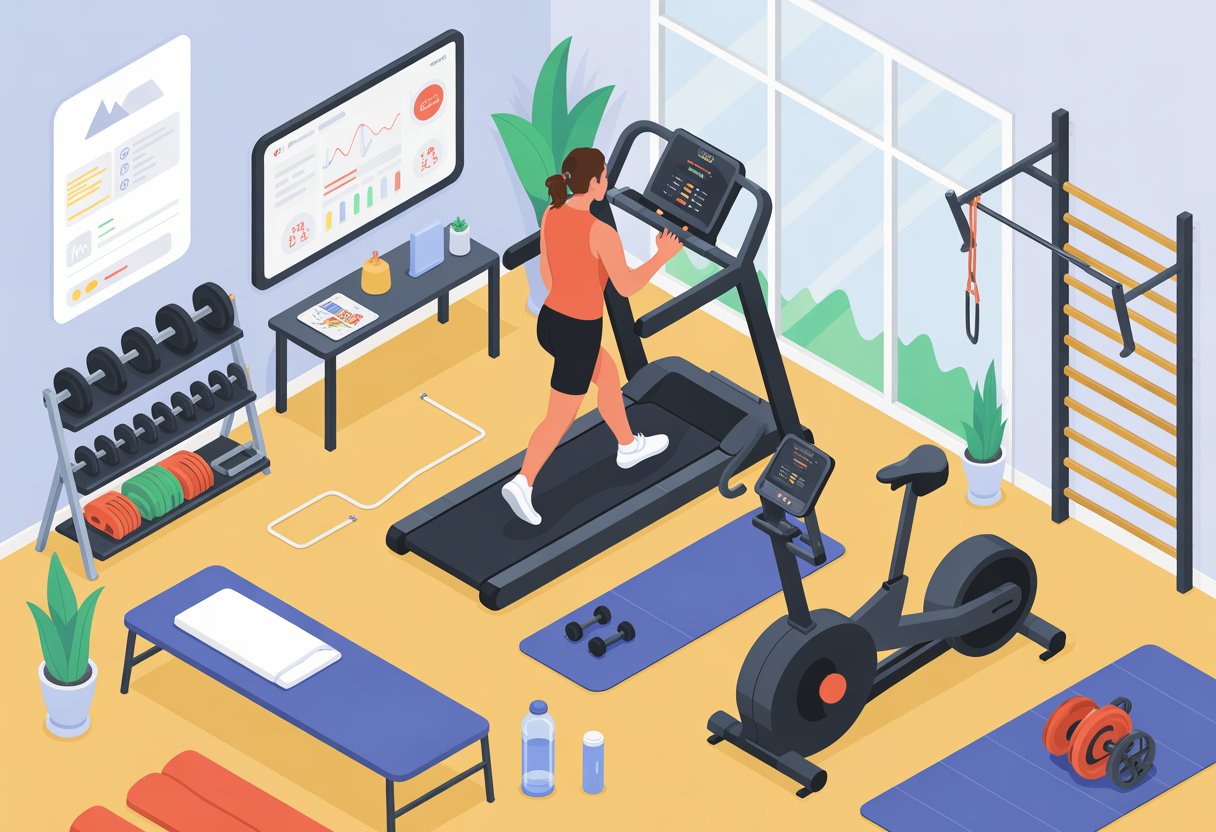
Setting clear fitness goals helps people stay motivated and measure their success when working out at home. The right approach involves picking specific targets and checking progress regularly to make adjustments.
Defining Objectives for Your Home Workout Plan
A home gym workout plan[1] works best when it targets specific outcomes rather than vague ideas. Someone might want to build muscle at home, improve cardiovascular health, or enhance flexibility. Each goal requires different training methods.
For muscle hypertrophy, the focus should be on progressive overload with resistance training. This means gradually increasing weight, reps, or sets over time. People seeking to build muscle typically need 3-5 sessions per week with adequate rest between workouts.
Core strength goals benefit from exercises like planks, dead bugs, and bird dogs performed 2-3 times weekly. These movements also help improve posture when done consistently. A workout split divides training by muscle groups or movement patterns across different days. Common splits include upper/lower body, push/pull/legs, or full body routines.
Common fitness goal types:
- Strength gains
- Muscle building
- Weight loss
- Endurance improvement
- Flexibility enhancement
Tracking Progress and Adjusting Goals
Measuring progress keeps people accountable and shows whether their approach works. Simple tracking methods include logging weights lifted, reps completed, or workout duration in a notebook or app.
Taking body measurements every 2-4 weeks provides concrete data. Key areas to measure include chest, waist, hips, arms, and thighs. Progress photos taken in similar lighting and poses reveal changes that daily mirror checks miss.
Performance markers matter more than appearance for some goals. Someone focusing on core strength might track how long they hold a plank. Those working on muscle hypertrophy should note weight increases on key lifts.
Goals need adjustment when progress stalls for 3-4 weeks despite consistent effort. This might mean changing exercise selection, adjusting volume, or modifying rest periods. Building a workout routine[4] requires flexibility to adapt as the body changes and fitness improves.
Building a Home Workout Routine
A successful home workout plan requires careful planning of weekly schedules, appropriate training splits, and balanced exercise types. Most people need 3-5 workout days per week with proper rest periods between sessions.
Structuring Your Weekly Schedule
The first step in creating at-home workout programs[5] involves deciding how many days to train each week. Beginners should start with three days, while intermediate lifters can handle four to five sessions. Each workout should last 45-75 minutes including warmup and cooldown.
Rest days are just as important as training days. Muscles grow during recovery, not during the workout itself. A person should avoid training the same muscle groups on consecutive days unless following a specific advanced program.
Training volume matters for results. This includes the total number of sets and reps performed for each muscle group per week. Most people see good results with 10-20 sets per muscle group weekly, spread across multiple sessions.
Sample Home Workout Splits
A workout split determines which muscle groups get trained on specific days. Full-body routines work well for beginners training three days per week, hitting all major muscle groups each session with 2-3 exercises per body part.
Upper/lower splits divide training into four days: two upper body days and two lower body days. This allows higher training volume per muscle group while maintaining adequate recovery time.
Push/pull/legs splits require five to six training days. Push days focus on chest, shoulders, and triceps. Pull days target back and biceps. Leg days work the entire lower body. This home workout routine[6] approach suits experienced lifters who can handle more frequent training.
Balancing Cardio, Strength, and Flexibility
A complete at-home workout program includes all three fitness components. Strength training should form the foundation, performed 3-4 times weekly with progressive overload principles applied consistently.
Cardio can be added 2-3 times per week for 20-30 minutes. This improves heart health without interfering with strength gains. Low-impact options like walking, cycling, or rowing work well on rest days or after strength sessions.
Flexibility work takes 10-15 minutes and fits into warmups and cooldowns. Dynamic stretches before workouts prepare joints for movement. Static stretches after training improve range of motion over time. Including mobility exercises prevents injury and enhances exercise progression in compound movements.
Strength Training Fundamentals at Home
Building strength at home requires understanding three core elements: mastering exercises that use your own body weight, adding external resistance through equipment, and systematically increasing challenge over time to force muscle adaptation.
Bodyweight Strength Moves
Bodyweight exercises form the foundation of any home strength program. These movements require no equipment and target multiple muscle groups at once.
Push-ups work the chest, shoulders, and triceps while engaging the core for stability. Squats build leg strength and improve mobility in the hips and ankles. Pull-ups develop back and arm strength, though they require a basic bar mounted in a doorway.
Essential bodyweight exercises include:
- Push-ups (standard, wide, diamond variations)
- Squats (bodyweight, single-leg, jump squats)
- Lunges (forward, reverse, walking)
- Planks (front, side, extended holds)
- Pull-ups or inverted rows
These fundamental exercises for weight lifting at home[7] create a solid base before adding external weight. Most people can perform 8-15 reps of each movement to build strength effectively.
Lifting With Dumbbells and Bands
Dumbbells and resistance bands add versatility to home workouts. Dumbbells allow for precise weight increments and work well for both compound movements and isolation exercises.
A basic set of adjustable dumbbells saves space while providing weight options from 5 to 50 pounds. These tools enable exercises like bicep curls, shoulder presses, rows, and chest presses.
Resistance bands offer variable tension throughout each movement. They attach to door frames for exercises like chest flies, tricep extensions, and lat pulldowns. Bands come in different resistance levels, typically ranging from 5 to 50 pounds of tension.
Key equipment exercises:
- Dumbbell bench press
- Dumbbell rows
- Shoulder press
- Band-resisted squats
- Band chest press
Both tools target the same muscles as gym machines but cost significantly less. They work especially well for upper body strength training[1] when combined properly.
Progressive Overload Principles
Progressive overload means gradually increasing stress on muscles to force growth and strength gains. Without this principle, the body adapts and stops improving.
Elevate Your Health for Just $29.99/Month
Join the Precision Wellness Subscription at My Healing 365 and get discounted services, priority coaching access, virtual care, and exclusive wellness resources to support your physical, emotional, and hormonal health.
Join for $29.99/MonthTraining volume increases through three main methods: adding more weight, performing more reps, or doing additional sets. Someone who squats 100 pounds for 3 sets of 10 reps might progress to 105 pounds, or increase to 12 reps, or add a fourth set.
The body needs 2-4 weeks to adapt to a new stimulus. Increasing challenge every 1-2 weeks keeps muscles responding without risking injury. Small jumps of 2-5 pounds for upper body exercises and 5-10 pounds for lower body movements work best.
Tracking workouts in a notebook or app shows whether progress is happening. This data reveals when to increase difficulty and ensures consistent advancement toward strength goals.
Best Bodyweight Exercises for All Levels
Bodyweight training offers exercises that work for beginners just starting out and advanced athletes looking for a challenge. These movements require no equipment and can be modified to match any fitness level through simple adjustments to form, tempo, or range of motion.
Upper Body Moves
Push-ups form the foundation of upper body bodyweight training[8]. Beginners can start with knee push-ups, where the knees stay on the ground to reduce the amount of bodyweight being lifted. This modification allows people to build strength in the chest, shoulders, and triceps without strain.
The pike push-up shifts more weight to the shoulders by positioning the hips high in the air with hands and feet on the ground. Diamond push-ups target the triceps by placing the hands close together under the chest with thumbs and index fingers touching to form a diamond shape. Pull-ups remain one of the most challenging bodyweight exercises, requiring a bar and the strength to lift the entire body until the chin clears the bar.
For those unable to perform full pull-ups, holding at the top position or using a resistance band for assistance helps build the necessary strength over time.
Lower Body Essentials
The bodyweight squat stands as the most essential lower body exercise. Feet should be shoulder-width apart, and the hips lower back as if sitting in a chair until thighs reach parallel to the ground. The air squat uses this same form and challenges balance and leg strength through multiple repetitions.
Lunges work each leg independently by stepping forward and lowering the back knee toward the ground while keeping the front knee aligned over the ankle. This unilateral training approach[9] helps correct muscle imbalances between legs.
One-legged squats require advanced strength and balance. The person stands on one leg while lowering down as far as possible, keeping the other leg extended forward. Starting with a partial range of motion and using a wall or chair for support makes this movement accessible while building toward the full version.
Core Strength Builders
Planks engage the entire core by holding a straight body position supported on the forearms and toes. The forearm plank requires the elbows to stay directly under the shoulders while keeping the back flat and avoiding any sagging in the hips. Hold times can start at 20 seconds and gradually increase as core strength improves.
Leg raises target the lower abdominal muscles by lying flat on the back and lifting straight legs up toward the ceiling, then lowering them back down without touching the ground. Bending the knees makes this exercise easier for beginners.
The hollow body hold creates an even more challenging position than traditional planks. Lying on the back, a person lifts the shoulders, arms, and legs off the ground while pressing the lower back into the floor. This creates a slight curved or “hollow” body position that activates deep core muscles throughout the entire torso.
Incorporating Dumbbells and Resistance Equipment
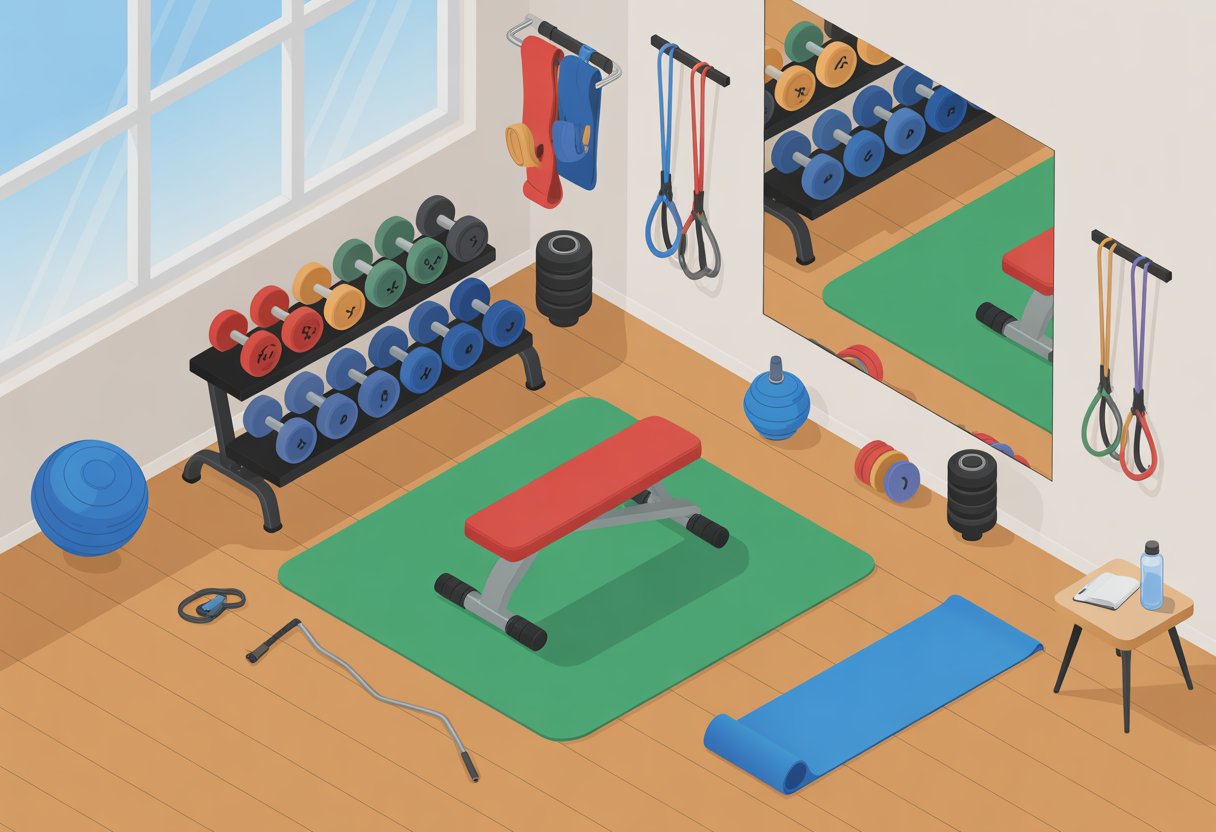
Dumbbells offer targeted muscle building through exercises like rows and presses, while resistance bands add portable tension-based training. Kettlebells bring dynamic movement patterns that challenge stability and power.
Dumbbell Basics for Home Lifters
A basic dumbbell workout[10] can target every major muscle group without requiring a large equipment collection. Beginners should start with light dumbbells that allow proper form across 8-12 repetitions before adding weight.
The dumbbell row builds back strength by pulling weight toward the torso while supporting the body on a bench or sturdy surface. Goblet squats work the legs and core by holding a single dumbbell vertically at chest level during the squat movement. For shoulders, lateral raises involve lifting dumbbells out to the sides with slightly bent arms.
Arm exercises include biceps curls with palms facing up and triceps extensions performed overhead or lying down. The dumbbell chest press replicates bench pressing while lying on a flat surface or stability ball.
Adjustable dumbbells save space and money by replacing multiple fixed-weight pairs. They allow gradual weight increases as strength improves without cluttering the workout area.
Resistance Bands for Versatility
Resistance bands provide constant tension throughout each movement, creating a different stimulus than free weights. Resistance bands work well[11] as foundational equipment for home gyms due to their low cost and minimal storage needs.
These bands come in various resistance levels, typically marked by color. Light bands suit warm-ups and rehabilitation work, while heavy bands challenge advanced lifters. Loop bands wrap around legs for glute activation and lateral movements. Bands with handles attach to doors or anchor points for rowing and pressing motions.
Common band exercises include banded squats, chest flies, and shoulder rotations. They excel at isolation work and can increase difficulty on bodyweight exercises like push-ups when draped across the back.
Kettlebell Movements to Try
Kettlebells feature an offset weight distribution that engages stabilizer muscles during dynamic movements. The kettlebell swing serves as a foundational exercise, driving the bell forward through hip thrust power rather than arm strength.
Turkish get-ups challenge full-body coordination by moving from lying to standing while holding a kettlebell overhead. Kettlebell goblet squats mirror the dumbbell version but often feel more natural due to the bell’s shape and handle position.
Single-arm kettlebell rows, overhead presses, and windmills add rotational and anti-rotational core work. Most home gym owners start with one or two kettlebells in moderate weights before expanding their collection based on specific training needs.
Designing Bodyweight and Circuit Training Programs
A well-designed bodyweight circuit combines multiple exercises that target different muscle groups with minimal rest between movements. The key is balancing exercise difficulty, rest periods, and total workout duration to match fitness levels while keeping the heart rate elevated.
Creating Full-Body Circuits
A bodyweight circuit focuses on cycling through exercises[12] that work different muscle groups with short rest periods between each movement. The most effective circuits include a push exercise, a pull exercise, a lower body movement, and a core exercise.
Each circuit should contain 4-8 exercises performed in sequence. Beginners might start with 2 rounds of 6 exercises, while advanced exercisers can complete 3-4 rounds of 8-10 movements. Rest periods between exercises typically range from 15-45 seconds, depending on fitness level.
Exercise selection matters for creating a balanced full-body workout. Upper body exercises like push-ups and inverted rows pair well with lower body movements such as bodyweight squats and step-ups. Including exercises like planks and glute bridges ensures core activation throughout the circuit.
Mixing Cardio and Strength Intervals
Interval training alternates between high-intensity cardio bursts and strength-focused movements to maximize calorie burn and muscle engagement. This approach elevates heart rate while building functional strength.
A basic interval structure includes 30-45 seconds of high-intensity cardio followed by 30-45 seconds of strength work. Cardio intervals can feature burpees, high knees, squat jumps, or jump rope. Strength intervals might include push-ups, squats, lunges, or planks.
The work-to-rest ratio determines intensity level. Beginners benefit from a 1:2 ratio (20 seconds work, 40 seconds rest), while advanced exercisers can handle 2:1 ratios (40 seconds work, 20 seconds rest). This flexibility allows for exercise progression as fitness improves.
Sample Bodyweight Circuit
| Exercise | Duration/Reps | Notes |
|---|---|---|
| Jump rope | 45 seconds | Can substitute high knees |
| Push-ups | 12 reps | Drop to knees if needed |
| Squat jumps | 15 reps | Regular squats for beginners |
| Step-ups | 10 reps per leg | Use a stable bench or box |
| Burpees | 10 reps | Remove jump for lower impact |
| Plank | 30 seconds | Focus on form over duration |
Perform this circuit 2-3 times with 90-120 seconds rest between rounds. The total workout takes 20-25 minutes including warm-up. Exercisers should modify movements based on their current fitness level rather than pushing through poor form.
Progressing and Adapting Your Workouts
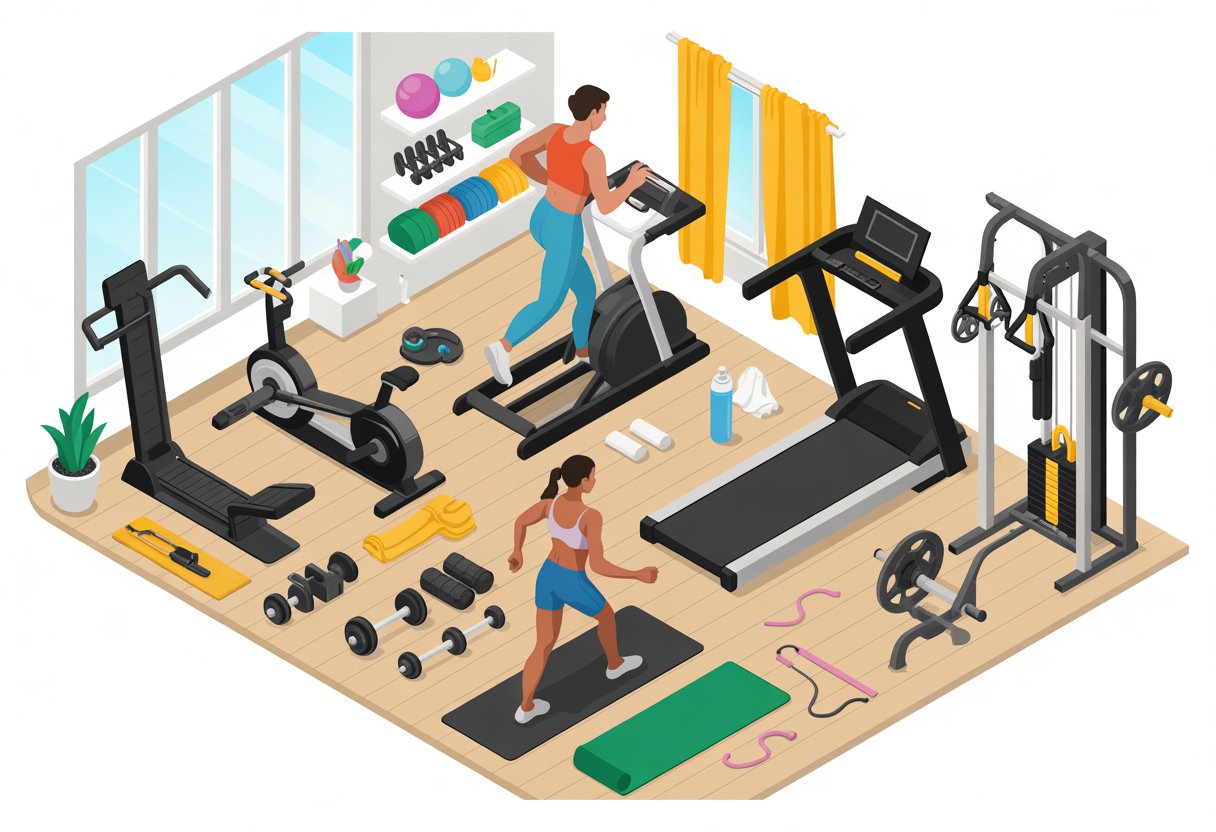
Your muscles adapt quickly to familiar exercises, which means you need to challenge them in new ways to keep seeing results. Smart progression involves manipulating workout variables like weight, reps, and exercise difficulty while listening to your body’s response.
Increasing Intensity for Muscle Growth
Muscle hypertrophy requires consistent progressive overload. This means gradually increasing the demands placed on your muscles over time.
The most direct approach is adding weight to your lifts. If you performed three sets of 10 deadlifts at 150 pounds last week, try bumping the weight up to 155 pounds this week. Even small increases of 2.5 to 5 pounds matter.
You can also adjust your sets and reps. Moving from three sets of 10 reps to three sets of 12 reps at the same weight creates more total volume. Another option is adding an extra set while keeping the same weight and reps.
Time under tension is another key factor for growth. Slowing down the lowering phase of each exercise keeps your muscles working longer. For example, count to three as you lower into a squat or bring the bar down during a bench press.
Rest periods also affect intensity. Cutting your rest from 90 seconds to 60 seconds between sets makes your muscles work harder with less recovery time.
Introducing Advanced Variations
Once you master basic movements, advanced variations keep your workouts challenging. These harder exercises recruit more muscle fibers and improve overall strength.
Single-leg exercises like pistol squats demand more balance and control than regular squats. Start by holding onto a wall or using a suspension trainer for support, then progress to bodyweight-only pistols.
The overhead squat combines mobility, stability, and strength. Hold a barbell, PVC pipe, or even a broomstick overhead while squatting. This variation exposes weaknesses in shoulder mobility and core strength.
Progressive Exercise Options:
- Push-ups: Standard → Decline → One-arm
- Rows: Two-arm → Single-arm → Archer rows
- Squats: Goblet → Front squat → Overhead squat
Compound exercises remain the foundation of any effective home gym workout plan[1]. Adding complexity to these multi-joint movements provides new stimulus without requiring additional equipment.
Avoiding Plateaus at Home
Plateaus happen when your body fully adapts to your current routine. Breaking through requires strategic changes to your training approach.
Track every workout in a notebook or app. Write down the exercises, weights, sets, and reps you complete. This data shows exactly where you’re stuck and helps you plan smart adjustments.
Change one variable at a time. If you hit a plateau on bench press, don’t simultaneously add weight, change your rep scheme, and switch to a new variation. Pick one adjustment and stick with it for at least two weeks.
Cycling between different rep ranges prevents stagnation. Spend four weeks working in the 8-12 rep range for hypertrophy, then shift to 3-5 reps for strength. This variety keeps your muscles responding.
Deload weeks matter just as much as hard training weeks. Every four to six weeks, reduce your training volume by 40-50%. Use lighter weights or perform fewer sets to give your body recovery time.
Core and Flexibility Enhancement at Home
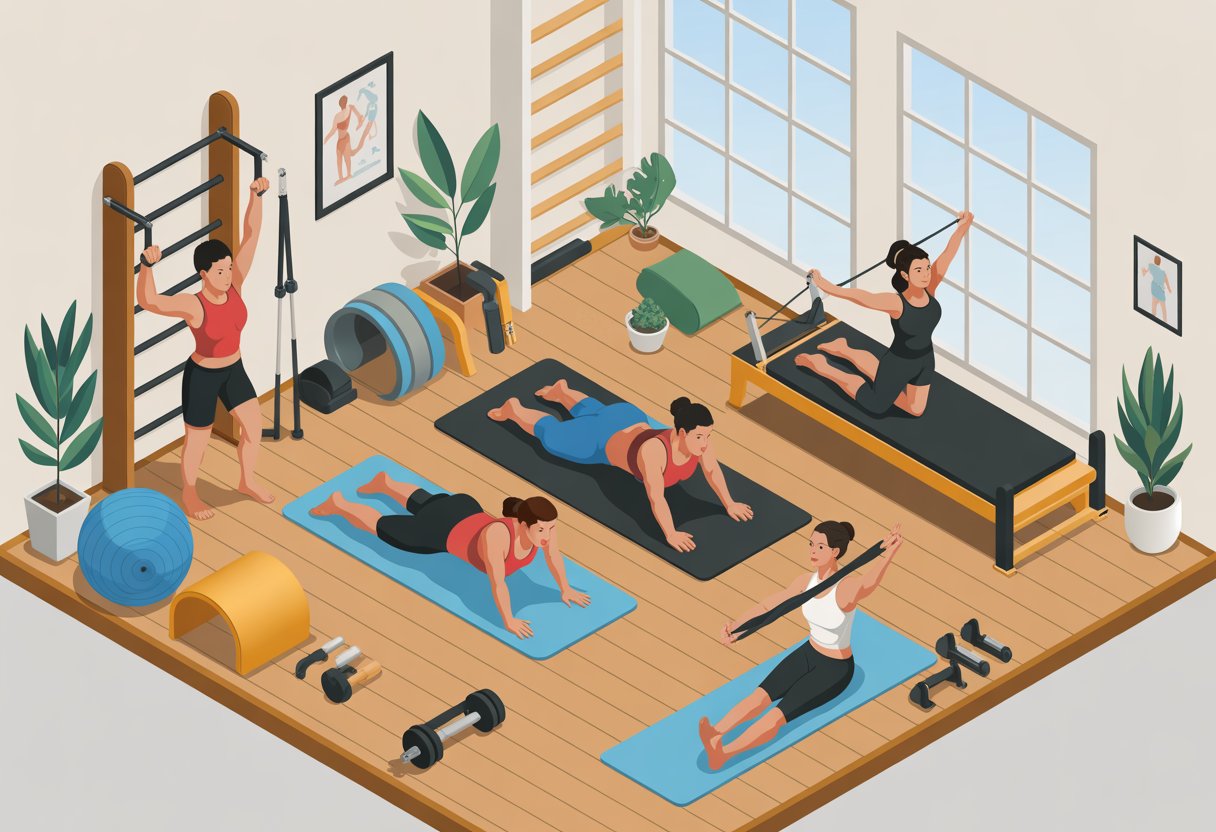
Building core strength and maintaining flexibility requires minimal equipment but delivers significant benefits for overall fitness and injury prevention. A dedicated yoga mat provides the foundation for effective core exercises and stretching routines that complement any home gym setup.
Core-Focused Exercise Selection
The plank and its variations[13] form the backbone of effective core training at home. A standard forearm plank engages all major core muscles when held for 15 to 60 seconds with proper form. The body should remain straight from head to heels without letting the hips sag or the upper back sink.
Side planks target the obliques and lateral stabilizers running from ankle to shoulder. Exercisers start in a standard plank position, then shift weight to one forearm while stacking their feet. Holding for 15 to 60 seconds per side builds lateral hip strength and stability.
Advanced plank variations include single-arm or single-leg extensions. Lifting one limb for 10 seconds increases intensity by challenging balance and engaging deeper core muscles. These modifications require no equipment beyond a comfortable surface.
Bicycle crunches and bridges round out a complete core workout. The bicycle crunch works the rectus abdominis and obliques simultaneously through a pedaling motion with alternating elbow-to-knee touches. Bridges isolate the hamstrings, lower back, and glutes while improving spine stability through controlled hip lifts.
Flexibility and Mobility Routines
Daily flexibility work prevents injury and improves range of motion for other exercises. Dynamic stretches before workouts prepare muscles and joints for movement, while static stretches after training help with recovery.
Hip flexor stretches address tightness from prolonged sitting. A low lunge position with the back knee on the mat opens the hip flexors when held for 30 seconds per side. Gentle forward and backward shifts deepen the stretch gradually.
Shoulder mobility exercises maintain upper body function. Arm circles, doorway stretches, and thread-the-needle poses counteract the forward shoulder position common in desk workers. These movements take five to ten minutes but prevent chronic tightness.
Hamstring and lower back flexibility improves through seated forward folds and figure-four stretches. Practitioners should focus on steady breathing and avoid bouncing, which can cause muscle tears. Holding each stretch for 20 to 30 seconds allows muscles to relax and lengthen safely.
Yoga and Stretching for Recovery
Yoga combines flexibility training with core strength and mental focus on a single mat. Poses like downward dog and child’s pose stretch multiple muscle groups while building stabilizer strength. A 15 to 20 minute session aids recovery between intense workout days.
Cat-cow stretches mobilize the spine through gentle flexion and extension. This flowing movement increases circulation to the back muscles and releases tension. Performing 10 to 15 repetitions warms up the core before other exercises.
Restorative poses support muscle recovery after strength training. Legs-up-the-wall position reduces lower body swelling, while supine twists release tension in the spine and hips. These passive stretches require minimal effort but accelerate the body’s natural recovery processes.
Regular yoga practice improves balance and body awareness, which enhances performance in other exercises. The controlled breathing patterns used during holds also train the diaphragm and deep core muscles that support proper lifting form.
Cardio and Endurance Options for Home Gyms
Building cardiovascular fitness at home requires either bodyweight exercises or dedicated machines, combined with smart training methods. Both cardio exercises that use body weight[14] and equipment-based options deliver results when programmed correctly.
No-Equipment Cardio
Bodyweight cardio exercises require no machines or tools to raise heart rate and build endurance. High knees stand as one of the most effective moves, engaging the core while driving the heart rate up quickly. Jump rope offers another powerful option that improves coordination and burns significant calories in short sessions.
Burpees combine multiple movement patterns into one exercise. Mountain climbers work the entire body while maintaining an elevated heart rate. Jumping jacks provide a simple entry point for beginners.
These movements can be done at different paces based on current fitness levels. Someone new to exercise might perform each move for 20 seconds with rest periods, while advanced trainees can push for longer intervals. The flexibility to adjust intensity makes bodyweight cardio accessible to most people.
Machines for Indoor Cardio
The treadmill remains the most popular cardio machine for home gyms. It allows users to walk, jog, or run regardless of weather conditions. Most models offer incline settings to increase difficulty without added impact.
A rowing machine works both upper and lower body simultaneously. It builds cardiovascular endurance while strengthening the back, arms, and legs. The low-impact nature protects joints better than running.
Cycling equipment comes in two main forms: upright bikes and recumbent models. Upright bikes mimic outdoor cycling positions, while recumbent bikes provide back support for those with mobility concerns. Both styles deliver effective workouts.
Incorporating Interval and Steady-State Sessions
Interval training alternates between high-intensity bursts and recovery periods. A basic session might include 30 seconds of sprinting on a treadmill followed by 90 seconds of walking, repeated for 20 minutes. This approach burns calories efficiently and improves both aerobic and anaerobic capacity.
Steady-state cardio maintains the same moderate pace throughout the entire session. Examples include jogging at a consistent speed for 30 minutes or cycling at a steady resistance. This method builds aerobic base fitness and endurance.
Both training styles serve different purposes. Interval sessions take less time but demand more recovery. Steady-state workouts allow for longer durations with less fatigue. Most people benefit from including both types in their weekly routine, alternating between them based on schedule and energy levels.
Staying Motivated and Safe While Training at Home
Working out at home requires building strong habits and paying attention to proper technique. Creating a structured routine and focusing on safety helps people get better results from at-home workouts.
Building Consistency and Habits
Setting a regular workout schedule makes home training feel like a normal part of the day. People should pick specific times to exercise and treat them like important appointments they cannot miss. Turning challenges into opportunities[15] helps maintain long-term motivation for home workouts.
Creating a workout schedule works best when:
- Training happens at the same time each day
- The workout space stays set up and ready to use
- Goals are written down and tracked weekly
- Small wins get celebrated along the way
Starting with shorter sessions of 15 to 20 minutes helps build the habit without feeling overwhelming. Once the routine feels natural, people can add more time or intensity. Keeping workout clothes visible serves as a reminder to exercise. Many people find that laying out their gear the night before makes it easier to follow through the next morning.
Ensuring Proper Form and Injury Prevention
Proper form matters more than the number of repetitions completed. Poor technique can lead to muscle strains, joint pain, and long-term injuries that set back fitness progress.
People should start with bodyweight exercises to learn correct movement patterns before adding weight. Watching instructional videos or using mirror feedback helps identify form issues. Moving slowly through each exercise allows better control and muscle engagement. This approach helps build muscle at home safely and effectively.
Key safety practices include:
- Warming up for 5-10 minutes before training
- Focusing on controlled movements instead of speed
- Stopping immediately if sharp pain occurs
- Taking rest days to allow muscle recovery
Strengthening core muscles and back muscles can improve posture during daily activities. Exercises like planks, bird dogs, and wall slides teach proper alignment while building strength.
Making Your Home Gym Work for You
A home gym does not need expensive equipment to deliver results. Working out at home offers flexibility[16] that traditional gyms cannot match since there are no closures or schedule conflicts.
Basic equipment like resistance bands, dumbbells, and a yoga mat covers most training needs. People can mix cardio and strength training[1] based on their specific goals. The space should have good lighting and enough room to move safely in all directions.
Keeping the workout area clean and organized makes training more enjoyable. Some people dedicate a corner of a bedroom or living room, while others use a garage or basement. The location matters less than having a consistent spot that stays ready for exercise. Playing energizing music or following online workout programs adds variety and keeps sessions interesting.
Frequently Asked Questions
Choosing the right equipment, planning workouts effectively, and making the most of limited space are common concerns for anyone building a home gym. These questions address practical considerations for different fitness goals and space constraints.
What are the most important features to consider when choosing a home gym machine?
Adjustability stands as the top feature to look for in any home gym machine. Equipment that offers multiple resistance levels and exercise variations will grow with a person’s fitness level over time.
Space efficiency matters for most home setups. Machines that fold, stack, or have a small footprint make it easier to fit exercise equipment into bedrooms, garages, or basements.
Build quality determines how long the equipment will last. Look for sturdy frames, smooth moving parts, and weight capacities that exceed the user’s body weight by at least 50 pounds.
The range of exercises a single machine can perform affects its overall value. Multi-station machines or adjustable dumbbells provide more workout options than single-purpose equipment.
How can I create an effective weekly workout plan using a home gym setup?
A balanced weekly plan should include three to four strength training days and two to three cardio sessions. This allows muscles time to recover while maintaining consistent exercise throughout the week.
Split routines work well for home gyms with basic equipment. A person can train upper body on Monday and Thursday, lower body on Tuesday and Friday, and add cardio on Wednesday and Saturday.
Each workout session should last 45 to 60 minutes. This includes a 5-minute warm-up, 35 to 45 minutes of main exercises, and 5 to 10 minutes of cool-down stretching.
Rest days are just as important as workout days. The body builds muscle and gets stronger during recovery periods, not during the actual workout.
What is a good 6-day workout schedule that can be done with home gym equipment?
A push-pull-legs split repeated twice per week provides excellent results with home equipment. Day 1 focuses on chest, shoulders, and triceps. Day 2 targets back and biceps. Day 3 works legs and core.
The same three-day pattern repeats for days 4 through 6. This approach trains each muscle group twice weekly, which research shows supports muscle growth and strength gains.
Each training session should include 4 to 6 exercises with 3 to 4 sets per exercise. Rep ranges can vary from 6 to 15 depending on the specific exercise and fitness goals.
Sunday serves as a complete rest day or active recovery with light walking or stretching. Six consecutive training days requires proper nutrition and sleep to avoid overtraining.
How can women structure a home gym workout plan for strength and fat loss goals?
Compound movements should form the foundation of any strength and fat loss program. Exercises like squats, deadlifts, push-ups, and rows burn more calories and build more muscle than isolation exercises.
A four-day split works well for combining strength and fat loss goals. Two days can focus on lower body with higher weights and lower reps, while two days target upper body with moderate weights and higher reps.
Adding 15 to 20 minutes of high-intensity interval training after strength workouts increases calorie burn. This can include jumping jacks, mountain climbers, or burpees using just body weight.
Protein intake matters just as much as the workout itself. Women aiming for fat loss while building strength should consume 0.7 to 1 gram of protein per pound of body weight daily.
What are the best home gym ideas for maximizing results in a small space?
Resistance bands deliver a full-body workout while taking up minimal space. They can be stored in a drawer and provide enough resistance for both beginners and advanced exercisers.
An adjustable dumbbell set replaces an entire rack of weights. These systems adjust from 5 to 50 pounds or more with a simple dial or pin mechanism.
A pull-up bar that mounts in a doorway enables multiple upper body exercises. It can be removed when not in use and requires no permanent installation.
Foldable equipment like workout benches or treadmills can be stored against walls or in closets. This keeps living spaces functional when not exercising.
How can I build a complete workout routine at home without any equipment?
Bodyweight exercises provide resistance through a person’s own mass. Push-ups, squats, lunges, and planks target all major muscle groups effectively.
Progressive overload applies to bodyweight training just like weighted exercises. Increasing reps, adding pause holds, or trying harder variations makes exercises more challenging over time.
A basic no-equipment routine[17] might include 3 sets of 15 push-ups, 20 squats, 10 lunges per leg, and a 60-second plank. This hits chest, legs, and core in under 30 minutes.
Circuit training maximizes calorie burn without equipment. Performing exercises back-to-back with minimal rest keeps the heart rate elevated while building strength.
Post Views: 4
References
- The Ultimate Home Gym Workout Plan (Perfect for Beginners). https://totalshape.com/equipment/home-gym-workout-plan/ Accessed April 19, 2026
- Page Not Found. https://www.garagegymreviews.com/ultimate-home-gym-guide Accessed April 19, 2026
- How to Set Up a Home Gym. https://www.compassselfstorage.com/blog/how-to-set-up-a-home-gym/ Accessed April 19, 2026
- How To Build Your Own Workout Routine (Plans & Exercises). https://www.nerdfitness.com/blog/how-to-build-your-own-workout-routine/ Accessed April 19, 2026
- Page Not Found. https://www.garagegymreviews.com/program-your-own-workouts Accessed April 19, 2026
- The PERFECT Full Body Workout Routine (3x/Week: 6 Exercises + 1 Bonus). https://builtwithscience.com/workouts/full-body-workout-routine/ Accessed April 19, 2026
- Page Not Found. https://www.garagegymreviews.com/weight-lifting-at-home Accessed April 19, 2026
- upper body bodyweight training. https://www.womenshealthmag.com/fitness/g44302167/best-bodyweight-exercises/ Accessed April 19, 2026
- Page Not Found. https://www.garagegymreviews.com/at-home-bodyweight-workout Accessed April 19, 2026
- Guide to building your Home Gym with Dumbbells. https://eleiko.com/en/stories/guide-to-building-your-home-gym-with-dumbbells Accessed April 19, 2026
- How to build a home gym: from a set of resistance bands to a full gym (and everything in between). https://www.karinainkster.com/post/how-to-build-a-home-gym Accessed April 19, 2026
- The 10 Best Circuit Training Workouts (Beginner to Advanced). https://www.strengthlog.com/circuit-training-workouts/ Accessed April 19, 2026
- plank and its variations. https://www.verywellfit.com/quick-core-workout-routine-3120075 Accessed April 19, 2026
- cardio exercises that use body weight. https://www.verywellfit.com/step-by-step-cardio-exercises-for-home-workouts-1230827 Accessed April 19, 2026
- ERROR: The request could not be satisfied. https://www.technogym.com/en-US/stories/top-tips-to-stay-motivated-to-work-out-at-home/ Accessed April 19, 2026
- Everything You Need to Know About Working Out at Home. https://www.everydayhealth.com/fitness/everything-you-need-to-know-about-working-out-at-home/ Accessed April 19, 2026
- The Home Workout Guide. https://www.aworkoutroutine.com/the-home-workout-guide/ Accessed April 19, 2026