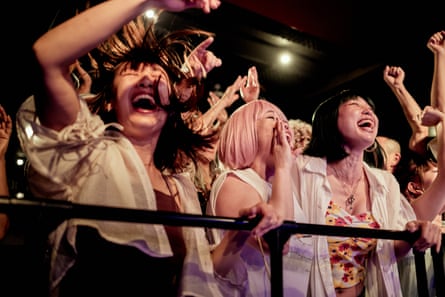
For some reason, we have collectively agreed that new year is the time to reinvent ourselves. The problem, for many people, is that we’ve tried all the usual health kicks – running, yoga, meditation, the latest diets – even if we haven’t really enjoyed them, in a bid to improve our minds and bodies. But have any of us given as much thought to creativity? Allow me to suggest that this year be a time to embrace the arts.
Ever since our Paleolithic ancestors began painting caves, carving figurines, dancing and singing, engaging in the arts has been interwoven with health and healing. Look through the early writings of every major medical tradition around the world and you find the arts. What is much newer – and rapidly accelerating over the past two decades – is a blossoming scientific evidence-base identifying and quantifying exactly what the health benefits of the arts are.
Randomised trials on the mental health benefits of the arts now number in triple figures, with regular singing, dancing, reading, crafts, and cultural pursuits shown to reduce symptoms of anxiety, depression and stress for people of all ages. Some studies suggest that combining creative arts therapies such as music therapy with antidepressants and counselling can nearly double the improvements in depressive symptoms compared with standard treatments alone. But the arts can also be beneficial preventatively. People who regularly go to the theatre, live music events, museums, galleries and the cinema have nearly half the risk of developing depression. This is not merely because such people tend to be wealthier or healthier or engaged in other health-promoting behaviours. It’s actually independent of socio-demographic characteristics, lifestyle and even genetics.
Instead, neuroscience research and psychological experiments have revealed that when we engage in the arts, we give our brains what they want to be happy – we activate the same pleasure and reward networks in the brain that are activated by food, sex and drugs, and we experience the benefits of hormones such as dopamine that improve our mood. We also give our brains what we need – dancing, singing, crafting and writing help fulfil core psychological needs that are the building blocks of our mental health, such as autonomy, control and a sense of mastery. Crucially, the arts give us an effective way to regulate our emotions – calming or invigorating us as the situation demands, which helps us buffer and deal with life stresses more effectively.
Elevate Your Health for Just $29.99/Month
Join the Precision Wellness Subscription at My Healing 365 and get discounted services, priority coaching access, virtual care, and exclusive wellness resources to support your physical, emotional, and hormonal health.
Join for $29.99/MonthFor our brains, the arts are a very efficient workout, engaging diverse regions involved in sensory processing, memory, movement, pattern recognition and emotions (among others). Over time, regular arts engagement can strengthen connectivity between brain regions and even increase the volume of grey matter. In fact, amateur musicians and artists have stronger connections between parts of the brain that are vulnerable to ageing, and are identifiable in brain images as “younger”.
Participating in arts, crafts, reading, playing musical instruments and going to cultural events and performances builds what is known as “cognitive reserve”: the resilience of the brain against cognitive decline. So even if we start to develop the pathological indications of dementia, our brains can compensate for longer. In fact, even when we’ve taken lifestyle and personal characteristics into account, people who are regularly engaged in cultural activities perform better on cognitive tests as they age, showing slower rates of decline in ability and a lower risk of developing dementia, and they are on average older if and when they do get that diagnosis than people who aren’t engaged in the arts.
For our bodies, there is no physiological system the arts do not affect. When we breathe deeply for an activity such as singing, we improve the strength of our respiratory muscles, giving our lungs the same level of workout as a brisk walk. When we dance, we can experience decreases in blood pressure and glucose levels – improvements that are stronger than if we do similar exercises without the creative element of dance. Arts engagement improves immune activity, lowering levels of inflammation that influence both our physical and mental health. Studies just emerging even indicate that arts engagement influences gene expression, with people showing patterns of gene expression (known as “epigenetic clocks”) that are younger than those of people who don’t engage in the arts. Whether we’re keeping our fingers nimble with crochet, our bodies fit through dance, or keeping ourselves active by going to gigs and cultural venues, engaging with the arts reduces our risks of developing chronic pain, physical impairments and frailty – even when other health behaviours such as exercise have already been taken into account – extending our “healthspan”.
I want to be clear – the arts are not a panacea. In fact, there are examples of the arts doing more harm than good, from loud music and surrealist art being used as a means of torture for prisoners, to art being used as a way to flaunt wealth and power within society. But it’s not an exaggeration to say that the arts could save your life. Over the years I’ve met a number of people who have told me stories of how painting, reading, dancing or acting became the lifeline that got them through seemingly impossible times.
I bet if a new drug came on the market offering the same catalogue of benefits as the arts, most people would want to take it. Instead, many of us see engaging in the arts as a luxury rather than a necessity. Even though they may be exactly what we need to improve our health and wellbeing.
So I invite you to be brutally honest with yourself. How many minutes did you spend actively engaging in the arts yesterday? (By “actively” I mean that you weren’t multi-tasking at the time, so I don’t count plugging in your headphones and then zoning out.) When a representative sample of US adults answered that question recently, 95% of them said zero. If you are currently part of that majority, here are five evidence-based recommendations to get you going.
Table of Contents
Find your creative pick-me-up

Use music and books to boost your mood. Swap your morning alarm for a song and take the time to listen to it before you get up. Swap doomscrolling on your commute for a novel. The dopamine release provided by stories and songs comes not only at the most joyous or exciting parts – the choruses in songs and climaxes in plotlines – but also from the tension that builds during the lead up to those moments, as our brains anticipate what’s coming. When a song or story feels too predictable, it can seem bland (think lift music) and there isn’t enough build-up of anticipation. If it’s too far outside our comfort zone, our brains don’t know how to judge it, so we miss the joy of the tension and resolution. So don’t feel pressure to pick a book or album you feel you should read or listen to. You can maximise the joy you get from the arts by finding your personal sweet spot between familiarity and complexity.
Choose a new creative hobby
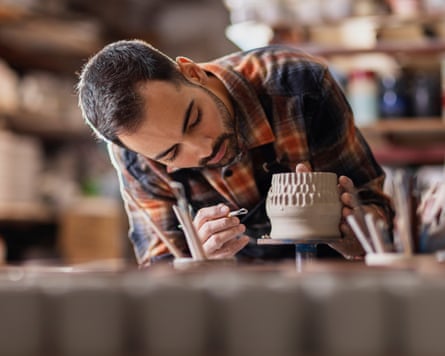
If you can dedicate between 30 and 60 minutes once a week to engaging in the arts, studies suggest you can expect to see improvements in your wellbeing within around six weeks. Think about which psychological needs aren’t being met in your life. If you’re feeling out of control, pick a hobby that lets you take the lead without needing instruction, such as drawing, creative writing or clay modelling. If you’re craving a feeling of mastery, try something that will allow you to develop a new skill. Crafts like crochet, or picking up a ukelele, can be a good option in winter, either with the support of YouTube demonstrations or a community class. Giving yourself a goal to work towards (a performance, or a gift to give to friends) can be a good motivator. Remember that failure is essential to building a sense of accomplishment, so if your pottery collapses or scarves unravel, practising dealing with such failures can build your sense of resilience.
Get to an exhibition
Whether you’re a fan of Renaissance paintings, contemporary sculpture, immersive audiovisual installations or street art, exhibitions are a wonderful way to experience awe. But make sure you actually look! On average, we spend just 28 seconds looking at art in exhibitions (and a fair chunk of that is often spent taking pictures). We need three or four seconds to form a basic emotional response and 10 seconds to decide cognitively what we think about an artwork. But if we’re hoping the encounter will be more meaningful, we need time to look, think, respond, look again, and so on, and this takes minutes, not seconds. So don’t try to take in too much at once. It’s better to meaningfully engage with just a few exhibits on an arts expedition than try to take in everything.
Use rhythm to enhance your exercise routine
When we listen to music and dance, our movements, breathing and heartrates all synchronise to the beat. If the music is motivational in style (upbeat, peppy, joyful), we will run further, pedal faster, or do 20% more bench presses in the same amount of time. Music can also inhibit physiological feedback signals of fatigue and pain and make us more efficient in our movements. Effectively, music is a legal performance-enhancing drug. A tempo of 125-140 bpm is a good rule of thumb when you’re working out, although you can push it higher if you’re trying to synchronise movements such as your running gait.
Indulge in some make believe
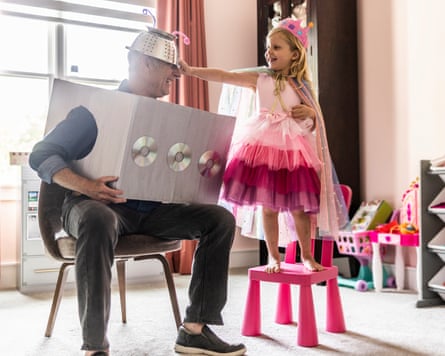
As adults, we have a tendency to dismiss play as frivolous and childish. How wrong we are. When we enter imaginary worlds, the temporary suspension of social norms and hierarchies allows us to understand the world from different angles, which helps our brains build mental flexibility to deal with unpredictable changes in our lives. So embrace your imagination, whether that’s by hosting a murder mystery acting evening, cosplaying, or finding a carnival or festival to put into your diary.
I’ll be honest: most of the health fads I’ve been sucked into over the years haven’t brought me much joy. But last January I decided instead to practice what I preach. I can honestly say that the mental highlights of the year since have all revolved around the arts experiences I had. I wish you similar success with your creative endeavours in 2026.

























