
This morning, I woke up feeling a little groggy. My go-to remedy is usually a coffee and cold-water face plunge, followed by a compulsive phone scroll. But today called for something more, so I unpeeled a small, yellow “energy” patch the size of a walnut, popped it on to my upper arm and hoped for the best.
The patch (£12 for 30) contains – so the packaging says – vitamins B5, B3 and a “microdose” of caffeine. It is made by Kind Patches, which is one brand in an increasingly crowded market of wellness stickers that claim to treat everything from lack of sleep to period pains to pimples. They are coin-sized, and often come in TikTok-friendly shades of sunflower yellow and peachy orange: you may have seen a teenager sporting a star-shaped one on their face to treat spots, or influencers patting blue magnesium ones on their wrists before bed.
These patches are designed to deliver various substances into the bloodstream through the skin – to ward off some of the most common symptoms of everyday life. Feeling tired? Patches. Feeling stressed? Patches. Feeling anxious? Patches. From libido boosters to immunity enhancers, there’s a patch for every condition if you look hard enough. The wearable patch market – which also includes disease monitoring and drug delivery – was estimated at $9.95bn in 2024 (approx £7.45bn) and is predicted to grow significantly in the next five years, according to the Financial Times. Forget eating your feelings; pop a sticker on them instead.
But do they work? Or are they yet more snake oil in the $6tn global wellness industry, designed to exploit our weaknesses, on the basis that those most human of conditions – how well you sleep, how happy you are – are there to be corrected.
John Tregoning, professor of vaccine immunology at Imperial College London and author of the book Live Forever?, says it is impossible to know. “It’s not like a vaccine where you did or didn’t get the virus. It is: do you feel better?” For example, the energy patch I’m wearing now may make me feel better. “But my take on energy might be different to yours,” Tregoning points out. If nothing else, he says, patches like the ones I am sampling “are an example of drifting placebo. Simply by putting it on, it might get you out of a slump”. It’s also nigh-on impossible to prove which ones don’t work if you can’t prove which ones do.
You cannot feel these patches , and they slide off easily in the bath. But you can certainly see them, which for some users is half the point. Depending on where you place the patch – guidance varies, but most suggest the neck and chest areas to see which makes a difference – they are often as visible as you need them to be. Some claim to work the same day, while others suggest using them for up to a month. The effects of the energy patch I am wearing are supposed to be instant. I can’t say I feel anything that morning, but by the time I peel it off in the bath, I do believe I feel fresher. The idea is neat. But is it the patch? I also did some yoga, and had steak for dinner.
I try another energy patch by The What Supp Co (£18 for 15 patches), which it says is for “fatigue, fed-up feelings and focus”. It contains ashwagandha (which it claims “helps your body adapt to stress”) and caffeine among a list of other ingredients. I pop the red W-shaped patch on my wrist, as shown in the instruction video. I don’t know if it is doing anything, but I do struggle to get to sleep that night, which is debatably down to the caffeine (luckily I have a patch for sleep too).
Acupuncturist Ross J Barr also makes a patch that promises to support “focus, clarity and mental performance” (£15 for 10). Less visible than most, it smells herbal, a little festive, which is the point – it apparently offers a “deeply relaxing olfactive experience”. I could also feel it when I put the patch on – a gentle tingling, not unlike a Tens machine, which did at least make me believe it was doing something. I also try Barr’s Period Patches for cramps, aches and pains (£15 for seven), which were developed with gynaecological staff at Miss Claire Mellon & Associates private practice. Like Barr’s other patch, it smells strongly of essential oils – somewhere between a meadow and tobacco – which is also the point. The sticker is stickier, and even after six hours it’s hard to remove. It is also designed to fit very specifically at the base of the spine. I don’t know how much this played into what happened next – but something did. My cramps seemed to mellow. Whether this was better than taking a painkiller, I couldn’t say. But the patches certainly cost more than over-the-counter painkillers – a factor that Dr Deborah Cohen, author of the new book Bad Influence: How the Internet Hijacked Our Health, thinks might influence how well they work. “The more expensive something is, the more you expect it to work,” she says. Cohen thinks women’s health has been neglected for too long, but these patches expose broader problems in the healthcare system too. “One of the reasons we go to social media to solve our problems is because doctors can’t give that level of holistic care,” she adds.
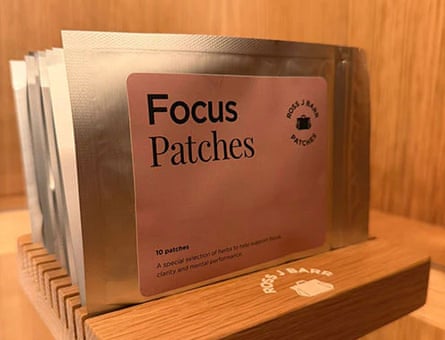
Eleven days into my patch journey, I have tried one for sleep and one for dreaming (Ross J Barr, £14.99 for 10, and Kind, £12 for 30); two for focus (Kind, £12 for 30, and Ross J Barr, £15 for 10), one for energy (Kind, £12 for 30), one for chilling out (The What Supp Co, £18 for 15), and another for menstrual cramps (Ross J Barr, £14.99 for seven). I’d love to say their collective effect was seismic, but aside from feeling a little buzzy after wearing those containing caffeine and the aforementioned effects of Barr’s cramp patches, I can’t be sure that I felt anything.
That’s not to say they didn’t work. The science behind patches is at best nebulous and at worse absent, but as you can’t control the variables, it’s impossible to know if it’s the patch – or something else. “Reducing something to, say, one hormone is a very reductionist way of looking at our health,” says Cohen. “We need to be more holistic and look at the whole person before we work out how to treat something.”
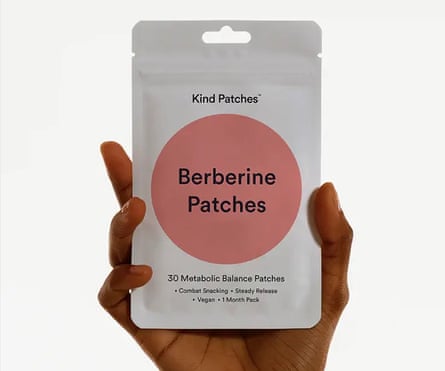
Inevitably some of these patches have taken a more sinister turn towards diet culture. Berberine, a plant-derived compound, is believed to suppress appetite. I try Kind’s berberine patches (which curiously changed their name from Weightless); they need to be worn every day to see a difference. When I go out for a walk, I have to turn back as I start feeling light-headed. I quickly take it off.
I’m struck that only one of the patches I try comes with the caveat that they are not the only solution to a problem. Alongside using Barr’s sleep patches, for example, it is recommended that other basic sleep hygiene practices are brought in – read a book, turn off your phone, etc. While there may not be anything specifically wrong with putting on a patch if you can afford it, they are not a panacea. As Tregoning points out, it’s probably best to see them “like an expensive herbal tea”. Drink it if you like it and think it helps, but it’s not a cure-all.
Elevate Your Health for Just $29.99/Month
Join the Precision Wellness Subscription at My Healing 365 and get discounted services, priority coaching access, virtual care, and exclusive wellness resources to support your physical, emotional, and hormonal health.
Join for $29.99/MonthBut then this is the problem with a lot of the products in the wellness space – everyone is looking for a hack, a quick fix. It is easier to put a sleep patch on than contemplate that poor sleep may be a logical response to the modern world; that a lack of energy may be due to an overwhelming life; that a lack of focus may mean you are dealing with bigger problems than the day-to-day of going to work. In an age in which we have learned to manipulate the aesthetics of our bodies through surgery or fillers, it seems highly appropriate that we might also now wear our supplements. As Cohen writes in her book, “the body is now a dashboard to be monitored and gamified”.
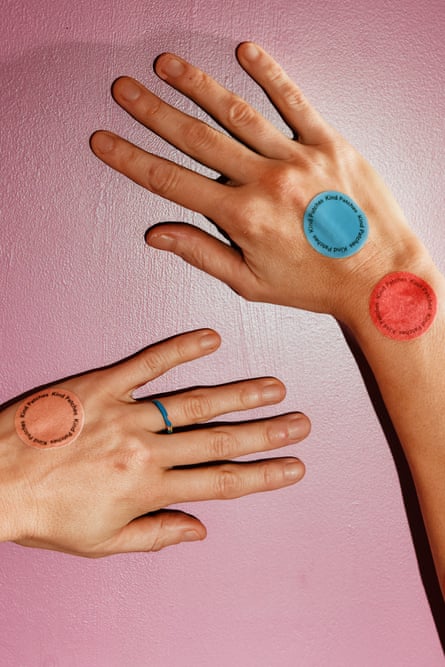
And of course, this is performative health. When I failed to give up smoking, my nicotine patch was proof to the outside world that I was at least trying. Lisa Payne, head of beauty at trend forecaster company Stylus, calls it “handbag health” – the idea that you can carry around patches and pop them on when you need a lift. “These patches cost money, so it literally shows you have invested in your health.” Forget eating your feelings; pop a plaster on them instead.
The use of patches in medicine is nothing new, says Pupinder Ghatora, a pharmacist and co-founder of a collagen supplement brand. “In pharmaceuticals, we’ve used patches for pain relief, anti-sickness medications, certain heart treatments and nicotine-replacement therapy. These medicines are clinically proven as the molecule is suitable for skin absorption and the formulation is designed with this in mind.” However, the evidence on wellness patches for other purposes is less clear. “Transdermal delivery can absolutely be effective but only when the science supports it. The skin barrier is incredibly sophisticated and not every ingredient can pass through it,” Ghatora says.
The problem, adds Cohen, isn’t just the way these substances are delivered – it’s the substances themselves. “Before you get to the ‘route’, the first thing to ask is whether the compound they’re promoting is going to do anything.” Take something like dopamine, she says, for which patches do exist. This needs to go into your brain to work. How does that even happen?
“HRT patches and nicotine patches [which have been around for a while] require robust clinical trials to prove they have an effect. But if you can spin something into a wellness supplement, you don’t need regulators,” she says. “Ultimately, if patches are as good as they say they are, why isn’t everything on one?”
Perhaps the most ubiquitous patches are Star patches. If you have a teenager – or watched last year’s Big Brother – there is every chance you’ve come across them. Designed to protect spots from bacteria and prevent picking, while also containing various ingredients which may or may not treat the spot, they have become such a mainstay of modern culture that the V&A recently acquired some in its Rapid Response Collecting as an example of gen Z lifestyle.
Advertising that you have a pimple is a million miles away from how millennials like me and Payne grew up. “Our generation saw beauty as something that solves the problem you want to fix,” she says. If you had a spot, you’d buy concealer to hide it, not a neon sticker to broadcast it as a shared experience. But for some of gen Z, Payne says, a visible treatment for an internal feeling is as much about identity as anything.
It used to be easy to be good. All you had to do was combine a decent diet, exercise, time outside and connection with friends. Now, says Cohen, “daily life is subjected to medical interpretation and diagnosis, with normal variations reframed as conditions requiring intervention”.
I spent three weeks patched up, on and off. And some people I know swear by Barr’s sleep patches. But it was also deep, dark December, a time when my moods and sleep shift like sand, and as a newish millennial parent, it was ever thus. Patches are an example of the way influencer culture has scrambled how we look at ourselves. But if you’re tired and there’s no other underlying problem causing it, the likelihood is you probably need to rest.

























