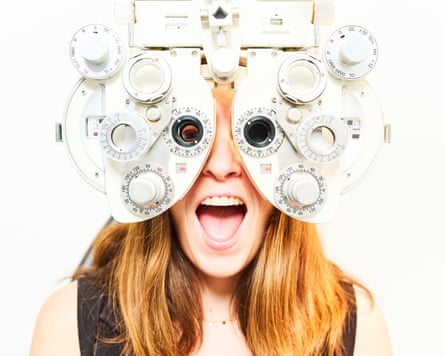
Eye health is often something that we take for granted until we encounter problems. But lifestyle choices such as screen time and smoking can affect your vision. Here, ophthalmologists share their tips on maintaining healthy eyes, from sight tests to sunglasses.
Table of Contents
Seek help, fast
“The front of the eye, and the cornea in particular, has more nerve endings per millimetre square than anywhere else in the body,” says Dr Dilani Siriwardena, a consultant NHS ophthalmologist at Moorfields eye hospital in London and vice-president of the Royal College of Ophthalmologists. “So it can be very sensitive. The tiniest scratch or piece of grit in your eye can feel like a brick.”
While you should take any changes to eye health seriously, says Siriwardena, it is important not to rush to hospital unnecessarily. “Around 40% of eye casualty attendances are due to issues with the front of the eye that could be managed either by the patient themselves or with advice from a pharmacy or an optician. It is about judging for yourself the severity.”
Dr Meera Radia, a consultant ophthalmologist at Imperial College healthcare NHS trust, recommends visiting a pharmacy for guidance on conjunctivitis, styes or dry eye. With any changes in vision, flashes and floaters, or headaches, an optician is usually the best first port of call, “to check eye pressure, the retina and optic nerve”, says Radia. They can provide eye drops, or refer you to hospital where necessary. “Think about opticians as a GP for your eye,” says Dr Zaria Ali, an ophthalmologist at Manchester Royal eye hospital.
If you have a sudden loss of vision, or have a serious injury to your eye, such as a laceration or chemical injury, go straight to your nearest A&E, which can refer you to an ophthalmologist if needed. “If a chemical goes in your eye, most first-aid kits should have an eye wash, so do that right away, then go to hospital,” says Siriwardena.
Make sure someone else drives you to hospital, Ali says: “We might need to put dilating eye drops in, which can blow your vision. You’re not going to be covered by insurance if that happens.”
Get regular eye tests
Even if you have good vision, “the number one thing to do to look after your eyes is to have a sight test every two years”, says Siriwardena.
Choose a local optician that you feel comfortable with, says Radia, “and they can pick up on changes in your prescription, cataracts or potentially silent conditions”.
Don’t be put off by the expense, Siriwardena adds: “Some people will be eligible for a free sight test and it doesn’t necessarily mean that you’ll have to buy glasses, but it is worth checking your eye health. Glaucoma is the leading cause of irreversible blindness in the UK and opticians can pick that up early.”
“A lot of people don’t realise that their vision doesn’t meet driving standards,” says Ali, “so it’s really important to go to your optician to find out your vision is better than 6/12” – the minimum standard for good eyesight, usually measured by an eye chart. In the UK, “children are invited to eye screenings at the age of four or five. Parents can decline but I very much encourage them to participate, because you can pick up problems that can be fixed. If you ignore it and you miss the cutoff for when vision stops developing at around age seven or eight, your child is then going to have bad vision in that eye permanently.”
Put safety first

Doing DIY or construction work? Always protect your eyes. “Every day, in eye A&E, we see at least 100 patients in our walk-in service,” says Radia, “and three to five of them will be construction workers who have landed something in the eyes, or people who have been doing DIY at home. So try to make sure you buy industrial-grade safety goggles if you’re going to take on work where things might be flying about, such as wood and especially metal – we see a lot of metallic foreign bodies in the cornea.”
You even need to be careful when gardening, says Ali: “We’ve had people come in where a thorn’s gone right into their eye.” She also recommends protective eyewear when welding or doing snow sports: “You can get arc eye [a condition caused by unprotected exposure to bright flashes of UV light], which is quite painful.”
Wear shades
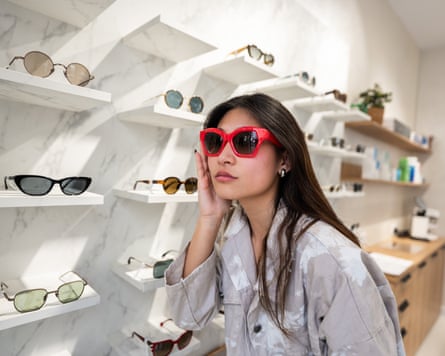
In sunny conditions, put your sunglasses on, whatever the time of year. “Just as we lather our skin with SPF, we need UV eye protection as well,” says Radia. “When you are looking to buy a trendy pair of sunglasses, always check that there is UVA or UVB sun protection by looking out for labels such as UV400, which covers both.” Exposure can cause macular degeneration and early cataract development, among other issues, says Radia.
Follow the 20-20-20 rule
Radia is often asked about how to avoid the kind of eyestrain that comes from excessive working and playing on screens so much. “Blue light from screens doesn’t really cause eye disease or significant strain,” says Radia. “It is more the screen time itself.” To combat this, she advises following a 20-20-20 rule. “Every 20 minutes, take a 20-second break and stare 20ft away. It doesn’t have to be a hard and fast rule of 20 minutes, but just keep it in your head.”
“When you use a screen, you blink 50-60% less, so that means your eyes are going to dry out even more,” says Ali. “If you’re getting that dry feeling and tiredness, keep dry-eye drops next to your computer; then you’ll remember to put them in.” Your setup should be as comfortable as possible: “Make sure your screen is at the right brightness for you,” says Ali. “There should not be a lot of glare. Have good lighting. Enlarge the text if you need to. If you’ve been told you need glasses for your computer, wear them” – even if you don’t like how they look on a Zoom call.
Go outside

“We’re seeing a massive explosion of myopia or shortsightedness, and the need to start wearing glasses for distance vision, quite early on among children,” says Radia. “Because we have smartphones, iPads, streaming – this is all to the detriment of the development of our vision.” Close work on tablets and phones is the worst offender, but watching TV for six hours isn’t ideal either. The solution? Get kids to play outside more. “There is evidence to suggest two hours a day of outdoor play will benefit children’s developing eyes and lower the rate or risk of developing myopia,” says Radia.
Do not rub growing eyes
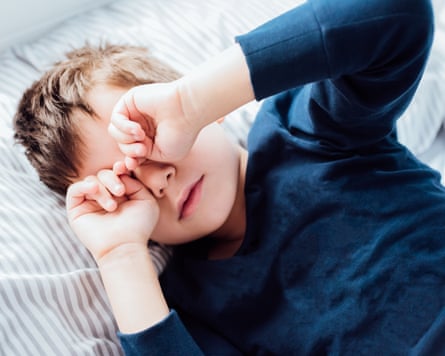
As tempting as it is to rub an irritated eye, it is crucial that kids and young teenagers don’t, explains Radia, “as the cornea and the eyes are growing. If your child suffers from hay fever, or has asthma or eczema, and they get really itchy eyes, take them to the GP or optician for a prescription of anti-allergy eye drops or dry-eye drops. The risk of rubbing the eyes constantly can lead to a condition called keratoconus, where the cornea grows in a more conical shape.”
Try a warm compress
“If you start to get eyelid lumps, or a pharmacist or optometrist has told you that you’ve got inflammation of your eyelids with blepharitis, doing a hot compress is sensible,” says Siriwardena.
“Get a clean flannel and warm water – from the tap is fine,” says Radia. “Heat up your eyelids with the cloth for two to three minutes, wrap the flannel around your finger, and then just gently massage from inside to outside on the upper lid and the lower lid. You’re trying to milk the oil glands so that they are less inflamed, less blocked, and secrete a natural oil that coats the tears and prevents them from drying out through evaporation.”
Don’t smoke
“Another leading cause of sight loss is from age-related macular degeneration, and smoking is one of the biggest risk factors for that. So not smoking is really good for your eyes,” says Siriwardena.
Eat your greens
“Having a sensible diet, controlling your blood pressure and doing exercise are all good for your eye health,” says Siriwardena. Is there anything special you should eat that will help? For someone without an eye condition, no, says Siriwardena. “If you’ve got age-related macular degeneration, diets that are rich in leafy greens and polyphenols can be good for you.”
“Eating a wholesome, vitamin-rich diet with lots of fruit and vegetables is going to serve you well,” says Radia, adding that carrots can genuinely be good for the eyes thanks to their vitamin A content, but probably won’t help you to see in the dark. Type 2 diabetes affects eyesight and people with the condition may need more frequent eye tests, she adds.
Elevate Your Health for Just $29.99/Month
Join the Precision Wellness Subscription at My Healing 365 and get discounted services, priority coaching access, virtual care, and exclusive wellness resources to support your physical, emotional, and hormonal health.
Join for $29.99/MonthStaying hydrated can prevent dry eyes, says Ali: “Drink plenty of water, because that affects tear production. If you don’t drink enough, your body will prioritise water for everything else other than your eyes.”
Don’t overwear contact lenses
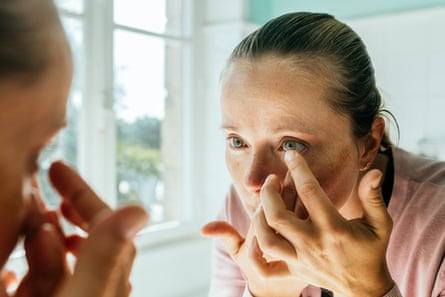
Be sensible about changing your contacts. “One of the biggest causes of people coming to eye casualty [are issues] related to contact lenses,” says Siriwardena. “Not wearing them properly, wearing them for too long, not taking them out, not cleaning them, not changing them frequently enough.” Ten hours is about the longest you should go before changing your contacts.
Reassuringly, it is impossible to lose a contact in your eye, she says: it will always be in there somewhere, or have fallen out.
“Swimming in contact lenses isn’t something you should do,” adds Siriwardena. “If you love swimming, get yourself some goggles that correct your vision.” Radia takes a more extreme position of not even showering in contacts: “We recommend a blanket rule: don’t sleep, shower or swim in your contact lenses, because of the infection risk.”
Use eye makeup with caution
If you are a big wearer of mascara, eyeshadow or eyeliner, “make sure you look at when it expires – it should have a circle with six or 12 [months] on it”, says Ali. Discard it if you have had it longer than that. “Make sure you take your makeup off before you go to bed,” continues Ali. “If you do get things such as eye swelling, try to avoid using, or get an allergy test.” Fake eyelashes and extensions can increase the risk of blepharitis, so use with caution.
Rest your eyes
“If you are tired, your eyes will feel sore and gritty because you haven’t had enough sleep and maybe your tear film isn’t good enough, causing dry eye,” says Siriwardena. “Sometimes they might get twitchy from tiredness, or too much caffeine or alcohol. Sleep helps, or just trying to relax your eyes, lying down and closing them, even if you don’t sleep – at least your eyes are resting.”

























