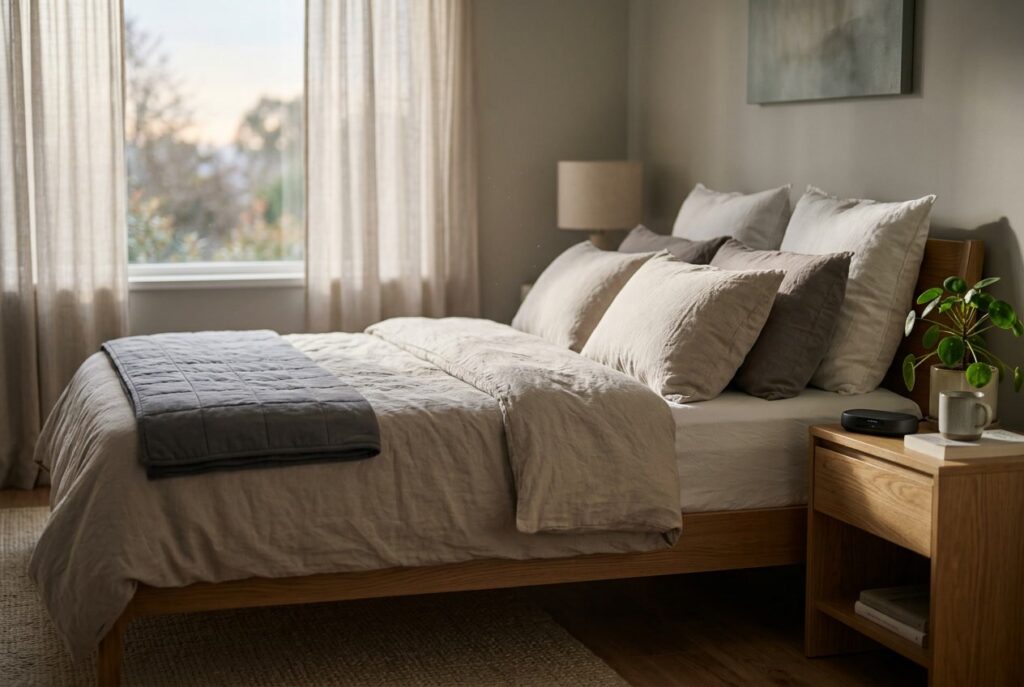
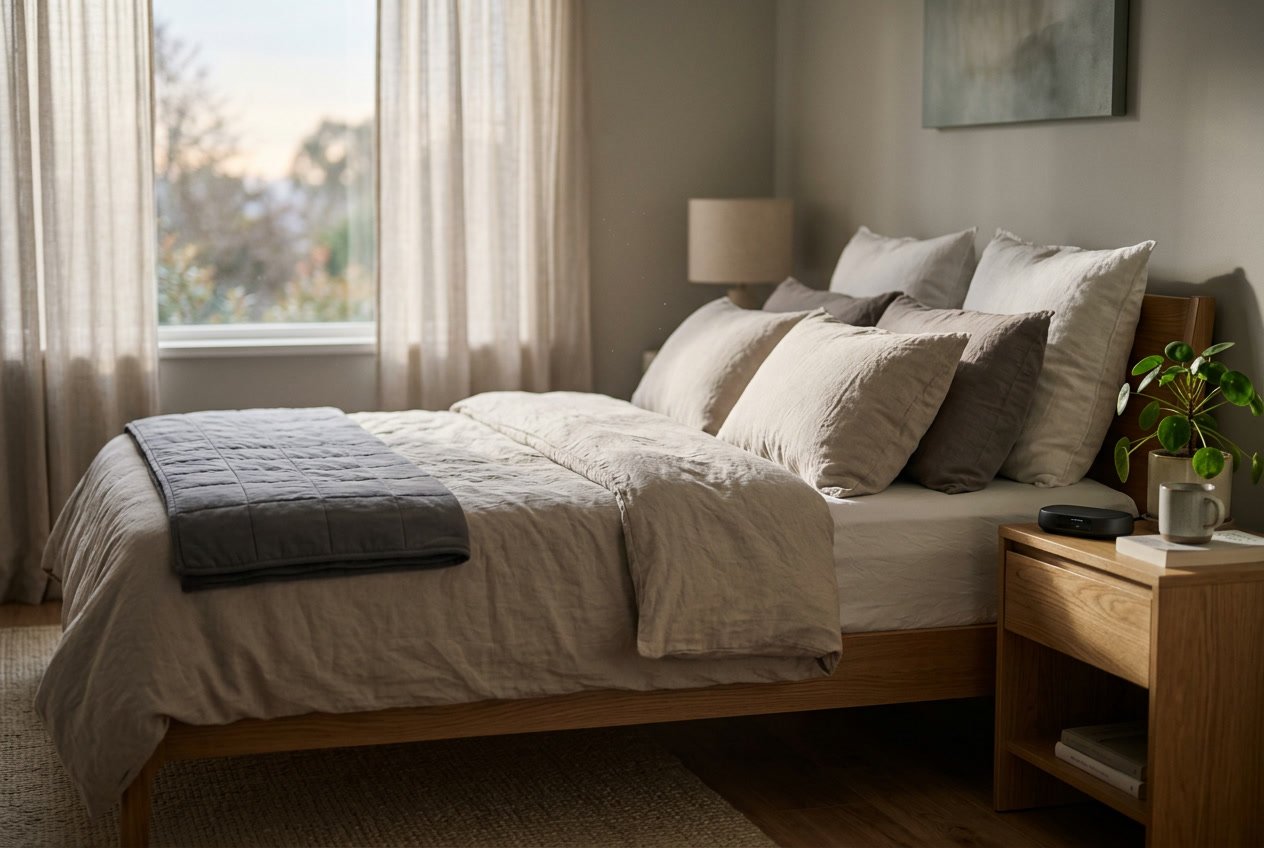
Medically Reviewed
Dr. Jose Rossello, MD, PhD, MHCM
Preventive Medicine & Public Health Specialist
Last Reviewed: May 26, 2026
Your bedroom affects how well you sleep more than most people realize. Research shows that creating a sleep-friendly environment[1] involves more than just picking comfortable sheets. The temperature, lighting, sounds, and even the colors in a bedroom can all impact sleep quality.
A sleep-friendly bedroom is an environment designed to support the body’s natural sleep-wake cycle by optimizing temperature, lighting, noise levels, air quality, and overall comfort. These factors work together to help people fall asleep faster and stay asleep longer. When a bedroom lacks proper environmental controls, it can lead to frequent awakenings and poor rest.
Science-backed bedroom design[2] combines practical setup with thoughtful visual choices. From controlling light exposure to maintaining the right temperature range, each element plays a role in achieving restorative sleep. Understanding these principles helps people transform their bedrooms into spaces that promote better sleep and improved well-being.
Table of Contents
Key Takeaways
- The bedroom environment directly impacts how quickly someone falls asleep and the quality of rest they get throughout the night
- Temperature, lighting, air quality, and sound levels must be optimized to support the body’s natural sleep patterns
- Simple changes to bedroom design and setup can lead to measurable improvements in sleep quality and overall health
Understanding Circadian Rhythms and Melatonin
The body’s internal clock controls when a person feels awake or sleepy through a 24-hour cycle that responds to light and darkness. Melatonin production rises in the evening to promote sleep, while light exposure during the day keeps the circadian rhythm aligned with natural patterns.
How Light Exposure Influences Sleep-Wake Cycles
The suprachiasmatic nucleus in the brain[3] acts as the master clock that regulates circadian rhythm. This clock responds primarily to light as its main signal for setting the body’s daily schedule.
Natural daylight helps calibrate the sleep-wake cycle. When light enters the eyes, it signals the brain to suppress melatonin and increase alertness. This process keeps a person awake and focused during daytime hours.
Artificial light after sunset disrupts this natural pattern. Blue light from screens and electronic devices is particularly problematic because it mimics daylight. Exposure to this type of light in the evening tells the brain to stay alert when it should prepare for sleep.
The timing of light exposure matters as much as the intensity. Morning light helps reset the circadian rhythm and promotes earlier sleep onset at night. Evening light delays the internal clock and pushes sleep times later.
People who work night shifts or travel across time zones experience disrupted light patterns. These disruptions can lead to sleep disorders, metabolic problems, and mood changes.
The Role of Melatonin Production in Restful Sleep
Melatonin is a hormone the pineal gland releases in response to darkness. Production typically begins around two hours before a person’s usual bedtime. Levels peak during the middle of the night and decline toward morning.
This hormone does more than signal sleep time. It lowers body temperature and blood pressure, creating physical conditions that support rest. The reduction in these vital signs helps the body transition into sleep mode.
Melatonin production decreases[4] when the eyes detect light, especially blue wavelengths. This is why evening light exposure from phones, tablets, and computers can delay sleep onset by one to three hours.
Temperature also affects melatonin release. A cooler bedroom environment supports the natural drop in body temperature that accompanies melatonin production. Most people sleep best in rooms between 60-67 degrees Fahrenheit.
Consistent sleep and wake times strengthen melatonin patterns. When a person goes to bed and wakes up at the same time daily, the body learns when to start and stop producing this sleep hormone.
Synchronizing Bedroom Design With Natural Rhythms
Bedroom design choices directly impact how well the space supports circadian rhythm. The goal is to create an environment that enhances natural sleep signals rather than fighting against them.
- Blackout curtains or shades block external light sources
- Dimmer switches allow gradual light reduction before bedtime
- Red or amber nightlights provide visibility without suppressing melatonin
- Smart bulbs that reduce blue light automatically in evening hours
Wall colors and surfaces affect how light behaves in the space. Dark colors absorb light and create a more restful atmosphere. Reflective surfaces bounce light around the room and can interfere with the transition to sleep.
Window placement matters for morning light exposure. East-facing windows allow natural sunrise light to enter the room. This helps wake the body naturally and reinforces healthy sleep hygiene practices.
Electronic devices need designated storage outside the bedroom or in drawers. The small lights from charging cables and standby modes create enough illumination to reduce blue light’s negative effects on sleep quality.
Temperature regulation tools support melatonin production. Programmable thermostats can lower room temperature automatically before bedtime. Breathable bedding materials help maintain comfortable body temperature throughout the night.
Optimizing Bedroom Lighting for Quality Sleep
The right bedroom lighting protects melatonin production and keeps the circadian rhythm aligned with natural sleep-wake cycles. Darkness at night, warm light before bed, and minimal blue light exposure create conditions for falling asleep faster and staying asleep longer.
Blocking External Light With Blackout Curtains
External light from streetlamps, car headlights, and early morning sun can disrupt sleep even with closed eyes. Research shows that eyelids cannot block sufficient light[5] to prevent circadian rhythm interference.
Blackout curtains block the majority of outside light and create a darker sleep environment. These curtains work best when they extend beyond the window frame on all sides to prevent light leakage around the edges.
People who cannot install blackout curtains may benefit from a close-fitting sleep mask. Studies indicate that eye coverings can contribute to improved sleep quality[5] when blocking light from other sources is not possible.
For shared bedrooms where one person needs light, keeping brightness at the lowest setting reduces sleep disruption for others.
Choosing Warm-Toned Bulbs and Sconces
Blue light has a short wavelength that significantly affects melatonin and circadian rhythm more than longer wavelength light. Warm-toned lighting with low illuminance[6] helps the body transition toward sleep by minimizing this interference.
Red or amber bulbs produce less circadian disruption than white or blue-tinted lighting. Wall sconces and other ambient fixtures provide softer illumination than overhead lights when preparing for bed.
A small, low-power lamp creates dim lighting that supports relaxation in the hour before sleep. Warm color temperatures signal the brain differently than the harsh blue light common in many LED bulbs.
Light strips and recessed lights offer alternatives to traditional lamps when installed with warm bulbs and dimmer controls.
Creating Dimmable and Layered Lighting
Keeping lights dim before bedtime allows melatonin production to begin naturally. Bright lighting in the evening can delay this process and push back sleep timing.
Layered lighting options include:
- Overhead lights with dimmer switches
- Bedside lamps with adjustable brightness
- Motion-activated lights for hallways
- Timer-controlled fixtures
Motion-activated lights deliver low levels of illumination only when needed for nighttime bathroom trips. This approach prevents constant light exposure throughout the night while maintaining safety for people at risk of falls.
Lights with timers benefit those who need illumination to fall asleep but want darkness for the majority of sleep hours. Even low levels of ambient light during sleep have been associated with eye strain[5] and discomfort.
Managing Blue Light From Devices
Electronic devices like phones, tablets, and laptops emit blue light that disrupts sleep timing and quality. Screen time before bed keeps the mind stimulated while simultaneously interfering with melatonin production.
The most effective solution is removing technology from the bedroom entirely. When this is not practical, reducing electronic use two to three hours before bedtime minimizes sleep disruption.
Device management strategies:
- Enable “night mode” settings to reduce blue light
- Lower screen brightness as far as possible
- Use blue light filtering glasses
- Set TV sleep timers to prevent all-night exposure
Many phones and computers include applications that reduce blue light emission[5] during evening hours. However, the mental stimulation from screen content may still affect sleep even with filters active.
Keeping devices silenced during the night prevents light from notifications that can cause awakenings and interrupt sleep cycles.
Regulating Temperature and Air Quality
Temperature and air quality work together to create conditions that support deep, uninterrupted sleep. The body needs to cool down for sleep onset, while fresh air helps maintain oxygen levels and removes sleep-disrupting pollutants.
Ideal Bedroom Temperature for Sleep Efficiency
Research shows that sleep onset requires core body temperature to drop[7] by approximately 1-2°F. The ideal bedroom temperature for sleep falls between 60°F and 67°F (15°C to 19°C). This range supports the body’s natural cooling process.
When room temperature exceeds 67°F, the body struggles to release heat efficiently. This can delay sleep onset and reduce time spent in deep sleep stages. Temperatures below 60°F may cause the body to conserve heat, which also disrupts sleep quality.
Individual preferences vary based on factors like metabolism, age, and health conditions. Older adults often prefer slightly warmer temperatures, while younger people may sleep better in cooler rooms. Testing temperatures within the recommended range helps identify personal comfort zones.
Enhancing Air Circulation and Ventilation
Proper ventilation prevents the buildup of carbon dioxide and stale air that accumulates during sleep. The microclimate created by bedding affects sleep comfort[8] more than bedroom temperature alone.
Opening windows creates cross-ventilation when weather permits. Ceiling fans or portable fans improve air movement without requiring outdoor air exchange. Fans also create white noise that masks disruptive sounds.
Elevate Your Health for Just $29.99/Month
Join the Precision Wellness Subscription at My Healing 365 and get discounted services, priority coaching access, virtual care, and exclusive wellness resources to support your physical, emotional, and hormonal health.
Join for $29.99/MonthAir circulation helps regulate humidity and prevents moisture accumulation. This reduces the risk of mold growth and dust mite populations, both of which affect respiratory health during sleep. Running a fan on low speed provides continuous air movement without creating excessive noise or drafts.
Purifying Air for a Healthier Sleep Environment
Indoor air contains pollutants from cleaning products, furniture, and outdoor sources. An air purifier with HEPA filtration removes particles as small as 0.3 microns, including dust, pollen, and pet dander.
Plants like the snake plant naturally filter air by absorbing carbon dioxide and releasing oxygen at night. Snake plants require minimal care and thrive in low-light bedroom conditions. They remove toxins such as formaldehyde and benzene from indoor air.
Air purifiers work most effectively in rooms with closed doors and windows. Placing the unit near the bed maximizes exposure to clean air during sleep. Units with activated carbon filters also remove odors and volatile organic compounds that affect air quality.
Humidity Control and Breathable Bedding
Humidity levels between 30% and 50% prevent respiratory irritation and maintain comfortable sleeping conditions. Levels above 50% promote mold growth and dust mites. Levels below 30% cause dry skin and nasal passages.
Breathable bedding made from natural fibers like cotton, linen, or bamboo allows moisture to evaporate rather than trap it against the skin. These materials regulate temperature better than synthetic fabrics. A supportive mattress with good airflow prevents heat accumulation underneath the body.
Moisture-wicking sleepwear works with breathable bedding to enhance sleep comfort. Dehumidifiers reduce excess moisture in humid climates, while humidifiers add moisture in dry environments. Monitoring humidity with a hygrometer ensures levels stay within the optimal range for sleep quality.
Soundscapes and Acoustic Solutions for Restful Nights
The audio environment in a bedroom directly affects how quickly someone falls asleep and how well they stay asleep throughout the night. Strategic use of sound masking and physical sound barriers can address both intrusive noise and uncomfortable silence.
Using White Noise Machines for Consistent Sleep
A white noise machine produces steady, consistent sound that masks sudden noises like traffic, footsteps, or voices that might otherwise wake a sleeper. These devices work through a process called auditory masking, where the brain focuses on the constant background sound rather than unpredictable disruptions.
Complete silence can actually make the brain more sensitive to random sounds. A creaking floorboard or distant car becomes jarring in a totally quiet room. White noise and soundscapes[9] create a buffer that prevents these sudden noises from triggering alertness.
Many people find that white noise machines help them fall asleep faster and improve sleep quality by maintaining a stable sound environment. The constant audio backdrop helps the brain transition into deeper sleep stages. Some devices offer variations like pink noise or brown noise, which emphasize different frequency ranges and may feel more natural to certain sleepers.
Soundproofing With Acoustic Panels and Soft Furnishings
Physical modifications to a bedroom can reduce external noise and control internal sound reflections. Acoustic panels absorb sound waves rather than letting them bounce off hard surfaces, which reduces echo and creates a quieter atmosphere.
Sound-absorbing materials[10] integrated into decor transform rooms that feel hollow or echo-prone into calmer spaces. These materials include:
- Upholstered headboards that absorb sound at the head of the bed
- Heavy curtains that block outside noise and prevent sound reflection
- Carpet or rugs that dampen footsteps and reduce floor noise
- Wall-mounted fabric panels that target specific reflection points
Soft furnishings serve dual purposes in bedroom design. They enhance comfort while simultaneously improving the acoustic properties of the space. A bedroom with multiple soft textures naturally dampens sound better than one filled with hard surfaces like bare walls, wood floors, and metal furniture.
Mitigating Disruptive Noises and Enhancing Calm
Identifying specific noise sources helps determine the most effective solutions for better sleep. External noise like street traffic requires different approaches than internal sounds like HVAC systems or household activity.
For outside noise, weatherstripping around doors and windows creates seals that block sound transmission. Moving the bed away from shared walls reduces the impact of noise from adjacent rooms or neighbors. Some sleepers benefit from rearranging furniture so that bookshelves or wardrobes act as additional sound barriers against noisy walls.
Internal noise sources need direct attention. A humming appliance might need replacement or relocation. Squeaky doors benefit from lubricant on hinges. Creating personalized bedroom soundscapes[11] means addressing both what sounds enter the space and what sounds generate within it.
Sleep efficiency improves when the bedroom environment supports uninterrupted rest cycles. Combining passive soundproofing with active sound masking gives sleepers control over their audio environment.
Design Choices and Furnishings That Boost Sleep
A supportive mattress and thoughtful furniture placement form the foundation of any sleep sanctuary, while strategic storage solutions and calming accessories help maintain the peaceful environment needed for restorative sleep.
Selecting a Supportive Mattress and Breathable Bedding
A supportive mattress should match a person’s body weight, sleeping position, and firmness preferences. Research shows that a new mattress can improve sleep quality[1] while decreasing stress and back pain. The mattress needs to provide proper spine alignment and pressure point relief throughout the night.
Breathable bedding keeps sleepers comfortable by managing body temperature. Natural materials like cotton, linen, and bamboo allow better air circulation than synthetic fabrics. Sheets with a thread count between 200 and 400 typically offer the best balance of softness and breathability.
Pillows play an equally important role in neck support and alignment. Side sleepers generally need thicker pillows, while back and stomach sleepers benefit from flatter options. Washing bedding weekly prevents dust mite buildup and keeps the bed feeling fresh.
Arranging Bedroom Layout for Serenity
Bedroom design should prioritize a usable and appealing layout[12] that avoids a cramped feeling. The bed should fit comfortably without taking up too much floor space. Positioning the bed away from windows reduces light and noise disruptions during sleep.
Nightstands within arm’s reach provide convenient storage for essentials without cluttering the room. Keeping a clear path from the bed to the bathroom prevents tripping hazards during nighttime bathroom visits. This stress-free arrangement creates a calming atmosphere.
Utilizing vertical space with wall-mounted shelves or tall dressers maximizes even small bedrooms. Furniture placement should support easy movement and avoid blocking natural light sources during the day. Every item in the bedroom should serve a clear purpose to maintain simplicity.
Utilizing Under-Bed Storage and Decluttering
Under-bed storage containers make efficient use of otherwise wasted space. Rolling bins, drawers, or vacuum-sealed bags can hold seasonal clothing, extra linens, or items used infrequently. This keeps belongings organized while freeing up closet and floor space.
Visual clutter generates stress and creates mental obstacles to relaxation. A disorganized bedroom reinforces feelings of having too many loose ends, which makes falling asleep harder. Spending just a few minutes daily picking up items prevents overwhelming buildup.
Essential decluttering steps include:
- Removing items that don’t belong in the bedroom
- Organizing drawers to make morning routines easier
- Keeping surfaces like dressers and nightstands mostly clear
- Storing only truly necessary items in the bedroom
Adding Calm With Sleep Masks and Pillow Sprays
A sleep mask blocks out light completely, which helps reinforce healthy circadian rhythms. This proves especially useful for shift workers, travelers, or anyone with a bedroom that receives exterior light. Contoured masks prevent pressure on the eyes while blocking light effectively.
Pillow sprays containing lavender or chamomile provide aromatherapy benefits. Studies have found that aromatherapy with essential oils like lavender can promote relaxation[1] and make falling asleep easier. While odors typically don’t wake people during sleep, calming scents help create the right environment for rest.
These accessories work best when combined with other bedroom design improvements. A sleep mask cannot compensate for a poor mattress, just as pillow spray won’t fix a cluttered space. Together with proper lighting and temperature control, these simple additions support the goal of restorative sleep.
Cultivating a Calming and Sleep-Positive Atmosphere
The physical appearance and sensory elements of a bedroom directly affect how quickly the mind settles down for rest. Selecting calming colors, reducing visual chaos, and introducing natural scents create a space that signals to the brain it’s time to sleep.
Choosing Soothing Colors and Minimalist Decor
Wall colors and decorative choices influence the brain’s stress response. Cool tones like soft blues, gentle greens, and muted grays lower heart rate and promote relaxation. These colors create a backdrop that doesn’t overstimulate the visual cortex before sleep.
Warm neutrals like beige and light taupe also work well for bedroom design. They provide a sense of calm without feeling cold. Bright reds, oranges, and intense yellows should be avoided as they increase alertness and energy levels.
Minimalist decor reduces mental clutter:
- Remove unnecessary decorative items from surfaces
- Choose simple furniture with clean lines
- Limit wall art to one or two calming pieces
- Keep electronics out of sight
A sleep sanctuary doesn’t need elaborate decoration. Simple, intentional choices create a more restful environment than busy patterns or excessive accessories.
Maintaining a Clutter-Free Space for Relaxation
Physical clutter creates mental stress that interferes with sleep onset. Studies show that people who sleep in cluttered rooms take longer to fall asleep and report lower sleep quality. The visual chaos triggers the brain to stay alert rather than wind down.
Clear surfaces in the bedroom help the mind recognize the space as dedicated to rest. Nightstands should hold only essential items like a lamp, alarm clock, or book. Clothes belong in closets or dressers, not draped over chairs or piled on the floor.
Storage solutions keep items organized and hidden. Under-bed containers, closed wardrobes, and drawer organizers maintain order without adding visual noise. A quick five-minute tidying routine before bed helps create the perfect sleep environment[13] each night.
Clean floors and clear pathways also reduce nighttime hazards and anxiety about tripping in the dark.
Promoting Relaxation With Plants and Scent
Certain plants improve air quality while adding natural elements that calm the nervous system. A snake plant releases oxygen at night and filters toxins from the air. It requires minimal care and thrives in low light conditions, making it ideal for bedrooms.
Lavender plants or dried lavender sachets near the bed promote relaxation. Research shows that lavender essential oil can improve sleep quality[14] and help people wake feeling more refreshed.
Sleep-promoting scents include:
- Lavender for relaxation
- Chamomile for stress reduction
- Vanilla for comfort
- Sandalwood for grounding
Essential oil diffusers distribute these scents evenly throughout the room. They should run for 30-60 minutes before sleep rather than all night. Too much fragrance can become overstimulating and disrupt better sleep.
Plants also add visual softness to a room without creating clutter. They connect the indoor environment to nature, which reduces stress hormones. Pair plants with breathable bedding and proper temperature control to improve sleep quality from multiple angles.
Frequently Asked Questions
The ideal sleep environment depends on specific temperature ranges, controlled light exposure, and proper support from bedding. Small adjustments to noise levels and strategic bedroom preparation can make measurable differences in sleep quality.
What bedroom temperature range is most supportive of deep, uninterrupted sleep?
The ideal bedroom temperature for sleeping is 65 degrees Fahrenheit[14] (18.3 degrees Celsius). This cooler setting helps maintain a lower core body temperature during sleep.
Adults naturally experience a drop in body temperature as they enter the initial stages of sleep. A cooler room supports this biological process and promotes deeper rest.
Some sleepers may find 65 degrees too cold for comfort. Adding an extra blanket or wearing warmer sleepwear can help maintain comfort while keeping the room temperature low.
How do light levels and blue light exposure in the evening affect melatonin and sleep quality?
Light exposure directly influences the body’s circadian rhythms that control the sleep-wake cycle. During daylight hours, the eyes perceive sunlight and signal the brain to produce cortisol, which promotes alertness.
When darkness falls, the brain produces melatonin to induce sleepiness and relaxation. Exposure to artificial light in the evening delays these circadian rhythms and extends the time it takes to fall asleep.
Research shows that exposure to light sources with 10 lux or higher later in the day[14] can lead to more nighttime awakenings and less slow-wave sleep. Smartphones, televisions, and other screens produce artificial blue light that disrupts sleep even when using dimmer nighttime settings.
Which bedroom noise-reduction strategies are most effective for improving sleep continuity?
A quieter bedroom supports better sleep than a louder one. Loud noise causes severe sleep fragmentation and disruption, which negatively impacts physical and mental health.
Even low-level noise can cause shifts to lighter sleep stages or brief awakenings. Blocking outside noises helps maintain sleep continuity throughout the night.
White noise machines or fans can effectively mask disruptive sounds. Noise-blocking curtains offer another practical solution for reducing external noise that interferes with rest.
What does the 3-2-1 bedroom method involve, and how is it used to optimize sleep conditions?
The 3-2-1 method is a time-based approach to preparing the bedroom and body for sleep. It involves stopping eating three hours before bed, finishing work two hours before bed, and avoiding screens one hour before sleep.
This method helps separate wakeful activities from the sleep environment. It creates clear boundaries between daytime stimulation and nighttime rest.
The gradual wind-down allows the body to transition into sleep mode. Each step reduces factors that can interfere with falling asleep quickly and staying asleep.
How do mattress and pillow firmness influence spinal alignment and overnight comfort?
The right mattress depends on individual factors like body weight, sleep position, and firmness preferences. Some sleepers prefer the close contour of memory foam, while others enjoy the gentle support of latex or the springy feel of coils.
Studies indicate that newer mattresses promote better sleep quality[14] and reduce back pain compared to older models. Proper spinal alignment during sleep prevents pressure points and discomfort.
Pillow selection should consider firmness, loft (thickness), and durability. The ideal pillow keeps the head and neck aligned with the spine based on sleep position.
What are the most important items to include in a practical sleep-environment checklist for adults and babies?
Adults should maintain bedroom temperatures around 65 degrees and keep the room as dark as possible. Blackout curtains or eye masks block light that interferes with melatonin production.
Clean bedding matters for sleep quality. Washing sheets at least once every two weeks[14] reduces dust mites and allergens that can disrupt breathing during sleep.
Babies require similar temperature control but need additional safety considerations. Their sleep space should be free of loose blankets, pillows, and stuffed animals to reduce suffocation risks.
A practical checklist includes comfortable mattress and pillows, minimal noise and light, appropriate room temperature, and regular cleaning of bedding. These elements work together to create a sleep-friendly environment[2] that supports the body’s natural sleep-wake cycle.
Post Views: 4
References
- How to Design the Ideal Bedroom for Sleep. https://www.sleepfoundation.org/bedroom-environment/how-to-design-the-ideal-bedroom-for-sleep Accessed May 27, 2026
- Science of Sleep-Friendly Bedrooms. https://www.iliveactive.com/Health/Mind-and-Body/Sleep/Sleep-environment/Science-of-Sleep-Friendly-Bedrooms Accessed May 27, 2026
- Exploring the Role of Circadian Rhythms in Sleep and Recovery: A Review Article. https://pmc.ncbi.nlm.nih.gov/articles/PMC11221196/ Accessed May 27, 2026
- Optimizing Sleep Cycles: The Science of Melatonin and Circadian Rhythms. https://www.nbinno.com/article/active-pharmaceutical-ingredients-apis/melatonin-circadian-rhythms-sleep-cycle-regulation Accessed May 27, 2026
- Light & Sleep: Effects on Sleep Quality. https://www.sleepfoundation.org/bedroom-environment/light-and-sleep Accessed May 27, 2026
- Lighting for Sleep: How to Create a Glow for Restful Nights. https://bettersleep.org/blog/lighting-for-sleep-how-to-create-a-glow-for-restful-nights/ Accessed May 27, 2026
- Ideal Bedroom Temperature for Sleep: What Science Says. https://www.mattressnut.com/bedroom-temperature-guide/ Accessed May 27, 2026
- How Bedroom Temperature, Ventilation Affect Sleep Quality. https://www.ashrae.org/news/ashraejournal/how-bedroom-temperature-ventilation-affect-sleep-quality Accessed May 27, 2026
- White Noise and Soundscapes: Improve Your Sleep. https://sleepiverse.com/articles/white-noise-soundscapes/ Accessed May 27, 2026
- Just a moment…. https://suite101.com/30-acoustic-bedroom-ideas/ Accessed May 27, 2026
- Acoustic Architecture: Custom Bedroom Sound Profiles from Acoustic Physicists – Me Doze. https://medoze.com/sleep-disorders/acoustic-architecture-custom-bedroom-sound-profiles-from-acoustic-physicists/ Accessed May 27, 2026
- The Science of Sleep: How Bedroom Design Affects Rest and Relaxation. https://opplehouse.com/the-science-of-sleep-how-bedroom-design-affects-rest-and-relaxation/ Accessed May 27, 2026
- How To Create The Perfect Sleep Environment. https://amerisleep.com/blog/how-to-create-the-perfect-sleep-environment/ Accessed May 27, 2026
- Bedroom Environment: What Elements Are Important?. https://www.sleepfoundation.org/bedroom-environment Accessed May 27, 2026

























