• Twenty47HealthNews
  • Health & Wellness
  • Disclaimer
    • Terms of Use
    • Privacy Policy
    • DMCA Notice
  • Twenty47HealthNews
  • Health & Wellness
  • Disclaimer
    • Terms of Use
    • Privacy Policy
    • DMCA Notice
24/7 Health News
No Result
View All Result
Home Acupuncture

‘A potential treasure trove’: World Health Organization to explore benefits of traditional medicines

January 1, 2026
in Acupuncture, Alternative medicine, Article, Global development, Global health, Health, Health & wellbeing, Homeopathy, India, Life and style, Medical research, Science, Society, South and central Asia, World Health Organization, World news
‘A potential treasure trove’: World Health Organization to explore benefits of traditional medicines

From herbalists in Africa gathering plants to use as poultices to acupuncturists in China using needles to cure migraines, or Indian yogis practising meditation, traditional remedies have increasingly being shown to work, and deserve more attention and research, according to a World Health Organization official.

A historical lack of evidence, which has seen traditional practices dismissed by many, could change with more investment and the use of modern technology, according to Dr Shyama Kuruvilla, who leads the WHO Global Traditional Medicine Centre.

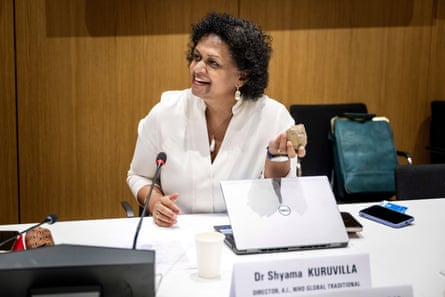
A woman in a white blouse speaks into a microphone.

Earlier this year, countries agreed the WHO should adopt a new global traditional medicines strategy for the next decade that “seeks to harness the potential contribution of TCIM [traditional, complementary and integrative medicine] to health and wellbeing based on evidence”.

It includes plans to establish a robust evidence base for traditional medicine practices, develop regulation of treatments and practitioners and, where appropriate, integrate the practices into mainstream biomedical healthcare.

“It’s super-exciting,” says Kuruvilla. “I’m not saying we know what works and what doesn’t work at scale – but I think there’s this opportunity [to find out] right now.”

Traditional medicine, defined as systems for health and wellbeing that predate “biomedicine”, comes in many guises ranging from herbal tea to India’s Ayurvedic medical system.

Many of these centuries-old practices have “huge potential”, says Kuruvilla, and can now be explored in new ways by technologies including artificial intelligence, genomics and brain scans.

Kuruvilla says Thailand is a good example of a country embracing traditional medicine, with researchers observing and documenting traditional practice, and performing randomised trials to get herbal treatments on to the country’s essential medicines list. In May, Thailand’s health ministry recommended doctors switch from some biomedicines to traditional remedies for certain conditions including muscle pain and constipation.
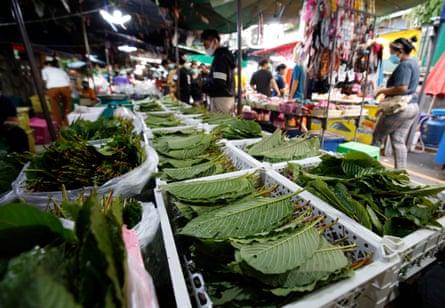
Trays full of green leaves for sale in a street market in Thailand

There have been some concerns that the WHO strategy could create a backdoor for unscientific systems such as homeopathy to enter the mainstream but Kuruvilla points out that homeopathy does not fit the WHO’s definition of traditional medicine – it was only created in the late 18th century – and that there is not strong enough evidence for the practice.

But, she says: “With all of these – with biomedicine, homeopathy, traditional medicine – if the evidence changes, I think it’s our responsibility to be open to that.”

In some countries homeopathy is used as a complementary medicine “and that’s up to the countries”, Kuruvilla says. “We have to, as WHO, just stick to the evidence.

“So I think that’s our bottom line: is this supported by robust reliable evidence, especially on safety and efficacy? And if it’s not, WHO is not supporting it, whether it is biomedicine or traditional medicine.”

WHO surveys suggest that in most countries, the majority of traditional, complementary and integrative medicine services are not part of the formal health system and are paid for by patients. They are less likely to be subject to official quality checks but are hugely popular.

“Not engaging wasn’t an option, because that would mean everything goes on without any safeguards,” Kuruvilla says, pointing to a burgeoning trillion-dollar wellness industry ranging from yoga studios to “nutraceuticals”.
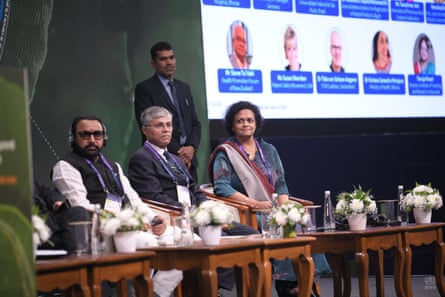
Three people in formal clothing stand behind desks in a conference hall

New methods let scientists study traditional medicine “in a way that wasn’t possible before”, Kuruvilla says. Genomics might prompt new understanding of the properties of a plant, while modern scanning equipment can pick up changes in the brains of people meditating.

“Meditation was all this ‘woo-woo stuff’ but now, seeing all these advances in neuroscience and showing changes in brain waves from functional magnetic resonance imaging, which we couldn’t do before – actually being able to trace the pathways that lead to changes in health measurements – I think this is really, really exciting,” she says.

A new WHO strategic technical advisory group for traditional medicine was launched this week at a global summit in India. “This is a pivotal moment for traditional medicine. It embodies cultural heritage and national health identities, and increasingly, it constitutes a vital component of primary health care strategies,” Dr Yukiko Nakatani, WHO’s assistant director-general for health system, access and data, told the summit.

The idea, Kuruvilla suggests, is to “build a bridge” between traditional medicine and biomedicine. It is important to “find commonalities”, she says. “Showing that the science can be robust is really, really important, and especially on the patient safety aspect.”

Traditional medicine has the potential to be a “treasure trove”, Kuruvilla says. The vast numbers of people working in the field – including university-educated professionals accredited to work in clinics in China and India – could ease global workforce shortages and make a “huge contribution” to universal health coverage, she says.
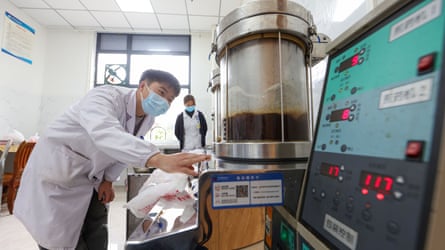
A man in a lab coat and face mask checks a container of liquid next to a screen with numbers on it in a hospital room

In the context of aid cuts forcing countries to rethink health provision, traditional medicine could be “a way for countries also to be more self-reliant and then share those resources with each other”.

The risk of failing to invest, she says, is leaving people unable to access their preferred type of healthcare in a safe way and “the world not being able to use our shared heritage here in a way that allows us to find new holistic solutions for health and wellbeing of people and planet”.


ShareTweetSharePin
Next Post
Cycling is changing at speed – but is Britain keeping pace?

Cycling is changing at speed – but is Britain keeping pace?

Most Read

What causes stuttering? A speech pathology researcher explains the science and the misconceptions around this speech disorder

What causes stuttering? A speech pathology researcher explains the science and the misconceptions around this speech disorder

December 15, 2022
morning back pain

Morning Again Ache Trigger Is Not the Mattress

October 11, 2021

Why Circadian Rhythms Matter for Your Health

July 30, 2024

4 steps to building a healthier relationship with your phone

January 28, 2025
lower back pain relief exercises

5 decrease again ache aid workouts

October 11, 2021
Nasal vaccines promise to stop the COVID-19 virus before it gets to the lungs – an immunologist explains how they work

Nasal vaccines promise to stop the COVID-19 virus before it gets to the lungs – an immunologist explains how they work

December 14, 2022
3 years after legalization, we have shockingly little information about how it changed cannabis use and health harms

3 years after legalization, we have shockingly little information about how it changed cannabis use and health harms

October 15, 2021
bleeding in gum

When The Bleeding in gum Is Severe ?

October 11, 2021
Good Night Sleep

6 Causes of Good Evening Sleep

October 11, 2021
Kick up your heels – ballroom dancing offers benefits to the aging brain and could help stave off dementia

Kick up your heels – ballroom dancing offers benefits to the aging brain and could help stave off dementia

January 3, 2023
Biden is getting prostate cancer treatment, but that’s not the best choice for all men − a cancer researcher describes how she helped her father decide

Biden is getting prostate cancer treatment, but that’s not the best choice for all men − a cancer researcher describes how she helped her father decide

May 20, 2025
Ten small changes you can make today to prevent weight gain

Ten small changes you can make today to prevent weight gain

October 12, 2021

COVID vaccines: how one can pace up rollout in poorer international locations

October 5, 2021

Multiple sclerosis: the link with earlier infection just got stronger – new study

October 12, 2021
Five ways to avoid pain and injury when starting a new exercise regime

Five ways to avoid pain and injury when starting a new exercise regime

December 30, 2022
Support and collaboration with health-care providers can help people make health decisions

Support and collaboration with health-care providers can help people make health decisions

December 16, 2021
Greece to make COVID vaccines mandatory for over-60s, but do vaccine mandates work?

Greece to make COVID vaccines mandatory for over-60s, but do vaccine mandates work?

December 1, 2021

This Simple Hygiene Habit Could Cut Your Risk of Stroke, New Research Reveals

February 1, 2025
woman covered with white blanket

Exploring the Impact of Sleep Patterns on Mental Health

August 4, 2024

Maximize Your Performance – Sync with Your Circadian Rhythms

August 9, 2024
Backlash to transgender health care isn’t new − but the faulty science used to justify it has changed to meet the times

Backlash to transgender health care isn’t new − but the faulty science used to justify it has changed to meet the times

January 30, 2024
How to protect your well-being, survive the stress of the holiday season and still keep your cheer

How to protect your well-being, survive the stress of the holiday season and still keep your cheer

December 21, 2025
News of war can impact your mental health — here’s how to cope

Binge-eating disorder is more common than many realise, yet it’s rarely discussed – here’s what you need to know

December 2, 2022
Nurses’ attitudes toward COVID-19 vaccination for their children are highly influenced by partisanship, a new study finds

Nurses’ attitudes toward COVID-19 vaccination for their children are highly influenced by partisanship, a new study finds

December 2, 2022
Nutrition advice is rife with misinformation − a medical education specialist explains how to tell valid health information from pseudoscience

Nutrition advice is rife with misinformation − a medical education specialist explains how to tell valid health information from pseudoscience

January 28, 2025
Four ways to avoid gaining weight over the festive period – but also why you shouldn’t fret about it too much

Four ways to avoid gaining weight over the festive period – but also why you shouldn’t fret about it too much

December 22, 2022
Why are some people faster than others? 2 exercise scientists explain the secrets of running speed

Why are some people faster than others? 2 exercise scientists explain the secrets of running speed

April 29, 2024
As viral infections skyrocket, masks are still a tried-and-true way to help keep yourself and others safe

As viral infections skyrocket, masks are still a tried-and-true way to help keep yourself and others safe

December 14, 2022
How regulatory agencies, not the courts, are imposing COVID-19 vaccine mandates

How regulatory agencies, not the courts, are imposing COVID-19 vaccine mandates

October 24, 2021
Heart disease risk from saturated fats may depend on what foods they come from – new research

Heart disease risk from saturated fats may depend on what foods they come from – new research

November 29, 2021
  • Twenty47HealthNews
  • Health & Wellness
  • Disclaimer

© 2020 DAILY HEALTH NEWS

  • Twenty47HealthNews
  • Health & Wellness
  • Disclaimer
    • Terms of Use
    • Privacy Policy
    • DMCA Notice

© 2020 DAILY HEALTH NEWS










