Medically Reviewed
Dr. Jose Rossello, MD, PhD, MHCM
Preventive Medicine & Public Health Specialist
Last Reviewed: April 20, 2026
A cluttered bedroom can seriously interfere with sleep quality. Piles of clothes, stacks of papers, and crowded nightstands create visual chaos that makes it harder for the brain to relax and wind down at night. When people declutter their bedrooms by removing excess items and organizing what remains, they create a calmer environment that helps them fall asleep faster and sleep more soundly.
The connection between a tidy space and better rest is straightforward. A messy room acts as a constant reminder of unfinished tasks and responsibilities. Every time someone looks at the clutter, their stress levels can increase. This mental stimulation works against the peaceful atmosphere needed for quality sleep.
Creating a decluttered bedroom[1] does not require a complete room makeover or expensive organizing systems. Simple changes like clearing off surfaces, organizing the closet, and removing items that do not belong in the bedroom can make a real difference. The process takes some effort upfront, but the reward is a bedroom that truly serves its main purpose as a place for rest and recovery.
Table of Contents
Key Takeaways
- Removing clutter from the bedroom reduces visual distractions and stress that interfere with falling asleep
- Decluttering involves[2] sorting through items, organizing storage spaces, and keeping only what belongs in a sleep space
- Maintaining a tidy bedroom requires regular habits like making the bed daily and putting items away immediately
Why Decluttering Your Bedroom Improves Sleep
A cluttered bedroom creates stress and makes it harder to fall asleep and stay asleep through the night. When someone removes excess items and organizes their space, they reduce mental distraction and create an environment that supports rest.
Psychological and Physical Benefits
When a person walks into a clean bedroom, their brain receives fewer visual signals to process. This allows the mind to shift into a relaxed state more easily. Decluttering creates a sense of calm and relaxation[1], which directly improves mood and mental wellbeing.
A messy space triggers the release of cortisol, the stress hormone. High cortisol levels keep the body alert and ready for action. This biological response works against the natural wind-down process needed for sleep.
Physical benefits also emerge when someone declutters their bedroom. They can move around more freely without tripping over shoes or piles of clothing. The air quality often improves because there are fewer surfaces collecting dust. These changes make the bedroom environment more comfortable for rest.
Impact of Visual Clutter on Rest
Visual clutter acts as a constant source of stimulation that keeps the brain active. Every item in view sends a message to process, creating background mental noise. This prevents the deep relaxation needed to fall asleep quickly.
An unorganized and chaotic environment creates unease and stress[3], which interferes with the ability to relax. The eyes continue scanning the room even when someone lies down to sleep. Piles of laundry, stacks of papers, and scattered belongings all compete for attention.
A clear bedroom allows the eyes to rest on simple, calming surfaces. This reduces mental activity and helps the body recognize that it’s time to sleep. The brain associates the clean space with rest rather than work or stress.
Scientific Studies Linking Clutter and Sleep Quality
Research shows a direct connection between bedroom clutter and poor sleep. The National Sleep Foundation found that people who reported more clutter in their bedrooms also reported poorer sleep quality[1].
Studies measure sleep quality through factors like how long it takes to fall asleep, how often someone wakes during the night, and how rested they feel in the morning. Participants with cluttered bedrooms scored worse on all these measures.
The research also reveals that people sleep better when they make their beds daily and keep surfaces clear. These simple actions signal to the brain that the bedroom is a dedicated space for rest. The data supports what many people experience: a tidy bedroom environment leads to better sleep.
Step-By-Step Guide: How to Declutter Your Bedroom
A clean bedroom starts with a clear plan and consistent habits. The process involves creating a vision for the space, removing items that don’t belong, and maintaining order through daily routines.
Set Your Bedroom Vision and Intent
Before touching a single item, a person needs to decide what they want their bedroom to become. This means thinking about how the space should feel and function. Does it need to be a calm retreat for rest? A space that promotes better sleep? Or a room that feels peaceful the moment someone walks in?
Writing down three to five specific goals helps keep the process on track. For example, goals might include having clear nightstands, being able to see the floor, or storing clothes out of sight.
Taking a photo of the current state of the room provides a starting point. This image serves as a reminder of why the work matters. Looking at effective strategies for creating an organized space[4] shows that people who set clear intentions finish their projects more successfully.
The vision should focus on sleep quality and relaxation. Items that don’t support these purposes likely don’t belong in the bedroom.
Remove Unnecessary Items
The next step involves taking everything out that doesn’t serve the bedroom’s purpose. Start with obvious clutter like old magazines, empty water bottles, and trash. Move items that belong in other rooms back to their proper places.
Go through one category at a time rather than trying to tackle everything at once. Clothes come first, then books, then papers, then miscellaneous items. This room-by-room approach[5] prevents overwhelm and creates visible progress.
Ask these questions about each item:
- Has this been used in the past year?
- Does it help with sleep or relaxation?
- Is it worth the space it takes up?
Items under the bed often get forgotten but collect dust and create visual clutter. Clear this space completely or use it only for seasonal storage in closed containers.
Make Your Bed Every Morning
Making the bed takes two minutes but sets the tone for the entire day. A made bed instantly makes the room look cleaner and more organized. This simple habit prevents the bed from becoming a dumping ground for clothes and other items throughout the day.
The process doesn’t need to be complicated. Pull up the sheets, arrange the blanket or comforter, and place the pillows. When learning to declutter a bedroom[6], experts emphasize keeping surfaces clear and neat as a fundamental rule.
This daily action creates momentum for maintaining the decluttered space. People who make their beds regularly report feeling more in control of their environment. The visual reward of a tidy bed reinforces the habit and makes it easier to keep the rest of the room organized.
Organizing Bedroom Surfaces and Storage
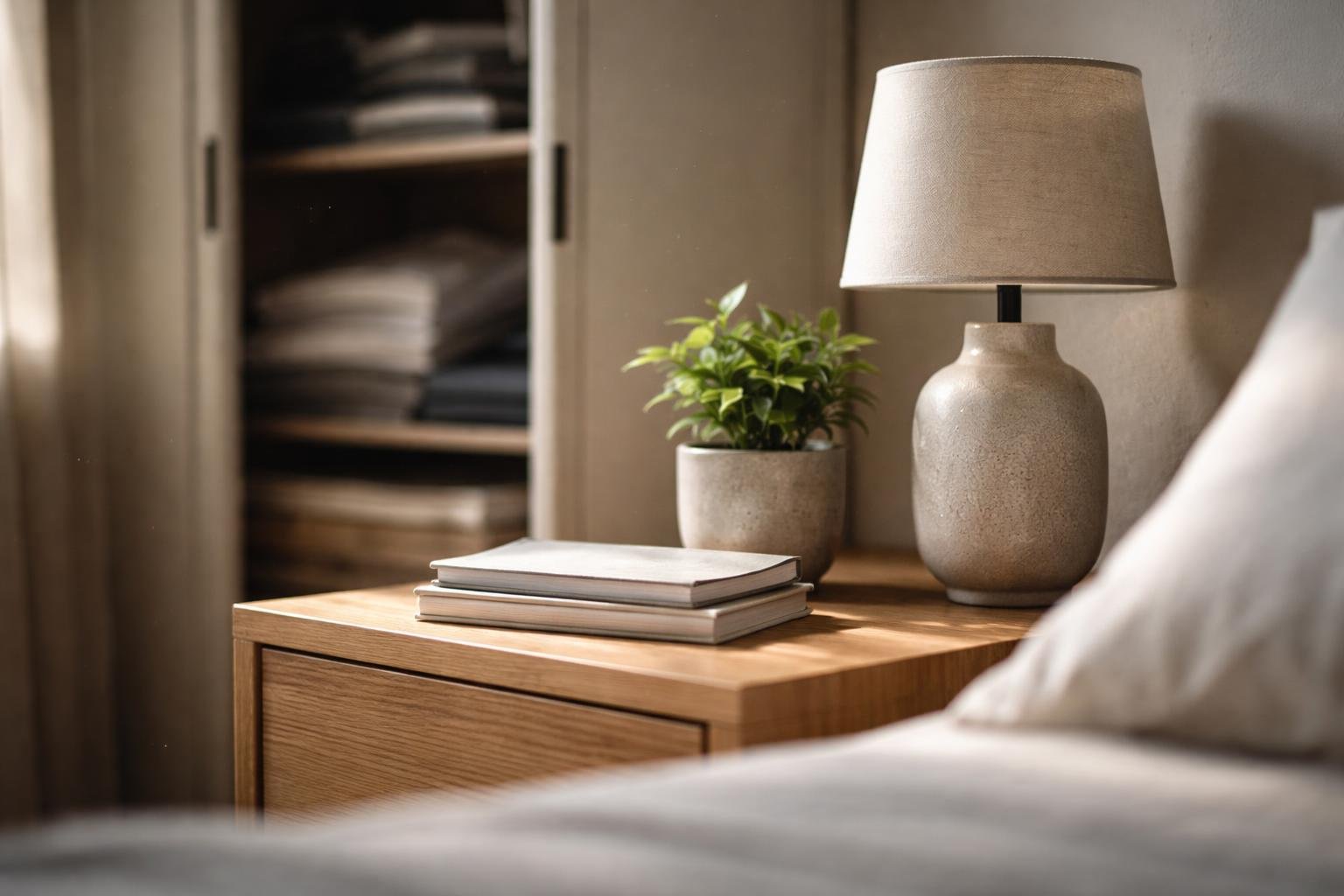
Keeping nightstands functional and surfaces clear creates a calm environment that supports better rest. Small containers and strategic storage solutions help manage everyday items while reducing visual distractions.
Clear and Simplify Nightstands
A nightstand should hold only what someone needs for their nightly routine and morning wake-up. Most people can function with just a bedside lamp, an alarm clock or phone charger, and perhaps a book or journal.
Everything else creates unnecessary visual clutter that can interfere with relaxation. Making nightstands serve multiple purposes[2] works well in smaller spaces. A person might choose a small dresser instead of a traditional nightstand to gain extra drawer space for storing items out of sight.
The top surface should remain mostly empty except for essential items used daily. This approach keeps the area around the bed calm and prevents the nightstand from becoming a dumping ground for random objects.
Declutter All Surfaces
Tidying visible surfaces like shelves and tabletops[2] proves just as important as organizing closets and drawers. Dressers, windowsills, and open shelving should display minimal items.
A good rule involves keeping decorative items to three or fewer pieces per surface. This creates breathing room and prevents spaces from feeling crowded. People should remove items they haven’t used or noticed in the past month.
Common surface clutter includes:
- Loose change and receipts
- Old magazines or mail
- Beauty products not used daily
- Random trinkets without purpose
Each surface needs regular maintenance to prevent clutter from building up again. A quick weekly review helps catch accumulation before it becomes overwhelming.
Contain and Organize Essentials
Small items like jewelry, keys, and wallets need designated homes to prevent counter chaos. Attractive containers on dressers or grooming areas[2] keep personal items orderly while adding style.
Lidded boxes work well for hiding less attractive necessities. Clear or decorative trays can corral daily essentials in one spot. Drawer dividers in nightstands or dressers[2] tame small objects like makeup brushes, pens, and charging cables.
People should clear out these storage spaces twice yearly, discarding expired items or duplicates. This practice of bedroom organization prevents drawers from becoming junk collectors. Matching containers create a unified look that reduces visual noise, even when items remain visible.
Smart Bedroom Storage Solutions
The right storage pieces keep clothing and accessories organized while freeing up floor space. Strategic placement of hampers, under-bed containers, and dual-purpose furniture creates a cleaner environment that promotes better rest.
Use Laundry Hampers Effectively
A laundry hamper prevents dirty clothes from piling up on chairs, floors, and other surfaces. Placing one in a convenient location near the closet or bathroom door makes it easy to toss worn items inside immediately.
Hamper placement options include:
- Corner spaces that would otherwise go unused
- Inside closets to keep them hidden
- Next to dressers for quick access
Choosing a hamper with a lid contains odors and keeps the bedroom looking tidy. Models with handles or wheels make transport to the laundry room simpler. Some people benefit from having two hampers to presort lights and darks, which saves time on laundry day.
The hamper should be emptied regularly before it overflows. An overflowing hamper defeats its purpose and adds visual clutter to the space.
Maximize Under-Bed Storage
The space beneath a bed offers valuable storage that many people overlook. Under-bed storage solutions[7] keep items out of sight while remaining accessible when needed.
Rolling bins work well for storing off-season clothing, extra bedding, or shoes. Clear containers make it easy to see contents without pulling everything out. Vacuum-sealed bags compress bulky items like winter comforters to fit more in the available space.
Bed frames with built-in drawers provide even more organized storage. These drawers slide out smoothly and keep items protected from dust. Platform beds with lift-up mattress bases reveal large storage compartments perfect for suitcases or seasonal items.
Incorporate Storage Ottomans and Multifunctional Furniture
A storage ottoman serves as seating, a footrest, and a place to store items inside. These pieces work particularly well at the foot of a bed or in a reading corner.
Common items to store in ottomans:
- Extra blankets and throw pillows
- Books and magazines
- Charging cables and electronics
Nightstands with drawers replace open shelving that collects clutter. Benches with lift-up seats provide spots to sit while putting on shoes and hidden storage for accessories. Headboards with built-in shelving eliminate the need for separate bookcases.
Multifunctional bedroom furniture[8] reduces the number of pieces needed in the room. A dresser can double as a TV stand, while a desk with drawers handles both work and storage needs. These dual-purpose items maximize bedroom organization without crowding the floor space.
Clothing, Closets, and Laundry Control
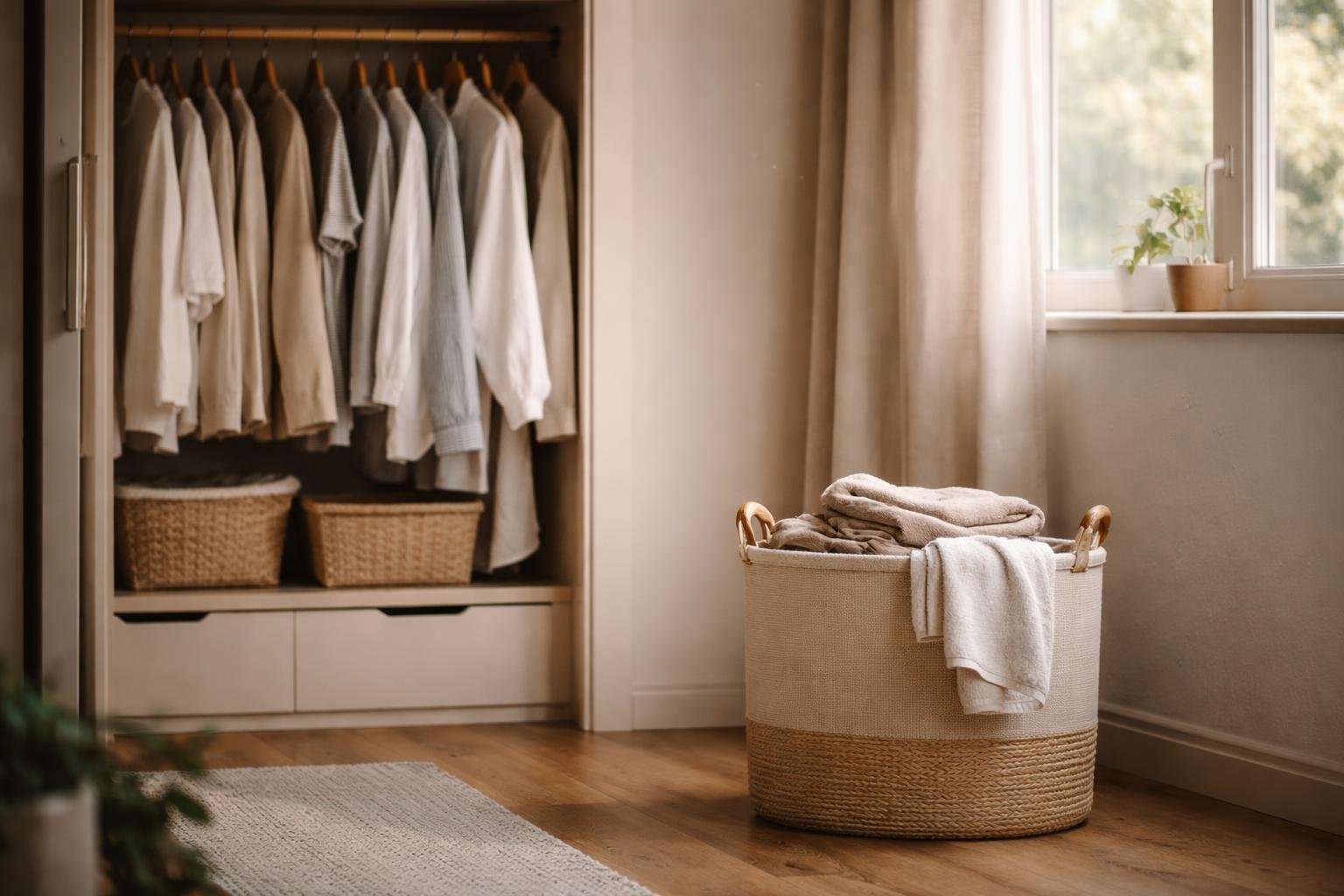
Clothes create the most persistent clutter in bedrooms because they exist in constant rotation between clean, worn, and dirty states. Managing this cycle requires both an initial reduction of total items and a functional system for clothes that fall between freshly laundered and ready for the wash.
Purge Clothes and Manage Closet Clutter
The average person wears 20% of their wardrobe 80% of the time. This means most closets contain clothes that serve no practical purpose but still demand mental energy every time someone opens the door.
Start by removing everything from the closet and dresser. Sort items into three categories: keep, donate, and discard. Items with stains, holes, or that haven’t been worn in a year should leave immediately.
For clothing organization and decluttering[9], arrange remaining items by category and frequency of use. Daily-wear clothes go at eye level, seasonal items go higher or lower, and special-occasion pieces can move to storage outside the bedroom entirely.
Use matching hangers to create visual calm. Clear plastic bins work better than cardboard boxes because they let someone see contents without opening them.
System for In-Between Clothes
The pile of clothes on the chair or floor happens when people lack a designated spot for items that aren’t dirty enough for the hamper but aren’t clean enough to return to the closet.
Elevate Your Health for Just $29.99/Month
Join the Precision Wellness Subscription at My Healing 365 and get discounted services, priority coaching access, virtual care, and exclusive wellness resources to support your physical, emotional, and hormonal health.
Join for $29.99/MonthInstall a small hook or wall-mounted rack[2] specifically for these in-between items. Limit this space to three items maximum. When it fills up, everything either gets worn again or goes into a laundry hamper with a lid.
A lidded laundry hamper prevents visual clutter from dirty clothes while keeping them contained. Place it inside the closet or bathroom rather than in plain view. This simple change removes the unfinished-task trigger that interferes with sleep preparation.
Maintaining a Decluttered, Sleep-Friendly Bedroom
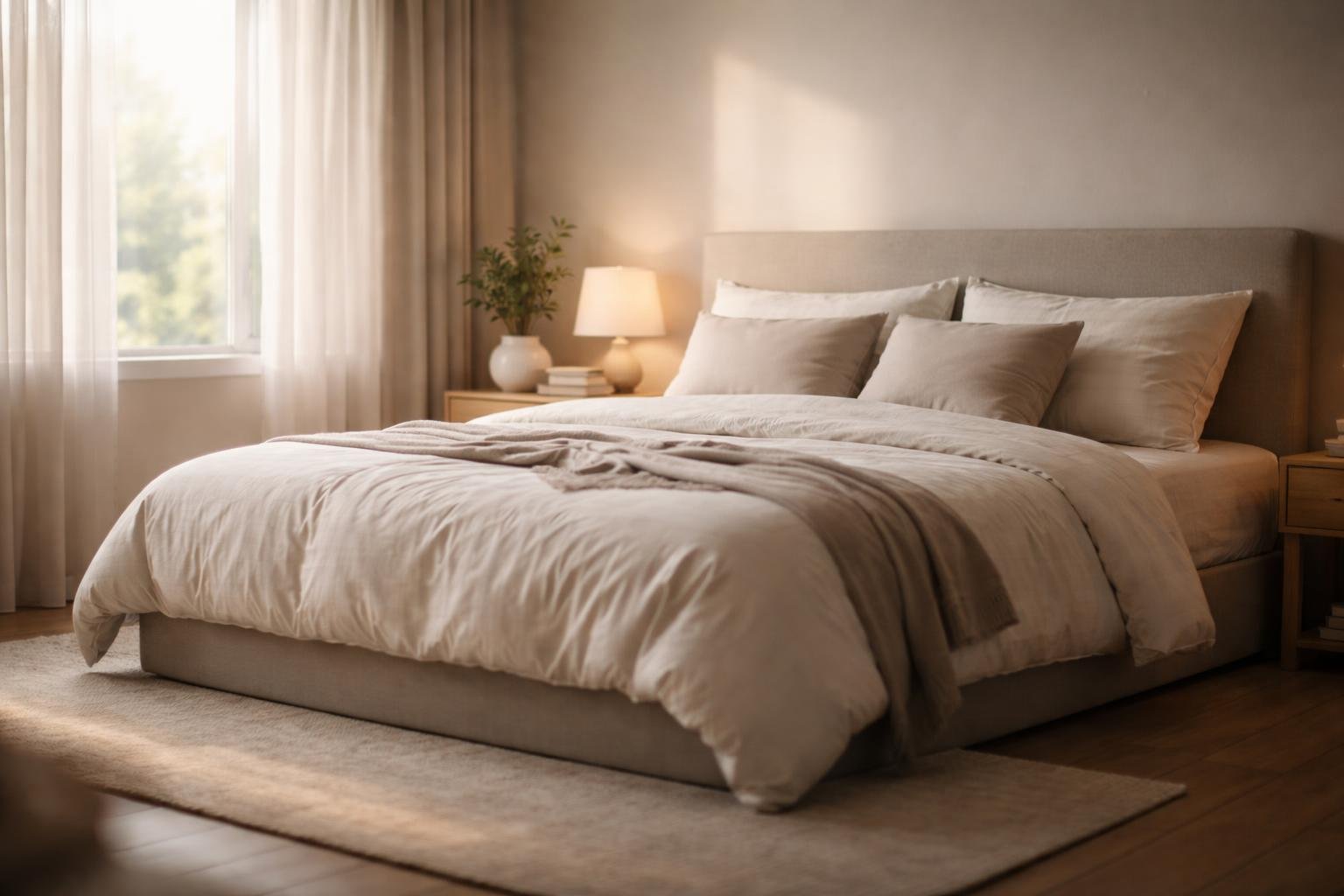
Keeping a bedroom clutter-free requires consistent habits and intentional choices about what enters the space. Simple daily actions and mindful shopping decisions help preserve the calm environment needed for quality rest.
Daily and Weekly Routines
Making the bed each morning takes less than five minutes but instantly transforms the room’s appearance. A beautifully made bed helps not just the room feel airy and less cluttered, but your mind, too[10], which supports better sleep.
Setting aside 10 minutes each evening to reset the bedroom prevents clutter from accumulating. This includes:
- Putting clothes in the hamper or back in the closet
- Clearing nightstands of unnecessary items
- Returning books, electronics, and personal items to their designated spots
- Removing dishes, cups, or food containers
A weekly routine should include vacuuming or sweeping floors, wiping down surfaces, and checking for items that don’t belong in the bedroom. Laundry should be put away within 24 hours of folding to prevent piles from forming on chairs or the bed.
Limiting Incoming Items
One effective strategy involves the one-in-one-out rule. When someone brings a new item into the bedroom, they remove something else. This prevents gradual accumulation over time.
Shoppers should pause before purchasing bedroom items and ask whether each piece serves a specific purpose. Impulse buys often become visual clutter that disrupts the bedroom environment.
The bedroom shouldn’t serve as storage for items belonging elsewhere in the home. Office supplies, hobby materials, and seasonal decorations belong in dedicated storage areas. Keeping only sleep-related items in the bedroom maintains its primary function as a rest space.
Gift-givers should be redirected toward consumable items or experiences rather than objects that take up physical space.
Designing a Calming Bedroom Environment
Neutral colors on walls and bedding create a more restful atmosphere than bright or busy patterns. Soft blues, grays, greens, and earth tones promote relaxation.
Visible storage should be minimal. Closed cabinets and drawers hide necessary items while maintaining clean sight lines. Open shelving should display only a few carefully chosen pieces rather than collections of objects.
Lighting plays a crucial role in creating calm. Harsh overhead lights can be replaced with softer bedside lamps or dimmable fixtures. Blackout curtains block external light that disrupts sleep cycles.
The bedroom should contain only essential furniture. A bed, nightstand, and dresser usually suffice. Extra chairs often become clothes-dumping spots that add to visual clutter.
Plants can add life without creating mess, though they should be limited to one or two low-maintenance varieties. Electronic devices should be removed or kept in drawers when not actively charging.
Frequently Asked Questions
People often struggle with where to start when decluttering their bedrooms and how to maintain progress once they begin. These common questions address practical strategies for different situations and time constraints.
What are the most effective steps to declutter a bedroom in one day?
The fastest approach is to start by removing items that don’t belong in the bedroom[11] like trash, dishes, and things that should live in other rooms. This creates immediate visual improvement and frees up space to work.
Next, tackle clothing since it takes up the most space and creates the biggest piles. Sort through wardrobes, drawers, and any clothes on chairs or floors. Remove items that don’t fit, haven’t been worn in over a year, or are damaged beyond repair.
After clothing, focus on flat surfaces like nightstands, dressers, and floors. Put away items that have proper homes elsewhere and find designated spots for things that need to stay in the bedroom.
The final step involves organizing what remains into proper storage solutions. Use drawer dividers, closet organizers, or bins to keep similar items together and easy to find.
What should be included in a practical bedroom decluttering checklist?
A comprehensive bedroom decluttering checklist[12] should cover all major areas where clutter accumulates. Start with entry points like the floor near the door and any chairs or benches where items get dropped.
The checklist needs to include all clothing storage areas: closets, dressers, under-bed storage, and any overflow spots. Each drawer and shelf should be reviewed individually.
Flat surfaces require their own checklist items. This includes nightstands, dressers, windowsills, and any shelving units in the room.
Under the bed, inside closets, and the top of wardrobes are often-forgotten spaces that need attention. These areas tend to become cluttered because they’re out of sight.
How can you declutter your room fast without making a bigger mess?
The key is to work in zones rather than pulling everything out at once. Pick one small area like a single drawer or one shelf and complete it fully before moving to the next spot.
Use three containers or bags labeled keep, donate, and trash. This system prevents items from spreading across the room and eliminates the need to make multiple trips.
Set a timer for focused 15-minute sessions. This prevents fatigue and keeps the momentum going without creating overwhelming piles that need to be dealt with later.
Put items back immediately after deciding to keep them. Don’t create a separate “put away later” pile that adds to the mess.
How do you declutter a bedroom step by step when you have ADHD?
Breaking the task into very small, specific steps helps prevent overwhelm. Instead of “organize closet,” the step becomes “sort through one shelf of t-shirts.”
Visual timers work better than mental commitments. Setting a timer for 10-15 minutes creates a clear endpoint and makes starting feel less daunting.
Having a body double—someone present while working—can increase focus and follow-through. They don’t need to help physically, just be in the room.
Starting with the most obvious items first builds momentum. Trash, dirty dishes, and items that clearly belong in other rooms provide quick wins that motivate continued progress.
Clear containers and labels reduce the mental load of remembering where things belong. When everything has a visible, labeled home, putting things away requires less executive function.
What is the 12-12-12 rule in decluttering, and how do you apply it to a bedroom?
The 12-12-12 rule involves finding 12 items to throw away, 12 items to donate, and 12 items to return to their proper place. This creates a manageable goal that produces visible results.
In a bedroom, trash items might include expired medications from the nightstand, old receipts, broken hangers, worn-out socks, or empty product containers. These are easy decisions that don’t require much thought.
Donation items could be clothes that no longer fit, duplicate items like extra phone chargers, books that won’t be read again, or decorative items that no longer match personal style. The 12-item limit makes letting go feel less permanent.
Items to return to their proper place might include dishes that belong in the kitchen, bathroom products, office supplies, or items borrowed from other household members. This category restores order quickly.
What are the biggest decluttering mistakes that keep bedrooms feeling cluttered?
Using open storage instead of closed containers[11] creates visual clutter even when items are organized. Nightstands with drawers work better than open shelves for keeping small items hidden.
Overfilling storage spaces makes it impossible to keep things tidy. When drawers and closets are packed too full, items overflow onto chairs, floors, and other surfaces.
Skipping the daily reset allows clutter to rebuild quickly. Leaving glasses, empty product bottles, and dirty clothes to pile up for days undoes decluttering progress.
Turning under-bed space into unorganized storage creates dust accumulation and makes items hard to access. If under-bed storage is necessary, closed containers work better than open bins.
Keeping too many decorative items on surfaces takes away from the calm feeling a bedroom should provide. Each item displayed adds visual noise that can interfere with relaxation and sleep quality.
Post Views: 6
References
- How to Declutter Your Bedroom for Better Sleep. https://fortheloveofsimple.com/how-to-declutter-your-bedroom/ Accessed April 21, 2026
- Decluttering involves. https://www.bhg.com/decorating/storage/projects/declutter-your-bedroom/ Accessed April 21, 2026
- 17 Ways to keep your bedroom clutter-free for better sleep – Decluttering Mom. https://declutteringmom.com/17-ways-to-keep-your-bedroom-clutter-free-for-better-sleep/ Accessed April 21, 2026
- effective strategies for creating an organized space. https://www.southernliving.com/how-to-declutter-bedroom-11705222 Accessed April 21, 2026
- room-by-room approach. https://www.thespruce.com/how-to-declutter-your-home-2648002 Accessed April 21, 2026
- How to declutter your bedroom. https://www.ikea.com/us/en/rooms/bedroom/how-to/how-to-declutter-your-bedroom-in-8-easy-steps-pub4d181ae0/ Accessed April 21, 2026
- Reduce Bedroom Clutter for a Calm Bedroom. https://www.ikea.com/us/en/rooms/bedroom/decluttering-for-improved-sleep-pubb98eac81/ Accessed April 21, 2026
- Smart Storage Solutions for an Organized Bedroom. https://homeremodelingexpert.com/smart-bedroom-storage/ Accessed April 21, 2026
- clothing organization and decluttering. https://www.thespruce.com/cutting-clutter-in-your-bedroom-2647994 Accessed April 21, 2026
- 9 easy ways to declutter a bedroom, according to experts. https://www.homesandgardens.com/interior-design/bedrooms/how-to-declutter-your-bedroom Accessed April 21, 2026
- start by removing items that don’t belong in the bedroom. https://www.womenshealthmag.com/uk/health/a65045388/declutter-bedroom/ Accessed April 21, 2026
- Declutter Your Bedroom with This Step-by-Step Checklist. https://tidyhomeguide.com/decluttering-bedroom-checklist/ Accessed April 21, 2026