Medically Reviewed
Dr. Jose Rossello, MD, PhD, MHCM
Preventive Medicine & Public Health Specialist
Last Reviewed: April 30, 2026
Your hair deserves the same care and attention you give the rest of your body, but salon treatments can be expensive and time-consuming. The good news is that effective hair care doesn’t require fancy products or professional appointments. Most people already have the ingredients needed to create powerful hair treatments right in their kitchen, from coconut oil and honey to avocados and eggs.
Making DIY hair masks at home[1] offers a natural, affordable way to address common hair concerns like dryness, damage, frizz, and lack of shine. These homemade treatments work because they use simple, natural ingredients that penetrate the hair shaft and nourish from within. Whether someone has curly hair that needs extra moisture, oily hair that needs balancing, or color-treated hair that needs protection, there’s a DIY solution that fits.
The following eight hair masks use ingredients found in most kitchens and take just minutes to prepare. Each recipe targets specific hair needs and can be customized based on hair type and length. With regular use, these natural hair treatments[2] can transform dry, damaged strands into healthy, shiny hair.
Table of Contents
Key Takeaways
- Homemade hair masks use affordable kitchen ingredients like coconut oil, honey, and avocado to treat various hair concerns
- Different recipes target specific issues including dryness, damage, frizz, oily hair, and lack of volume
- Regular application of DIY hair masks can improve hair health, shine, and texture without expensive salon treatments
Benefits of Using Homemade Hair Masks
Homemade hair masks offer real advantages over commercial products, from cost savings to ingredient control. Natural kitchen ingredients like eggs, oils, and honey contain proteins, fatty acids, and vitamins that genuinely nourish hair without harsh chemicals.
Elevate Your Health for Just $29.99/Month
Join the Precision Wellness Subscription at My Healing 365 and get discounted services, priority coaching access, virtual care, and exclusive wellness resources to support your physical, emotional, and hormonal health.
Join for $29.99/MonthWhy Choose DIY Hair Masks Over Store-Bought
DIY hair masks cost a fraction of salon treatments while delivering comparable results. A single store-bought mask can cost $15 to $50, while homemade versions use ingredients that cost pennies per application.
People know exactly what goes into homemade hair masks[3], which matters for those with sensitive scalps or ingredient concerns. Commercial products often contain silicones, sulfates, and preservatives that coat hair temporarily but don’t provide lasting nourishment.
Natural ingredients work without unnecessary fillers. Eggs, olive oil, and honey have been used for centuries because they actually penetrate the hair shaft rather than just sitting on the surface. Someone can customize masks to their specific hair type and concerns, adjusting ingredients based on whether hair is dry, oily, damaged, or color-treated.
Key Ingredients and Their Natural Benefits
Eggs provide protein that hair needs since hair is primarily made of keratin. The proteins temporarily fill gaps in damaged cuticles. Egg yolks contain fatty acids and vitamins A, D, and E.
Coconut oil penetrates the hair shaft better than most other oils. It reduces protein loss and protects hair from damage during grooming and chemical treatments.
Olive oil is rich in oleic acid and vitamin E. Its molecular structure allows it to moisturize hair effectively[4] while smoothing the cuticle to reduce frizz.
Honey acts as a humectant, drawing moisture from the air into hair strands. It contains antioxidants and has antibacterial properties that benefit scalp health.
Avocado delivers healthy fats, vitamins B and E, and biotin. These nutrients intensely moisturize dry hair and promote strength.
How Hair Masks Promote Hair Growth and Repair
Hair masks improve the condition of existing strands, which indirectly supports hair growth by reducing breakage. When hair breaks less, people retain more length over time.
Ingredients that support scalp health[5] create better conditions for healthy hair growth. Coconut oil and other nourishing ingredients improve scalp circulation and reduce inflammation that can interfere with follicle function.
The proteins in eggs and yogurt help repair damaged hair by filling in cracks along the hair shaft. Fatty acids from oils like olive and coconut strengthen the hair structure from within. Vitamin E acts as an antioxidant, protecting hair from environmental damage.
Regular use of hair masks keeps strands hydrated and elastic, preventing the brittleness that leads to breakage. This protective effect is especially important for chemically treated or heat-styled hair. While masks won’t create new hair follicles, they maintain hair in optimal condition for achieving maximum length and thickness.
Essential Tips for Making and Applying Homemade Hair Masks
Getting the best results from homemade hair masks requires proper preparation, correct application timing, and basic safety measures. These simple guidelines help maximize benefits while avoiding common mistakes that can waste ingredients or damage hair.
How to Prepare and Apply Hair Masks Effectively
Always start with clean mixing bowls and utensils to prevent bacteria from contaminating the mask. Room temperature ingredients blend more easily than cold ones straight from the refrigerator.
For smooth application, use a blender or food processor to eliminate lumps from ingredients like bananas or avocados. Chunks can get stuck in hair and become difficult to rinse out.
Apply most DIY hair masks to damp hair[6] rather than soaking wet or completely dry strands. Damp hair absorbs treatments better while still allowing the mask to coat each strand properly.
Section hair into four parts before applying to ensure even coverage. Use fingers or a wide-tooth comb to distribute the mixture from roots to ends, depending on the mask’s purpose.
Cover treated hair with a shower cap or plastic wrap. The heat helps ingredients penetrate the hair shaft more effectively. Some people wrap a warm towel over the cap for extra heat activation.
Rinse with cool or lukewarm water first to remove the mask before shampooing. Hot water can cook egg-based masks or make oil-based treatments harder to remove.
How Often Should You Use DIY Hair Masks
Normal to oily hair types benefit from applying homemade hair masks once per week[7]. More frequent use can weigh down hair or create excess buildup on the scalp.
Dry or damaged hair can handle treatments twice weekly. Hair that feels greasy or heavy after masking needs less frequent applications.
Color-treated hair should stick to once-weekly masks focused on the mid-lengths and ends. Too much protein or moisture can cause color to fade faster than normal.
People targeting specific issues like dandruff or hair growth can use specialized treatments like apple cider vinegar rinses or castor oil masks twice per week. Monitor how the scalp responds and adjust frequency as needed.
Consistency matters more than intensity. Regular weekly treatments deliver better long-term results than occasional intensive sessions followed by long breaks.
Safety Precautions and Allergy Testing
Always perform a patch test before applying a new mask to the entire head. Mix a small amount of the recipe and apply it to the inner forearm or behind the ear.
Wait 24 hours to check for redness, itching, or irritation. Skip ingredients that cause any negative reaction, even mild ones.
People with nut allergies should avoid almond oil, coconut products, and any tree nut-based ingredients. Egg allergies make protein masks unsafe.
Check ingredient expiration dates before mixing masks. Spoiled dairy products or rancid oils can cause scalp infections or unpleasant odors that linger in hair.
Never leave homemade masks on longer than recommended, especially those containing acidic ingredients like lemon juice or apple cider vinegar. Extended contact can damage the hair cuticle or irritate the scalp.
Store unused portions in the refrigerator for no more than three days. Most natural ingredient masks[8] lack preservatives and spoil quickly at room temperature.
8 Hair Masks You Can Make at Home
Natural ingredients from the kitchen can transform dry, damaged hair into healthy, shiny locks. These homemade hair mask recipes use simple combinations of oils, proteins, and natural moisturizers to address common hair concerns like dehydration, breakage, and frizz.
Avocado and Coconut Oil Mask for Deep Hydration
This coconut oil hair mask[6] combines the moisture-rich properties of avocado with the penetrating power of coconut oil. The mask works because avocado contains fatty acids and vitamins that enter the hair shaft, while coconut oil locks in moisture.
To make this mask, users should mash one ripe avocado until smooth, then mix in two tablespoons of coconut oil and one tablespoon of honey. The mixture should be applied from roots to tips on damp hair.
After wrapping the hair in a warm towel, the mask needs to sit for 30 minutes. This allows the fatty acids to fully absorb into each strand. The mask rinses out with cool water, leaving hair softer and more hydrated than before.
Egg and Olive Oil Mask for Strength and Shine
Eggs provide proteins that strengthen weak or thinning hair. This mask combines one whole egg with two tablespoons of olive oil to create a treatment that adds both strength and shine.
The proteins in eggs work to repair the hair shaft and make strands appear fuller. Olive oil adds moisture and helps the hair reflect more light for a shinier finish. Users should whisk the egg thoroughly before adding the olive oil and optional honey.
The mixture gets applied to damp hair with gentle massage into the scalp. After 20 minutes, it must be rinsed with cool water only. Hot water will cook the egg and make it difficult to remove from hair.
Honey and Yogurt Mask for Intense Moisture
Honey acts as a natural humectant that attracts and holds moisture in the hair. When combined with yogurt, this mask delivers intense hydration plus the strengthening benefits of protein.
To prepare this homemade hair mask[7], mix one-quarter cup of raw honey with one-quarter cup of plain, full-fat yogurt. One teaspoon of lemon juice can be added for extra shine.
The mask works best on damp hair, especially on dry ends. A shower cap keeps the mixture in place during the 20 to 30 minute treatment time. The result is shiny hair with improved softness and manageability.
Banana and Almond Oil Mask for Frizz Control
Bananas contain natural oils and potassium that smooth the hair cuticle and reduce frizz. Almond oil adds fatty acids that coat each strand for a sleeker appearance.
One ripe banana should be blended until completely smooth to avoid chunks in the hair. Two tablespoons of almond oil and one tablespoon of honey get mixed into the banana paste. The smooth consistency makes application easier from roots to ends.
This DIY treatment for frizzy hair[8] needs 30 minutes under a warm towel to work effectively. The warmth helps the ingredients penetrate better. After rinsing with cool water, hair appears smoother with noticeably less frizz, even in humid conditions.
Specialized DIY Hair Masks for Specific Hair Concerns
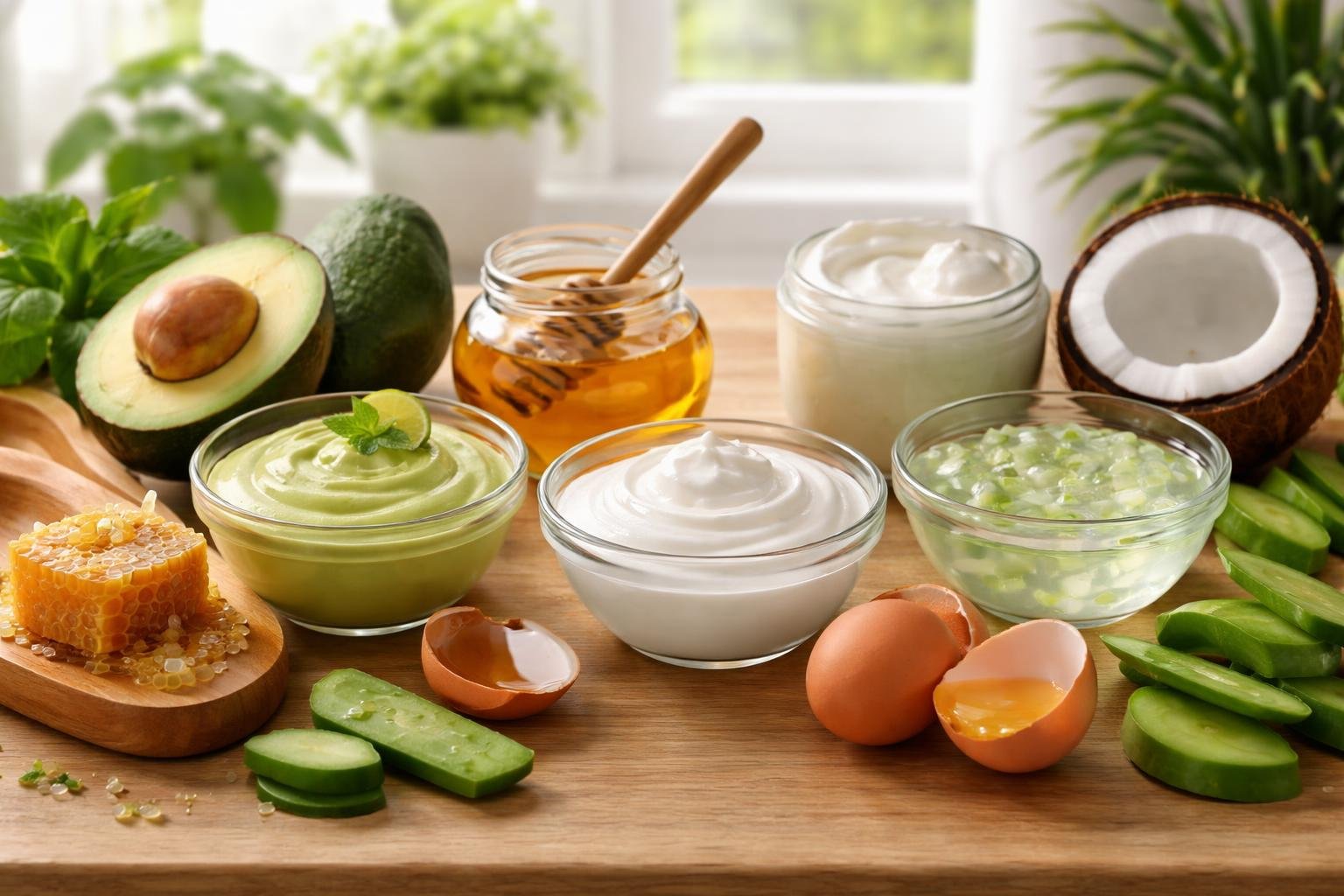
Certain hair issues need targeted treatments that go beyond basic conditioning. Castor oil strengthens weak strands, apple cider vinegar clarifies product buildup, and lemon juice tackles excess sebum production at the scalp.
Castor Oil Mask for Hair Growth and Thickness
Cold-pressed castor oil contains omega-6 fatty acids that penetrate the hair shaft and strengthen it from within. The oil’s thick consistency coats each strand to reduce breakage and improve overall texture.
Vitamin E in castor oil protects hair from free radical damage that can weaken follicles. The antioxidants work to create a healthier environment for hair growth.
To make this mask for strengthening weak hair[9], warm one teaspoon of castor oil for about 10 seconds until it reaches a comfortable temperature. Massage the oil directly into the scalp using circular motions, then work it down the length of each strand. Leave the treatment on for 15 minutes before washing it out thoroughly with shampoo.
The oil’s thick nature means it requires extra rinsing to avoid leaving residue behind.
Apple Cider Vinegar Rinse for Clarity and Shine
An apple cider vinegar rinse removes product buildup and restores the scalp’s natural pH balance. The antibacterial and anti-fungal properties clean the scalp while adding shine to dull strands.
Mix one part raw apple cider vinegar with three parts lukewarm water. Add 3-5 drops of peppermint oil to combat the vinegar’s strong smell and provide additional scalp benefits.
After shampooing, skip the conditioner and towel dry hair until damp. Massage the mixture thoroughly into the scalp and work it through to the ends. Let it sit for 15-30 minutes, then rinse with lukewarm water.
This clarifying treatment works best[10] when used once a week for people who use heavy styling products. Those who rarely use products can apply it monthly for maintenance.
Lemon and Egg White Mask for Oily Scalp
Lemon juice acts as a natural astringent to remove excess oil from the scalp. Protein enzymes in egg whites help balance sebum production while tightening pores.
Combine two egg whites with two tablespoons of fresh lemon juice. Whisk the mixture until it forms a consistent texture without lumps.
Apply the mask directly to the scalp, focusing on areas that feel greasy. Use fingertips to massage it in gently, then distribute any remaining product through the mid-lengths of hair. Cover with a shower cap and leave on for 20 minutes.
Rinse with cool water to prevent the eggs from cooking. The cool temperature also helps seal the hair cuticle for added shine. Follow with a light conditioner on the ends only if needed.
Choosing the Best Hair Mask Recipe for Your Hair Type
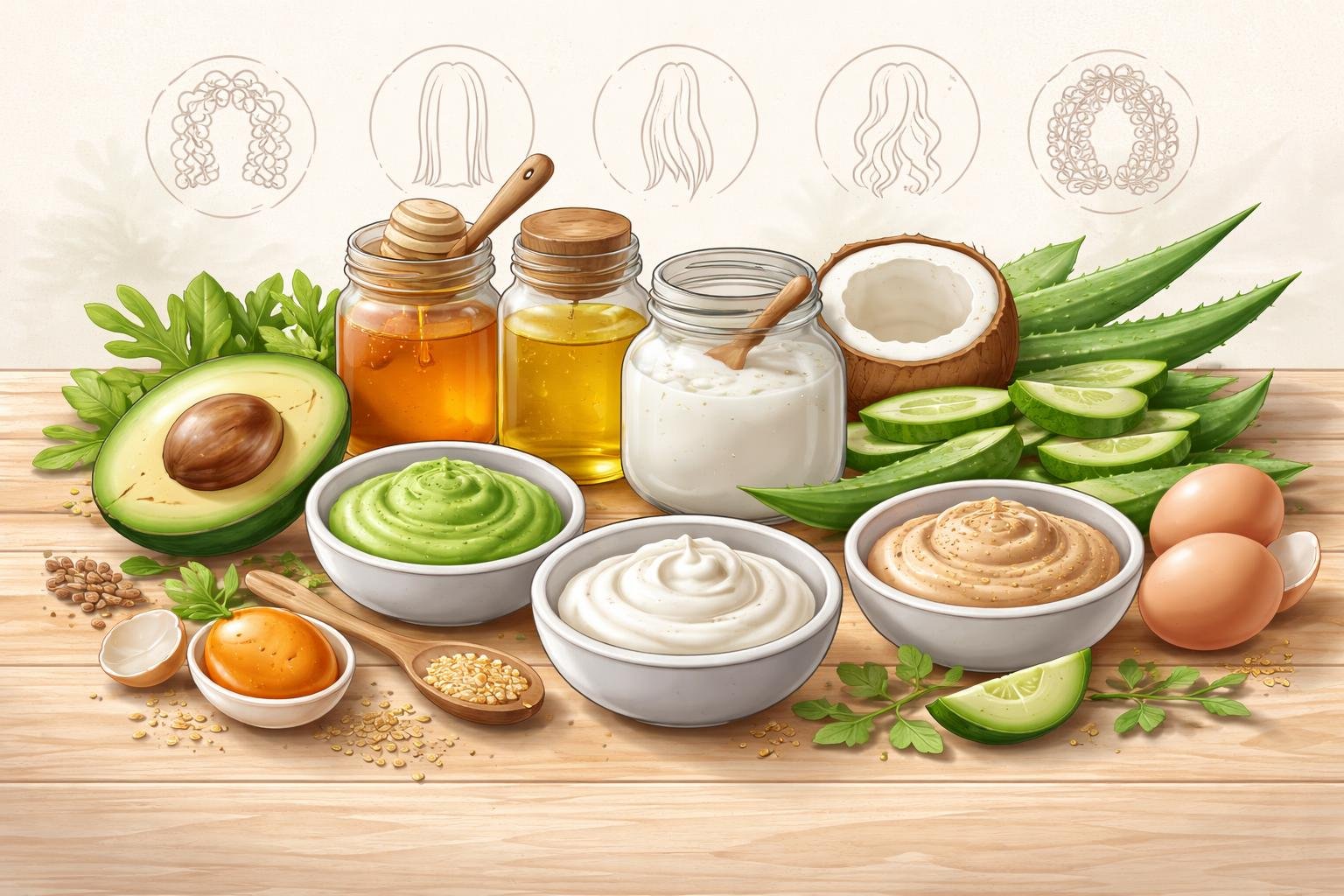
Different hair conditions need different ingredients to get real results. Matching your mask to your specific needs makes the difference between wasted time and visible improvement.
Masks for Dry or Damaged Hair
Dry and damaged hair needs ingredients that can penetrate deep and seal in moisture. Coconut oil works well because it gets inside the hair shaft to reduce protein loss and add flexibility. Avocado brings healthy fats and vitamins that smooth rough cuticles and add softness.
A simple recipe combines half a ripe avocado with two tablespoons of coconut oil and one tablespoon of honey. Mash the avocado until completely smooth to avoid chunks. Mix in the warmed coconut oil and honey until blended.
Apply this mask from mid-lengths to ends, then work any leftover product toward your roots. Cover with a shower cap and leave on for 20 to 30 minutes. The honey pulls in moisture while the oils lock it in.
Rinse with warm water first, then shampoo thoroughly. You might need two washes to remove all the oil. This combination helps repair damaged hair[10] by rebuilding weak spots and restoring natural shine.
Masks for Oily or Fine Hair
Oily and fine hair gets weighed down easily, so lighter ingredients work best. Egg whites contain protein without heavy oils. Lemon juice helps cut through grease and balance your scalp’s oil production.
Mix one egg white with one tablespoon of lemon juice and two tablespoons of plain yogurt. The yogurt adds mild lactic acid that gently removes buildup without stripping your hair.
Apply only to your scalp and roots where oil builds up most. Avoid the ends unless they also feel greasy. Leave the mask on for 15 to 20 minutes.
Rinse with cool water to prevent the egg from cooking onto your hair. Follow with a light shampoo. This recipe helps remove excess oil while adding strength and volume.
Fine hair responds well to weekly treatments. Too much can make hair feel coated or limp.
Masks for Color-Treated or Chemically-Processed Hair
Color-treated hair needs gentle care that won’t strip dye or damage already-stressed strands. Olive oil protects color while smoothing the cuticle. Banana adds potassium and natural oils without harsh chemicals.
Mash one ripe banana until no lumps remain. Add two tablespoons of olive oil and one tablespoon of honey. Blend thoroughly so the banana spreads evenly.
Work this mask through damp hair, focusing on areas that feel most processed or brittle. The olive oil creates a protective layer that helps lock in color and adds shine. Banana softens without weighing hair down.
Leave on for 20 minutes under a shower cap. Rinse with lukewarm water, not hot, which can fade color faster. Shampoo gently with a sulfate-free formula.
This mask supports chemically-processed hair by adding back moisture and flexibility lost during coloring or relaxing treatments. Use it once a week to keep processed hair looking healthy between salon visits.
Pro Tips for Maintaining Healthy, Shiny Hair
Regular use of DIY hair masks for shiny and strong hair[11] works best when paired with a consistent routine and smart maintenance habits. Understanding when to apply treatments and which daily practices protect hair makes the difference between temporary improvements and lasting results.
Incorporating Hair Masks Into Your Routine
Most hair types benefit from using masks 1-2 times per week. People with dry or damaged hair can apply treatments twice weekly, while those with oily hair should limit use to once per week to avoid buildup.
The best time to use a hair mask is on freshly washed, damp hair. This allows ingredients to penetrate the hair shaft more effectively. Users should apply the mask from mid-length to ends, avoiding the scalp unless treating dandruff or dryness.
Key application tips include:
- Leaving masks on for 20-30 minutes for deep conditioning
- Using a shower cap to trap heat and boost absorption
- Rinsing with cool water to seal the cuticle and enhance shine
- Alternating between protein-rich and moisture-based masks to prevent imbalance
Consistency matters more than frequency. A regular schedule delivers better results than sporadic intensive treatments.
Maximizing Shine and Strength Over Time
Protecting hair between mask treatments helps maintain results. Using heat protectant spray before styling prevents damage that masks work to repair. Limiting heat tools to 2-3 times per week gives hair time to recover.
Daily habits support hair repair efforts. Sleeping on a silk pillowcase reduces friction that causes breakage. Brushing gently from ends to roots prevents unnecessary stress on strands.
Diet plays a role in hair health. Foods rich in omega-3 fatty acids, biotin, and vitamins A and E support strong, shiny hair from within. Drinking adequate water keeps hair hydrated between treatments.
Trimming ends every 8-12 weeks removes split ends before they travel up the hair shaft. This simple step helps homemade moisturizing ingredients[8] work more effectively by eliminating severely damaged portions.
Frequently Asked Questions
Making hair masks at home raises practical questions about ingredients, application methods, and expected results. Understanding which natural components work best for specific hair concerns helps create effective treatments that deliver salon-quality benefits.
What are the most effective ingredients for homemade hair masks for dry hair?
Avocado stands out as one of the most powerful ingredients for dry hair because it contains fatty acids and vitamins that penetrate the hair shaft. When mashed and combined with coconut oil, it creates a deeply hydrating treatment.
Honey works as a natural humectant, meaning it attracts and retains moisture in the hair. Mixing honey with full-fat yogurt creates a moisturizing mask that adds shine[6] while softening brittle strands.
Olive oil provides intense conditioning when mixed with other ingredients. It helps seal moisture into the hair cuticle and prevents future dryness.
Banana offers natural oils and potassium that smooth and hydrate parched hair. Blending it completely prevents chunks from getting stuck in the hair during application.
How can you create a hair mask at home for promoting hair growth and thickness?
Castor oil serves as the foundation for growth-promoting hair treatments[6] because it contains ricinoleic acid. This compound increases circulation to the scalp and stimulates hair follicles.
A basic growth mask combines three tablespoons of castor oil with one tablespoon of coconut oil and five drops of rosemary essential oil. The mixture should be applied directly to the scalp in sections, massaged gently for five minutes, then left on overnight.
Eggs provide protein that strengthens hair shafts and makes hair appear fuller. Whisking one whole egg with two tablespoons of olive oil creates a volumizing treatment that reduces breakage.
Applying these masks consistently once or twice per week produces better results than sporadic use. The scalp needs regular stimulation and nourishment to support healthy hair growth.
Can you make overnight hair masks at home and what are their benefits?
Overnight masks allow ingredients more time to penetrate the hair shaft and deliver nutrients. The extended application period increases the treatment’s effectiveness compared to shorter sessions.
The castor oil growth treatment works particularly well as an overnight mask. Wrapping the pillow in an old towel protects bedding from oil stains while the treatment works during sleep.
Coconut oil can be applied alone as an overnight deep conditioning treatment. It absorbs into the hair over several hours, providing intense hydration for very dry or damaged strands.
These extended treatments should not be used every night. Once or twice weekly applications prevent buildup and allow the scalp to maintain its natural oil balance.
Which homemade hair masks work best for curly hair types?
Greek yogurt combined with honey and olive oil[6] strengthens curly hair and reduces breakage. The protein in yogurt reinforces the hair shaft while the other ingredients add moisture.
Curly hair tends to be drier because natural oils from the scalp have difficulty traveling down spiral strands. Avocado and coconut oil masks address this issue by providing deep hydration directly to the hair.
Banana and almond oil create a smoothing effect that controls frizz without weighing down curls. The mixture should be blended completely smooth to avoid residue in textured hair.
Applying masks to damp rather than soaking wet hair helps the product adhere better to curly strands. Covering the hair with a shower cap traps heat and enhances absorption.
How do you prepare a hydrating mask using ingredients from your kitchen?
A simple hydrating mask requires one ripe avocado, two tablespoons of coconut oil, and one tablespoon of honey. Mashing the avocado until completely smooth prevents lumps that are difficult to rinse out.
The mixture should be applied from roots to tips on clean, damp hair. Wrapping the head in a warm towel for 30 minutes allows the ingredients to penetrate deeply.
Another hydrating option combines raw honey with plain full-fat yogurt[6] and a teaspoon of lemon juice. This mask works best when left on for 20 to 30 minutes under a shower cap.
Rinsing with cool water seals the hair cuticle and locks in moisture. Following up with a cool rinse adds extra shine to the finished result.
What natural recipes can you follow to achieve soft and shiny hair?
Mayonnaise creates an effective shine-boosting treatment when mixed with apple cider vinegar. Half a cup of full-fat mayonnaise combined with one tablespoon of vinegar coats the hair shaft and protects color-treated hair from fading.
The honey and yogurt combination delivers glossy results because honey attracts moisture while yogurt provides protein. Adding one teaspoon of lemon juice enhances shine without causing dryness.
Egg masks contribute to softness through their high protein content. Mixing one whole egg with two tablespoons of olive oil and applying it to damp hair for 20 minutes strengthens strands while adding luster.
Rinsing all egg-based masks with cool water prevents the protein from cooking onto the hair. Hot water turns egg into a sticky residue that becomes difficult to remove.
Post Views: 22
References
- 8 DIY Hair Masks That You Can Make At Home –. https://www.the-bella-vita.com/8-diy-hair-masks-that-you-can-make-at-home/ Accessed May 6, 2026
- 8 DIY Hair Care Recipes That Actually Help Dry & Damaged Hair. https://natural-alternative-therapies.com/homemade-natural-hair-products/ Accessed May 6, 2026
- homemade hair masks. https://www.goodhousekeeping.com/beauty/hair/g29627145/diy-hair-masks/ Accessed May 6, 2026
- DIY Hair Masks: 8 Easy Recipes for Every Hair Type (Using Kitchen Ingredients). https://www.workingal.com/articles/easy-and-affordable-homemade-hair-masks Accessed May 6, 2026
- Homemade Hair Mask For Hair Growth And Thickness: Natural DIY Recipes That Work. https://www.olivaclinic.com/blog/homemade-hair-mask-for-hair-growth-and-thickness/ Accessed May 6, 2026
- 8 Easy DIY Hair Masks Experts Swear By. https://www.coloredhaircare.com/diy-hair-mask-recipes/ Accessed May 6, 2026
- DIY Hair Masks: 10 Homemade Recipes with Natural Ingredients. https://www.tuasaude.com/en/diy-hair-mask/ Accessed May 6, 2026
- 10 Simple Homemade Hair Masks for Healthy Locks in 2026. https://therighthairstyles.com/best-diy-hair-masks/ Accessed May 6, 2026
- mask for strengthening weak hair. https://www.prevention.com/beauty/hair/a32407529/diy-hair-masks/ Accessed May 6, 2026
- Best Homemade Hair Masks for Every Hair Type and Need (2026). https://theglossylocks.com/homemade-hair-masks/ Accessed May 6, 2026
- 8 DIY Hair Masks For Shiny And Strong Hair. https://news.abplive.com/photo-gallery/health/8-diy-hair-masks-for-shiny-and-strong-hair-1745423 Accessed May 6, 2026

























