My medical history can sound almost unbelievable, even to me. In 2017, I underwent a spinal procedure during which the surgeon operated on the wrong part of my back, leaving me with two herniating intervertebral discs instead of one. During my post-surgical downtime, I began to wonder what I might contribute as a doctor, so applied for medical school.
It was going reasonably well until I woke up one morning with functional loss in my right foot. It turned out a bit of wayward disc had started compressing one of my spinal nerve roots, resulting in permanent neurological damage. A couple of years later, during final exams for medical school, I had a funny turn and discovered a benign but nasty tumour at the base of my brain. After careful consideration, I eventually had surgery to remove it.
It’s interesting to straddle the space between doctor and patient. To have a foot in both camps and critically examine each experience. Here are a few of the lessons I’ve learned along the way.
Table of Contents
Good bedside manner can be healing
Sometimes I meet doctors who dismiss bedside manner as secondary to clinical knowledge, but I think that’s nonsense. As a patient, I’d always prefer the clinician who is kind, inclusive and upfront about having to double-check something over someone who’s abrupt and dismissive but able to rapidly recall medical facts.
We have no concrete idea the extent to which positive interpersonal interactions impact health, but I wouldn’t be surprised if it’s profound. Does clear, reassuring communication help ease high blood pressure? Does empathy help alleviate pain? We might never know, but I see the behavioural effects of bedside manner daily.
Kindness and inclusivity encourage people to participate in their healthcare by asking questions, understanding their treatment, adhering to medication regimens and enhancing health-seeking behaviours for the future, which all have a positive impact on a person’s health.
Everybody looks things up, and that’s fine
Long before a career in medicine was on my radar, I would sometimes visit the GP and watch with a raised eyebrow as they appeared to Google my ailment and decide how to treat it based on their internet search. I’ve heard the same complaint from others, the implication being that, with a sufficiently stable internet connection, we could dispense with GPs altogether. Fast-forward a few years and I now know clinicians in hospitals and specialist clinics look things up all the time too, they’re just less likely to be sitting next to you when they do it.
Elevate Your Health for Just $29.99/Month
Join the Precision Wellness Subscription at My Healing 365 and get discounted services, priority coaching access, virtual care, and exclusive wellness resources to support your physical, emotional, and hormonal health.
Join for $29.99/MonthThe fact is medical professionals should be looking things up, because medical science is dynamic and evolving. Some things we thought we knew decades ago seem silly now. Guidelines change with new research, and your treatment should reflect that. Also, sometimes we just forget things, the same as everyone else. In my experience, doctors are usually checking a small part of the bigger picture: an obscure anatomical landmark or the correct dose of a medication to prescribe. Often, what appears to be a random internet search directs us to niche subscription websites that only medical professionals tend to use. Double checking an answer is a much safer approach than guessing, and doctors are still drawing on their medical training to synthesise all the information they find.
The emergency department is not necessarily diagnostic
Some years ago, I turned up to emergency with excruciating back pain wanting an MRI to see whether something terrible had happened (again). The doctors declined. They acknowledged something was clearly wrong but reassured me I wasn’t showing any signs of permanent functional loss, so they could safely discharge me home to follow up with my GP. At the time, I was furious – I wanted answers! – but now the roles have been reversed, I better understand the decision.
The emergency department is fundamentally a place to rule out or treat medical danger. People will always try to get to the bottom of things diagnostically, but sometimes the answer will be, we don’t quite know what this is, but we’re confident it’s not life-threatening and won’t cause permanent harm. If you’re well enough, you’ll be sent home to seek answers and further treatment in the community.
Uncertainty can be incredibly frustrating when you’re unwell, and it’s understandable to want to know what’s going on with your body. But our health system doesn’t always cater for the immediacy of that frustration.
Hospitals aren’t designed to be comfortable
I’ve spent quite a bit of time in hospitals over the years, so I understand that their lack of creature comforts can be disappointing. When you’re sick, you want good food, a warm bed and a solid night’s sleep. Hospitals are usually cold, noisy and notably absent a Michelin star. They aren’t designed with comfort in mind so much as safety. There are monitoring alarms, regular observation checks, scheduled medications and other patients to account for.
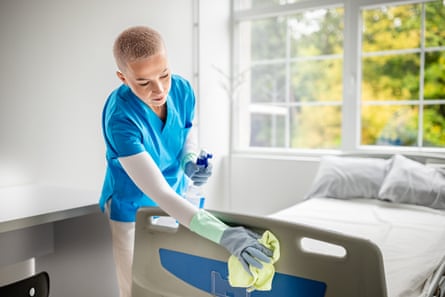
It’s probably best that hospitals aren’t designed to be too appealing because, despite aiming to optimise your health, they have a raft of hazards that might not be present in the community. Sometimes people are admitted with one issue – say, a broken bone – and pick up a few more along the way: a chest infection, a UTI, delirium. Especially as they get older. It’s one of many reasons we should always be lovely to cleaning staff, as they play a huge role in safety. Not all heroes wear capes – some carry mops and disinfectant wipes.
Health is not a passive activity
Every now and then someone asks, “Can you fix me, doc?” as if there was a magic bullet for their ailment. I understand the appeal of a quick fix, and there are elements of modern medicine that market themselves that way. I was quite sure surgery would be an easy cure for my spinal woes all those years ago, but now I know better. For most of us, health requires maintenance.
Certainly, doctors can prescribe medications and perform procedures, but that doesn’t mean you’re off the hook.
Staying active, eating a balanced diet and quitting smoking and alcohol will set you up for long-term health success. As will engagement with allied health teams and mental health services, which a good GP should be able to refer you to. All of that requires cost, access and effort, which sucks because when you’re sick you just want to feel looked after. But being an active participant in your own health can make a huge difference in the long term. Let modern medicine serve as a safety net in case you get into trouble health-wise rather than a menu of potential miracles.
Given the choice again, I would not have had that first spinal surgery. I would have gone to physiotherapy, scaled back any activity likely to exacerbate the initial injury and made sure to access mental health services when the pain peaked. That’s how I manage things now and, while my health hasn’t been perfect, it has been much better than it was in the aftermath of the botched operation.

























