
Whatever you think of alcohol, you have to admit that it’s versatile. Ever since the first humans started smashing up fruit and leaving it in pots to chug a few days later, we’ve been relying on it to celebrate and commiserate, to deal with anxiety and to make us more creative. We use it to build confidence and kill boredom, to get us in the mood for going out and to put us to (nonoptimal) sleep. Where most mind-altering substances have one or two specific use-cases, alcohol does the lot. That’s probably why it’s been so ubiquitous throughout human history – and why it can be so hard to give up entirely.
“We often call alcohol pharmacologically promiscuous,” says Dr Rayyan Zafar, a neuropsychopharmacologist from Imperial College London. “It doesn’t just calm you: it can stimulate reward pathways, dampen threat signals, release endogenous opioids that can relieve pain or stress, alter decision-making and shift mood, all at the same time.”
By way of comparison, we know that cocaine primarily acts on our dopamine and noradrenaline systems (which drive motivation, alertness and energy), MDMA primarily stimulates the release of serotonin and oxytocin (which elevate mood, empathy and social bonding), and opiates such as heroin work on the endorphin system (which induces deep relaxation and euphoria). Alcohol hits all of these, and also the two most common neurotransmitters in your nervous system: glutamate, which fires up your brain cells so they can send information, and gamma-aminobutyric acid (almost always shortened to Gaba), which slows down or blocks certain signals to help the brain relax.
“Alcohol gets to the brain within minutes, and the first thing it does is start shifting the balance between these two inhibitory and excitatory chemical messengers,” says Zafar. “It enhances Gaba and dampens glutamate, and so that early ‘buzzed’ feeling is a combination of your frontal cortex, the part of your brain responsible for judgment, restraint and self-monitoring, starting to go offline. That’s twinned with the release of dopamine and endorphins in the reward circuits that give you motivation, relaxation and energy. So people feel more relaxed, more talkative, less socially inhibited.”
As the concentration of alcohol in your bloodstream rises, it begins to affect deeper and more primitive brain regions – including the cerebellum, which coordinates movement, and the brainstem, which regulates basic functions like heart rate and breathing. “It progressively shuts down higher-order control systems first, and then the circuits that keep us physically coordinated,” says Zafar. This means that your speech slurs, your balance falters and your reaction times slow. If you ignore all the warning signs until your blood-alcohol levels get critical, it can slow down the brainstem so much that it forgets to tell your lungs to breathe or your heart to beat.
The Gaba-glutamate balance is also responsible for the anxious or depressed feeling many of us get the day after one too many, as the body overcorrects for the chemicals you’re putting into it. “While alcohol is in your system, the brain compensates for its sedative effects by ramping up its excitatory systems, particularly glutamate and the stress pathways,” saysZafar. “Once alcohol leaves your system, though, those compensatory systems don’t instantly switch off – instead, you’re left with a temporary rebound state of hyperexcitation. Stress hormones like cortisol can remain elevated, sleep architecture has been disrupted, and neurotransmitter systems are temporarily out of balance. The result is a brain that feels wired but depleted, anxious and restless.”
Another increasingly well-understood factor in alcohol’s effects on our mood is the gut-brain axis, or the communication network linking our central nervous system with our gastrointestinal tract.
Elevate Your Health for Just $29.99/Month
Join the Precision Wellness Subscription at My Healing 365 and get discounted services, priority coaching access, virtual care, and exclusive wellness resources to support your physical, emotional, and hormonal health.
Join for $29.99/Month“Alcohol can increase intestinal permeability, causing what is often called ‘leaky gut’ – allowing bacterial fragments to enter the bloodstream,” says Zafar. “These molecules trigger immune responses and low-grade inflammation, which can affect mood, cognition and fatigue via the gut-brain axis.” In heavy or chronic drinkers, this can cause longer-term health issues, many of which are likely linked to mood. And we also still have to contend with all the more well-established downsides of regular alcohol consumption, including liver disease, elevated blood pressure, disrupted sleep and an increased risk of several types of cancer.
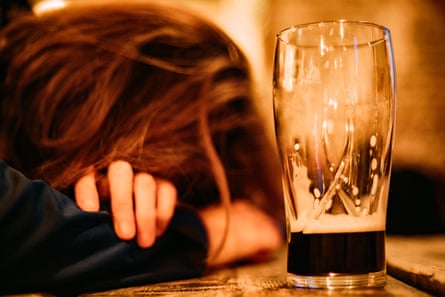
So where does this leave us, the apes still addicted to glugging the odd fermented-fruit extract after a long day at the office? Well, first, hopefully in a better position to appreciate the reason many of us do it in the first place. “I think the most helpful shift is to move away from thinking about alcohol – or any other psychoactive recreational drug – in moral terms, like ‘good’ or ‘bad’, ‘strong’ or ‘weak’,” says Zafar. “Alcohol works because it is biologically effective. It changes stress systems, reward circuits and social processing in ways that feel useful in the moment. Understanding the ‘why’ we need alcohol helps people become more intentional. Instead of asking, ‘Should I drink?’, a better question might be, ‘What am I using this drink for?’”
If the answer’s stress relief, social ease or switching off, we might realise that we don’t really need all that much of it to achieve the desired effect – or that we aren’t willing to deal with the neurochemical rebound it guarantees. We might set ourselves simple “rules” for when – and how much – we’ll drink, to ensure that we stay under the NHS-recommended maximum of 14 units a week. We also, of course, might realise that something else would do the same job better – whether that’s a mocktail, some deep breathing, a cold plunge or a hot shower. We might find alternatives for the thing we drink with dinner, or when we’re out with friends, or after a hard day. Alcohol might be the most versatile mood-altering tool available, but that’s the great thing about modern living: we’ve got loads of new ones.

























