Medically Reviewed
Dr. Jose Rossello, MD, PhD, MHCM
Preventive Medicine & Public Health Specialist
Last Reviewed: April 29, 2026
Your bedroom should be more than just a place to sleep. It should actively support the rest your body needs. The right bedroom design choices can directly impact how quickly you fall asleep, how deeply you rest, and how refreshed you feel in the morning.
A 5-bedroom house plan[1] offers unique opportunities to create sleep-friendly spaces that go beyond basic furniture placement. With multiple bedrooms to design, homeowners can test different approaches and discover which elements truly make a difference. The extra rooms in five bedroom house plans[2] also provide flexibility for dedicated relaxation zones, quiet home offices, and guest spaces that don’t interfere with the primary sleeping areas.
From strategic furniture placement to thoughtful material choices, small design decisions add up to create environments that help the nervous system wind down naturally. These proven bedroom design strategies work whether someone is planning a new five-bedroom home or updating existing spaces to better support quality sleep.
Table of Contents
Key Takeaways
- Strategic bedroom layouts with proper bed placement and screen-free zones create environments that signal safety and promote natural relaxation
- Natural materials like linen bedding and wood finishes combined with layered lighting support healthy sleep patterns better than synthetic alternatives
- Five-bedroom floor plans offer flexibility to separate active spaces from quiet sleeping areas while accommodating home offices and multi-generational living needs
Choosing the Right 5-Bedroom Floor Plan for Better Rest
The layout of a home directly affects how well everyone sleeps at night. A well-designed floor plan separates noisy areas from quiet bedrooms and gives each person enough private space to unwind.
Optimizing Bedroom Placement and Privacy
The location of bedrooms within 5 bedroom floor plans[2] plays a major role in sleep quality. The primary suite should sit far from high-traffic areas like kitchens, living rooms, and entryways. Many five-bedroom house plan[1] designs place the main bedroom on the opposite side of the home from secondary bedrooms.
This separation works well for families with teenagers or guests who keep different schedules. Bedrooms positioned along exterior walls typically receive better natural light and ventilation than those tucked in the center of the house.
Key placement strategies include:
- Clustering children’s bedrooms together while isolating the primary suite
- Placing guest rooms near their own bathroom and away from family sleeping areas
- Avoiding bedroom placement directly above or below kitchens and living rooms
- Positioning bedrooms away from garage doors and main entries
Two-story layouts often dedicate the entire upper level to sleeping quarters. This creates a natural buffer between daytime activities downstairs and nighttime rest above.
Balancing Shared and Personal Spaces
5 bedroom floor plans[3] ranging from 2,800 to 4,500 square feet need thoughtful organization of communal and private zones. An open floor plan works well for entertaining but requires careful boundaries to protect bedroom quietness.
The best layouts create transition zones between active and restful spaces. A hallway, mudroom, or foyer acts as a sound buffer between the main living area and sleeping quarters. Homes with flex rooms or lofts give family members space to spread out without disturbing those who need sleep.
Effective zoning includes:
- Dedicated hallways that separate bedroom wings from living spaces
- Upstairs lofts or bonus rooms for activities that might disrupt sleep
- Strategic bathroom placement so multiple people can use facilities without entering bedroom hallways
- Home offices or studies positioned away from bedroom corridors
Soundproofing Considerations for Tranquility
Sound control makes the biggest difference in sleep quality across 5-bedroom house plan[4] designs. Bedrooms should never share walls with laundry rooms, bathrooms, or media rooms when possible.
Interior walls between bedrooms benefit from extra insulation and staggered stud construction. Solid core doors block more noise than hollow alternatives. Bedrooms located above garages need additional floor insulation to minimize sound transfer from car doors and garage door openers.
HVAC systems require proper sizing and quality ductwork to prevent noise from traveling between rooms. Ceiling fans in each bedroom reduce the need to adjust the thermostat at night, which can create disruptive sounds throughout the house.
Critical soundproofing elements:
| Feature | Benefit |
|---|---|
| Double-layer drywall | Reduces sound transmission by 40-50% |
| Insulated interior walls | Absorbs noise between adjacent rooms |
| Carpeted hallways | Dampens footsteps and voices |
| Weather-stripped doors | Blocks sound gaps around frames |
Windows with dual-pane glass keep external noise from traffic or neighbors from entering bedrooms. Closets positioned along shared walls create natural sound barriers between sleeping spaces.
Key Features That Support Quality Sleep Environments
Multi-bedroom homes require thoughtful planning beyond the primary suite to ensure every occupant and visitor enjoys restful sleep. Strategic placement of guest accommodations, shared bathroom configurations, and entry zones all contribute to a quieter, more organized sleep environment throughout the entire home.
Guest Suite Layouts for Visitors
A well-designed guest suite provides privacy and comfort that helps visitors sleep better in unfamiliar surroundings. The most effective guest suites are located away from high-traffic areas like kitchens and main living spaces to minimize noise disruption during morning routines.
Positioning the guest bedroom on a separate floor or at the opposite end of the hallway from the primary suite gives both hosts and guests the independence they need. Many 5-bedroom house plans dedicate one bedroom near a full bathroom specifically for guest use.
Essential guest suite features include:
- Blackout curtains or blinds for light control
- A comfortable mattress rated medium-firm for universal appeal
- Bedside lamps with adjustable brightness
- A small closet or luggage rack for belongings
The guest suite should feel separate from daily household activity. This separation allows visitors to maintain their own sleep schedules without disrupting the family’s routine or feeling pressured to adjust their habits.
Jack and Jill Bathroom Options
A jack and jill bathroom connects two bedrooms through a shared bathing space, offering both convenience and noise management benefits. This configuration works particularly well for children’s bedrooms or teen spaces in larger homes.
The bathroom acts as a buffer zone between the two sleeping areas, providing sound insulation that reduces noise transfer. Doors on both sides allow each bedroom to lock the bathroom from their side when in use, maintaining privacy while sharing facilities.
Key design considerations include:
Elevate Your Health for Just $29.99/Month
Join the Precision Wellness Subscription at My Healing 365 and get discounted services, priority coaching access, virtual care, and exclusive wellness resources to support your physical, emotional, and hormonal health.
Join for $29.99/Month- Separate vanity areas to reduce morning conflicts
- Solid-core doors with quality hardware for soundproofing
- Exhaust fans to manage moisture and odors
- Individual towel bars and storage for each bedroom
This layout appears frequently in 5-bedroom house plans where siblings or guests share a wing. The shared bathroom reduces the total number of bathrooms needed while still providing adequate facilities for multiple occupants.
Mudroom and Entryway Functionality
A dedicated mudroom keeps outdoor debris, noise, and clutter away from sleeping areas. This transitional space between the exterior and main living areas prevents dirt, allergens, and street noise from traveling deeper into the home.
Strategic mudroom placement near the garage or back entrance creates a natural decontamination zone. Family members remove shoes, coats, and bags before entering main living spaces, which reduces bedroom cleaning needs and improves air quality throughout the home.
Effective mudroom features include:
- Built-in storage benches for removing footwear
- Hooks at varying heights for coats and bags
- Closed cabinets to hide visual clutter
- Durable, easy-to-clean flooring materials
The mudroom also serves as a sound barrier. When positioned between the garage and main living areas, it absorbs noise from car doors, voices, and movement that might otherwise disturb sleeping family members during early morning or late evening hours.
Incorporating Flexible Spaces for Modern Lifestyles
A fifth bedroom creates opportunities to address work-from-home needs and accommodate extended family members. These adaptable spaces support changing household dynamics while maintaining privacy and functionality.
Designing a Dedicated Home Office
Converting a fifth bedroom into a home office requires proper planning for lighting, electrical outlets, and sound isolation. Position the desk near a window to maximize natural light, which reduces eye strain during long work sessions. Install at least four to six electrical outlets along different walls to accommodate computers, printers, and charging stations.
Soundproofing becomes essential when the office sits near other bedrooms. Adding weather stripping to doors and using solid-core doors instead of hollow ones reduces noise transfer. A separate entrance works well when clients visit regularly.
Storage solutions keep work materials organized and separate from living spaces. Built-in shelving, filing cabinets, and closet organizers prevent office clutter from spreading into shared areas. Modern 5 bedroom designs[5] emphasize these practical features alongside open-concept living areas.
Multi-Generational Living Solutions
The fifth bedroom serves aging parents or adult children who need private living quarters within the family home. An attached bathroom eliminates the need to share facilities with other household members. Ground-floor placement reduces mobility challenges for elderly residents.
Plan modifications can transform a standard bedroom into a suite with a kitchenette. A small refrigerator, microwave, and sink provide independence while keeping residents connected to the main household. Wider doorways and zero-threshold entries accommodate wheelchairs or walkers.
Flexible spaces that adapt to changing needs[6] include considerations for in-law suites or teen retreats. These modifications maintain resale value since future buyers appreciate versatile layouts that support different family structures.
Connecting Indoor and Outdoor Living Spaces
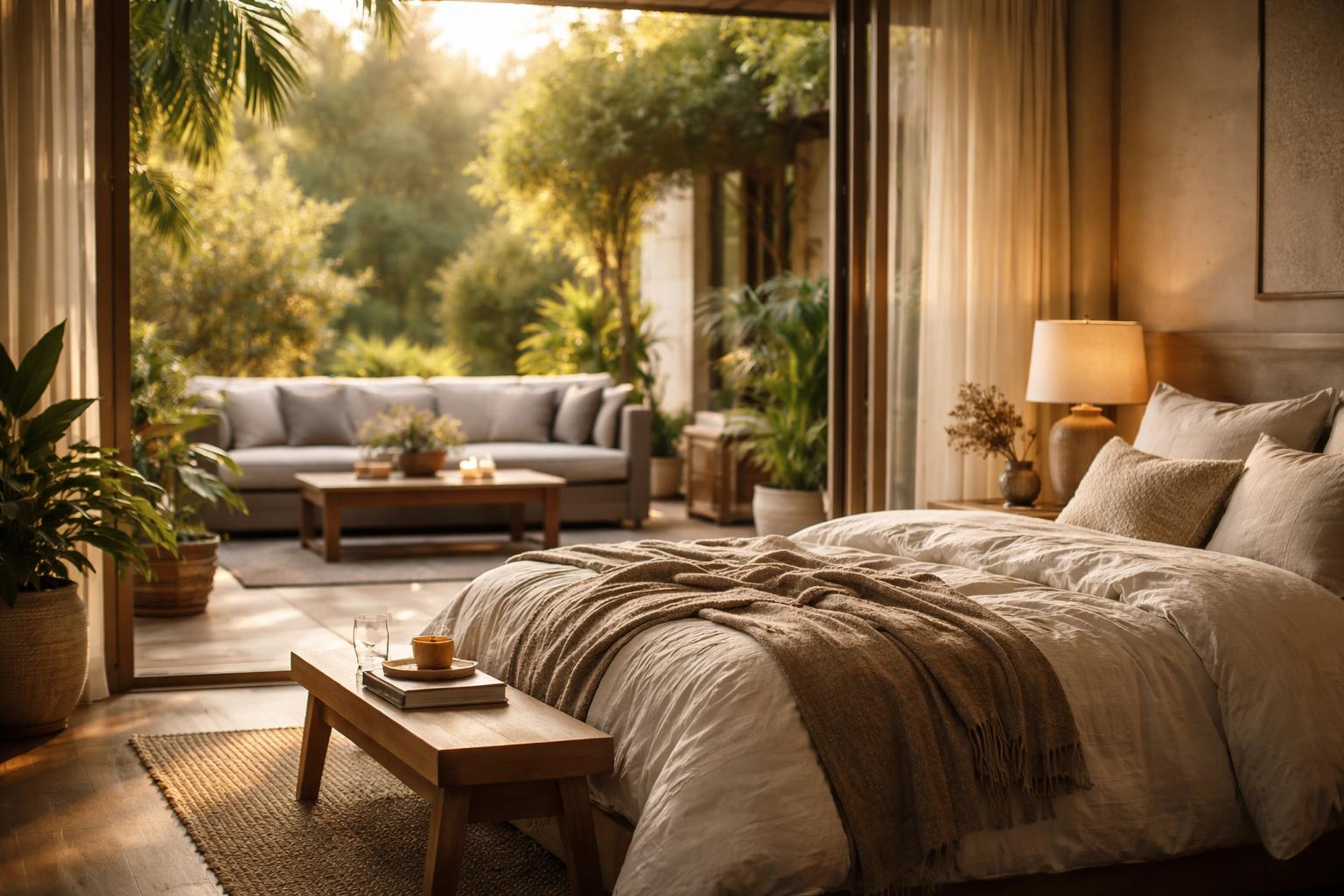
Blending indoor and outdoor living[7] creates one cohesive space that flows naturally from bedroom areas to exterior zones. Proper transitions to patios and dedicated outdoor relaxation areas reduce stress and improve sleep quality through increased exposure to natural environments.
Creating Seamless Flow to Patios
Large sliding glass doors or French doors establish direct access from bedrooms to outdoor areas. These openings should be at least 8 feet wide to create an unobstructed pathway.
Floor materials that continue from inside to outside strengthen the visual connection. Matching tile, wood-look porcelain, or polished concrete eliminates the harsh boundary between spaces.
Covered patio extensions protect the transition zone from weather while maintaining usability year-round. A roof overhang of 10 to 12 feet provides adequate coverage without blocking natural light from entering the bedroom.
Level thresholds eliminate steps between indoor and outdoor floors. This flat transition makes the patio feel like a natural extension of the bedroom rather than a separate area.
Consistent lighting design connects both spaces after dark. Wall sconces or recessed lighting should match in style and warmth on both sides of the threshold.
Outdoor Living Spaces for Relaxation
Dedicated outdoor living spaces[8] adjacent to bedrooms provide private areas for evening wind-down routines. A patio of at least 120 square feet accommodates comfortable seating and movement.
Essential furniture includes:
- Weather-resistant lounge chairs or daybeds
- Side tables for books or beverages
- Shade structures like pergolas or umbrellas
- Soft outdoor lighting on dimmers
Privacy screens made from lattice, plants, or frosted panels create seclusion without blocking airflow. Tall planters with evergreen shrubs offer year-round coverage at a height of 6 to 8 feet.
Water features add calming white noise that masks neighborhood sounds. Small fountains or wall-mounted designs work well in compact outdoor living space areas without requiring extensive installation.
Native plants require less maintenance while attracting beneficial wildlife. Lavender, jasmine, and gardenias release relaxing scents during evening hours when bedrooms connect to outdoor zones.
Selecting Architectural Styles and Customization Options
Five-bedroom homes come in multiple architectural styles, from traditional colonials to modern farmhouses, and each can be tailored to support better sleep through strategic design choices. The right modifications transform standard floor plans into personalized spaces that prioritize rest and relaxation.
Plan Modifications for Personal Preferences
Most five-bedroom house plans can be customized[2] to meet specific sleep-related needs. Homeowners can request modifications that include repositioning bedrooms away from noisy common areas, adding soundproofing materials between rooms, or expanding primary suites to accommodate separate sleeping and waking zones.
Window placement represents a critical modification for sleep quality. Adjusting window sizes and locations controls natural light exposure, which directly affects circadian rhythms. North-facing windows in bedrooms provide consistent, indirect light throughout the day without harsh morning glare.
Room dimensions can be altered to accommodate specific furniture layouts or create adequate distance between beds and doors. Some homeowners request higher ceilings in bedrooms to improve air circulation, while others prefer cozier proportions that feel more secure.
Common Sleep-Focused Modifications:
- Relocating HVAC vents away from sleeping areas
- Adding walk-in closets to reduce bedroom clutter
- Expanding en-suite bathrooms for nighttime convenience
- Installing pre-wired locations for blackout shade systems
Exploring Popular Five-Bedroom Designs
Modern farmhouse and craftsman styles[9] frequently incorporate sleep-friendly features like separated bedroom wings and quiet zones. These designs often place the primary bedroom on the main floor, isolated from secondary bedrooms upstairs, which reduces nighttime disturbances from children or guests.
Colonial and Mediterranean designs typically feature symmetrical layouts with bedrooms clustered together. While this arrangement works well for families with young children who need proximity to parents, it may require additional soundproofing between rooms.
Ranch-style five-bedroom floor plans[10] spread bedrooms across a single level, eliminating stairs and footstep noise from above. This configuration suits multi-generational households where elderly residents need ground-level access without sleep disruption.
Two-story designs offer natural noise separation, with common living areas downstairs and sleeping quarters upstairs. Many modern five-bedroom layouts[11] include a secondary primary suite on the main level for guests or aging parents who prefer first-floor sleeping arrangements.
Practical Tips for Designing Your Sleep-Friendly 5-Bedroom Home
Smart bedroom planning requires thinking beyond current needs and finding the right mix of attractive design with everyday comfort. These considerations help create a home that supports quality rest for years to come.
Future-Proofing Your House Plan
A well-designed 5 bedroom plan house[4] accounts for changing family dynamics over time. Homeowners should consider how each bedroom might serve different purposes as children grow or aging parents move in.
Plan modifications can add flexibility without major renovations. Installing pre-wiring for adjustable lighting systems allows easy updates to bedroom environments. Adding extra electrical outlets near bed locations supports future sleep technology needs.
Bedroom placement matters for long-term comfort. Ground-floor bedrooms work well for family members with mobility concerns. Upper-level rooms provide natural separation for teenagers or guests who need privacy.
Storage planning prevents clutter buildup that disrupts sleep quality. Built-in closets and under-bed storage options maintain organized spaces. Each bedroom should include dedicated storage for bedding, clothing, and personal items.
Balancing Style With Functionality
Five bedroom house plans demand careful attention to both aesthetics and practical needs. Color choices impact sleep quality, with softer, warmer tones typically promoting relaxation[12] better than bright, stimulating shades.
Layout efficiency prevents cramped feelings that increase stress. Furniture placement should allow clear pathways and avoid blocking windows or ventilation sources. Nightstands positioned within arm’s reach add convenience without crowding sleeping areas.
Key design elements include:
- Room-darkening window treatments for light control
- Adequate floor space between furniture pieces
- Accessible storage that keeps surfaces clear
- Temperature control options for each bedroom
Five-bedroom homes benefit from consistent design themes that create visual harmony while allowing individual room personalization. Personal touches like meaningful artwork help bedrooms feel welcoming without creating visual clutter.
Frequently Asked Questions
Getting the bedroom setup right involves understanding how different design elements work together to support better rest. The following questions address practical concerns about layout, lighting, color schemes, materials, bedding, and sound control.
How can bedroom layout and furniture placement be optimized to improve sleep quality?
The bed should be positioned away from direct light sources and external noise when possible. Placing the headboard against a solid wall creates a sense of security and stability.
Nightstands on both sides of the bed keep essential items within reach without creating clutter. This prevents the need to get up during the night for things like water or glasses.
The bedroom layout should allow for a clear path from the bed to the bathroom[12] to prevent tripping hazards during nighttime trips. Furniture should be arranged to avoid a cramped feeling, which can create stress.
Storage solutions like underbed drawers or vertical shelving help reduce visual clutter. A clean, organized space promotes mental relaxation before sleep.
Which lighting choices and controls best support a healthy sleep-wake cycle in the bedroom?
Light is the strongest signal for the body’s internal clock, which controls sleep timing. Making the bedroom as dark as possible at night helps reinforce healthy sleep patterns.
Blackout curtains block external light from streetlamps or early sunrise. For bedside lamps, choosing bulbs with low color temperature creates a warmer glow that doesn’t interfere with drowsiness.
Dimmer switches allow for gradual light reduction as bedtime approaches. This signals the body to start producing sleep hormones.
Electronic devices emit blue light that disrupts the sleep-wake cycle. Keeping phones, tablets, and TVs out of the bedroom or at least out of arm’s reach protects sleep quality.
What is the 60-30-10 rule in bedroom design, and how does it influence a calmer sleep environment?
The 60-30-10 rule is a color distribution guideline used in interior design. It suggests using a dominant color for 60% of the room, a secondary color for 30%, and an accent color for the remaining 10%.
This approach creates visual balance and harmony in the space. The dominant color typically appears on walls and larger furniture pieces.
The secondary color shows up in bedding, curtains, or area rugs. Accent colors add interest through pillows, artwork, or decorative items.
Following this rule prevents color overwhelm that can feel chaotic or stimulating. A balanced color scheme supports the calm atmosphere needed for sleep.
What materials, finishes, and color palettes create a quieter, more restorative bedroom atmosphere?
Softer, warmer colors generally create a more relaxing environment than bright or cool tones. Blues, greens, and earth tones are popular choices for promoting calmness.
Natural materials like wood, cotton, and linen add texture without visual noise. These materials also tend to be breathable and comfortable.
Matte finishes on walls and furniture absorb light rather than reflecting it. This creates a softer visual environment compared to glossy surfaces.
Carpet or area rugs help absorb sound and add warmth underfoot. Natural fiber rugs like wool or jute combine aesthetic appeal with practical benefits.
What are the most effective bedscaping upgrades that enhance comfort and temperature regulation overnight?
The mattress is the foundation of comfortable, supportive sleep[12]. It should match personal firmness preferences while providing proper spinal alignment.
Pillows need to support the head and neck based on sleeping position. Side sleepers typically need thicker pillows than back or stomach sleepers.
Sheets made from breathable materials like cotton or bamboo help regulate body temperature. Thread count matters less than the quality of the fibers used.
Layered bedding allows for easy temperature adjustments throughout the night. A lightweight blanket plus a duvet or comforter provides flexibility as body temperature changes during sleep cycles.
The bedroom temperature should stay between 60 to 71 degrees Fahrenheit for optimal sleep. Most people sleep better in cooler environments.
How can noise reduction and acoustic treatments be integrated into a bedroom without compromising style?
External noise causes frequent sleep disruptions[12] that reduce both sleep quality and overall health. Addressing sound issues improves rest without requiring major renovations.
Heavy curtains serve double duty by blocking light and absorbing sound from outside. Fabric panels on walls can function as both acoustic treatment and decorative art.
Upholstered headboards and padded wall panels reduce echo and sound bounce. These elements add visual interest while improving room acoustics.
Area rugs and carpet reduce footfall noise and dampen sound reflections. Bookshelves filled with books act as natural sound diffusers.
White noise machines mask disruptive sounds without adding visual clutter. Some people prefer apps or speakers that play calming nature sounds or music.
Weatherstripping around doors and windows blocks external noise. This simple upgrade remains invisible while significantly reducing sound intrusion.
Post Views: 5
References
- 5-Bedroom House Plans. https://www.architecturaldesigns.com/house-plans/collections/5-bedroom-house-plans Accessed April 30, 2026
- 5 Bedroom House Floor Plans, Designs, Blueprints & Layouts. https://www.houseplans.com/collection/5-bedroom-house-plans Accessed April 30, 2026
- 5 Bedroom House Plans. https://www.theplancollection.com/collections/5-bedroom-house-plans Accessed April 30, 2026
- 5 Bedroom Plan House Guide: Layouts, Privacy, Loft & PDFs. https://dwellifyhome.com/blog/bedroom/5-bedroom-plan-house/ Accessed April 30, 2026
- The Best 5 Bedroom Plan Collection (2026) by Advanced House Plans. https://www.advancedhouseplans.com/collections/5-bedroom-house-plans Accessed April 30, 2026
- What to Look for in a 5 Bedroom House Plan. https://www.roomsketcher.com/blog/five-bedroom-house-plans/ Accessed April 30, 2026
- Blending Indoor and Outdoor Living With Stylish Interior Design Tips. https://www.wolferizor.com/blog/design-tips/blending-indoor-and-outdoor-living/ Accessed April 30, 2026
- Indoor Outdoor Living: Expert Design Tips, Benefits, & 12 Fantastic Ideas. https://rtaoutdoorliving.com/indoor-outdoor-living-ideas-design/ Accessed April 30, 2026
- 5 Bedroom House Plans, Floor Plans, Designs & Layouts. https://archivaldesigns.com/collections/5-bedroom-house-plans Accessed April 30, 2026
- 5 Bedroom House Plans. https://www.monsterhouseplans.com/house-plans/5-bedrooms/ Accessed April 30, 2026
- Just a moment…. https://www.houseplans.net/five-bedroom-house-plans/ Accessed April 30, 2026
- How to Design the Ideal Bedroom for Sleep. https://www.sleepfoundation.org/bedroom-environment/how-to-design-the-ideal-bedroom-for-sleep Accessed April 30, 2026