
Table of Contents
Olivia Petter: ‘We hid in cupboards behind Ms Hill’s desk and jumped out to frighten her halfway through lessons’
At school, I was not a good girl. Actually, that’s putting it mildly: I was an emotional terrorist hellbent on inflicting torture and humiliation on my year 6 teacher, Ms Hill, one whoopee cushion at a time. That’s how it began, anyway, but like all crimes, mine followed a strategic pattern of escalation, carefully executed alongside my best friend and accomplice.
We started small: bringing spiders into Ms Hill’s classroom; writing silly notes on the whiteboard; replacing her precious chocolate digestives with stale biscuits from the dining hall. Then we took things further, hiding in cupboards behind her desk and jumping out to frighten her halfway through lessons, and, on one occasion, exploiting the bathroom’s faulty taps to flood the entire thing over lunchtime.
None of this was OK. In fact, it was downright awful, a symptom of reckless malevolence fuelled by boredom and entitlement. We were just unhappy kids who wanted to watch the world burn – an operation that poor Ms Hill bore almost all of the brunt of. To be clear, we never did anything that would constitute harassment, but our pranks were consistent and cruel.
Looking back on them as an adult with several friends who work as teachers, I can’t help but feel a deep sense of shame and guilt. I owe Ms Hill a proper apology. And, while I won’t attempt to justify my 11-year-old self’s behaviour, I’d like to offer an explanation as to why I might have been such a little monster back then.

Like so many other kids, I was being bullied, as was my best friend. I can remember one breaktime when she was pushed up against a wall by one of the older girls, who threatened to physically hurt her. Then there were the other classic things girls do to one another: leaving people out, spreading malicious rumours, and generally finding new and innovative ways to put people down to make others laugh. Neither one of us felt as if we fitted in, and so we stuck together.
There were issues going on at home – my parents divorced and my dad was living between London and the US. And I wasn’t really sleeping, either; I had bouts of insomnia as a child. In other words, I was struggling, and doing poorly at school as a result. A newly qualified twentysomething teacher in charge of our class, Ms Hill was the one often reprimanding us for not getting the grades we should have been – it was a highly competitive school, so I suspect she was under pressure to make sure her pupils were meeting certain standards. Again, as kids, we didn’t know that. All we saw was a young teacher telling us we weren’t good enough, and being mean to us in the process. So we decided to be mean back.
I really regret the way my friend and I behaved back then. Because, even though on the surface this might have looked like innocuous mischief, I can imagine it took a toll. Nobody deserves to be humiliated in their place of work, especially not by obnoxious children with far too much time on their hands. So, Ms Hill, if you’re still around, please accept my apology. I’m sorry for all the whoopee cushions, for stealing your biscuits, and for attempting to embarrass you to mask my own feelings of inadequacy. Ultimately, I hope my behaviour made you laugh more times than it made you frown. And that you are living a happy, fulfilled life somewhere with unlimited supplies of McVitie’s and absolutely no spiders.
Olivia Petter is a journalist and author of Gold Rush.
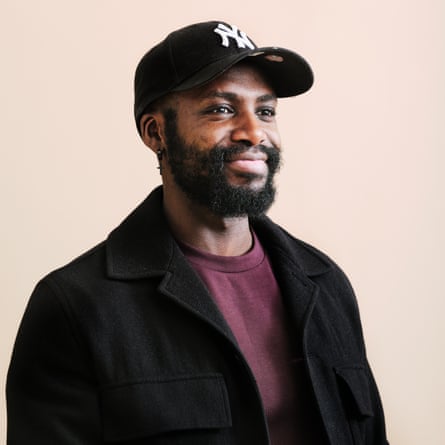
Derek Owusu: ‘Why did you foster us – why not other children, lighter in tone and burden, closer to those you had brought up?’
Mum, why don’t I remember more about you? So much is missing. I had 10 years with you: seven before I was returned to my biological mother, and three broken up into Christmas visits, with photos I have since lost and sweets sometimes arriving in the post. I tell myself you died when I was 10, but maybe it was later. Maybe you were kept from me to help me move on, just like your death was kept from me until I turned 14.
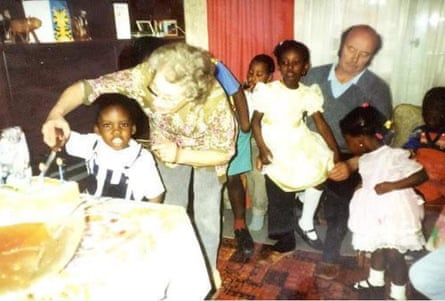
The last Christmas visit I remember well enough: the huge stocking with socks and satsumas at the bottom, imitation Game Boys, all surrounded by chocolate gold coins that sometimes cut you before they revealed the goods. Then, 10 of us around the kitchen table, crackers pulled and hats donned, jokes read to straight faces or a quick “oi” and glance down the table from you, and then, finally, the wait. Everyone had to be finished before we could run to the tree, and whoever was last received Christmas knocks on their head when you weren’t looking.
These are the images I come back to. So many children running around your house, so much noise, so much joy and, of course, so much lost. Because each child was away from their parent(s), long‑term or short-term, but each child called you Mum, regardless of duration, regardless of difference.
And we were different. All black children living with a very white mother, from dressing us up for Remembrance Day – flat cap and shoe polish – to awkwardly cutting our afros with scissors and never worrying about moistening our scalps. So I ask why. Why did you foster us – why not other children, lighter in tone and burden, closer to those you had brought up? You had seven children of your own, I think, and grandchildren who surely could have allowed you to relive those years.
I never got to ask, so I grew up speculating. Were you a white saviour, I asked myself. Was it Christian virtue? Was there more going on, more that I can’t remember, or choose not to?
It could have simply been about the money. You had retired, and perhaps you needed the income, though I remember your husband working. Perhaps it was greed, the four-bedroom house with a garage and garden not enough. I asked myself all this and more, fictionalised you and then questioned you, tried to uncover something suppressed.
Until, with time, with differing perspectives, I turned the why on myself. Why must there be something more? The money – the fee charged for private foster care that my biological mum paid monthly – you took a quarter of it and put it into a secret account, which became mine when I turned 16. Our race wasn’t your choice; it was more that private foster care was the safest alternative for west African immigrants, ones anxious about sending their children back to where they started, even if they struggled to find footing on the troubled ground of Britain.
You were no saviour, because you were imperfect and made no attempt to hide it. You taught us lessons but presented them harshly, maybe too harshly, the cane by the window sill evidence of your impatience. But you apologised when you were wrong, acknowledged when we had done right. And kept going even when sick, when dying, trying to fight for the last of us.
There is a story I remember, of one of the foster kids almost being deported with his family. And the person they immediately called was you. You drove to the airport, in that beat-up van we loved to pile into, picked up the child, and said you’d keep them safe for as long as was necessary.
I need to let kindness be. I wish I had let you be, returning your compassion with some form of empathy. So, Mum, I am sorry. I’m sorry I failed to see you and I am sorry for my doubt.
Derek Owusu is a writer and poet. His third novel, The Recovery House, is out now.
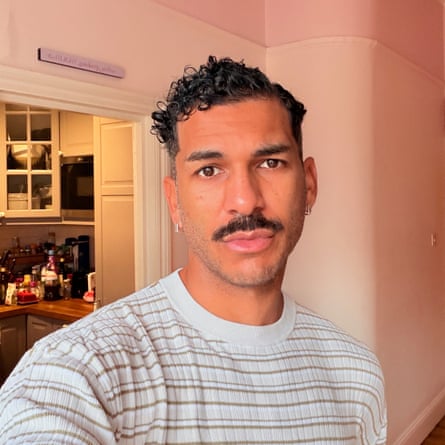
William Rayfet Hunter: ‘I don’t think I dated you because I wanted to deceive you. I fell for you because I wanted to deceive myself’
It’s a fresh spring afternoon, but inside the hermetically sealed corridor of the students’ union, the air is thick with body heat and desperation. Through clouds of Lynx Africa and BO comes an incessant thrum: whispered soliloquies, hummed arpeggios, the rustle of photocopied scripts. Next to me, a boy repeats his own name over and over as though, faced with the impatient stare of a third-year student cosplaying as a theatre director, he might forget this most elementary fact about himself. When my turn comes, I summon the confidence I’ve been trying to assemble over the previous six months.
The theatre society was full of extraordinary talent, but all of the best performances happened off the stage. University offered all of us the same irresistible bargain: here, finally, we could become whoever we wanted to be. New friends. New politics. New haircuts. We dressed like people we had seen in films, smoked because interesting people smoked, half-read Judith Butler, and spoke with the unique certainty of bright 19-year-olds.
Elevate Your Health for Just $29.99/Month
Join the Precision Wellness Subscription at My Healing 365 and get discounted services, priority coaching access, virtual care, and exclusive wellness resources to support your physical, emotional, and hormonal health.
Join for $29.99/MonthThat was the backdrop to our meeting. You were the rosy-cheeked girl in the director’s chair and I was your leading man. And from there we both played our parts perfectly until everything fell apart. Three months together at university felt like three years anywhere else. We rehearsed together, got blind drunk together, and learned each other’s childhood stories with the urgency of people convinced life was already slipping away.
I’m sorry that when we met I couldn’t really see you. You were funny and warm and emotionally fluent in a way I wouldn’t be for years. You were trying, with remarkable generosity, to know me. The trouble was that I was entirely invested in remaining unknowable.
I already knew I was gay. Or rather, I knew in the way people know the things they cannot yet afford to admit. It was my Big Secret: a stolen penny burning a hole in my pocket.
I walked into that audition room full of false and careful bravado, and saw what I thought might be my salvation in your smile. I don’t think I dated you because I wanted to deceive you. I fell for you because I wanted to deceive myself. I imagine the distinction matters far less when you’re the one who gets hurt.
If there was ever a moment, afterwards, when you wondered whether there had been something lacking in you, then I am deeply sorry. There wasn’t. The thing that wasn’t whole was me, and I mistook that incompleteness for a problem that could be solved by somebody else filling in the gaps.
Growing up has involved many apologies. Some I’ve made. Some I’ve only rehearsed. This one sticks in my throat because it asks me to admit something I still find uncomfortable: that becoming yourself is not, by itself, a virtue. It matters how you do it, who gets caught in the machinery. I was so intent on becoming someone I could live with that I forgot you were living through it, too.
People often say university is where you find yourself. That wasn’t quite true for me. University was where I finally stopped pretending it was possible to be somebody else. The irony, of course, is that I had joined the one society statistically least likely to cure me of being gay. Somewhere between Annie Get Your Gun, the Sondheim medley and the cancelled production of Rent, the evidence was mounting.
Auditions are strange things. You spend two minutes pretending to be somebody else in the hope that someone will finally see who you are. I spent much longer pretending. I’m sorry you had to watch.
William Rayfet Hunter is a writer and author of Sunstruck.
Poorna Bell: ‘I went into a diatribe about how that woman was such a phoney. “I’m standing right behind you,” a voice said’

As nicknames go, Foghorn Leghorn – inspired by the oversized cartoon rooster with a booming voice – isn’t particularly agreeable to me, but it has been fairly accurate. When combined with alcohol, this tendency can create a toxic cocktail, and leads to me saying obnoxious things at a high volume, often about someone as they stand undetected, mere feet away.
I haven’t drunk alcohol for 16 months, primarily because it was making my body feel like a garbage pail, and with newfound sobriety comes a reckoning about some of the things I did and said while under the influence. It’s not exactly a 12-step list of amends, but it’s close.
About 11 years ago, I was going to a press awards ceremony held at the Grosvenor hotel in London. I didn’t particularly want to go as it required a late night and an early start the next day, and it was this bedrock of grumbling that was my undoing. Sometimes I can be a cheerful drunk, but other times it taps into some unexpressed reservoir of resentment, and it was this that flowed into my bloodstream along with a lot of white wine.
Early in the evening, a woman in her 20s came up to say hello. We didn’t know each other well, but I remembered her from an internal work event a couple of months prior. We made small talk at the bar, which then turned slightly awkward as we ran out of things to say, so I made my excuses. Around halfway through the evening, our team hadn’t won anything, and the mood of the table had turned slightly sour. It was at this point that the young woman came over to chat again. Through a haze of wine, I remember feeling irritated.
Finally the ceremony ended, and we shuffled out to the cloakroom, where she and I encountered each other for the third time. Again, a sense of overfamiliarity lingered as we said our goodbyes. As my colleagues and I were heading to the door, one of them asked me who she was. I went into a diatribe about how that woman was such a phoney, pretending that we knew each other well. I overegged it entirely for the benefit of my audience. “I can’t stand her,” I finished dramatically.
“I’m standing right behind you,” a voice said. I turned around, and there she was. When such a moment occurs, adrenaline floods your body alongside a cold dread, and then you just have to sit in the murk of what you have created. I opened my mouth to apologise but nothing came out.
Although this is someone whose name I don’t remember, and who I am unlikely to recognise if I saw them again, I think about this moment with surprising regularity. I think about what it must have been like to hear someone talk about you like that, but I also wonder what possessed me to say all of those things that weren’t even real, or true.
I wish I could tell her I’m sorry, and that I was probably saying all of those things about myself, and it was definitely not about her at all. That, actually, I was in a really unhappy place in my life, and while alcohol should never be an excuse, it made me a nastier version of myself. I wonder how many of these apologies I owe to people.
Poorna Bell is a journalist and author. Her latest book, She Wanted More, is out now.
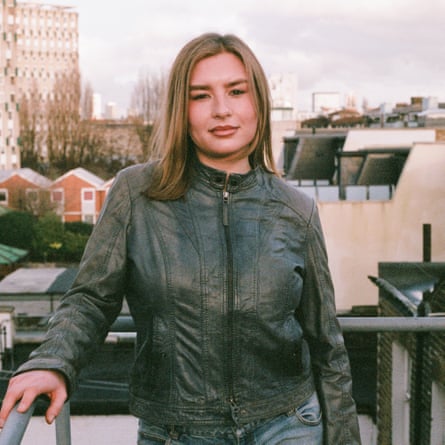
Annie Lord: ‘I gave it about a day, then I dumped him. I thought I was rotten, so if someone liked me there must be something wrong with them’
We were in year 8. I don’t remember much about him. Only that he was covered in freckles and was very bony, all elbows and knees. To me he appeared quite conventionally attractive with his well-proportioned face, but he was in the nerdy group so that wouldn’t have counted for anything. He came back from a holiday with malaria, which I thought was pretty exciting back then.
Around him, everything else seemed to fade into nothing. My throat would go dry when we spoke, and it was hard to get my words out. I realised after a while that this must be what fancying someone felt like. Eventually, he fancied me, too, and asked me to be his girlfriend. Well, he asked someone to ask me, as was customary back then.
It wasn’t long after I said yes that something started to shift. What was once light and uncertain was now concrete: he was my boyfriend. Now there were rules we had to follow. People would expect us to kiss, hold hands, be together all the time. The intensity that I had once enjoyed now felt suffocating.

When people found out, there wasn’t much of a commotion because I wasn’t a very notable character. I was Vicky’s best friend, the blond girl who went bright red when anyone spoke to her. But I remember sitting on the field during PE and one of the popular girls saying to me, “Oh, how sweet, Pete’s finally got a girlfriend.” It was immediately horrifying. Her comment seemed to confirm all my deepest fears. There must be something wrong with him – that’s why no one else wanted him.
I gave it about a day and then I dumped him. He would have seen Vicky coming across the field and known what was coming. He took it well. He wasn’t horrible to me, like some men I’ve rejected. I felt an instant dizzying relief, but then alongside it, digging its nails in, this fear that maybe I’d made a mistake.
I’d go on to repeat this pattern over the course of my life with lots of different men. Liking them and then having a feeling of terror when they started to like me. I would watch them move on to other women, look at their photos together on Instagram and think, why were you so scared of that being you?
It’s only in the last year, through therapy, that I have fully unpacked what was going on. I was going through puberty, my body was changing, and a deep feeling of wrongness sunk down into my very tissue. I thought I was rotten, so if someone liked me there must be something wrong with them. That girl’s comment during PE confirmed this.
We can be so imaginative when it comes to love. But when it comes to rejection we can’t imagine all the million reasons a person might not want to be with you: there’s just you and why you’re not good enough. I hope he knows it was nothing to do with him. I hope it didn’t make him scared of intimacy, or trap him in a pattern.
When I see kids in love, I think about how lucky they are. It must be so incredible to love that young, to feel it that much, to enter into intimacy slowly and safely with someone you trust. We could have had that, but I ran from it. I ruined it for both of us. I’m really sorry for him because I robbed us of that experience, but I’m also really sorry for myself.
Annie Lord is a writer and author. Her latest book, The Project, is out now.
Nikesh Shukla: ‘I grew up in fear of being told off, not really understanding what I did wrong in the first place. And I don’t want you to feel like that’

Dear kids
I don’t know what came over me. I’m sorry. That’s all I can say. I know it’s not nice to be shouted at. And, look, I think you and your sister could take a little responsibility for waiting until I’m concentrating to start bickering. Why did you wait until I sat down at my desk to work on my novel before getting into a fight about the big green Lego tile? Seriously? We have two of them! I know one of them is supersize, but stick them together and you get a mega-tile! Imagine the house you could build on a mega-tile! Just stop bickering!
I think I have let this apology run away from me somewhat. It’s almost as pompous as what I said to you at the time. When I relayed this story to a friend later on, she howled with laughter and called me a pretentious [redacted swear word]. I believe I said – well, shouted, at the top of my voice: “I don’t have a regular job. I am in that room creating universes and moving characters around them. And when you pull me out of that universe and back into this boring home because you can’t remember who used the green Lego tile last, that universe dies. Just a little. But it dies.”
Oh God, typing that out you can really hear how ridiculous it sounds. How high-minded. You’d really have to think what you do is special in order to shout that. What you don’t know is, at the time, I was writing a scene in a comic book about a man tripping over a discarded apple while running for the bus. Put that in your imagined universe and smoke it.
I used to think a lot about what sort of parent I would be. Of course, you only ever really have your parents as the first example. My own mum and dad made me feel as if they were never in the wrong. If they told me and your aunt off, they didn’t ever really explain themselves. I grew up in fear of being told off, not understanding what I did wrong in the first place. And I don’t want you to feel like that. Because there have definitely been times when I’ve been cross with you because I was tired, or stressed by work, or interrupted having a gossipy text exchange with a friend and thought, hold on a minute, I’m the blinkin’ adult here! I must regain control.
None of those situations are because you actually did anything that bad. They were all me. And so I have tried my best to apologise when I realise that the telling off that upset you was because of something else. I didn’t apologise to you that day, about being Mr Universe-Creator. As soon as I sat back down at my desk, I realised how ridiculous I had been. And you were both quiet again, playing away, creating your own universes. When I checked back in on you later, I saw that you had ended up working together, using all the green tiles to build a mega-structure. Which I suppose was a good thing, but I hated myself for making you do it because of my anger.
That comic book is out now. And it’s about a dad who can’t really control his anger. And, it turns out, the call was coming from inside the house the entire time. I am so sorry I shouted something incredibly pompous at you, and, to be honest, apology aside, there is no way of telling this story without looking like a complete pilchard.
Love, Dad
Nikesh Shukla is an author and screenwriter.