Medically Reviewed
Dr. Jose Rossello, MD, PhD, MHCM
Preventive Medicine & Public Health Specialist
Last Reviewed: May 22, 2026
Your bedroom does more than provide a place to rest. The way you design this space directly affects how well you sleep each night. A well-designed bedroom combines the right colors, lighting, temperature, and layout to support your body’s natural sleep cycle and help you fall asleep faster and stay asleep longer.
Most people struggle with sleep but never consider that their bedroom setup might be the problem. Small changes to bedroom design can improve sleep quality[1] and reduce the time it takes to fall asleep. From the mattress you choose to the amount of light in your room, each detail plays a role in creating a sleep environment that works with your body instead of against it.
The good news is that you don’t need to spend a lot of money or completely redo your room to see results. Simple adjustments to your bedroom layout, air quality, and daily habits can make a real difference in how rested you feel each morning.
Table of Contents
Key Takeaways
- The bedroom environment including lighting, temperature, and air quality directly impacts how quickly you fall asleep and stay asleep
- Reducing clutter and choosing calming colors helps create a relaxing space that supports better sleep quality
- Pairing smart bedroom design with consistent sleep habits strengthens your natural sleep cycle
Optimizing Bedroom Layout for Relaxation
The physical arrangement of furniture shapes how the body and mind respond to a bedroom space. Proper furniture placement creates clear pathways and reduces visual stress, while thoughtful bed positioning establishes a sense of security that helps the nervous system shift into rest mode.
Strategic Furniture Placement
Creating a sleep-first layout[2] requires placing furniture to minimize obstacles and visual clutter. Large pieces should sit against walls to maximize floor space and create an open feel. Nightstands belong within arm’s reach of the bed for easy access to essentials without disrupting the room’s flow.
Dressers and storage units work best positioned away from the immediate bed area. This separation helps define the sleep zone as distinct from functional spaces. Chairs or reading nooks should occupy corners or wall spaces that don’t interrupt movement between the bed and door.
Key furniture positioning rules:
- Keep walking paths at least 24-36 inches wide
- Place mirrors where they won’t reflect the bed directly
- Position electronics like TVs outside the direct sight line from the pillow
- Use vertical storage to reduce floor clutter
Command Position and Bed Placement
The bed should face the door while maintaining distance from it, a principle that creates psychological comfort. This positioning allows someone to see who enters without being directly in line with the doorway. The headboard gains stability and support when placed against a solid wall rather than under a window.
Corner placement often feels cramped and limits access from both sides. Center placement along the longest wall typically provides the most balanced approach. Both partners need equal access to get in and out without climbing over each other, which disrupts sleep quality throughout the night.
Balanced Pathways and Flow
Arranging bedroom furniture for better sleep[3] means eliminating obstacles between the bed and bathroom. Night trips shouldn’t require navigating around chairs, laundry baskets, or storage boxes. Clear pathways reduce tripping hazards and nighttime anxiety.
Symmetrical arrangements on either side of the bed create visual calm. Matching nightstands and lamps establish balance that the brain reads as orderly and peaceful. However, perfect symmetry isn’t required if the overall layout feels harmonious and uncluttered.
The space should allow drawers and closet doors to open fully without hitting other furniture. This practical consideration prevents daily frustration that can carry into bedtime.
Visual Calm and Color Psychology
The colors and visual elements in a bedroom directly affect how quickly someone falls asleep and how well they rest throughout the night. Strategic choices in paint, decor, and organization can reduce stress and create an environment that supports quality sleep.
Calming Colors and Paint Choices
Blue stands out as one of the most effective colors for promoting relaxation and sleep[4]. Research shows that blue tones can lower heart rate and reduce stress levels, making it easier to fall asleep. The color evokes feelings of calmness, security, and tranquility.
Green ranks as another top choice for bedroom walls. This nature-inspired shade creates a sense of calm and has been shown to improve overall mood and life satisfaction.
Soft purple shades, particularly lavender, offer gentle relaxation without overstimulation. White and off-white tones make spaces feel larger and brighter while maintaining a clean, peaceful atmosphere.
Colors to avoid include:
- Yellow – too stimulating and can increase anxiety
- Red – raises energy levels and can make rooms feel smaller
- Orange – creates excessive energy for a sleep environment
- Black – associated with negative emotions like depression and fear
Paint finish matters just as much as color. Matte or flat finishes work best because glossy surfaces reflect light and stimulate the brain.
Managing Visual Noise and Clutter
Visual noise refers to the chaos created by too many objects, patterns, or items competing for attention. A cluttered bedroom increases stress and makes it harder to relax before sleep.
Studies on bedroom design psychology[5] confirm that organized spaces promote better rest. The brain processes every visible item, even when someone tries to ignore the mess.
Regular decluttering removes unnecessary items that create visual distractions. Closed storage solutions hide everyday items and reduce the number of things the eyes must process.
Keeping surfaces clear helps the mind settle. Nightstands should hold only essential items like a lamp, alarm clock, or a single book.
Incorporating Minimalistic Decor
Minimalism in bedroom design focuses on intentional choices rather than empty spaces. Each decorative element should serve a purpose or bring genuine joy without overwhelming the senses.
A minimalistic approach to interior design[6] uses parallel colors on the color wheel rather than high-contrast combinations. This creates visual harmony that supports relaxation.
Artwork should be limited and carefully selected. One or two meaningful pieces work better than multiple competing images on the walls.
Bedding in solid colors or subtle patterns maintains visual calm. Bold prints or busy patterns can stimulate the brain when it needs to wind down.
Accent pieces like pillows or small decorative items allow for personal expression while keeping the overall environment peaceful. These touches add warmth without creating the visual chaos that interferes with sleep quality.
Lighting Strategies for Healthy Sleep Cycles
The right lighting approach can significantly impact sleep quality by supporting the body’s natural rhythms. Strategic use of different light sources throughout the bedroom, combined with effective light-blocking solutions, creates an environment that promotes melatonin production and maintains healthy sleep cycles.
Layered Lighting for Flexibility
Layered lighting design[7] provides the most control over bedroom illumination through three distinct types: ambient, accent, and task lighting. Each layer serves a specific purpose and works best when connected to independent dimmer switches.
Ambient lighting provides overall room illumination from ceiling fixtures. Accent lighting creates mood through wall sconces or decorative elements. Task lighting handles specific activities like reading.
The key is keeping lights dim when preparing for bed. A small, low-power lamp helps transition to bedtime while warm color temperatures support relaxation. This flexibility allows people to adjust brightness based on time of day and activity.
Blue light from LEDs has a short wavelength that significantly affects melatonin and circadian rhythm[8] more than longer wavelength light. Choosing warm-toned bulbs for evening use minimizes this disruption.
Bedside Lamps and Mood Lighting
Bedside lamps offer targeted illumination without flooding the entire room with light. The best options include dimmer controls or three-way bulbs that allow brightness adjustment.
Placement matters for effectiveness. Lamps should sit at a height that directs light downward rather than into the eyes. This positioning reduces strain while providing enough light for reading or other bedtime activities.
Red-wavelength lighting signals the brain to produce melatonin[9], making it an ideal choice for evening use. Warm amber or red-tinted bulbs in bedside lamps create a sleep-friendly glow.
Motion-activated nightlights work well for bathroom trips. These low-level lights provide safety without disrupting sleep cycles as much as bright overhead fixtures would.
Blocking Light With Blackout Curtains
Blackout curtains block the majority of external light to create the darkness needed for quality sleep. Pitch darkness reduces potential distractions and disruptions[8] while preventing fragmented sleep cycles.
Research shows that closing eyes alone is not enough. Eyelids cannot block sufficient light, and effects on circadian rhythm can occur even with low levels of indoor light. External sources like streetlights, car headlights, and early morning sun can all interfere with rest.
When selecting blackout curtains, look for options that extend beyond the window frame on all sides. This prevents light leakage around edges. Double-rod systems allow pairing blackout panels with sheer curtains for daytime privacy and light control.
For people who cannot achieve complete darkness through curtains, a close-fitting eye mask provides an alternative solution. Some evidence indicates that eye coverings contribute to improved sleep quality when other light-blocking methods fall short.
Sound and Scent: Enhancing the Sleep Environment
Controlling auditory and olfactory elements in the bedroom addresses two often-overlooked factors that significantly impact sleep quality. Strategic use of sound masking and calming scents can reduce sleep disturbances and promote faster sleep onset.
White Noise and Noise Control
A quieter bedroom promotes better sleep[10] than one exposed to inconsistent sounds. Even low-level noises can cause sleepers to shift into lighter sleep stages or wake up briefly during the night.
White noise works by creating a consistent sound blanket that masks sudden noises from traffic, neighbors, or household activities. A white noise machine produces steady frequencies that help the brain filter out disruptive sounds. Alternatively, fans provide similar benefits through their continuous hum.
For those who prefer silence, noise-blocking curtains reduce external sound penetration. Earplugs offer another solution for light sleepers in noisy environments. Some people find ambient sounds like rainfall or ocean waves more soothing than pure white noise.
The key is consistency. Sudden changes in sound levels disrupt sleep more than steady background noise. Whether using a dedicated device or a smartphone app, maintaining the same volume throughout the night supports uninterrupted rest.
Essential Oil Diffuser Choices
Certain scents influence the sleep environment by promoting relaxation. An essential oil diffuser disperses these fragrances throughout the bedroom without overwhelming the senses.
Lavender essential oil improves sleep quality[10] and helps people wake up feeling more refreshed. Peppermint and chamomile also offer calming properties. The diffuser should run for 30-60 minutes before bedtime rather than all night to avoid scent saturation.
Ultrasonic diffusers work quietly and won’t add disruptive noise to the sleep environment. They use water and vibration to disperse oils, making them safer than heat-based options. Place the diffuser at least three feet from the bed to prevent direct exposure to concentrated vapor.
Start with 3-5 drops of oil per 100ml of water. Too much fragrance can actually hinder sleep rather than help it.
Air Quality, Temperature, and Restorative Sleep
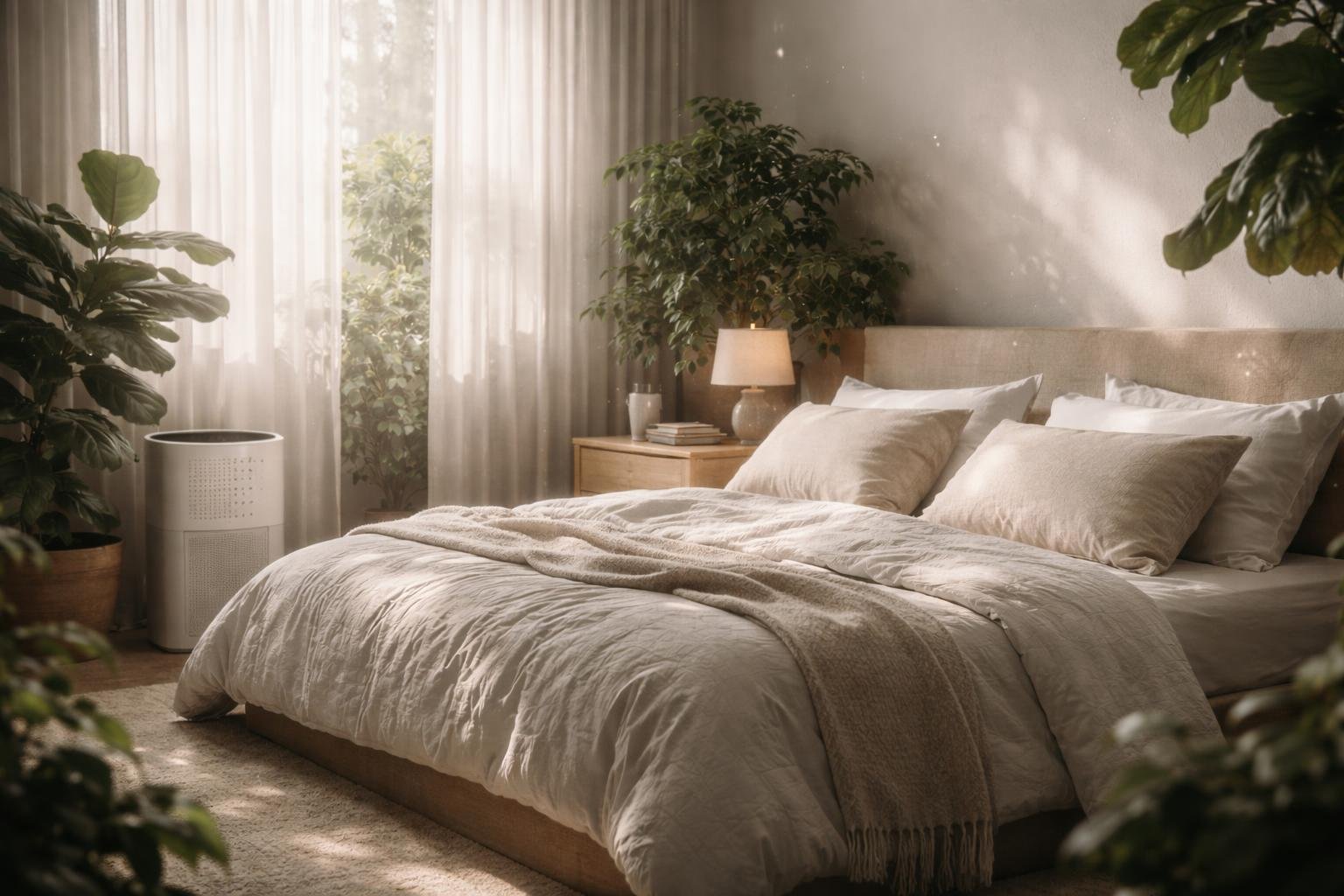
The physical conditions in a bedroom directly affect how well someone sleeps each night. Fresh air and the right temperature work together to support the body’s natural sleep processes.
Optimizing Bedroom Temperature
The ideal bedroom temperature falls between 60 to 71 degrees Fahrenheit, with most sleep experts recommending the cooler end of this range. Excess heat disrupts sleep patterns because the body needs to cool down slightly to enter deep sleep stages.
People without precise thermostat control can use fans or open windows to adjust their room temperature. During warmer months, running a fan creates air circulation while lowering the temperature. In colder weather, cracking a window slightly brings in fresh, cool air without making the room uncomfortably cold.
Temperature adjustment strategies:
- Use breathable bedding materials like cotton or linen
- Keep bedroom doors open to improve air flow
- Avoid heavy blankets that trap too much heat
- Take a warm bath 90 minutes before bed to trigger the body’s cooling response
Improving Air Quality and Freshness
Proper ventilation and fresher air[1] is associated with better sleep quality throughout the night. Poor air circulation allows allergens and dust to accumulate, which can cause breathing difficulties and frequent awakenings.
Regular cleaning dramatically reduces dust mites and other particles that affect air quality. Opening windows for 10-15 minutes daily refreshes stale air and removes built-up moisture. People with allergies should consider using hypoallergenic bedding and washing sheets weekly in hot water.
An air purifier with a HEPA filter removes airborne particles and improves overall bedroom air quality. This investment is particularly valuable for those living in urban areas or near busy roads where outdoor air pollution is a concern.
Incorporating Houseplants Like Snake Plant
Snake plants improve bedroom air by releasing oxygen at night, unlike most plants that only produce oxygen during daylight hours. They also filter common indoor toxins like formaldehyde and benzene from the air.
These plants require minimal care and thrive in low-light conditions, making them practical for bedrooms. One or two snake plants in a medium-sized bedroom can contribute to better air quality without creating excess humidity or maintenance demands.
Other bedroom-friendly plants include pothos and peace lilies, which also filter air pollutants. However, people should avoid overloading their bedroom with plants, as too many can increase humidity levels and create visual clutter that works against creating a calming environment[11].
Sleep Surfaces and Bedding Essentials
Your mattress and bedding directly affect how well you rest each night. The right combination of support, temperature control, and comfort helps your body relax completely during sleep.
Choosing Mattress and Bedding for Support
A quality mattress forms the foundation of good sleep. Your mattress should match your body weight and preferred sleeping position[1] to provide proper spinal alignment throughout the night.
Elevate Your Health for Just $29.99/Month
Join the Precision Wellness Subscription at My Healing 365 and get discounted services, priority coaching access, virtual care, and exclusive wellness resources to support your physical, emotional, and hormonal health.
Join for $29.99/MonthSide sleepers typically need a softer surface that cushions shoulders and hips. Back sleepers benefit from medium-firm support that maintains the natural curve of the spine. Stomach sleepers usually require a firmer mattress to prevent lower back strain.
Your pillow height matters just as much as your mattress. The pillow should fill the space between your neck and the mattress to keep your head aligned with your spine. A pillow that’s too high or too flat can cause neck pain and disrupt sleep.
Key bedding considerations:
- Replace your mattress every 7-10 years
- Choose pillows based on sleeping position
- Test mattresses for at least 15 minutes before buying
- Consider mattress toppers for added comfort
Selecting Breathable Sheets
Sheet material affects your body temperature during sleep. Natural fibers like cotton and linen allow air to flow freely, which helps regulate heat throughout the night.
Cotton sheets with a thread count between 200-400 offer the best balance of softness and breathability. Higher thread counts aren’t always better since they can trap heat. Percale weave cotton feels crisp and cool, while sateen weave offers a softer, slightly warmer feel.
Linen sheets excel at moisture wicking and become softer with each wash. They work well for people who sleep hot or live in warm climates. Bamboo-derived fabrics also provide good temperature control and feel smooth against skin.
Upholstered Headboard for Comfort
An upholstered headboard adds both comfort and function to a bedroom. The padded surface provides a soft backrest for reading or watching television before sleep.
Fabric headboards in neutral tones create a calming visual effect that supports relaxation. Velvet, linen, and microfiber are popular choices that add texture without overwhelming the space. The headboard should be thick enough to provide cushioning but not so large that it dominates the room.
Installing a headboard also protects the wall from pillow oils and scuff marks. This practical benefit keeps the bedroom looking clean and organized, which helps maintain a peaceful sleep environment.
Storage, Decluttering, and Personal Touches
A cluttered bedroom disrupts sleep quality by creating visual chaos and mental stress. Strategic storage solutions and thoughtful personalization transform a bedroom into a calm retreat that supports rest.
Hidden Storage Solutions
Under-bed storage[12] maximizes unused space without adding visual clutter. Beds with hydraulic lift mechanisms reveal an entire storage area beneath the mattress for linens, seasonal clothing, or extra blankets. For traditional bed frames, low-profile drawers on wheels slide easily and keep items accessible yet hidden.
Nightstands with multiple drawers serve dual purposes. A small three-drawer dresser works better than a basic nightstand because it provides storage for clothing, accessories, and bedside essentials in one compact piece.
Storage ottomans and benches at the foot of the bed offer seating while concealing items inside. Choose leather or fabric upholstery that matches the bedroom design. A bed skirt hides storage bins or shoe organizers tucked underneath while maintaining a clean appearance.
Wall-mounted solutions free up floor space. Floating shelves, built-in cabinets in unused nooks, and armoires keep belongings organized behind closed doors. These options work especially well in smaller bedrooms where every square foot matters.
Maintaining an Organized Space
Purging regularly[13] prevents clutter from accumulating. Remove items that lack purpose or meaning, including excess throw pillows, outdated books, and duplicate items taking up closet space.
Drawer dividers and storage bins keep categories separate. Designate specific drawers for different clothing types so everything has a permanent home. Canvas bags from bedding purchases store extra sheet sets without mixing them with clothing.
Daily habits prevent mess from returning. Return water glasses to the kitchen immediately and avoid using dressers as drop zones for keys or mail. Making the bed each morning creates an instant sense of order.
Closet systems with designated spaces for shoes, folded items, and hanging clothes reduce bedroom overflow. When everything fits properly in the closet, less spills out into the visible bedroom space.
Adding Meaningful Accents
Bedroom design improves when decorative items serve a purpose. A decorative tray on the nightstand corrals hand cream, reading glasses, and small essentials into one organized vignette rather than scattered clutter.
Display only one or two meaningful pieces per surface. A favorite photograph, a cherished trinket, or a single potted plant adds personality without overwhelming the space. Edit down collections and store the rest in decorative boxes with lids.
Choose quality over quantity when adding new items. Wait before purchasing impulsive additions and consider whether each piece enhances the sleep sanctuary. Whimsical storage containers like tin boxes keep small items organized while adding visual interest.
Personal touches should create calm rather than distraction. Soft textures, muted colors, and items with sentimental value contribute to a restful environment that supports better sleep.
Establishing Healthy Bedtime Habits
Creating consistent evening rituals and choosing the right sleep accessories can significantly impact sleep quality. The right sleepwear, proper light blocking tools, and regular nighttime patterns work together to signal the body it’s time to rest.
Consistent Bedtime Routines
A regular bedtime routine helps the brain recognize when it’s time to wind down. Going to bed at the same time each night strengthens the body’s natural sleep-wake cycle.
The routine should start 30 to 60 minutes before the desired sleep time. This window allows the mind and body to transition from daytime activities to rest mode.
Effective pre-sleep activities include:
- Reading a physical book
- Taking a warm bath or shower
- Gentle stretching or light yoga
- Listening to calm music
- Practicing deep breathing exercises
These activities should happen in the same order each night. The predictability trains the brain to anticipate sleep.
Screen time should end at least one hour before bed. The blue light from devices disrupts melatonin production and keeps people alert when they need to relax.
Selecting Sleepwear and Accessories
The right sleepwear helps maintain comfortable body temperature throughout the night. Natural fabrics like cotton, bamboo, and linen allow skin to breathe and wick away moisture.
Loose-fitting pajamas prevent restriction and allow for natural movement during sleep. Tight clothing can interfere with circulation and cause discomfort that leads to waking.
Temperature-regulating sleepwear adapts to body heat changes. Some people sleep better in lightweight materials, while others prefer slightly heavier options depending on bedroom temperature and personal preference.
Socks can help those with cold feet fall asleep faster. Warming the extremities signals the body to lower core temperature, which promotes drowsiness.
Using Eye Masks for Light Control
Eye masks provide complete darkness even when blackout curtains aren’t available. Total darkness supports melatonin production and helps maintain deep sleep stages.
Contoured eye masks prevent pressure on the eyelids and allow for natural eye movement during REM sleep. Flat masks can press against the eyes and cause discomfort.
The best eye masks feature:
- Adjustable straps that don’t pull hair
- Soft, breathable materials
- Complete light blocking around the nose bridge
- Lightweight construction
Travel and shift workers benefit most from eye masks since they often sleep during daylight hours. The mask creates an artificial night environment regardless of external light conditions.
Some eye masks include cooling gel inserts that reduce puffiness and provide soothing temperature therapy. These dual-purpose options combine light blocking with comfort features.
Frequently Asked Questions
Small adjustments to bedroom layout, color choices, and environmental controls can significantly impact sleep depth and duration. Understanding how to optimize lighting, reduce noise, and arrange furnishings helps create conditions that support natural sleep cycles.
What bedroom layout changes can improve sleep quality?
Positioning the bed away from direct light sources and doors reduces disturbances throughout the night. The headboard should ideally face a solid wall rather than a window to minimize temperature fluctuations and outside noise.
Keeping electronic devices at least three feet from the bed decreases electromagnetic interference. A clear path from the bed to the bathroom prevents injuries during nighttime trips.
Bedroom furniture arrangement affects both physical comfort and psychological ease. Avoiding cramped spaces around the bed creates better airflow and reduces feelings of being confined.
Which colors, materials, and finishes create the most calming bedroom atmosphere?
Cooler tones like soft blues, grays, and greens typically promote relaxation better than bright or warm colors. These shades have wavelengths that the brain associates with twilight and nighttime.
Natural materials such as cotton, linen, and wood create textures that feel less stimulating than synthetic surfaces. Matte finishes reflect less light than glossy ones, reducing visual stimulation before sleep.
Earth tones and neutral palettes work well for walls and large furniture pieces. Personal preference still matters, so choosing colors that create a sense of calm[1] based on individual response is important.
How can lighting be designed in a bedroom to support melatonin and a consistent sleep schedule?
Installing dimmer switches allows gradual reduction of light levels in the evening hours. This mimics natural sunset patterns and signals the body to begin melatonin production.
Blackout curtains or lined shades block exterior light from streetlamps and early sunrise. Even small amounts of light during sleep can disrupt melatonin cycles and reduce sleep quality.
Bedside lamps should use warm-toned bulbs with color temperatures below 3000K. Blue light from screens and cool white bulbs suppresses melatonin production for several hours after exposure.
Red or amber night lights provide enough visibility for safe movement without disrupting circadian rhythms. These wavelengths have minimal impact on melatonin compared to white or blue light.
What are the best soundproofing and noise-control strategies for a quieter bedroom?
Heavy curtains and fabric wall hangings absorb sound waves that hard surfaces would reflect. Layering window treatments adds both sound dampening and light control benefits.
Weatherstripping around doors and windows seals gaps that allow outside noise to enter. Door sweeps at the bottom of bedroom doors block hallway sounds and conversations.
White noise machines or fans create consistent background sound that masks irregular noises like traffic or neighbors. Studies show that reducing environmental noise[1] prevents the frequent awakenings that fragment sleep cycles.
Acoustic panels or foam can be added to walls shared with noisy areas. Rugs and padded headboards also help absorb sound within the room itself.
Which bedscaping elements improve comfort without making the room feel cluttered?
Quality pillows that match sleep position needs provide proper neck alignment without requiring multiple extras. Side sleepers need firmer, thicker pillows while back sleepers benefit from medium-loft options.
Layering bedding with a fitted sheet, flat sheet, and one blanket or duvet keeps the bed tidy. Adding too many decorative pillows or throws creates visual clutter and extra items to move at bedtime.
Keeping nightstands minimal with only essential items reduces visual distractions. A small lamp, alarm clock, and perhaps one book or glass of water are typically sufficient.
Under-bed storage contains extra linens and seasonal items without taking up visible space. This maintains an organized appearance while maximizing functionality in smaller rooms.
What feng shui bedroom rules help promote restful sleep and balanced energy?
The bed should be positioned where someone lying in it can see the door without being directly in line with it. This “command position” creates a subconscious sense of safety and control.
Mirrors facing the bed are discouraged in feng shui practice as they can create restless energy. If mirrors must be present, covering them at night or positioning them on side walls works better.
Electronic devices and work materials should be removed or hidden from view. These items carry active energy that conflicts with the passive, restorative energy needed for sleep.
Balanced placement of furniture on both sides of the bed creates symmetry and stability. This applies to nightstands, lamps, and decorative elements that frame the sleeping space.
Post Views: 4
References
- How to Design the Ideal Bedroom for Sleep. https://www.sleepfoundation.org/bedroom-environment/how-to-design-the-ideal-bedroom-for-sleep Accessed May 24, 2026
- How to Design a Bedroom for Great Sleep: 10 Expert Tips. https://www.homesandgardens.com/interior-design/how-to-design-a-bedroom-for-better-sleep Accessed May 24, 2026
- 7 Bedroom Layout Ideas for Better Sleep & Rest. https://www.latimes.com/spaces/room/bedroom/story/bedroom-furniture-layout-ideas-sleep Accessed May 24, 2026
- Bedroom Color Psychology and Its Impact on Sleep. https://bettersleep.org/blog/bedroom-color-psychology-and-its-impact-on-sleep/ Accessed May 24, 2026
- Bedroom Design Psychology for Better Sleep. https://www.leesa.com/article/psychology-sleep-design-bedroom-environment Accessed May 24, 2026
- Room Enhance AI. https://www.roomenhance.com/blog/room-color-psychology Accessed May 24, 2026
- Bedroom Lighting Design for Better Sleep: A Room-by-Room Guide. https://www.mattressnut.com/bedroom-lighting-design-sleep/ Accessed May 24, 2026
- Light & Sleep: Effects on Sleep Quality. https://www.sleepfoundation.org/bedroom-environment/light-and-sleep Accessed May 24, 2026
- Better Sleep Tonight: The Science Behind Perfect Bedroom Lighting. https://www.healthcouncilcanada.ca/better-sleep-tonight-the-science-behind-perfect-bedroom-lighting/ Accessed May 24, 2026
- Bedroom Environment: What Elements Are Important?. https://www.sleepfoundation.org/bedroom-environment Accessed May 24, 2026
- creating a calming environment. https://www.housebeautiful.com/design-inspiration/a70495678/bedroom-design-tips-for-better-sleep/ Accessed May 24, 2026
- 25 Bedroom Storage, Tidying, & Organizing Ideas. https://www.extraspace.com/blog/home-organization/bedroom-organization-ideas-tips-hacks/ Accessed May 24, 2026
- 15 Best Bedroom Organization Ideas of 2025. https://www.architecturaldigest.com/story/best-bedroom-organization-ideas Accessed May 24, 2026

























