Medically Reviewed
Dr. Jose Rossello, MD, PhD, MHCM
Preventive Medicine & Public Health Specialist
Last Reviewed: April 14, 2026
Your bedroom affects how well you sleep each night. Creating a sleep-friendly bedroom involves controlling light, temperature, noise, and choosing comfortable bedding to help your body relax and fall asleep faster. Most people can make these changes in a single afternoon without spending much money.
The difference between a regular bedroom and one designed for quality sleep comes down to a few key factors. Research shows that bedroom temperature, darkness, quietness, and mattress comfort directly impact sleep quality. When you design your bedroom for better sleep[1], you’re setting up conditions that work with your body’s natural sleep cycle instead of against it.
Small adjustments add up to big improvements in how quickly you fall asleep and how rested you feel in the morning. From blocking out light to removing electronics, each change makes your bedroom more focused on rest. These proven methods help transform any bedroom into a space that supports better sleep night after night.
Table of Contents
Key Takeaways
- Control light, temperature, and noise levels to create ideal conditions for falling asleep faster
- Choose a supportive mattress and comfortable bedding that suits your sleeping position and preferences
- Remove electronic devices and establish a calming environment that signals your body it’s time to rest
Essential Elements of a Sleep-Friendly Sleep Environment
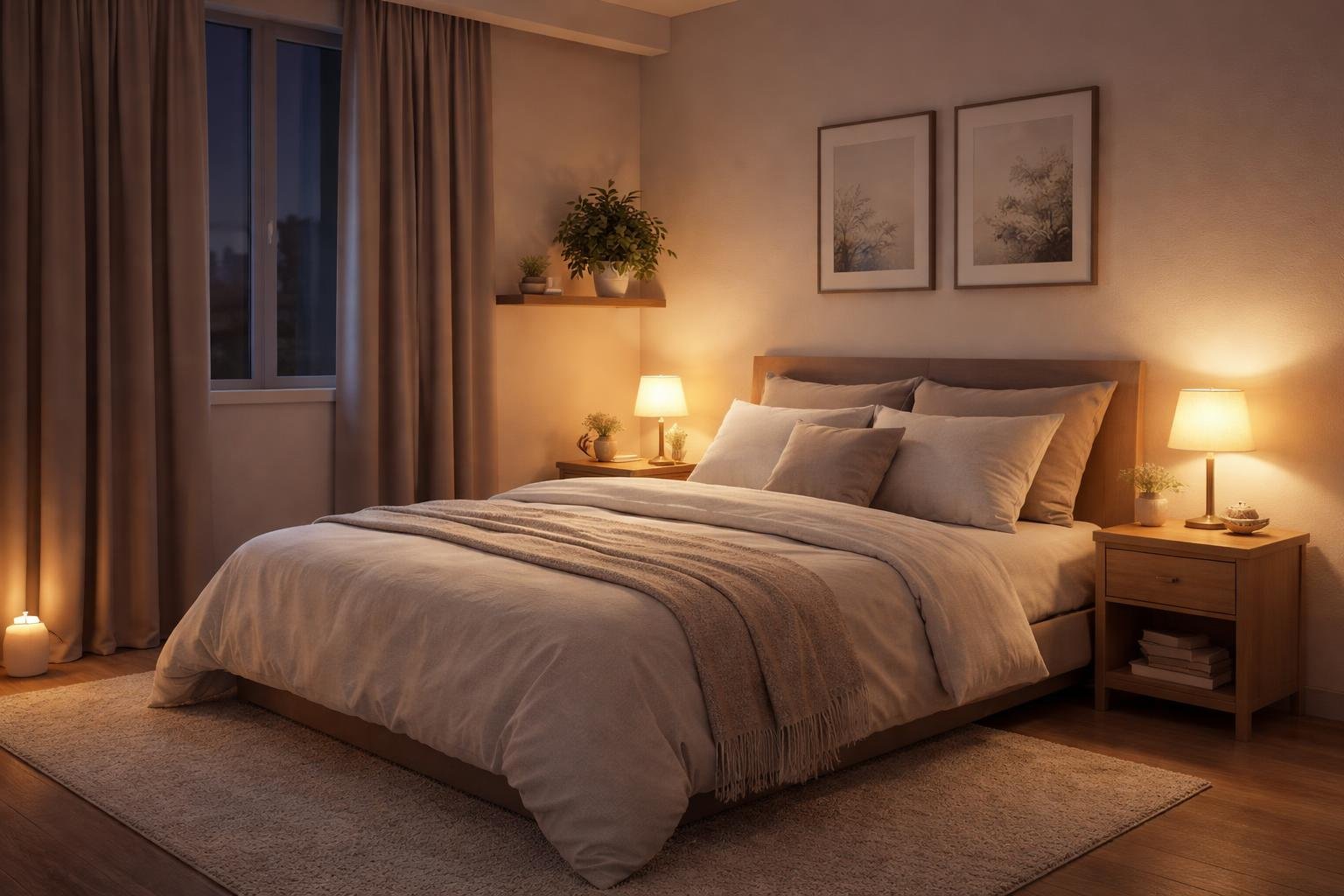
A sleep-friendly bedroom requires attention to four key factors: temperature control, lighting management, noise reduction, and maintaining an organized space. Each element affects how quickly someone falls asleep and how well they stay asleep throughout the night.
Optimizing Bedroom Temperature and Air Quality
The ideal bedroom temperature for sleeping is 65 degrees Fahrenheit[2], though individual preferences may vary slightly. A cooler room helps the body maintain a lower core temperature, which naturally promotes sleepiness. People who feel too cold at this temperature can add an extra blanket rather than raising the thermostat.
Air quality plays an equally important role in creating a healthy sleep environment. Poor ventilation can lead to stuffy air that makes breathing difficult during sleep. Opening a window for a few minutes before bed or using an air purifier helps circulate fresh air. Regular vacuuming removes dust mites and allergens that accumulate in carpets and bedding.
Humidity levels between 30-50% prevent dry air from irritating airways while avoiding excess moisture that promotes mold growth. A small hygrometer can help monitor these levels throughout the year.
Controlling Light and Using Blackout Curtains
Light exposure directly impacts the body’s production of melatonin, the hormone responsible for sleep. Exposure to light sources with 10 lux or higher can lead to more nighttime awakenings[2] and reduced sleep quality. Smartphones and televisions emit artificial blue light that disrupts circadian rhythms even when using dimmed settings.
Blackout curtains block external light sources like streetlights and early morning sun. These curtains provide complete darkness, which helps the brain recognize it’s time for sleep. For renters or those seeking a temporary solution, blackout shades or eye masks offer alternatives.
All electronic devices with LED displays should be covered or removed from the bedroom. Even small indicator lights from chargers or alarm clocks can interfere with sleep. People who need to check the time at night should choose clocks with red displays, which are less disruptive than blue or white light.
Minimizing Noise for Uninterrupted Sleep
Loud noise causes severe sleep fragmentation[2], but even low-level sounds can shift someone into lighter sleep stages. Creating a quieter sleep environment requires blocking outside noise and introducing consistent background sounds.
A white noise machine masks disruptive sounds by providing steady, neutral sound. The constant hum helps the brain filter out sudden noises like traffic, barking dogs, or neighbors. Fans serve a dual purpose by offering both white noise and air circulation.
Earplugs provide another effective solution for blocking unwanted sounds. Foam earplugs are inexpensive and disposable, while silicone versions can be washed and reused. For those sharing a bedroom with a snoring partner, earplugs combined with white noise often work best.
Noise-blocking curtains add an extra layer of sound insulation, particularly for bedrooms facing busy streets. Heavy fabric naturally absorbs sound waves before they enter the room.
Decluttering and Designing for Calm
A cluttered bedroom creates visual stress that makes it harder for the mind to relax. Keeping the bedroom tidy and removing distractions[3] helps signal to the body that this space is meant for rest. Work documents, exercise equipment, and electronics should be stored elsewhere or hidden from view.
The bedroom should function as a sleep sanctuary dedicated primarily to rest. Removing items unrelated to sleep strengthens the mental association between the bedroom and sleeping. This means relocating laptops, clearing nightstands of clutter, and putting away laundry.
Calming colors like soft blues, greens, and neutral tones promote relaxation better than bright or stimulating shades. Wall color, bedding, and decor should create a cohesive, peaceful atmosphere. Artwork should be simple and soothing rather than busy or thought-provoking.
Storage solutions like under-bed bins or closed closets keep necessary items accessible without creating visual chaos. Even making the bed each morning contributes to an organized sleep environment that feels inviting at night.
Choose the Right Mattress and Bedding

The right mattress and bedding directly affect sleep quality through proper support and comfort. A supportive mattress keeps the spine aligned, while the right pillow prevents neck pain, and clean bedding made from breathable materials helps regulate body temperature throughout the night.
Selecting a Supportive Mattress
Choosing a comfortable mattress[4] depends on sleep position, body weight, and personal preference. Side sleepers typically need a softer mattress that cushions the shoulders and hips. Back sleepers benefit from medium-firm support that maintains the spine’s natural curve. Stomach sleepers usually require a firmer surface to prevent the hips from sinking too deep.
A supportive mattress should keep the spine in neutral alignment regardless of sleep position. Research shows that a newer mattress promotes better sleep quality and reduces back pain compared to an older model. The best mattress for each person varies based on individual factors like body weight and whether they prefer a soft or firm surface.
Different mattress types offer distinct feels. Memory foam provides close body contouring. Latex offers gentle support with a responsive feel. Innerspring mattresses deliver a springy, traditional bounce.
Pillow Choice for Neck and Spine Alignment
The right pillow maintains proper neck alignment with the spine during sleep. Side sleepers need a thicker, firmer pillow to fill the gap between the shoulder and head. Back sleepers require medium-loft pillows that support the neck’s natural curve without pushing the head forward. Stomach sleepers should use thin, soft pillows to minimize neck strain.
Key factors when selecting the best pillow include firmness, loft (thickness), and durability. A pillow that’s too high or too low forces the neck into an unnatural position. This leads to morning stiffness and headaches.
The pillow should compress slightly under the head’s weight while maintaining enough support to keep the spine aligned. People who switch positions during the night may need an adjustable pillow or one with medium loft that works across multiple positions.
Best Bedding Materials for Comfort
Cotton sheets remain popular because they’re breathable, soft, and easy to wash. Cotton naturally wicks moisture away from the body and allows air circulation. This helps people who run hot during sleep stay comfortable throughout the night.
Percale cotton offers a crisp, cool feel. Sateen cotton provides a silky, smooth texture. Both work well for temperature regulation.
Other bedding materials serve specific needs:
- Linen – Highly breathable and gets softer with each wash
- Bamboo – Naturally moisture-wicking and antimicrobial
- Microfiber – Budget-friendly and wrinkle-resistant
- Silk – Smooth texture that’s gentle on skin and hair
The best bedding choice depends on whether someone prefers a crisp or silky hand-feel and how warm they sleep at night. Lighter-weight materials work better in warm weather, while flannel or jersey knit sheets provide extra warmth in winter.
Mattress Covers and Hypoallergenic Options
A mattress cover protects against dust mites, allergens, spills, and general wear. Waterproof covers shield the mattress from moisture damage while breathable covers prevent heat buildup.
Hypoallergenic bedding reduces exposure to common allergens. Dust mites trigger allergies in many people and thrive in mattresses and pillows. Regular vacuuming and washing bedding helps, but hypoallergenic materials provide extra protection.
Hypoallergenic options include:
- Tightly woven fabrics that prevent dust mite penetration
- Mattress encasements with allergen-proof zippers
- Pillows filled with synthetic materials instead of down
- Washable pillow protectors
Clean bedding supports healthy sleep. Experts recommend washing sheets at least once every two weeks[2]. People who sweat heavily or share their bed with pets should wash bedding weekly. Following care tag instructions prevents damage and shrinkage to mattress and bedding items.
Lighting and Blue Light Management
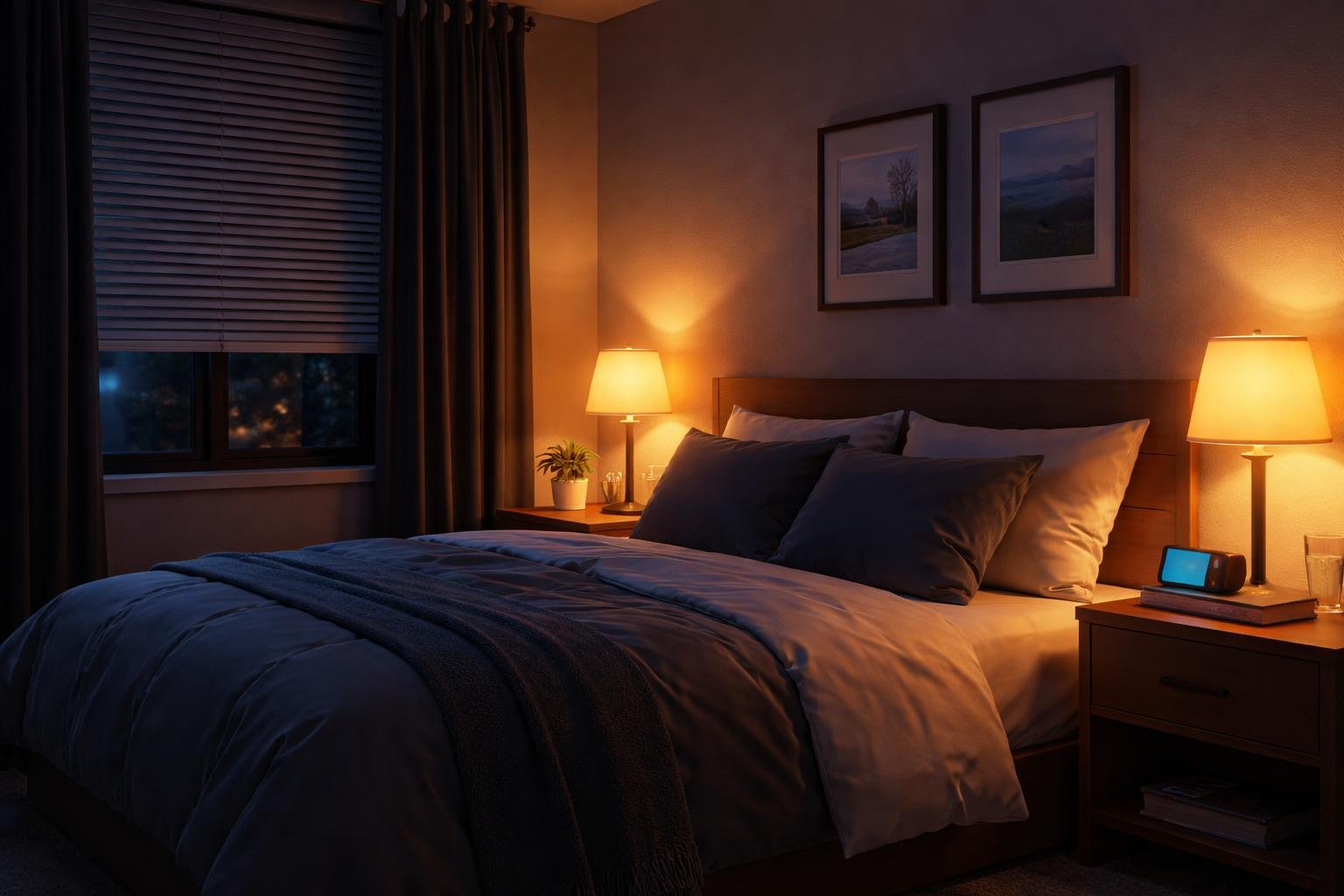
The right lighting helps signal your body when it’s time to sleep. Warm, dim lights in the evening support natural melatonin production, while bright blue light from screens and bulbs can keep you awake.
Setting Up Dimmable Warm Lighting
Dimmable warm lighting creates the foundation for better sleep[5] by allowing gradual adjustment throughout the evening. Light color is measured in Kelvin, and warm light ranges from 1800K to 2700K, producing an amber or candle-like glow that’s gentler on the eyes.
People should start dimming lights about two hours before bed. This means turning off bright overhead fixtures and switching to lamps or wall fixtures instead. An hour before sleep, they can reduce lighting further by leaving only one or two light sources on.
Installing dimmer switches on existing fixtures provides easy control over brightness levels. For bedrooms without dimmer capability, replacing standard bulbs with three-way bulbs offers multiple brightness settings. The warmest setting should be used during the final hour before bed to support the body’s natural wind-down process.
Benefits of Bedside Lamps and Smart Bulbs
A bedside lamp provides task lighting for reading while keeping the rest of the room dark. This localized light prevents the need to turn on harsh overhead fixtures when getting ready for bed or during nighttime bathroom trips.
Smart bulbs offer adjustable color temperature and brightness control[6] through smartphone apps or voice commands. Many models allow users to schedule automatic dimming, gradually shifting from bright cool light in the evening to warm amber tones closer to bedtime. Some can simulate sunrise in the morning by slowly increasing brightness over 20 to 30 minutes.
Key smart bulb features for sleep:
- Tunable white color temperature (1800K-6500K range)
- Dimming capability down to 1-5% brightness
- Scheduling and automation options
- Integration with smart home systems
These features eliminate the need to manually adjust lighting each night.
Reducing Blue Light Exposure Before Bed
Blue light, found in wavelengths between 400 and 495 nanometers, suppresses melatonin production more than any other light color. This suppression can delay sleep onset by one to three hours when exposure occurs in the evening.
Electronic screens emit significant blue light. Smartphones, tablets, computers, and televisions should be avoided for at least one hour before bed. For those who must use devices, enabling night mode or night shift settings reduces blue light output by shifting the screen to warmer tones.
Many LED and fluorescent bulbs also emit blue-enriched light. Switching to bulbs specifically labeled as warm white or soft white helps minimize blue wavelengths in the bedroom. At 2700K warm white, melatonin suppression is roughly 50 percent less[7] than with cooler white bulbs.
Even small sources matter. Covering or removing indicator lights from chargers, alarm clocks, and other electronics reduces ambient blue light in the room.
Using Blue-Light Blocking Glasses
Blue-light blocking glasses filter out blue wavelengths before they reach the eyes. They’re worn in the evening to protect melatonin production while allowing normal activities like reading or screen use.
Effective glasses should block at least 90% of blue light in the 400-500nm range. Orange or amber-tinted lenses typically provide better blocking than clear or lightly tinted versions. Some studies show that wearing these glasses for two to three hours before bed can improve sleep quality and duration.
People who work night shifts or must use screens late in the evening benefit most from this approach. The glasses should fit comfortably since they’ll be worn for extended periods. They work best when combined with other sleep-friendly lighting changes rather than being used as the only intervention.
Sound, Scent, and Air Quality Enhancements
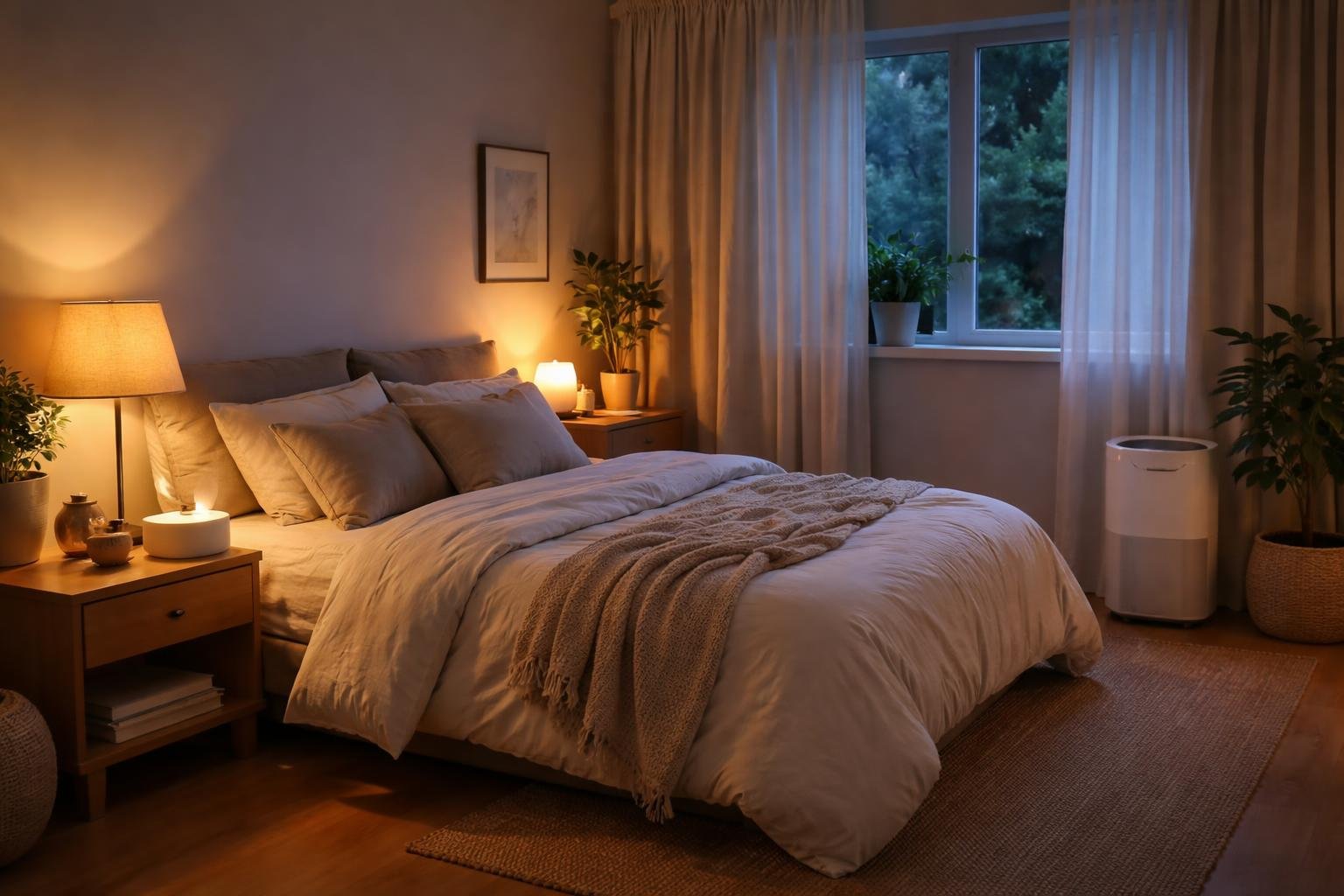
Managing noise levels, introducing calming scents, and maintaining clean air work together to create conditions that support deeper sleep. These three elements address common sleep disruptions that many people overlook when setting up their bedroom.
White Noise for Consistent Soundscape
External noise causes frequent awakenings and reduces both sleep quality and overall health[1]. A white noise machine helps mask unpredictable sounds like traffic, neighbors, or household activity by creating a steady audio backdrop. The consistent sound prevents the brain from being startled by sudden noises during the night.
White noise works by producing sounds across all audible frequencies at equal intensity. This creates a blanket of sound that drowns out disruptive noises. People can also use smartphone apps or speakers to play calming music as an alternative to traditional white noise.
The device should be placed at a moderate distance from the bed and set to a comfortable volume. Too loud can be disruptive, while too quiet won’t effectively mask other sounds.
Aromatherapy and Essential Oil Diffusers
While odors don’t typically wake people from sleep, aromatherapy with essential oils can promote relaxation[1] and make falling asleep easier. Lavender is the most studied scent for sleep benefits and consistently shows positive results. Other calming options include chamomile, bergamot, and cedarwood.
An essential oil diffuser disperses these scents throughout the bedroom in a controlled manner. Ultrasonic diffusers are quiet and don’t produce heat, making them ideal for nighttime use. A lavender spray applied to pillows or bedding offers a simpler alternative for those who prefer not to use electronic devices.
The fragrance should remain subtle rather than overwhelming. Running the diffuser for 30-60 minutes before bed rather than all night long provides enough scent without becoming overpowering.
Utilizing Air Purifiers and Plants
Proper ventilation and fresher air are associated with better sleep quality[1]. An air purifier removes dust, pollen, pet dander, and other airborne particles that can trigger allergies or breathing difficulties during the night. Look for models with HEPA filters that capture particles as small as 0.3 microns.
Indoor plants like snake plant and spider plant can improve air quality naturally while adding visual appeal to the bedroom. Snake plants release oxygen at night, making them particularly suitable for sleep spaces. Spider plants effectively remove common indoor pollutants.
Air purifiers should be sized appropriately for the bedroom’s square footage. Running them during the day helps maintain clean air without adding noise at night, though many models offer quiet sleep modes.
Choosing Bedding and Curtains to Reduce Allergens
Hypoallergenic bedding prevents dust mites and allergens from accumulating where people spend 7-9 hours each night. Tightly woven fabrics with thread counts above 300 create barriers that dust mites cannot penetrate. Materials like bamboo, eucalyptus, and specially treated cotton resist allergen buildup naturally.
Regularly washing bedding[1] keeps beds feeling fresh while reducing dust and allergen accumulation. Sheets should be washed weekly in hot water (at least 130°F) to kill dust mites effectively. Pillows and comforters need washing every 3-6 months.
Clean bedding also includes mattress and pillow protectors with allergen-proof covers. Heavy curtains should be washed or dry-cleaned seasonally since they collect dust. Lighter, washable curtains offer easier maintenance while still providing darkness and temperature control.
Establishing a Consistent Sleep Routine
A regular sleep pattern trains the brain to recognize when it’s time to rest, making it easier to fall asleep and wake up naturally. Setting fixed sleep and wake times, creating a calming pre-bed routine, and understanding sleep cycles all work together to improve rest quality.
Building a Bedtime Routine
A bedtime routine consists of activities performed in the same order[8] every night during the 30 to 60 minutes before bed. This consistent pattern signals the brain that sleep is approaching.
The routine should include relaxing activities that prepare both body and mind for rest. These might include:
- Putting away electronic devices
- Taking a warm bath
- Reading a book with simple content
- Writing a quick to-do list for the next day
- Practicing light stretches
The key is consistency. Performing the same activities in the same order each night creates a mental association between these actions and sleep. Most people benefit from a 5- to 15-minute wind-down routine[9] that serves as a clear signal for the brain.
Electronic devices should be avoided during this time since blue light suppresses melatonin production. If someone must use their phone, they should enable the red-light filter well before starting their routine.
Maintaining a Consistent Sleep Schedule
Going to bed and waking up at the same time every day strengthens the body’s natural sleep-wake cycle. This applies to weekends too, even though it might be tempting to sleep in.
The brain starts preparing for sleep a few hours before bedtime as part of its natural rhythm. A fixed schedule takes advantage of this process by training the body to feel tired at the right time.
Most adults need seven to nine hours of sleep per night. Someone who needs to wake at 6:00 AM should aim for a bedtime between 9:00 PM and 11:00 PM. They should set a reminder 30 minutes to 2 hours before their target bedtime to begin their wind-down routine.
Sticking to this schedule helps regulate the body’s internal clock. After a few weeks, falling asleep and waking up become easier and more natural.
Wind-Down Techniques for Deep Sleep
Specific relaxation methods help release physical and mental tension before bed. Deep breathing exercises and progressive muscle relaxation turn attention toward the body while promoting calmness.
Meditation practices teach people to observe thoughts without judgment, which reduces bedtime stress. Simple meditation involves closing the eyes and focusing on breathing while letting thoughts pass without engagement.
Music and sound can aid relaxation when chosen carefully. The genre matters less than the calming effect it produces. Pink noise like rain or waves has been shown to improve sleep quality, while white noise helps some people fall asleep faster.
Physical relaxation through gentle yoga stretches or light massage prevents cramping and releases muscle tension. These activities should be slow and gentle rather than energizing.
A light snack can settle the stomach without causing digestive issues. Foods like cherries, grapes, kiwi, or a small serving of yogurt provide nutrients that support sleep without being too heavy.
Optimizing Your Sleep Cycle and Stages
Sleep happens in cycles that last about 90 minutes each. During each cycle, a person moves through different sleep stages including light sleep, deep sleep, and REM sleep.
Deep sleep occurs more during the first half of the night and is crucial for physical recovery. This stage supports immune function, tissue repair, and memory consolidation.
REM sleep increases during the later sleep cycles and plays a role in emotional processing and learning. Most dreaming happens during this stage.
Getting enough total sleep time ensures a person completes multiple full cycles. Someone who only sleeps five hours might miss out on important REM sleep that occurs later in the night. Seven to nine hours allows the body to cycle through all stages multiple times.
Body temperature naturally drops at night as part of the sleep cycle. Taking a warm bath at least an hour before bed mimics this temperature change, triggering sleepiness as the body cools down afterward.
Personalizing Your Sleep Sanctuary

Making a bedroom feel like a true retreat requires thoughtful choices about layout, decor, and how the space gets used. A personalized bedroom environment[1] supports better rest when it reflects individual needs while maintaining calm and order.
Arranging Bedroom Layout for Rest
The way furniture gets positioned directly affects how relaxing a bedroom feels. The bed should be the focal point, placed where it’s easily accessible from both sides when possible.
A nightstand within arm’s reach holds essentials like water or reading glasses. Keeping pathways clear prevents stumbling during nighttime bathroom trips. This becomes especially important in smaller spaces where every inch matters.
Utilizing vertical space[1] or underbed storage helps avoid a cramped feeling. Dressers and closets work best when positioned away from the bed to create visual separation between sleep and storage areas.
The layout should make daily routines frustration-free. Easy access to clothes and a clear path from bed to door reduces morning stress.
Incorporating Sleep-Friendly Decor
Calming colors form the foundation of restful bedroom design[10]. Soft, warm tones on walls and bedding typically work better than bright or harsh colors. Most people respond well to blues, greens, grays, and earth tones.
Natural textures add warmth without overstimulation. Cotton sheets, wooden furniture, and woven rugs create a grounding effect. These materials also tend to be more breathable than synthetic options.
Personal touches make the space feel welcoming. Photos of loved ones, meaningful artwork, or cherished objects add character. These items don’t need to be expensive or elaborate to be effective.
Wall art should enhance calm rather than create visual noise. Simple pieces in muted tones work better than busy patterns or bright colors.
Journaling and Mindfulness for Relaxation
A dedicated spot for journaling helps establish wind-down routines. Keeping a notebook and pen on the nightstand makes it easy to write before bed. This practice helps clear the mind of racing thoughts.
Journaling can take many forms. Some people prefer gratitude lists, while others write about their day or tomorrow’s plans. The act of putting thoughts on paper often reduces nighttime worry.
A small meditation cushion or comfortable chair creates space for mindfulness practice. Even five minutes of deep breathing before bed can shift the nervous system toward relaxation.
These practices work best when kept simple and consistent. Overcomplicating bedtime rituals can create more stress than they relieve.
Maintaining a Bedroom for Sleep Only
Using the bedroom for sleep[1] and intimacy only strengthens the brain’s association between the space and rest. Working, eating, or watching TV in bed weakens this connection.
Removing electronics reinforces this boundary. Tablets, phones, and laptops belong in other rooms whenever possible. The blue light from screens disrupts circadian rhythms, and the content keeps minds active.
If a device must stay in the bedroom, it should be kept out of arm’s reach. Setting it across the room prevents mindless scrolling when trying to sleep.
Visual clutter generates stress that interferes with relaxation. Spending a few minutes each day tidying prevents mess from building up. Clothes belong in hampers or closets, not draped over chairs.
A sleep sanctuary[11] stays clean and organized with minimal effort when items have designated homes.
Frequently Asked Questions
Small adjustments to temperature, light, and noise can create better sleep conditions within minutes. A bedroom checklist and simple preparation methods help anyone rest well in any space.
Elevate Your Health for Just $29.99/Month
Join the Precision Wellness Subscription at My Healing 365 and get discounted services, priority coaching access, virtual care, and exclusive wellness resources to support your physical, emotional, and hormonal health.
Join for $29.99/MonthWhat are the quickest changes you can make to improve a bedroom’s sleep environment?
The fastest way to improve sleep conditions is to adjust temperature, light, noise, and mattress surface[12]. Most of these changes take less than an afternoon to complete.
Blocking light sources takes just minutes. Someone can hang blackout curtains, cover electronic device lights with tape, or turn alarm clocks away from the bed.
Reducing clutter helps the mind relax before sleep. Taking five minutes to clear the nightstand and floor creates a calmer space.
Turning down the thermostat or opening a window adjusts bedroom temperature right away. Removing extra blankets from the bed also helps cool things down quickly.
Which bedroom temperature, lighting, and humidity settings best support quality sleep?
The bedroom temperature should stay between 60 to 71 degrees Fahrenheit[1]. Most sleep experts recommend keeping the room on the cooler side of this range.
Light levels should be as dark as possible at bedtime. Any necessary lighting should have low color temperature and brightness to avoid disrupting the body’s natural sleep signals.
Humidity levels need to stay moderate to prevent mold growth and maintain air quality. Proper ventilation keeps the air fresh and supports better breathing during sleep.
What items or tools help reduce noise and light for better sleep at night?
Blackout curtains block external light from street lamps and early morning sun. They work especially well for bedrooms that face busy streets or receive direct sunlight.
White noise machines mask disruptive sounds from traffic, neighbors, or other household members. Mobile apps can also play white noise or calming music through speakers.
Eye masks provide portable darkness for people who cannot control room lighting. Earplugs offer simple noise reduction without requiring any equipment.
Heavy curtains or door sweeps reduce sound coming through windows and door gaps. These additions also help with temperature control.
How can you make a new or unfamiliar bedroom feel comfortable enough to fall asleep quickly?
Bringing familiar items from home helps create a sense of comfort in unfamiliar spaces. A regular pillow, favorite blanket, or photos of loved ones can make a new room feel more welcoming.
Controlling the basics matters most in strange bedrooms. Adjusting the temperature, blocking unwanted light, and reducing noise creates better conditions regardless of location.
Maintaining regular bedtime routines signals the body that it’s time to sleep. Following the same steps before bed works even when the bedroom changes.
Using calming scents like lavender through aromatherapy can promote relaxation. Essential oils travel easily and work in any bedroom setting.
What should be included in a practical sleep-environment checklist for a bedroom?
A complete bedroom checklist covers temperature control, lighting, sound management, and bedding quality. Each category needs specific attention for optimal sleep conditions.
Temperature items include a working thermostat, fan, or window access. The goal is maintaining a cool environment between 60 and 71 degrees.
Light control requires blackout curtains, covered electronic displays, and low-wattage bedside lamps. All screens should stay out of arm’s reach.
Sound management includes white noise machines, earplugs, or heavy curtains. The bedroom should stay as quiet as possible throughout the night.
Bedding quality covers a supportive mattress, appropriate pillows, and clean sheets. Regular washing keeps allergens and dust under control.
Air quality needs proper ventilation and low humidity. An air purifier helps people with allergies breathe easier during sleep.
What is the 3-2-1 bedroom method, and how do you apply it at bedtime?
The 3-2-1 method structures the hours before sleep with specific timing for activities. It creates a wind-down period that prepares the body and mind for rest.
Three hours before bed, someone should finish their last large meal. Eating too close to bedtime can disrupt sleep quality and cause discomfort.
Two hours before sleep, all work activities should stop. This includes checking work emails, finishing projects, or engaging in stressful tasks.
One hour before bedtime means turning off all screens and electronic devices. This reduces blue light exposure that interferes with natural sleep signals.
During that final hour, the person focuses on relaxing activities like reading, light stretching, or preparing the bedroom. The room should be dark, cool, and quiet by the time they get into bed.
Post Views: 8
References
- How to Design the Ideal Bedroom for Sleep. https://www.sleepfoundation.org/bedroom-environment/how-to-design-the-ideal-bedroom-for-sleep Accessed April 16, 2026
- Bedroom Environment: What Elements Are Important?. https://www.sleepfoundation.org/bedroom-environment Accessed April 16, 2026
- 17 Tips to Create Ultimate Sleep Environment. https://sleepdynamics.com/17-tips-to-create-the-ultimate-sleep-environment/ Accessed April 16, 2026
- How to Make a Sleep-Friendly Bedroom. https://www.thensf.org/how-to-make-a-sleep-friendly-bedroom/ Accessed April 16, 2026
- How Bedroom Lighting Affects Sleep Quality and What to Change Tonight. https://www.easyrest.com/how-bedroom-lighting-affects-sleep-quality-and-what-to-change-tonight/ Accessed April 16, 2026
- Smart Bedroom Lighting For Better Sleep: How To Automate Bulbs And Sensors For Healthier Nights. https://smarthomemuse.com/smart-bedroom-lighting-for-better-sleep/ Accessed April 16, 2026
- Bedroom Lighting Design for Better Sleep: A Room-by-Room Guide. https://www.mattressnut.com/bedroom-lighting-design-sleep/ Accessed April 16, 2026
- How to Build a Better Bedtime Routine for Adults. https://www.sleepfoundation.org/sleep-hygiene/bedtime-routine-for-adults Accessed April 16, 2026
- 5 Simple Changes to Your Bedroom for Better Sleep – Lifestyle Medicine. https://lifestylemedicine.stanford.edu/bedroom-changes-sleep-routine/ Accessed April 16, 2026
- How to Turn Your Bedroom Into a Sleep Sanctuary: Temperature, Sound. https://www.womansworld.com/wellness/sleep/how-to-turn-your-bedroom-into-a-sleep-sanctuary-temperature-sound Accessed April 16, 2026
- Sleep Sanctuary Design: 10 Expert Eco-Friendly Tips. https://cozybedquarters.com/sleep-sanctuary-design-ideas/ Accessed April 16, 2026
- How to Set Up Your Bedroom for Better Sleep: 10 Changes That Work. https://www.mattressnut.com/how-to-set-up-a-bedroom-for-better-sleep/ Accessed April 16, 2026

























