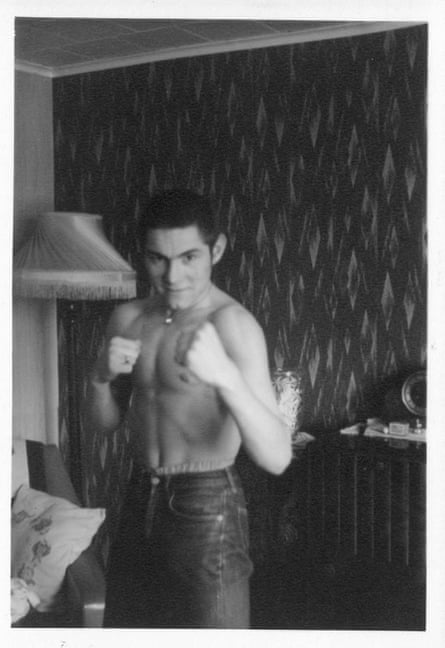
When I tell people that a drug addiction nearly killed my dad, I know what most of them are thinking. Heroin. Crack. Maybe meth or ket. Those substances that steal your soul and slowly wreak havoc on your body. They’re imagining Trainspotting; too-skinny frames and protruding hip bones, the physical effects of addiction that are impossible to miss.
But that isn’t how it played out in my family.
I was 13 years old when my parents’ marriage fell apart, disintegrating suddenly and seemingly without warning over a few grey November weeks. When I tell people that my mum, my brother and I had no idea my dad was addicted to drugs until after he left us, I can see the bewilderment in their eyes. How could you not have noticed? I ask myself the same question all the time.
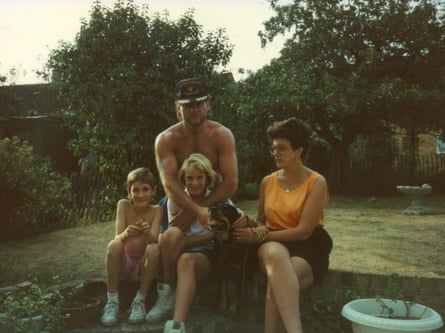
My dad’s drug addiction didn’t ravage his body. Instead, it built it. As a 17st 7lb powerlifter, he looked to my childhood eyes like something of an adonis. Friends fancied him. Boys in my class coveted his physique. There was never any question of “my dad’s harder than your dad” in my school playground. It was always my dad. And I loved him for it. Dad rarely drank alcohol and ate unfathomable quantities of protein and carbs. He went to the gym several times a week, a habit he had held on to, obsessively, since he was 15 years old. My mum jokes that he even skipped his own stag do to fit in an extra session.
Born six years after the end of the second world war, my dad grew up on a council estate in Essex after his family were relocated from London’s bomb‑battered East End. Theirs was an ordinary, working-class household. Four kids. Formica table. A budgie in a cage on the sideboard. They were poor, but happy. Like many successful sportspeople, Dad was something of a teenage polymath. He played semi-professional football for Leyton FC and broke the schoolboy sprint record in his last year of secondary school. But weight training was the thing that truly captured his imagination.
In the mid-60s, my dad was a skinny kid with a shaved head who knocked around the estate in bovver boots and bleached Levi’s. By the time I was born 10 years later, he was unrecognisable. In 1977, Dad competed in his first British championships and Mum went into labour with me halfway through the presentation ceremony. Perhaps we should have known then that family life would always be overshadowed by lifting. Not even the day of my birth belonged to me alone.
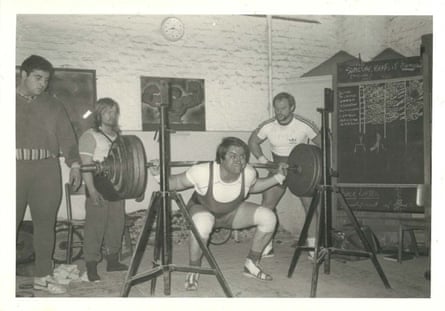
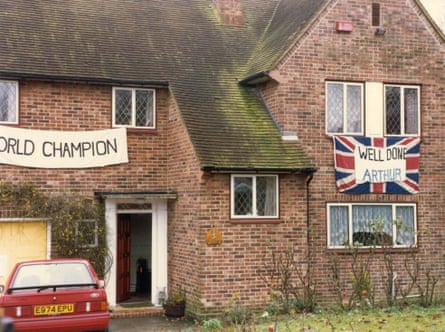
A decade later, in 1988, he won his first world championships. He was 37 years old. We welcomed him home with banners that spanned the width of our house and articles in the local newspaper. He won Essex Sports Personality of the Year.
Two years later, he went to work one day – and didn’t come back.
Until that November in 1990, my parents – who had met at 14 and married at 19 – had seemed ridiculously happy. We were a close family, and alongside his weightlifting career my dad had spent the 80s building a successful construction business. With a villa in Spain and a brand-new red Escort XR3i on the driveway, we looked as if we had it all together. Then it fell spectacularly apart.
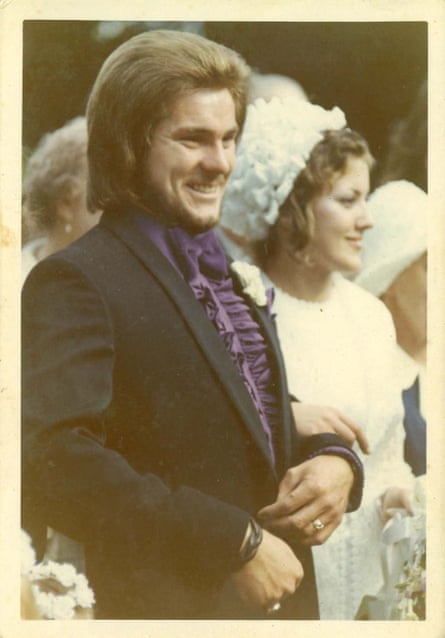
Shortly before he left, Dad sat me down and told me he was having an affair. I was 13, and felt as if the bottom had fallen out of my world. Then, despite promising me that he would not leave, he did just that. His abandonment came weeks before we were due to move house and was just the first in a long line of catastrophic betrayals that my mum would uncover in the coming months. First was finding out that he had gone to South Africa with the woman he’d promised he was no longer shagging. Second was that he had taken £35,000 in cash from the sale of our house. Two weeks later, after paying cash for a flat in Cape Town and burning through the rest in an extended drugs binge, he returned without a penny. He walked through the airport with only the clothes on his back, begged my mum to take him back, and confessed that he had become addicted to steroids and cocaine. To say that my mum was shocked is the understatement of the century. She knew that he had taken steroids on occasions, but she had no idea about the extent of his dependency. It quickly became clear.
Sometime in the mid-80s, Dad had sustained an injury. A bloke at the gym offered him something to speed up his recovery; he was reticent, but nearly everyone was doing it. The dangers didn’t register or, perhaps, like most, he simply chose to ignore them.
Anabolic androgenic steroids (to give them their full and proper name) are a synthetic version of the male sex hormone testosterone. They are regularly prescribed to treat chronic and serious illnesses, such as cancer and HIV. But their ability to build muscle mass, reduce body fat and improve performance has often led to them being abused by athletes. They are highly addictive, and the side-effects are wide-ranging and potentially life-threatening, from mental (mood swings, anxiety, depression, paranoia, personality changes, aggression, rage, fatigue, insomnia and irritability) to physical (liver failure, cardiovascular problems, infertility, acne, gynecomastia – the growth of male breast tissue), water retention and kidney disease. Over the years, I saw many of these impact my own family.
The irony is that the steroids didn’t make him that much stronger. In 1981, when I was four years old, he won his first European championships with a 340kg squat, a 197.5kg bench press and a 367.5kg deadlift. And there was not a drug in his system. It’s hard to put those sorts of numbers into context if you’re not a gym rat, but, at 110kg, being able to put more than three times your own bodyweight on your back, squat with it and then stand up again is a rare feat.
The truth is that there probably isn’t a performance-enhancing drug in the world that can take a bog-standard average Joe and make him into a world champion anything, but those drugs, they give you something else. Confidence. Arrogance. A sense of invincibility. For my dad, they allowed him to train harder and longer, and that alone was worth it. He would go straight from work to the gym at least three times a week, getting home long after we were asleep. The training, he said, was his God; the obsession to which everything else played second fiddle. The tribe that he found in those East End gyms reflected back to him his own desires, telling him it was normal, admirable and good. Their lives revolved around numbers: waist, thigh and biceps circumferences, one-rep personal bests, totals and bodyweight. The mirrors on the walls reflected bodies that were never quite ripped enough, muscles not quite as big as they could be, personal bests that could be better and lifts that could be heavier, with a few more reps and a vial of this or that to help along the way. It’s amazing what the mind can convince us of. I think of all those bodybuilders, powerlifters and hobby physique-honers and I wonder if it is any different now that we are more informed about issues such as reverse anorexia and body dysmorphia. Never big enough, never heavy enough, always more. They are addictions all right, albeit because they come with sporting success or fitness gains, no one sees it that way at first.
When we talk about steroid abuse, we often centre conversations around the physical issues. We understand that it harms your health and damages your heart. Steroids cause the body to bulk, the heart to swell and the arteries to harden. It is a lethal combination. The year my dad won gold, Iceland’s Jón Páll Sigmarsson was crowned the World’s Strongest Man. Five years later, he died of an aortic rupture while deadlifting. Anabolic steroids were confirmed as a factor in his death. But far less attention is paid to the mental and emotional impact. The risk-taking and erratic behaviour. The cockiness and self-destructive sense of invincibility that can change a man’s personality beyond all recognition.
Over the years, Dad began to dabble in other drugs, too. He took amphetamines to give him a boost; at first for competitions, but soon much more regularly. Amphetamines led to cocaine and, before anyone knew it, everything started to unravel. He began working as a nightclub bouncer. At first, it was an easy win for a man whose growing drug addiction required a little extra cash in hand. But soon he was swapping the relatively tame nightclubs of Essex, with their footballers’ wives and wannabe glamour girls, for much more lucrative – and violent – opportunities.
By the time he left us, my dad had been making a series of increasingly drug-addled decisions for a fairly long time. As well as cheating on the woman he had loved since he was 14 years old, the amount of coke he was taking had made a sizable hole in my parents’ finances. When covering it up became impossible, he convinced my mum we needed to downsize – before scarpering off to warmer climes with the cash that was meant to repay his debts. It was the first of many catastrophic financial decisions that would mark the next tumultuous period of our lives.
Over the following three years, my dad came and went with alarming irregularity. Sometimes staying for a few weeks, sometimes a month or more, my mum would attempt to clean him up and dry him out – always to no avail. It was heartbreaking and disorientating and so deeply disappointing. He tried to divorce her and then begged for forgiveness. He bounced between our home and the mistress he had left, somehow managing to convince both women to try again over and over and over. He sold his wedding ring for drug money, and my mum took to stashing what was left of her jewellery at a friend’s house whenever he came home. Immersed in an increasingly violent world, he was working as an illegal debt collector and fighting on the streets of London for a living. He became paranoid and depressed and, on three separate occasions, he tried to end his own life – once, on the night that he won his second world title. The drugs that were supposed to make him strong brought him to his knees.
Eventually, miraculously, he got clean. Somehow, in the middle of all that mess, I found a faith. My mum and brother followed and, one day, my dad did, too. In the summer of 1993, they were baptised together and a few months later renewed their wedding vows. Slowly, they began to rebuild their life.
In the mid-80s, little was known about the long‑term effects of consuming steroids in large quantities. Today, despite much more information about the harmful side‑effects, sales are booming. A recent study published in the European Heart Journal found “an unusually high proportion of deaths in male bodybuilders” – with the risk of sudden cardiac death five times higher among professionals compared with amateurs. But while anabolic steroids were once used almost exclusively by serious athletes, bodybuilders and weightlifters, new markets have now opened up.
In 2020, the UK Anti-Doping Agency (Ukad) revealed that some experts believed almost 1 million people in the UK were taking steroids. Most of them are men, and many are teenage boys. Emily Robinson, Ukad’s director of strategy and education, called it “a serious public health issue”.
Digital communication and the dark web have made access to all illegal substances far easier. And social media has created the pressures and unrealistic expectations that drive many to take them. The internet is a phenomenal source of information, democratising knowledge and opening up avenues of learning. But all those buff, bronzed bodies on Love Island can lead to Google searches that you definitely don’t want your teenage son to know the answers to.
In 1993, when my dad finally got clean, he went to his doctor and registered as a drug addict. Quite frankly, they told him, it was a miracle he was still alive. His heart had swollen to the size of a balloon, and scans revealed the long, thin striations of stretch marks throughout the muscle. The serious heart pain he was experiencing subsided, but the wild pursuit of strengthening his body has caused organ damage that can never be undone. He has had several heart operations but, still, he is one of the lucky ones. Many of his peers are no longer alive.
Yet the physical effects are almost eclipsed by the emotional damage. Nothing can prepare you for the horror of finding out that your parent has tried to end their own life. I still cannot marry up the image of my dad that I carry in my head – the strong, successful, capable man who could do anything, beat anyone, who was always our protector and provider – with a man so crippled with pain that he would attempt that sort of violence against his own body.
When my parents reconciled, they had to slowly reconstruct their lives in the aftermath of three years of separation and several more of chaotic, drug-fuelled decision-making. Dad reckons that he blew hundreds of thousands of pounds in total, when you take into consideration the house in Spain that was mysteriously “lost” as well as the flat in South Africa that he paid for in cash and then walked away from. Then there was the jewellery he sold, the cash he wasted, the credit cards he maxed out and the cars he crashed.
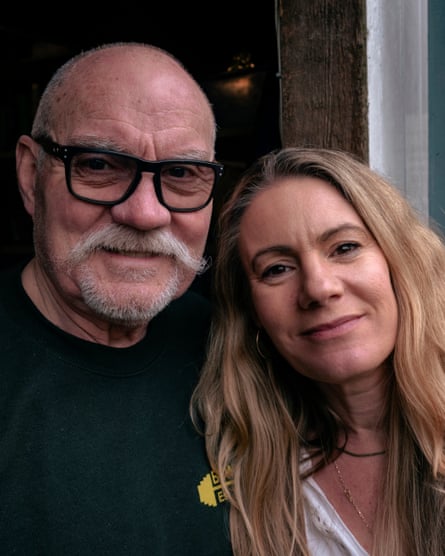
Recently, I asked Dad how he looked back on it all. “I was fortunate to have survived, but still suffer from the consequences of my drug addiction. There are many things I have done that I’m not proud of, many things I’m ashamed of, but I am proud that I owned up to my mistakes, that I asked for forgiveness from my wife and children, and that they found it in their hearts to forgive.” He returned to competing, drug free, and still won, “proving that drugs were not and are not necessary to win”.
In today’s internet age, the pressure on young boys – and girls – to look a certain way has never been stronger. All adolescents are deeply susceptible to the terrible triumvirate of fake news, peer pressure and an underdeveloped prefrontal cortex (the brain’s centre for risk assessment, impulse control and long-term planning). Many teenage boys are just after an easy way to get big quick, to not feel embarrassed when getting changed for PE, to impress a girl, or to not stick out like a sore thumb among the gym bros. But, despite what the internet influencers may promise, steroids always have – and still do – come with a serious health warning. My dad was a tough kid from the East End who grew up on a council estate in Essex and became a world champion weightlifter. He was the hardest man I knew. His mistake – like many others before and since – was to think that his strength would protect him from the pernicious physical and personality-changing side‑effects of anabolic steroids. It couldn’t.
Emma Fowle’s memoir All the Times You Were Not There by Emma Fowle (SPCK Publishing, £12.99). To support the Guardian, order your copy at guardianbookshop.com. Delivery charges may apply.
In the UK and Ireland, Samaritans can be contacted on freephone 116 123, or email jo@samaritans.org or jo@samaritans.ie. In the US, you can call or text the National Suicide Prevention Lifeline on 988, chat on 988lifeline.org, or text HOME to 741741 to connect with a crisis counselor. In Australia, the crisis support service Lifeline is 13 11 14. Other international helplines can be found at befrienders.org

















