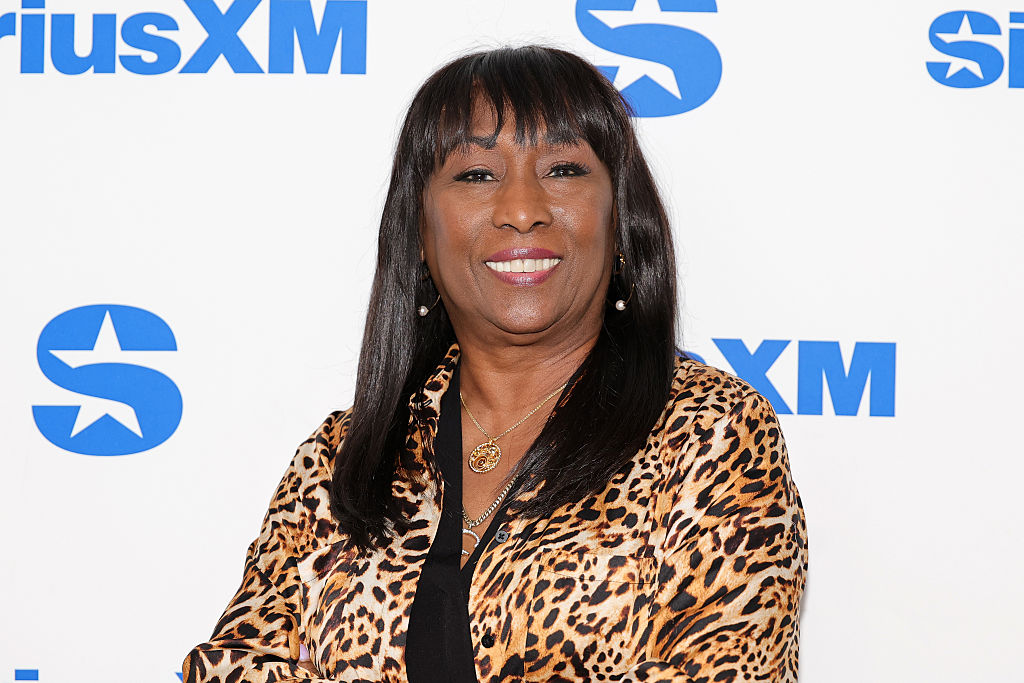
Cherished Showtime at the Apollo host Kiki Shepard died Tuesday of a massive heart attack. She was 74.
Her death was confirmed by a representative to TMZ. Her cause of death was widely reported by outlets including USA Today and PEOPLE.
Shepard hosted Showtime at The Apollo with Steve Harvey. The talent competition series that introduced the public to talents like H.E.R, Lauryn Hill, and more. Shepard was a fixture in the entertainment industry. Her work spanned across many genres.
She hosted the NBC series Live in Hollywood and the innovative TV One game show The Bid Whist Party Throwdown. She acted as well. Her onscreen credits include appearances on Grey’s Anatomy, A Different World, Everybody Hates Chris, Family Law, Baywatch, and NYPD Blue. She appeared in Broadway productions of Porgy and Bess, Your Arms Too Short to Box With God, and more.
She first embraced the stage in her hometown of Tyler, Texas where pageants helped her develop the energetic presence we would all come to appreciate on our screens. Later, she went on to be a dancer and travel with the D.C. Repertory Dance Company.
She used her platform as a public figure to champion compassionate causes, including the fight against Sickle Cell Disease, a condition that heavily affects the Black community. Her efforts to promote health and education were ongoing through her expansive career. She worked to distribute essentials to the community throughout the COVID-19 pandemic.
Shepard graduated from Howard University and was a proud member of the Delta Sigma Theta Incorporated sorority. Her death was met with an outpouring of love on social media, where the many people she inspired shared pictures of her warm smile.
Table of Contents
How Common Are Heart Attacks in The United States?
Heart attacks are myocardial infarctions. They are “caused by decreased or complete cessation of blood flow to a portion of the myocardium,” according to StatPearls. They range in level of severity from silent blips that might occur without notice to major incidents that can incapacate the persona. These are extremely common. According to the Centers for Disease Control (CDC), “In the United States, someone has a heart attack every 40 seconds” and 805,000 people have heart attacks annually.
Women Are Uniquely Impacted by Heart Disease
Heart disease affects millions of women. The risk of potentially having a heart attack rises with age but everyone can be impacted at any time. According to the CDC, “Heart disease is the leading cause of death for women in the United States and can affect women at any age.”
The majority of heart attacks portrayed in mainstream media reflect symptoms that are associated with the way they impact men. Women in distress can present differently, potentially leading to delays in diagnosis and treatment.
Some have credited the severity of the impact on women to the differences that they encounter in clinical settings. “Women are more likely to have a delayed diagnosis and are often undertreated in terms of dual antiplatelet therapy and hypolipidemic agents” and “Gender disparities concerning outcomes are likely due to a wide range of factors, including smaller coronary artery size in women, distinct plaque characteristics and a more significant role of CMD in the pathophysiology of coronary events,” according to Current Problems in Cardiology.
The American Heart Association revealed that women are more likely to die after a first heart attack than men in a 2022 report.
Heart Health and Black Women
Black women are disproportionately impacted by the threat of heart disease. They are extremely more likely to be struck down by it than others.
“Black women are more likely to have heart attacks than any other racial/ethnic group, often as a result of chronic stress and increased allostatic load,” according to the Preventive Cardiovascular Nurses Association.
The Journal of the American College of Cardiology reports that “Black women are disproportionately affected and have higher cardiovascular (CV) morbidity and mortality rates compared to women of other race/ethnicities.” A 2020 review from The Journal of Women’s Health stated that “Cardiovascular disease affects 47.3% of African American women, and African American women have the highest rates of hypertension, stroke, heart failure, and coronary artery disease observed among women in the United States.”
Our thoughts and prayers are with the loved ones of Shepard and anyone touched by her light.
Resources
European Journal of Cardiology
Current Problems in Cardiology
Preventive Cardiovascular Nurses Association.

















