Medically Reviewed
Dr. Jose Rossello, MD, PhD, MHCM
Preventive Medicine & Public Health Specialist
Last Reviewed: April 27, 2026
Finding the right haircare products feels overwhelming when store shelves are packed with hundreds of options. Many people waste money on products that don’t work because they don’t understand what their specific hair type actually needs. Each hair type has different characteristics that require tailored products and routines, from the way oils travel down the shaft in straight hair to how moisture escapes from curly and coily textures.
Understanding your hair type and its needs[1] starts with looking at texture, thickness, porosity, and elasticity. Straight hair might get oily quickly while curly hair struggles with dryness. Knowing these differences helps people choose products that actually improve their hair’s health and appearance instead of causing more problems.
The science behind hair structure explains why one person’s favorite shampoo might leave someone else with flat, greasy, or frizzy hair. Determining your hair type[2] involves examining natural texture patterns and understanding how hair absorbs and holds moisture. This knowledge transforms haircare from guesswork into a straightforward routine that delivers real results.
Table of Contents
Key Takeaways
- Different hair types need specific products based on their texture, thickness, and how they absorb moisture
- Identifying your natural hair pattern and characteristics helps you build an effective haircare routine
- Matching products to your hair’s unique needs prevents common problems like dryness, oil buildup, and frizz
Understanding Hair Types and Why They Matter
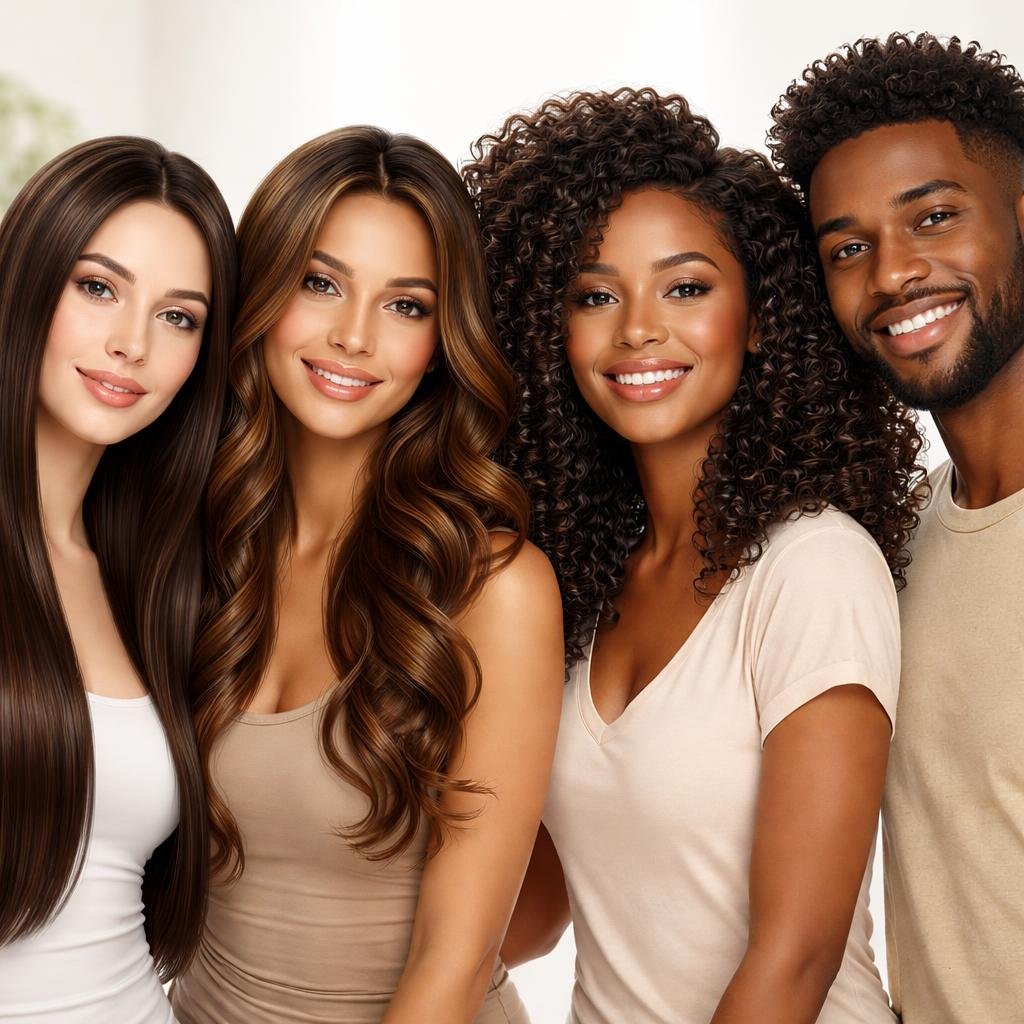
Hair typing gives you a framework to understand your strands’ natural behavior, while knowing your specific type helps you pick products and techniques that actually work. The system isn’t perfect, but it cuts through the confusion about why certain routines fail.
What Is Hair Typing?
Hair typing is a classification system that groups hair based on curl pattern and texture. The system uses four main categories[3]: Type 1 for straight hair, Type 2 for wavy, Type 3 for curly, and Type 4 for coily.
Each type breaks down further into A, B, and C subcategories. These letters show intensity—Type 2A has loose waves while Type 2C forms thick, pronounced S-shapes. Type 3A creates loose curls about the width of sidewalk chalk, and Type 4C has tight, dense coils.
The classification looks at three separate factors:
- Curl pattern from straight to coily
- Strand diameter measuring fine, medium, or coarse
- Porosity showing how hair absorbs moisture
Someone can have Type 3B curls with fine strands and high porosity. These traits work independently, which is why two people with the same curl pattern need different products.
Why Your Hair Type Influences Your Routine
Your hair type determines how sebum (natural oil) travels down each strand. Straight hair lets oil slide from root to tip easily, causing greasiness within 24 hours. Curly and coily patterns block this movement, leaving ends dry while roots stay oily.
Different hair types react differently to moisture and styling products[4]. Type 1 hair needs lightweight formulas to avoid flatness. Type 3 and 4 patterns require rich creams and oils because their structure makes moisture retention harder.
Porosity matters just as much as curl pattern. Low porosity hair absorbs less than 25% of moisture in five minutes. High porosity hair soaks up over 90% but loses it fast. This explains why a conditioner works for one person but sits on another’s hair doing nothing.
Washing frequency shifts by type too. Fine, straight strands need cleaning every 1-2 days. Coily hair thrives with weekly washes since over-washing strips essential moisture.
Common Hair Type Myths
Mixed hair types are normal, not exceptions. Most people have different patterns across their scalp. Hair at the crown might be 3A while the nape shows 3B curls. This happens because follicle shapes vary genetically across different areas.
Hair typing doesn’t predict what products you need alone. A Type 2B classification doesn’t tell the full story without knowing strand thickness and porosity. Two people with wavy hair might need completely different haircare routines based on these other factors.
Your hair type can shift over time. Hormones during pregnancy, menopause, or puberty change follicle behavior. Age shrinks follicles, often making hair finer. Chemical treatments alter hair texture[5] temporarily or permanently, moving someone from one category to another.
Ethnicity doesn’t determine hair type. While certain patterns appear more often in specific populations, over 86% of people worldwide have textured hair[6]—wavy, curly, or coily. Straight hair represents the minority globally.
How to Identify Your Hair Type Correctly
Understanding the specific characteristics of hair—from curl pattern to porosity levels—allows for better product selection and care routines. Accurate assessment involves examining multiple factors that work together to define individual hair needs.
Examining Curl Pattern and Natural Hair Texture
Hair texture refers to the shape or pattern[7] of individual strands and falls into four main categories. Type 1 is straight hair that lies flat and reflects light easily. Type 2 forms loose S-shaped waves that range from fine to coarse.
Type 3 shows defined curls or ringlets with more volume and texture. Type 4 features tight coils or zigzag patterns that appear dense. To properly identify your hair type[2] based on curl pattern, hair should air-dry naturally without products after washing.
The natural hair texture becomes most apparent when hair is clean and unstyled. Each curl type has subcategories (like 3A, 3B, 3C) that describe how tight or loose the pattern appears. Observing how hair behaves in its natural state provides the most accurate assessment of true texture.
Strand Thickness and Hair Density
Strand thickness measures the diameter of each individual hair fiber. Fine hair feels delicate between fingers and has a smaller diameter. Medium hair is thicker than fine but not as coarse, offering more resilience. Thick or coarse hair has the largest diameter and feels substantial to the touch.
Hair thickness can be tested[8] by holding a single strand between fingers—if it’s barely felt, the hair is fine; if it’s easily felt, it’s thick. Hair density is different from strand thickness. It refers to how many strands grow per square inch on the scalp.
Density levels include:
- Low density: Scalp is easily visible when hair is parted
- Medium density: Scalp shows somewhat when parted
- High density: Scalp is barely visible even with a part
These two factors work together but need separate assessment. Someone can have fine strands but high density, or thick strands with low density.
Assessing Your Scalp: Oily, Dry, or Balanced
Scalp condition affects how often hair needs washing and which products work best. An oily scalp produces excess sebum that makes hair look greasy within a day or two of washing. A dry scalp feels tight, may show flaking, and produces less natural oil.
A balanced scalp maintains comfortable moisture without excessive oil production. To assess scalp type, examine hair 24 hours after washing without using styling products. Hair that looks greasy or feels slick at the roots indicates an oily scalp. Tightness, itching, or visible flakes suggest a dry scalp.
The scalp type can change with seasons, stress, or hormonal shifts. Regular assessment helps adjust hair care routines as needed. Understanding scalp characteristics[5] is just as important as knowing hair texture since the scalp is where hair health begins.
Porosity and Elasticity Tests
Hair porosity describes how well strands absorb and retain moisture. Low porosity hair has tightly closed cuticles that resist moisture penetration and often experiences product buildup. Medium porosity absorbs moisture at a balanced rate. High porosity hair has open cuticles that quickly absorb water but also lose it rapidly.
The float test checks porosity: place a clean strand in water and observe. Hair that floats has low porosity, hair that sinks slowly has medium porosity, and hair that sinks quickly indicates high porosity. High porosity hair[7] typically needs more frequent hydration treatments.
Elasticity measures how much hair can stretch before breaking. Healthy hair with high elasticity stretches when wet and returns to its original length. Low elasticity means hair breaks easily when pulled, signaling damage or dryness. Testing involves gently stretching a wet strand—if it snaps immediately, elasticity is low and protein treatments may help.
Unique Needs of Each Hair Type
Hair types include straight, wavy, curly, and coily[9], and each one faces different challenges when it comes to maintaining healthy hair. The texture and curl pattern of your hair determines how oil moves down the strand, how much moisture it retains, and what styling concerns you’ll encounter most often.
Straight Hair: Shine, Volume, and Oil Control
Straight hair has a smooth cuticle that allows natural oils to travel easily from the scalp to the ends. This creates natural shine but can also lead to oily roots within a day or two of washing.
The main challenge for straight hair is maintaining volume at the roots. Hair lies flat against the scalp, making it look limp or lifeless. Heavy products weigh down straight strands quickly.
Key care strategies include:
- Using lightweight conditioners only on the ends
- Choosing volumizing shampoos that don’t strip too much oil
- Avoiding silicone-heavy products near the roots
- Washing more frequently to prevent oil buildup
Straight hair benefits from regular trims to prevent split ends from traveling up the shaft. The smooth texture makes damage more visible than on textured hair types.
Wavy Hair: Balancing Hydration and Definition
Wavy hair sits between straight and curly, creating unique needs that don’t fit neatly into either category. The bends in wavy strands slow down oil distribution, causing roots to get oily while ends remain dry.
This hair type struggles with frizz control because the cuticle lifts slightly at each wave. Humidity causes waves to either go completely straight or frizz out unpredictably.
Wavy hair needs products that provide enough moisture without weighing down the natural pattern. Light gels or mousses help define waves without crunchiness. Leave-in conditioners work better than heavy creams.
The key is finding balance. Too much moisture makes waves fall flat. Too little causes frizz and undefined texture. Most people with wavy hair benefit from air drying or diffusing on low heat rather than blow drying straight.
Curly Hair: Maximizing Moisture and Frizz Control
Curly hair has the most difficulty retaining moisture because natural oils cannot easily travel down the spiral shape of each strand. The twisted structure creates multiple points where the cuticle lifts, leading to chronic dryness.
Frizz control becomes the primary concern for curly hair. The lifted cuticles allow moisture to enter and exit rapidly, causing strands to expand and create a frizzy appearance. This is especially problematic in humid conditions.
Essential curly hair needs:
- Deep conditioning treatments weekly
- Products with ingredients like shea butter or oils
- Minimal brushing when dry to prevent breakage
- Gentle detangling with fingers or wide-tooth combs when wet
Curly hair requires the “squish to condish” method where conditioner is worked into soaking wet hair and squished upward to encourage curl formation. Heat styling should be minimized, as curly hair is more prone to heat damage than straight hair.
Coily and Kinky Hair: Gentle Care and Moisture Retention
Coily and kinky hair has the tightest curl pattern with sharp angles and z-shaped bends. This structure makes it the most fragile hair type and the driest because oils cannot navigate the tight coils.
Elevate Your Health for Just $29.99/Month
Join the Precision Wellness Subscription at My Healing 365 and get discounted services, priority coaching access, virtual care, and exclusive wellness resources to support your physical, emotional, and hormonal health.
Join for $29.99/MonthThe hair appears dense but is actually quite delicate. Each bend in the strand creates a weak point where breakage can occur. Rough handling causes significant damage.
Moisture retention is critical for coily hair health. This hair type needs rich butters, oils, and creams applied to damp hair and sealed in with heavier products. The LOC method (liquid, oil, cream) helps layer moisture effectively.
Protective styling reduces manipulation and breakage. Styles like twists, braids, and buns keep ends tucked away and minimize daily handling. Coily hair should never be brushed dry, as this causes severe breakage and disrupts the natural curl pattern.
Nighttime protection with satin or silk bonnets prevents friction against cotton pillowcases that strips moisture and causes tangles.
How Hair Structure, Thickness, and Porosity Affect Your Routine
Hair structure and strand thickness determine how much product you need and how often you should wash, while porosity controls how well your hair absorbs and retains moisture.
Fine, Medium, and Thick Hair Needs
Fine hair has a smaller diameter and can easily become weighed down by heavy products. People with fine hair should use lightweight formulas like mousses and serums instead of thick creams or oils. This hair type often needs more frequent washing because oils from the scalp travel down the strand faster.
Medium hair offers more flexibility with products. This hair thickness can handle most standard conditioners and styling products without becoming greasy or staying dry.
Thick hair and coarse hair have a larger strand diameter and need more product to achieve full coverage. These hair types benefit from rich creams, butters, and oils that provide lasting hydration. Thick hair can go longer between washes since natural oils take more time to coat each strand.
Product amounts by thickness:
- Fine hair: Dime-sized portions
- Medium hair: Nickel to quarter-sized portions
- Thick hair: Quarter to half-dollar-sized portions
Porosity: Adjusting for Moisture Retention and Protein Balance
Hair porosity determines how well your strands absorb and hold onto moisture[10]. Low porosity hair has tightly closed cuticles that resist water and product absorption. This hair structure needs heat when deep conditioning and lightweight, water-based products that won’t sit on the surface.
High porosity hair has raised or damaged cuticles that let moisture in quickly but can’t retain it. This type needs heavier oils and butters to seal moisture inside the hair shaft. Protein treatments help fill gaps in the cuticle layer.
Medium porosity hair maintains a good balance naturally. It needs both moisture and protein in moderate amounts to stay healthy.
All porosity types should avoid over-using protein, which makes hair stiff and brittle when applied too often.
Dealing With Damaged or High Porosity Hair
Damaged hair typically becomes high porosity through heat styling, chemical treatments, or environmental stress. Split ends and breakage signal that the cuticle layer has been compromised. A weekly hair mask containing protein helps temporarily repair these gaps in the hair structure.
Key treatments for damaged hair:
- Deep conditioning with biotin and keratin weekly
- Cool water rinses to help close cuticles
- Leave-in conditioners for ongoing hydration
- Reducing heat styling to prevent further damage
Damaged hair needs both moisture and protein, but the ratio matters. Too much protein without moisture causes breakage, while too much moisture without protein leads to weak, stretchy strands. Alternating between protein treatments and moisture-rich hair masks every other week helps restore balance to compromised hair structure.
Building a Custom Haircare Routine for Your Hair Type
A successful haircare routine requires selecting products that match specific hair needs and adjusting care based on texture, density, and environmental factors. The right combination of cleansing, conditioning, and protective products keeps hair healthy while preventing common issues like split ends and heat damage.
Shampoo and Conditioner Selection
The foundation of any hair routine starts with choosing the right shampoo and conditioner pair. Fine hair benefits from lightweight formulas that clean without adding heavy residue, while thick or coarse hair needs richer, more moisturizing products.
A hydrating shampoo works well for dry or color-treated hair types, as it cleanses while maintaining moisture levels. Those with oily scalps should look for clarifying shampoo options to use weekly, removing buildup from styling products and excess oils.
Curly and coily hair types often respond better to a cleansing conditioner, which gently cleanses without stripping natural oils. Straight and wavy hair typically handles traditional shampoo formulas well, though the specific ingredients matter more than the hair type itself.
People with damaged hair should seek products that align with their actual needs[11] rather than generic solutions. Sulfate-free options protect color and reduce irritation for sensitive scalps.
Incorporating Hydration, Masks, and Leave-In Conditioners
Deep conditioning treatments address specific hair concerns beyond daily washing. A hair mask applied once or twice weekly provides intensive moisture for dry, damaged, or chemically treated hair.
Hydration treatment frequency by hair type:
| Hair Type | Hair Mask Frequency | Leave-In Conditioner Use |
|---|---|---|
| Fine/Straight | Every 7-10 days | Light application on ends |
| Wavy/Medium | Every 5-7 days | Mid-length to ends |
| Curly/Thick | Every 3-5 days | Throughout hair |
| Coily/Very Dry | Every 2-3 days | Generous application |
A leave-in conditioner provides ongoing moisture between washes. Fine hair needs only a small amount on the ends, while thick or curly hair can handle more generous application throughout the length.
Protein treatments help repair damage by temporarily filling gaps in the hair shaft. These work best when used monthly for most hair types, though damaged hair may benefit from bi-weekly applications. Ingredients like hyaluronic acid help hair retain moisture without weighing it down.
Heat Protection and Damage Prevention
Heat damage remains one of the most common causes of split ends and breakage. A heat protectant creates a barrier between hair and styling tools, reducing moisture loss and structural damage.
Anyone using blow dryers, flat irons, or curling tools should apply heat protection before every styling session. These products work best on damp hair, distributed evenly from roots to ends.
Essential damage prevention steps:
- Apply heat protectant to towel-dried hair before blow drying
- Use the lowest effective temperature setting on styling tools
- Limit heat styling to 2-3 times per week when possible
- Keep flat irons and curling tools moving rather than clamping in one spot
- Allow hair to air dry partially before using heat tools
Split ends cannot be repaired with products alone. Regular trims every 8-12 weeks remove damaged ends and prevent splits from traveling up the hair shaft. Those who frequently use heat should consider trimming every 6-8 weeks instead.
Routine Adjustments for Seasonal and Lifestyle Changes
Hair needs shift throughout the year based on humidity, temperature, and activity levels. Winter often requires more intensive moisture, while summer may need lighter products and increased UV protection.
Cold weather dries out hair and scalp, making a switch to more hydrating formulas necessary. Indoor heating further depletes moisture, so increasing hair mask frequency helps combat dryness during these months.
Hot, humid conditions cause frizz for many hair types. Anti-humidity products and lighter leave-in formulas work better than heavy creams. Swimmers need a clarifying shampoo to remove chlorine and salt buildup that damages hair structure.
Lifestyle factors also impact a custom routine[12]. People who exercise daily may need to wash hair more frequently or use dry shampoo between washes. Those in polluted urban environments benefit from weekly clarifying treatments to remove environmental buildup.
Hormonal changes, medication, and stress can alter hair texture and oil production. Adjusting products when these changes occur maintains hair health rather than fighting against new characteristics.
Essentials for Styling and Protecting Different Hair Types
Each hair texture requires specific styling products and techniques to look its best while staying healthy. The right tools and protective approaches can prevent damage and enhance natural beauty.
Choosing Styling Products by Texture
Straight hair performs best with lightweight styling products that add hold without creating grease or flatness. Mousses and light sprays work well for adding volume and movement. These formulas prevent the heavy, weighed-down appearance that happens with thick creams or oils.
Wavy hair benefits from products containing argan oil or shea butter that control frizz while maintaining texture. Light creams and anti-frizz serums help define waves without making them crunchy or stiff. People with wavy hair should avoid heavy gels that can pull down their natural pattern.
Curly hair needs moisture-rich shampoos and conditioners[13] to maintain definition and prevent dryness. Curl creams and leave-in products with hydrating ingredients keep curls soft and bouncy. These hair products should contain natural oils that seal in moisture throughout the day.
Coily hair requires the richest formulations with oils like coconut, olive, or shea butter. Daily leave-in conditioners and hydrating mists maintain moisture between wash days. These textures need products that provide both hydration and hold to maintain curl patterns.
Volumizing Solutions for Fine and Straight Hair
Fine hair loses volume quickly without the right products and techniques. Volumizing products like root-lifting sprays and texturizing powders create lift at the scalp. These formulas add body without the stiffness that comes from traditional hairsprays.
Blow-drying with a round brush lifts hair at the roots while creating shape. The key involves directing airflow upward and away from the scalp. People with fine hair should focus heat at the roots first, then work down to the ends.
Dry shampoo serves as both a cleansing and volumizing product between washes. It absorbs oil at the roots that can flatten hair against the head. This approach extends time between washes while maintaining lift and texture.
Protective Styles and Maintenance for Coily Hair
Protective styles like braids, twists, or buns[13] shield coily hair from friction and breakage. These styles reduce daily manipulation that can damage fragile strands. The less handling coily hair receives, the better it retains moisture and length.
Braids and twists should be installed without excessive tension that can stress the hairline. Gentle styling preserves the hair’s integrity while still offering protection. These styles typically last one to three weeks depending on the technique used.
Maintaining protective styles requires regular moisturizing with leave-in conditioners or oils. Covering hair at night with a silk or satin scarf prevents friction against cotton pillowcases. This nighttime routine keeps styles fresh and hair hydrated.
Tools and Techniques: From Diffusers to Braids and Twists
A diffuser attachment distributes heat evenly across curly and coily hair without disrupting curl patterns. This tool prevents the frizz that comes from direct airflow. The diffuser cups curls gently while drying them in their natural shape.
Wide-tooth combs work best for detangling curly and coily textures when hair is wet and conditioned. Brushes can break apart curl patterns and cause unnecessary breakage. Combing from ends to roots prevents pulling and damage.
Heat protectant sprays shield all hair types from damage when using hot tools. These products create a barrier between hair and temperatures that can cause dryness. Anyone using flat irons, curling wands, or blow dryers needs this protection.
Frequently Asked Questions
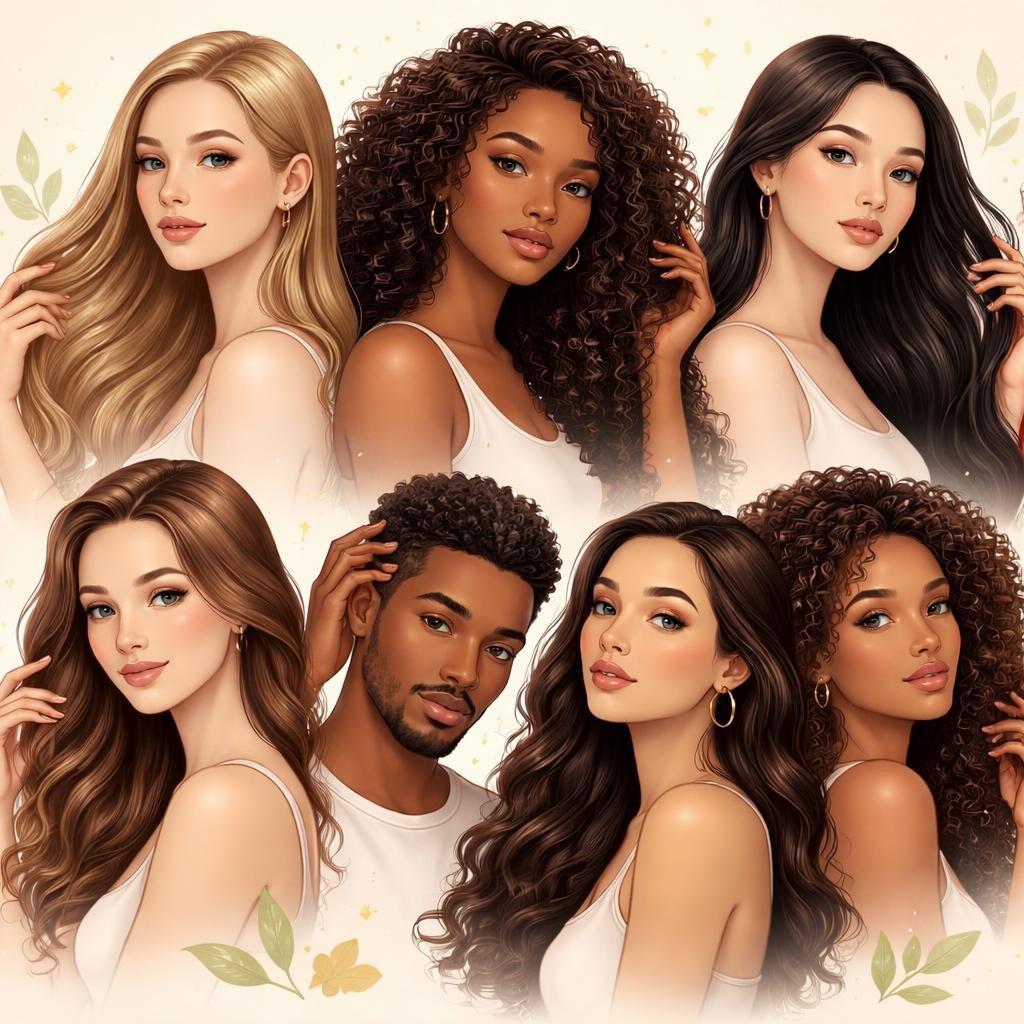
Finding the right hair care approach involves understanding your specific hair characteristics and choosing products that work with your natural texture. These common questions address the practical steps needed to build an effective hair routine.
How can I determine the best products for my specific hair type?
The first step is to wash and air dry hair without any styling products to see its natural pattern. Hair types range from straight (Type 1) to wavy (Type 2) to curly (Type 3) to coily (Type 4)[9], with each category broken into subtypes based on texture and thickness.
Straight hair typically needs volumizing shampoos and lightweight conditioners that won’t make it greasy. Wavy hair benefits from light hydrating products and frizz-control gels.
Curly and coily hair requires more moisture-rich formulas. These hair types need deep conditioning treatments and leave-in products to combat dryness. The tighter the curl pattern, the more hydration the hair needs to stay healthy.
People should look for products specifically formulated for their hair type and avoid harsh ingredients like sulfates. These chemicals can strip natural oils from the hair shaft.
What are the essential nutrients and ingredients for maintaining healthy hair?
Hair health starts with proper moisture balance. Conditioners containing coconut oil or jojoba oil help fine hair without weighing it down. Thicker, curlier hair needs richer ingredients like shea butter and argan oil.
Protein treatments strengthen hair by improving elasticity. Hair with high elasticity can stretch without breaking, while brittle hair with low elasticity snaps easily.
Hydrating ingredients become more important as curl patterns tighten. Coily hair is naturally drier because oil has difficulty traveling down curved hair shafts[9]. These hair types need intensive moisturizing products to prevent breakage.
How do I identify my hair’s porosity and why is it important for product selection?
Porosity measures how much moisture hair absorbs and holds[9]. A simple test involves placing a clean strand of hair in a bowl of water. Hair that sinks has high porosity, while hair that floats has low porosity.
High porosity hair has gaps in the cuticle layer that let moisture escape quickly. This often results from chemical treatments or heat damage. These gaps make hair frizzy and require extra conditioning to retain moisture.
Low porosity hair has tightly sealed cuticles that resist moisture absorption. This hair type needs lighter products that won’t build up on the surface.
Medium porosity is ideal because the cuticle maintains a healthy moisture balance. Products penetrate effectively without causing buildup or excessive dryness.
What routine should I follow to enhance the natural texture of my hair?
Washing frequency depends on hair type. Straight hair produces more visible oil and typically needs washing every other day. Wavy hair can go three days between washes[9].
Curly hair should be washed once per week to prevent dryness. Coily hair needs washing every two to three days with mild shampoo followed by leave-in conditioner.
Styling techniques also vary by texture. Straight hair benefits from layers and texture at the ends to create movement. Curly hair needs layers to reduce weight and prevent the hair from becoming too heavy.
Type 4 coily hair requires internal layers for shape[9]. Styles like braids and twists work well with this texture. Air drying or using a diffuser attachment helps maintain curl definition without causing damage.
Can diet and lifestyle changes impact the health of different hair types?
Hair growth and strength depend partly on nutrition. Protein supports hair structure, while vitamins and minerals promote healthy follicles. Adequate hydration helps maintain moisture levels in the hair shaft.
External care matters more than diet for managing specific hair textures. The shape of hair follicles determines whether hair grows straight or curly, and genetics control these characteristics.
Lifestyle factors like stress and sleep quality can affect hair health. Poor sleep or high stress levels may disrupt the hair growth cycle. This cycle includes a growth phase, a resting phase, and a shedding phase.
Heat styling and chemical treatments cause more visible damage to hair health than most dietary factors. Limiting these practices helps prevent cuticle damage that leads to high porosity and breakage.
What are the key differences in hair care for curly vs. straight hair?
Straight hair distributes oil easily from root to tip, making it shinier but also greasier. This hair type needs frequent washing with volumizing products. It holds heat styles well but lacks natural body and movement.
Curly hair struggles with dryness because oil cannot travel down curved strands efficiently. This creates the need for moisturizing products and less frequent washing. Frizz is a common challenge that requires specific anti-frizz formulas.
Product weight makes a big difference. Straight hair needs lightweight formulas to avoid appearing flat and greasy[9]. Curly hair can handle heavier creams and butters that provide essential moisture.
Brushing techniques also differ between textures. Straight hair tolerates regular brushing, while curly hair should be detangled gently with fingers or wide-tooth combs. Aggressive brushing breaks curly hair and disrupts the natural curl pattern.
Post Views: 5
References
- The Science of Haircare: Understanding Your Hair Type and Needs. https://rethinkbeautiful.com/tip-of-the-day/the-science-of-haircare-understanding-your-hair-type-and-needs/ Accessed April 29, 2026
- 7 Ways to Determine Hair Type. https://www.wikihow.com/Determine-Hair-Type Accessed April 29, 2026
- Types of Hair Explained: Understanding All Specific Hair Types. https://www.newbeauty.com/types-of-hair-how-to-figure-out-your-hair-type/ Accessed April 29, 2026
- Different hair types react differently to moisture and styling products. https://www.realsimple.com/how-to-know-your-hair-type-8715327 Accessed April 29, 2026
- What is My Hair Type? How to Find Out, The Right Way. https://www.latest-hairstyles.com/advice/what-is-my-hair-type.html Accessed April 29, 2026
- Hair Texture Types Explained: Your Complete Guide to Every Type. https://theglossylocks.com/hair-texture-types-explained/ Accessed April 29, 2026
- How to Identify Your Hair Type: A Complete Guide – Kerotin. https://kerotin.com/blogs/featured/how-to-identify-your-hair-type-a-complete-guide Accessed April 29, 2026
- Hair Type: How to Finally Identify Yours the Right Way. https://www.activatedbeauty.com/how-to-identify-your-hair-type/ Accessed April 29, 2026
- Hair Types: Straight, Wavy, Curly, and Coily. https://www.webmd.com/beauty/hair-types Accessed April 29, 2026
- Hair Porosity Test & Best Care Tips: What is Your Type?. https://www.drserkanaygin.com/blog/hair-porosity/ Accessed April 29, 2026
- How to Build a Hair Care Routine That Actually Works for Your Hair Type. https://literallydarling.com/blog/2025/08/01/how-to-build-a-hair-care-routine-that-actually-works-for-your-hair-type/ Accessed April 29, 2026
- How to take care of your hair with a custom haircare routine. https://www.lorealprofessionnel.com/hair-mag-ultimate-haircare-routine Accessed April 29, 2026
- How to Care for Your Hair Based on Its Type. https://bioma.health/blog/how-to-care-for-your-hair-based-on-its-type/ Accessed April 29, 2026

























