Medically Reviewed
Dr. Jose Rossello, MD, PhD, MHCM
Preventive Medicine & Public Health Specialist
Last Reviewed: May 31, 2026
Your bedroom does more than hold your bed. The way you set up your space affects how quickly you fall asleep, how often you wake up, and how rested you feel in the morning. A sleep-optimized bedroom[1] focuses on controlling light, sound, temperature, and clutter to help the body settle faster and stay asleep longer.
Most people overlook simple changes that make a real difference. Blackout curtains block early sunlight. A cooler room helps the body temperature drop naturally before sleep. Moving a phone charger across the room reduces late-night scrolling.
This checklist walks through each part of the bedroom, from mattress choice to furniture placement. The goal is a space that supports rest without requiring expensive gadgets or total overhauls.
Table of Contents
Key Takeaways
- Controlling light, sound, and temperature creates conditions that help the body fall asleep and stay asleep
- Small changes like blackout curtains, cooler room settings, and moving devices away from the bed reduce common sleep disruptions
- Bedroom organization and thoughtful furniture placement remove distractions and support consistent sleep routines
Choosing the Best Sleep Surface
Your mattress, bed frame, and pillows form the foundation of quality sleep. The right combination supports your spine, reduces pressure points, and creates a comfortable space for rest.
Finding the Right Mattress for Your Body and Sleep Style
A quality mattress should match your sleep position and body weight. Side sleepers typically need softer surfaces to cushion shoulders and hips, while back and stomach sleepers benefit from firmer support.
Memory foam mattresses conform to body shape and isolate motion between partners. They work well for side sleepers and people with joint pain. Innerspring mattresses offer stronger support with more bounce and better airflow. Hybrid options combine foam comfort layers with innerspring support cores.
The best mattress maintains spinal alignment throughout the night. A person should be able to slide their hand under the small of their back when lying down, but the gap shouldn’t be too large. Most mattresses last 7-10 years before they lose support and need replacement.
Firmness preferences vary by individual. A mattress protector extends the life of any mattress by blocking spills, dust mites, and allergens while keeping the surface clean.
Bed Frames, Platform Beds, and Foundations Explained
Platform beds[2] feature a solid or slatted surface that supports a mattress directly without requiring a box spring. They sit lower to the ground and offer a modern, streamlined look. Many platform beds include built-in storage drawers underneath.
Storage beds maximize bedroom space by incorporating drawers or lift-up compartments. These work well in smaller rooms where under-bed storage helps reduce clutter.
Traditional bed frames require a box spring or foundation between the frame and mattress. Box springs add height and some cushioning, though modern foam mattresses often don’t need them. A sleigh bed features curved head and footboards for a classic appearance, while canopy beds include four posts that can support fabric drapes.
The foundation should remain sturdy and squeak-free. Wooden slats should sit no more than 3 inches apart to prevent sagging.
Pillows and Mattress Protectors for Comfort and Health
Pillows keep the head and neck aligned with the spine during sleep. Side sleepers need thicker, firmer pillows to fill the space between the shoulder and head. Back sleepers require medium-height pillows, while stomach sleepers do best with thin, soft options.
Fill materials include memory foam, down, polyester, and latex. Memory foam holds its shape and provides consistent support. Down offers softness but requires regular fluffing. Most pillows need replacement every 1-2 years.
A mattress protector creates a barrier against moisture, allergens, and dust mites. Waterproof versions prevent spills from reaching the mattress while breathable fabrics maintain airflow. This simple addition protects the investment in a quality mattress and improves sleep hygiene.
Decorative pillows add visual appeal but should be removed before sleep to avoid clutter on the sleep surface.
Optimizing Bedding and Textiles for Sleep
The right bedding creates a comfortable sleep surface while helping regulate body temperature throughout the night. Quality sheets, appropriate blankets, and thoughtful material choices work together to support uninterrupted rest.
Bedding Layers: Sheets, Blankets, and Comforters
A well-designed bed uses multiple layers that can be adjusted based on individual comfort needs. The foundation starts with fitted and flat sheets that stay smooth against the mattress and skin. These base layers should fit properly without bunching or pulling loose during sleep.
The middle layer typically includes a blanket or lightweight comforter that provides warmth without excessive weight. Many sleepers benefit from having this adjustable layer that can be easily added or removed as body temperature fluctuates during different sleep stages.
The top layer often features a duvet or comforter that adds visual appeal while offering additional warmth when needed. This outermost layer can be heavier during cold months and swapped for a lighter option during warmer seasons. Regularly washing bedding[2] keeps the bed feeling fresh and reduces dust and allergen buildup.
Selecting the Right Materials for Temperature Control
Different fabrics affect how well the body maintains comfortable temperature during sleep. Cotton sheets remain popular because they breathe well and wick moisture away from skin. Linen offers excellent temperature regulation and becomes softer with each wash.
Bamboo-derived fabrics provide natural cooling properties and resist bacterial growth. Microfiber materials cost less but may trap more heat than natural fibers. Wool blankets regulate temperature effectively by insulating when cold and releasing heat when warm.
Thread count matters less than fiber quality and weave type. A 300-400 thread count in quality cotton often performs better than higher counts made from inferior materials. Percale weaves create crisp, cool sheets while sateen weaves feel softer and warmer.
Extra Blankets, Throws, and Decorative Touches
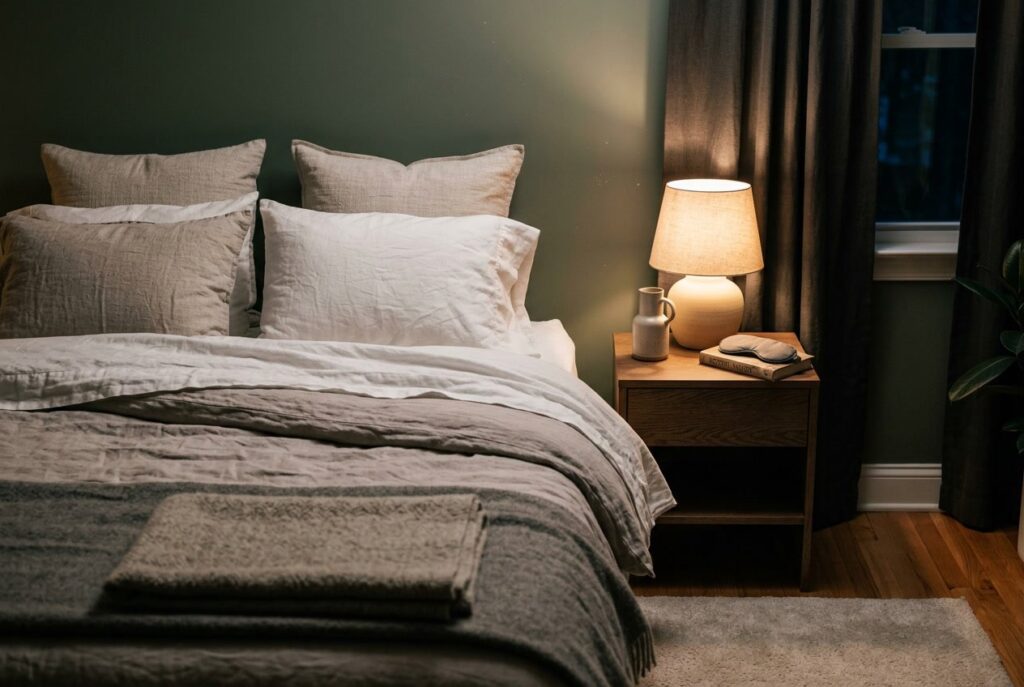
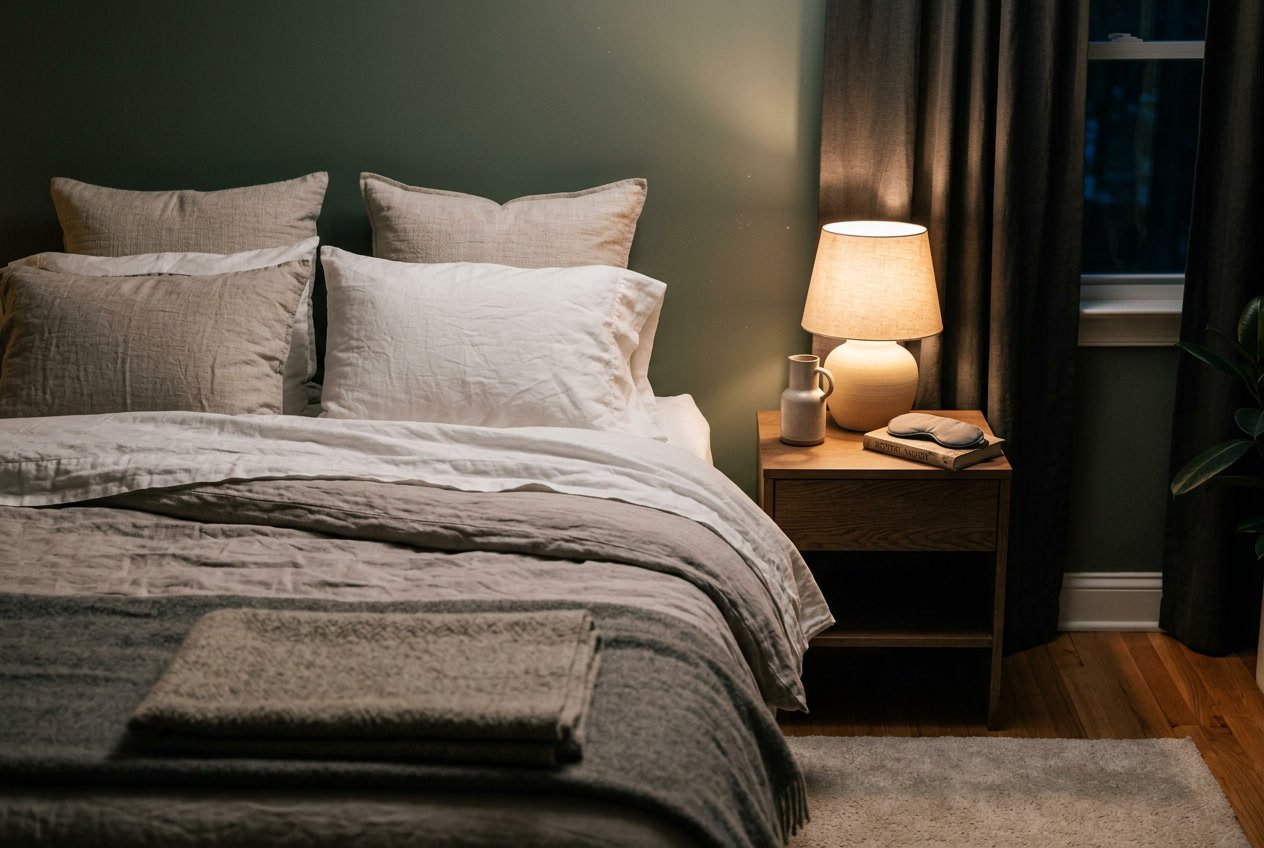
Keeping extra blankets within reach allows for quick temperature adjustments without fully waking. A folded throw blanket at the foot of the bed or draped over a nearby chair provides an accessible option when additional warmth becomes necessary during the night.
Throw blankets serve both functional and aesthetic purposes in bedroom design. They add texture and color while remaining available for use during reading or relaxing before sleep. A bedroom rug or area rug placed beside the bed cushions feet when getting up and adds warmth to the overall space.
Decorative pillows should be removed before sleep to avoid clutter on the sleeping surface. Storage solutions like a bedside basket or bench keep these items organized and off the floor.
Controlling Light and Darkness
Light exposure directly affects sleep quality by influencing melatonin production and circadian rhythm. Complete darkness helps the body recognize when it’s time to sleep, while proper lighting choices during waking hours support healthy sleep patterns.
Curtains, Blackout Curtains, and Blinds
Window treatments serve as the first line of defense against external light sources. Blackout curtains block up to 99% of outside light and work especially well for people who sleep during daylight hours or live in areas with bright streetlights. Regular curtains provide partial light blocking but may not be sufficient for complete darkness.
Blinds offer adjustable light control throughout the day. When paired with curtains, they create layers of protection against unwanted light. The combination allows for flexibility during daytime while providing maximum darkness at night.
Installation matters as much as the product itself. Curtains should extend several inches beyond the window frame on all sides to prevent light leaks around the edges. Light disrupts sleep through even small gaps[3], so proper mounting and sizing are essential for effectiveness.
Smart Lighting Solutions
Bedroom lighting should support both evening wind-down routines and nighttime darkness. A bedside lamp with warm, low-intensity bulbs helps prepare the body for sleep without triggering alertness. Table lamps with dimmer switches provide control over brightness levels as bedtime approaches.
Ambient lighting creates a relaxing atmosphere without being too bright. Wall sconces positioned away from direct eye contact offer gentle illumination for evening activities. Floor lamps in corners can provide soft background light that doesn’t interfere with melatonin production.
Avoid overhead ceiling lights within two hours of bedtime. Chandeliers and bright ceiling fixtures produce too much light and can delay sleep onset. If a ceiling light or ceiling fan with lighting is necessary, use the lowest setting possible or switch to dedicated task lighting like bedside lamps instead.
Managing Gadgets and Screens
Electronic devices emit blue light that suppresses melatonin and signals the brain to stay awake. Phones, tablets, and televisions should be removed from the bedroom or kept out of arm’s reach. Charging stations belong in another room to eliminate the temptation of late-night scrolling.
Small indicator lights from electronics create unnecessary light pollution. Chargers, alarm clocks, and other devices with LED displays should be turned away from the bed or covered with tape. Even these tiny lights can disrupt sleep quality throughout the night.
Minimizing screen time before bed[2] improves both sleep onset and overall sleep quality. If devices must remain in the bedroom, enable night mode settings and keep screens at least one hour before intended sleep time.
Noise and Distraction Minimization
Unwanted sounds disrupt sleep cycles and prevent deep rest. A bedroom needs specific noise control solutions like white noise machines, sound-absorbing materials, and physical barriers to create consistent quiet.
White Noise, Earplugs, and Machines
A white noise machine produces steady background sound that masks sudden noises like traffic or footsteps. The constant hum prevents the brain from registering sharp sounds that trigger wakefulness.
Common white noise options include:
- Dedicated white noise machines with volume and tone controls
- Smartphone apps that play continuous ambient sounds
- A ceiling fan that provides gentle air circulation and steady noise
- Desktop fans positioned away from direct airflow on the bed
Earplugs offer a different approach by physically blocking sound from entering the ear canal. Foam earplugs expand to create a seal and reduce noise by 20-30 decibels. Silicone or wax earplugs mold to the ear shape for a custom fit.
Some people combine both methods. A white noise machine handles background sounds while earplugs block remaining disturbances. This layered approach works well for noise-free sleep in particularly disruptive environments[4].
The volume matters. White noise should remain just loud enough to cover interruptions without becoming a distraction itself.
Sound-Absorbing Furnishings and Layout
Hard surfaces like bare walls and wood floors bounce sound around the room. Soft materials absorb noise instead of reflecting it back.
A bedroom rug with thick padding underneath reduces sound transmission through floors and dampens echoes. Larger rugs covering most of the floor space provide better noise reduction than small accent pieces.
Effective sound-absorbing furnishings:
- Heavy curtains or layered drapes over windows
- Upholstered headboards against the wall
- Filled bookshelves that break up sound waves
- Fabric wall hangings or tapestries on bare walls
Room layout affects noise levels too. Placing the bed against an interior wall instead of an exterior wall reduces outdoor noise exposure. A tall dresser or bookshelf positioned between the bed and a noisy wall adds another sound barrier.
Bedding itself contributes to noise absorption. Thick duvets, multiple pillows, and heavier blankets all help soften the acoustic environment.
Weatherstripping and Noise Barriers
Sound travels through gaps around doors and windows just like air drafts. A crack even a few millimeters wide lets in substantial noise from hallways and streets.
Weatherstripping seals these openings with foam or rubber strips that attach to door and window frames. The adhesive-backed material compresses when the door or window closes to create an airtight seal.
Door sweeps attach to the bottom of bedroom doors and block the gap between the door and floor. These prevent noise from passing underneath into the sleeping space.
Key installation points:
| Location | Solution | Purpose |
|---|---|---|
| Door bottom | Door sweep | Blocks hallway noise |
| Door edges | Foam weatherstripping | Seals frame gaps |
| Window frames | Rope caulk or weatherstripping | Stops outdoor sounds |
Window gaps need attention too. Tightening loose window locks pulls the window tighter against its seal. Rope caulk is a removable putty that fills persistent gaps around window glass without permanent changes.
Draft stoppers provide instant results. These fabric tubes sit at the door base and block noise immediately without tools or installation.
Regulating Temperature and Humidity
Your body needs specific temperature and moisture levels to move through sleep cycles properly. Getting these conditions right prevents night sweats, respiratory irritation, and sleep disruptions that fragment rest.
Ideal Bedroom Temperature for Sleep
The best bedroom temperature for sleep falls between 65-68°F[5]. This range matches the natural drop in core body temperature that happens during sleep stages.
Temperatures above 70°F can reduce time spent in deep sleep and REM sleep. The body struggles to cool down when the room feels warm or stuffy. Temperatures below 60°F may cause shivering and frequent wake-ups during the night.
A programmable thermostat helps maintain consistent temperature throughout the night. For people who sleep hot, setting the temperature to 65°F works better than 68°F. Those who sleep cold can add blankets rather than raising the room temperature.
Temperature adjustment methods:
- Set thermostat 1-2 hours before bed
- Use a ceiling fan on low speed for air movement
- Keep bedroom doors open during the day to prevent heat buildup
- Close blinds during hot afternoons to block solar heat
Humidifiers, Hygrometers, and Air Circulation
Indoor humidity should stay between 30-50% for comfortable sleep. Humidity levels above 60% increase wakefulness[6] and reduce time in restorative sleep stages.
A hygrometer measures relative humidity in the bedroom. These devices cost $10-30 and show whether a humidifier or dehumidifier is needed. Digital models display both temperature and humidity on one screen.
Dry air below 30% humidity causes throat irritation, dry skin, and nasal congestion. A humidifier adds moisture back into the air during winter months or in dry climates. Cool-mist models work better for bedrooms than warm-mist versions that can raise room temperature.
A ceiling fan improves air circulation without drastically changing temperature. Running it on low to medium speed prevents air from feeling stagnant. The airflow helps regulate perceived temperature and moisture on the skin.
Prevention of Mold and Air Quality Concerns
High humidity creates conditions for mold growth on walls, ceilings, and around windows. Mold releases spores that trigger allergies, asthma symptoms, and breathing problems during sleep.
Check for condensation on windows each morning. Water droplets indicate humidity levels are too high. A dehumidifier removes excess moisture from the air and stores it in an internal tank that requires regular emptying.
Air quality maintenance steps:
- Clean or replace HVAC filters every 1-3 months
- Wipe down window sills weekly to prevent mold
- Run bathroom exhaust fans during showers
- Keep bedroom plants to a minimum (they release moisture)
- Wash bedding in hot water weekly to reduce dust mites
Dust mites thrive in humid environments above 50% relative humidity. These microscopic creatures live in mattresses and pillows, causing allergic reactions that disrupt sleep. Maintaining humidity between 40-50%[7] limits dust mite populations without making the air feel too dry.
Air purifiers with HEPA filters capture airborne particles including mold spores, dust, and allergens. Place the unit 6-10 feet from the bed and run it continuously for best results.
Organization and Bedroom Furniture Essentials
The right furniture pieces create a functional bedroom while maintaining a peaceful sleep environment. Strategic placement of storage solutions and bedside essentials helps reduce clutter and establishes organized spaces for daily routines.
Nightstands and Bedside Tables
A nightstand serves as the command center for nighttime essentials within arm’s reach of the bed. Most bedrooms benefit from two nightstands flanking the bed[8], though smaller rooms may accommodate just one.
The ideal bedside table height sits level with the mattress top or slightly below. This positioning makes it easy to reach for items without straining. Width typically ranges from 18 to 24 inches.
Key features to consider:
- At least one drawer for storing personal items
- A flat surface for a lamp, phone, and water glass
- Built-in charging ports or cable management
- Enough clearance between bed and nightstand for comfortable movement
Nightstands with multiple drawers or shelves provide extra organization for books, medications, or sleep aids. Open shelving works well for decorative items but offers less privacy for personal belongings.
Dressers, Wardrobes, and Storage Solutions
Dressers anchor a bedroom’s storage furniture layout[9] and determine how efficiently clothes stay organized. A standard six-drawer dresser accommodates folded clothing for one person, while couples often need larger units or multiple pieces.
Drawer configuration options:
- Horizontal dressers: Wide and low, fitting well under windows
- Vertical chest of drawers: Narrow footprint for tight spaces
- Combination dressers: Mix of large and small drawers for varied storage needs
Wardrobes or armoires work well in rooms lacking adequate closet space. These freestanding units typically include hanging rods, shelves, and drawers. They also hide clothing behind closed doors for a cleaner appearance.
Under-bed storage containers[10] maximize unused space in master bedroom design. These low-profile bins hold seasonal clothing, extra linens, or shoes while staying hidden from view.
Shelving Units and Ottomans
Wall-mounted shelving units add vertical storage without consuming floor space. Floating shelves display books, plants, or decorative objects while keeping surfaces clear. Built-in shelving around windows or in alcoves creates custom storage that feels permanent.
Standalone bookcases work well for readers who need accessible book storage near the bed. Place them against walls where they won’t interfere with door swings or foot traffic.
An ottoman at the foot of the bed serves multiple purposes in bedroom organization. It provides seating for putting on shoes, offers hidden storage inside the cushioned top, and adds a soft surface for folding laundry.
Ottoman benefits:
- Extra seating without adding chairs
- Storage for blankets or pillows
- Surface for laying out next day’s clothing
- Decorative accent piece
Bedroom benches without storage offer similar seating benefits while maintaining a lighter visual footprint. They work especially well in smaller bedrooms where bulky furniture feels overwhelming.
Visual Design and Furniture Layout
The visual elements in a bedroom directly affect sleep quality and daily comfort. Strategic color choices, intentional furniture placement, and thoughtful decorative touches create a space that supports rest while maintaining functionality.
Calming Color Palettes and Reduced Clutter
Bedroom design works best with a 60-30-10 color ratio. The dominant color covers 60% of the space through walls and large furniture. The secondary shade takes up 30% in bedding and window treatments. Accent colors fill the remaining 10% through pillows and artwork.
Elevate Your Health for Just $29.99/Month
Join the Precision Wellness Subscription at My Healing 365 and get discounted services, priority coaching access, virtual care, and exclusive wellness resources to support your physical, emotional, and hormonal health.
Join for $29.99/MonthSoft whites and warm neutrals promote relaxation better than bright or saturated hues. Blues and greens have a calming effect that helps lower heart rate before sleep. Dark colors can work in modern bedroom designs when paired with adequate lighting and lighter accents.
Best colors for sleep:
- Pale blue
- Soft gray
- Warm beige
- Muted sage green
- Off-white
Clutter disrupts visual calm and makes it harder to relax. Every item in the bedroom should have a designated storage spot. Closed storage units hide daily necessities while keeping surfaces clear. A bedroom interior design that limits visible objects to essential items creates a more restful environment.
Furniture Arrangement for Flow and Function
Professional bedroom floor layouts[11] depend on how people move through the space each morning and evening. The bed should allow a diagonal sightline to the door without the foot pointing directly at the entry. This placement creates security without blocking natural circulation patterns.
Each side of the bed needs at least 24 inches of clearance for comfortable movement. The primary exit side works better with 30 inches when space allows. Placing the bed on the longest wall in most rooms creates visual balance and frees up floor space for other furniture.
Bedroom furniture layout should keep the heaviest pieces on walls perpendicular to the entry rather than directly opposite it. Large wardrobes or bookcases facing the door flatten the room’s visual depth immediately. Wall-mounted bedside lighting saves surface space and allows smaller tables that don’t obstruct movement.
Incorporating Plants and Decorative Details
Bedroom plants improve air quality and add natural visual interest without creating clutter. The snake plant works particularly well because it releases oxygen at night and tolerates low light conditions. It also requires minimal watering and maintenance.
Other low-maintenance options include pothos, peace lilies, and rubber plants. These varieties filter common indoor air pollutants while surviving with weekly watering. Plants should sit on dressers or nightstands rather than the floor to keep circulation paths clear.
Decorative elements work best when they serve both aesthetic and functional purposes. A textured throw blanket adds visual interest while providing warmth. Framed artwork at eye level creates focal points without requiring shelf space. Using at least three different textures around the bed through fabric, wood, and soft materials creates depth in bedroom design ideas[12] without adding visual noise.
Enhancing Sleep Hygiene and Routine
Strong sleep hygiene involves more than just a comfortable bed. A well-planned nightly routine, the right tools, and a stable sleep environment work together to support the body’s natural circadian rhythm and improve sleep quality.
Bedroom Sleep Checklist for Nightly Routine
A consistent bedtime routine helps regulate the body’s internal clock[13] and signals that sleep is approaching. The routine should start 60 to 90 minutes before the desired sleep time.
Key steps include:
- Power down screens at least 60 minutes before bed
- Dim the lights to encourage melatonin production
- Take a warm bath or shower to lower core body temperature
- Practice relaxation through reading, gentle stretching, or breathing exercises
- Journal briefly to clear the mind of worries or tasks
The same wake time every day matters just as much as bedtime. This includes weekends. A fixed schedule strengthens the circadian rhythm and makes falling asleep easier over time.
People who nap should limit them to 20-30 minutes in the early afternoon. Late or long naps can interfere with nighttime sleep.
Tools and Gadgets for Optimal Rest
The right devices support better sleep without overcomplicating the process. A sleep mask blocks light completely, which helps people who can’t achieve full darkness with curtains alone.
White noise machines or fans mask disruptive sounds. Earplugs work well for those in noisy environments. A traditional alarm clock eliminates the need for a phone in the bedroom, reducing screen exposure.
Smart thermostats maintain the ideal bedroom temperature between 60-67°F[14]. Blackout curtains prevent early morning light from disrupting sleep cycles.
Humidifiers add moisture to dry air, which can ease breathing and reduce congestion. Air purifiers remove allergens and improve air quality.
Blue light blocking glasses worn 2-3 hours before bed can help if screen use is unavoidable. However, turning off devices remains the most effective approach for optimal sleep.
Maintaining a Consistent Sleep Environment
The bedroom should serve one primary purpose: sleep. Keeping the sleep environment stable and predictable[15] helps the brain associate the space with rest.
Temperature stability matters throughout the night. A room that starts cool but warms up can cause wake-ups. Programmable thermostats or fans keep conditions steady.
Light control extends beyond bedtime. Covering or removing LED displays from electronics eliminates small light sources. Getting morning sunlight exposure helps anchor the circadian rhythm and makes evening sleepiness more predictable.
The bedroom checklist should include regular cleaning to reduce dust and allergens. Fresh bedding and pillowcases prevent skin irritation and maintain comfort. Clutter creates visual stress, so keeping surfaces clear supports relaxation.
Scent can influence sleep quality. Lavender and chamomile promote calmness, while strong or synthetic fragrances may cause disruption. Testing different options helps identify what works best for each person’s sleep hygiene routine.
Frequently Asked Questions
Most people have similar questions about setting up their bedroom for better sleep. The right temperature range, essential furniture pieces, and smart organization strategies make the biggest difference in sleep quality.
What are the essential items every bedroom should include for better sleep and comfort?
A quality mattress and supportive pillows form the foundation of any sleep-friendly bedroom. These items directly impact sleep quality and physical comfort throughout the night.
Blackout curtains or blinds help create the darkness needed for healthy sleep. Light is the most powerful cue for the circadian rhythm[2], so controlling it matters for falling asleep and staying asleep.
A nightstand provides a place for essentials like a lamp, water, and an alarm clock. Storage furniture like a dresser or closet organizer keeps the room tidy and reduces visual clutter.
Temperature control items are important for comfort. A fan or space heater helps maintain the ideal bedroom temperature between 60 to 71 degrees Fahrenheit.
How can I turn my bedroom into a calm oasis without a full renovation?
Simple changes to lighting create a more relaxing atmosphere. Replacing bright bulbs with lower wattage options or adding a dimmer switch helps the room feel calmer at bedtime.
Decluttering makes an immediate difference in how peaceful a bedroom feels. Spending a few minutes each day putting items away prevents mess from building up and creating stress.
Adding personal touches like meaningful photos or art makes the space feel more welcoming. These items don’t need to be expensive to create a sense of home.
Soft textiles like throw pillows, a cozy blanket, or an area rug add warmth to the room. Choosing warm, appealing colors in bedding or accent pieces enhances the calming effect.
A white noise machine or speakers for relaxing music can mask disruptive sounds. External noise causes frequent awakenings[2] that reduce sleep quality.
What should be on a new bedroom setup checklist when moving into a new space?
Start with the bed itself, including a mattress, box spring or bed frame, pillows, sheets, blankets, and a comforter or duvet. These items need to be in place before the first night in the new home.
Window treatments should be installed early to control light and privacy. Blackout curtains work well for bedrooms that receive lots of exterior light.
Basic furniture like a nightstand, dresser, and lamp provide functionality from day one. A nightstand next to the bed creates a clear path to place items and reduces frustration.
Organization tools like hangers, drawer dividers, and storage bins help keep the space tidy. Setting up these systems early prevents clutter from accumulating.
Climate control items like fans, space heaters, or a humidifier help maintain comfortable sleeping conditions. Air quality matters for health, so proper ventilation should be addressed right away.
Which bedroom accessories improve relaxation and make the room feel more complete?
Aromatherapy diffusers with essential oils like lavender promote relaxation and make it easier to get quality rest[2]. The right scents create a calming environment for sleep.
Reading lamps with adjustable brightness allow for evening activities without overly bright light. Low color temperature lighting makes it easier to feel drowsy.
Comfortable seating like a reading chair or small bench provides a place to relax outside of bed. This creates a sense of the bedroom as a retreat space.
Decorative items like plants, candles, or artwork add personality without creating clutter. These accessories should be meaningful rather than just filling space.
Underbed storage containers maximize space in smaller bedrooms. Using vertical space with wall shelves also helps keep floor areas open and airy.
How do I create a luxury bedroom feel using a practical shopping and styling plan?
High-quality bedding makes the biggest impact for the investment. Soft sheets, a comfortable duvet, and plush pillows create an inviting bed.
Layering textures adds visual interest and comfort. Combining different fabrics like linen sheets, a velvet throw, and cotton curtains creates depth.
A cohesive color scheme ties the room together. Sticking to two or three complementary colors in walls, bedding, and accessories creates a polished look.
Proper lighting at different levels adds ambiance. A combination of overhead lighting, bedside lamps, and accent lighting creates flexibility for different moods.
Small upgrades like matching hangers, coordinated storage boxes, or a nice rug elevate the overall feel. These details don’t require major spending but add to the finished appearance.
What is the best way to inventory a bedroom and identify what needs to be replaced or added?
Walk through the room and make a list of all current items organized by category. Group things like bedding, furniture, lighting, and storage together.
Evaluate each item’s condition and functionality. Items that are worn out, uncomfortable, or no longer serving their purpose should be marked for replacement.
Identify gaps in what the bedroom needs for better sleep and organization. Missing items like proper window coverings or adequate storage should be added to a shopping list.
Consider how the current layout affects daily routines. If getting dressed is frustrating or the path to the bathroom is cluttered, those issues need solutions.
Test the sleeping environment by checking temperature control, light levels, and noise. Problems in these areas should be prioritized since they directly affect sleep quality.
Post Views: 2
References
- Is Your Bedroom Sleep-Optimized? Follow this 7-Point Interior-Design Checklist. https://thearchitectsdiary.com/is-your-bedroom-sleep-optimized-follow-this-7-point-interior-design-checklist/ Accessed June 1, 2026
- How to Design the Ideal Bedroom for Sleep. https://www.sleepfoundation.org/bedroom-environment/how-to-design-the-ideal-bedroom-for-sleep Accessed June 1, 2026
- Light disrupts sleep: a practical checklist for your bedroom. https://mxmsleep.com/light-sleep-bedroom-checklist/ Accessed June 1, 2026
- Quiet bedroom tips for a restful, noise-free sleep. https://mxmsleep.com/quiet-bedroom-tips-checklist/ Accessed June 1, 2026
- Ideal Bedroom for Sleep — Complete Setup Checklist. https://www.mattressnut.com/ideal-bedroom-for-sleep-2/ Accessed June 1, 2026
- Humidity and Sleep: Optimize Your Sleep Environment. https://www.sleepfoundation.org/bedroom-environment/humidity-and-sleep Accessed June 1, 2026
- Sleep Temperature Fixes: The Bedroom Setup Checklist That Works. https://anulex.com/sleep-bedroom/sleep-temperature-setup-checklist/ Accessed June 1, 2026
- Bedroom Furniture Essentials: Complete Buying Checklist. https://www.povison.com/blog/buying-guide/bedroom-furniture-essentials.html Accessed June 1, 2026
- 17 Must-Have Bedroom Furniture Essentials. https://www.castlery.com/us/blog/bedroom-furniture-essentials Accessed June 1, 2026
- Under-bed storage containers. https://www.goodhousekeeping.com/home-products/g61665448/bedroom-essential-items/ Accessed June 1, 2026
- Just a moment…. https://foyr.com/learn/design-bedroom-floor-plan/ Accessed June 1, 2026
- A Complete Guide to Designing A Bedroom Layout. https://www.andacademy.com/resources/blog/interior-design/bedroom-design-layout-guide/ Accessed June 1, 2026
- Complete Sleep Hygiene Checklist 2026: Better Sleep Guide | Sleep & Circadian. https://sleep-circadian.com/guides/complete-sleep-hygiene-checklist Accessed June 1, 2026
- The Ultimate Sleep Hygiene Checklist: 10 Essential Steps …. https://www.yourdailyway.com/posts/sleep-hygiene-checklist-perfect-bedroom-better-sleep/ Accessed June 1, 2026
- The Complete Sleep Hygiene Checklist [with Printable Download]. https://vlhhealth.com/the-complete-sleep-hygiene-checklist/ Accessed June 1, 2026